How many grafts do I need is really two questions. One is how many grafts your Norwood stage demands, the other is how many your donor area can safely give over a lifetime. This guide walks every Norwood stage, the donor-capacity ceiling most calculators skip, the future-loss reserve that protects your next decade, and the three all-inclusive package tiers your graft count maps to. Send your photos for a free graft-count evaluation.

The first quote almost no man gets right is his own. You look in the mirror, decide you are probably a Norwood IV, and book the "3,500 graft" package because a clinic site rounded up to fill a tier. The harder question never gets asked. How many grafts does my donor area actually have left, and what happens to the crown that is still quietly thinning. This guide answers how many grafts do I need the way a team with 5,000+ procedures behind it answers it, Norwood stage by Norwood stage, with a donor-area capacity check that most online "hair graft calculator" tools quietly skip. You will leave with a Norwood-to-graft list you can save, a per-stage hairline-versus-full-coverage breakdown, the donor-budget math that decides whether you have one transplant or two ahead of you, and how your numbers fit the three Your Hair Center all-inclusive packages. No login, no email, no widget. Just the math.
How many grafts do I need for each Norwood stage?
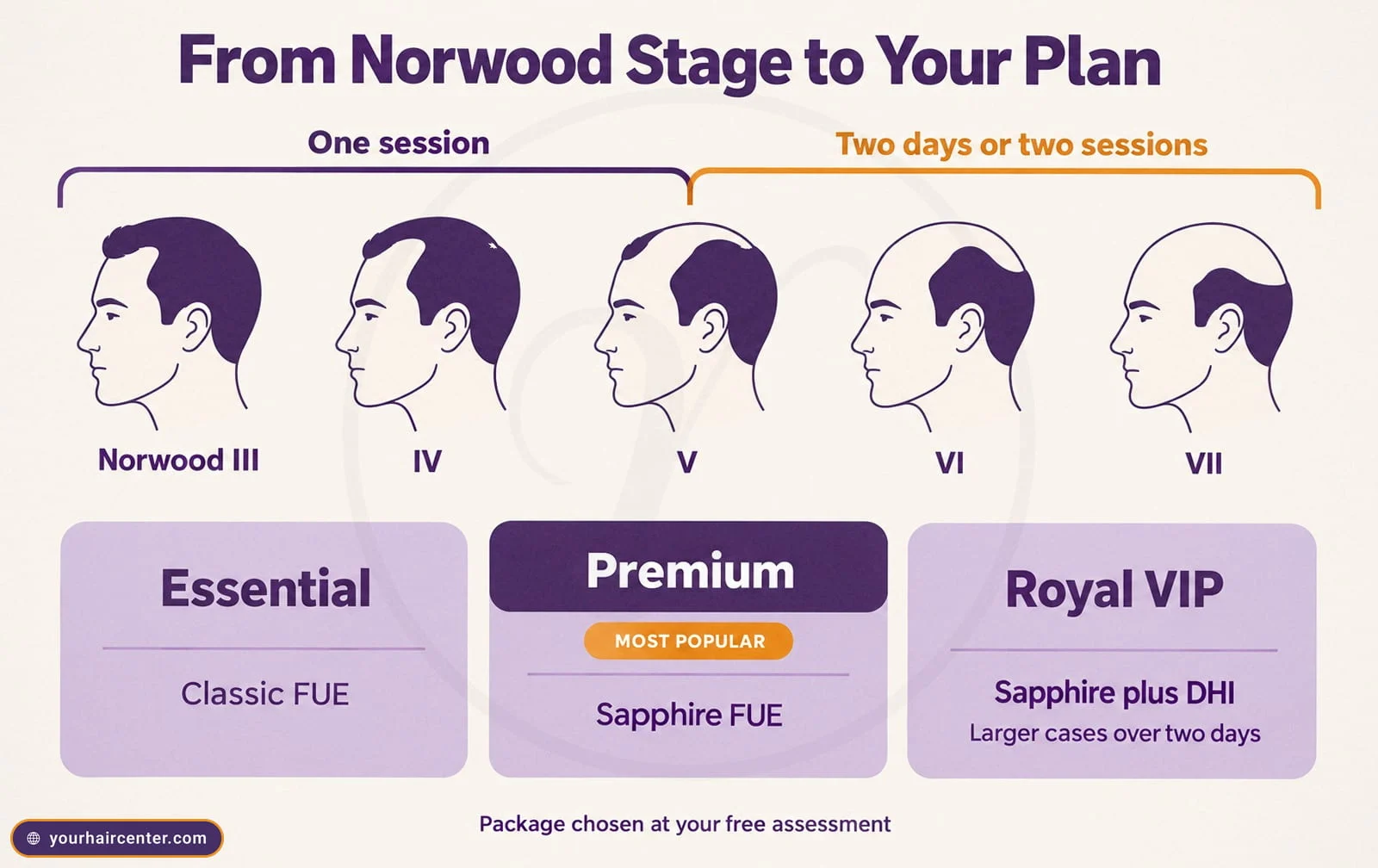
The answer comes down to one number, your Norwood stage, adjusted by two more, your donor-area density and your coverage scope. Most men need somewhere between 1,500 and 6,500 grafts in total, one session tops out at about 4,000, and where you land depends on whether the plan covers the hairline only or the hairline plus the crown. Here is how many grafts each stage needs as a starting band, anchored to the graft ranges Your Hair Center uses to plan male cases.
- Norwood I and II typically need no surgery at all. Your Hair Center plans both stages as no transplant needed, and at most a Norwood II is a small, elective temple-corner refinement that many clinics would still advise against.
- Norwood III is the first stage where a transplant is the standard recommendation, planned at 1,500 to 2,500 grafts for hairline-only restoration.
- Norwood IV is planned at 2,500 to 3,500 grafts, with hairline-only cases at the lower end and hairline-plus-bridge cases at the upper end.
- Norwood V is planned at 3,000 to 4,500 grafts, covering the hairline and bridging toward the crown, with the upper end run over two sessions under one plan.
- Norwood VI is planned at 4,000 to 6,000 grafts, usually staged across two sessions.
- Norwood VII is planned at 4,500 to 6,500 grafts, staged across two sessions, often twelve months apart.
Treat that band as a starting point, not a quote. When you ask how many grafts do I need, the honest answer is a range first and a precise figure only after measurement. Three factors move you inside it. Lower donor density means you reach a natural-looking result with fewer grafts before the donor runs thin. Hairline-only scope sits at the bottom of each band while full hairline-plus-crown coverage sits at the top. And the implantation technique, FUE, Sapphire, or DHI, sets how dense the recipient zone can go per square centimeter. Each stage gets a proper breakdown below, then the donor-area ceiling check, then how it fits the packages. If you want to know how many grafts your own case needs today, the Your Hair Center hair and scalp analysis works it out from your photos. The full picture starts with the men’s hair transplant overview.
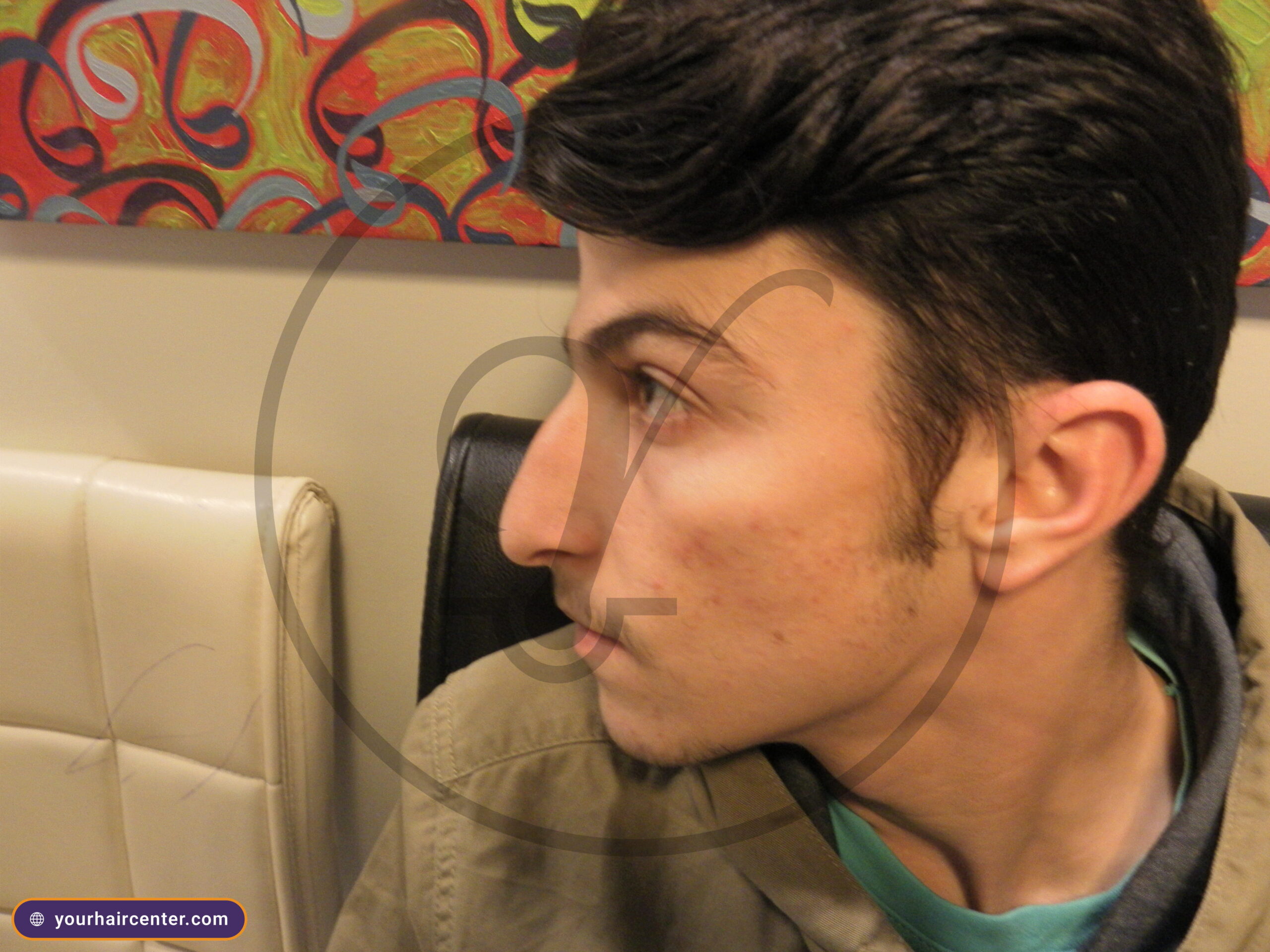
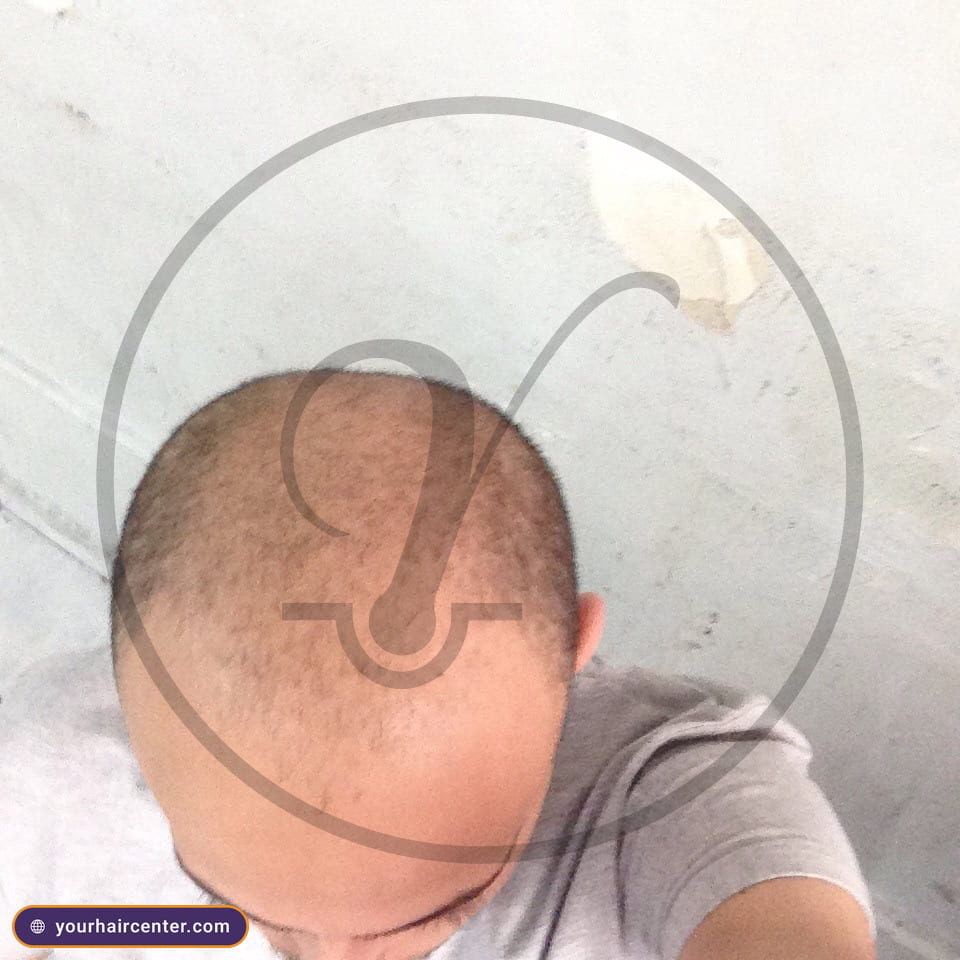
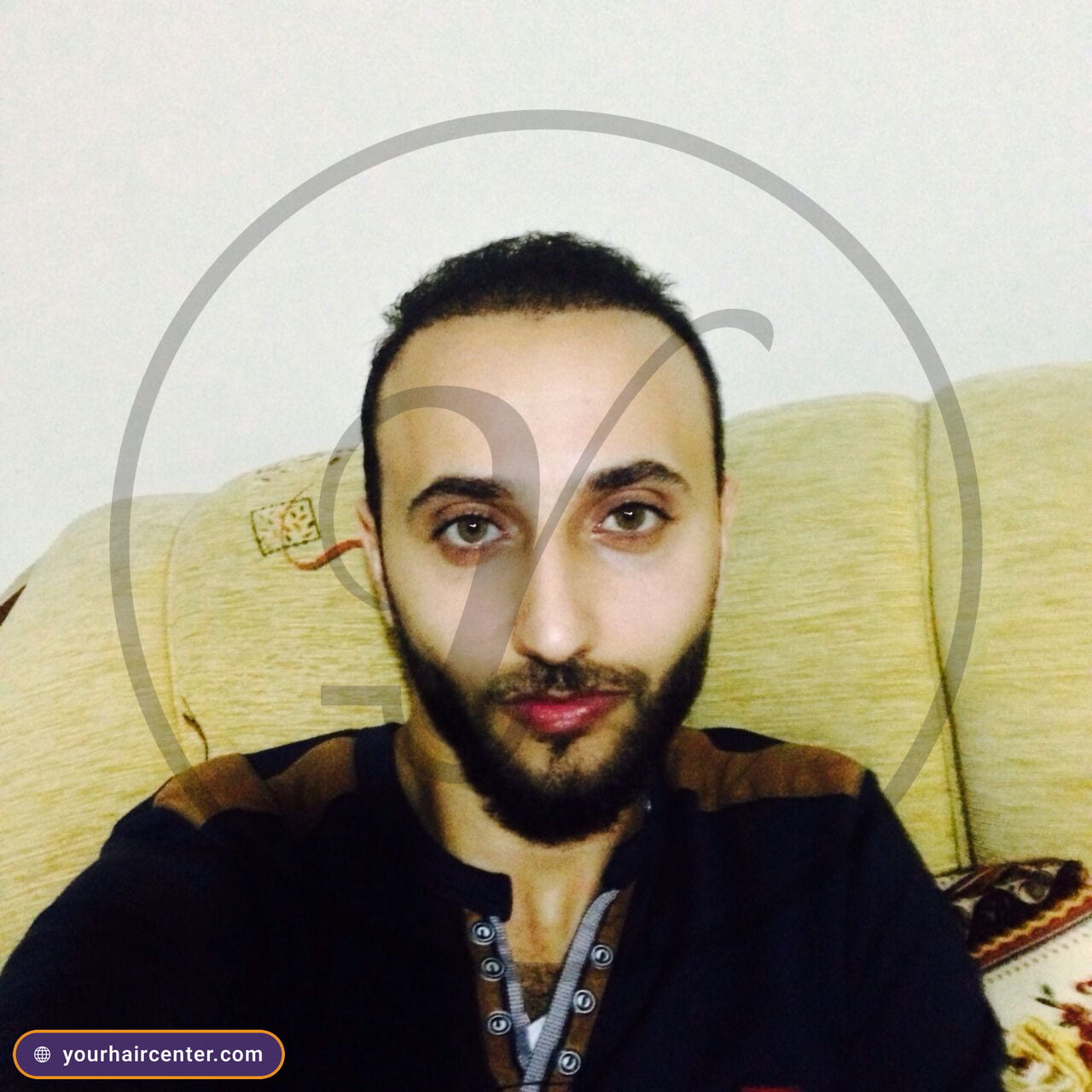
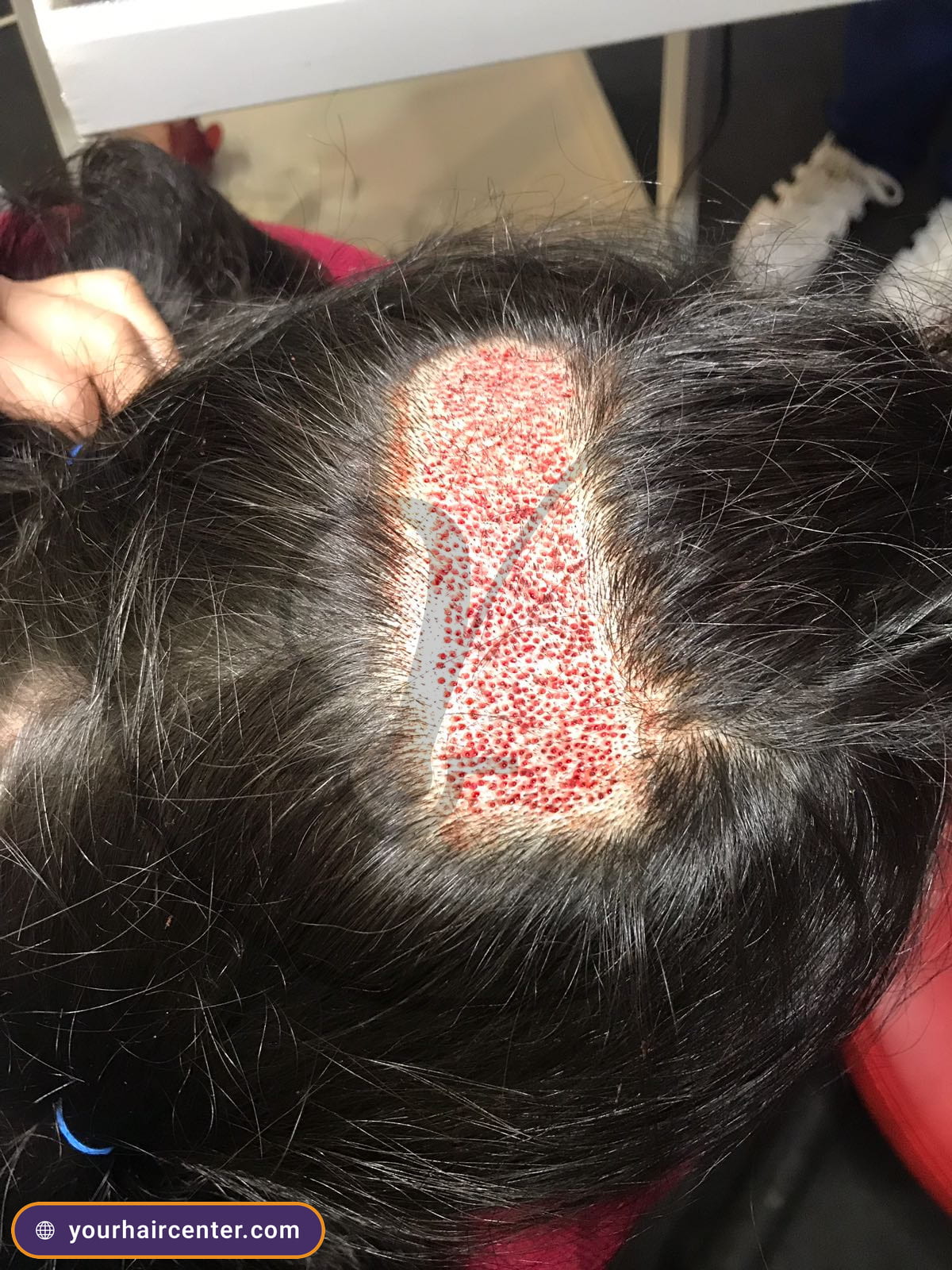
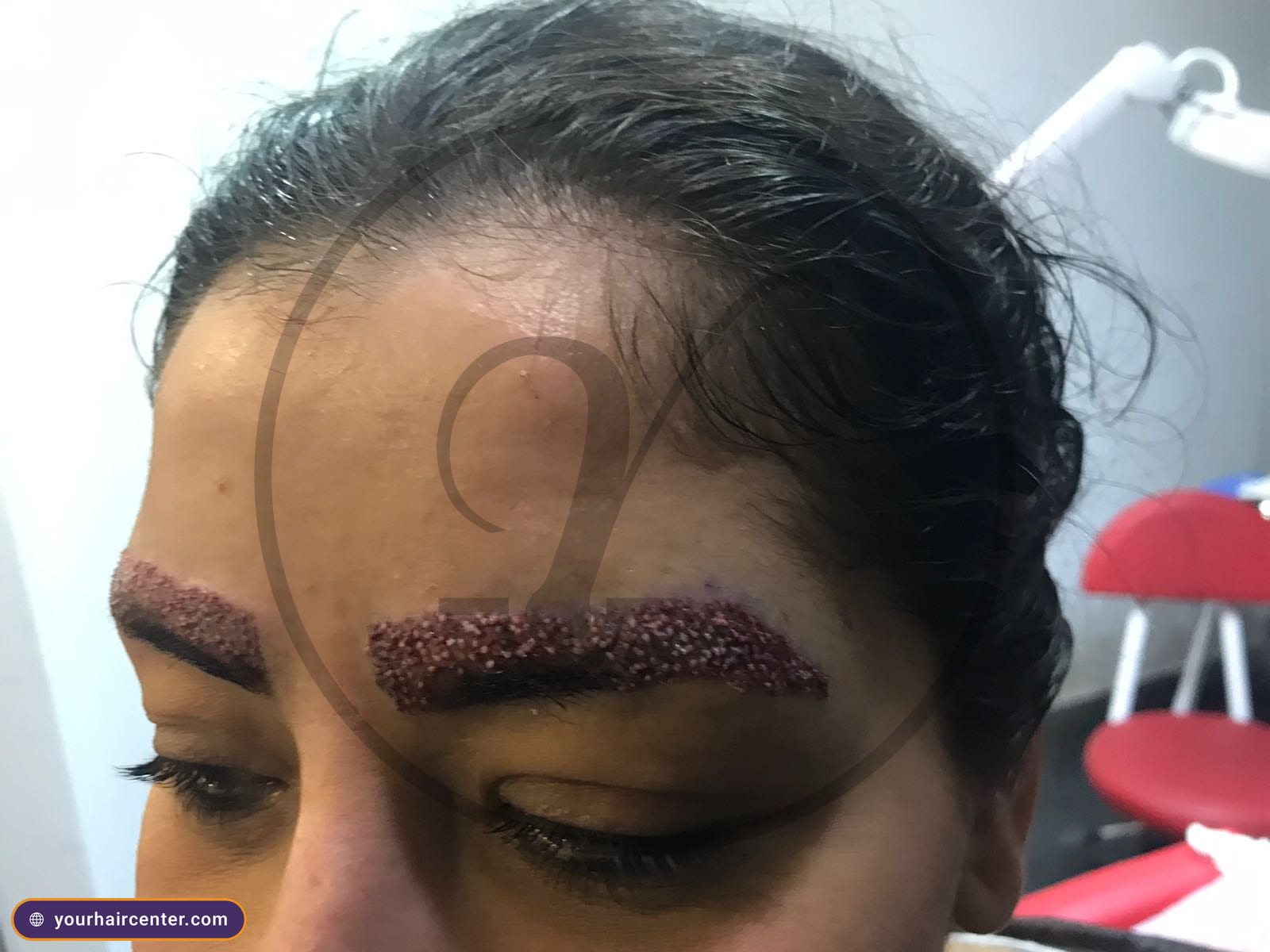
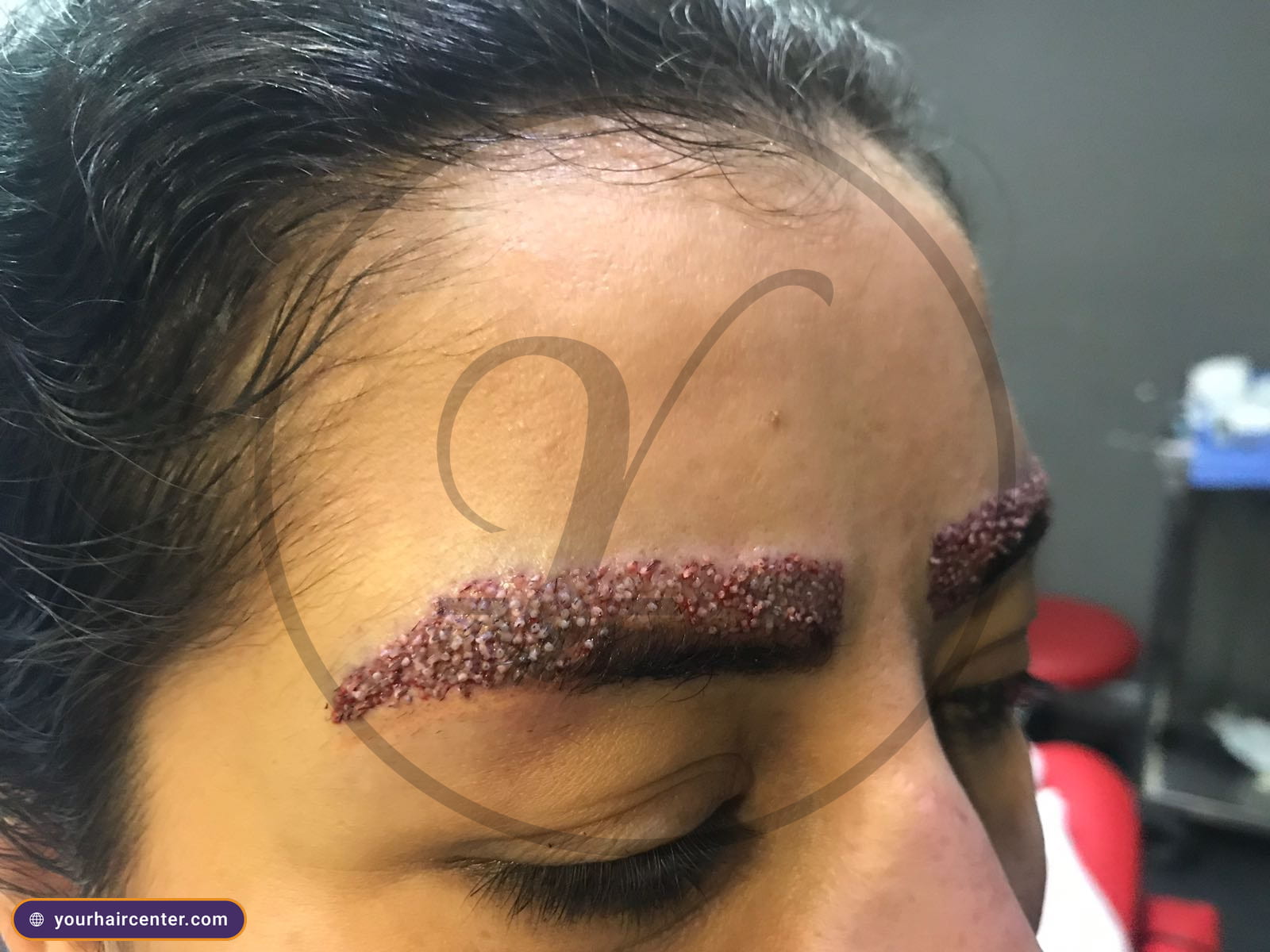
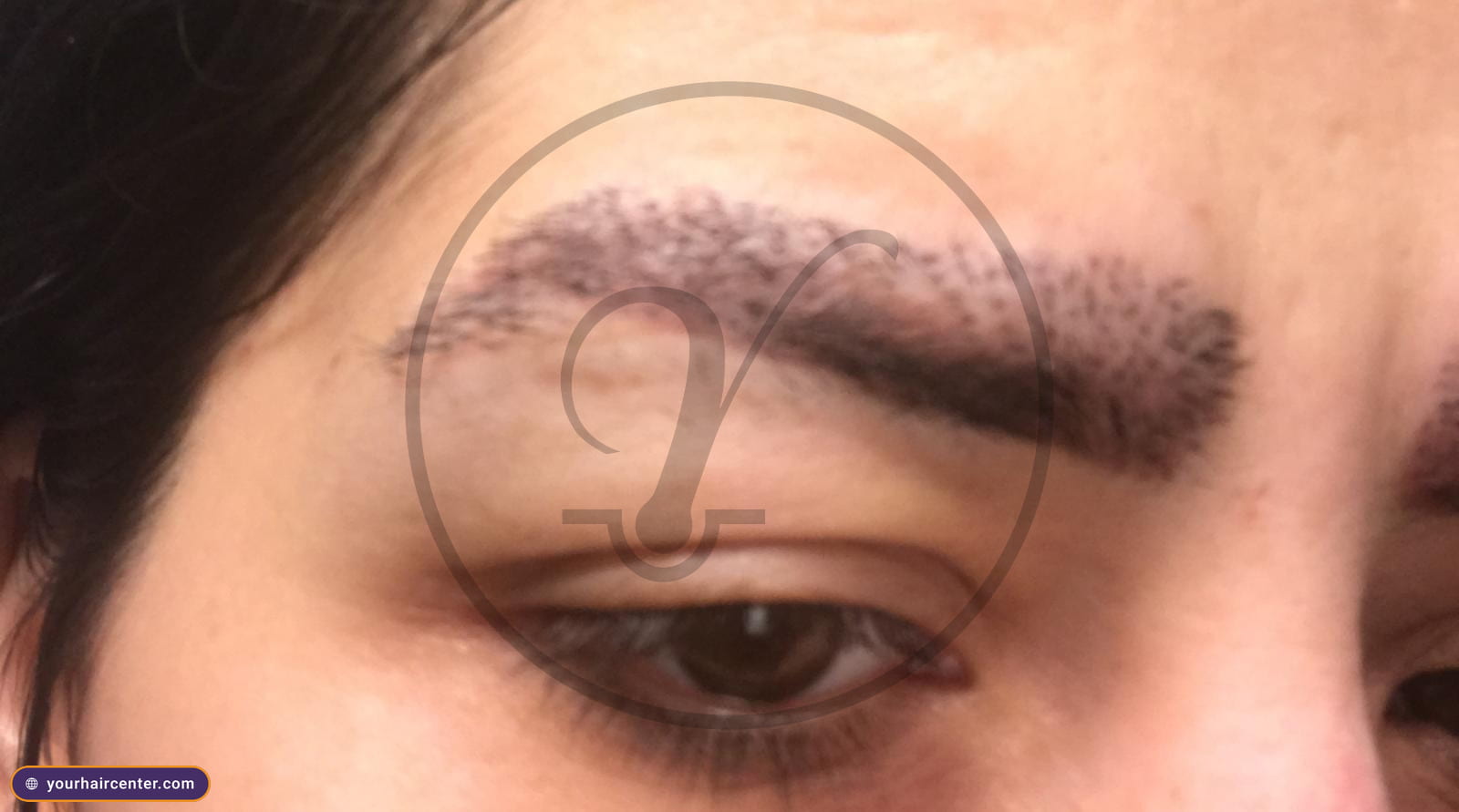
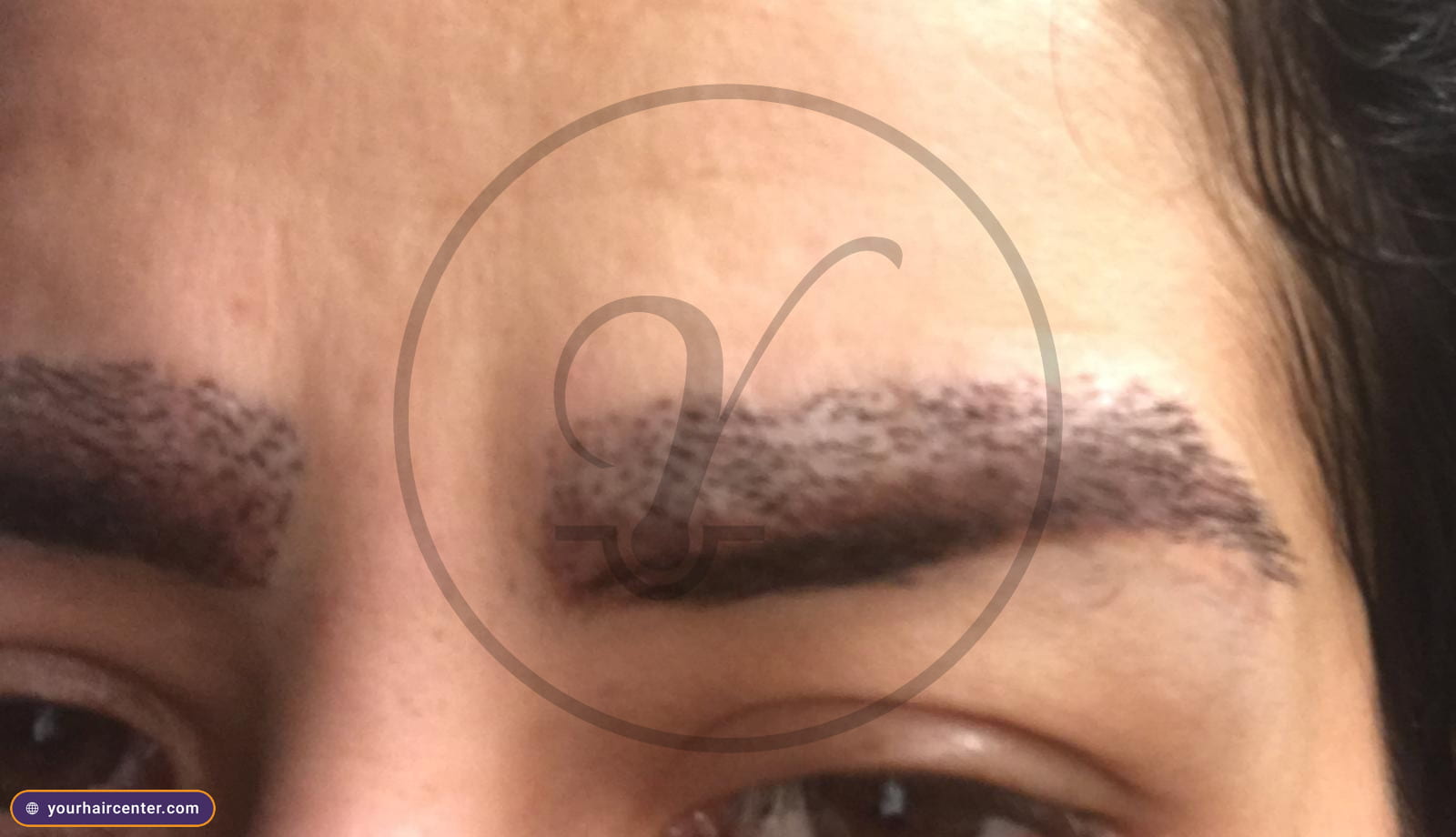
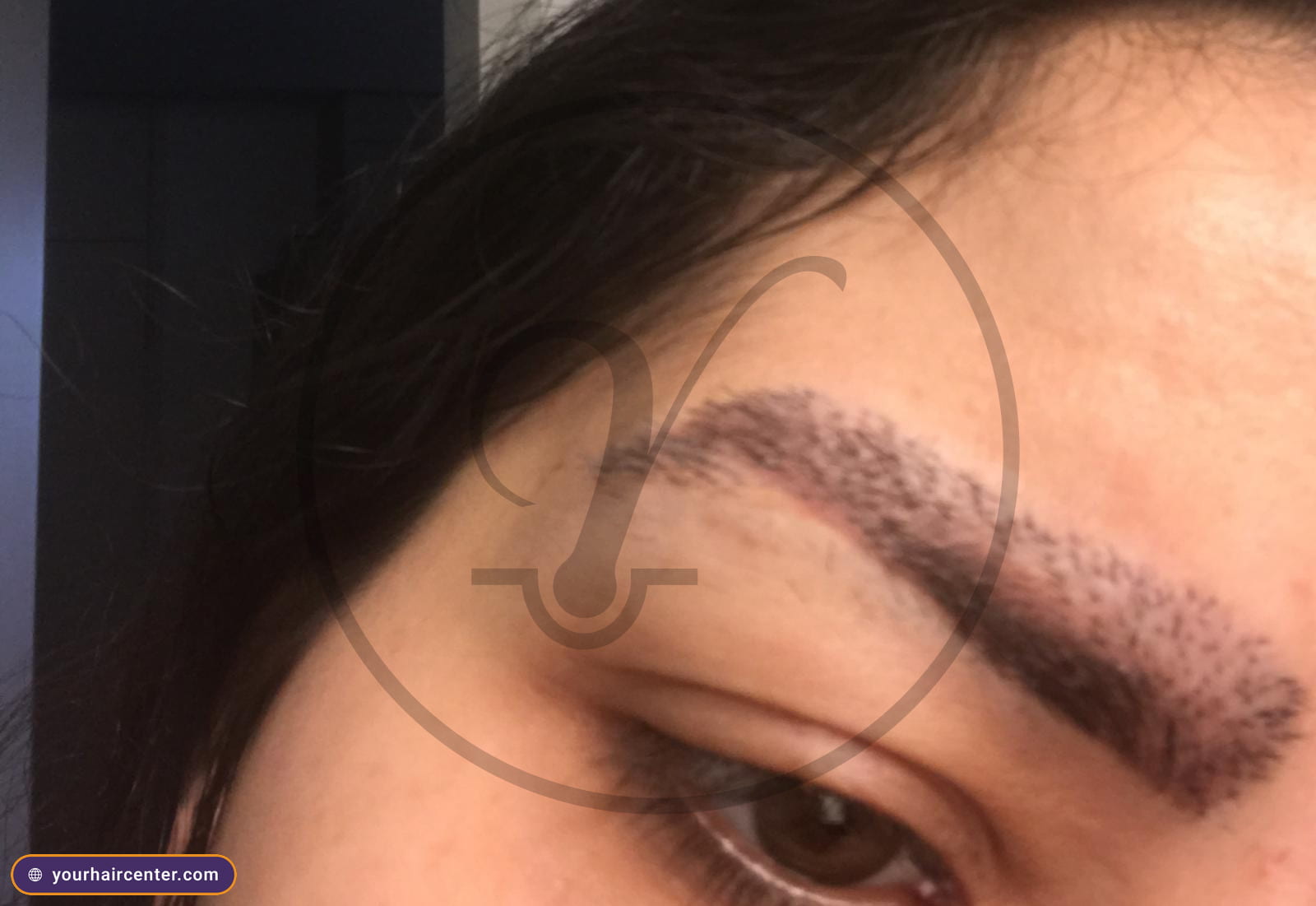
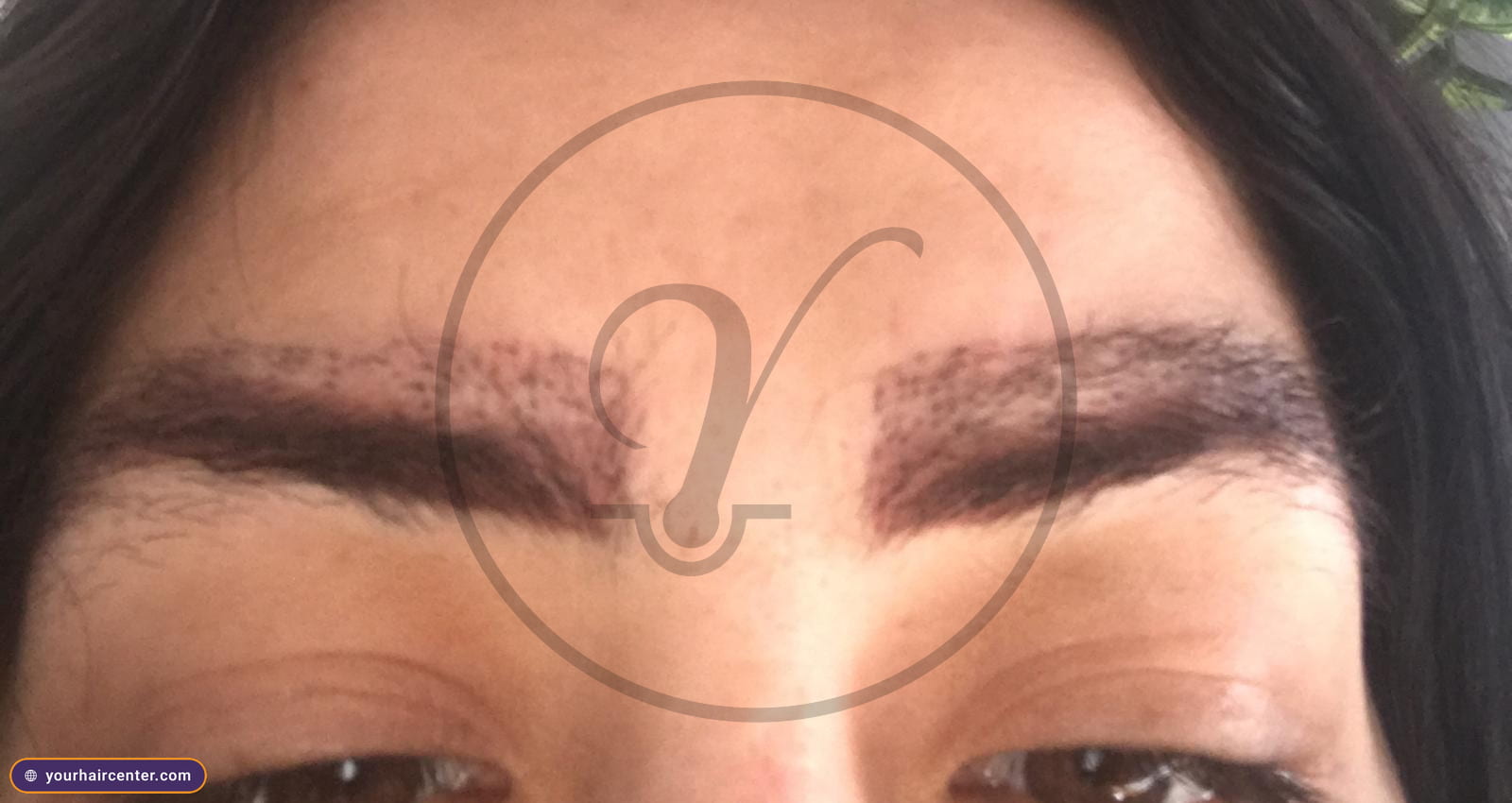
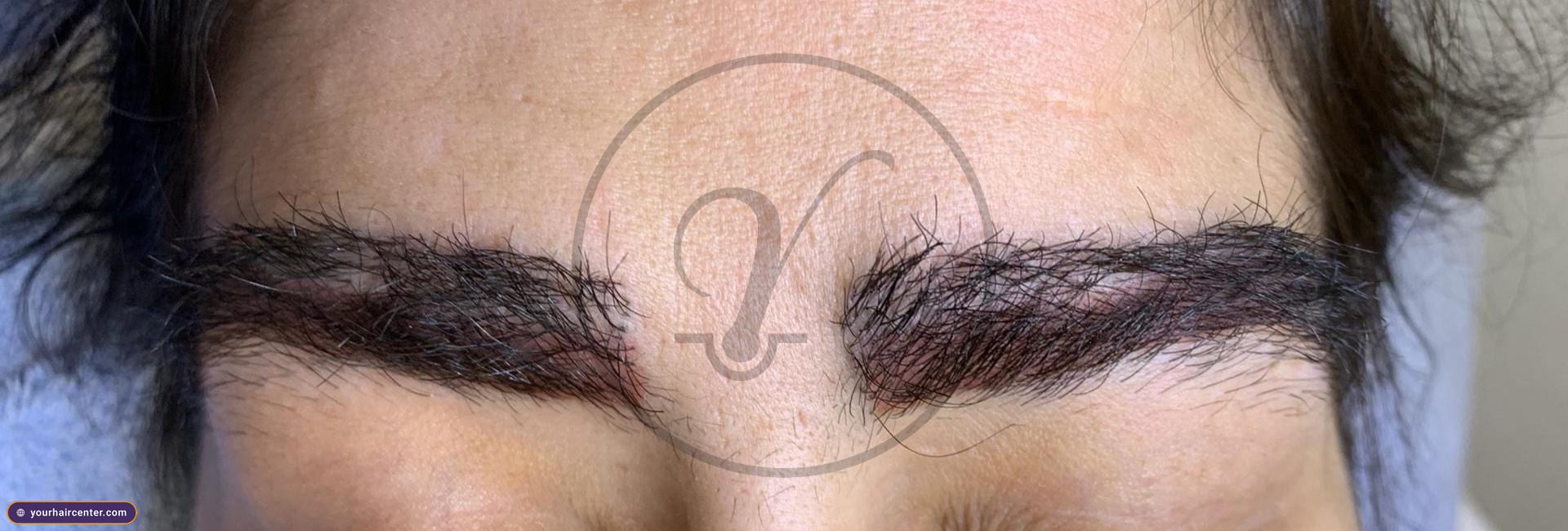
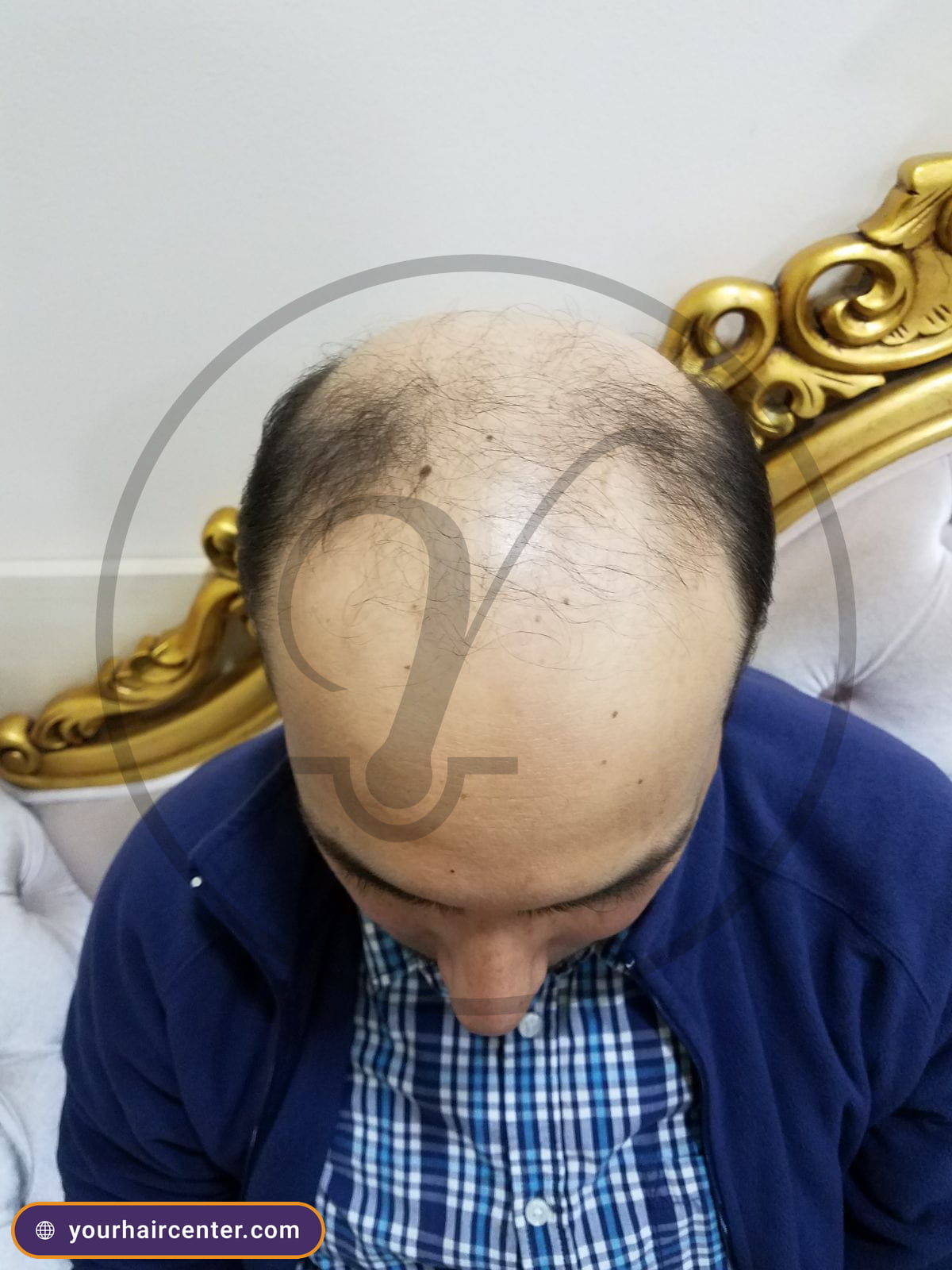
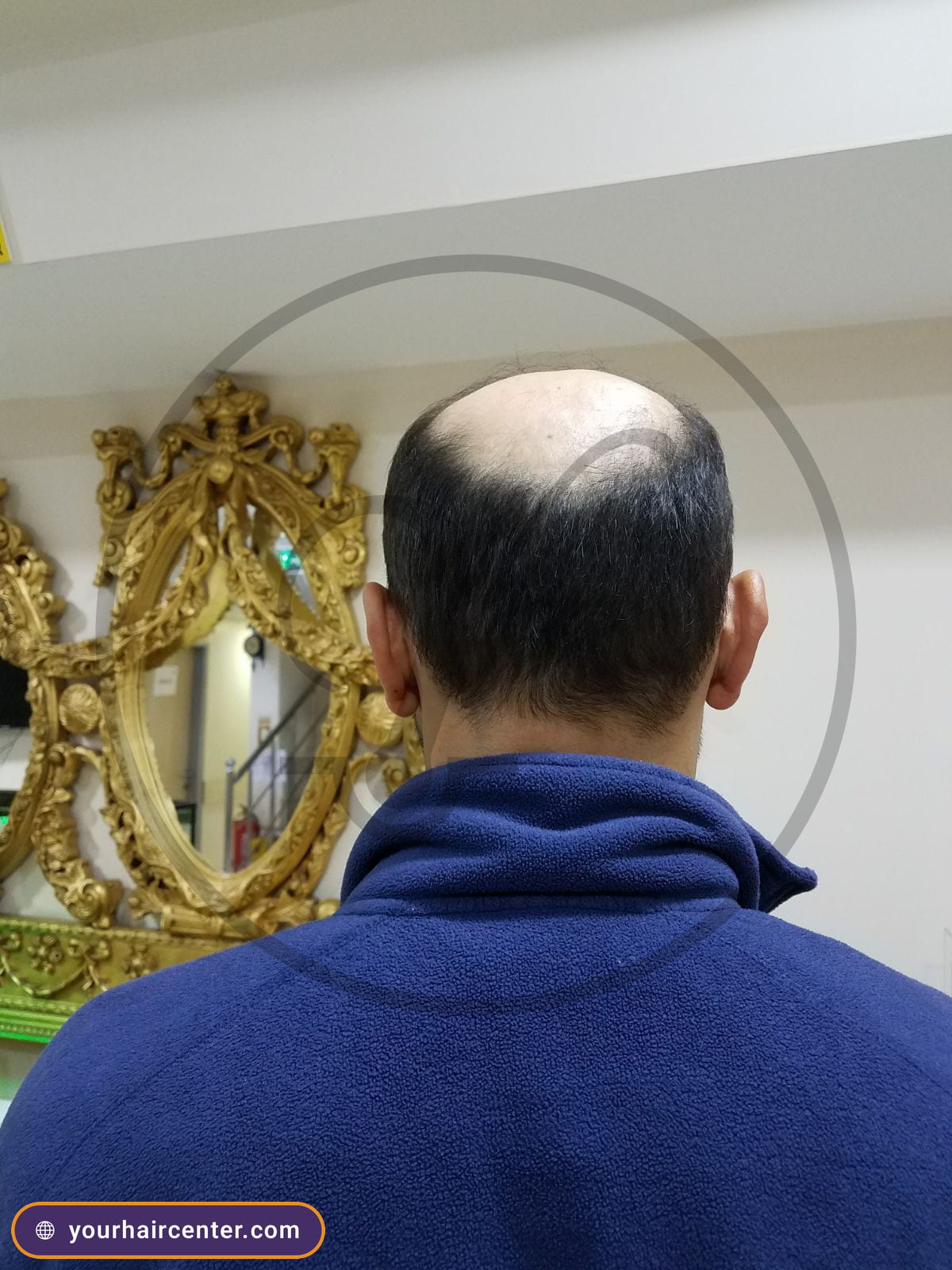
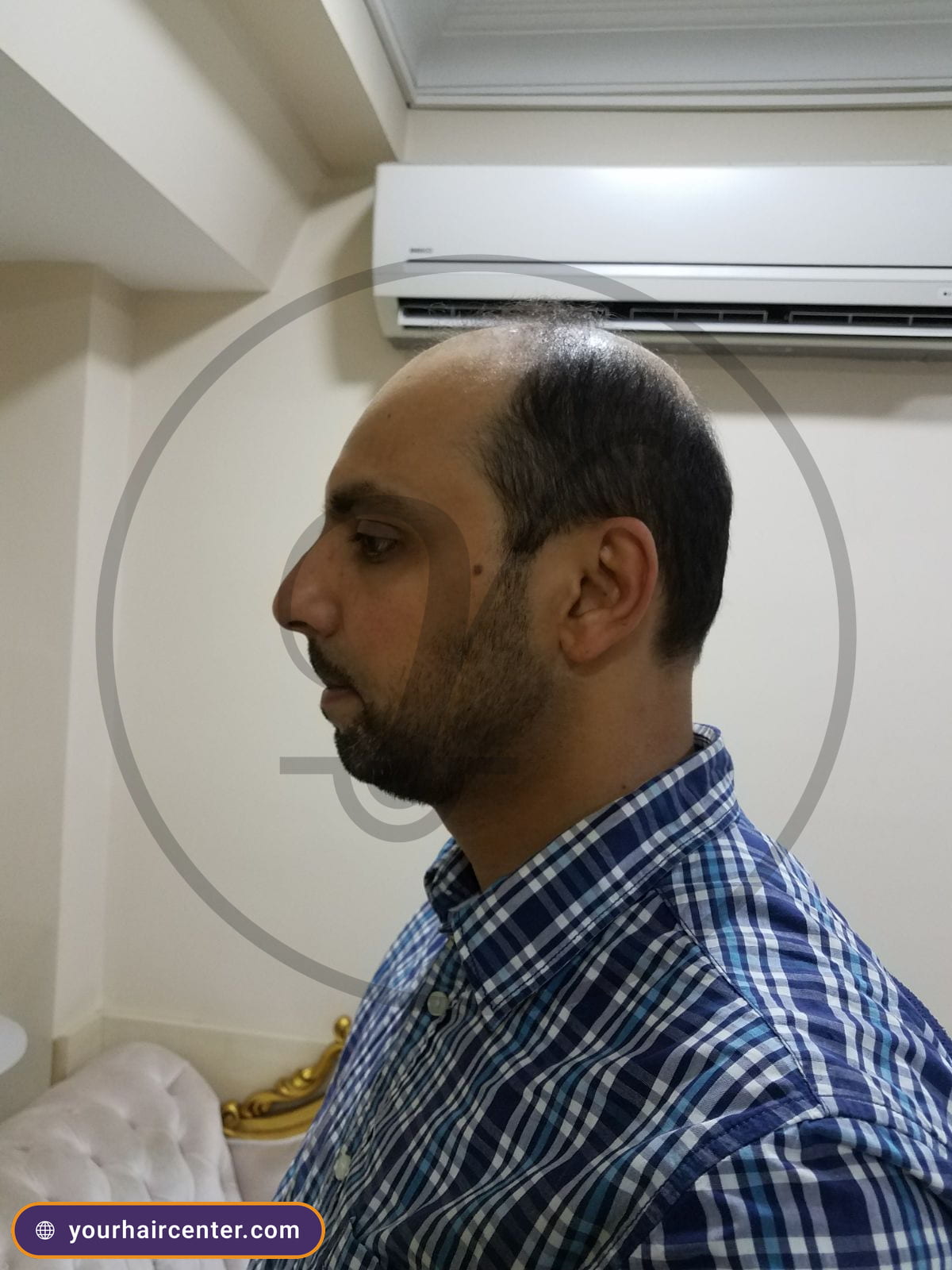
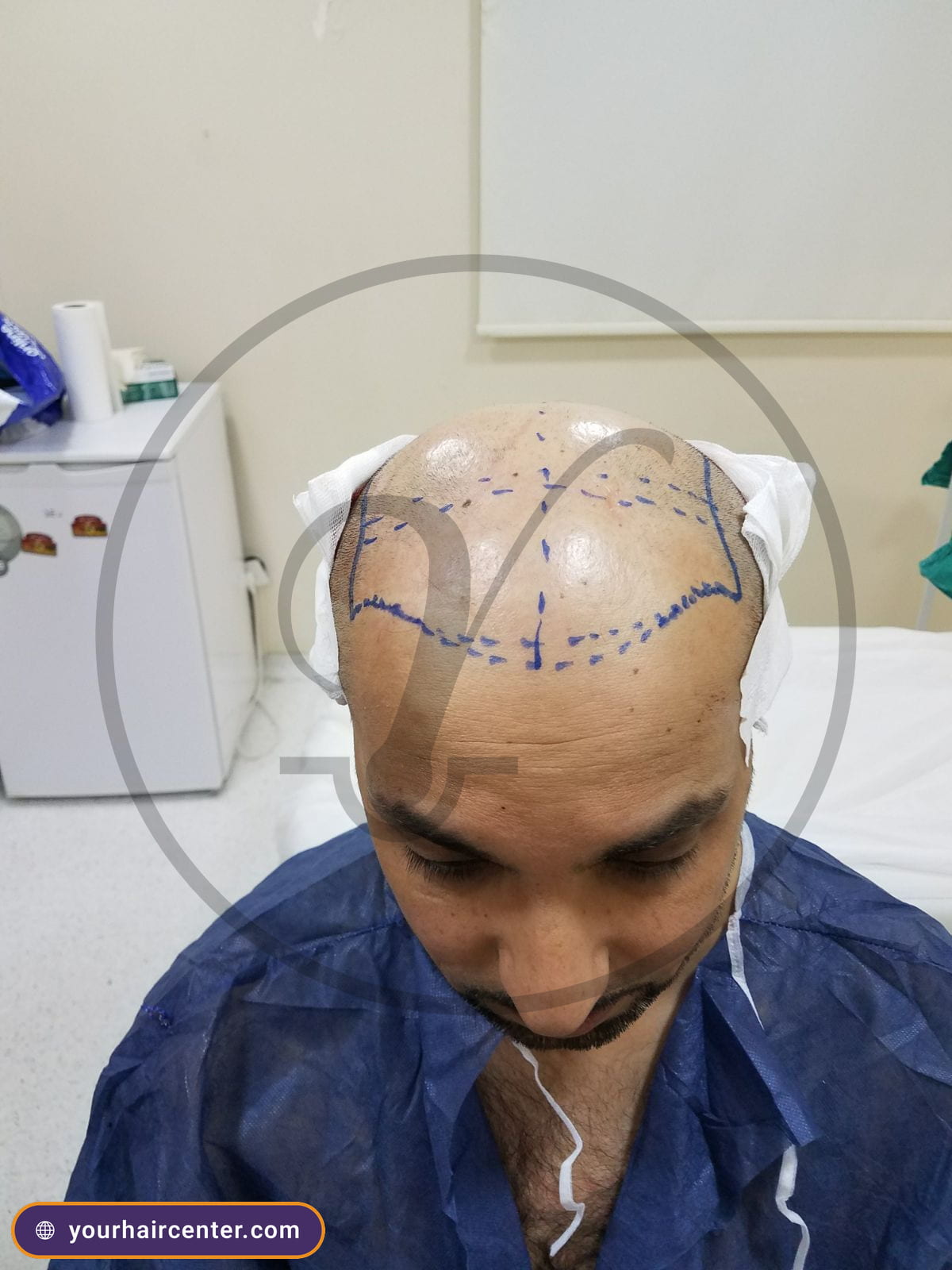
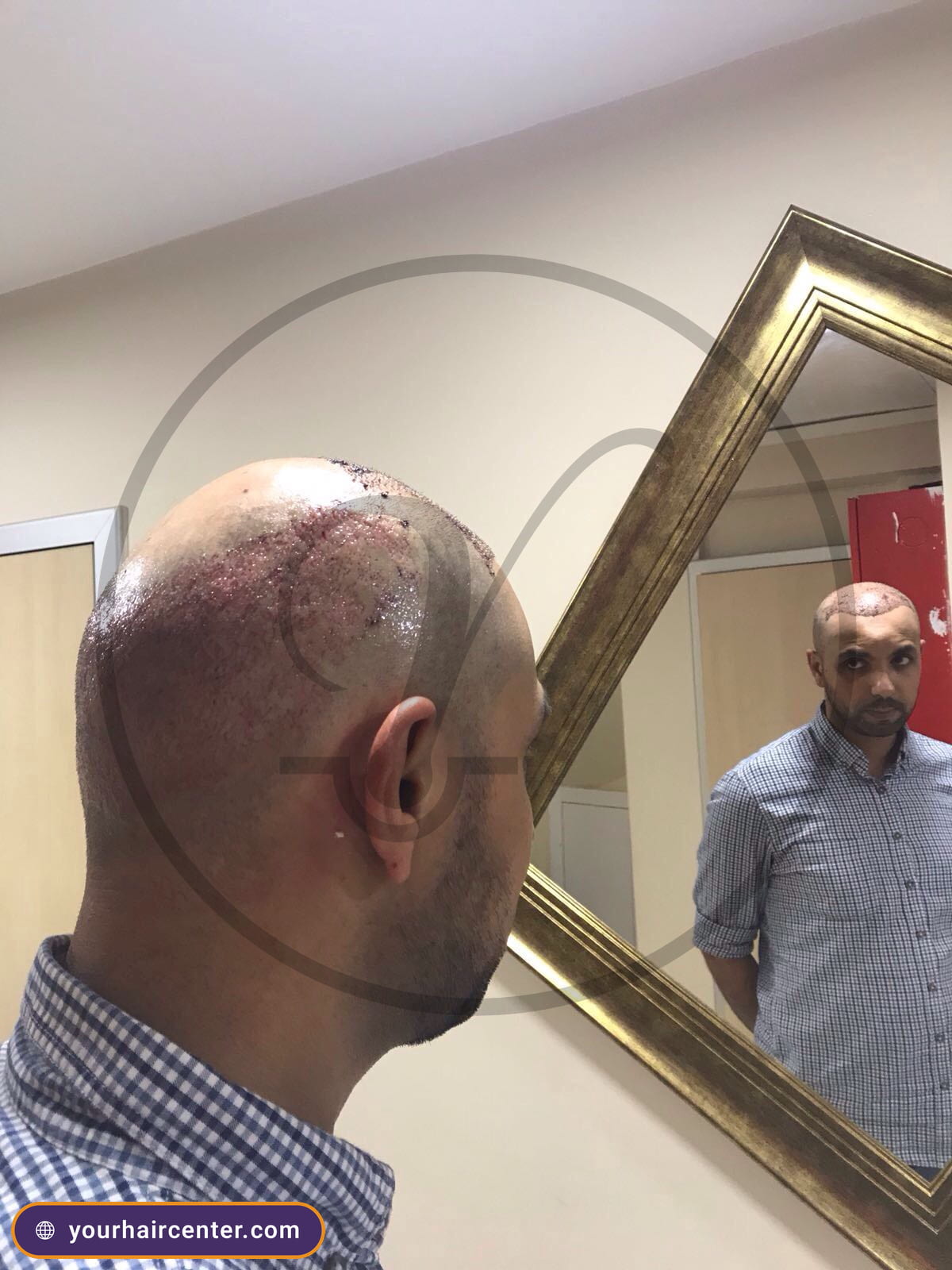
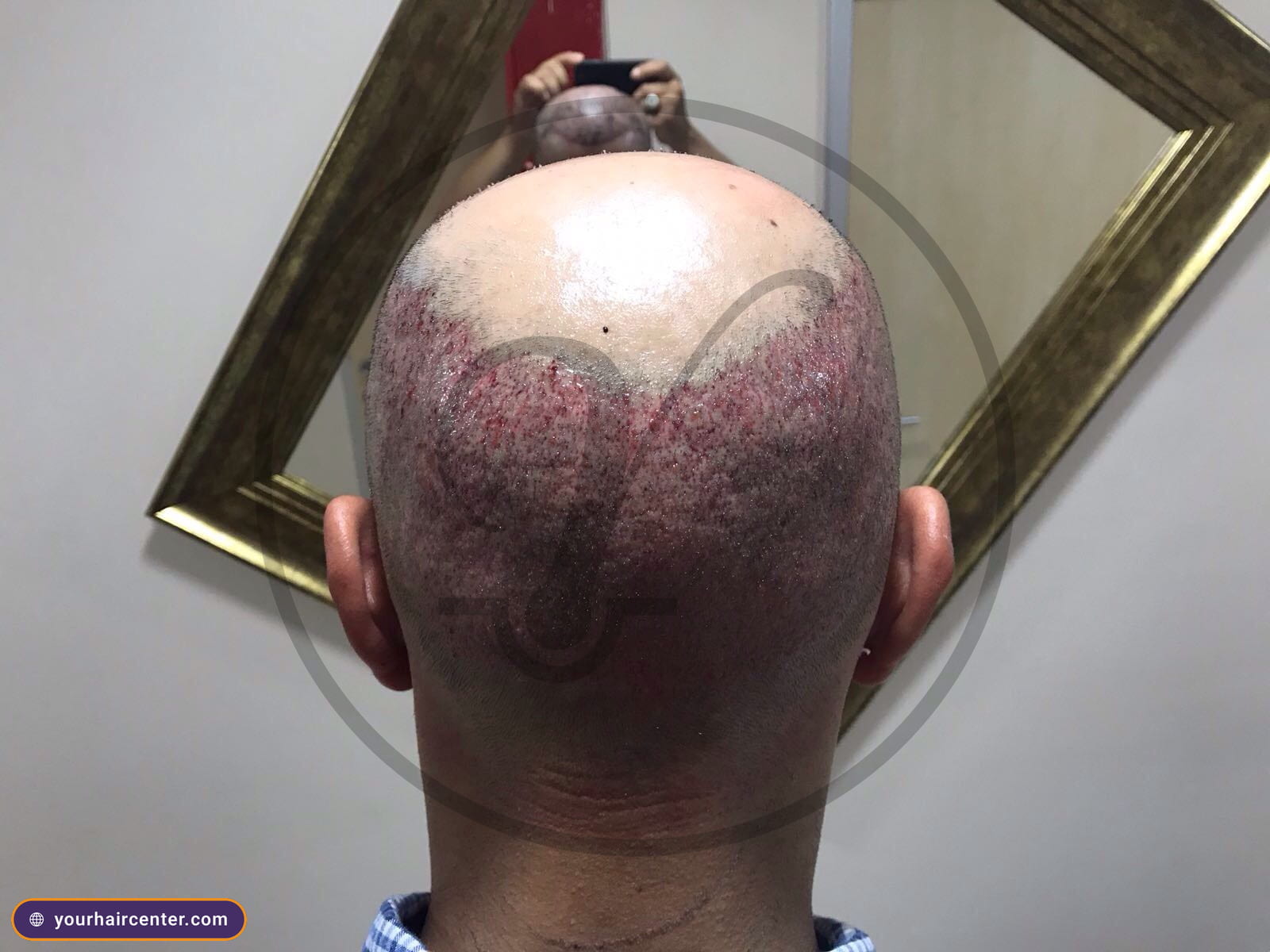
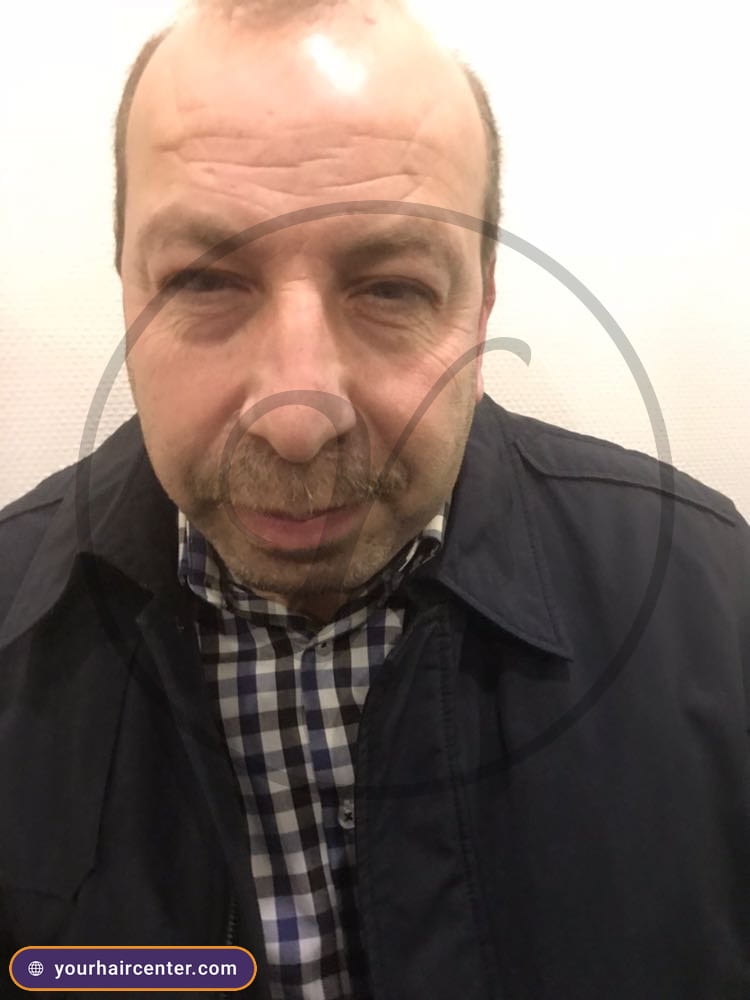
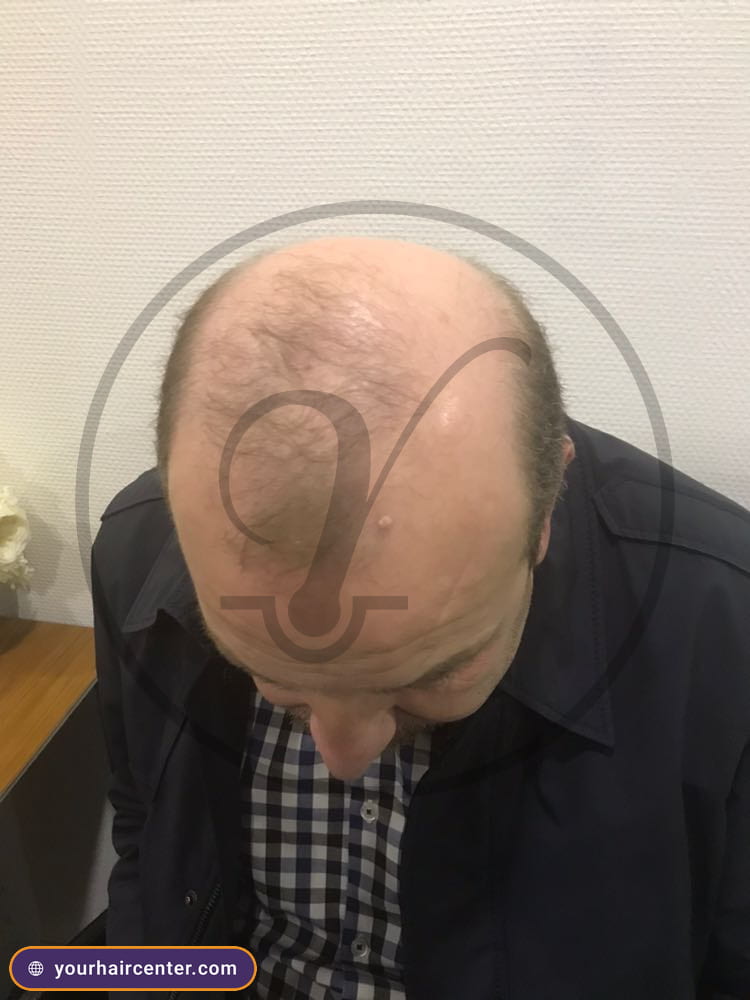
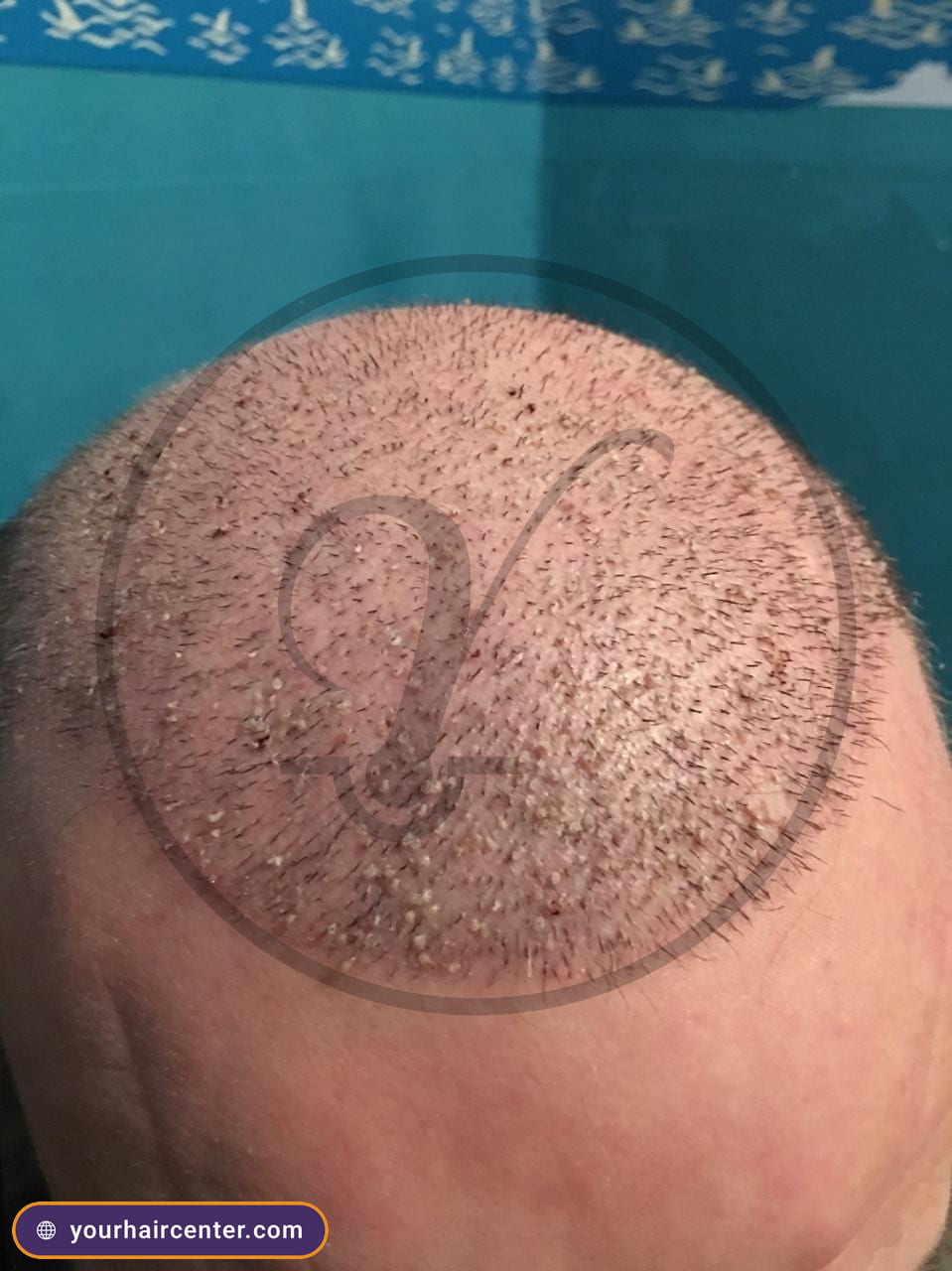
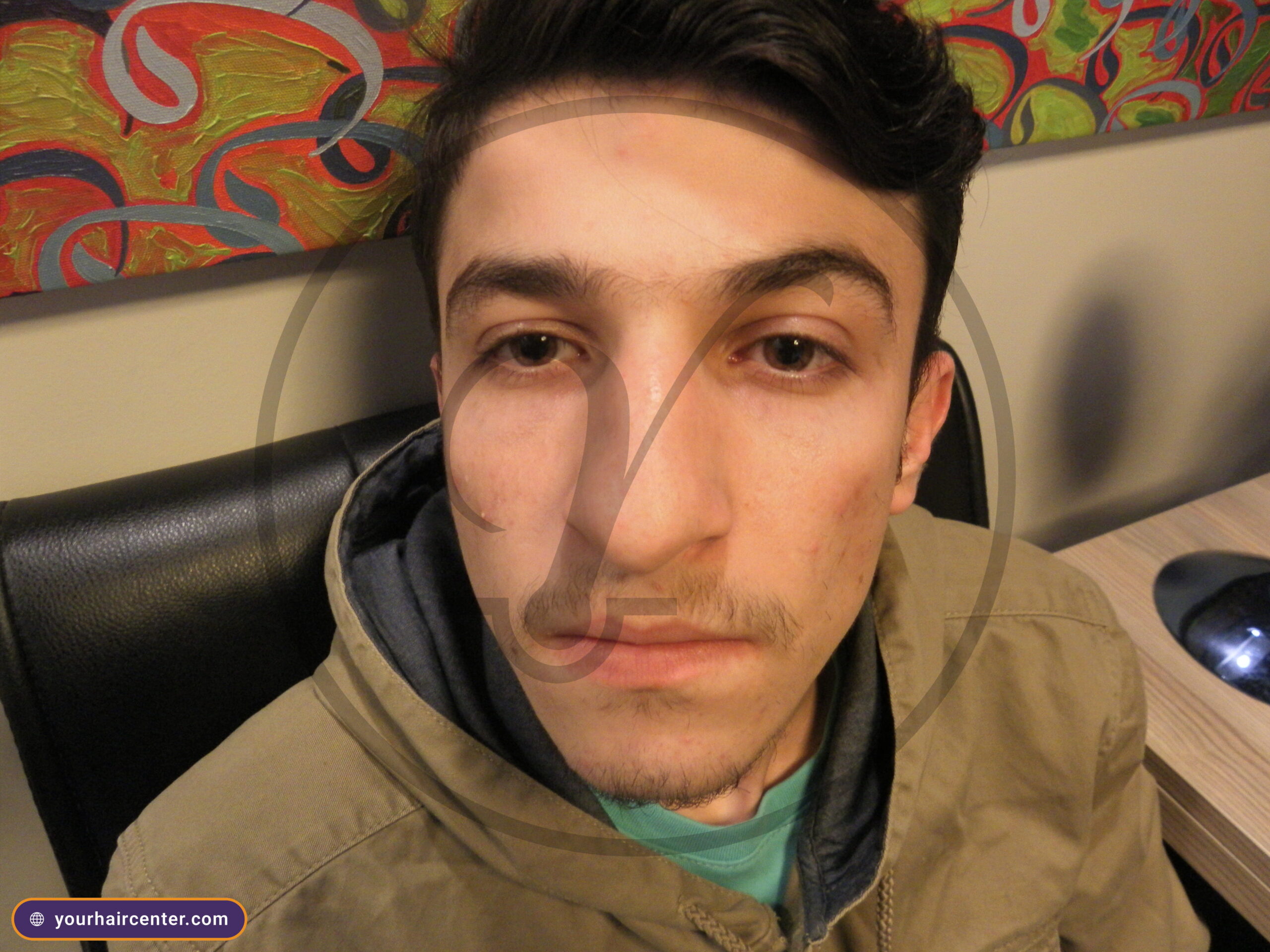
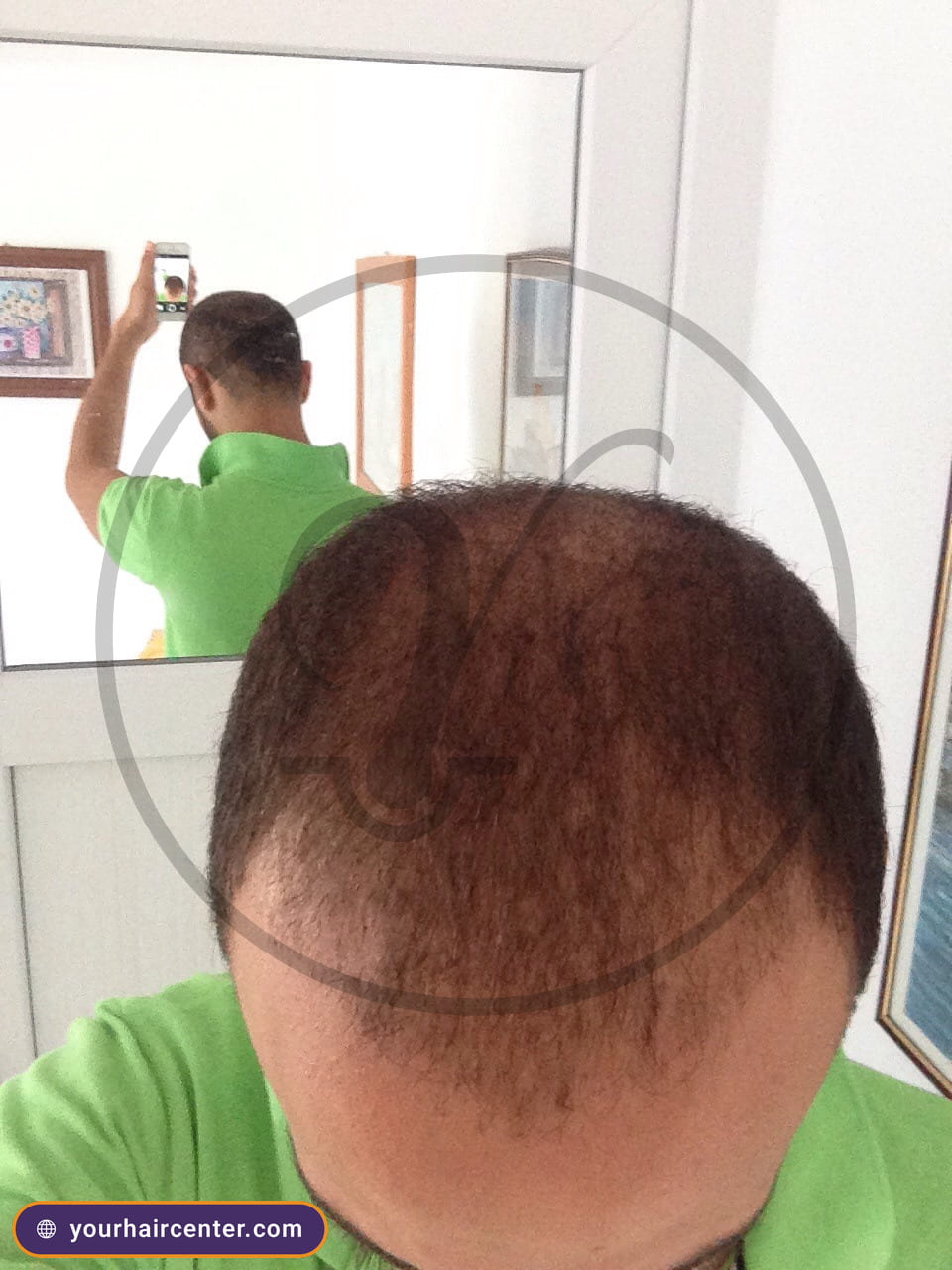
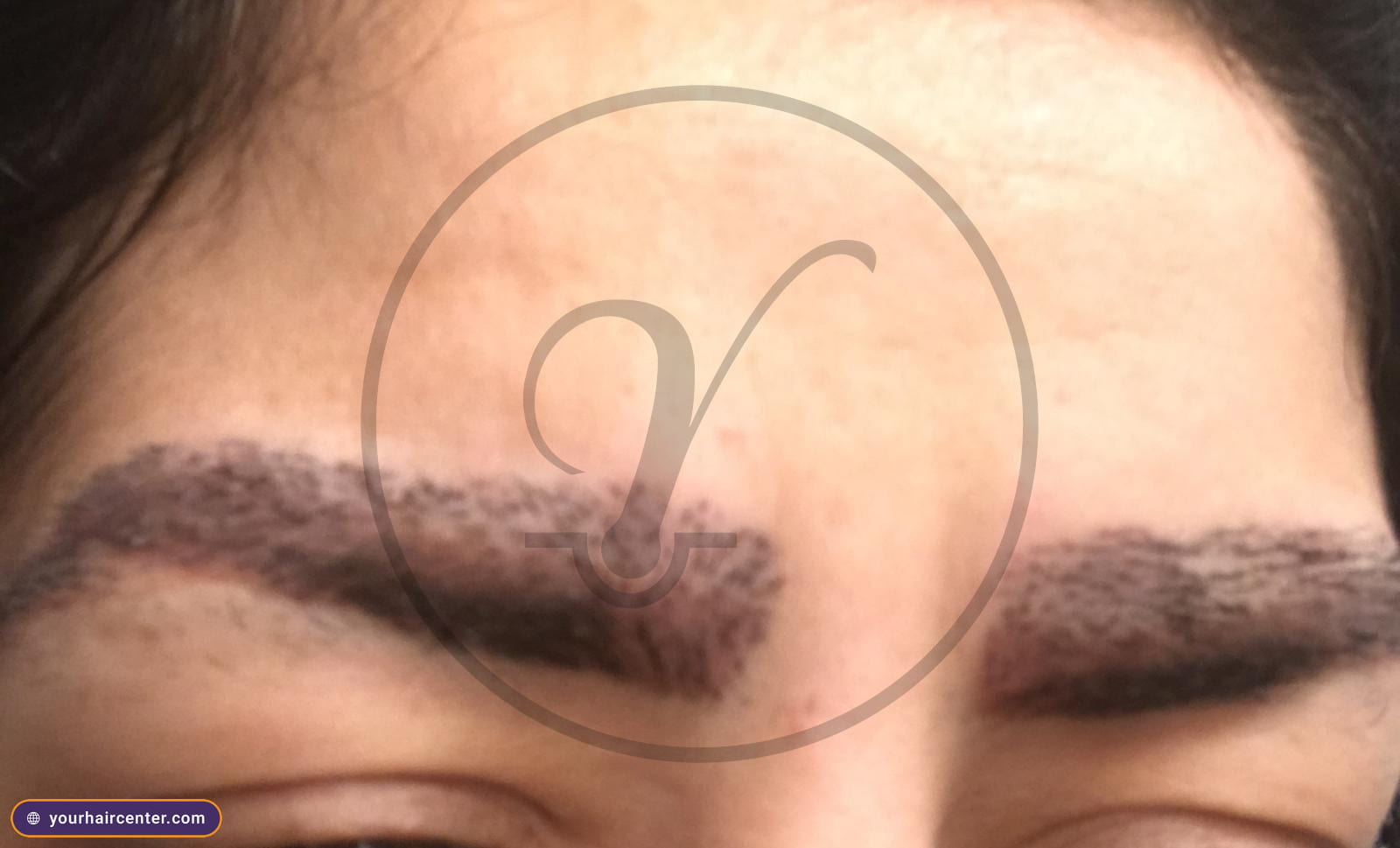
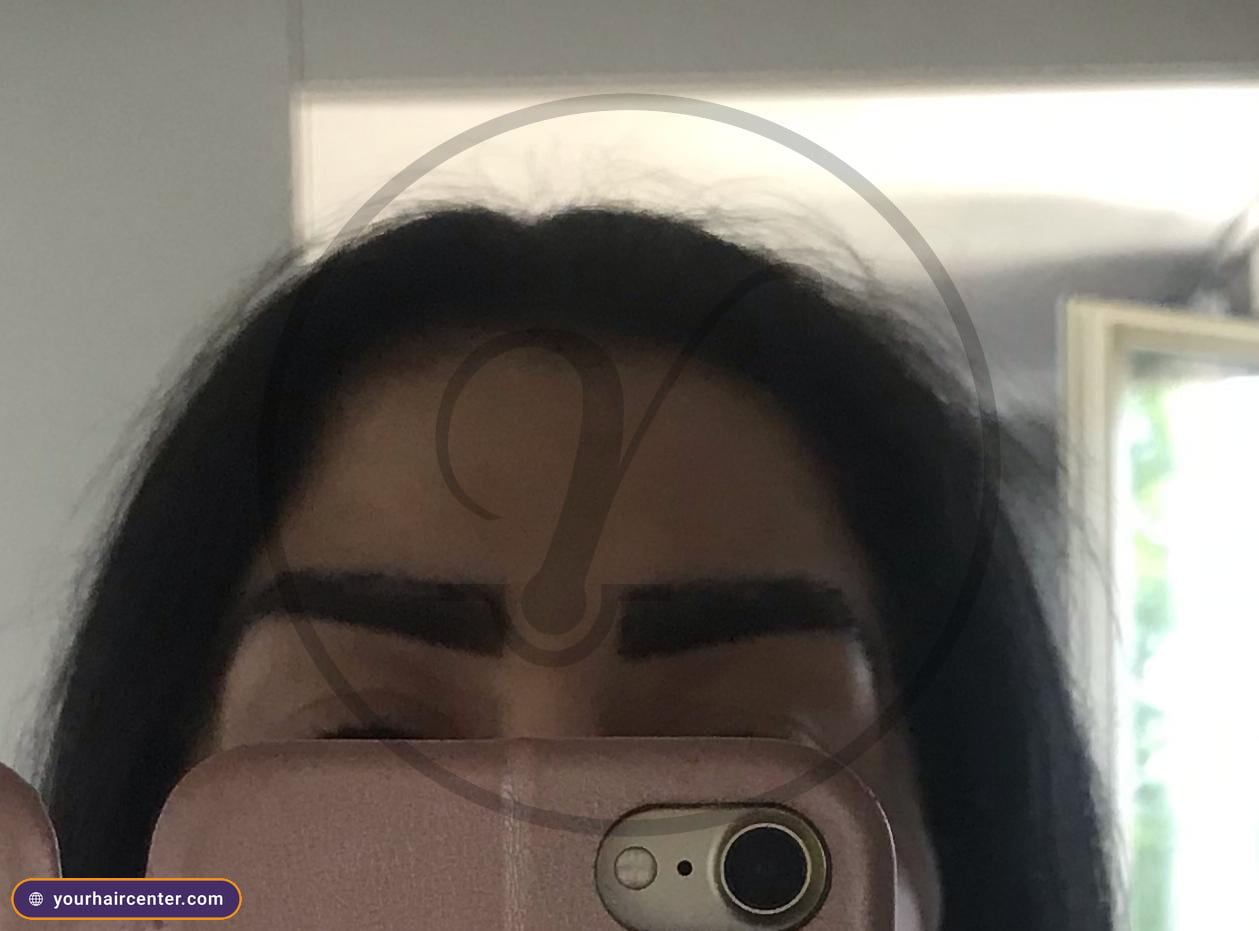
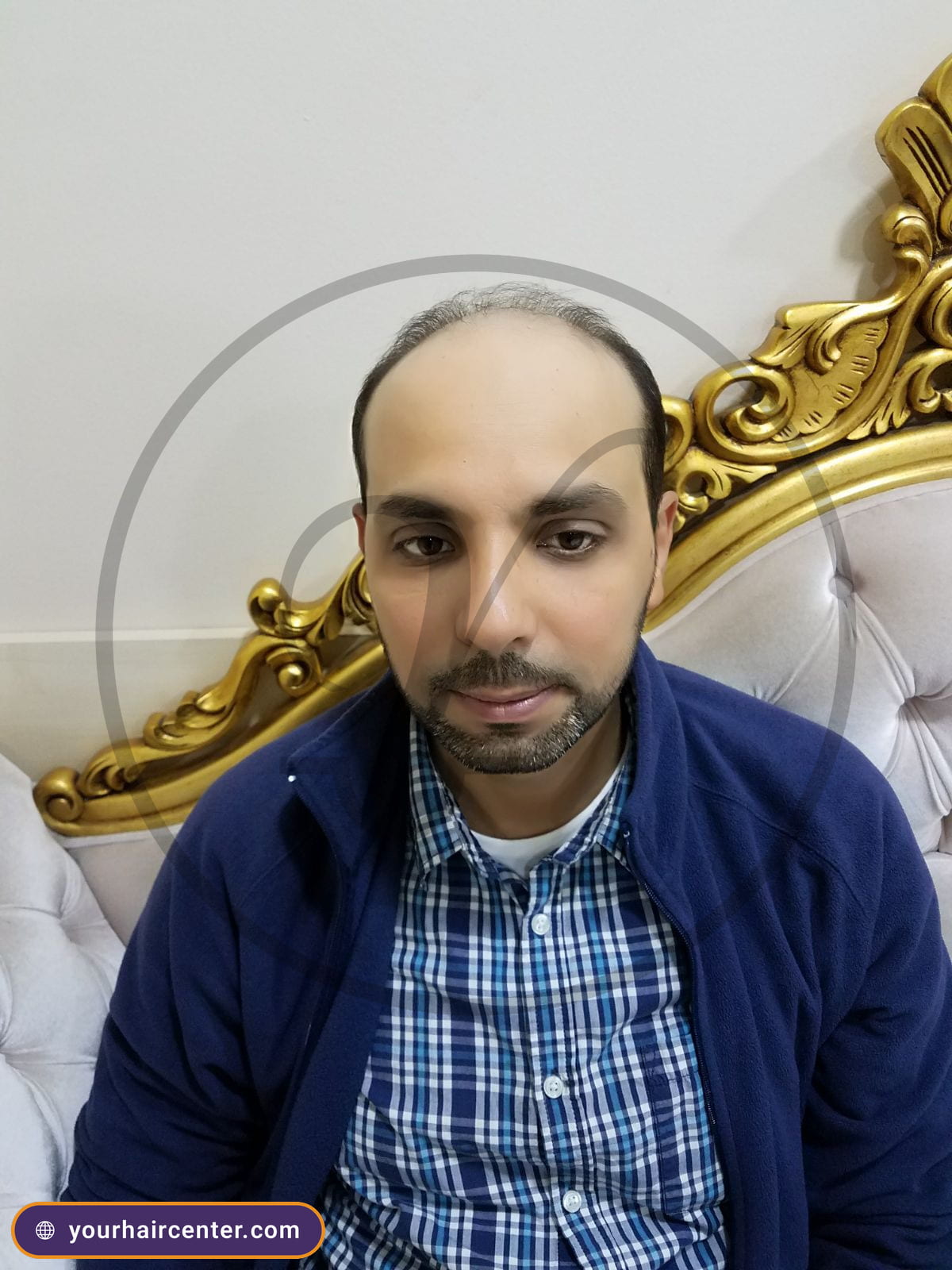
Real results from our patients’ archive. Photos exactly as captured at our accredited partner clinics, with no filters and no retouching. Browse more cases in our photo gallery.


What is the difference between a graft, a follicle and a hair?
Before you can work out how many grafts you need, it helps to know what a graft actually is. One graft is one follicular unit, the natural cluster of hairs the surgeon extracts in a single motion. A follicular unit holds anywhere from one to four hairs, and across extracted units the average works out to roughly 2.3 hairs per graft.[1] That ratio is why a graft count and a hair count are two different numbers. A 2,000-graft session moves close to 4,600 individual hairs into the recipient zone, not 2,000.
The distinction matters when you work out how many grafts you need from a quote. Some clinics, particularly in the US, quote the larger "hair count" because it makes a package look denser than the same case quoted in grafts. The surgical unit, the one your surgeon actually plans around, is the graft. When you collect numbers from different clinics, normalize everything to grafts before you compare, or you will be comparing a hair count against a graft count and reaching the wrong conclusion. With the vocabulary settled, here is what each Norwood stage actually asks for.
Norwood-stage breakdown, hairline-only versus full coverage
A Norwood number on its own is only half an instruction for how many grafts you need. The other half is scope, whether you are rebuilding just the hairline or the hairline plus the crown, and that scope decides whether a given stage lands at the bottom or the top of its band. This is where men searching how many grafts for Norwood 3, 4, 5, or 6 get their real answer.
Norwood II
Most Norwood II patients do not need surgery. Your Hair Center classifies Norwood I and II as no transplant needed, because the recession is a maturing hairline, cosmetically minor, and it often progresses no further for years. At most a Norwood II is a small, elective temple-corner refinement that many clinics would advise against entirely, and it is usually the wrong first move for a younger man. This is the stage where maintenance earns its keep first. If you are in your twenties and watching early thinning, a non-surgical starter such as PRP or exosome therapy is often the smarter opening play, with surgery held in reserve for when the loss declares itself.
Norwood III
For how many grafts a Norwood 3 needs, Norwood III is the first stage where a transplant becomes the standard recommendation, planned at 1,500 to 2,500 grafts. The work is hairline-only, rebuilding the frontal corners and the central forelock, and it runs as a single session. Men who ask how many grafts for Norwood 3 are usually validating a quote they have already been given. If you want to see what a sub-2,000-graft result looks like in the flesh, the photo gallery is the place to calibrate your expectations against real cases.
Norwood III vertex
For the vertex variant, how many grafts you need hinges on a fork in the road. Covering the hairline plus early crown thinning pushes the plan to roughly 2,000 to 3,000 grafts, while deferring the crown and treating the hairline alone keeps it nearer 1,500 to 1,800. This is exactly where the "treat the hairline first, treat the crown later" decision lives, and the crown hair transplant guide walks the crown-deferral math in detail. If your stage classification itself is unclear, the Norwood scale explained article teaches the scale, while here we just use it as the input.
Norwood IV
For how many grafts a Norwood 4 needs, Your Hair Center plans the stage at 2,500 to 3,500 grafts, and scope decides where inside that band you sit. A hairline plus a bridge to the mid-scalp without full crown coverage sits lower, while full coverage that closes the crown reaches the top of the band. This is the stage where over-prescription shows up. A 5,000-graft plan on a typical moderate-loss Norwood IV is worth questioning, both because it rarely matches how many grafts the coverage actually needs and because, as the next section explains, it spends a large share of a finite donor budget, more than one session of about 4,000 grafts can carry.
Norwood V
For how many grafts a Norwood 5 needs, the stage is planned at 3,000 to 4,500 grafts, covering the hairline and bridging across toward the crown. Most Norwood V cases are still a single session for Your Hair Center, though one session tops out at about 4,000 grafts, so the upper end of the band runs over two sessions under one plan. Higher density expectations or a larger head circumference push how many grafts you need toward the top of the range, which is also where the donor-supply question, covered next, stops being theoretical.
Norwood VI
For how many grafts a Norwood 6 needs, the stage is planned at 4,000 to 6,000 grafts, usually staged across two sessions, and this is where staging enters the conversation. As the Your Hair Center service page puts it, larger totals, "usually Norwood VI to VII, run over two days under one plan or as a second session months later." Treat that as a feature rather than a downgrade. Splitting the work protects the donor area, keeps per-session extraction conservative, and the total yield across two well-spaced sessions is usually higher and healthier than forcing everything into one aggressive sitting.
Norwood VII
For how many grafts a Norwood 7 needs, the stage is planned at 4,500 to 6,500 grafts and is a deliberate two-session strategy, often twelve months apart. For many Norwood VII men the binding constraint is no longer demand, it is supply. They run into a donor-area ceiling before they run into a graft-count target, which quietly reframes the whole question from what the bald area needs into "how many grafts can my donor area safely give me." That is the question the next section answers.
Donor-area lifetime capacity, the ceiling nobody quotes you
Almost every online calculator that tells you how many grafts you need answers only the demand side, the number the bald area wants, and stops there. The supply side is the number that actually governs a good long-term outcome, because your donor area is a finite reserve and you only get to spend it once. The real question shifts from demand to supply, to how many grafts your donor area can safely give.
Start with density. The central occipital donor area in Caucasian men runs roughly 65 to 85 follicular units per square centimeter, and around 61 to 63 in Asian men.[2] From that baseline, experts recommend keeping a single FUE pass conservative, on the order of 10 to 15 excisions per square centimeter on a 65 to 75 baseline, so that the residual density stays high enough to keep the donor looking full.[2:1] A residual donor density of roughly 40 to 50 follicular units per square centimeter is what maintains adequate coverage afterward.[2:2] In practice, one study of FUE donor areas found extraction averaged about 35 percent of total donor density, within a range of roughly 29 to 43 percent.[1:1]
Put those sourced numbers together and the ceiling becomes intuitive. Take a safe donor zone of, say, 90 square centimeters at the cited densities, hold each pass to the conservative excision rate, and the arithmetic of how many grafts can be moved over a lifetime lands on a few thousand without thinning the back of the head visibly at short haircut lengths. This is an illustration, not a fixed figure stamped on every scalp, which is precisely why surgeons measure rather than quote a universal number. Your donor budget is yours alone, and the only way to know it is to have it read.
The silent failure mode is over-extraction. Pull too many grafts in one session from an average-density donor and you cross the conservative safe band, producing the see-through donor that shows up at a number-one buzz even when the transplanted front looks pristine. The donor scarring side of this, and how it interacts with short haircuts, is covered in the hair transplant scars and haircut compatibility guide. The takeaway here is simpler. A five-thousand-graft plan runs past one session of about 4,000, and without explicit two-session staging it spends most of your lifetime donor budget on the first surgery. The donor side is FUE-driven extraction, so the FUE technique page covers the harvesting mechanics, while Sapphire governs how densely the recipient side can be packed. To learn how many grafts your own donor area can give, the hair and scalp analysis measures donor surface and density directly.
Why a 32-year-old should not spend his whole donor budget today
Here is the regret case that the single-session calculators never show you. A thirty-year-old Norwood IV spends a full-coverage plan today, looks great, and wakes up at fifty as a Norwood VI with a fraction of his donor budget left and a crown that has been receding for over a year. He paid for one transplant and now needs a second one his donor area cannot fully fund. The first surgery was not wrong. The decision about how many grafts to spend on it was.
The fix is a reserve principle. Before you commit to a single-session graft count, subtract a planned reserve from your lifetime donor budget for the loss that is statistically still coming. A man under forty with active, unstabilized loss should generally not spend his entire comfortable budget on session one, because the Norwood scale is a progression, not a snapshot, and today’s stage is rarely the final one. Here is how many grafts to plan now in three cases, all anchored to the Your Hair Center planning bands.
- Norwood III at 30. Plan a hairline session at the lower end of the 1,500 to 2,500 graft band now, and leave the bulk of the donor reserve for a possible future crown.
- Norwood IV at 32. Either a hairline-plus-bridge plan inside the 2,500 to 3,500 band today, preserving a healthy reserve, or a planned two-session strategy with the crown deferred until progression has clearly stabilized.
- Norwood V at 45, stable for years. The reserve math relaxes. A man whose loss plateaued long ago can comfortably plan the upper end of the 3,000 to 4,500 band, with anything past about 4,000 grafts run as a second session, because future loss is unlikely to keep eating the budget.
The real rule of thumb is stability over age. Twelve or more months of unchanged hairline photos and no fresh shedding episodes buys more reserve-relaxation than a birthday does. A stable Norwood V at thirty-eight can transplant more aggressively than an active Norwood IV at thirty-eight who is still losing ground year on year, which is why how many grafts you need today is partly a question about your next decade. Pairing the procedure with finasteride and minoxidil per FDA labels, doctor-prescribed, slows the progression curve and changes how aggressive that single-session count can responsibly be. The prescription side belongs to hair loss treatment, the active-loss stabilization layer to PRP, mesotherapy, and exosome therapy, and the crown-timing decision to the crown hair transplant guide.
Which package fits each Norwood stage?
Once you know how many grafts you need, the next question is which package that number buys. This is where your personal stage math becomes a real package. Your Hair Center offers three all-inclusive packages that differ in technique, hotel and extras, with the graft count and plan set at the free assessment, and every cell below is taken directly from the men’s service page and the all-inclusive packages page.
| Details | Essential | Premium (most popular) | Royal VIP |
|---|---|---|---|
| Grafts | Up to about 4,000 in one session | Up to about 4,000 in one session | Larger cases over two days under one plan |
| Technique | Classic FUE | Sapphire FUE | Sapphire plus DHI |
| Hotel stay | 4-star hotel, 3 nights | 5-star hotel, 4 nights | 5-star hotel suite, 5 nights |
| Transfers | Airport and clinic | Airport and clinic | Airport and clinic |
| Follow-up | Full 12 months | Full 12 months | Full 12 months |
| Medication and aftercare kit | Included | Included | Included |
Matching how many grafts you need to a package is straightforward. A Norwood III at 1,500 to 2,500 grafts fits in one session. A Norwood IV at 2,500 to 3,500 grafts also stays within one session, whether the plan is hairline-only or hairline-plus-bridge. A Norwood V at 3,000 to 4,500 grafts stays in one session up to about 4,000 grafts, and the service page runs the upper end of that band over two days. A Norwood VI at 4,000 to 6,000 grafts is usually staged over two sessions. A Norwood VII at 4,500 to 6,500 grafts runs across two sessions, often twelve months apart, with the donor ceiling as the hard constraint. The Essential and Premium packages cover up to about 4,000 grafts in one session, and the Royal VIP package takes larger cases over two days under one plan. The package itself is chosen at the assessment. Every package is genuinely all-inclusive, the procedure, three to five nights in a four-star or five-star hotel by package, airport and clinic transfers both ways, all medication and the aftercare kit, and twelve months of follow-up. Whether the recipient zone is implanted with FUE, Sapphire, or the DHI Choi pen, which gives the highest control over density per square centimeter at a tight frontal hairline, is a doctor-driven call, not a tier you pick. You can see the full inclusions on the all-inclusive packages page, and the men’s hair transplant overview ties the tiers back to the technique mix.
How US per-graft pricing compares with all-inclusive Turkey packages
Once you know how many grafts you need, cost is the validation step, the point where you confirm the package math is real money and not marketing. The structural difference between the two markets is how they price. US and UK clinics bill the procedure on its own and add travel and aftercare separately, which is why a large graft count there runs into five figures. The men’s service page puts the same procedure at $8,000 – $15,000 in the United States and $7,000 – $13,000 in the United Kingdom, procedure only, with travel and aftercare billed on top. A Turkey all-inclusive package folds everything into one flat price, which is why the Your Hair Center packages run from about $1,650 to $4,650 and covers the procedure, hotel, transfers, medication, and the full twelve-month follow-up.
That structure settles the two most common cost questions. A 3,000-graft case fits in one session inside the $1,650 to $4,650 band with hotel and follow-up included rather than added later. A 5,000-graft case, the other common question, stays within the same inclusive band and runs over two days under one plan in the Royal VIP package or as two sessions, where the equivalent US procedure-only figure would sit at the top of that $8,000 – $15,000 range before a single flight is booked. Set against those procedure-only figures, the package price already holds the hotel and transfers, so the round-trip flight is the main cost left to add on the Turkey side. One honest caveat. An all-inclusive package is not line-for-line comparable to an itemized US quote, because the two price different things, so the right way to normalize a comparison is item by item, procedure, anesthesia, facility, medication, and follow-up. The hair transplant cost US versus Turkey guide does that full normalization, and the all-inclusive packages page itemizes exactly what sits inside the flat price.
How a donor-density assessment turns the band into your number
Everything above is a band. Turning the question of how many grafts you need into a real number takes four measurements, and no online calculator can take them. The first is your Norwood stage, classified by a doctor from photos rather than self-diagnosed in a mirror. The second is your donor-area surface, the square centimeters of safe-zone scalp available to harvest. The third is your donor density, the follicular units per square centimeter read under dermoscopy. The fourth is recipient scope, hairline-only versus full coverage, which is your call after a hairline-design review.
The Your Hair Center step that produces those inputs is the hair and scalp analysis, and it is the human version of a "how many grafts do I need" calculator. It starts free over WhatsApp. As the service page describes the flow, you "send your photos over WhatsApp, the doctor reviews your case free of charge and decides how many grafts you need," and "you receive a full treatment plan and a price quote within 24 hours." Standard-angle photos, front, top, both sides, and the back of the donor, give a doctor enough to classify your stage, estimate donor surface, and flag low-density patterns. The dermoscopy performed during the day-one medical check-up then confirms the density figure that converts the band into a specific count.
Two things this step protects against. Your donor density is the variable most men underestimate, your stage is fixed but your budget is not, and that is the number a real assessment pins down. And the twelve-month follow-up at month 1, 3, 6, and 12 is what catches a reserve mistake early, if a Norwood IV starts losing crown ground after surgery, the schedule sees it. For aggressive Norwood VI and VII cases, the assessment sometimes returns a "maximum safe graft count this session" that sits below the demand-side number, because donor supply, not Norwood stage, decides how many grafts can be moved. To calibrate against men at your own stage, the photo gallery holds real graft-count cases, and the men’s hair transplant overview frames the whole journey.
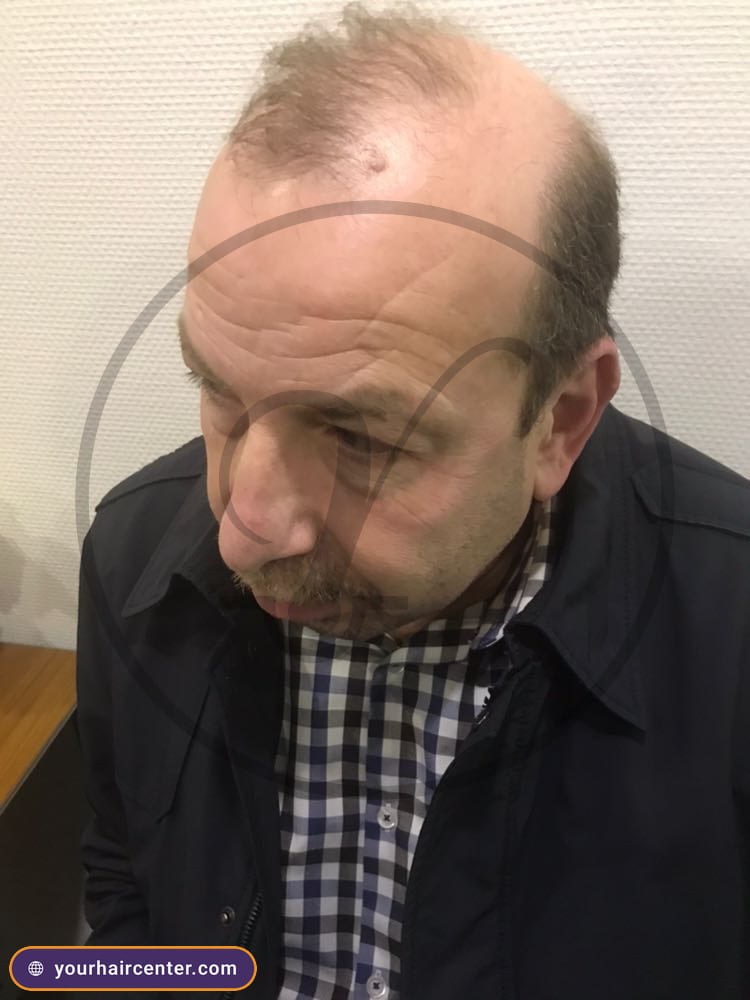
Real results from our patients’ archive. Photos exactly as captured at our accredited partner clinics, with no filters and no retouching. Browse more cases in our photo gallery.



Frequently asked questions
How much will 3,000 hair grafts cover?
If you are working backward from a package to figure out how many grafts you need, three thousand grafts typically covers a Norwood IV to V scope, the hairline plus a bridge across the mid-scalp, with partial crown coverage depending on the case. It sits inside the Your Hair Center planning bands, where Norwood IV is 2,500 to 3,500 grafts and Norwood V is 3,000 to 4,500, and it fits in one session, within the up to about 4,000 grafts the Essential and Premium packages cover.
Is 2,700 grafts a lot?
No, if you are asking how many grafts you need and a clinic quoted 2,700, that is a moderate single-session count rather than a high one. It is the typical band for a Norwood III vertex case or a hairline-focused Norwood IV, both of which sit comfortably in the lower-to-middle range of what most men receive. The per-stage breakdown above shows where it fits.
Is 4,000 grafts a lot?
Yes, 4,000 grafts is a high count. It sits at the upper limit of one session and well above the average first session of 2,347 grafts among ISHRS member surgeons,[3] and it is the typical band for a Norwood V. At that volume you are extracting a meaningful share of a finite lifetime donor budget, which is why checking how many grafts your donor area can give matters before you commit.[2:3]
Is 3,500 grafts enough?
Whether 3,500 is how many grafts you need depends on your stage. For a Norwood IV or a hairline-focused Norwood V, 3,500 grafts is usually enough for full single-session coverage of the hairline plus the front of the crown. For a true Norwood VI it falls short, and a planned two-session strategy is the right call instead, exactly as the reserve logic above describes.
How many grafts for Norwood 2?
The answer is usually none. Your Hair Center classifies Norwood II as no transplant needed, the recession is cosmetically minor and often stable, and at most it is a small, elective temple-corner refinement that many clinics would advise against. At this stage a maintenance-first route is often smarter, PRP, mesotherapy, or exosome therapy may be the better starter.
How many grafts do you have in donor area?
The donor area carries a finite reserve set by its density, roughly 65 to 85 follicular units per square centimeter in Caucasian men.[2:4] How many grafts can be safely moved is kept conservative to preserve coverage, with extraction in practice averaging around a third of donor density.[1:2] The donor-capacity section above runs the full math, and a scalp analysis turns it into your personal number.
Your next step
So, how many grafts do I need is really two questions wearing one coat. The demand side asks what the bald area wants, and the answer is a Norwood-stage band you can read off the list above. The supply side asks how many grafts your donor area can safely give across a lifetime, and that answer is the one most online calculators skip entirely. A good surgical outcome respects both. This guide gave you both, the per-stage bands, the donor-capacity ceiling, the future-loss reserve, and how each number fits the packages.
Finding out how many grafts you need from here is a small step. A free photo evaluation over WhatsApp turns your Norwood band into a personal count, the tier table into a real package, and the donor-ceiling math into a specific safe figure for your scalp. Get a free Norwood-stage and graft-count evaluation from your photos, and if you would rather calibrate against men at your own stage first, see real graft-count cases from the Your Hair Center archive.
References
-
"Effect of Follicular Unit Extraction on the Donor Area," PMC (PubMed 30083502). https://pmc.ncbi.nlm.nih.gov/articles/PMC6066700/ (opens in new tab) ︎ ︎ ︎
-
International Society of Hair Restoration Surgery, Hair Transplant Forum International, "Determining Safe Excision Limits in FUE: Factors That Affect, and a Simple Way to Maintain, Aesthetic Donor Density," vol. 28, no. 1. https://www.ishrs-htforum.org/content/28/1/1.2 (opens in new tab) ︎ ︎ ︎ ︎ ︎
-
International Society of Hair Restoration Surgery, "2025 Practice Census Results," procedures performed in 2024. https://ishrs.org/wp-content/uploads/2025/05/report-2025-ishrs-practice-census_05-12-25-final.pdf (opens in new tab) ︎