Worried hair transplant scars will give you away at a buzz cut or a fade? This guide answers the question most male patients actually have. It walks the donor-area dot pattern across every haircut length from a number zero shave to a scissor cut, explains how FUE punch size and donor extraction density decide whether scars show, lays out the month-by-month fade timeline, and breaks down the US versus Turkey cost of scalp micropigmentation when dots are still visible at a year.

The question most men actually type when they research hair transplant scars is simple, and it is rarely the one the brochures answer. It is some version of "if I buzz this down to a number one guard in a year, will anyone be able to tell I had work done." The short answer is that every hair transplant leaves some scarring, but with modern follicular unit extraction the marks are tiny dots that usually fade out of sight at scissor and number three guard lengths, and become more of a coin flip at a number one. Whether they show at the shortest lengths comes down to four things you can actually control or ask about. Technique. The punch size your surgeon uses. How much of the donor zone gets harvested. And what camouflage options exist afterward if the result is still too visible. This guide walks each of those levers in male-haircut-specific terms. If you are weighing a men’s hair transplant, this is the detail that decides how freely you can wear your hair afterward.
Will hair transplant scars show with a short haircut?
The scar is the small healed mark left where follicles were taken from the donor zone, or, with the older strip method, the line where a section of scalp was removed. Modern follicular unit extraction leaves tiny dot scars roughly a millimeter across, one for every graft removed, which are much less visible at very short lengths than a strip scar and are typically hidden once the donor hair is kept longer.[1][2] Two variables move that outcome, the punch diameter used during extraction and the total percentage of follicles harvested from the donor area.[3][4]
That snippet is the short version. The longer version is the rest of this page, because the same answer can be "completely invisible" for one man and "visible in the gym mirror" for another, depending on how the procedure was planned.
The four variables that decide whether your hair transplant scars show
- Technique. Extraction versus the older strip method changes the entire shape of the mark, dots versus a line.
- Punch size. The cutting tool runs from about 0.7mm to 1.0mm, and that diameter sets the diameter of each dot.[3:1]
- Extraction density. Pull too high a percentage of follicles from one zone and the hair transplant scars stop hiding in the surrounding hair.[4:1]
- Camouflage routes. Scalp micropigmentation, the unshaved option, and simply giving the donor area time all change what a casual observer sees.
Why haircut length matters more than the technique label
Hair transplant scars look different at every haircut length, so this guide walks the question across actual male haircut lengths, from a number zero shave through a scissor-cut pompadour, because "I had FUE" tells you almost nothing about whether anyone will notice. You can also see donor-area healing across our patient gallery rather than take a written answer on faith.
What scars do FUE and FUT leave?
This comparison is the usual starting point, but it should not be where your decision lives. The older strip-harvest method removes a band of hair-bearing scalp, for example about 1cm wide and 25cm long for a 2,000-graft case, then closes the gap into a single thin linear hair transplant scar across the back of the head.[5] That line is concealed by hair longer than roughly a number four guard and exposed below it. This article focuses on extraction-era scarring because the FUE technique we use belongs to the extraction family, not the strip family.
Follicular unit extraction leaves a dispersed pattern of small circular hair transplant scars, about a millimeter each, one for every graft removed.[1:1][2:1] The count scales with how many grafts you need, and the individual dots pale as the skin heals over the first year, while their size depends on the punch used and on how your own skin heals.[2:2] It is also why the ISHRS lists "scarless surgery" among the marketing claims it considers misleading, in a position statement its Board of Governors revised on 11 July 2026.[6] That is the realistic baseline, before punch size and harvest density push the result better or worse. Blade type matters at the recipient site too, which is why the sapphire FUE blade variant factors into how cleanly the new hairline heals. The point is that "I got FUE" is not enough to predict whether your hair transplant scars show at a number one buzz, and the next three sections answer the question the technique label alone cannot.
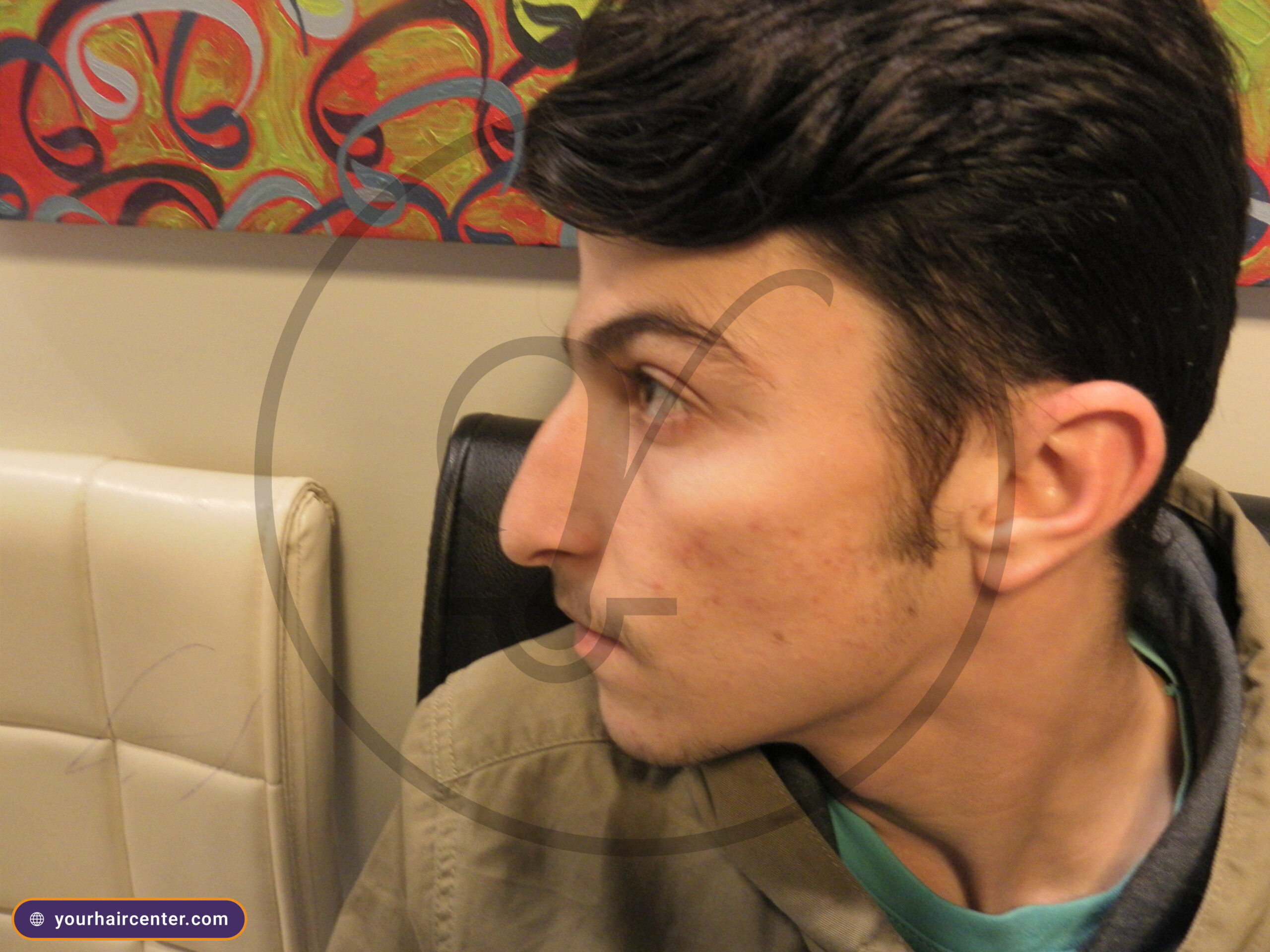
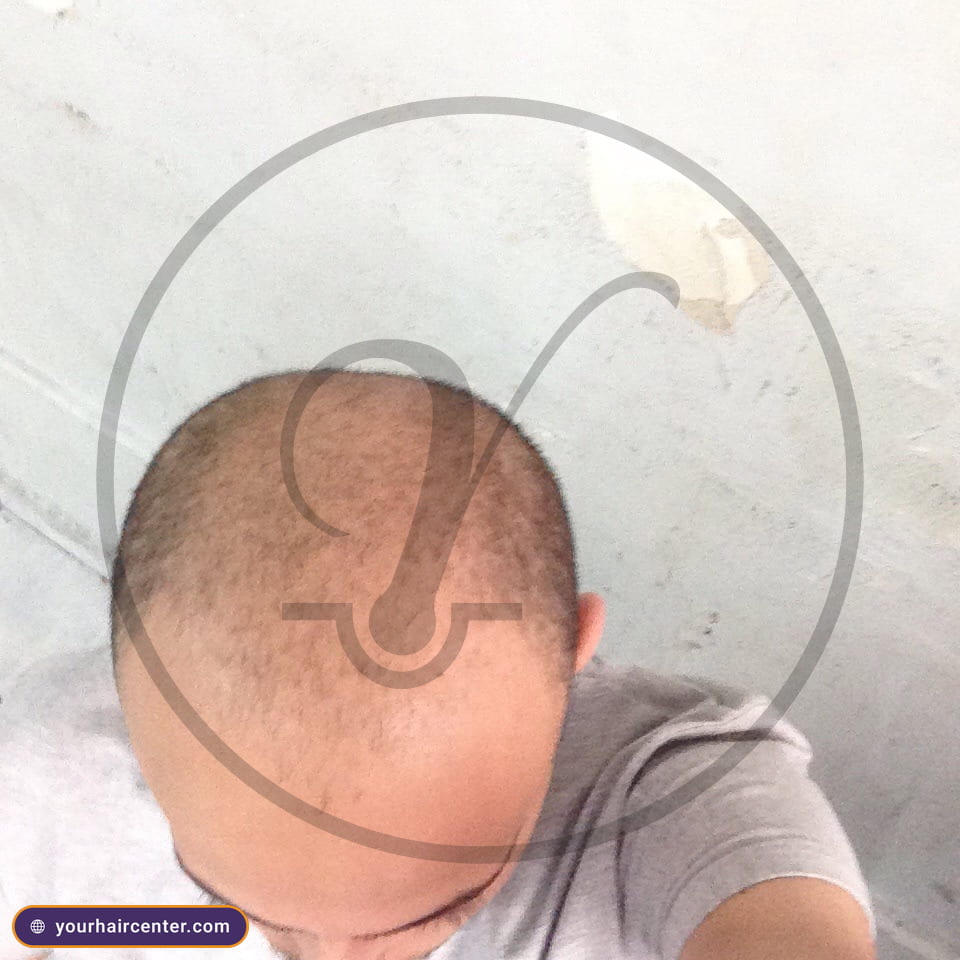
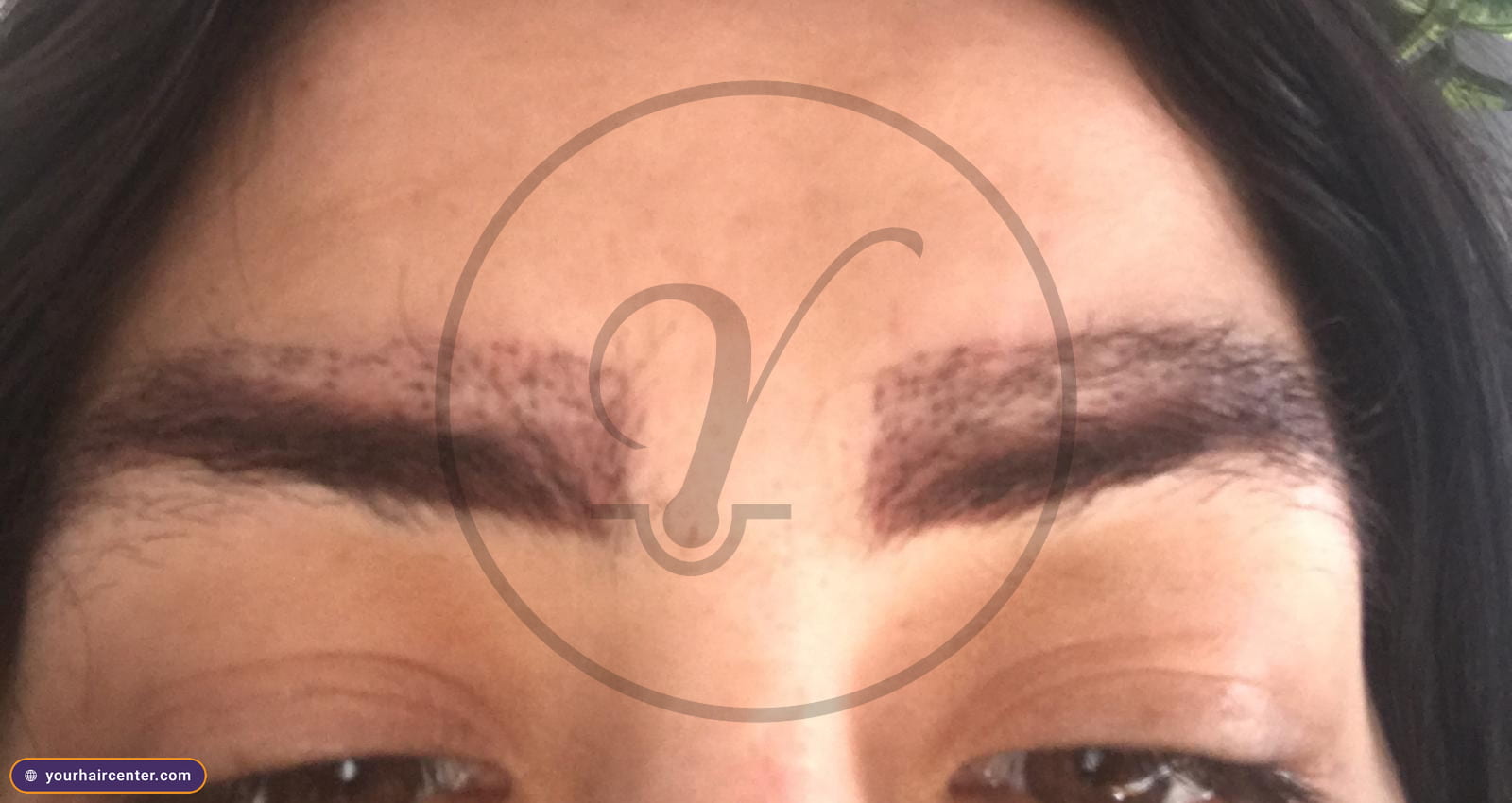
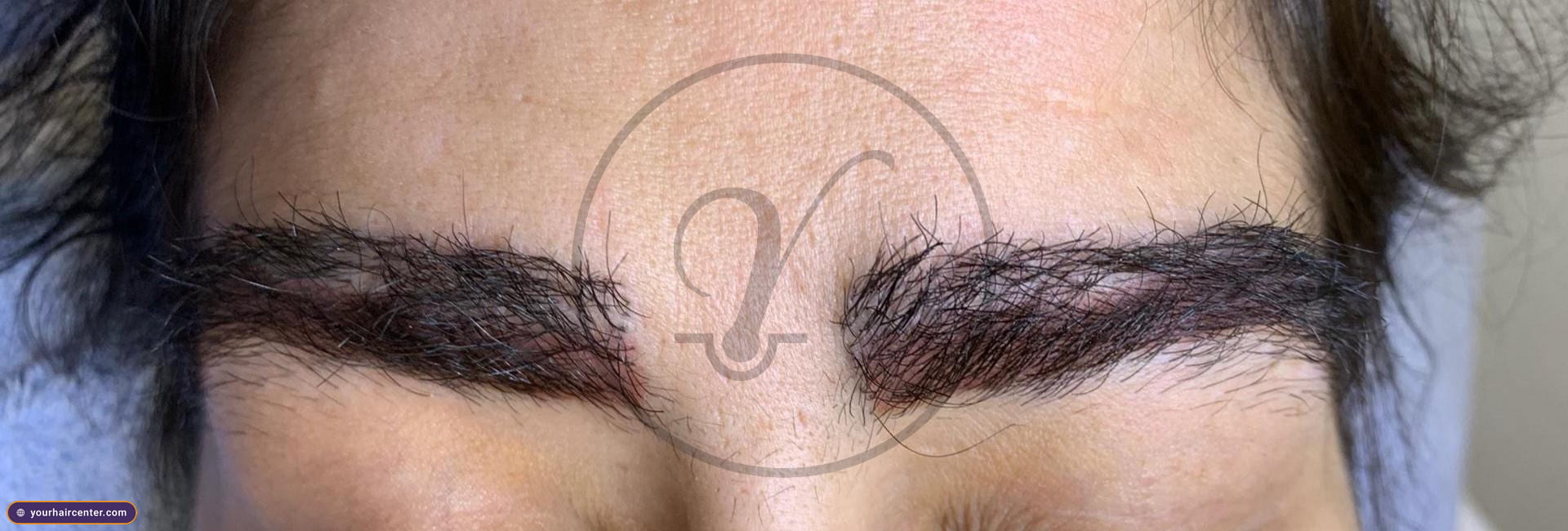
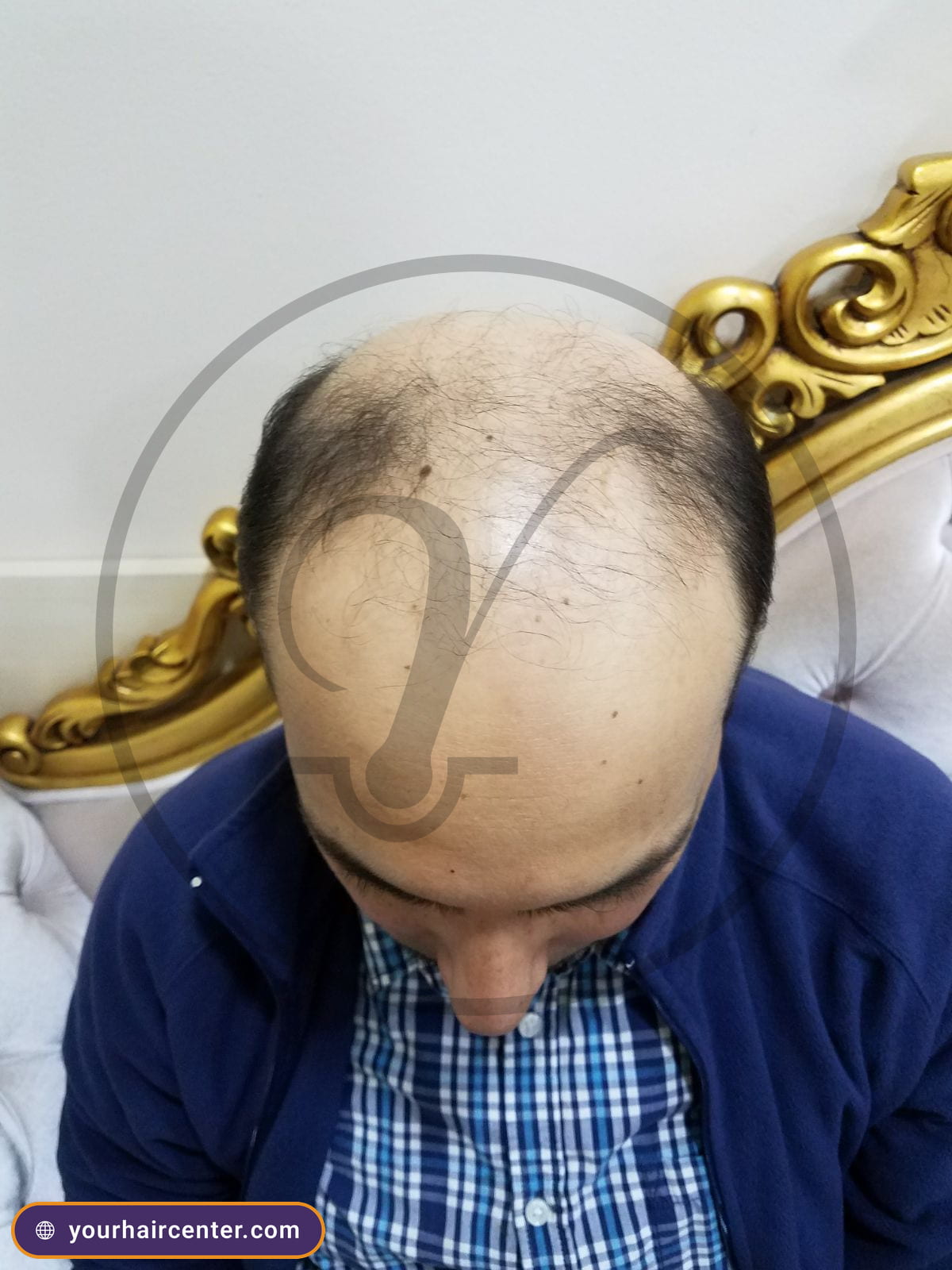
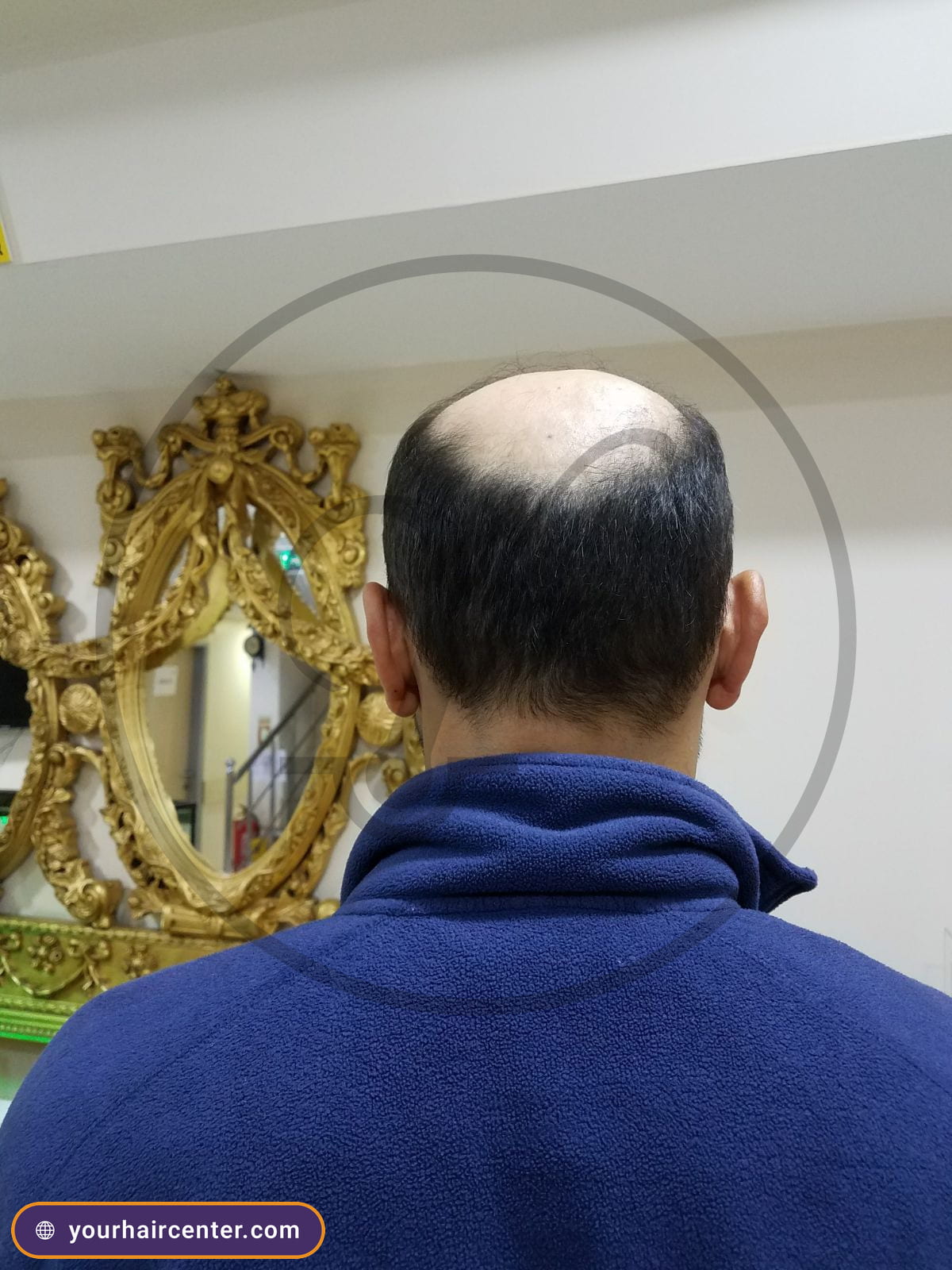
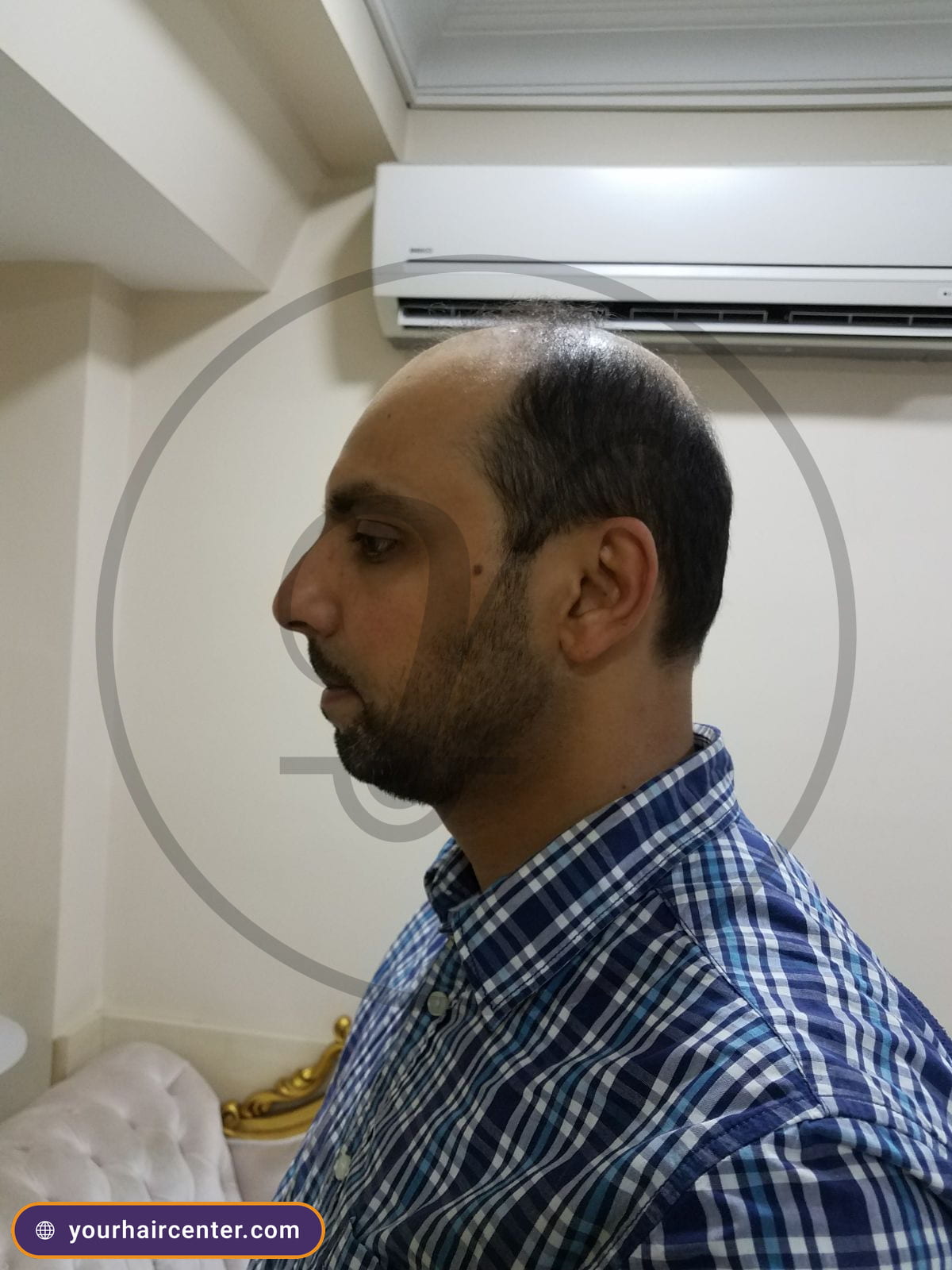
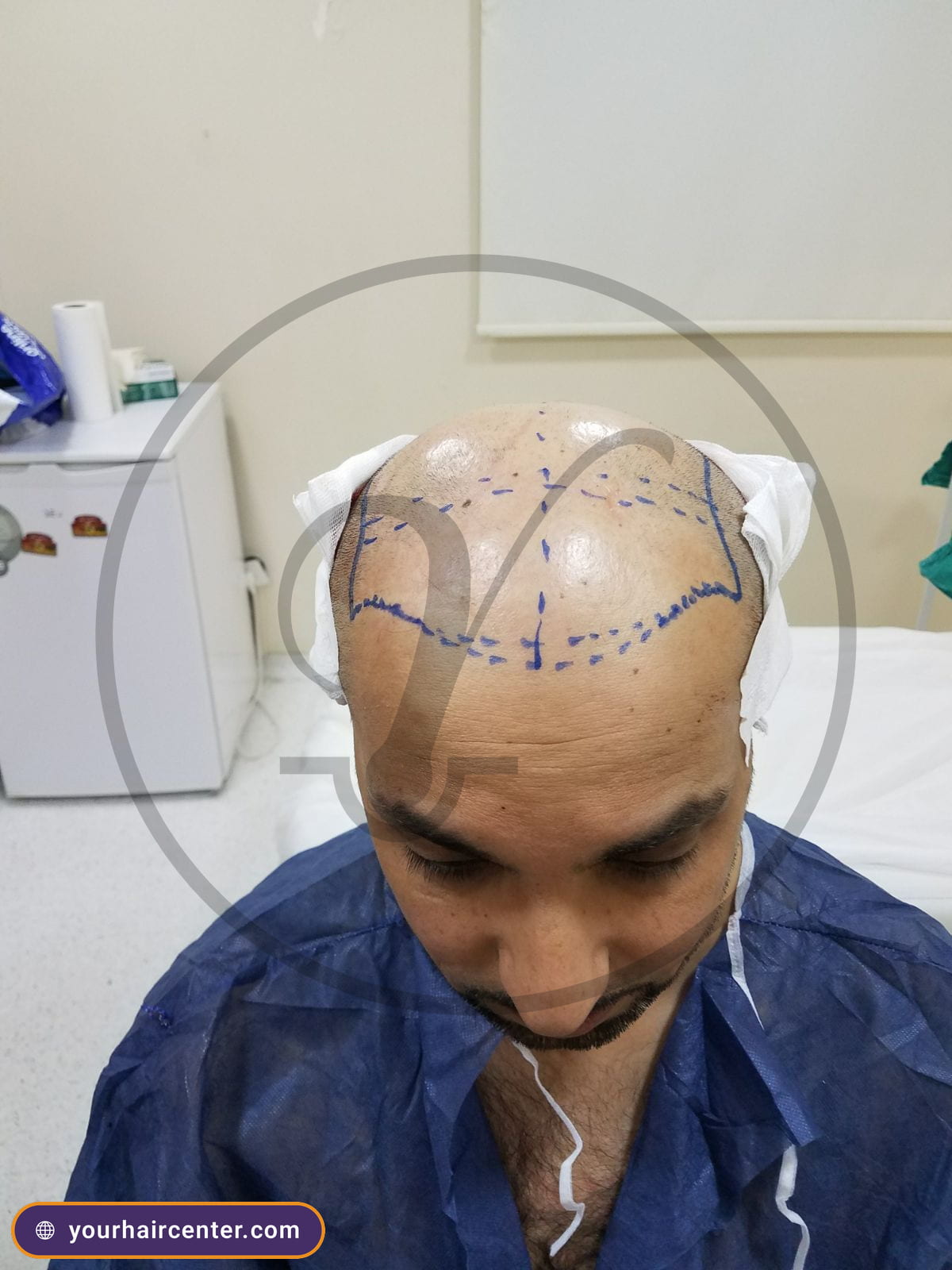
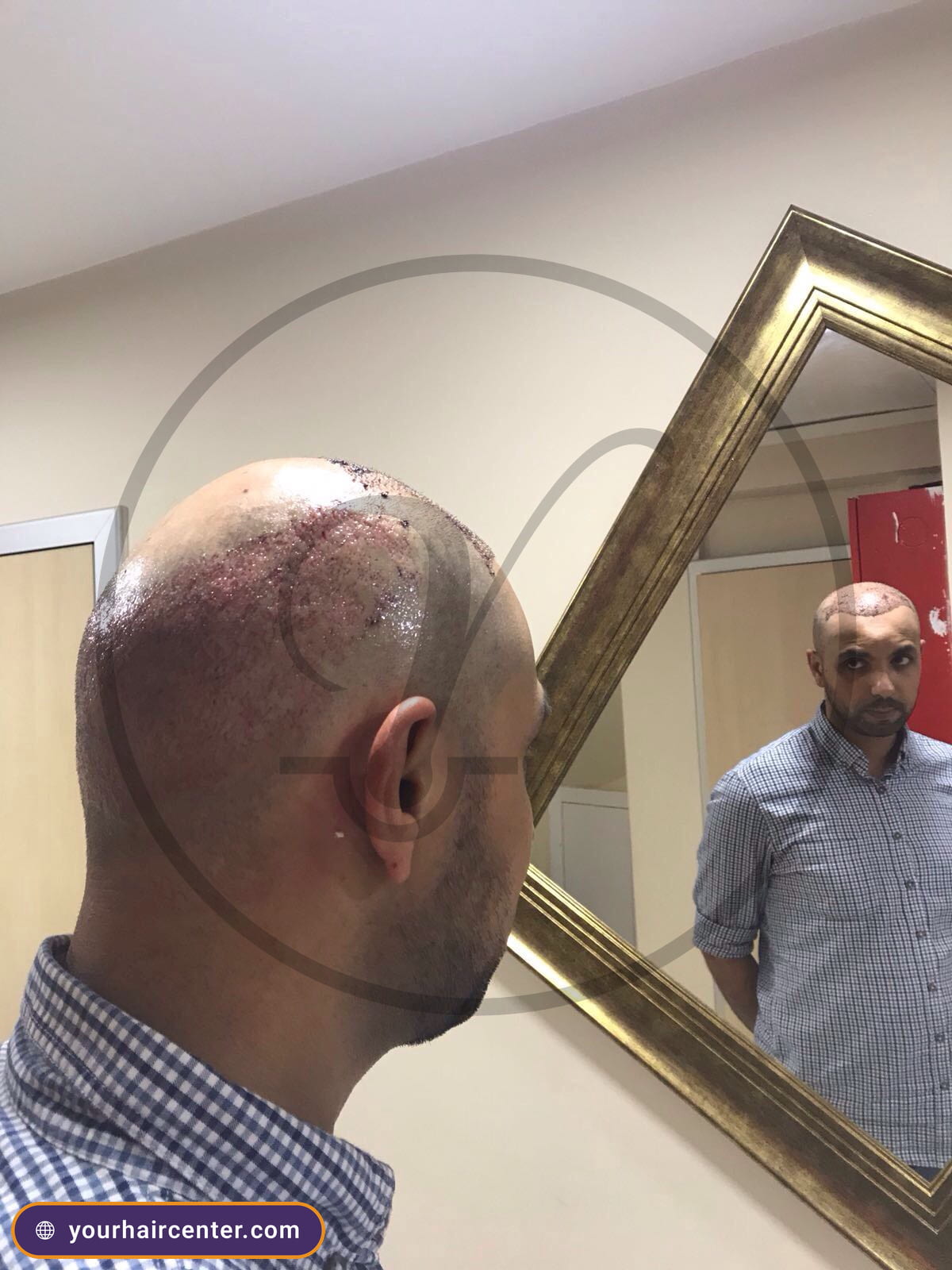
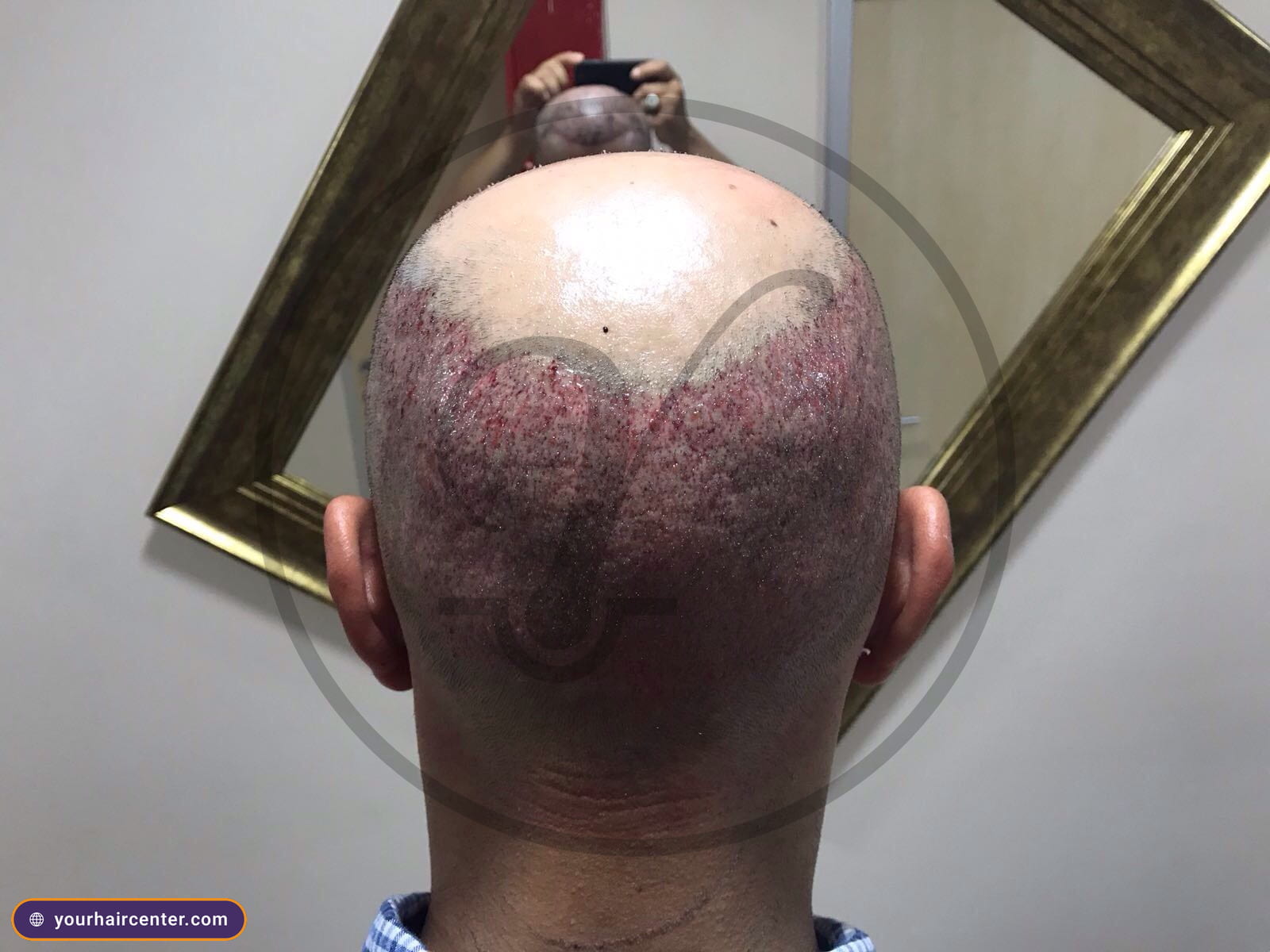
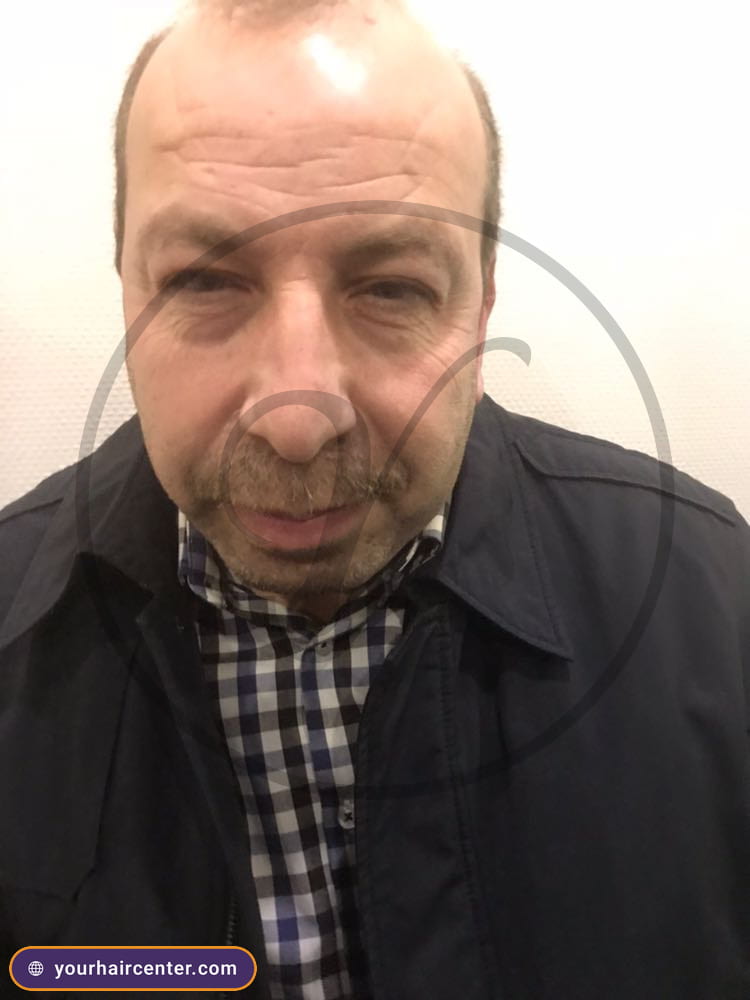
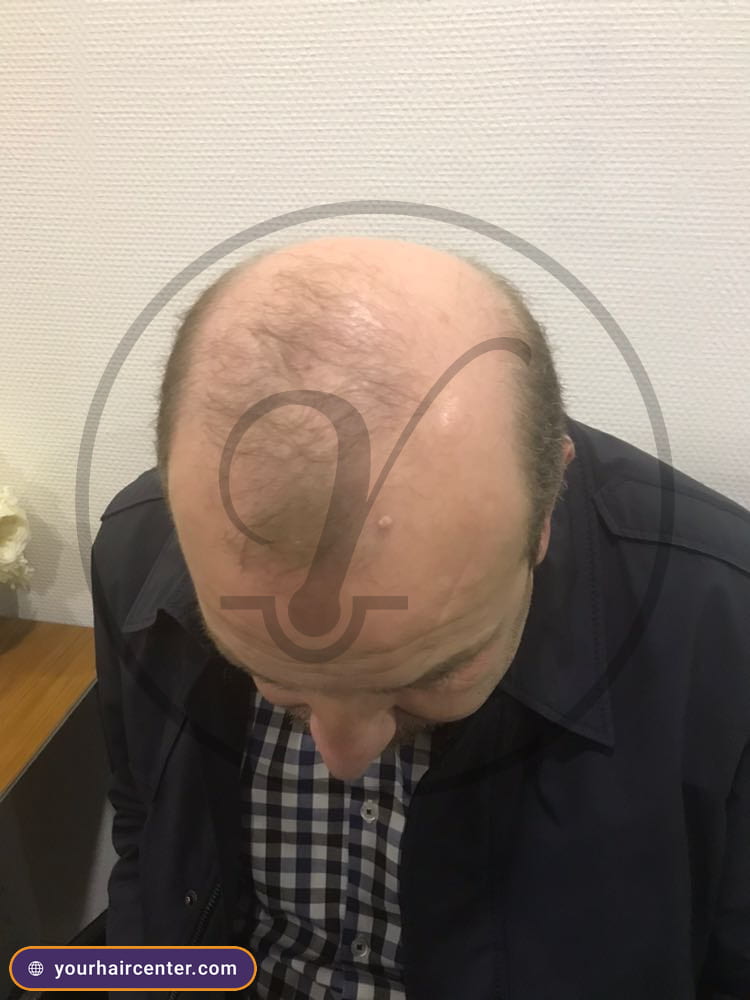
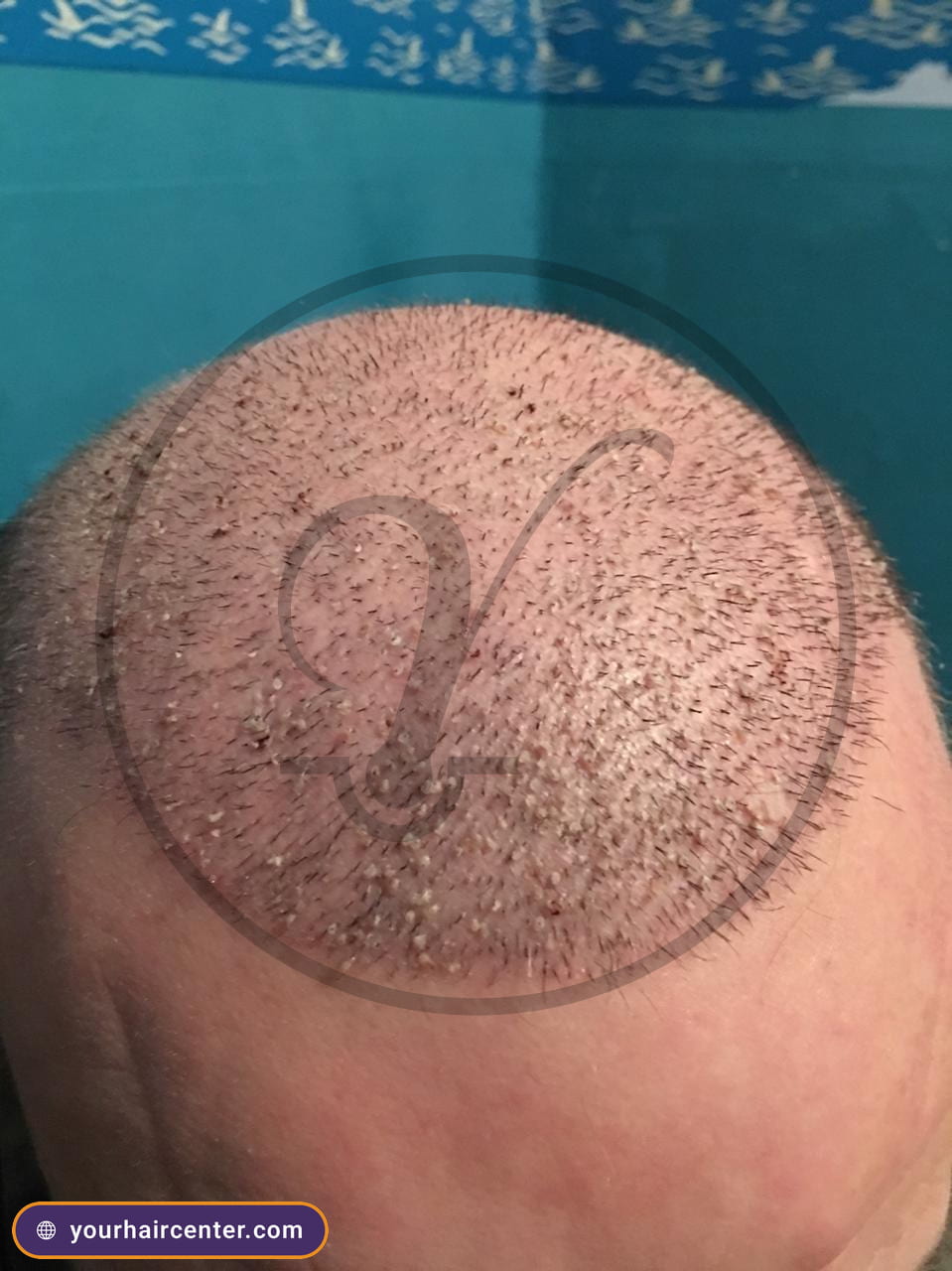
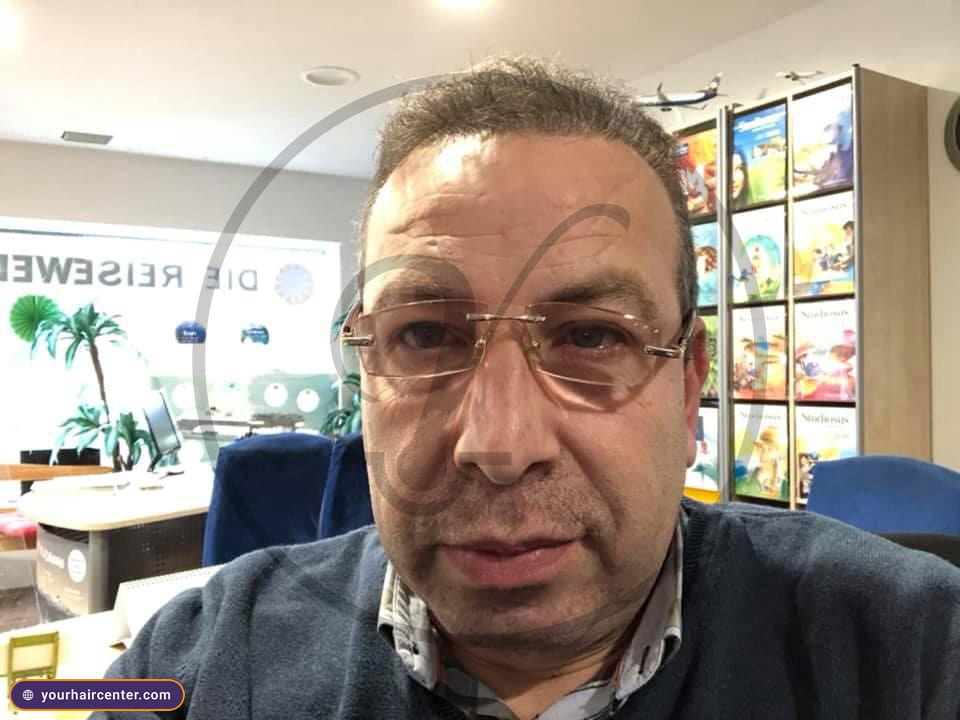
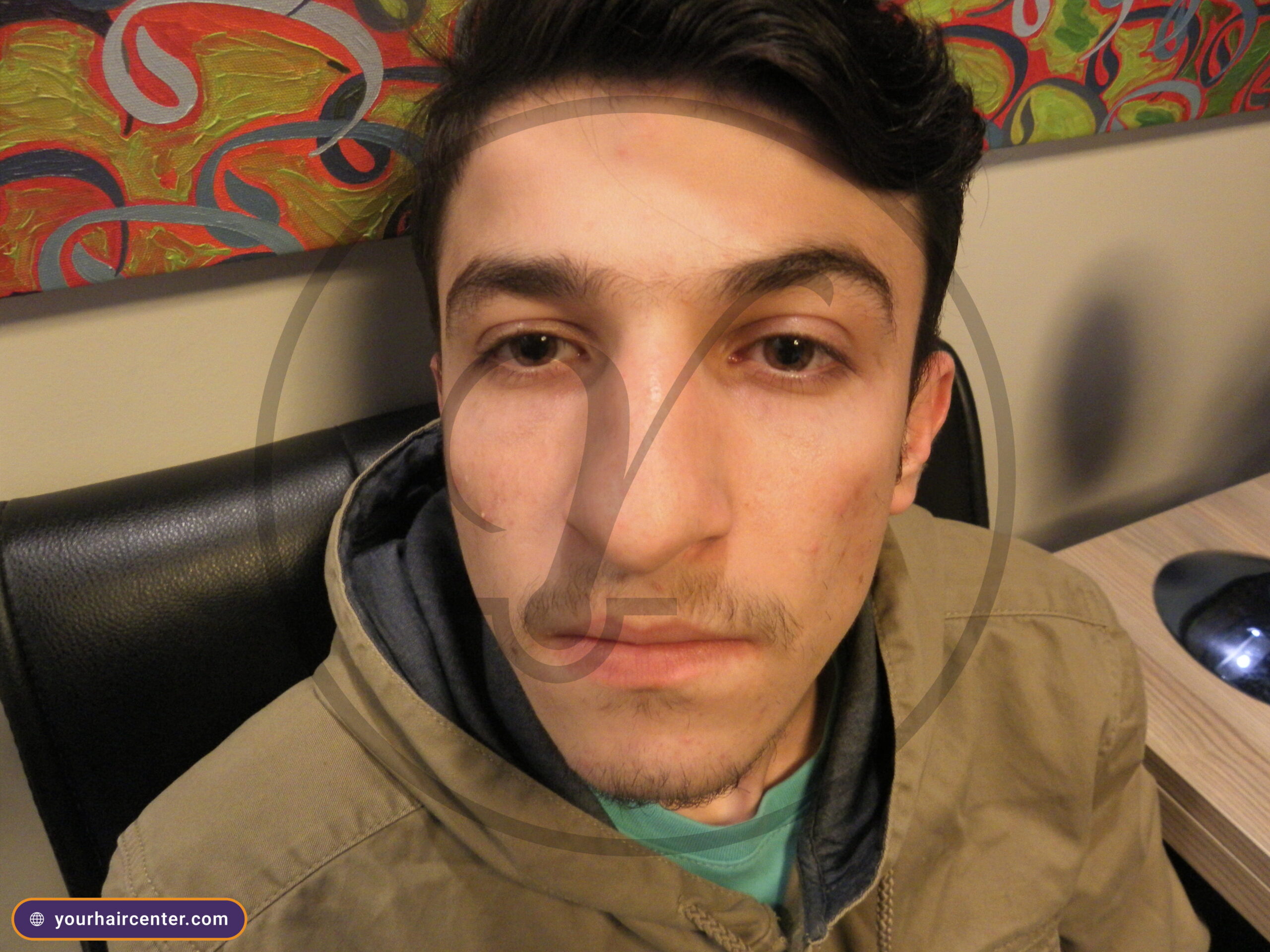
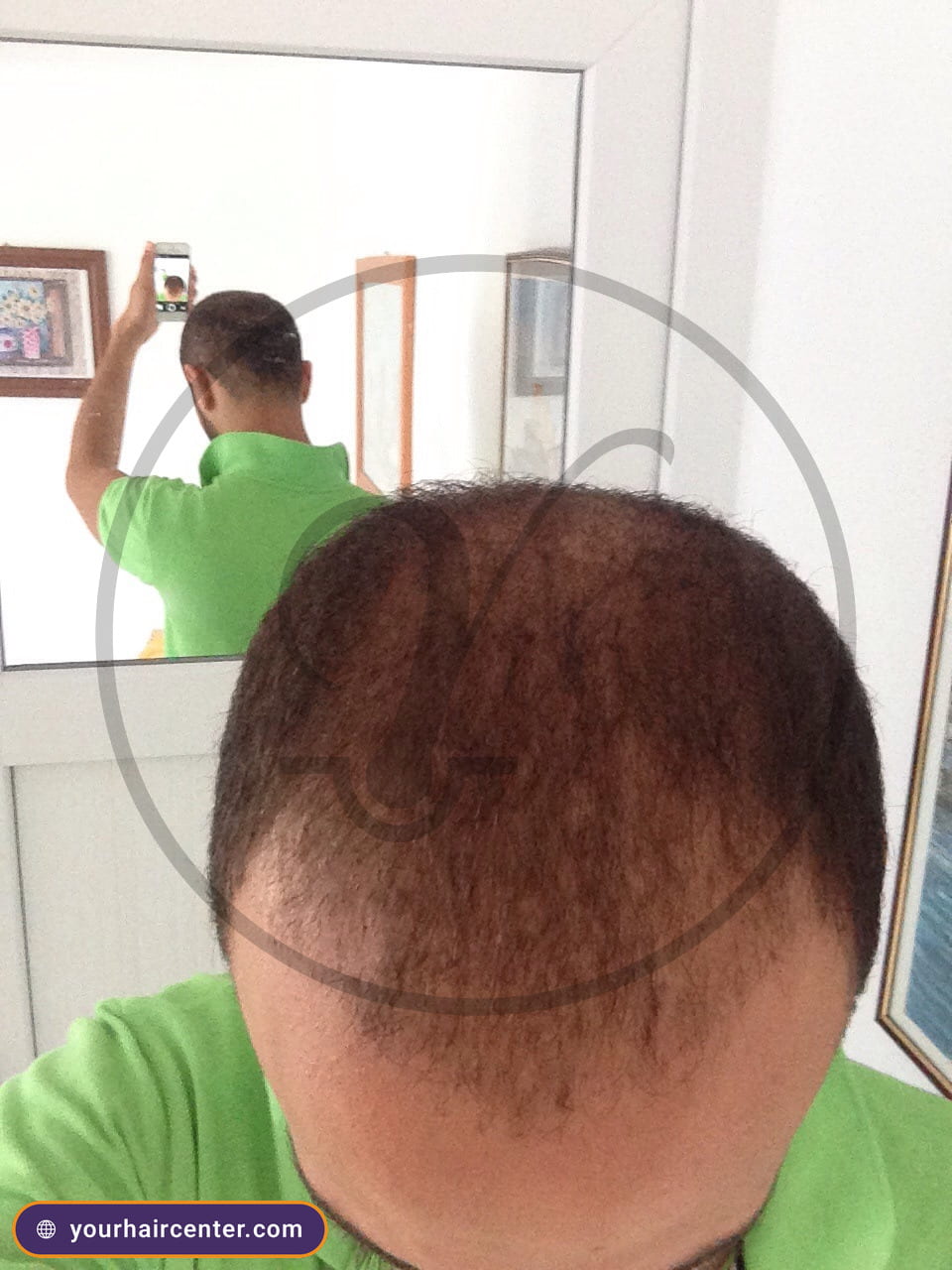
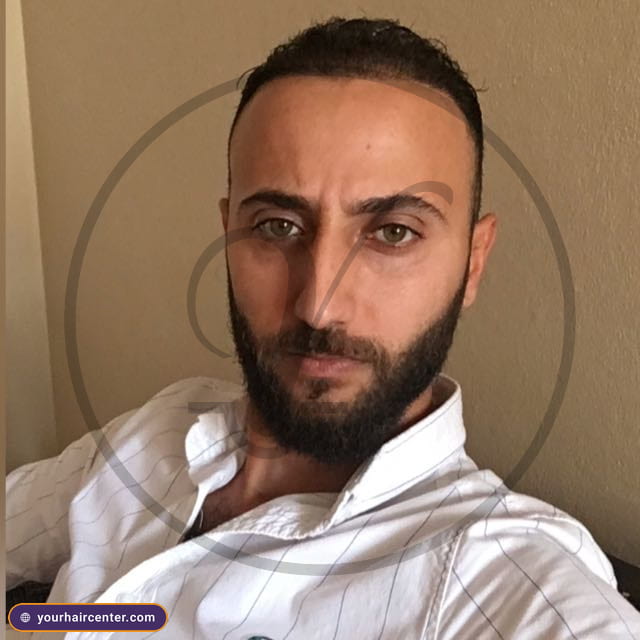
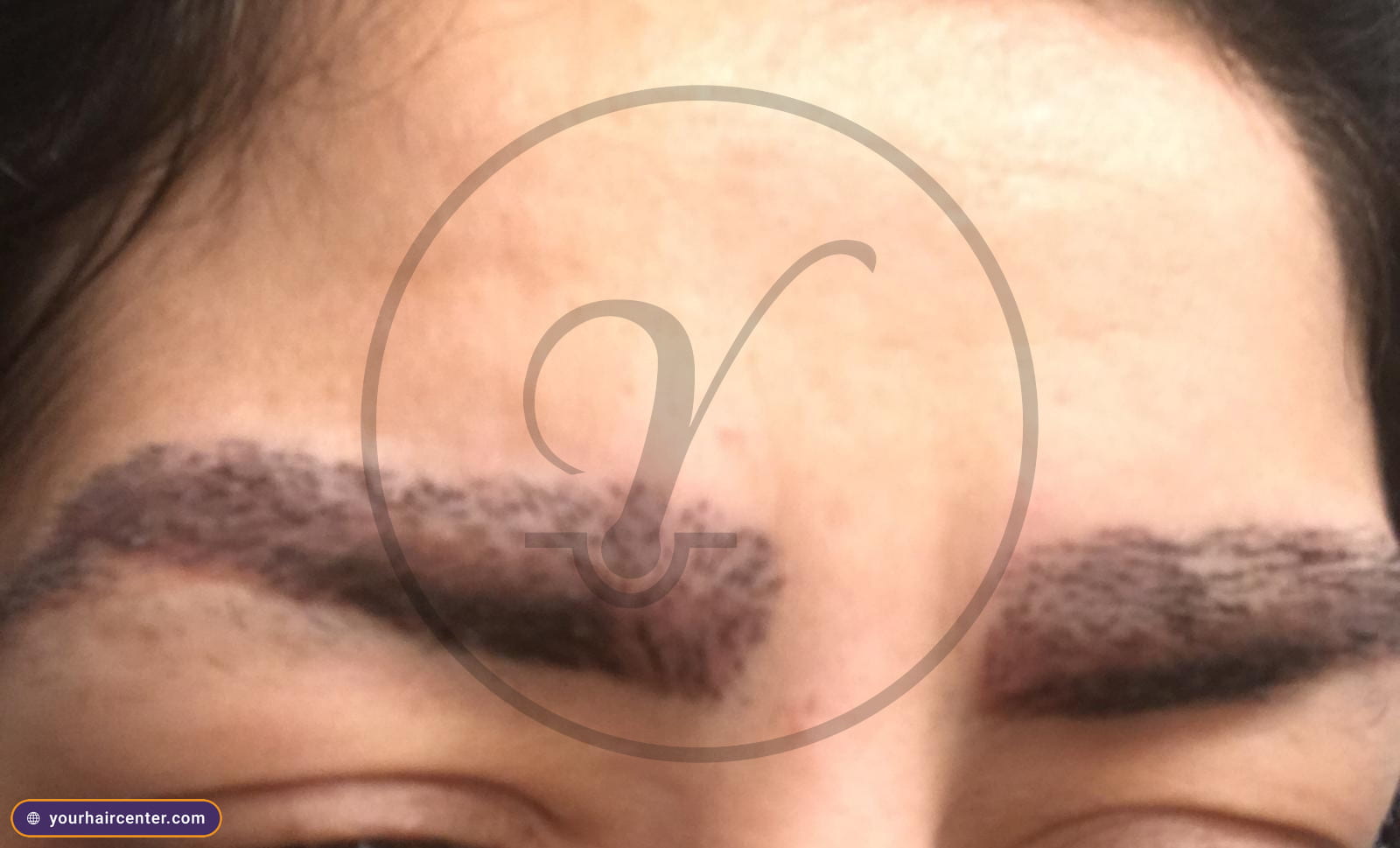
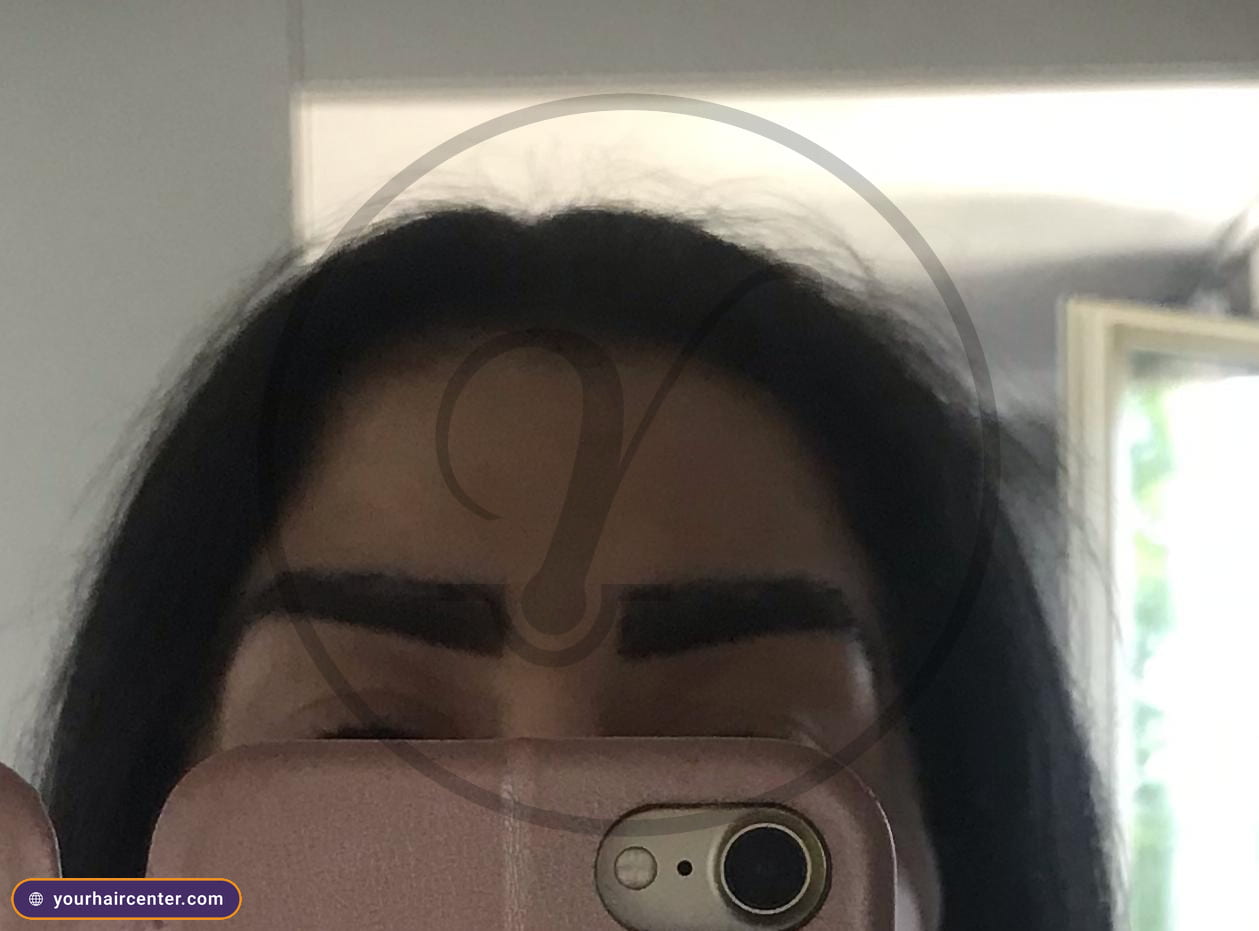
Real results from our patients’ archive. Photos exactly as captured at our accredited partner clinics and hospitals, with no filters and no retouching. Browse more cases in our photo gallery.

How visible are hair transplant scars at each haircut length?
This is the table to bring to a consultation. The rows below run from a number zero clipper shave up to a scissor-cut length, and the columns track visibility at month six and month twelve, plus a lighting note, because overhead fluorescent light and direct sun expose dot scars that warm indoor light hides. The matrix assumes a well-managed extraction case, roughly a 0.8 to 0.9mm punch and a conservative harvest density.[4:2] The next two sections explain what changes if either moves out of bounds.
| Haircut length | Month 6 | Month 12 | Lighting notes |
|---|---|---|---|
| #0 shave | Dot pattern visible at close range | Faint stippling possible, varies by punch size | Most exposed under direct overhead light and sun |
| #1 buzz | Dots visible at conversation distance | Usually faint, occasionally visible at the donor border | Sensitive to harsh light, fine in warm indoor light |
| #2 guard | Mostly concealed, slight texture up close | Generally invisible | Holds up under most lighting |
| #3 guard | Concealed at normal distance | Invisible, even under salon lighting | No practical exposure |
| #4 guard | Fully concealed | Fully concealed | No practical exposure |
| Scissor-length or longer | Fully concealed at every distance | Fully concealed at every distance | No practical exposure |
The pattern is clear. Above a number three you are safe at any stage. The whole question lives in the number zero to number two band, and almost entirely in the first year, which is where a man planning a clean buzz needs to know whether he can wear it without exposing hair transplant scars.
Why fades and tapers expose the donor border
There is a trap specific to mid-length men’s styles. Even if your donor zone sits at a number three overall, a low fade or a tight taper drops the donor border to a number one or zero at the exact band where dot density is highest. This is where most "I got caught at month eight" reports come from, the fade line cutting through the densest part of the harvest. An experienced surgeon plans the extraction to keep follicle removal out of the band where your usual fade will land. If you wear a slick-back, a pompadour, a side part, or a crew cut over a number four, the donor zone is concealed at every stage and the question never applies to you. It sharpens only for the buzz-cut and low-fade audience this matrix is built for.
How FUE punch size changes scar visibility
Holding harvest density constant, punch size is the single biggest determinant of how visible your hair transplant scars are. Here is the millimeter-level version.
What the punch tool is
The punch is a small cylindrical cutting tool that scores a circular incision around each follicular unit before it is lifted out. The modern operating range runs from about 0.7mm at the small end to 1.0mm at the typical large end, with some literature citing tools up to 1.2mm.[3:2] A 0.8 to 0.9mm punch is the standard window for fine to medium hair calibers. The key point is direct, the diameter of the punch, together with how your skin heals, sets the size of the residual hair transplant scar.[3:3][2:3]
Does a smaller punch risk graft survival?
Smaller is not automatically better. A 0.7mm punch leaves the smallest possible hair transplant scar but raises the rate at which follicles are accidentally cut during extraction, which can mean fewer surviving grafts.[3:4] A 1.0mm punch is faster and gentler on graft survival but leaves a visibly larger dot. The 0.8 to 0.9mm window is where most experienced operators settle, because it balances hair transplant scar size against the survival rate, and the sharpness of the punch matters too, since a dull punch needs more force and distorts the skin and follicles.[3:5] This is a fair question to ask directly, what punch size will be used on your case.
Sapphire blades and recipient-site scarring
So far this has been about the donor zone, where the hair transplant scars live. The recipient site, where the new hairline goes in, heals separately. Sapphire-crystal blades are used to open these recipient channels, and that site heals separately from the donor dots this article is about. If recipient-site healing is on your mind, the sapphire FUE blade option is the relevant detail.
How much of the donor area can safely be harvested?
This is the most-asked and least-explained variable in hair transplant scar visibility. It is also the one that separates a clean result from a patchy one, regardless of how small the individual dots are.
What extraction density means
Extraction density is the percentage of follicular units removed from the donor zone relative to its original native density per square centimeter. Donor density commonly sits around 150 hairs per square centimeter, and the literature recommends keeping first-session extraction under roughly 35 percent of total density.[4:3] That ceiling protects two things at once, the donor zone’s own appearance and the follicular reserve you would need for any future second session.
What happens when the donor area is over-harvested
Push past the safe band and the failure mode is visible thinning. Removing in the region of half of the donor density approaches a "watershed" where loss becomes detectable to the naked eye, and an over-harvested zone reads as patchy rather than dense no matter how small each hair transplant scar is.[4:4] The surrounding hair can no longer hide the dots because there is not enough of it left. This is the structural reason headline mega-graft offers from low-volume clinics are risky, the grafts come from over-mining a single donor zone.
How the extraction map is planned
A careful surgeon maps the donor zone at evaluation rather than at the chair. The available area is measured, a safe extraction percentage is set for each zone, and the maximum graft count for a single session is calculated from those two inputs, not from a patient’s wish list. Understanding this is the point of the hair and scalp analysis we run before quoting any case. "How many grafts can I get in one session" has a real ceiling, and it varies with your individual donor density.
How donor scars fade from month 1 to month 24
Here is what you see in the mirror at each stage of the fade.
Month 1 is the visible dot phase
The hair transplant scars are pink to red dots, clearly visible at any length shorter than a number four. The small scabs from extraction shed naturally around day ten, but the donor zone is at its most exposed point during this first month. Wear a longer style for any social or professional appearance in the first thirty days.
Month 3 brings the transition
The dots begin fading toward skin tone, residual redness resolves, and the transplanted hair starts cycling in at the recipient zone around the three-month mark. At a number three guard or above the donor area is largely invisible by now, though the hair transplant scars still read as freshly harvested at very short lengths.
Month 6 is the cosmetic floor
For most men the dot pattern has faded to within a shade of the surrounding skin, and the native donor hair that was shaved for the procedure has regrown enough to restore visual density. Most patients can return to their preferred style by now, with the buzz-cut audience the last to clear the visibility check.
The stable result from month 12
This is the endpoint for most patients. The fade is essentially complete, and full results take up to a year to settle.[7] Any remaining visibility is either punch-size driven, larger dots that never fully vanish, or density driven, thinning that exposes the dots, which is when scalp micropigmentation becomes the route. This is the stage to check FUE scars against after 1 year, and the picture stays stable from there. The month-twelve result is essentially the lifetime result, the dots do not "come back" or worsen, and the donor zone ages along with your native hair pattern rather than on a separate hair transplant scar trajectory.
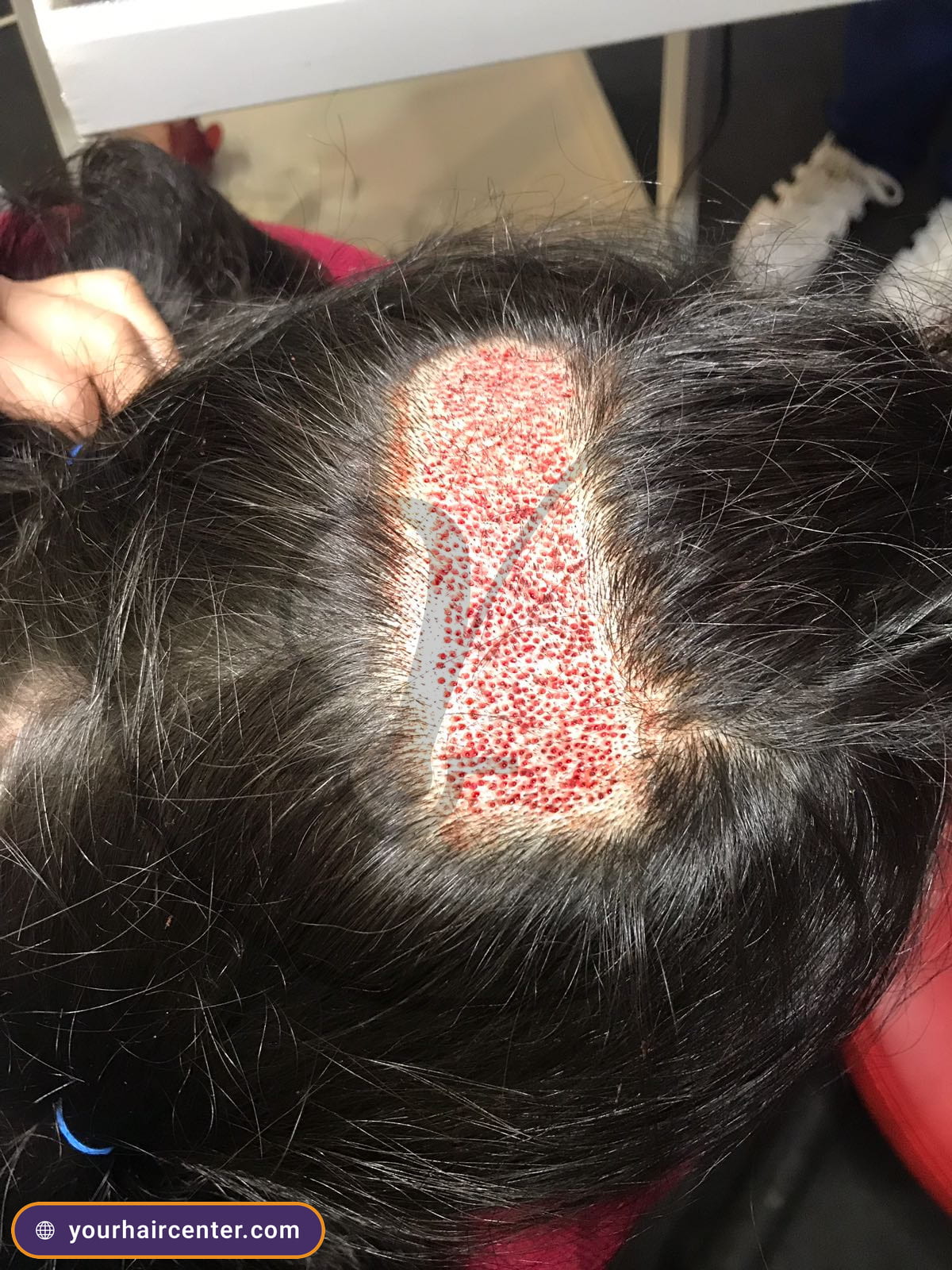
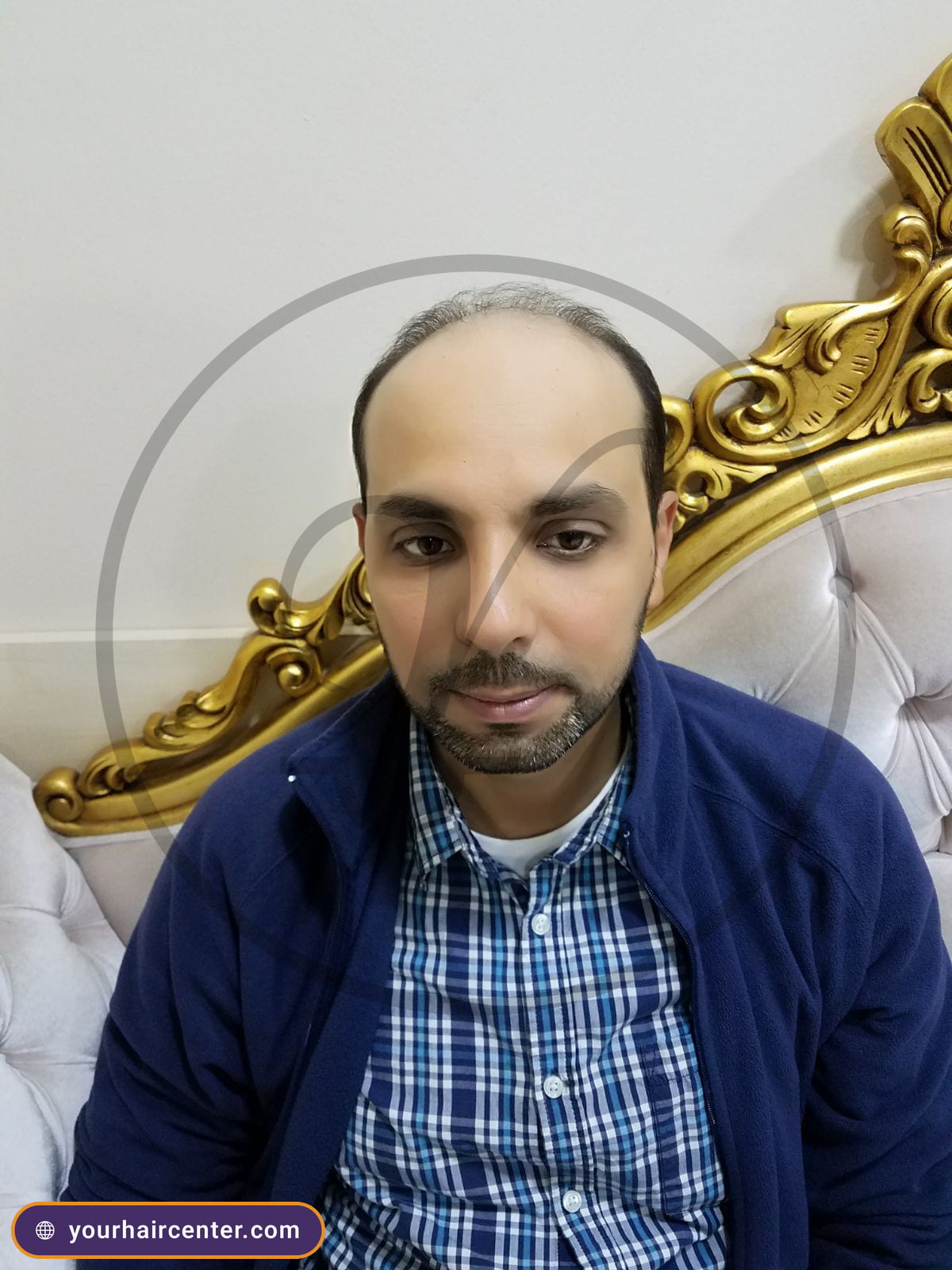
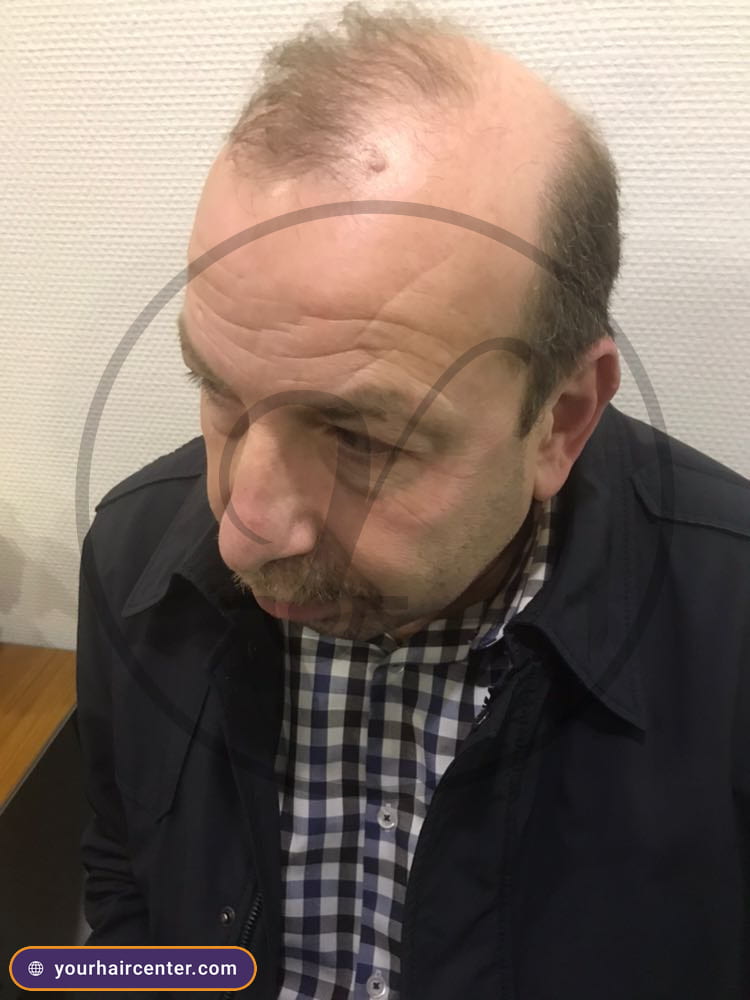
Real results from our patients’ archive. Photos exactly as captured at our accredited partner clinics and hospitals, with no filters and no retouching. Browse more cases in our photo gallery.



What to do when hair transplant scars stay visible
If dots are still visible at month twelve, scalp micropigmentation is the standard camouflage route, and it is the usual hair transplant scars treatment. Here is what it does and what it costs in plain terms.
What scalp micropigmentation does
Scalp micropigmentation deposits pigment particles into the upper dermis, just below the skin surface, to simulate the shadow of hair follicles.[8] It does not remove the underlying scar tissue. It visually fills the gaps between the hair transplant scars by darkening the surrounding scalp to match your residual stubble pattern, and it has an established record of improving the appearance of extraction donor scars.[1:2] The pigment fades gradually rather than lasting forever, so it is a maintenance route rather than a one-time fix.
What SMP costs in the US and Turkey
Scalp micropigmentation to cover residual donor-area hair transplant scars typically costs considerably less in Turkey than in the US, driven by the same volume and exchange-rate dynamics that create the surgical-side price gap. Exact pricing varies by clinic, the number of sessions, and the size of the area being treated, so any single figure is misleading. This is the practical answer to hair transplant scar removal cost, even though "removal" is the wrong word for what actually helps.
When SMP beats a second session
Scalp micropigmentation is the right call when your donor density is still adequate but the hair transplant scars are simply larger than the surrounding follicular pattern. A planned second extraction session is the alternative when the real goal is adding density rather than camouflaging existing dots. Which route fits is a case-by-case decision a surgeon makes at the consultation.
Why surgical scar removal rarely helps
Surgical excision is not the standard answer for dot-pattern hair transplant scars. Cutting out and re-closing tissue is reserved for older strip-method linear scars, and even there it is weighed case by case.[5:1] The "removal cost" framing comes from people picturing the wrong kind of scar.

Avoiding a visible recovery with unshaved FUE
For the man who cannot show up to a video call or a Monday meeting with a buzzed and dotted head, the donor zone never has to go through the visible phase at all.
What unshaved FUE means
Unshaved or partially-unshaved extraction leaves the donor hair at full length and works through the existing hair rather than from a clean-shaved field. To a casual observer, your appearance the day after the procedure is essentially unchanged. The unshaved hair transplant program exists for exactly this constraint.
Working through full-length hair is more technically demanding, takes longer, and sometimes carries a lower graft ceiling than a fully shaved field. Most routine cases are unshaved-eligible, while very large advanced cases may still require partial shaving. Donor-zone healing follows the same path as any extraction case, just without the conspicuous shaved phase. This is the route for the working professional, the public-facing role, and anyone with a same-week commitment they cannot move, and it addresses hair transplant scar anxiety indirectly, because the donor zone never passes through a shaved-and-dotted phase a colleague could photograph. The reception and recovery comfort while you stay in Istanbul is arranged around discreet recovery for the same reason.
Frequently asked questions about hair transplant scars
Do hair transplant scars go away?
Not completely, because every extraction leaves a small permanent dot, one per graft.[2:4] The dots pale as they heal, and with a conservative harvest they are hard to spot at most short haircut lengths, while donor hair kept longer typically hides them completely.[2:5] Older strip-method hair transplant scars remain a permanent line across the back of the head, concealed only by hair longer than roughly a number four guard.[5:2]
Are hair transplant scars permanent?
Only in one narrow sense. The dermal mark left by extraction never fully reverts to untouched skin, so in that strict sense it is permanent.[2:6] But visibility is the question that matters, and modern hair transplant scars from extraction are visually negligible at month twelve in most cases. The dermal residue is permanent, the cosmetic impact at typical male haircut lengths is not.
How much does hair transplant scar removal cost?
It depends on the method. Scalp micropigmentation to camouflage residual donor-area dots typically costs considerably less in Turkey than in the US, though exact pricing varies by clinic, session count, and the size of the area treated. Surgical excision is not the standard answer for extraction dots, it is reserved for older strip-method linear hair transplant scars, where it is weighed case by case. Send your photos for a case-specific recommendation rather than a generic number.
What happens 20 years after a hair transplant?
Twenty years after a hair transplant, the transplanted follicles keep cycling normally because they are taken from the donor zone, which is genetically resistant to the hormone that drives male pattern baldness. The donor-zone hair transplant scars do not worsen with age, they fade slightly further into the surrounding skin tone over time. The native, non-transplanted hair around them continues to follow your underlying genetic pattern, which sometimes calls for a second-session top-up years later.
What is the regret rate for hair transplant?
The regret rate for hair transplant is low, and published satisfaction is high. One retrospective series of 820 extraction cases found 94 percent of patients satisfied at twelve months.[9] The main drivers of regret are unrealistic density expectations and choosing a low-volume operator over a credentialed program, rather than scarring itself. Setting honest expectations before the procedure is the single biggest predictor of being happy after it.
Which haircut lengths you can wear after FUE
The four levers settle the whole question. Technique sets the shape of the hair transplant scar, punch size sets the diameter of each dot, harvest density decides whether the surrounding hair can still hide them, and camouflage routes catch anything left over. For most men, that means you can wear most male haircut lengths by month twelve without anyone noticing. The number one buzz audience is the exception, and even there the answer is good when an experienced surgeon uses the smallest viable punch and a conservative extraction density. Across 10+ years and 5,000+ procedures, that planning is what we build into every case. Send a free photo evaluation on WhatsApp, explore the men’s hair transplant program, or browse the before and after photo gallery to see donor zones at the lengths you actually wear.
The content and sources of this guide were reviewed on 28 September 2026.
References
-
Combining Follicular Unit Extraction and Scalp Micropigmentation for the Cosmetic Treatment of Alopecias. PMC5732651. https://pmc.ncbi.nlm.nih.gov/articles/PMC5732651/ (opens in new tab) ︎ ︎ ︎
-
International Society of Hair Restoration Surgery (ISHRS). Is FUE Scarless? "There are scars with FUE" and "The size of an FUE scar is directly related to both the size of the FUE punch used by the surgeon as well as the healing characteristics of the patient having the FUE surgery." https://ishrs.org/is-fue-scarless/ (opens in new tab) ︎ ︎ ︎ ︎ ︎ ︎ ︎
-
Sharma R, Ranjan A. Donor Harvesting: Follicular Unit Excision. J Cutan Aesthet Surg. PMC6371717. https://pmc.ncbi.nlm.nih.gov/articles/PMC6371717/ (opens in new tab) ︎ ︎ ︎ ︎ ︎ ︎
-
Effect of Follicular Unit Extraction on the Donor Area. PMC6066700. https://pmc.ncbi.nlm.nih.gov/articles/PMC6066700/ (opens in new tab) ︎ ︎ ︎ ︎ ︎
-
Donor Harvesting: Strip Dissection. J Cutan Aesthet Surg. PMC6371718. https://pmc.ncbi.nlm.nih.gov/articles/PMC6371718/ (opens in new tab) ︎ ︎ ︎
-
International Society of Hair Restoration Surgery (ISHRS). Position Statement on Misleading and Improper Messaging, revised by the Board of Governors on 11 July 2026, listing "Scarless surgery" among misleading marketing terms. https://ishrs.org/red-flags-misleading-inappropriate-messaging/ (opens in new tab) ︎
-
Cleveland Clinic. Hair Transplant. https://my.clevelandclinic.org/health/treatments/21519-hair-transplant (opens in new tab) ︎
-
Rassman WR, Pak JP, Kim J. Scalp Micropigmentation: A Concealer for Hair and Scalp Deformities. PMC4382144. https://pmc.ncbi.nlm.nih.gov/articles/PMC4382144/ (opens in new tab) ︎
-
Approach to Hair Transplantation in Advanced Grade Baldness by Follicular Unit Extraction: A Retrospective Analysis of 820 Cases. PMC6967160. https://pmc.ncbi.nlm.nih.gov/articles/PMC6967160/ (opens in new tab) ︎