The Norwood scale is the seven-stage map of male pattern hair loss, and most pages show the stages without telling you what to do about them. This guide walks every stage with archive-backed images, then maps each one to the clinical protocol the Your Hair Center team runs, with honest graft estimates for the transplant stages and realistic expectations for the non-surgical ones.

The Norwood scale, formally the Hamilton-Norwood scale, is the seven-stage system doctors use to grade male pattern hair loss, from Stage 1, with no recession, to Stage 7, where only a thin band of hair remains around the sides and back.[1] Your stage describes where you sit on a predictable curve and points to the kind of treatment that belongs there. The catch is that most pages on the Norwood scale show you the stages and stop there, leaving you to guess which medications, in-office treatments, or transplant routes actually fit. This guide does both. It walks every Norwood stage with archive-backed images from Your Hair Center, then maps each stage to the clinical protocol the Your Hair Center medical team actually runs, with realistic graft estimates for the transplant stages and honest expectations for the non-surgical ones.
What is the Norwood scale, the seven-stage map of male pattern hair loss
Formally the Hamilton-Norwood classification, this seven-stage visual system maps male pattern hair loss and tracks the progression from a youthful hairline through a mature hairline, deepening temple recession, crown thinning, and finally to a horseshoe band of hair around the sides and back. Clinicians use it to name where a man sits.[1:1]
The scale was originally proposed by James Hamilton in 1951 and refined by O’Tar Norwood in 1975, which is why the full name credits both men.[2][3] Today the Norwood scale is the standard staging tool that dermatologists and hair-restoration surgeons reach for when they describe pattern loss, and it shows up across clinical writing and research the same way a thermometer reading shows up in a fever chart.
The Norwood scale tracks two visual axes. The first is frontal recession, the retreat of the hairline at the temples that produces the familiar M-shape. The second is vertex thinning, the loss of density at the crown that opens a bald spot toward the back of the top of the scalp. Most stages combine the two. The scale also carries a set of Type A variants, where the entire frontal line marches straight back as one unit without a separate crown bald spot, which is why you sometimes see a stage written as 2A or 3A.
Why does staging matter beyond labeling. Because treatment thresholds hinge on the stage, not on how the loss feels. The point at which medications carry the result on their own, the point at which in-office treatments add real value, and the point at which a transplant becomes the only honest answer are all stage-dependent. Reading the Norwood scale correctly is the difference between a protocol that holds the line and a protocol aimed at the wrong target.
It is just as important to know what the Norwood scale does not measure. It does not describe diffuse thinning, which is the typical female pattern and uses a different tool covered further down. It does not describe telogen effluvium, the temporary heavy shedding triggered by stress, illness, or childbirth. And it does not describe the patchy autoimmune loss of alopecia areata. The Norwood scale is built for one thing, the androgen-driven pattern that follows predictable frontal-and-crown geography in men. For the wider picture of every cause and its matched pathway, the Hair Loss Treatment hub is the parent guide, and the broader surgical options live under the hair transplant category.
The seven Norwood stages walked end to end, what each looks like
Here is every stage in order, with the visual cue you can match against your own scalp. Read them as a progression, since the Norwood scale is a curve and most men move down it slowly over years rather than jumping between stages.
Stage 1, the adolescent hairline. No recession at all. This is the dense, low, straight hairline most men carry from puberty into their twenties. It is the baseline, included for completeness rather than because it signals a problem.
Stage 2, the mature hairline. Slight, symmetrical recession at the temples, generally no more than a finger-width back from the original adolescent line. This is considered cosmetic rather than clinical. Most adult men settle here and never progress further, which is why a Stage 2 hairline almost never needs treatment.
Stage 2A, the Type A variant. Instead of two isolated temple notches, the entire frontal line shifts back uniformly. The cue is uniform recession across the whole front rather than the classic M-shape. The forelock does not hold out ahead of the temples the way it does in standard Stage 2.
Stage 3, the diagnostic threshold. This is where pattern loss becomes clinically significant. The temple recession deepens into bare or thinly covered triangular patches, and the M-shape becomes obvious. Stage 3 is the stage most men first reach for the word Norwood, because it is the first stage that reads clearly as balding rather than maturing.
Stage 3 vertex. A separate sub-classification where Stage 3 frontal recession appears alongside an early thinning patch at the crown. The defining feature is two-zone loss, a receding front and an opening crown, rather than the single-zone recession of plain Stage 3.
Stage 4. The frontal recession has deepened past Stage 3 and the crown patch has enlarged. The two bald zones are now clearly separate, divided by a band of surviving hair across the mid-scalp. This is the classic two-zone bald pattern, front and crown both losing ground with a bridge still standing between them.
Stage 5. The mid-scalp bridge between the frontal and crown zones narrows and thins. The two bald zones start to read as one in certain light, although the strip is still physically present. The bridge looks sparse rather than absent.
Stage 6. The mid-scalp bridge is gone. The frontal and crown zones have merged into one continuous bald region across the top of the scalp. The donor zone, the dense band of hair around the back and sides, is still intact at this stage, which matters a great deal for what can be done about it.
Stage 7, the most advanced stage on the Norwood scale. Only a narrow horseshoe-shaped band of hair remains around the sides and back. The frontal zone, crown, and mid-scalp are all bare. The donor zone itself may show some thinning at its upper edges, which is the constraint that shapes what restoration can realistically achieve here.
A few quick self-classification cues tie these together. Run a finger from the deepest temple notch toward the crown to feel where dense hair starts again, which separates a mature Stage 2 from a clinically receding Stage 3. Use the comb-back test for Stage 3, where combing the front hair straight back exposes the triangular temple gaps that a forward style hides. And check whether you can still trace a continuous strip of hair between the front and the crown, which is the single cue that separates Stage 4 from Stage 6. When the cues conflict or the lighting fights you, a clinical hair and scalp analysis settles the stage with a density scan rather than a guess. The transplant stages later in the Norwood scale point toward men’s hair transplant planning and, for the highest-density frontal work, sapphire hair transplant channels.

Norwood vs Hamilton-Norwood vs Ludwig, and what women use instead
If you have seen the Norwood scale written two different ways, you have not found two different scales. Hamilton-Norwood is the full name that credits both originators, James Hamilton for the 1951 proposal and O’Tar Norwood for the 1975 revision. Norwood scale is simply the shortened form used in everyday clinical and consumer writing. They refer to the same seven-stage tool, so there is nothing to reconcile between them.
The reason the Norwood scale is male-pattern-specific comes down to how it was built. The seven Norwood stages were drawn around androgen-driven loss, the kind that follows predictable frontal-and-crown geography in men whose follicles are genetically sensitive to dihydrotestosterone. That geography, temples then crown then mid-scalp, is exactly what the stages chart.
This is also why women generally do not use the Norwood scale. Female pattern hair loss is overwhelmingly diffuse rather than zone-specific. The frontal hairline is usually preserved while density thins across the central scalp, so forcing that picture onto Norwood’s frontal-and-vertex zones gives the wrong reading and points at the wrong treatment. A woman who scores herself as a low Norwood stage because her hairline still looks intact can badly underestimate diffuse loss that a different tool would catch.
The tool built for that pattern is the Ludwig scale, the standard for female pattern hair loss. It has three stages. Ludwig I is mild diffuse thinning that shows first as a slightly widened part. Ludwig II is a clearly widened part with visibly reduced overall density. Ludwig III is advanced diffuse thinning where the part exposes significant scalp. The widening-part progression, rather than the receding-hairline progression, is what the Ludwig scale tracks.
When a woman does see Norwood-like frontal recession, often around or after menopause, or shows the central "Christmas tree" accentuation that the Olsen pattern describes, that is the cue to ask for a different evaluation rather than self-assigning a Norwood number. A woman weighing surgical options should start from the women’s hair transplant pathway, and the full set of female-specific protocols sits on the Hair Loss Treatment hub.
How to figure out your Norwood stage, the self-assessment workflow
You can get close to your stage on the Norwood scale at home before any clinic is involved. The point of self-assessment is not a perfect diagnosis, it is a reasonable starting estimate that tells you whether this is a watch-and-wait situation or a time-to-act one.
Start with a three-photo kit. Take a top-down shot of the crown with the camera held overhead, a frontal shot with a neutral expression and the forehead fully exposed, and a side profile that shows the line from temple to crown. Shoot all three in daylight against a plain background, with the hair dry and styled the way it naturally falls. These three angles capture what a single mirror glance always misses.
Next, run the temple test. Look at the frontal photo and ask whether the recession sits as two isolated triangles at the temples while a central forelock holds forward, or whether the whole front line has retreated uniformly. Isolated triangles with a surviving forelock point toward standard Stage 3. A uniform retreat across the entire front, with no separate temple peaks, points toward the 3A Type A variant. This single distinction changes how a hairline is later designed.
Then the crown check. Look at the top-down photo. A thinning patch the size of a coin or larger at the crown indicates vertex involvement, which moves you from a plain frontal stage on the Norwood scale into Stage 3 vertex or higher. Crown loss is the zone men most often miss, because you cannot see the back of your own head in a bathroom mirror.
Finally, the mid-scalp strip check, which is the Stage 4 to Stage 6 differentiator on the Norwood scale. On the side and top photos, look for a continuous strip of hair running between the frontal zone and the crown zone. A clearly present strip points toward Stage 4. A narrowing, sparse strip points toward Stage 5. An absent strip, with front and crown merged into one bald region, points toward Stage 6.
Be honest about the limits here. Lighting, the direction you style your hair, camera angle, and even how recently you washed all distort visible density. Self-assessment puts you in the right neighborhood, not on the right doorstep. The only reliable Norwood scale stage assignment comes from a clinical evaluation that includes a scalp-density scan, which counts follicles per square centimeter rather than reading shadows. That is exactly what a hair and scalp analysis provides.
So the honest pre-evaluation step is simple. Take the three reference photos and send them for a free Norwood-stage opinion before you commit to any treatment. You can send your photos on WhatsApp for a free Norwood-stage evaluation and get a stage read from the medical team rather than a guess from an app.
Match your stage to the right treatment, the Norwood-to-protocol matrix
This is the part almost every Norwood scale page skips. Knowing your stage is only useful if it tells you what to do, so here is each stage on the Norwood scale mapped to the protocol the Your Hair Center medical team actually runs. The two FDA-approved medications for pattern loss anchor most of these protocols. Minoxidil is a topical applied to the scalp and sold over the counter, and finasteride is an oral prescription drug for men that blocks the conversion of testosterone to DHT by inhibiting the type II 5-alpha-reductase enzyme. Finasteride needs daily use for three months or more before any benefit shows, minoxidil can take six to twelve months, and stopping either one gives the gain back, within 12 months in the case of finasteride.[4][5]
Finasteride also carries a safety warning worth knowing before you start. In May 2026 the UK medicines regulator, the MHRA, stated that finasteride is associated with depression, suicidal ideation and sexual dysfunction that may persist after treatment is stopped, and told men on the 1 mg dose to stop it at once and contact their doctor if depression or suicidal thoughts appear.[6] The US label lists depression, suicidal ideation and sexual dysfunction that continued after stopping among the reactions reported since approval.[4:1] That is why our specialists start finasteride only after reviewing your history, and why the decision to take it stays with your prescribing doctor.
Stage 1 to Stage 2, pre-clinical. No medical intervention is indicated. The right call is scalp-care fundamentals, photographic baselining (a top-down and frontal photo every six months to catch early progression), and, for men with a strong family history of baldness, an annual scalp-density check so any move toward Stage 3 is caught while medications still carry the most weight.
Stage 2A, uniform early recession. The same baselining as Stage 2, plus low-level laser therapy as the lowest-risk first intervention. Several home laser devices carry FDA clearance for hair loss, a lower bar than FDA approval, and the treatment adds no drug exposure, which makes it a sensible entry point when the loss is real but does not yet justify the side-effect profile of a daily medication.[5:1] You can read the full protocol on the LLLT laser page.
Stage 3 frontal, the diagnostic threshold. This is where medications earn their place. The standard layer is topical minoxidil plus finasteride for men, usually taken by mouth, since no topical form of finasteride is FDA-approved and the FDA has warned about compounded topical products.[7] Expect several months before a visible response. On top of that, platelet-rich plasma (PRP) can serve as the in-office layer, usually given monthly for three months and then every three to six months to maintain the result.[5:2] A transplant can also enter the conversation from Stage 3 once the loss has stabilized and an area is bald, with the medications continued alongside it. If you are about to start medications and worried about the early-shedding phase, the dedicated guide on what the first months on minoxidil actually look like explains why shedding at the start is not stage progression.
Stage 3 vertex, frontal plus early crown. The Stage 3 protocol plus mesotherapy nutrient delivery targeted at the vertex zone. This is also the natural call point for a baseline hair and scalp analysis, because a blood panel can pick up a ferritin, vitamin D, or zinc deficiency that adds its own shedding on top of the pattern loss and is worth correcting first.
Stage 4, the two-zone bald pattern. Medications remain indicated to protect the surviving mid-scalp strip and the donor zone, and in-office maintenance such as PRP and low-level laser layers on top. A transplant evaluation is the usual next conversation here, since a transplant is the only intervention that fills a bald zone with permanent hair rather than slowing further loss. If the oral-versus-topical finasteride question is on your mind at this point, the guide to topical finasteride and the 2025 FDA alert on compounded products walks through the safety trade-offs.
Stage 5, the strip narrowing. A transplant becomes the primary recommendation here, while medications continue to protect the donor zone and the narrowing strip. The conversation shifts from whether to transplant to which technique fits. Sapphire hair transplant, direct implantation and the percutaneous approach are all options, and your specialist chooses among them from the zones being treated and what the donor area can give. Recovery is similar across them, with crusts and redness clearing in about one to two weeks.
Stage 6, the continuous bald top. A transplant remains the answer, but the graft count rises and donor-zone capacity becomes the limiting factor. Two-session plans are common at this stage to spread the harvest, and medications continue indefinitely to protect what the donor zone still holds.
Stage 7, the horseshoe. A transplant is still possible, but expectations shift. The realistic goal is restoring the frontal frame and partial coverage of the top rather than the full density of a younger head, because the donor zone is the hard constraint.
The non-negotiable rule runs across every Norwood scale stage. Medications and in-office treatments protect and strengthen what you still have, but they cannot regrow a follicle that has miniaturized past the point of viability. That is why the same protocol does more at Stage 3 than at Stage 6, and why the earlier you act, the more the medications carry the result and the less the surgery has to.
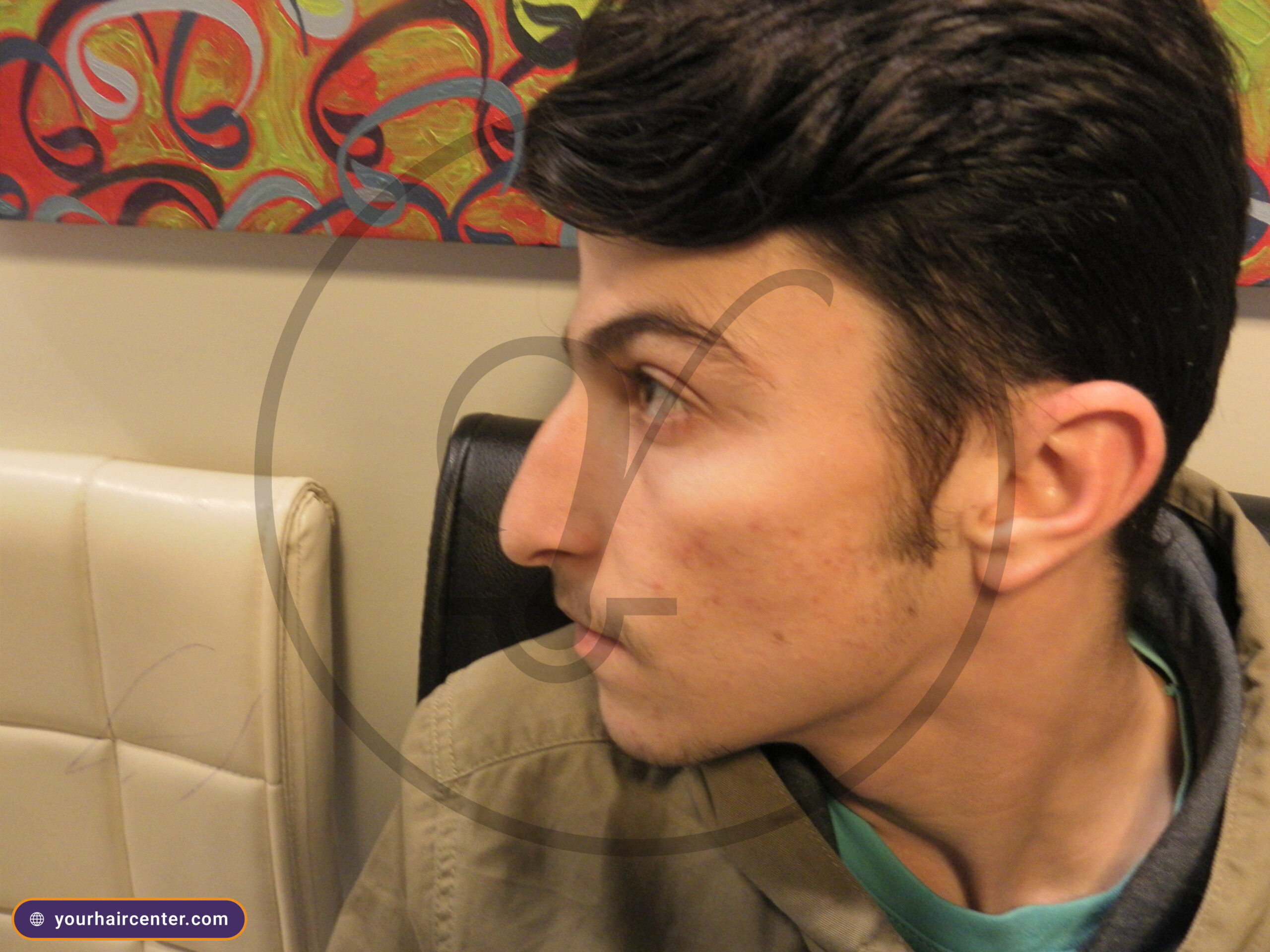
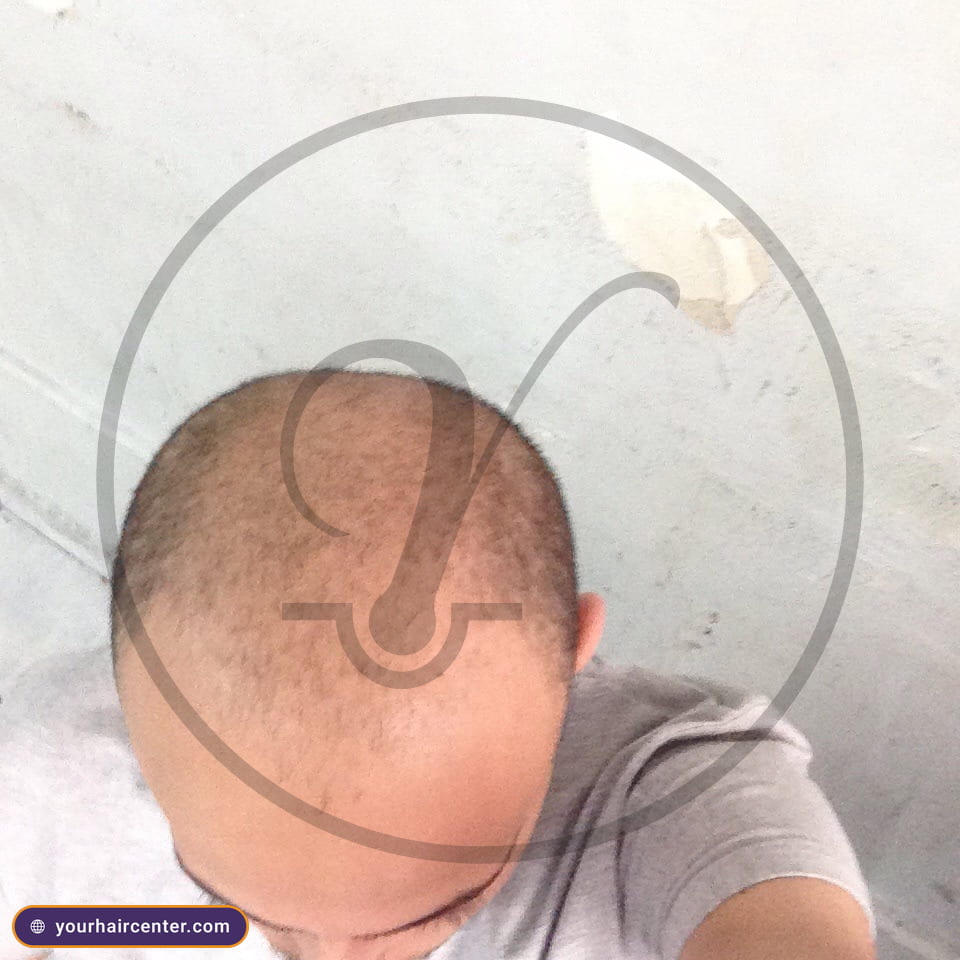
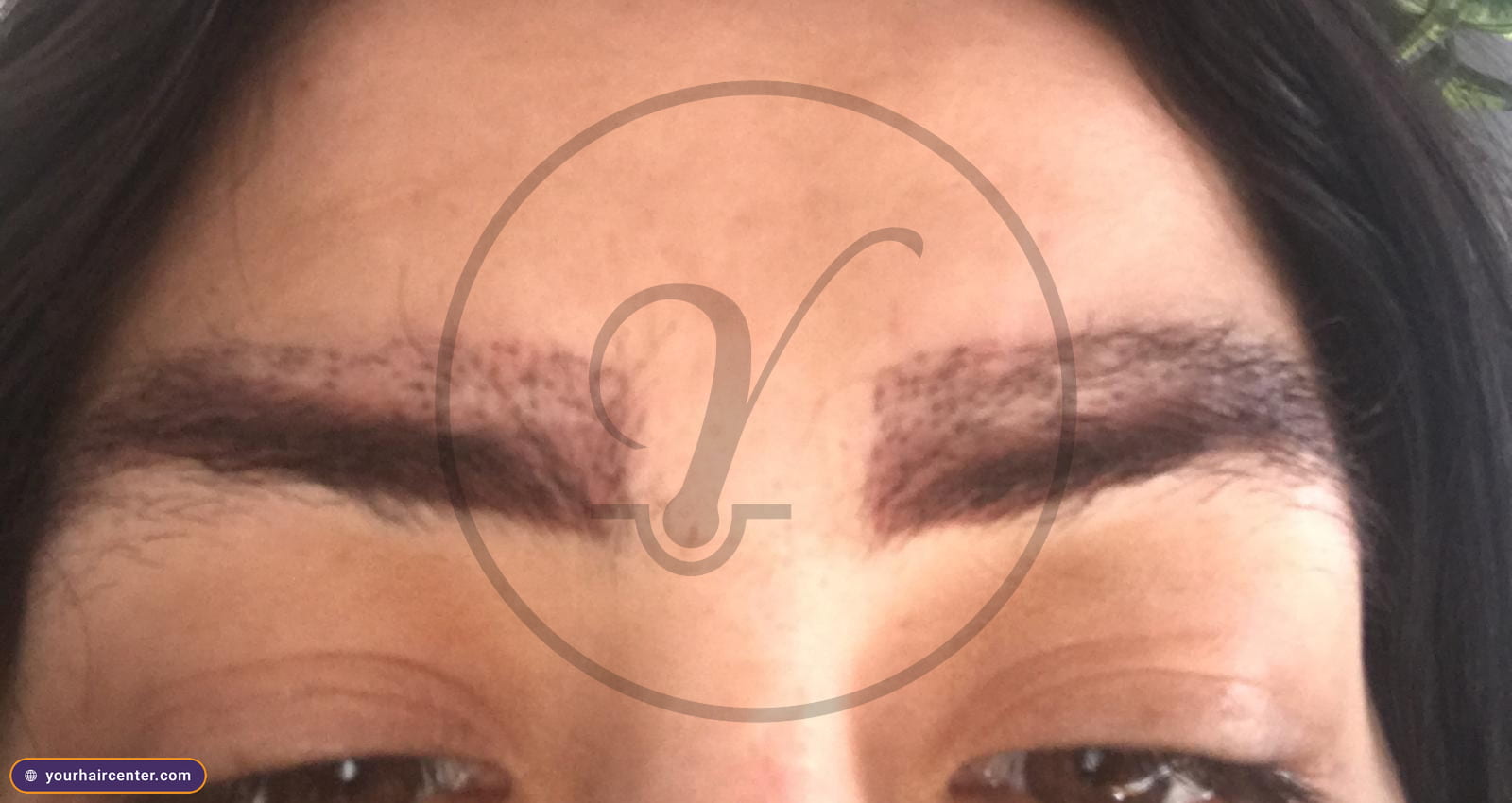
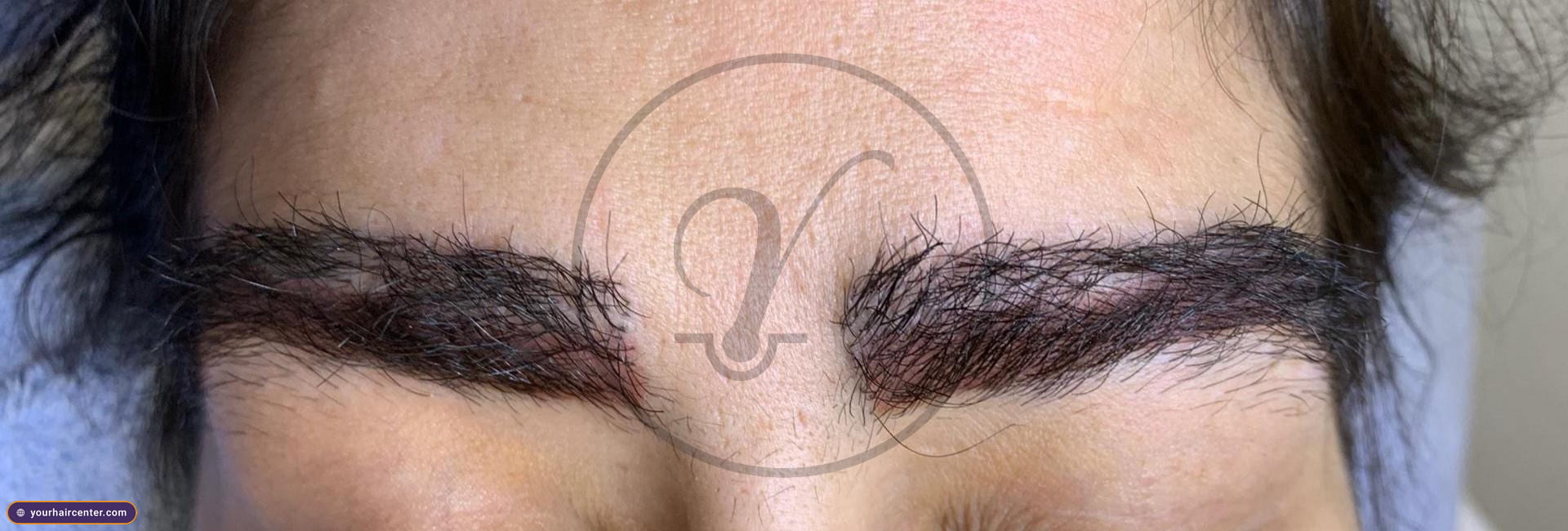
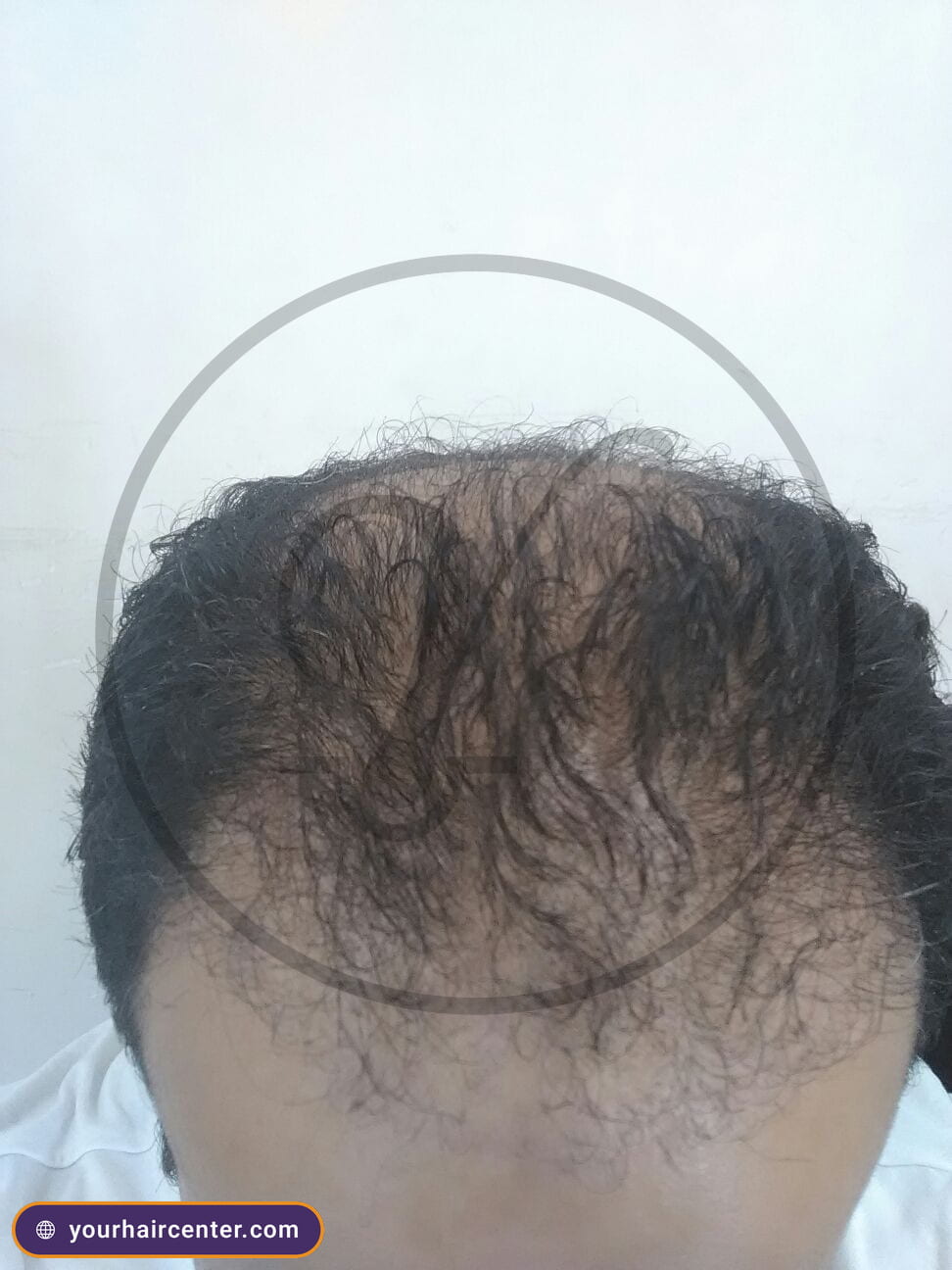
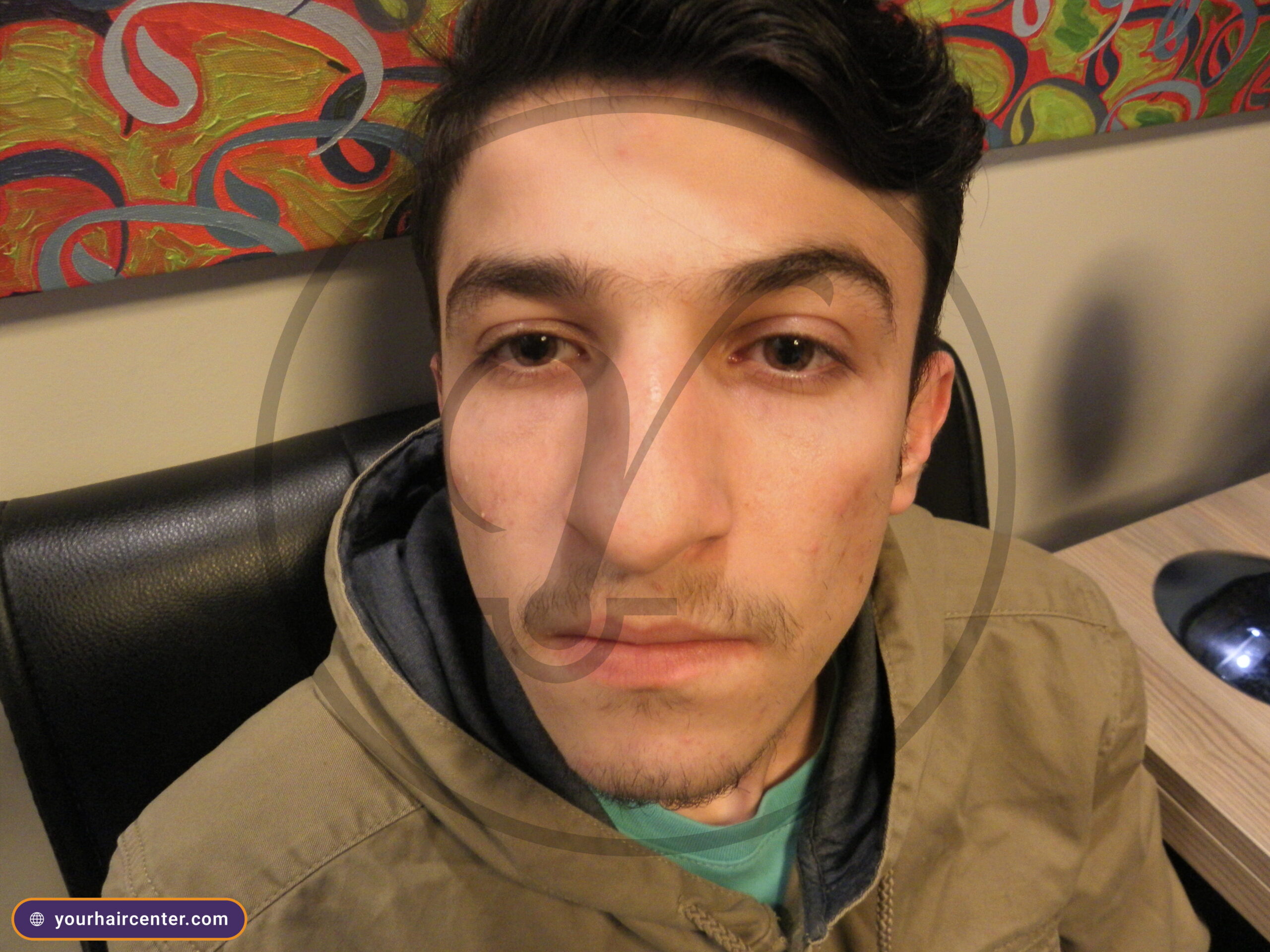
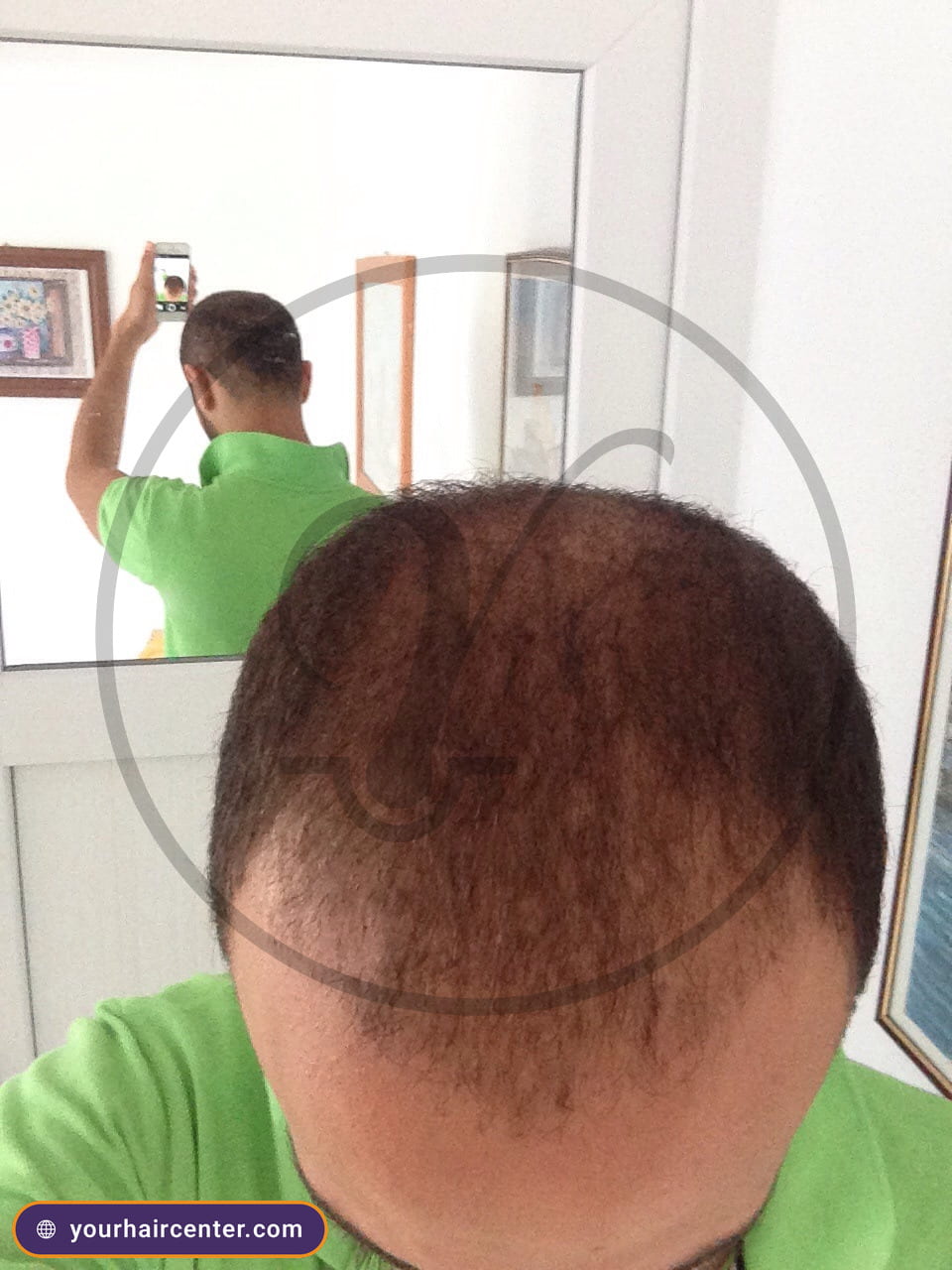
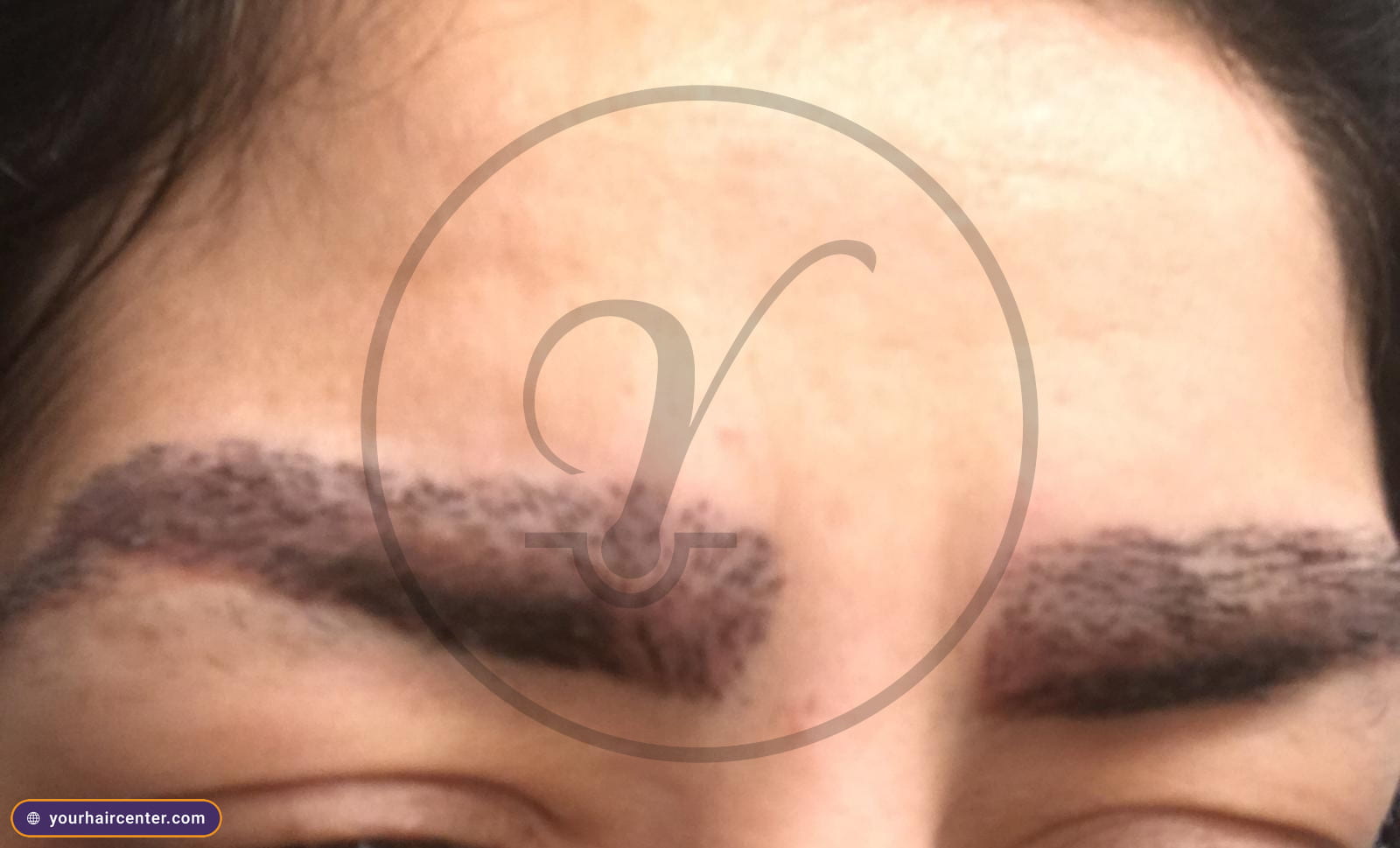
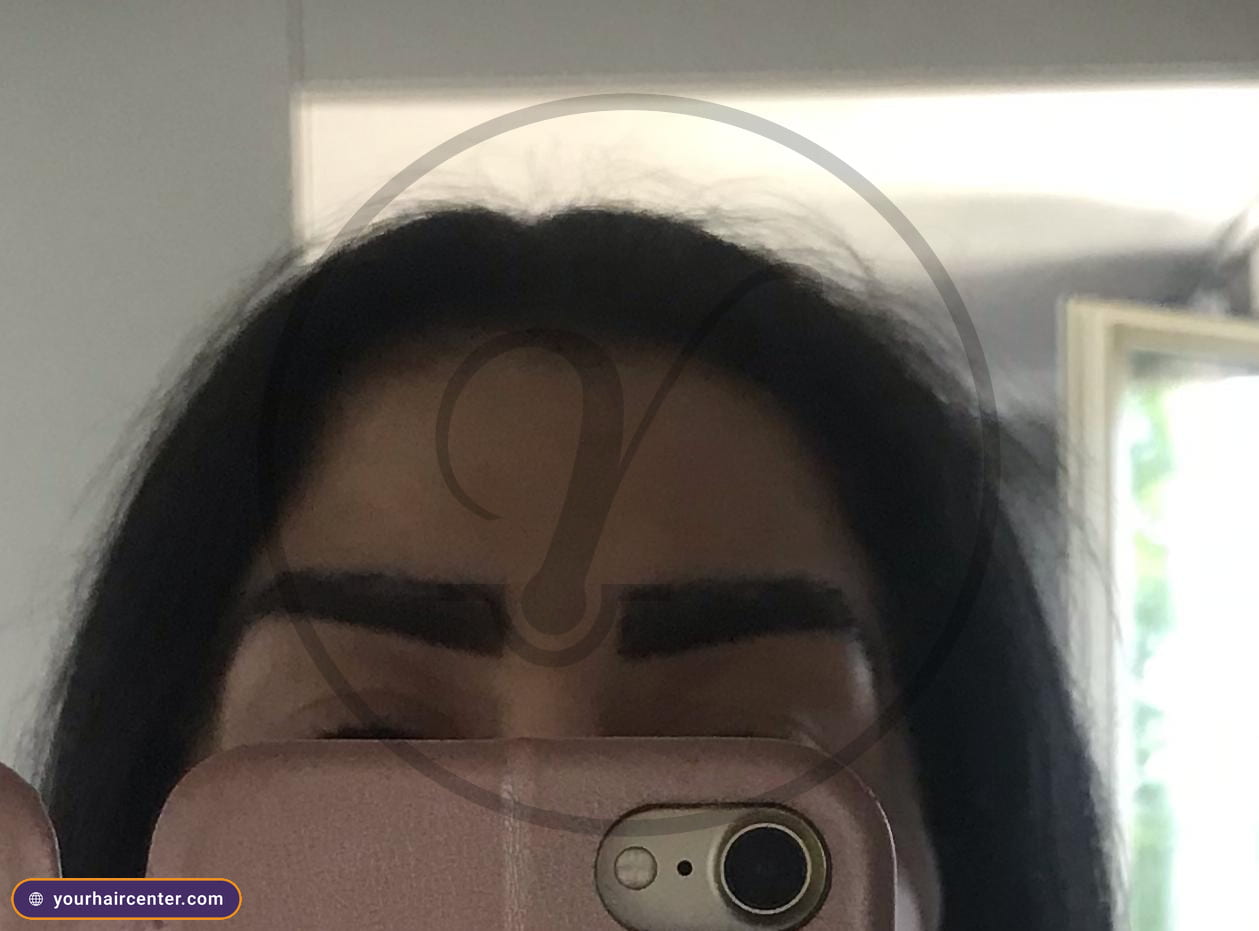
Real results from our patients’ archive. Photos exactly as captured at our accredited partner clinics, with no filters and no retouching. Browse more cases in our photo gallery.


Honest graft estimates by Norwood stage, what a transplant actually costs in grafts
Readers want a number, so here are realistic ranges keyed to the Norwood scale. Read them as ranges, not quotes, because the same Norwood stage on two different scalps produces two different graft counts. Every estimate below depends on two variables, the density of your donor zone in follicles per square centimeter and the surface area of the recipient zones that need coverage in square centimeters. The only thing that converts a stage into a real number is a scalp-density scan.
Norwood 2 to 2A. A transplant is generally not indicated. When a man asks for a frontal refinement at this stage, a hairline-shaping case typically falls in the range of 800 to 1,500 grafts.
Norwood 3 frontal. Restoring the frontal hairline and rebuilding the temple peaks typically falls in the range of 1,500 to 2,500 grafts.
Norwood 3 vertex. Combining frontal restoration with early crown filling typically falls in the range of 2,000 to 3,000 grafts, since the crown is a surface-hungry zone.
Norwood 4. The combined frontal and partial crown work typically falls in the range of 2,500 to 3,500 grafts, with the surviving mid-scalp strip usually left untouched unless it is already thinning.
Norwood 5. As the strip thins and may need partial coverage, the typical range moves to 3,000 to 4,500 grafts, and donor-zone evaluation tightens because more is being asked of it. One session usually tops out around 4,000 grafts, so the upper end of this range runs over two sessions under one plan.
Norwood 6. With the whole top bald, the typical range rises to 4,000 to 6,000 grafts, usually staged across two sessions. The donor zone becomes the limiting factor and is close to fully harvested.
Norwood 7. The goal narrows to a restored frontal frame plus partial top coverage, typically in the range of 4,500 to 6,500 grafts harvested across two sessions, with the donor zone fully assessed for exactly what it can spare without thinning the sides.
Notice that these are ranges, not point estimates, and that the spread widens as the stage advances. That is the honest picture. A scalp-density scan during a hair and scalp analysis is what turns your stage into a real figure.
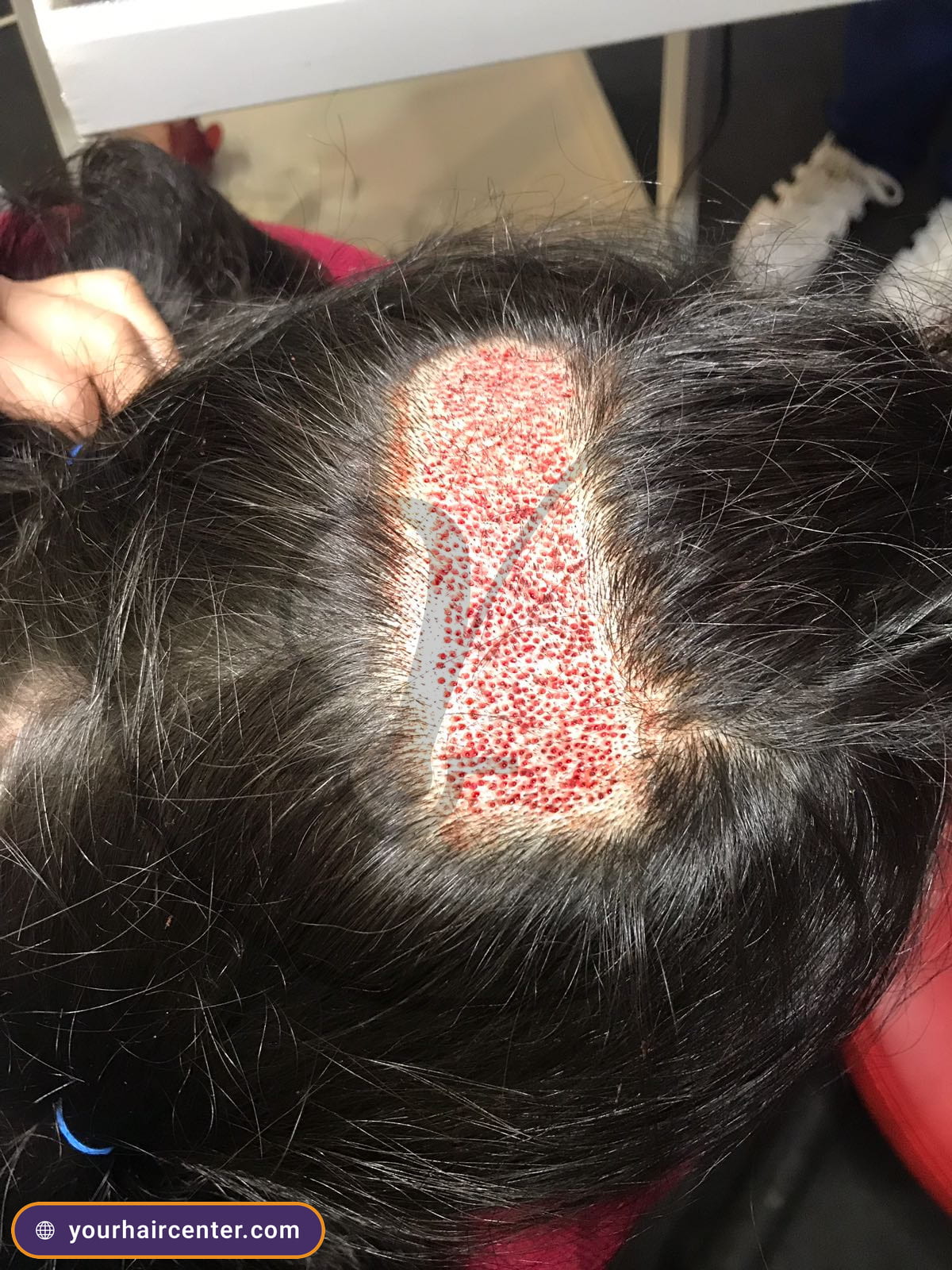
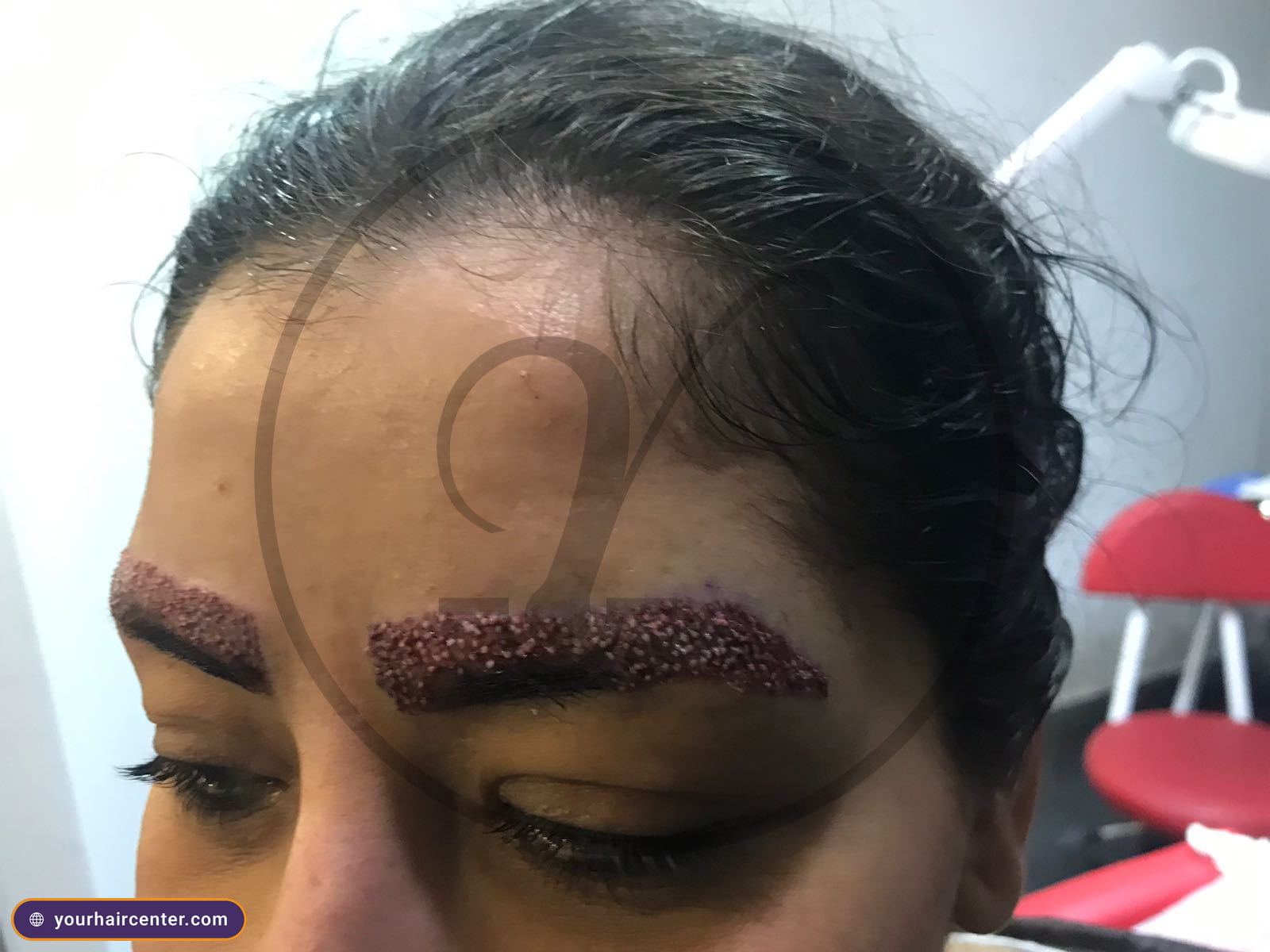
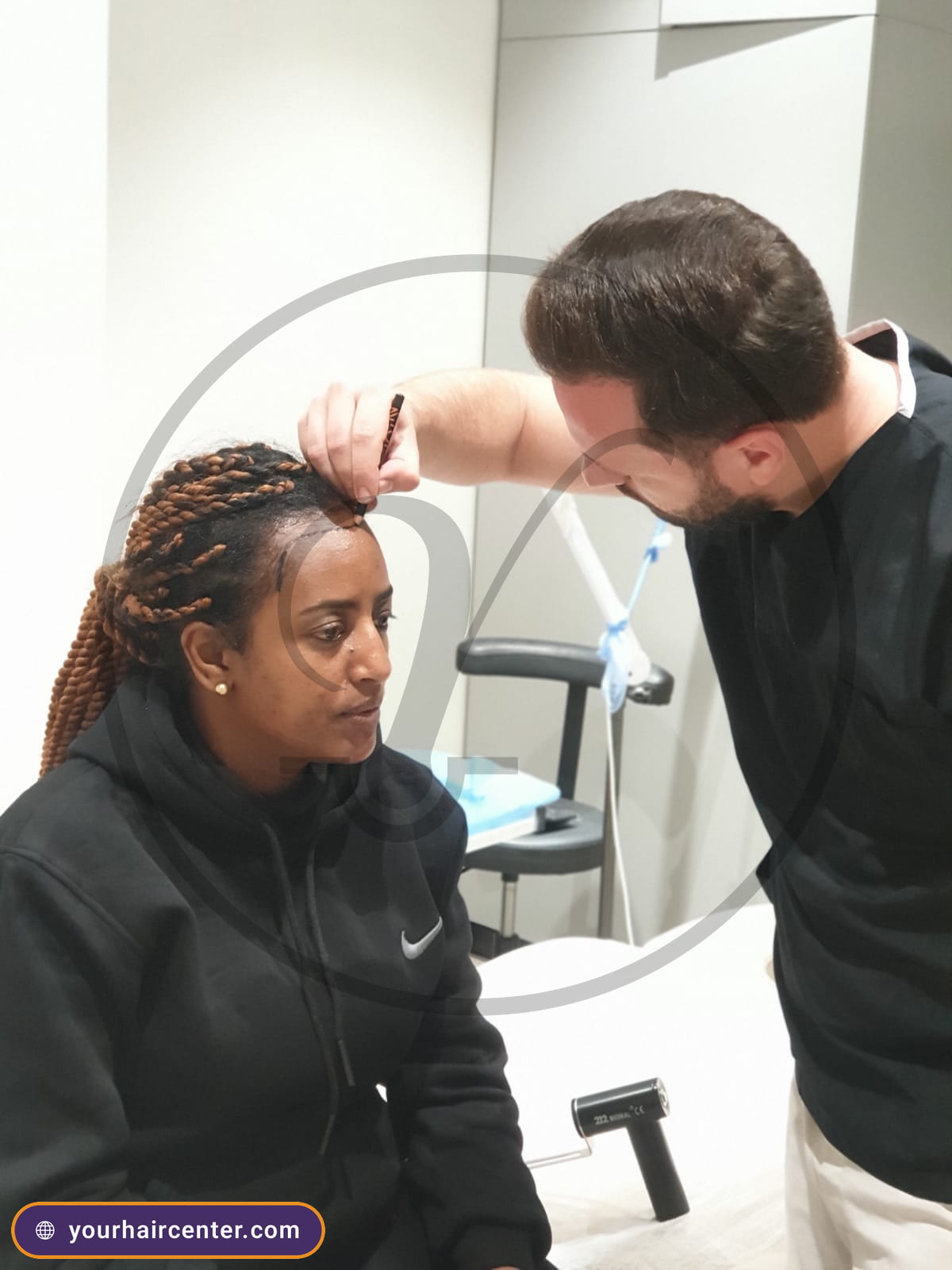
Real results from our patients’ archive. Photos exactly as captured at our accredited partner clinics, with no filters and no retouching. Browse more cases in our photo gallery.





Frequently asked questions about the Norwood scale
Is a Norwood 2 balding?
A Norwood 2 is not balding in the clinical sense. Stage 2 describes a mature hairline with slight, symmetrical temple recession that most adult men develop and never move past. It is treated as cosmetic rather than medical. The watch point is whether the recession keeps deepening over a year, since steady progression toward Stage 3 is what flips it from maturing to balding.
Is Norwood 3 too late?
Norwood 3 is not too late, it is closer to the ideal window. Stage 3 is the first clinically significant stage on the Norwood scale, which means the follicles are receding but most have not yet miniaturized past saving. Starting an FDA-approved medication protocol here gives the medications the most surviving hair to protect, so acting at Stage 3 usually preserves far more than waiting until Stage 5.
Do most men lose their hair?
Most do, to some degree. Male pattern baldness affects about two-thirds of men. About 25% see the first signs before 21, half have some hair loss by 50, and about 70% lose hair as they get older. It is more common in white men and less common in men of Chinese or Japanese descent.[1:2] What varies is how far down the scale a given man travels and how fast. Many settle at a mature Stage 2 hairline indefinitely, while others progress through the higher stages, which is exactly why staging beats guessing.
What Norwood stage am I at?
You can estimate it from three daylight photos, a top-down crown shot, a frontal shot with the forehead exposed, and a side profile, then check temple shape, crown thinning, and whether a hair strip still bridges the front and crown. That gets you a reasonable estimate. A confirmed Norwood scale stage needs a scalp-density scan, because lighting and styling distort what a photo shows.
Can hair loss go backward on the Norwood scale?
Pattern hair loss does not naturally reverse to an earlier stage, since the scale tracks progressive follicle miniaturization. Treatment can slow or pause progression and thicken miniaturized-but-living follicles, which can make a stage look better, but a follicle lost past viability does not return on its own. A transplant adds permanent hair to a bald zone, which improves coverage without rewinding the underlying stage.
At what Norwood stage should I consider a hair transplant?
A transplant can enter the conversation from Stage 3, once the loss has stabilized and an area is bald, and becomes the primary recommendation from Stage 5 onward, once medications alone cannot fill the bald zones. Medications continue alongside it to protect the hair a transplant does not touch. The deciding factor is donor-zone capacity, not the stage number on its own, which is why the Norwood scale stage and a donor-density scan are read together before any surgical plan is made.
The map is not the verdict
The Norwood scale is a map, not a sentence. A Stage 3 caught early and treated with the right stage-matched protocol can hold its ground for years. A Stage 6 left alone keeps drifting toward Stage 7. The difference is rarely the genetics, it is whether your place on the Norwood scale was named honestly and the treatment was matched to it rather than guessed at. The honest next step is a clinical opinion that turns your photographs into a stage assignment and a stage-matched protocol, not a number from a calculator. Send three photographs, top, front, and side, for a free Norwood-stage evaluation, and the Your Hair Center medical team will confirm your stage, run the scalp-density scan, and walk you through the protocol that belongs at it. You can also browse the full Hair Loss Treatment hub to see how every cause and stage connects.
The content and sources of this guide were reviewed on 1 October 2026.
References
-
Cleveland Clinic. "Male Pattern Baldness (Androgenic Alopecia): Stages, Treatment." Last updated 9 December 2022. https://my.clevelandclinic.org/health/diseases/24515-male-pattern-baldness-androgenic-alopecia (opens in new tab) ︎ ︎ ︎
-
Hamilton JB. "Patterned loss of hair in man; types and incidence." Ann N Y Acad Sci. 1951;53(3):708-728. https://pubmed.ncbi.nlm.nih.gov/14819896/ (opens in new tab) ︎
-
Norwood OT. "Male pattern baldness: classification and incidence." South Med J. 1975;68(11):1359-1365. https://pubmed.ncbi.nlm.nih.gov/1188424/ (opens in new tab) ︎
-
U.S. Food and Drug Administration. PROPECIA (finasteride) tablets, prescribing information, revised July 2022. https://www.accessdata.fda.gov/drugsatfda_docs/label/2022/020788s030lbl.pdf (opens in new tab) ︎ ︎
-
American Academy of Dermatology. "What is male pattern hair loss, and can it be treated?" https://www.aad.org/public/diseases/hair-loss/treatment/male-pattern-hair-loss-treatment (opens in new tab) ︎ ︎ ︎
-
Medicines and Healthcare products Regulatory Agency. "Finasteride and dutasteride: updated safety warnings for psychiatric side effects and sexual dysfunction." Drug Safety Update, 11 May 2026. https://www.gov.uk/drug-safety-update/finasteride-and-dutasteride-updated-safety-warnings-for-psychiatric-side-effects-and-sexual-dysfunction (opens in new tab) ︎
-
U.S. Food and Drug Administration. "FDA alerts health care providers, compounders and consumers of potential risks associated with compounded topical finasteride products." 22 April 2025. https://www.fda.gov/drugs/human-drug-compounding/fda-alerts-health-care-providers-compounders-and-consumers-potential-risks-associated-compounded (opens in new tab) ︎