Increased shedding in the first weeks of minoxidil is usually the medication working, the immediate telogen release that resynchronises resting follicles into growth. This guide maps the normal timeline, when shedding settles, when regrowth shows, and the five red-flag thresholds for the minoxidil shedding phase that mean the protocol needs to change.

You started minoxidil to keep your hair, and now, six to eight weeks in, you are losing more of it than the day you began, which is exactly why the minoxidil shedding phase sends so many people back to the mirror in a panic. Here is the part the panic hides. For most patients, that extra shedding is the medication doing exactly what it is supposed to do. As minoxidil pushes resting follicles back into active growth, the old hairs they were holding let go at once, a process clinicians call immediate telogen release. Increased shedding when starting minoxidil “usually settles within the first 6 weeks of treatment.”[1] This guide covers why it happens, the normal timeline, and the red flags that mean it is time to worry.
What is the minoxidil shedding phase and how long does it last?
This shedding phase is a temporary increase in hair fall after you start the medication, caused by immediate telogen release, the synchronized shedding of resting hairs as minoxidil shifts follicles into growth. For most patients it settles within about the first six weeks,[1:1] with regrowth visible after two to four months.[2] It signals the treatment is working.
The hair in your sink is not healthy hair being destroyed, it is the old hair clearing out ahead of schedule, and the NHS puts it plainly, the minoxidil shedding phase “serves to resynchronise the hairs into a growth cycle.”[3] A free hair and scalp evaluation from your photos is the cleanest check, alongside the hair loss treatment hub.
The biology behind the dread shed, immediate telogen release explained
Once you understand the mechanism behind the minoxidil shedding phase, you can also recognize the moment it stops being the explanation.
The hair cycle in three phases
Every follicle cycles through three phases. Anagen, the active growing phase, lasts roughly two to six years.[2:1] Catagen is a short transition of about two to three weeks. Telogen is the resting phase, after which the old hair sheds and a new one begins. On a healthy scalp at any moment, about 85 to 90 percent of follicles sit in anagen and 10 to 15 percent in telogen.[2:2] Because the phases are normally out of sync, you shed gradually rather than all at once, and it is normal to shed “between 50 and 100 hairs a day.”[4]
What minoxidil actually does to the cycle
The minoxidil shedding phase begins because minoxidil interrupts that staggered rhythm on purpose. The peer-reviewed mechanism literature, including work named in recent reviews as Bi et al. 2025, describes how minoxidil shortens telogen and accelerates the telogen-to-anagen transition,[5] telling a batch of resting follicles to wake at roughly the same time, so they release their old hairs together, in a wave rather than the usual trickle. That synchronization is why the shedding feels dramatic, and the same mechanism that produces the dread shed is the one that produces the later regrowth, which is why the shedding is literally the drug working.
Why the synchronization feels worse than the math
During the minoxidil shedding phase the daily rate climbs well above that 50-to-100 baseline for several weeks, and the eye reads a finite, temporary surge as a permanent acceleration. The release does not damage the follicle, accelerate genetic hair loss, use up hairs that would otherwise have grown later, or extend baseline shedding indefinitely, which is why a shed that refuses to settle is worth a second look.
The normal-versus-pathological timeline at months 2 to 4
Plotting your experience against the typical curve tells you whether you are inside the normal range. Use the windows below as a map, not a stopwatch.
Week 1 to week 8, the onset window
Most people notice no change in the first week. The minoxidil shedding phase usually appears within the first couple of weeks,[1:2] peaks in the following weeks, then begins to taper. Dramatic week-one shedding is usually misattribution, since minoxidil has not yet reached its peak telogen-release effect, so if you are searching “minoxidil shedding after 1 week,” the timeline has barely started.
Week 6 to week 16, the resolution window
For most patients the minoxidil shedding phase settles within roughly the first six weeks of treatment.[1:3] A subset run longer, with daily counts drifting back toward baseline by the three-to-four-month mark. Women often report the shedding as more alarming than men do at the same count, because longer hair makes each shed strand more visible.

Month 2 to month 4, the regrowth visibility window
This is the turn from “shedding is settling” to “regrowth is showing.” Visible improvement typically appears after two to four months of regular use,[2:3] often arriving first as fine, short hairs at the hairline or part, with fuller density building over the following months. This window is where the rising search for “minoxidil shedding phase pictures” comes from, as patients look for documented timelines to compare against their own progress.
Month 6 to month 12, the chronic-shedding boundary
Continued elevated shedding past month six is no longer typical of the immediate-telogen-release mechanism, which is a one-time resynchronization, not an open-ended state.[3:1] If you are searching “minoxidil shedding after 6 months” or “minoxidil shedding after 1 year,” you have reached the boundary this article cares about most, since past that point the cause is probably something other than the initial minoxidil shedding phase. A before-and-after timeline gallery helps you sanity-check your own progress against documented cases.
When to worry, the red-flag thresholds that mean the protocol needs to change
Here is where this guide parts ways with the pages that stop at “stay consistent and be patient.” Patience is right inside the normal minoxidil shedding phase and wrong once the loss crosses one of the thresholds below. Any one of these five flags is a reason to get evaluated rather than keep waiting.
Red flag 1, shedding has not begun to settle by month 4 to 6
The normal minoxidil shedding phase settles within roughly the first six weeks and is essentially resolved by the time regrowth becomes visible at two to four months.[1:4][2:4] If shedding remains clearly elevated past month four, the initial synchronization is no longer a sufficient explanation. Cleveland Clinic is direct, “if you do not see any new hair growth after 4 months, stop using this product and contact your care team.”[2:5]
Red flag 2, daily shedding stays well above your baseline past month 6
Put a number on it. If your baseline was in the normal 50 to 100 hairs a day[4:1] and you are still shedding far above that past month six, the elevated rate has crossed from the expected minoxidil shedding phase into shedding driven by something else, and it needs evaluation. A figure you can check against your own counts is what turns anxiety into action.
Red flag 3, the shedding comes with scalp signs
The minoxidil shedding phase affects the hair, not the skin underneath, so scalp signs mean something else is in play. Watch for redness or persistent itching, irritation or small bumps along the application area, new scaling or flaking, or burning, crusting, or peeling of the treated skin,[2:6] which can signal irritation or an allergic reaction to the product or its vehicle and warrant a hair and scalp analysis to separate drug-related shedding from a concurrent scalp condition. Swelling of the face, lips, tongue, or throat is a stop-and-seek-care signal.
Red flag 4, the shedding pattern has changed shape
The expected shed is diffuse, spread across the application area. Focal patches, a central part that keeps widening, or a frontal hairline that recedes while you are on the medication suggest the genetic hair loss is progressing faster than the minoxidil is countering it. If the pattern is shifting, re-check your stage against a Norwood scale self-assessment and discuss whether a DHT-blocker belongs in the regimen, as the topical finasteride safety profile guide covers.
Red flag 5, you feel systemically unwell
Topical minoxidil’s absorption into the body is low, but not zero. Unexpected weight gain, swelling in the ankles or legs, a racing or irregular heartbeat, chest discomfort, or dizziness are uncommon on the topical form, but if they appear, stop the medication and seek medical evaluation rather than wait out the minoxidil shedding phase.
Who should rethink minoxidil, contraindications and the persistent-shedder pathway
If you have recognized a red flag, here is what a clinic would do next.
Patients for whom minoxidil is not appropriate
Minoxidil is not the right call for everyone. It should be avoided or used only under specialist supervision by people with a known allergy to minoxidil or its vehicle, those with an untreated active scalp condition, and anyone with significant cardiovascular disease for whom even low systemic absorption is a concern. Pregnant or breastfeeding patients should not start it without medical guidance; the postpartum hair loss treatment guide owns that situation. This is the part of the article that tells some readers to stop.
The persistent-shedder switch, from topical to oral
When the topical form has not delivered, or when applying it twice daily[6] is the real-world point of failure, low-dose oral minoxidil has become an increasingly used alternative, described in the published literature as off-label for hair loss but supported by a dose-dependent efficacy signal in androgenetic alopecia.[7] It is not a self-directed switch. The oral route requires a clinician’s prescription and monitoring, since its most common adverse effects, excess body-hair growth and fluid retention, are dose-related and tend to appear within the first one to three months.[7:1] We do not print a dose, because the right dose sits behind an evaluation, not a blog.
The in-clinic bridge stack, what a clinic adds during the ramp
This is the layer direct-to-consumer pharmacies cannot sell, because they do not run a clinic. A PRP hair plasma program timed to begin around the third month, three to six sessions with results at three to six months, delivers growth-factor support during the resolution window. A mesotherapy nutrient-loading series, six to ten sessions with results in two to four months, addresses nutritional cofactors that can prolong the minoxidil shedding phase. And LLLT laser cap therapy, ongoing with results at four to six months, adds support that does not interfere with the medication. None replaces minoxidil if it is the right call; they sit on top of it.
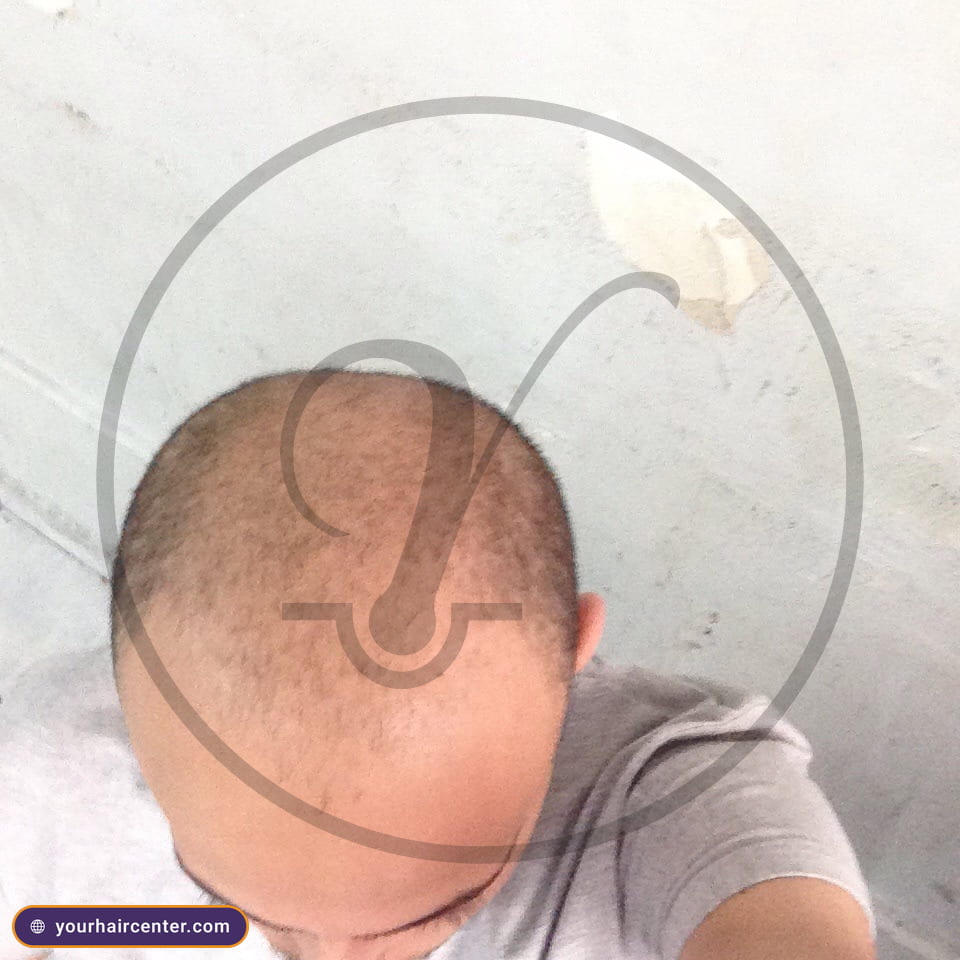
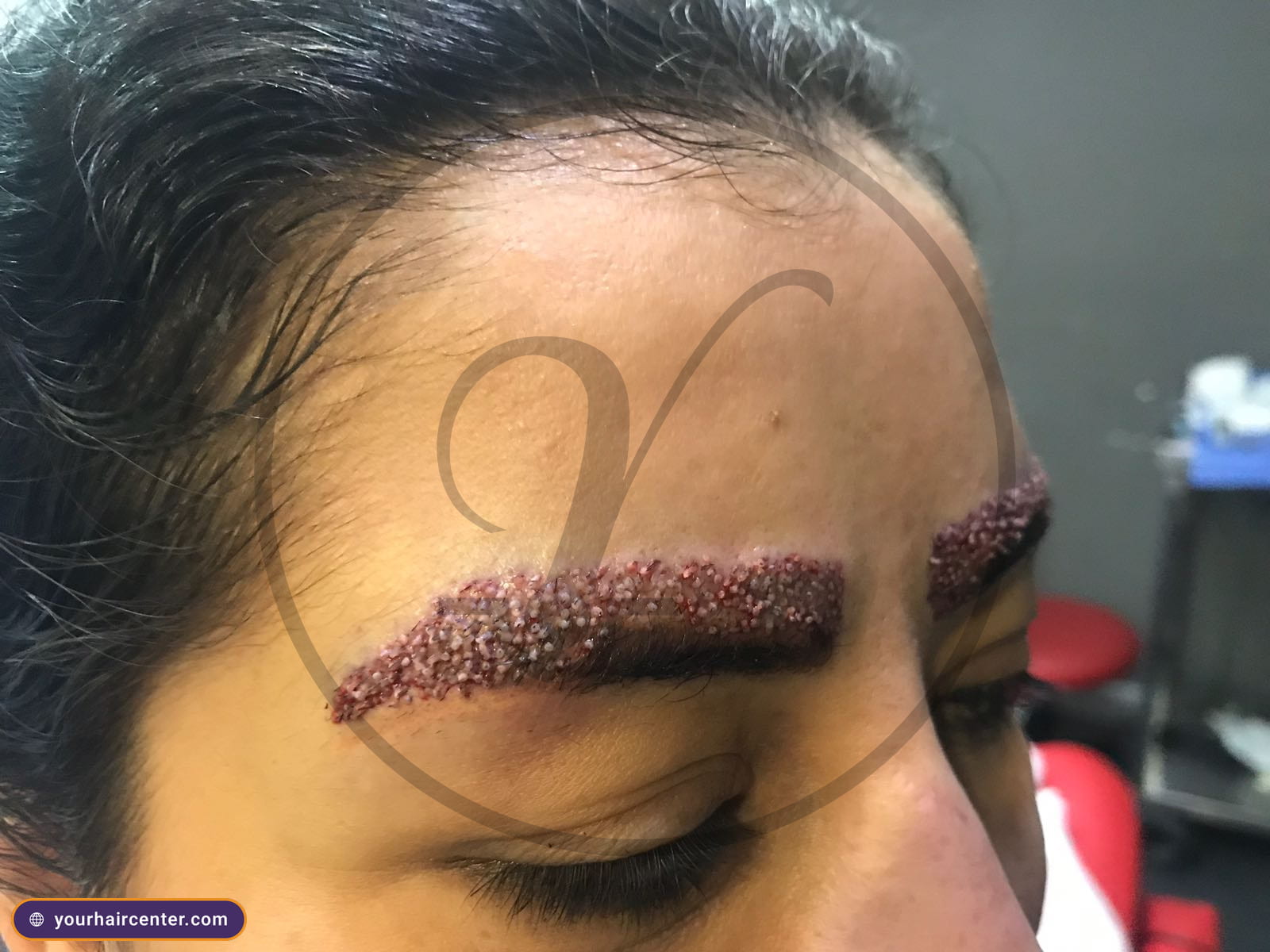
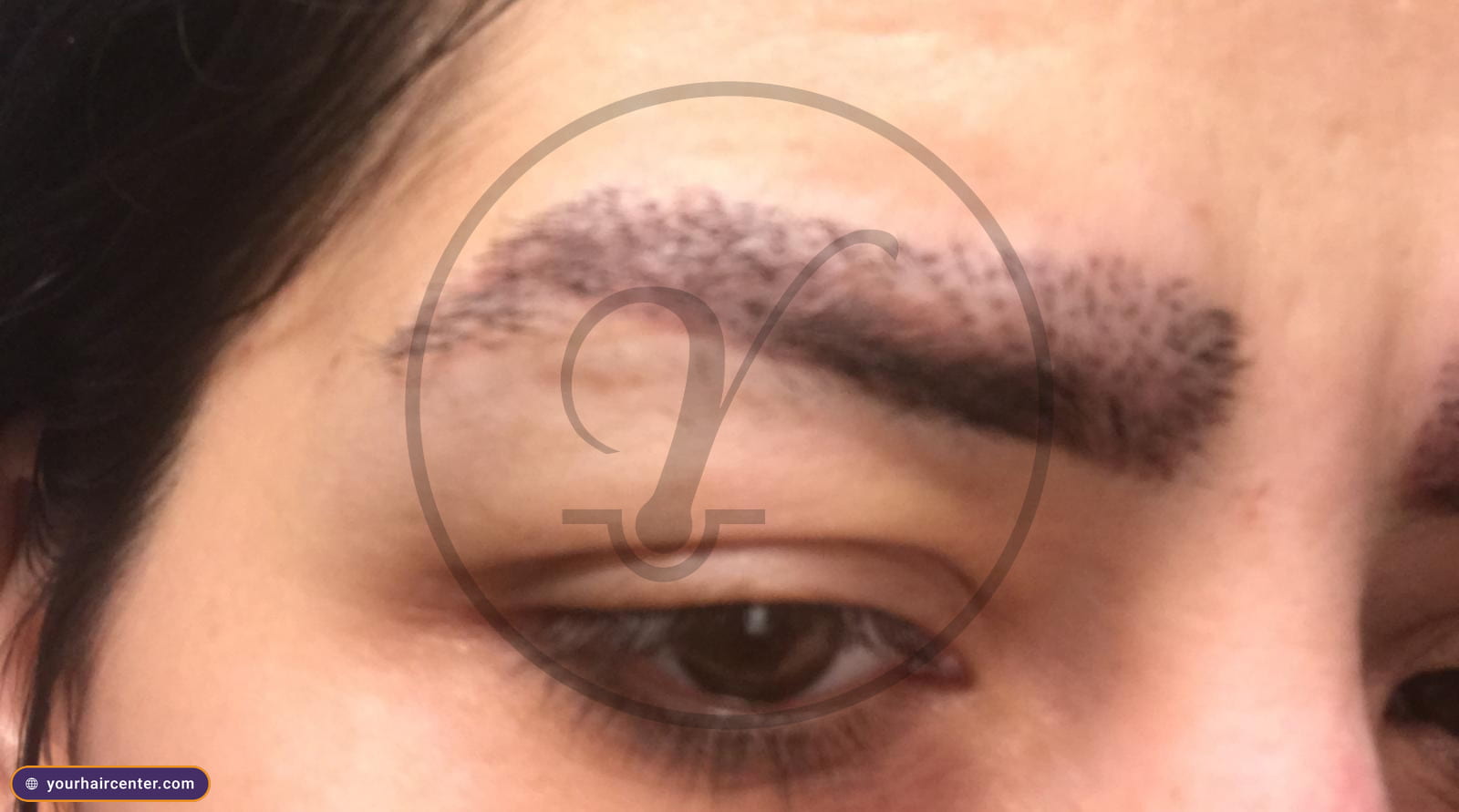
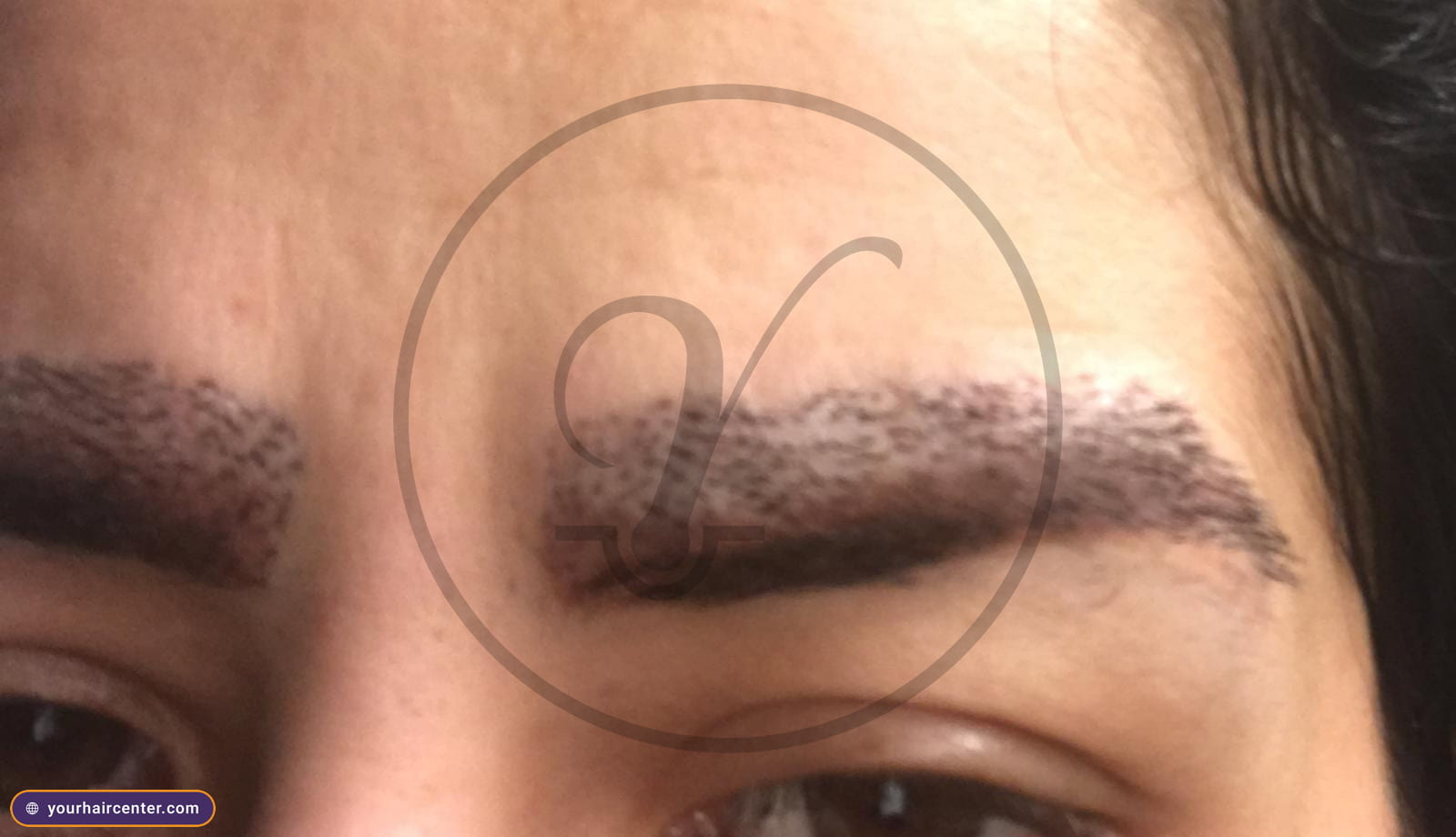
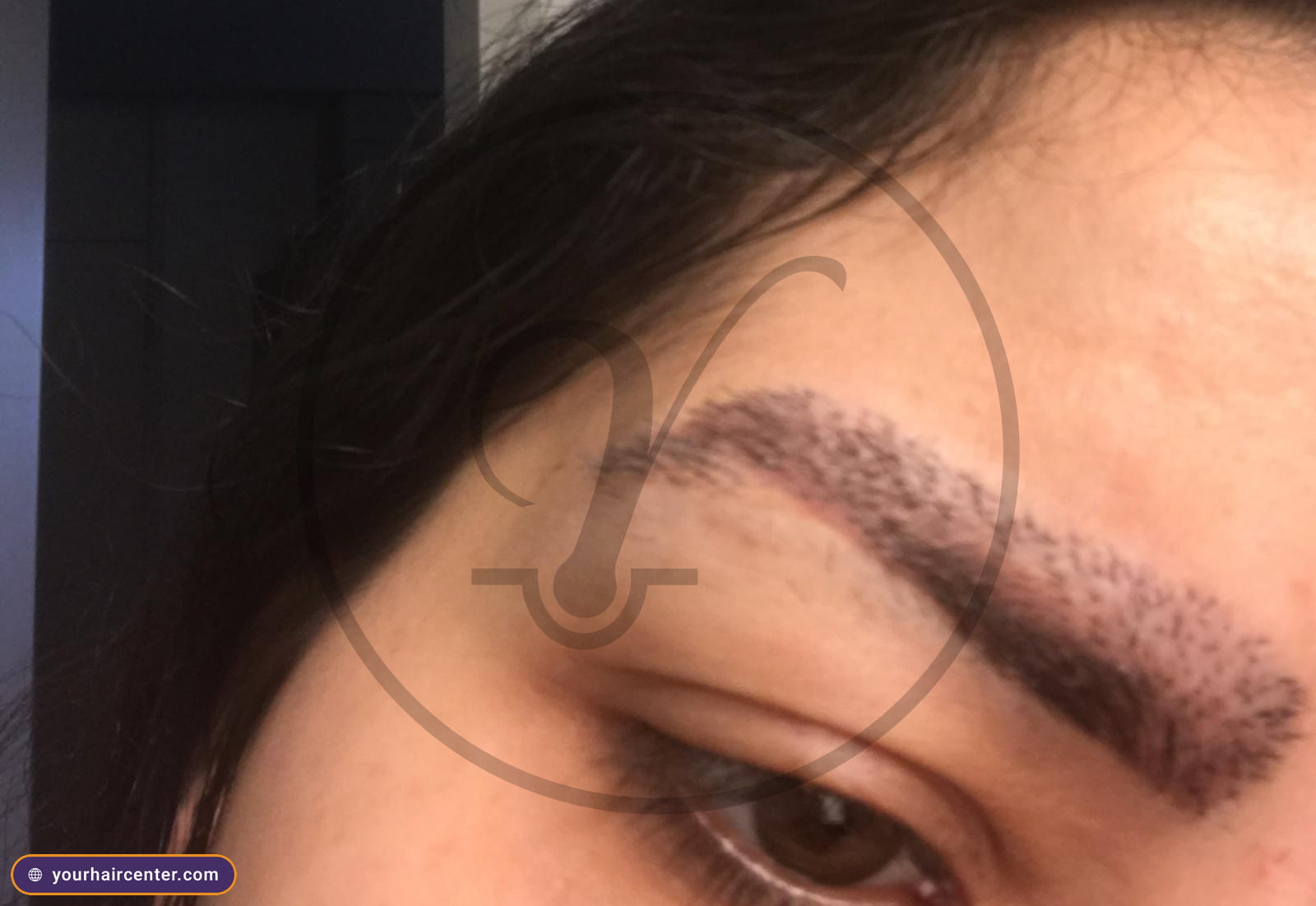
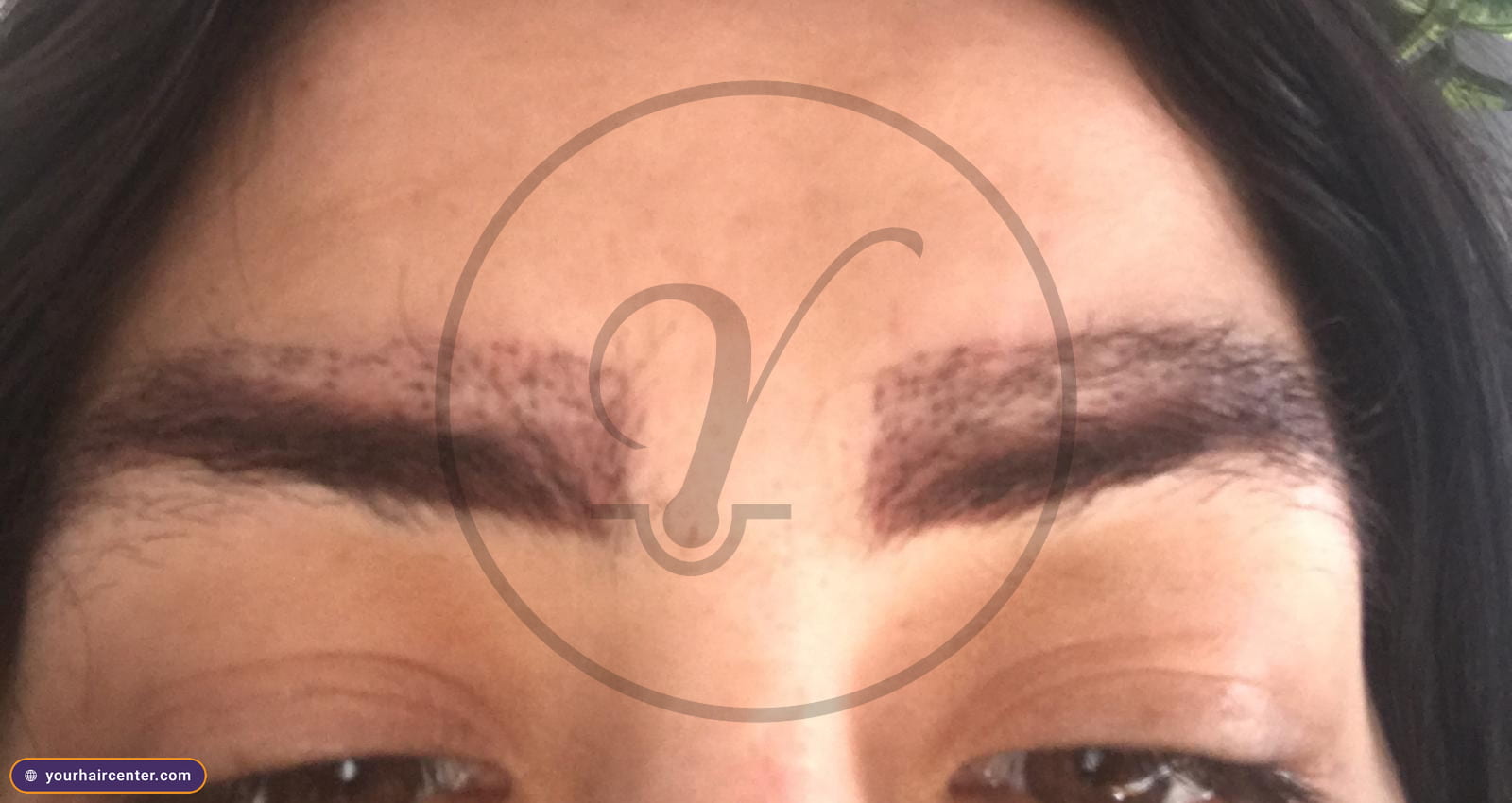
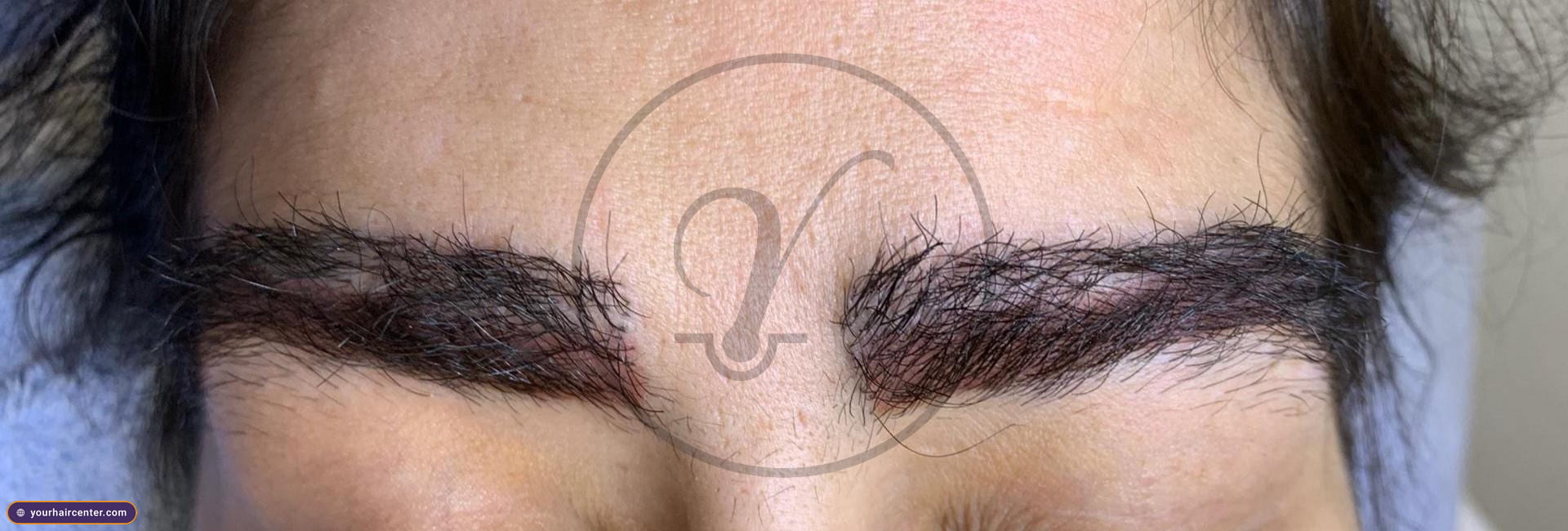
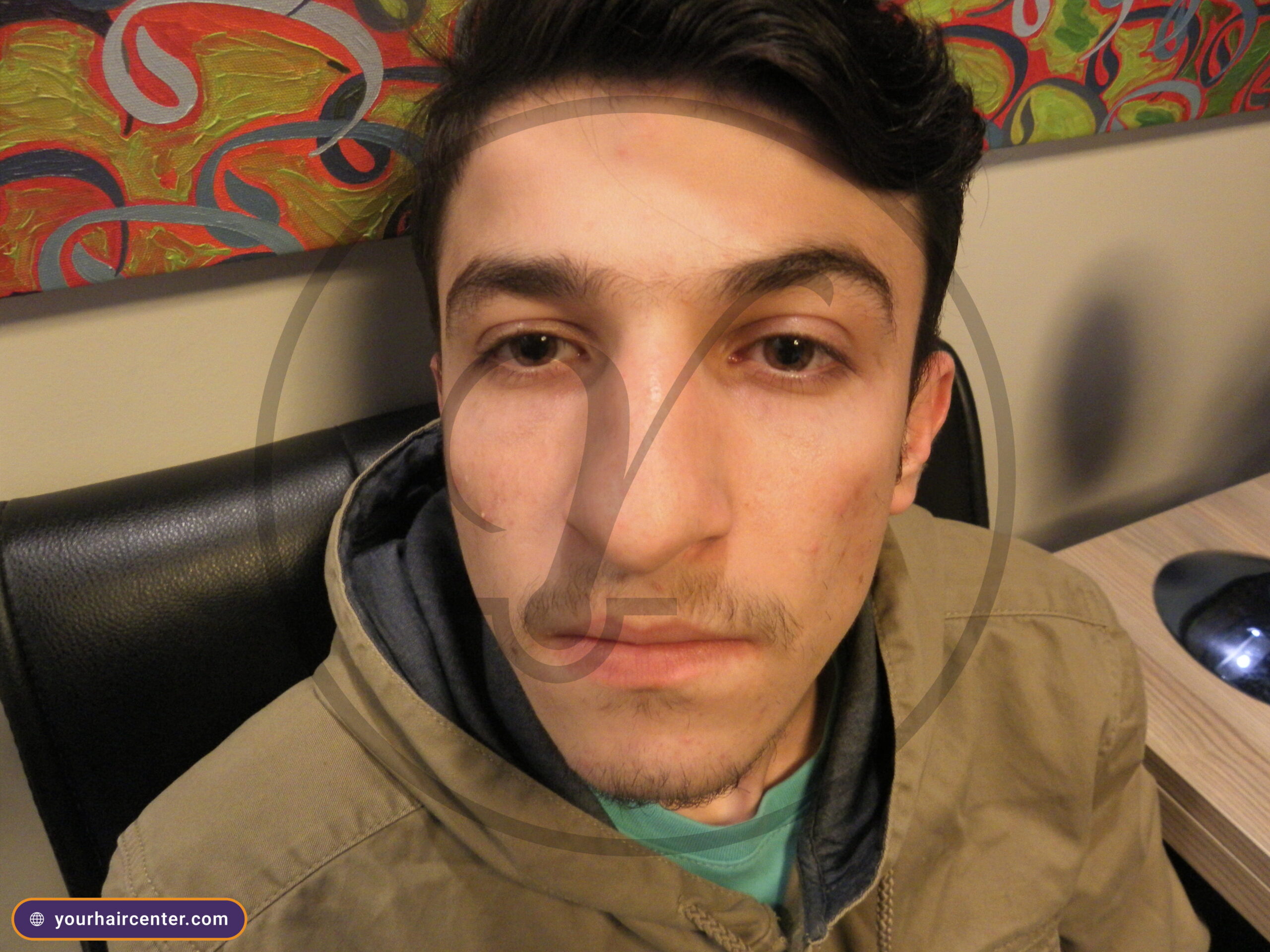
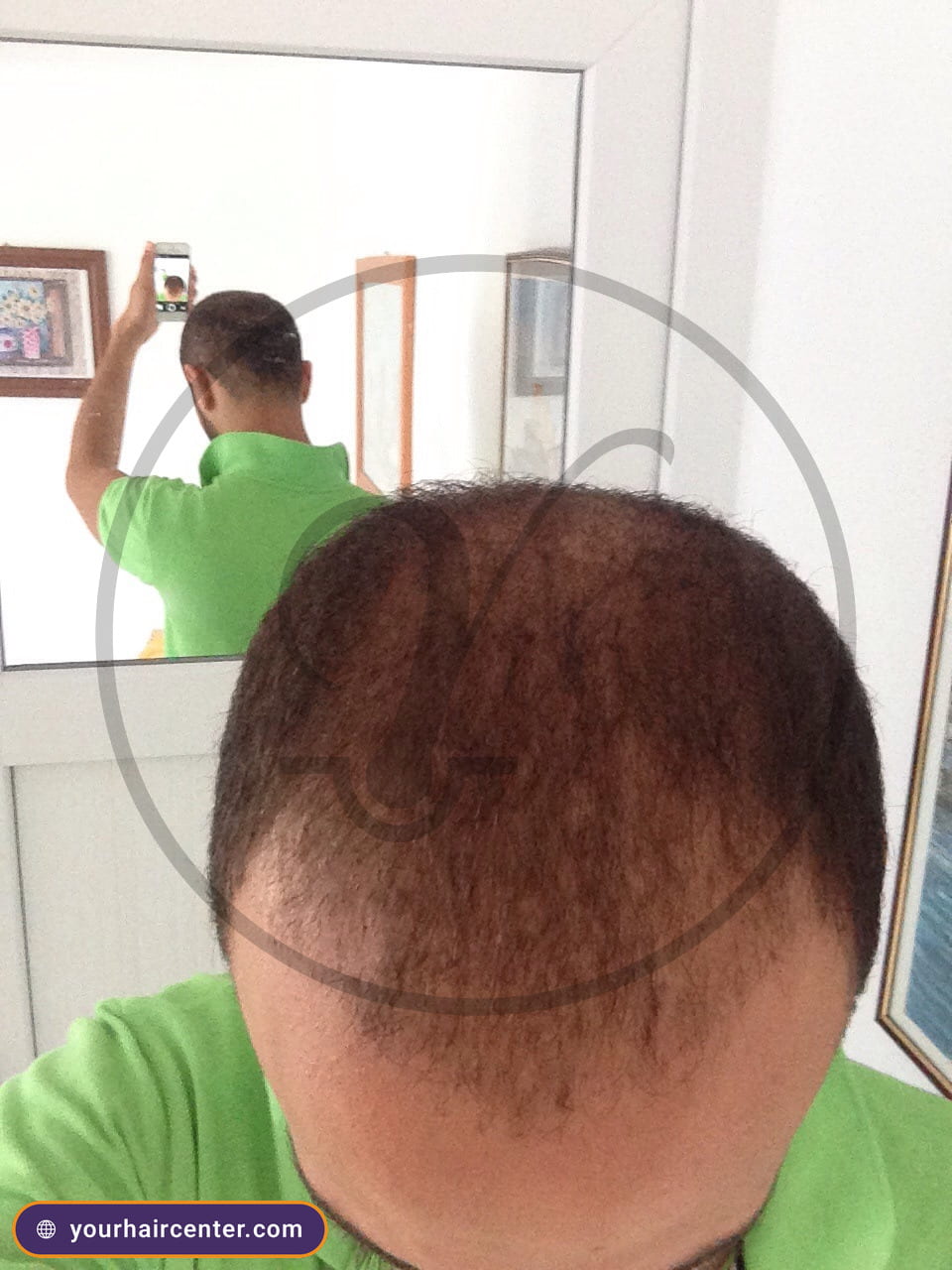
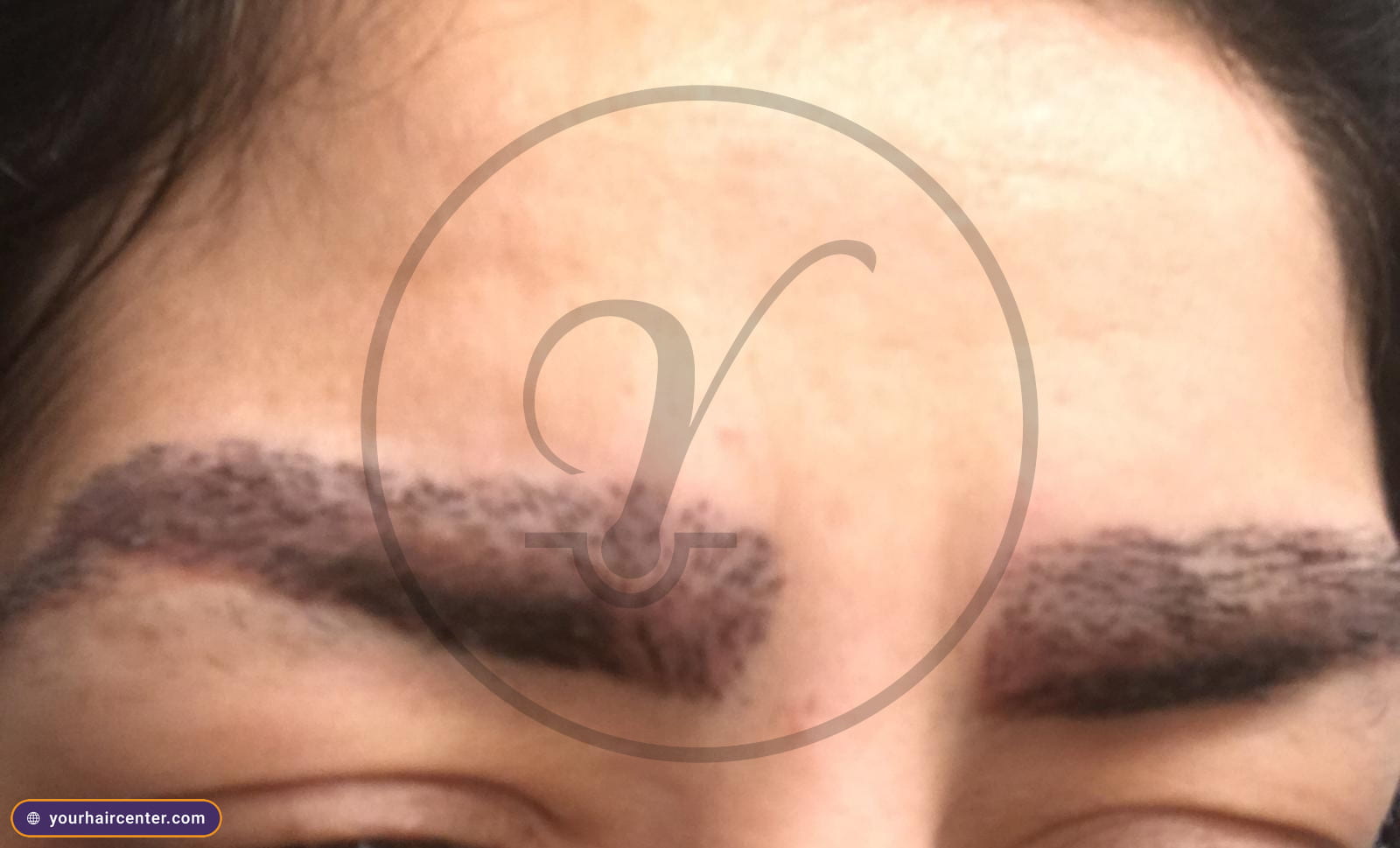
Real results from our patients’ archive. Photos exactly as captured at our accredited partner clinics — no filters, no retouching. Browse more cases in our photo gallery.


When to consider stopping minoxidil entirely
Minoxidil is not for every patient, and a good clinic supports the person who decides, with their clinician, that it is not the right protocol. Because minoxidil holds hairs in the growth phase, discontinuing it triggers a rebound shed as those hairs return to their pre-treatment cycle, and the resting-phase fraction temporarily exceeds baseline.[5:1] That rebound is expected pharmacology, not damage on the way out, and it typically plays out over a few months. If you are weighing whether to continue, the hair loss treatment hub lays out the non-minoxidil paths.
Myth-busting the four most common quit-now misreads
These four are the misreads that drive the most avoidable quitting at the exact moment the medication is starting to work.
Myth 1, “if minoxidil makes me shed, my hair was healthier before”
The synchronized shed is the mechanism that produces the later regrowth, not evidence of harm. The hairs that fall were already in or near the resting phase and were due to shed within weeks anyway, and in responders the density that follows is higher than the pre-treatment baseline.[5:2]
Myth 2, “I should switch brands or formulations to dodge the shed”
The immediate telogen release is a property of minoxidil the molecule, not of any brand, strength, or format. Moving from generic to brand name, from 2 percent to 5 percent, or from solution to foam does not bypass the shed, because the active drug is the same, and there is no documented way to get the regrowth without the resynchronization that produces it.
Myth 3, “skipping doses or taking 2-day breaks resets the cycle gently”
Intermittent dosing does not produce a gentler shed. Each restart can trigger another partial synchronization, so erratic use is a common reason the minoxidil shedding phase drags on. The documented schedule is consistent twice-daily use,[6:1] and a patient who cannot keep to it is a candidate for the topical-to-oral conversation above, not for self-styled drug holidays.
Myth 4, “people online who quit at month 2 saved their hair”
The “I quit during the shed and my hair came back better” stories on forums describe regression to the mean against a synchronized shedding peak, not real improvement. Stopping during the shed returns the scalp toward its pre-treatment rate and trajectory, it does not beat the baseline. If you are at that point, send us your photos for a real opinion rather than a forum vote.
Frequently asked questions about the minoxidil shedding phase
How long does shedding last after minoxidil?
For most patients the minoxidil shedding appears within the first weeks and settles within about the first six weeks.[1:5] A minority run longer, toward month three or four, and still fall inside the normal range, with visible regrowth usually following after two to four months of consistent use.[2:7] Shedding still elevated past month six is the cue to get evaluated.
Is there a way to avoid the minoxidil shedding phase?
No. The shedding is the immediate telogen release, the same synchronization that produces the later regrowth, so there is no documented way to keep the benefit while skipping the shed.[5:3] The closest practical step is the in-clinic bridge stack, which eases the scalp through the window rather than eliminating the mechanism.
How to tell if minoxidil is working?
Can I skip minoxidil for 2 days?
An occasional missed dose is generally tolerated without losing cumulative progress. Intentional skipping is different, since each restart can trigger another partial telogen-release event, which is why consistent twice-daily use is the documented schedule.[6:2] If the routine is the real obstacle, discuss the oral route with a clinician.
What does the minoxidil shedding phase look like in women?
The number of shed hairs is broadly comparable between men and women on equivalent treatment, but women often perceive the minoxidil shedding phase as more dramatic because longer hair makes each strand more visible. The hub’s women’s protocol covers the wider picture in the hair loss treatment overview.
What if I am still shedding after 6 months?
Shedding still elevated past month six has crossed from the expected minoxidil shedding phase into territory that needs a clinical eye.[3:2] The likeliest explanations are a concurrent scalp condition, a separate shedding trigger, or genetic hair loss the current dose is not countering. The right next step is a free hair and scalp analysis, or send your photos for a free shedding-phase evaluation.
The bottom line, and your next step
The minoxidil shedding phase is the synchronized release of resting hairs that makes room for the regrowth minoxidil is prescribed to produce. Expect the increase within the first weeks, a settling within roughly the first six weeks for most patients, and visible regrowth after two to four months of consistent use.[1:7][2:9] The shedding is the medication working, and quitting in month two usually forfeits the very result you started for. The one situation that flips the script is a shed that stays clearly elevated past month four to six, or comes with scalp signs, a changed pattern, or systemic symptoms, because that is no longer the shedding phase and the protocol needs to change. Send your photos for a free WhatsApp shedding-phase evaluation, and see where minoxidil fits among your options on the hair loss treatment hub.
References
- NHS, Gloucestershire Hospitals NHS Foundation Trust, “Minoxidil for hair loss” patient information. https://www.gloshospitals.nhs.uk/your-visit/patient-information-leaflets/minoxidil-for-hair-loss-ghpi1649/ (opens in new tab) ︎ ︎ ︎ ︎ ︎ ︎ ︎ ︎
- Cleveland Clinic, “Minoxidil (Rogaine), Hair Loss Treatment.” https://my.clevelandclinic.org/health/drugs/18238-minoxidil-topical-solution-or-foam (opens in new tab) ︎ ︎ ︎ ︎ ︎ ︎ ︎ ︎ ︎ ︎
- NHS, Royal Berkshire NHS Foundation Trust, “Minoxidil for hair loss” patient information (early shedding resynchronises hairs into a growth cycle). https://www.royalberkshire.nhs.uk/media/n3onzj1d/minoxidil-for-hair-loss_oct25.pdf (opens in new tab) ︎ ︎ ︎
- American Academy of Dermatology, “Do you have hair loss or hair shedding?” https://www.aad.org/public/diseases/hair-loss/insider/shedding (opens in new tab) ︎ ︎
- Peer-reviewed minoxidil mechanism literature (PMC) on telogen shortening, telogen-to-anagen transition, and post-discontinuation rebound shedding. https://pmc.ncbi.nlm.nih.gov/articles/PMC5877552/ (opens in new tab) ︎ ︎ ︎ ︎
- Hair loss treatment hub, Your Hair Center, minoxidil applied to the scalp twice daily (2% for women, 5% for men). ︎ ︎ ︎
- Low-dose oral minoxidil for androgenetic alopecia, peer-reviewed reviews (PMC), off-label use, dose-dependent efficacy, and adverse-event profile. https://pmc.ncbi.nlm.nih.gov/articles/PMC9485924/ (opens in new tab) and https://pmc.ncbi.nlm.nih.gov/articles/PMC11942662/ (opens in new tab) ︎ ︎