4500
grafts
DHI
A hair transplant into scar tissue can bring growing hair back to an old FUT strip line, an accident or surgery scar, or a burn, but a scar is a harder home for grafts than normal scalp. This guide sets out the survival figures published studies report, the test-graft step the ISHRS describes, how long to wait, how many sessions scars usually need, and where sapphire FUE fits as a repair route, including what the evidence on blades does not yet show.

A scar inside the hairline stays bald for a simple reason, the follicles that grew there were destroyed when the skin healed. It might be an old FUT strip line across the back of your head, a line left by an accident or brain surgery, or a patch from a burn. A hair transplant into scar tissue is the one treatment that puts growing hair back into it, yet a scar is a harder home for grafts than normal scalp. This guide gives the survival figures published studies actually report, explains the test-graft step and the number of sessions a hair transplant into scar tissue usually needs, and sets out where sapphire FUE fits as a repair route, including what the evidence does not yet show.
Yes, in most cases. Grafts placed into a scar take root for the majority of patients, according to the International Society of Hair Restoration Surgery, but fewer grafts survive than in normal scalp because a scar has a poorer blood supply.[1][2] One published series of burn, trauma and surgical scars reports survival between about 64% and 95%.[3]
The reason is biological. Hair does not naturally grow in scarred skin where the follicles have been destroyed, and transplanted follicles need a working blood supply to survive.[1:1] Scar tissue is stiffer than normal skin and carries less circulation,[4] and its oxygen level is lower as well,[2:1] so every graft in a hair transplant into scar tissue starts in a harder environment.
The numbers bear that out. In a series of 37 patients with scars from burns, trauma and cleft-lip surgery, the surviving share of transplanted follicular units ranged from 64.29% to 95.00%, with a mean of 78.96%, at follow-up between six and 24 months.[3:1] In ten patients with linear scars after skull surgery, survival at one year averaged 66.3%, while the same authors cite 80 to 90% for normal scalp.[2:2] Put plainly, a scar loses more grafts than a standard procedure would, and any plan for a hair transplant into scar tissue has to allow for it.
There is a quieter benefit too. In a three-patient pilot study, follicles transplanted into mature scars changed the tissue around them, and blood vessel density rose from about 6% before the procedure to about 10% afterward.[5] The grafts from a hair transplant into scar tissue can improve the ground they grow in. For how the technique itself works, see the sapphire FUE hair transplant page.
Scars do not all behave alike. The cause, the depth and the thickness of the scar change how a hair transplant into scar tissue performs, so the first question a surgeon asks is what made it.
An old strip line is the most common reason men who had a transplant years ago look into a hair transplant into scar tissue. The strip method removes a band of scalp from the back of the head and leaves a line, and the ISHRS notes that the look of that donor scar can be a significant concern for patients who want to wear their hair very short.[6] Some strip scars also widen, a problem reported in 1.9% to 15% of strip patients.[2:3]
FUE into a FUT scar is the usual answer. The ISHRS states that FUE can be used to try to camouflage linear donor scars and that many hair restoration surgeons consider this an excellent use of the technique,[6:1] and a surgeon writing in an ISHRS article adds the view that a strip scar visible at short lengths can be corrected with additional grafts.[7] The grafts come one by one from the healthy donor hair around the line, so no new strip is cut. For the full comparison of the two harvesting methods, read FUE vs FUT, and for how FUE donor dots compare with a strip line at short lengths, see the guide to hair transplant scars and haircut lengths.
Narrow linear scars from accidents or operations can respond well to a hair transplant into scar tissue, though results vary. In the skull-surgery series, six of ten patients had a good result at one year, three fair and one poor.[2:4] An older series found incision scars deeper than burn scars and harder to treat, with poorer results.[4:1]
Burn scars often respond well to a hair transplant into scar tissue. Of 41 patients treated with FUE for scarring hair loss after burns, 31 were very satisfied, 7 satisfied and 3 not very satisfied at 12 months, and 3 had complications such as a thick scab or temporary shedding.[8] The 2013 series likewise found that burn scars gave more favorable results than other scar types.[4:2]
Scarring hair loss caused by an inflammatory disease of the follicles is a different case. A 2025 systematic review of 123 patients found graft survival of 82.7% at 7 to 12 months that fell to 39.6% by 49 to 72 months, and four patients saw the disease reactivate after surgery.[9] A 2026 expert consensus therefore asks surgeons to confirm the scar is stable and to exclude primary cicatricial alopecia before any hair transplant into scar tissue.[10]
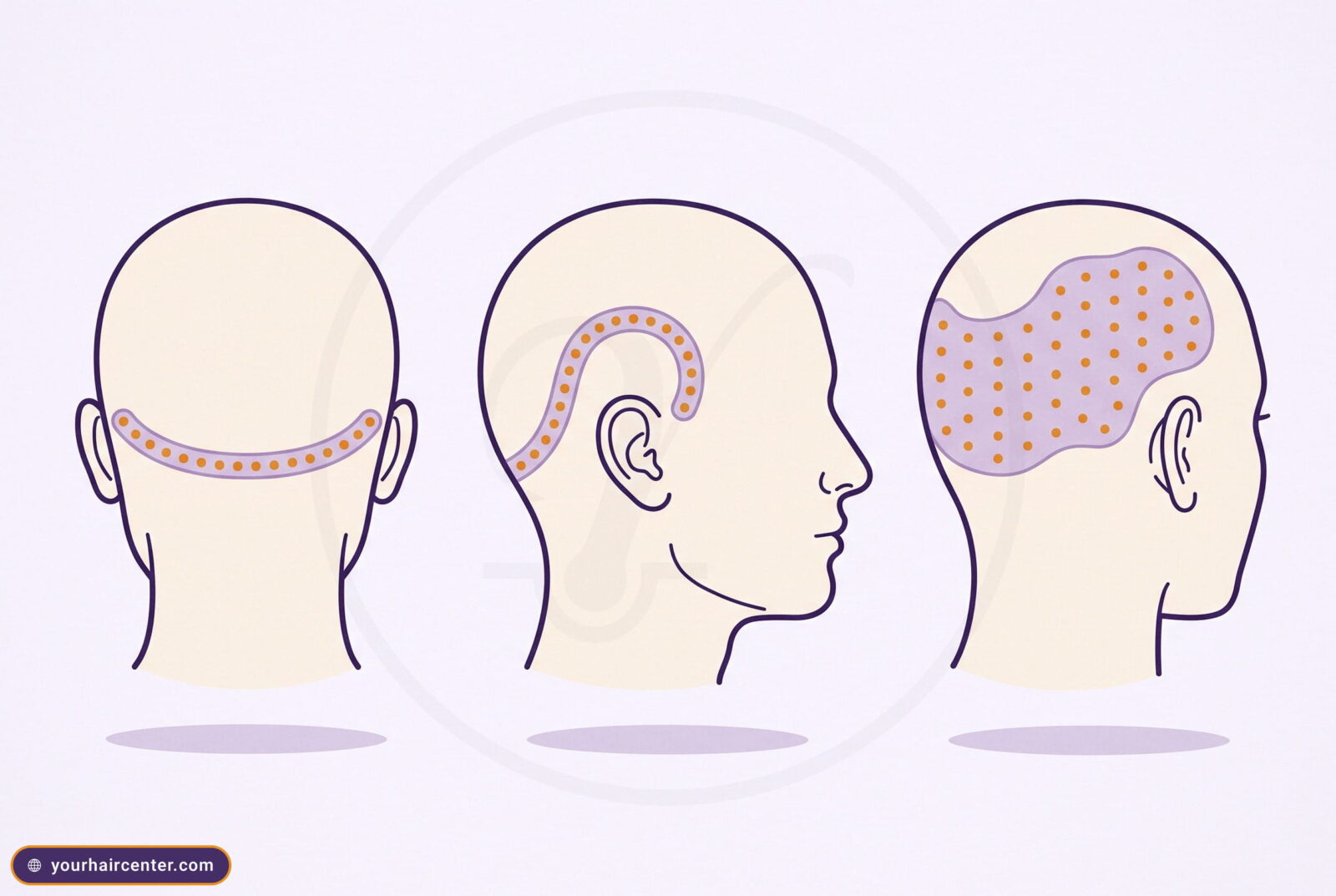
Sapphire FUE suits scar repair because of its geometry. Grafts are extracted with 0.7 to 0.8 mm punches, and recipient channels are opened with a sapphire blade at 1.0 to 1.3 mm, against 1.5 to 2.0 mm for older steel-blade work, with each channel matched to the graft and the area. In tissue whose blood supply is already limited,[1:2] a smaller opening disturbs less of what the graft depends on, and fine channels give the surgeon close control over spacing. That is the reasoning behind sapphire FUE for a hair transplant into scar tissue.
Now the honest part. No published study compares sapphire and steel blades inside scar tissue, and in normal scalp the evidence points both ways. A prospective observational study of 1,000 patients reported graft survival of 94.7% with sapphire blades against 88.9% with steel.[11] A small laser Doppler study in 12 patients found that handmade razor-blade slits caused significantly less tissue damage than sapphire blades.[12] The blade is one variable, and not the largest.
What decides the outcome of a hair transplant into scar tissue is density and spacing, set by how much blood the scar can supply. One series placed 20 to 40 grafts per square centimeter according to the blood supply of each scar.[13] In the skull-surgery series, the authors grouped patients after the fact (post hoc) by their one-year density; the six in the higher-density group, five of whom had good results, had received about 41 grafts per square centimeter at surgery against about 25 for the other four, with no significant difference in survival, and the authors suggest aiming above 40.[2:5] For comparison, the safe natural limit in healthy scalp is 40 to 45 grafts per square centimeter. The right figure for a given scar is a medical judgment made on that scar, and the classic FUE technique page explains how steel-blade work differs.
The step that protects a hair transplant into scar tissue from becoming an expensive disappointment is the test. The ISHRS describes the specialist assessing the blood supply by placing small test grafts into the scar before undertaking a larger procedure.[1:3] If those grafts grow, the scar can support a full session. If they struggle, a handful of grafts is lost rather than a whole procedure.
The scar’s texture guides that decision too. Very thick (hypertrophic) scar tissue may limit access to the underlying blood vessels, and very thin (atrophic) scar tissue may be too thin to hold transplanted follicles.[1:4]
A test before a hair transplant into scar tissue needs patience. After FUE in general, transplanted hair begins to grow about four months after placement and keeps improving until about 12 months,[13:1] so a test in a scar is read over months, not days. Keloid-prone patients need the same caution. Keloids after FUE are rare and more often linked to strip harvesting,[14] but anyone with a personal or family history of keloids is assessed with a small test area watched for a few months before a larger session.
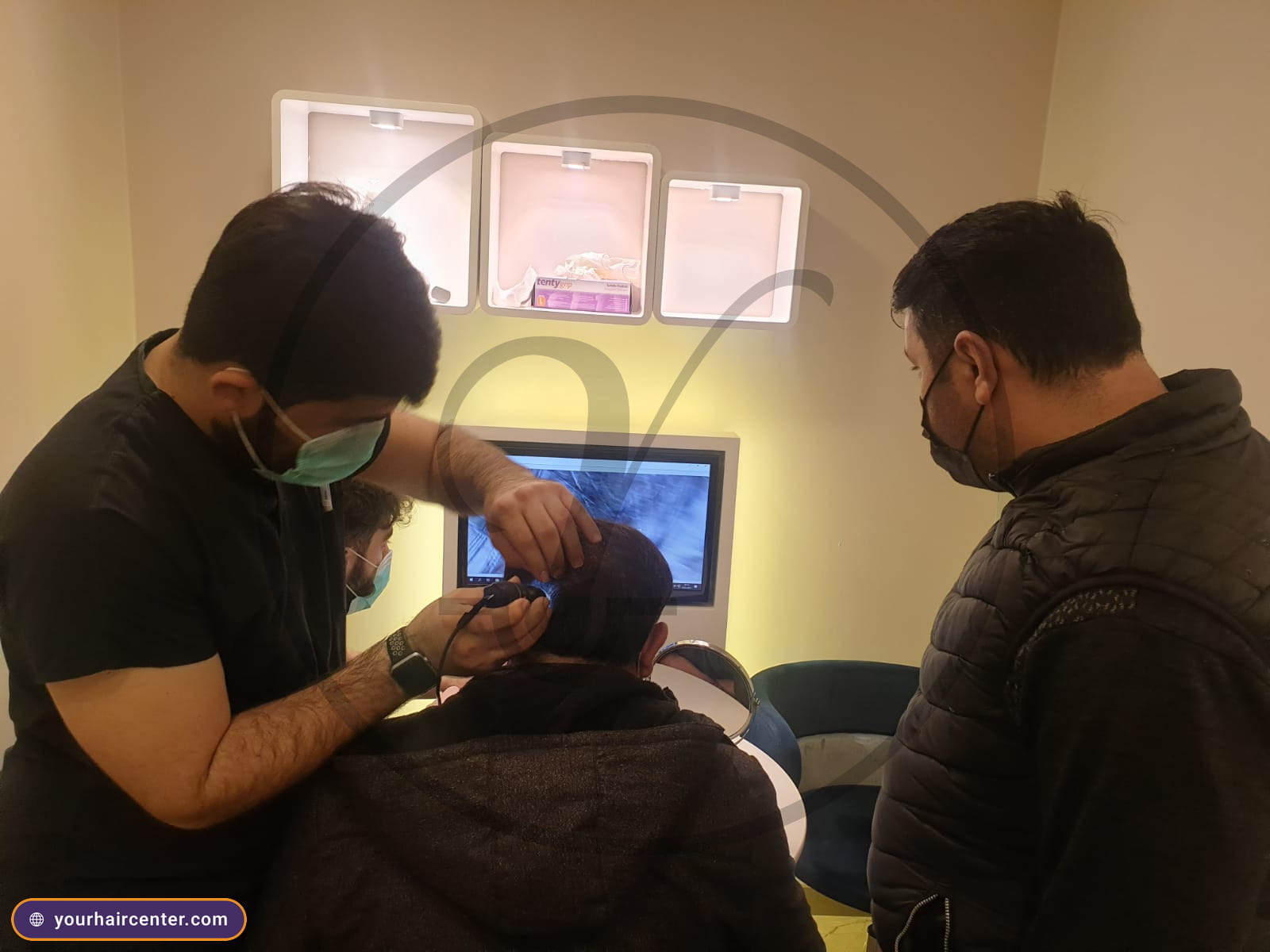
For a patient flying to Istanbul, a hair transplant into scar tissue starts at home. You send clear photos of the scar and the donor area, the medical team reviews them through a hair and scalp analysis, and it decides whether the scar needs a test before a full session. A narrow strip line bordered by healthy scalp is a different decision from a thick burn scar, and the plan is built around the one you have. To start that review, send a photo of your scar.
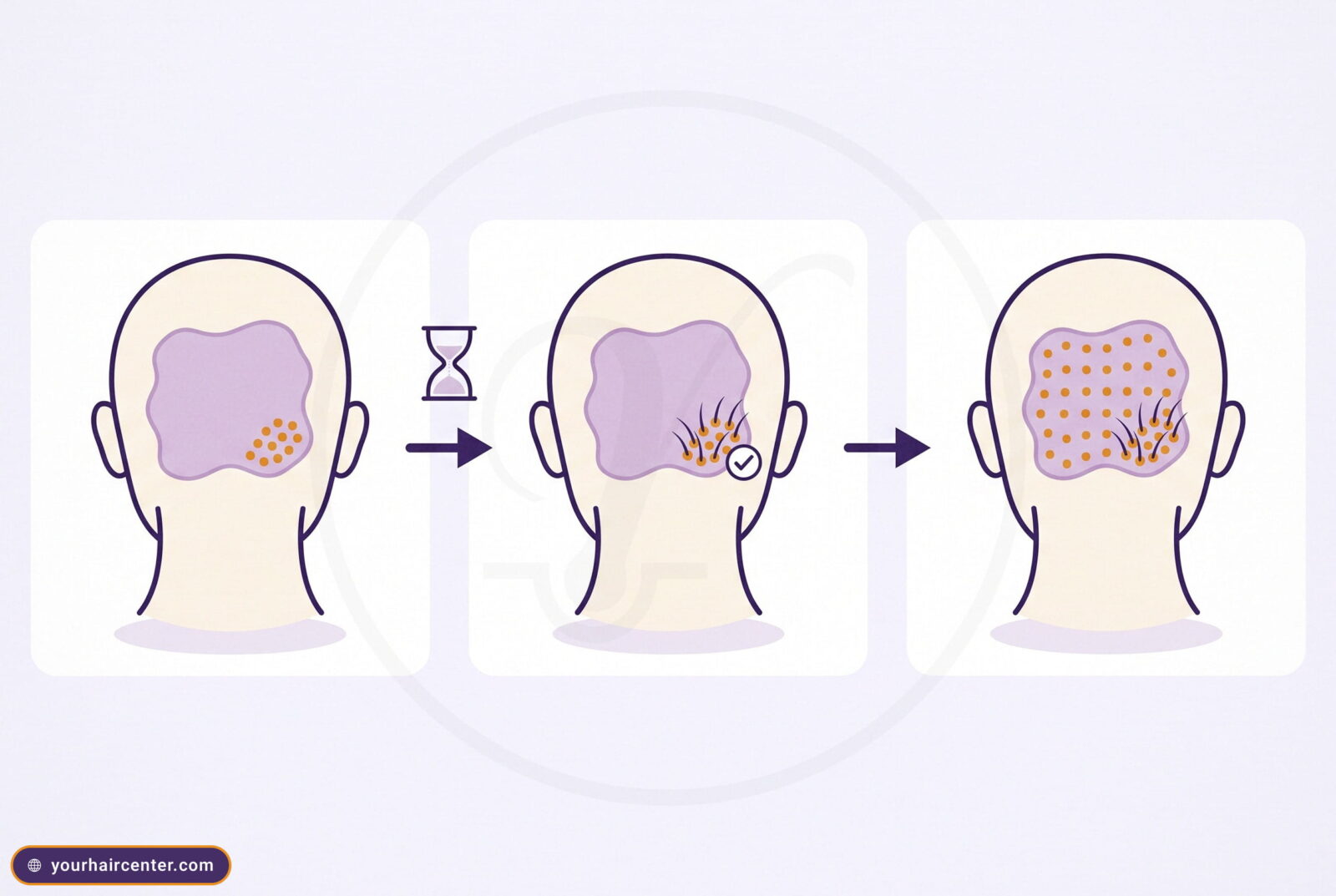
A scar should be settled before it is grafted. The 2026 consensus puts confirmation of stability at the front of patient selection,[10:1] and in the skull-surgery series every repair was performed more than a year after the original operation.[2:6] A scar that is still red, raised or changing is not ready for a hair transplant into scar tissue.
The hair around the scar matters as well. The general surgical rules still apply, which means a sufficient donor area at the back and sides of the scalp, good general health and no smoking, with smokers stopping at least one month before the procedure. When the scar sits inside wider genetic hair loss, that loss should be stable as well, and when it is still progressing, the scar repair is planned together with that loss rather than on its own, because the same donor hair has to serve both.
Photos of the scar taken some weeks apart, in the same light, help the medical team judge whether it is still changing. Bring any record of the original injury or operation as well, since the cause of the scar shapes how a hair transplant into scar tissue is planned and what result is realistic.
Plan for more than one. The 2013 series advised telling patients that a hair transplant into scar tissue may need a second or further operation for a better aesthetic result.[4:3] A 2025 series of 14 patients treated with a single FUE session for surgical scars found 3 dissatisfied (21.4%), with low or uneven density among the problems reported, and its authors concluded that multiple transplantations may be needed.[15] Severe cases can need more, and one reported burn reconstruction used three consecutive FUE sessions for scalp and eyebrow hair.[16]
The gap between sessions of a hair transplant into scar tissue follows the growth cycle. Because transplanted hair in general keeps improving until about 12 months,[13:2] a second session is planned once the first can be judged. The skull-surgery study offers a benchmark for that judgment, since five of the six patients whose scar held at least 20 grafts per square centimeter at one year had good results, and all four below that level had fair or poor results.[2:7] The scheduled reviews of the medical follow-up are where that decision is made.
For a patient traveling to Istanbul, a hair transplant into scar tissue means budgeting time as well as money. If a second session proves necessary, it is a second trip, planned after the one-year review rather than squeezed into the first visit, so the scar has the chance to show what it can carry.
A good candidate for FUT scar repair, or for any hair transplant into scar tissue, usually has three things.
Reasons to wait or to reconsider a hair transplant into scar tissue include an active scalp infection or skin condition, a scarring alopecia not yet confirmed as inactive, a thin donor area, or a keloid history that has not been tested. When the scar comes from an earlier transplant that went wrong, such as an overharvested donor area or poor growth, the repair is a different problem, covered in the guide to failed hair transplant signs and repair.
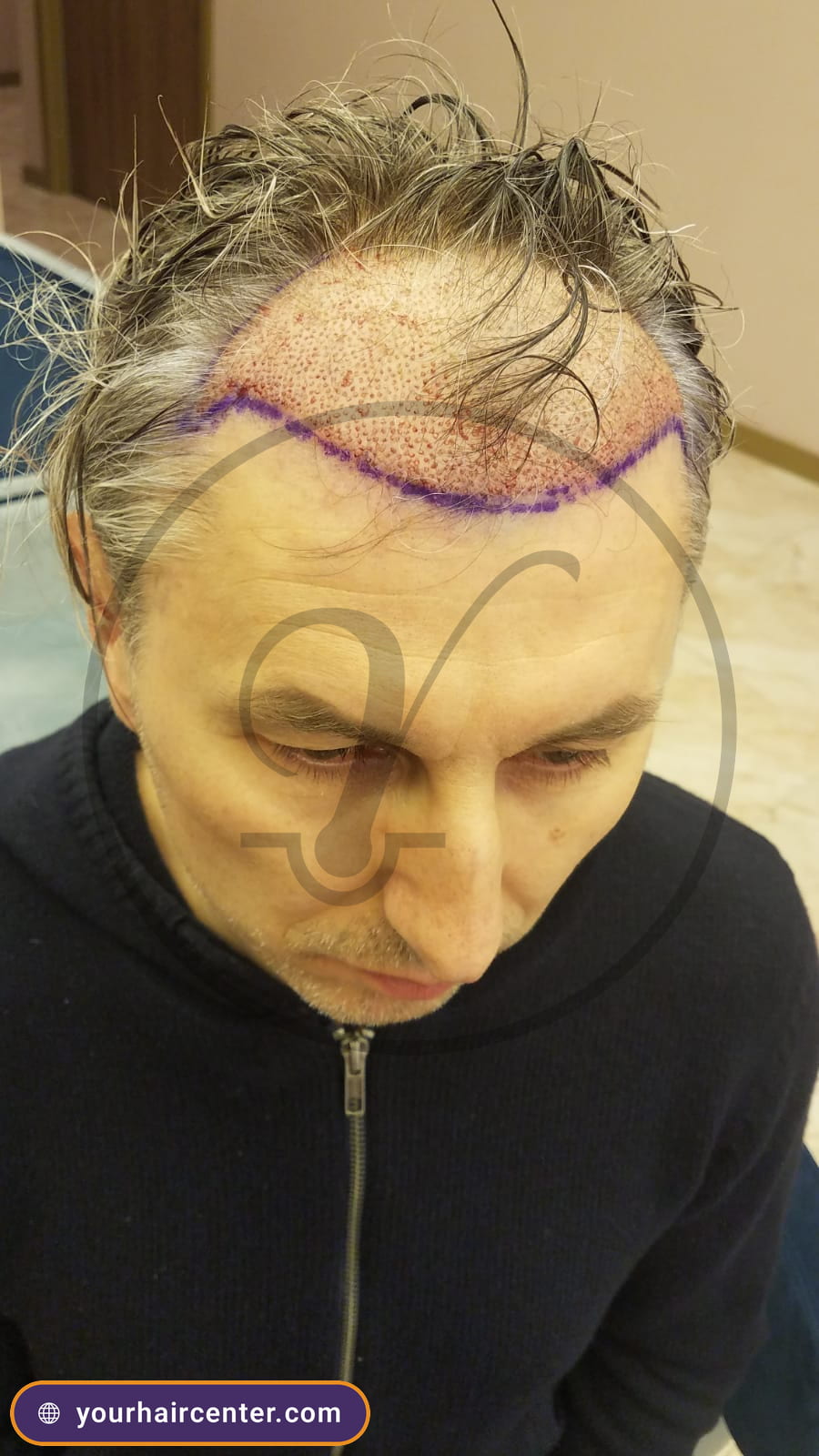
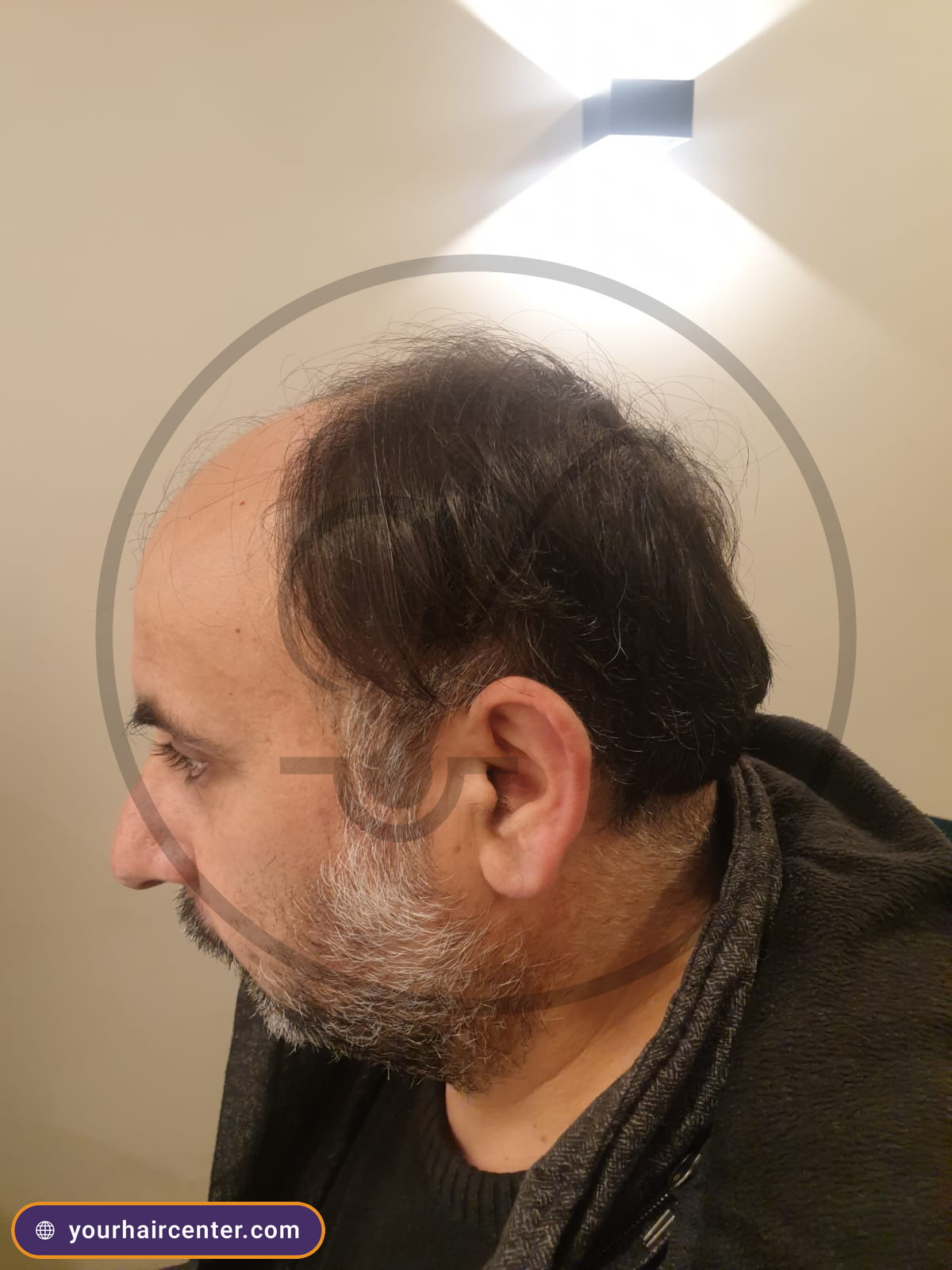
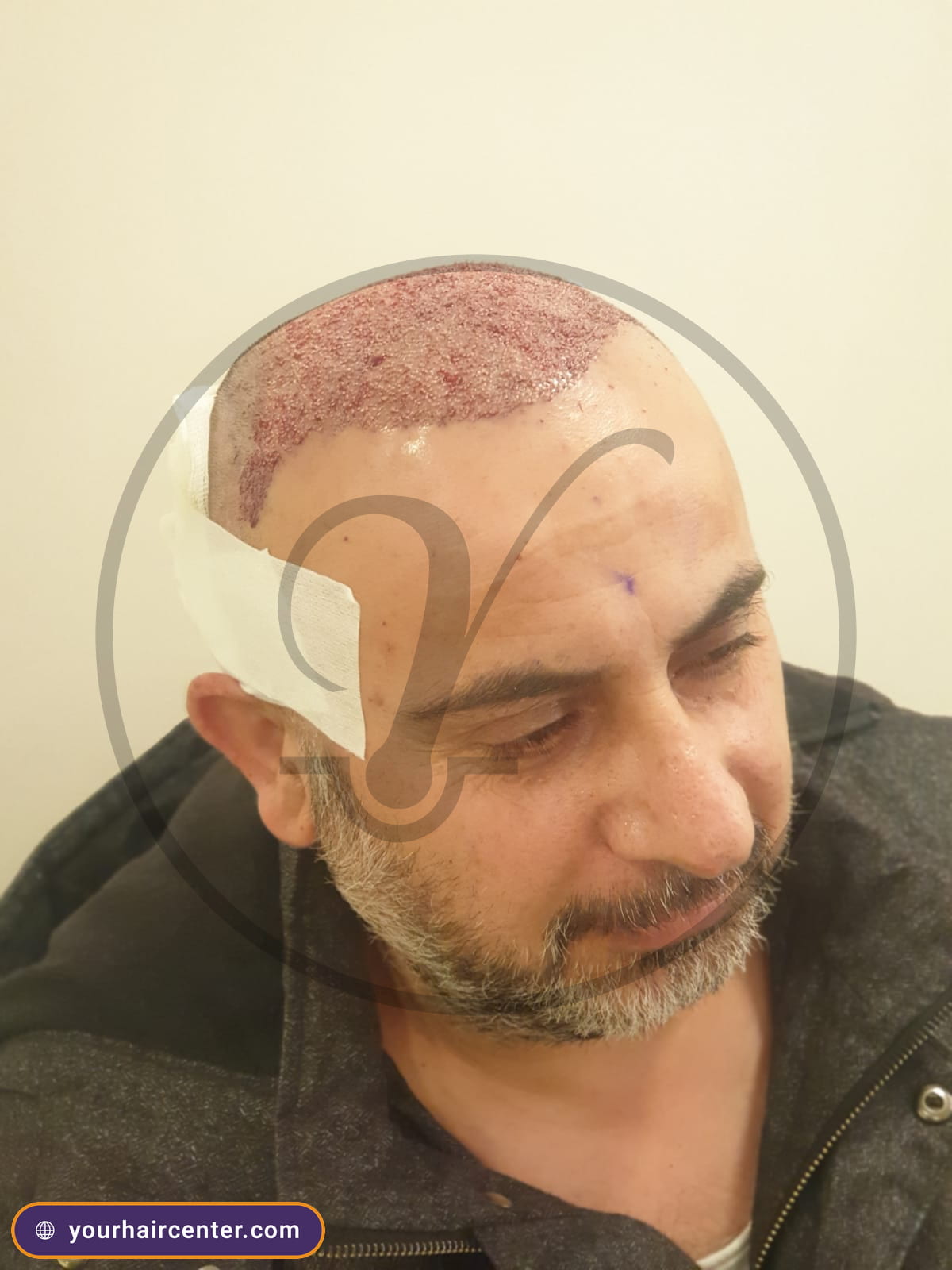
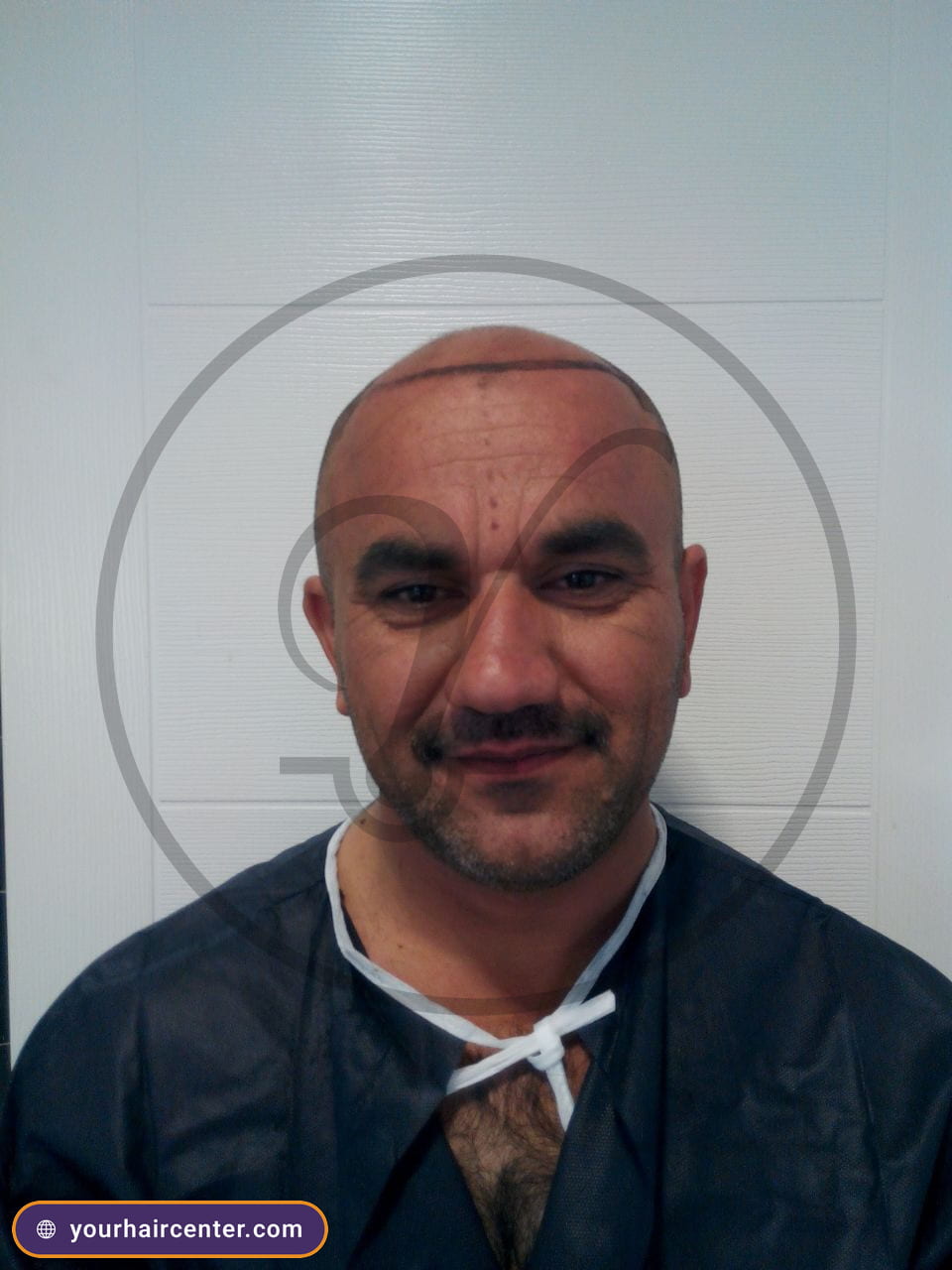
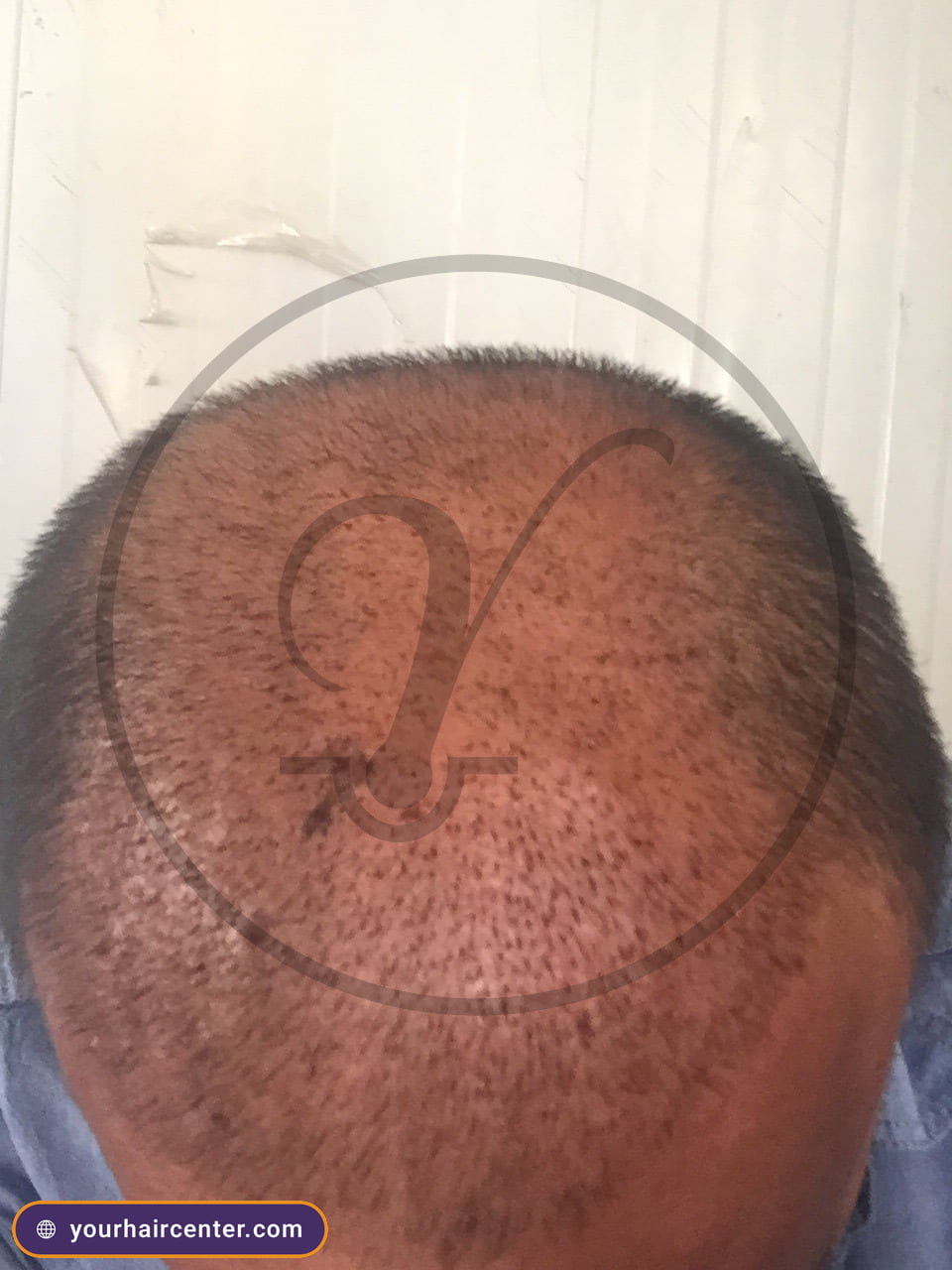
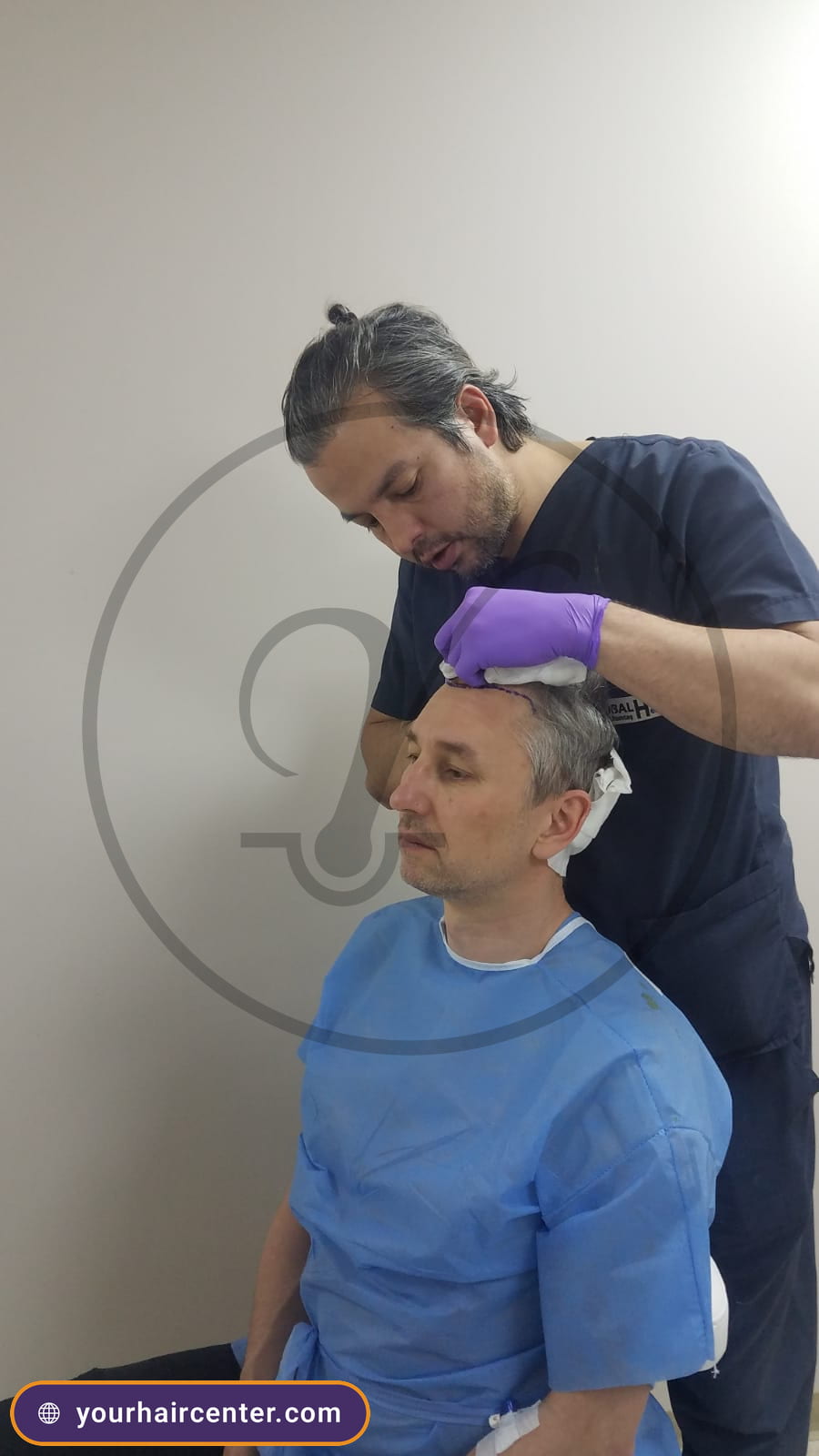
Real results from our patients’ archive. The cases below are FUE and sapphire hair transplant results, not scar repairs, photographed as they were at our partner clinics and hospitals with no filters or retouching. They show the density and natural direction a scar repair is judged against once its grafts have grown. Browse more cases in our photo gallery.
Hair cannot regrow through scar tissue on its own, because the follicles in scarred skin were destroyed as it healed.[1:5] Growing hair comes back only when healthy follicles are moved into the scar, which is exactly what a hair transplant into scar tissue does, and whether they survive depends on the blood supply the scar can offer.
A hair transplant into scar tissue can improve the scar itself as well as cover it. In a three-patient pilot study led by researchers at Imperial College London, follicles transplanted into mature scars made the tissue behave more like healthy skin over six months, with a thicker surface layer, more blood vessels and less dense collagen.[5:1] It is early research on a small group, but it suggests grafts do more than hide a scar.
Hair can be transplanted into a skin graft in selected cases. A published case report describes FUE restoring scalp and eyebrow hair after third-degree burns, including areas covered by skin grafts, over three consecutive sessions.[16:1] Grafted skin is judged like any scar, by its thickness and blood supply, so the test-graft logic above applies to it as well.
A scar repair done with FUE does leave new marks in the donor area, tiny ones where each graft was taken, but no new line is cut, and FUE scarring is less visible than a strip scar.[13:3] How visible those marks are at short haircuts, and how they fade over the following months, is covered in the guide to hair transplant scars and haircut lengths.
For most people with a stable scar the answer is yes, but the procedure asks for more planning than a standard one, a lower survival rate to plan around, a test where the scar is doubtful and often a second session. Sapphire FUE gives the surgeon fine control over spacing in fragile tissue, and the rest of a successful hair transplant into scar tissue comes down to an honest assessment of the scar. Explore the sapphire FUE hair transplant, or send a photo of your scar for an assessment to see whether yours is ready.