Wondering if your shedding is real before you book a clinic visit? The hair pull test is the one screening test you can run yourself at the bathroom mirror in about two minutes. This guide walks through the evidence-based four-step protocol, the count numbers that separate a normal result from active shedding, what a positive or negative result actually points to, and the honest line where the at-home test stops and a clinical scalp analysis takes over to name the cause.
The hair pull test is a quick screen for active hair shedding. You grasp a bundle of about 40 to 60 hairs close to the scalp, slide your fingers gently along them, and count how many come away, repeating it on the top, sides, and back of the head.[1] Two or fewer hairs per pull is normal,[2] while six or more points to active shedding.[1:1] If you have noticed more hair than usual on the pillow, in the shower drain, or in your hand after you run your fingers through it, this is the free, honest way to confirm the shedding is real before you pay for a clinic visit. It is the one screening test you can run yourself at the bathroom mirror in about two minutes, using the same gentle-traction protocol a dermatologist uses in the exam room. This guide gives you three things. First, the evidence-based four-step protocol, drawn from the published clinical revision of the test. Second, the count numbers that separate a normal result from active shedding. Third, an honest boundary on what the test can and cannot answer. Read this first so you know the framing up front. A positive at-home result is a strong signal, but it is not a diagnosis. A clinical scalp analysis is what resolves the cause.
The 4-step at-home hair pull test protocol
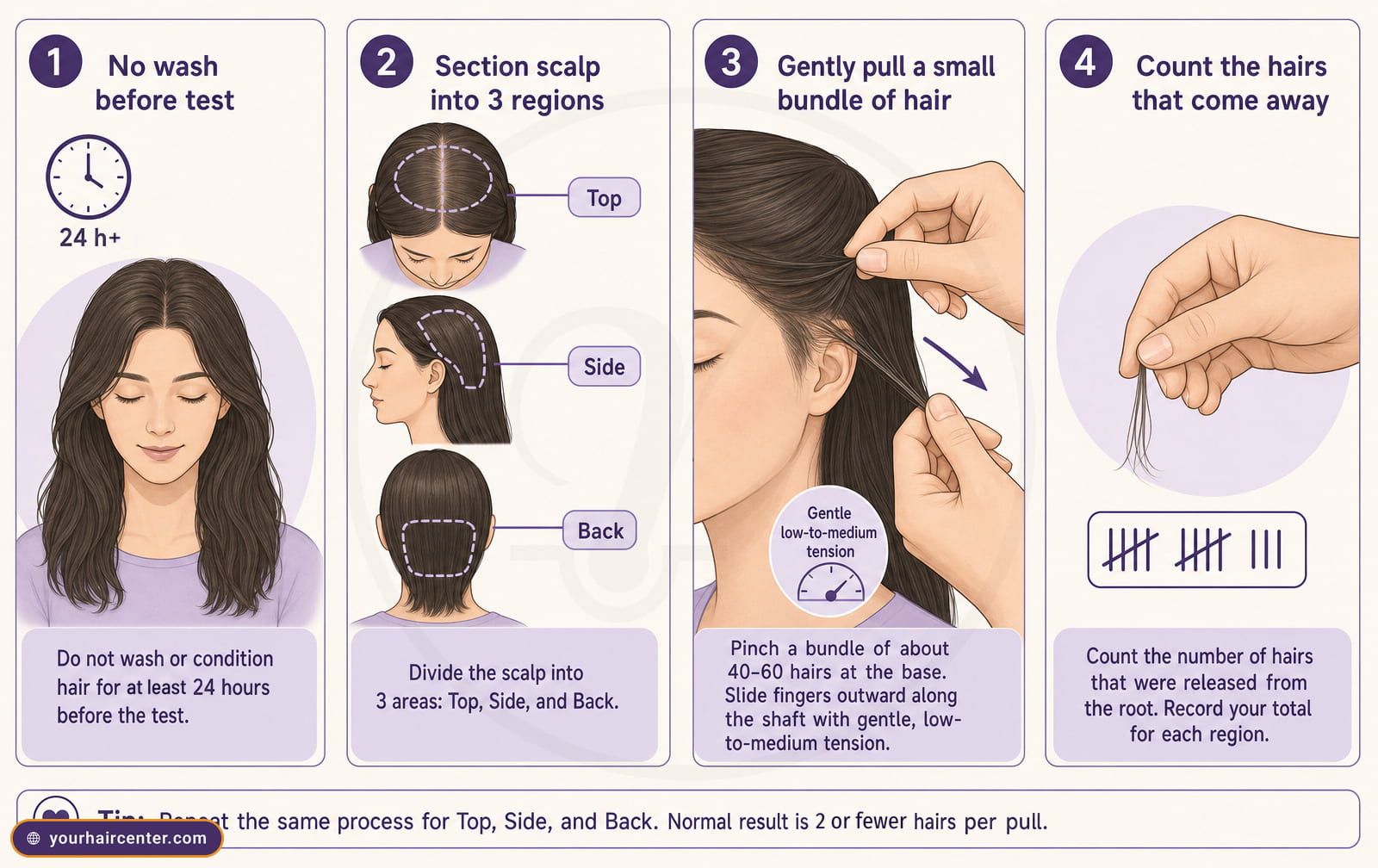
The test measures one thing, the proportion of hairs that are loose enough to release with a gentle pull, which reflects how many follicles have already shifted into the resting phase and are ready to shed. The protocol below follows the evidence-based revision of the test published in the dermatology literature.[1:2][2:1] Follow these four steps in order.
- Prep. Skip washing your hair for at least 24 hours before the test. Normal brushing is fine.
- Section. Work across three scalp regions, the top, the sides, and the back, grasping a bundle of roughly 40 to 60 hairs at each.
- Grasp and slide. Pinch the bundle at the base, then slide outward along the full shaft in one smooth motion with low to medium tension.
- Count. Count the hairs that come away after each pull, repeat across all three regions, and note the average.
Each step has a reason behind it. The day without washing follows the clinical protocol.[3] Older guidance asked for five days without washing, but the 2017 revision found that the timing of the last wash or brushing made no significant difference to the count, so a day is enough and normal brushing is allowed.[2:2] The three regions, the vertex on top, the parietal area at the sides, and the occipital area at the back, let you compare a diffuse whole-scalp shed against a localized one. The slide-and-pull is deliberately a smooth glide rather than a yank, because excessive force tears out healthy anchored hairs and inflates the result. Run the test in good light, on dry hair, and ideally have a partner help with the back of the head, where you cannot see well enough to judge the pull yourself.
How to read the result, the count thresholds
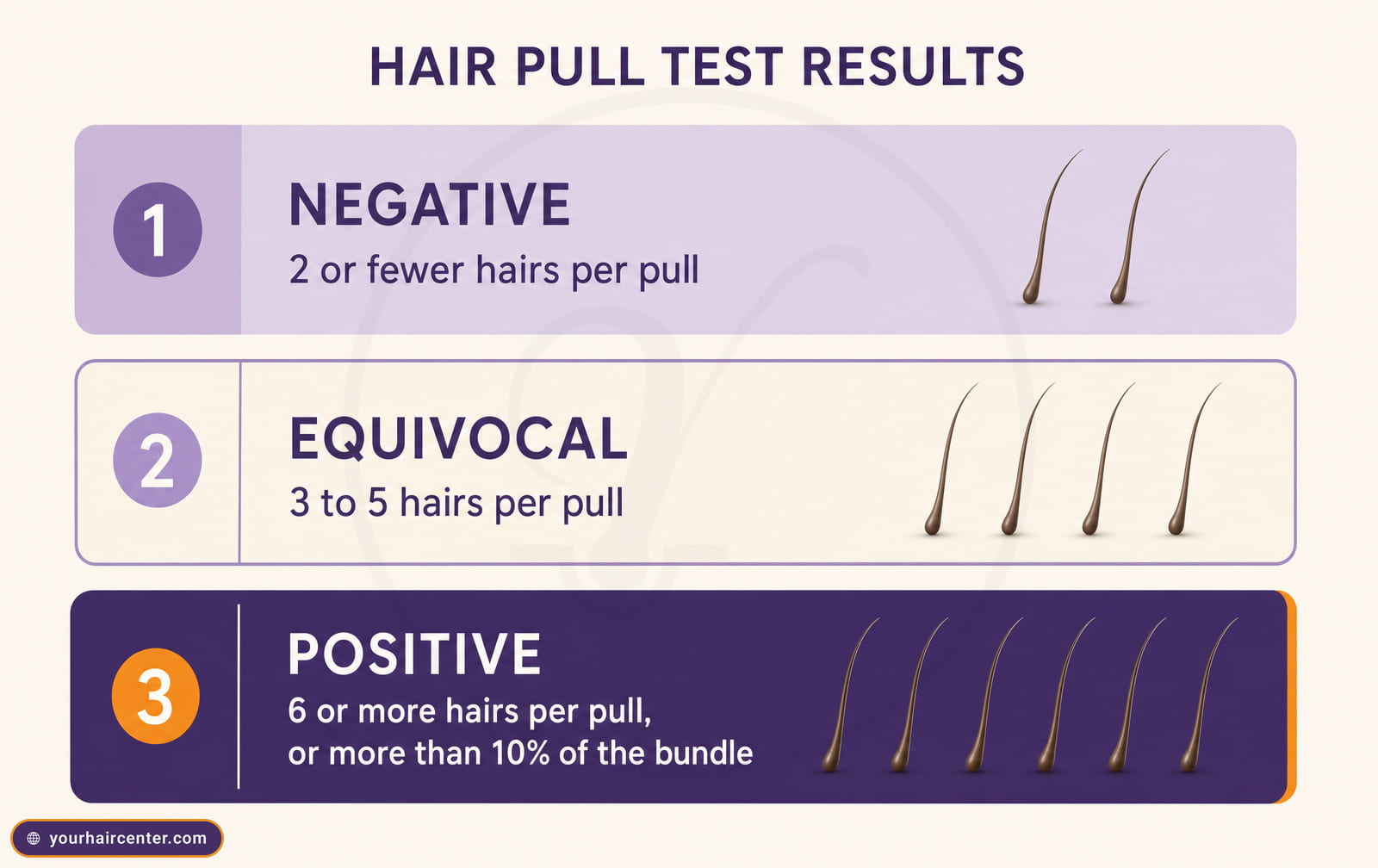
The thresholds below are the load-bearing numbers, so each one is sourced. The normal range comes from the 2017 revision of the test, the positive cutoff is the traditional one, and the band between them is where the two readings disagree.[2:3][1:3]
- Negative. Two or fewer hairs released per pull across all three regions. This is the expected baseline in a healthy scalp. In the 2017 revision, 97.2 percent of healthy adults pulled two hairs or fewer, with an average of under one hair per pull.[2:4]
- Equivocal. Three to five hairs per pull. This sits above the revised normal range but below the traditional cutoff, and more recent guidance already counts more than three as positive.[1:4][2:5] Treat it as an early signal. Retest in about four weeks under the same prep conditions, and book a scalp analysis sooner if the count climbs or thinning becomes visible.
- Positive. Six or more hairs released per pull, or more than 10 percent of the grasped bundle coming away, the traditional cutoff for active shedding that exceeds normal turnover.[1:5][3:1]
What a positive result actually means is narrow but important. It confirms that you are shedding actively right now. It does not name the cause, it does not tell apart the several conditions that drive active shedding, and it does not measure follicle miniaturization, which is the mechanism behind genetic pattern hair loss. A negative result means no abnormal active shedding at the moment, which is consistent with either a healthy scalp or a slow miniaturizing process where shedding is not the dominant feature. The test is binary, the count is a single data point, and a clinical scalp analysis extends the result with trichoscopy and a supporting blood panel.
What a positive result points to
A positive hair pull test confirms active shedding, and the next question is what is driving it. A handful of conditions account for most positive results, and naming them shows which direction the workup will take.
Telogen effluvium is the most common explanation for a positive test, a diffuse shed across the whole scalp that usually appears about two to three months after a trigger such as illness, surgery, severe stress, childbirth, a crash diet, or a new medication.[1:6] A positive hair pull test on multiple scalp sites strongly suggests this kind of active shedding.[1:7] When the trigger does not repeat, the hair usually recovers as new growth fills in over three to six months,[1:8] and PRP support during telogen recovery is one pathway a clinic may use.
Alopecia areata in an active phase can also produce a positive test, especially at the edges of an active patch where hairs release easily. A positive hair pull test here indicates active disease, while a negative one suggests the patch is stable or resolving.[1:9] The pattern is patchy rather than diffuse, and confirmed autoimmune cases route into medical hair loss treatment options.
Loose anagen syndrome is a rarer cause seen mostly in young girls, where actively growing hairs sit loosely in the follicle because the inner root sheath does not anchor them properly.[4] Because the anchor is weak, the hairs release painlessly and with very little force, so a hair pull test can bring away a strikingly high count. The reassuring part is that it is often self-limited and improves with age, so the next step is a clinical confirmation rather than aggressive treatment.[4:1]
Anagen effluvium is rapid, widespread loss of growing hairs after a toxic insult to the follicle, most often chemotherapy, where shedding often starts within about two weeks of the first dose, and sometimes radiation or a drug reaction.[5] Here the trigger is usually obvious and recent, so the pull test mostly confirms what the timeline already suggests. Most people regrow their hair once chemotherapy ends, though full recovery can take months, so the practical next step is supportive monitoring alongside the treating physician rather than a separate hair loss workup.[5:1]
The common misread is genetic pattern hair loss. Androgenetic alopecia usually gives a negative pull test, because it works through gradual shaft narrowing rather than active shedding.[1:10] To understand that distinction, see telling stress-driven shedding from genetic thinning and the named alopecia patterns and what to look for. The pull test narrows the differential but does not close it. The step that names the condition is trichoscopy paired with a supporting blood panel.
What a negative result means, and what it does not
A negative hair pull test is reassuring, but it is easy to over-read. What it confirms is narrow, no abnormal active shedding right now, on the day you ran it. It does not clear you of every form of hair loss, and three patterns slip past a negative result.
- Androgenetic alopecia. Genetic pattern thinning is a slow miniaturization process rather than an active shedding mechanism, so the hair pull test is typically negative in steady-state patterned loss. That diagnosis runs through trichoscopy, where shaft-diameter variability and miniaturization zones are the markers, not a shed count.
- Scarring alopecia. In the scarred center the follicles are already gone, so the pull comes back empty there, and any hairs that come away at the active edge are growing-phase hairs that a home count cannot read.[1:11] That diagnosis runs through the visible loss of follicle openings on close inspection, not through shedding.
- Intermittent shedding. You may simply have run the hair pull test during a quiet window between episodes. If the shedding resumes, retest in four to six weeks under the same prep conditions.
The practical rule is simple. If you can see visible thinning or recession in the mirror and the pull test is still negative, the at-home test is not the right tool for that pattern, and you should book a trichoscopy when the pull test cannot answer the question.
Where the at-home test stops and the clinic-grade test starts
This is the honest boundary that most guides skip. The at-home hair pull test delivers exactly one binary data point, are you shedding more than expected right now, yes or no. That is genuinely useful as a trigger, and it is also the limit of what a pull at the mirror can tell you. A clinical workup can add four diagnostic layers the home test cannot reach. The scalp analysis at Your Hair Center runs trichoscopy and the blood panel, and the wash test and the trichogram are tools a dermatologist adds when the picture stays unclear.
- Trichoscopy. A clinician moves a digital scope at up to 200x across your scalp while you sit still, and the magnified image appears on a screen you can see too. It maps shaft-diameter variability, miniaturization zones, exclamation-mark hairs, perifollicular inflammation, and yellow dots, the markers that separate genetic pattern loss from telogen effluvium and from autoimmune patterns regardless of whether active shedding is present. Nothing is extracted and there is no discomfort, so it reads the structure the hair pull test cannot see.
- The wash test. You stop washing your hair for a set number of days, then shampoo over a basin or filter that collects every shed strand so the total can be counted. It quantifies total resting-phase output rather than just the response to a single hair pull test, which turns one snapshot into a measured volume and shows whether the shedding is genuinely heavy or simply felt that way.
- The trichogram. A small group of hairs is plucked and examined under a microscope for the ratio of growing, resting, and damaged hairs. That ratio is a quantitative read on the growth-phase balance that a finger count cannot produce, and it tells the clinician whether the resting fraction is truly elevated rather than estimated from a single hair pull test.
- A supporting blood panel. A blood draw matched to your history checks markers such as ferritin, TSH, vitamin D, and a complete blood count, with hormone tests added when the picture points to them, the workup that names the underlying driver behind the shedding. A low ferritin or an off-range thyroid result, for example, can sit quietly behind a positive screen, and only the panel surfaces it so the cause is treated rather than the symptom.
The operational gap is clear. The home test cannot reach miniaturization, cannot distinguish patterns, and cannot name the cause, while the clinic-grade workup answers all three. A positive at-home pull test is the trigger that justifies the follow-up, so the next move after a positive screen is to book a clinical scalp analysis to close the diagnostic loop. When the home result and the clinical findings line up you stop guessing, rather than treating a cause they never confirmed.
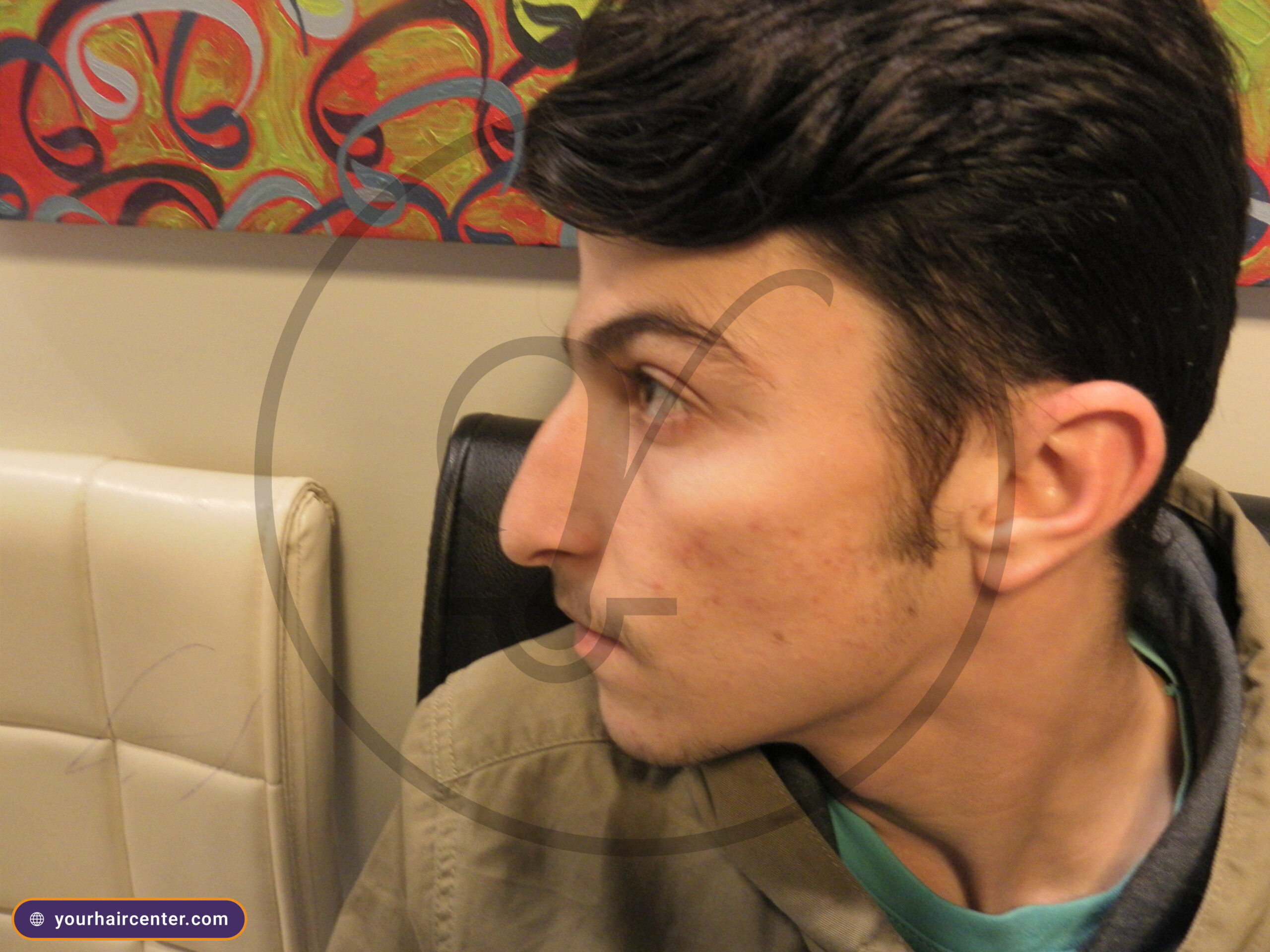
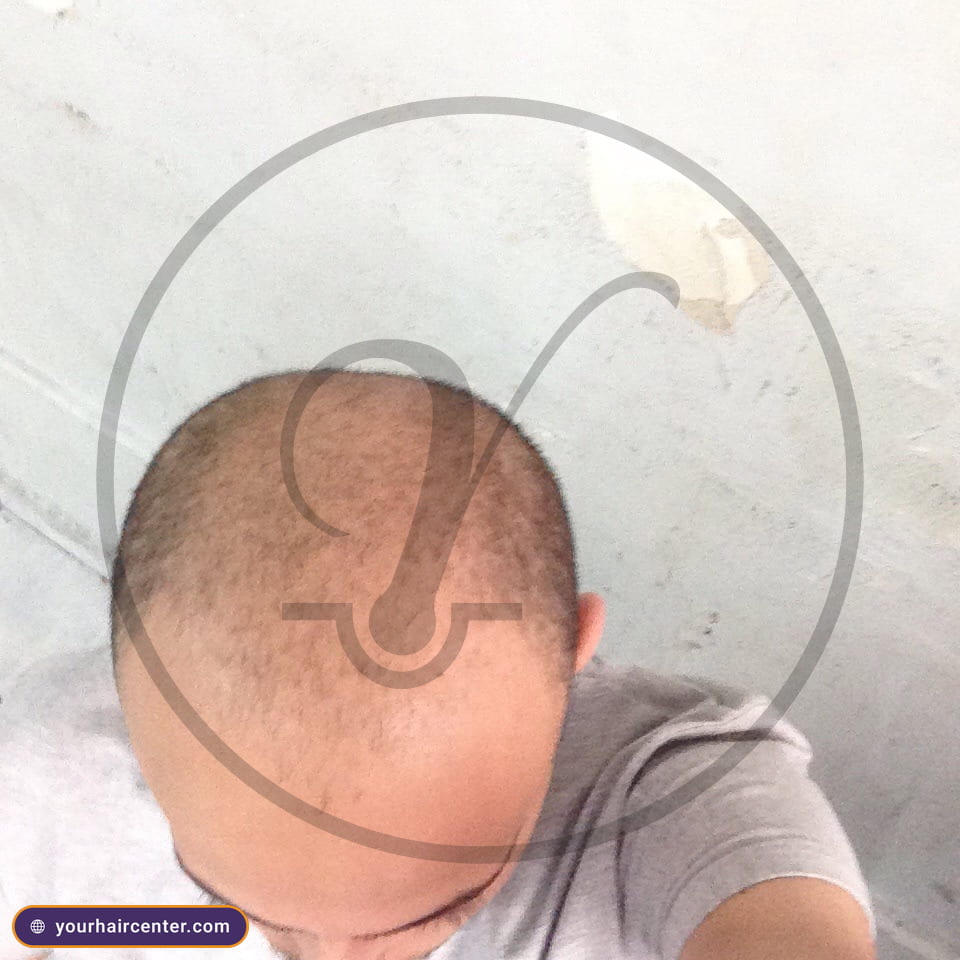
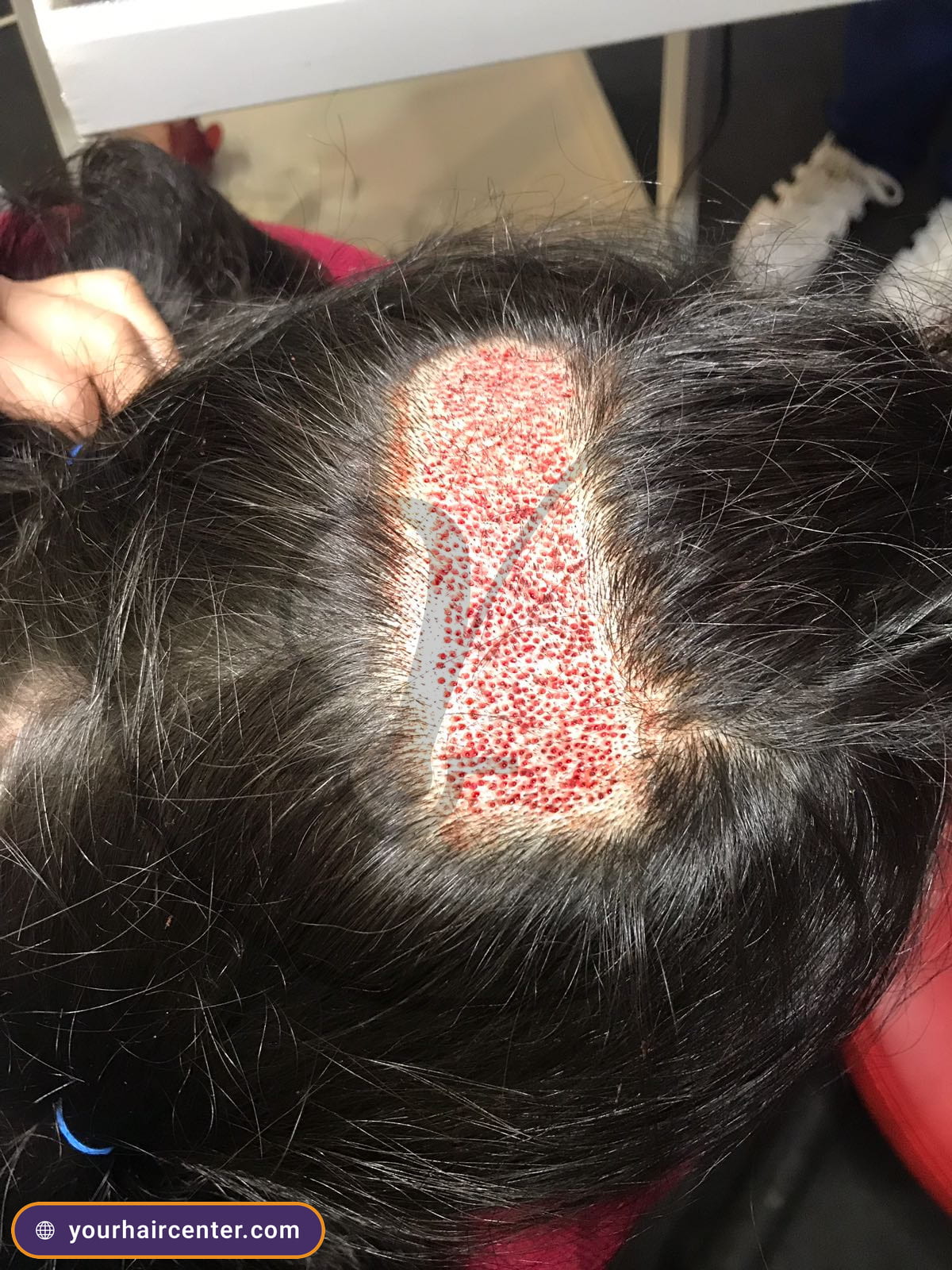
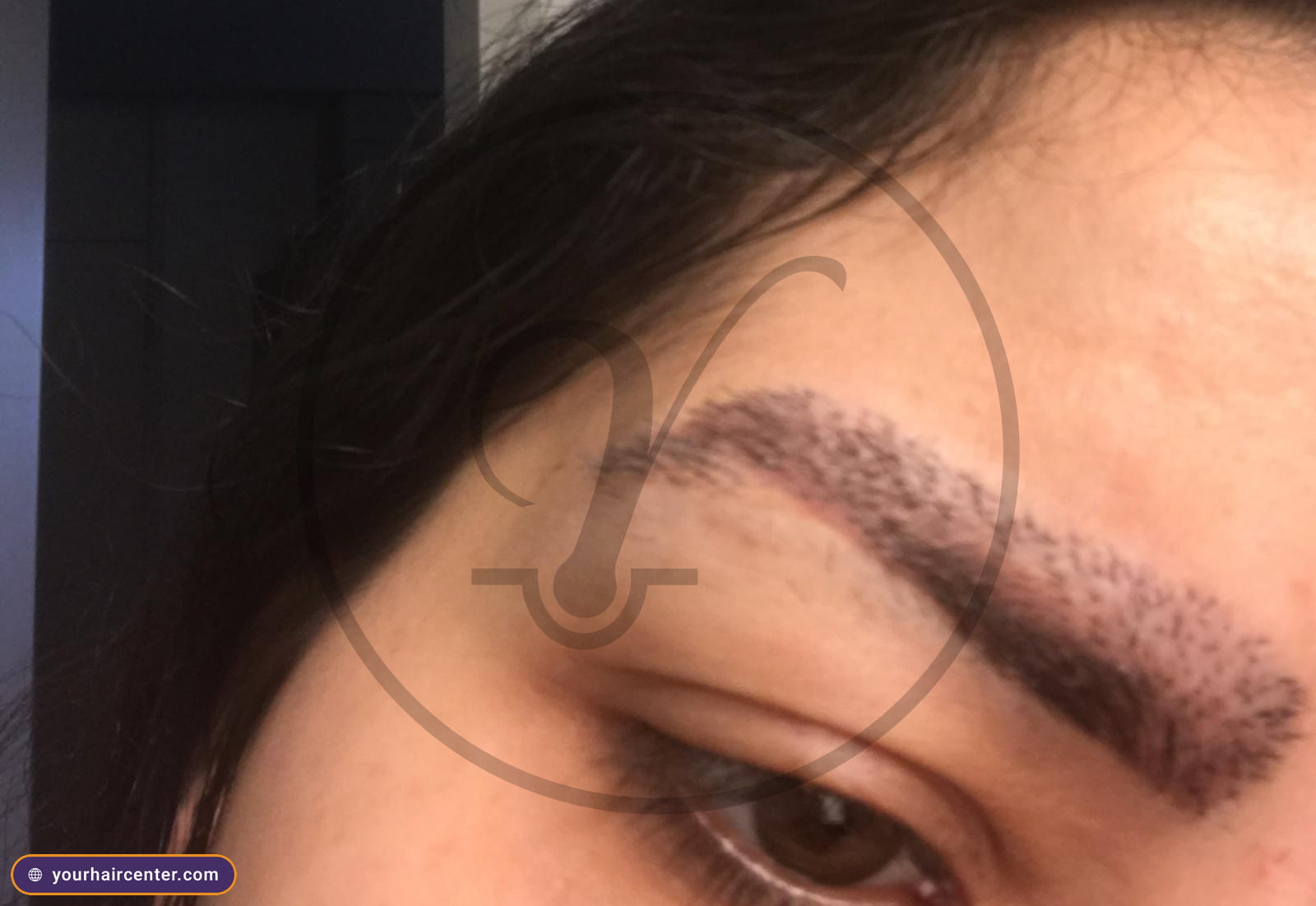
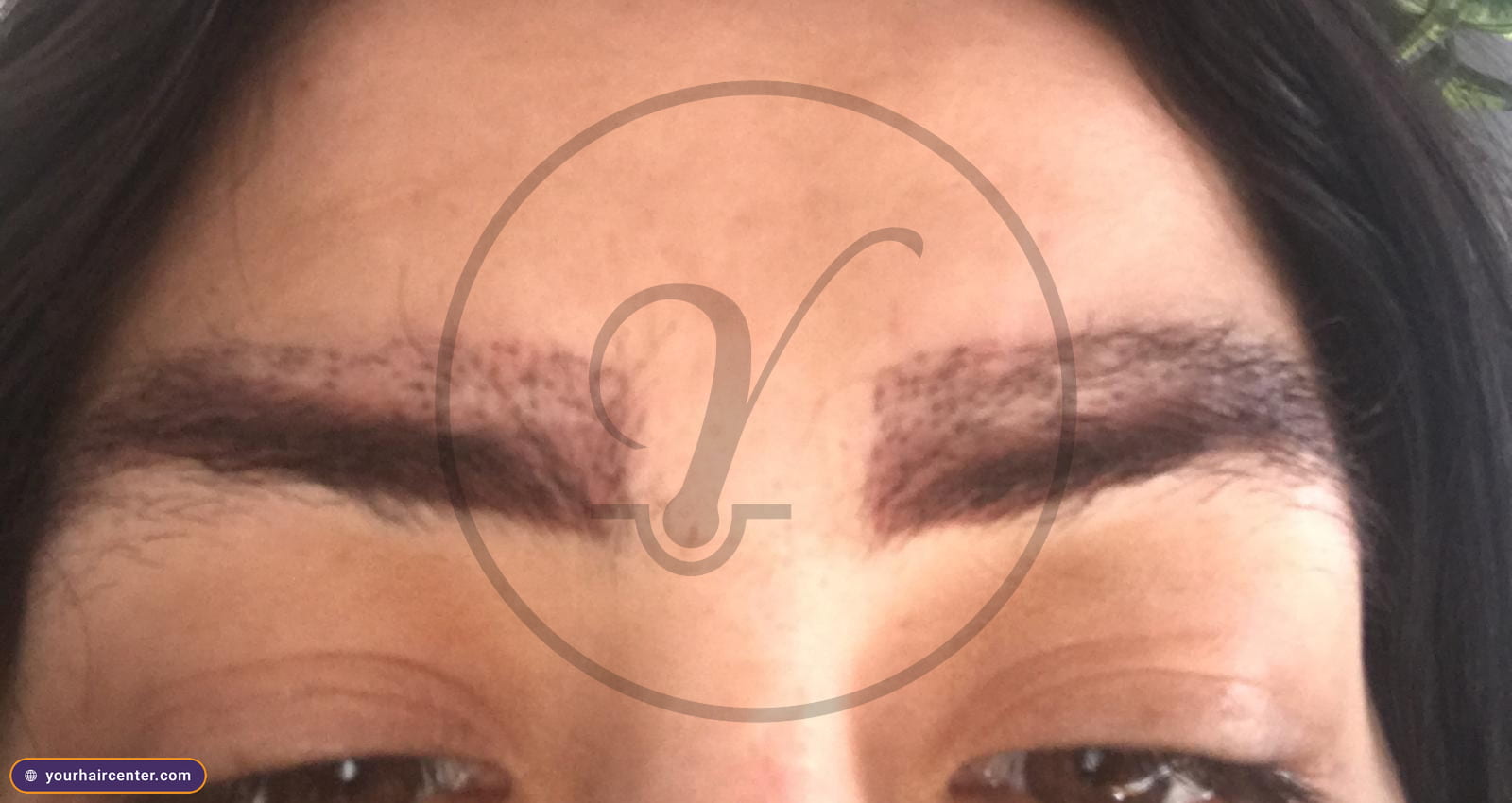
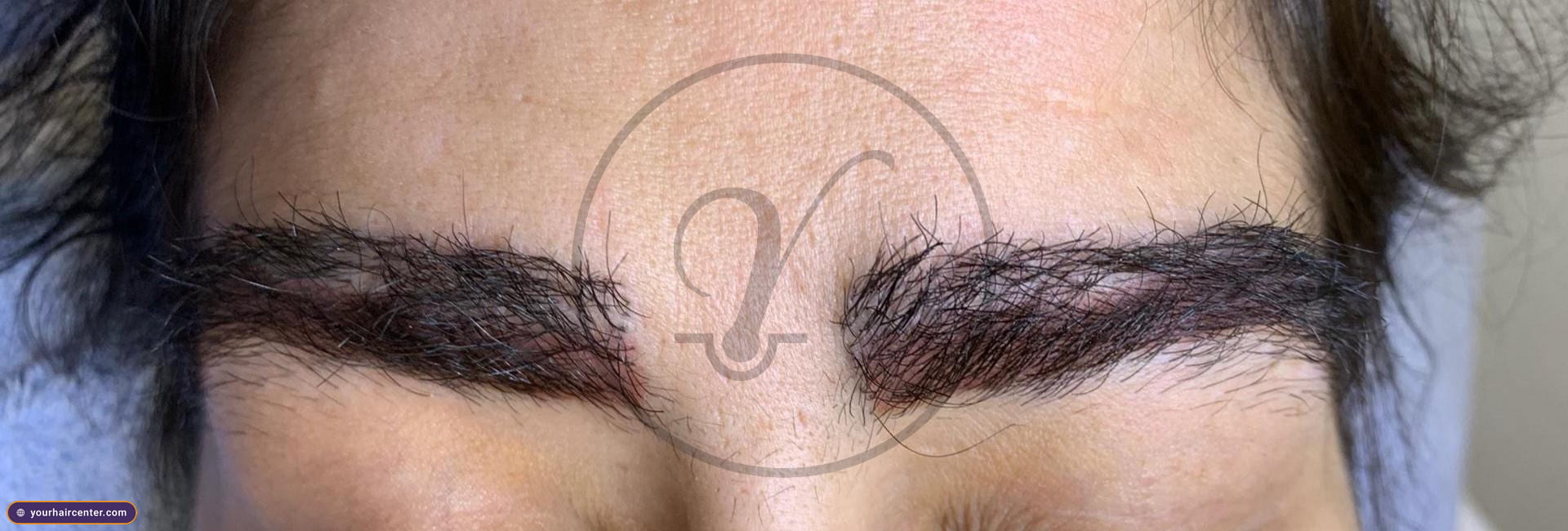
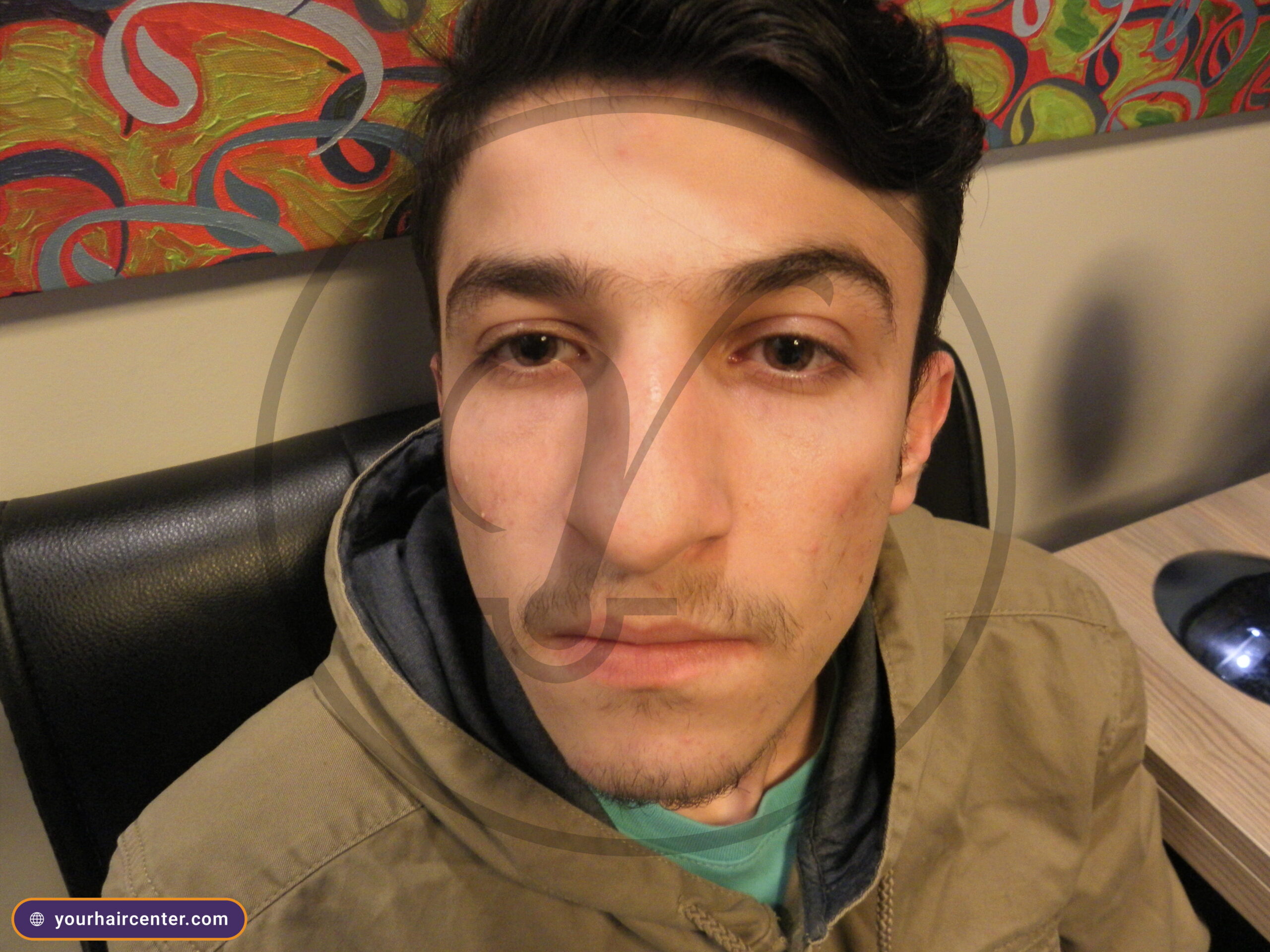
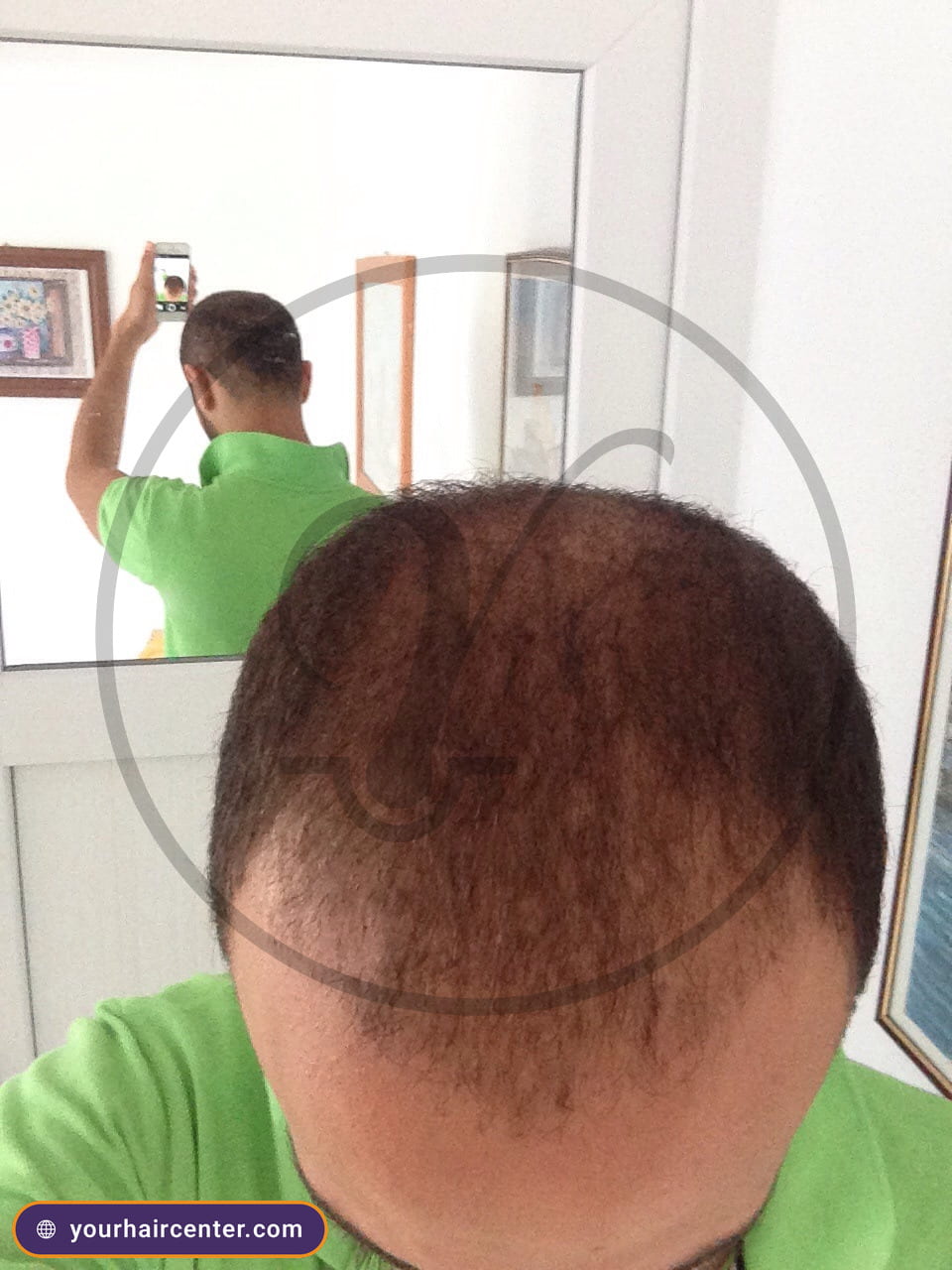
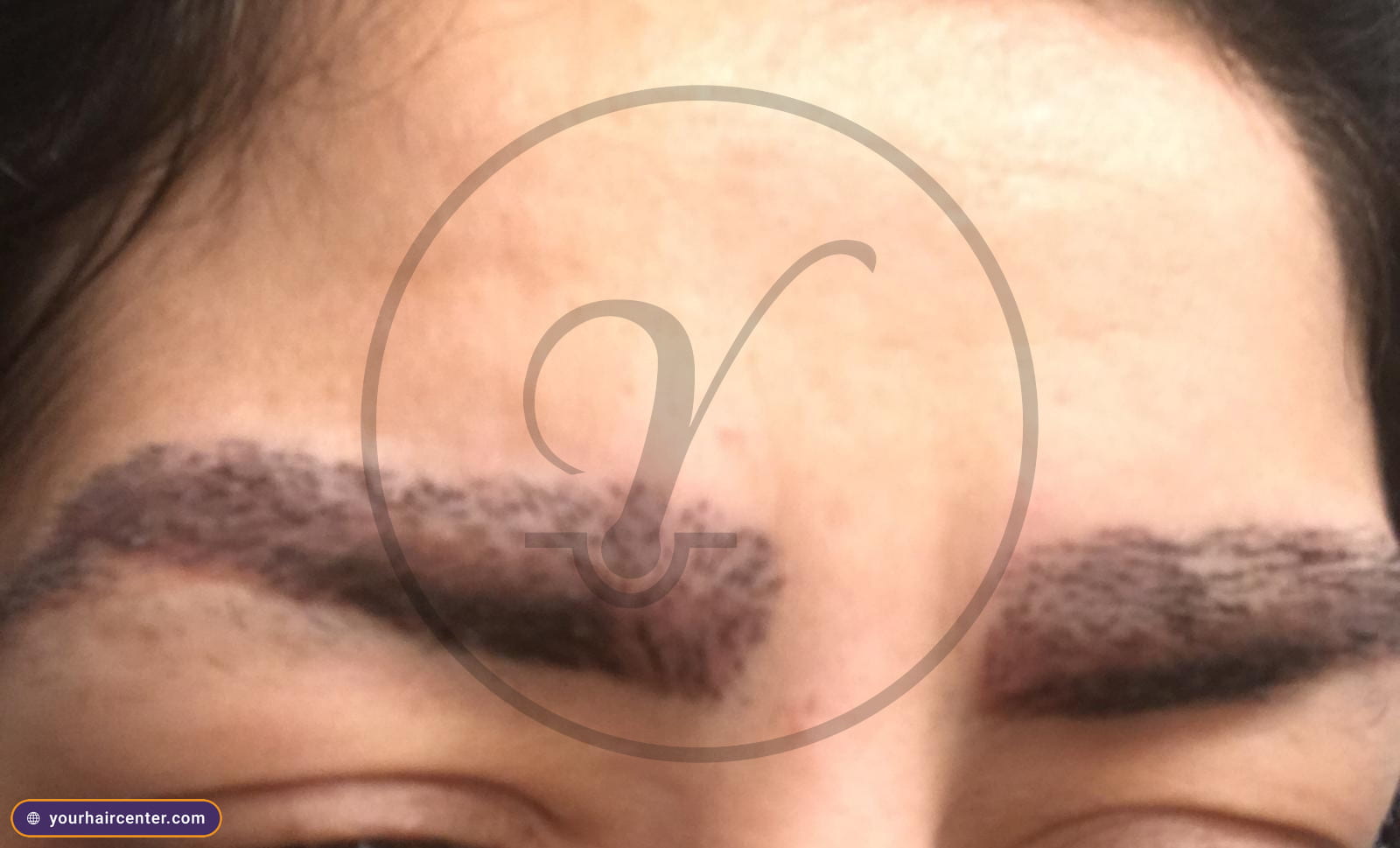
Real results from our patients’ archive. Photos exactly as captured at our accredited partner clinics, with no filters and no retouching. Browse more cases in our photo gallery.


What to do next based on your result
Turn the result into a decision rather than a worry. Match your count to one of the four branches below and take the next step it points to.
- Negative and no other concern. Monitor. Retest in about three months if the shedding resumes or if you notice a visible change in density.
- Negative but visible thinning in the mirror. A negative hair pull test does not clear patterned loss, so book a trichoscopy directly, because that diagnosis runs through shaft-diameter mapping rather than a shed count.
- Equivocal, three to five per pull. Retest in four weeks after the same day without washing and watch whether the count is trending up or down, and book a scalp analysis sooner if it climbs or thinning becomes visible.
- Positive, six or more per pull or more than 10 percent of the bundle. Book a clinical scalp analysis within four to six weeks, and run a supporting blood panel in parallel so the two findings together resolve the differential. The companion guide on the full blood panel to run alongside the scalp analysis covers what that workup checks, and you can book a clinical scalp analysis directly.
The framing to hold on to is this. The hair pull test is a binary trigger, and the clinical scalp analysis is what names the condition behind a positive hair pull test and routes the matched treatment pathway.
Frequently asked questions
What causes a positive hair pull test?
A positive result is caused by active shedding. The main drivers are telogen effluvium and an active phase of alopecia areata, with loose anagen syndrome in young children and anagen effluvium after chemotherapy as rarer causes. Genetic pattern hair loss usually does not drive a positive result. Get a clinical scalp analysis to confirm the cause.
How accurate is the hair pull test?
It is a screen, not a diagnosis. The test had little validation and unclear prep rules until a 2017 study measured it in 181 adults, lowered the normal range to two hairs or fewer, and found that the timing of washing and brushing made no significant difference.[2:6] Your result still depends on pulling with the same gentle force each time, so the test is best used as a yes-or-no signal rather than a stand-alone diagnostic.
How to do a hair pull test at home?
What does a hair pull test mean?
Hair pull test vs hair tug test, what is the difference?
The two answer different questions. The pull test grasps near the root and measures hairs releasing at the bulb, which signals active shedding. The tug test holds a bundle at mid-shaft with one hand and pulls the ends with the other to check for breakage, which signals fragile hair or a shaft problem rather than shedding.[3:3]
Is the hair pull test reliable for men?
The protocol is identical for men, but the interpretation weights differently. A positive result in men more often reflects telogen effluvium than an autoimmune cause, while genetic pattern loss in men typically presents with a negative pull test plus visible patterning. For that distinction, see telling telogen effluvium from genetic thinning.
A positive result is a trigger, not an answer
A positive at-home hair pull test is a screening trigger, not a diagnosis. It is a strong signal that something is actively shedding right now, and in most cases the conditions behind it are reversible when they are caught early. The step that names the condition and prescribes the matched treatment pathway is a clinical scalp analysis at Your Hair Center, and four to six weeks is the window that protects your treatment options without any need to panic. Book a free scalp analysis to move from a single shed count to a clear answer, or send your photos via WhatsApp and a specialist will help you figure out what comes next.
The content and sources of this guide were reviewed on 3 October 2026.
References
-
Syed HA, Zito PM. "Alopecia," StatPearls, NCBI Bookshelf, 2024. https://www.ncbi.nlm.nih.gov/books/NBK538178/ (opens in new tab) ︎ ︎ ︎ ︎ ︎ ︎ ︎ ︎ ︎ ︎ ︎ ︎ ︎ ︎
-
McDonald KA, Shelley AJ, Colantonio S, Beecker J. "Hair pull test: Evidence-based update and revision of guidelines," Journal of the American Academy of Dermatology, 2017. https://pubmed.ncbi.nlm.nih.gov/28010890/ (opens in new tab) ︎ ︎ ︎ ︎ ︎ ︎ ︎ ︎
-
Singh S, Muthuvel K. "Practical Approach to Hair Loss Diagnosis," Indian Journal of Plastic Surgery, 2021. https://pmc.ncbi.nlm.nih.gov/articles/PMC8719967/ (opens in new tab) ︎ ︎ ︎ ︎
-
Maxfield L, Cook C. "Loose Anagen Syndrome," StatPearls, NCBI Bookshelf, 2023. https://www.ncbi.nlm.nih.gov/books/NBK526030/ (opens in new tab) ︎ ︎
-
Saleh D, Nassereddin A, Saleh HM, Cook C. "Anagen Effluvium," StatPearls, NCBI Bookshelf, 2024. https://www.ncbi.nlm.nih.gov/books/NBK482293/ (opens in new tab) ︎ ︎