Most recovery guides show only the clinical clock. This no shave fue timeline runs two clocks side by side, what your scalp is doing medically and what a colleague actually sees at 3 feet across a meeting table. Follow the day by day map from Day 1 arrival in Istanbul through the Day 7 Tuesday standup moment and the Month 1 shock loss panic point, on to your final Month 12 result, with real archive backed cases at every checkpoint.

The honest answer to "how long until I am back at my desk" has two timelines stacked on top of each other. The clinical timeline tracks what your scalp is doing under the surface, scab formation, shock loss, follicle reset, new growth. The office-visibility timeline tracks what a colleague sees at 3 feet across a meeting table on the morning you walk back in. With a no shave procedure those two timelines diverge sharply, and the no shave fue timeline you actually need is the one that runs them side by side.
Your scalp can still be finishing its first week of healing on the same morning you sit through a meeting with nobody noticing a thing. What follows is the day-by-day no-shave FUE timeline for both tracks, anchored to the 4-day Istanbul journey, the named-day visibility markers, and real archive-backed patient cases at Day 7 and Month 3. Read it once and you stop asking "when am I healed" and start asking the only question that decides your calendar, "when can a colleague tell".
The dual-track no shave FUE timeline at a glance
Two clocks run at once. Track A is clinical, what your scalp is doing internally. Track B is office-visibility, what a colleague reads at 3 feet. The gap between them is the entire point of a no-shave approach. Here is the full no-shave FUE timeline from Day 1 to Month 12, with the visibility marker on every rung.
- Day 1 (post-op). Extraction sites sealed, recipient channels closing. Office-visibility is not applicable here, you are resting at the hotel in Istanbul.
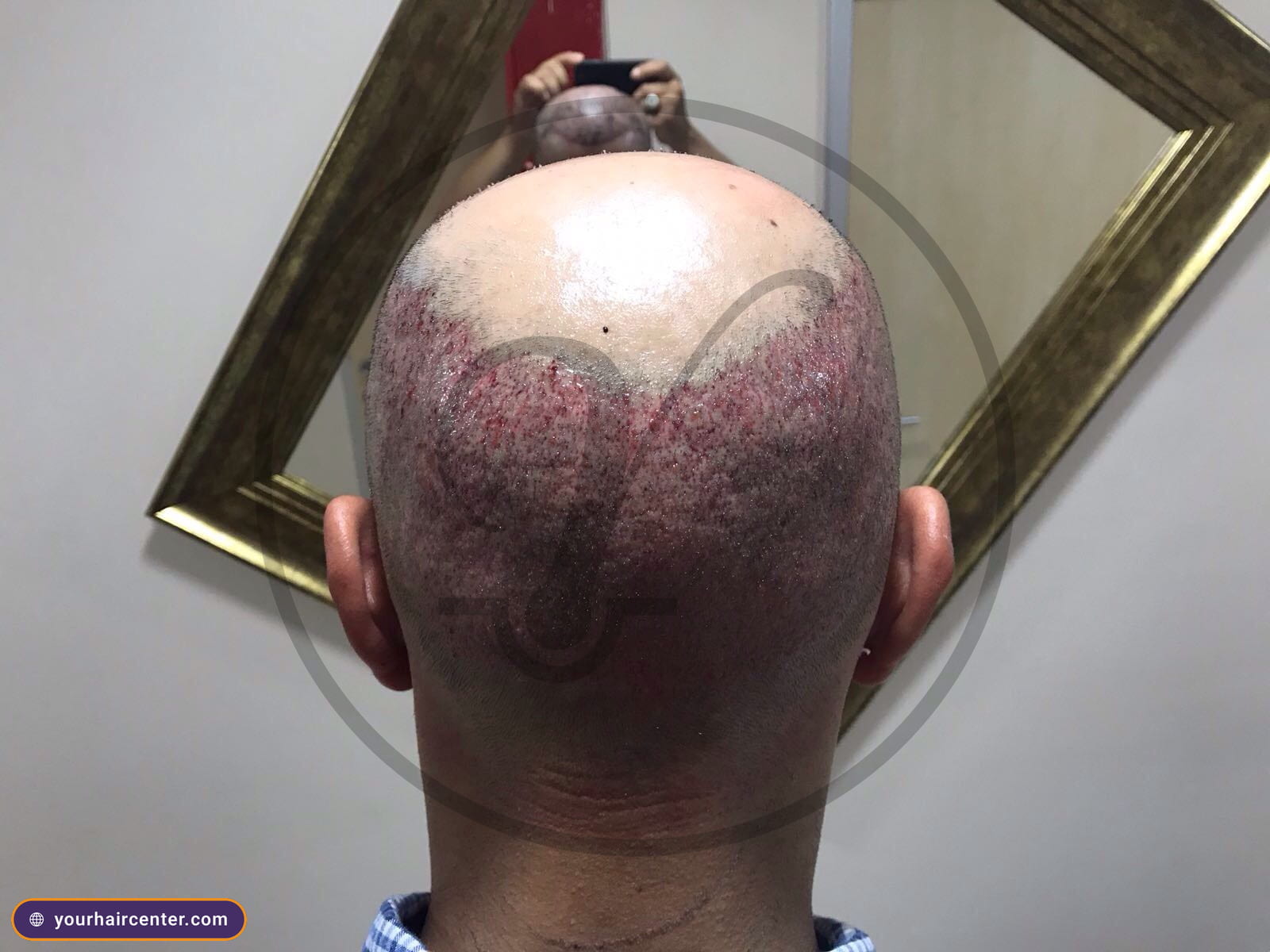
- Day 3. First professional wash, first scab layer set, light redness across the recipient zone. Office-visibility is passable on a high-angled video call, with redness readable in person at 3 feet.
- Day 7. Scabs exfoliating, donor area blending back into your existing length. Office-visibility is passable in person at 3 feet under normal office lighting.
- Weeks 2 to 4. Scabs cleared, scalp returning to baseline tone. Office-visibility is indistinguishable from pre-op at conversational distance.
- Month 1. Shock loss begins, transplanted shafts shed while the follicle stays anchored. Office-visibility looks the same as Week 2, the shed hairs were too short to read as missing.
- Month 3. Dormant phase, follicles resetting their growth cycle. Office-visibility holds at pre-op baseline, the panic point that is invisible to colleagues.
- Month 6. New shafts emerging at roughly 60 percent of final density. Office-visibility is the moment a colleague who has not seen you in months says your hair "looks fuller".
- Month 12. Full density, final shape, transplanted hair indistinguishable from the native zone. Office-visibility is the result, the canonical "after" photograph.
Every section below ladders against this no-shave FUE timeline. If you want the medical depth behind the visibility markers, the no-shave hair transplant service page covers the technique, and the 12-month remote follow-up program covers how each milestone is supervised.
Days 1 to 3, surgery, first wash, and what is actually visible
The first three days of the no-shave FUE timeline run on an Istanbul calendar, not a recovery calendar. Here is the trip itself mapped onto the recovery clock.
Day 1, arrival. VIP airport pickup, check-in at the hotel, an English-speaking coordinator who stays with you the whole way. No procedure yet, your scalp is at baseline. You rest and hydrate. If you want the logistics of the arrival day in detail, that sits with reception and accommodation, and the full 4-day trip is built around the all-inclusive package.
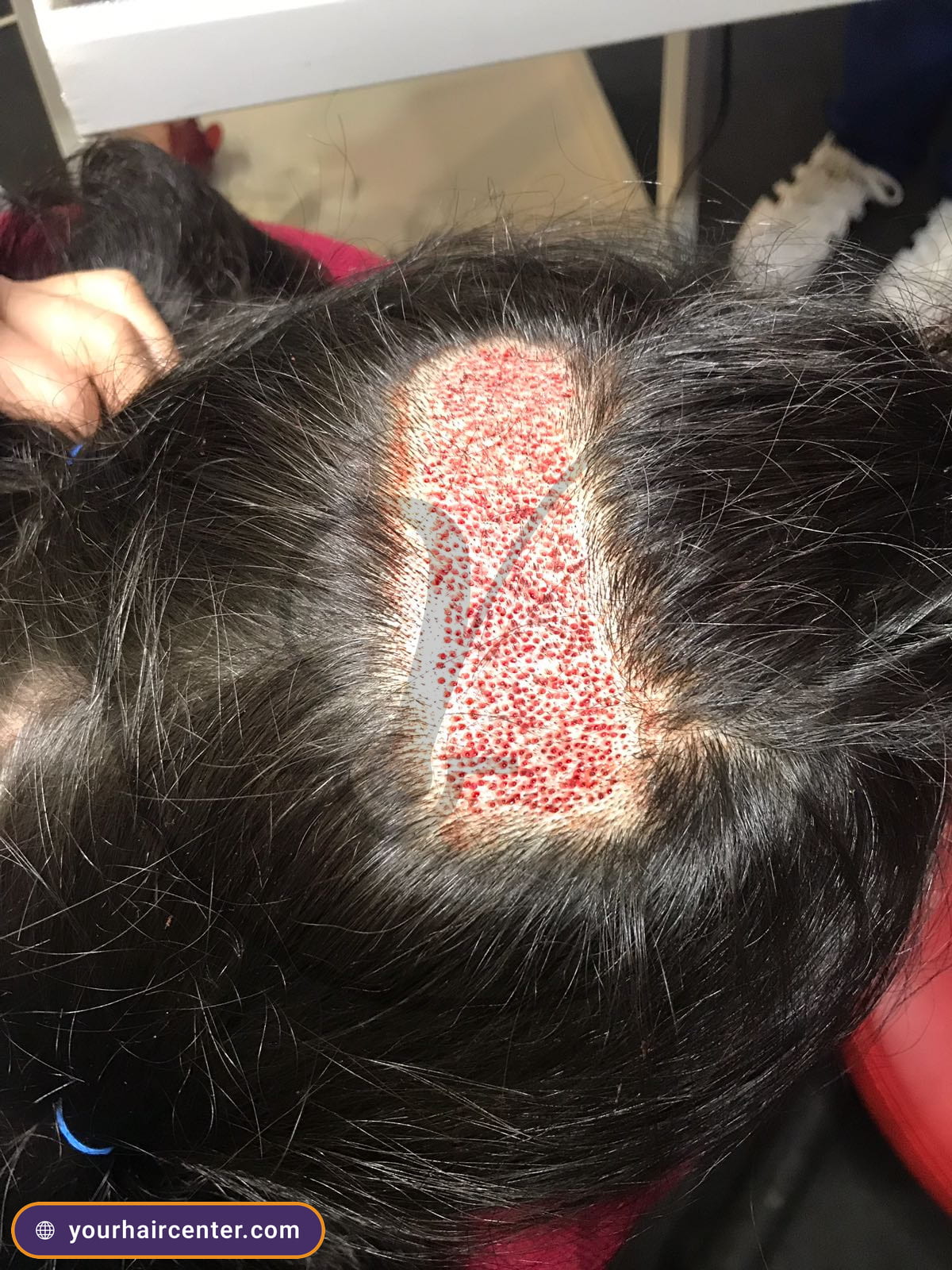
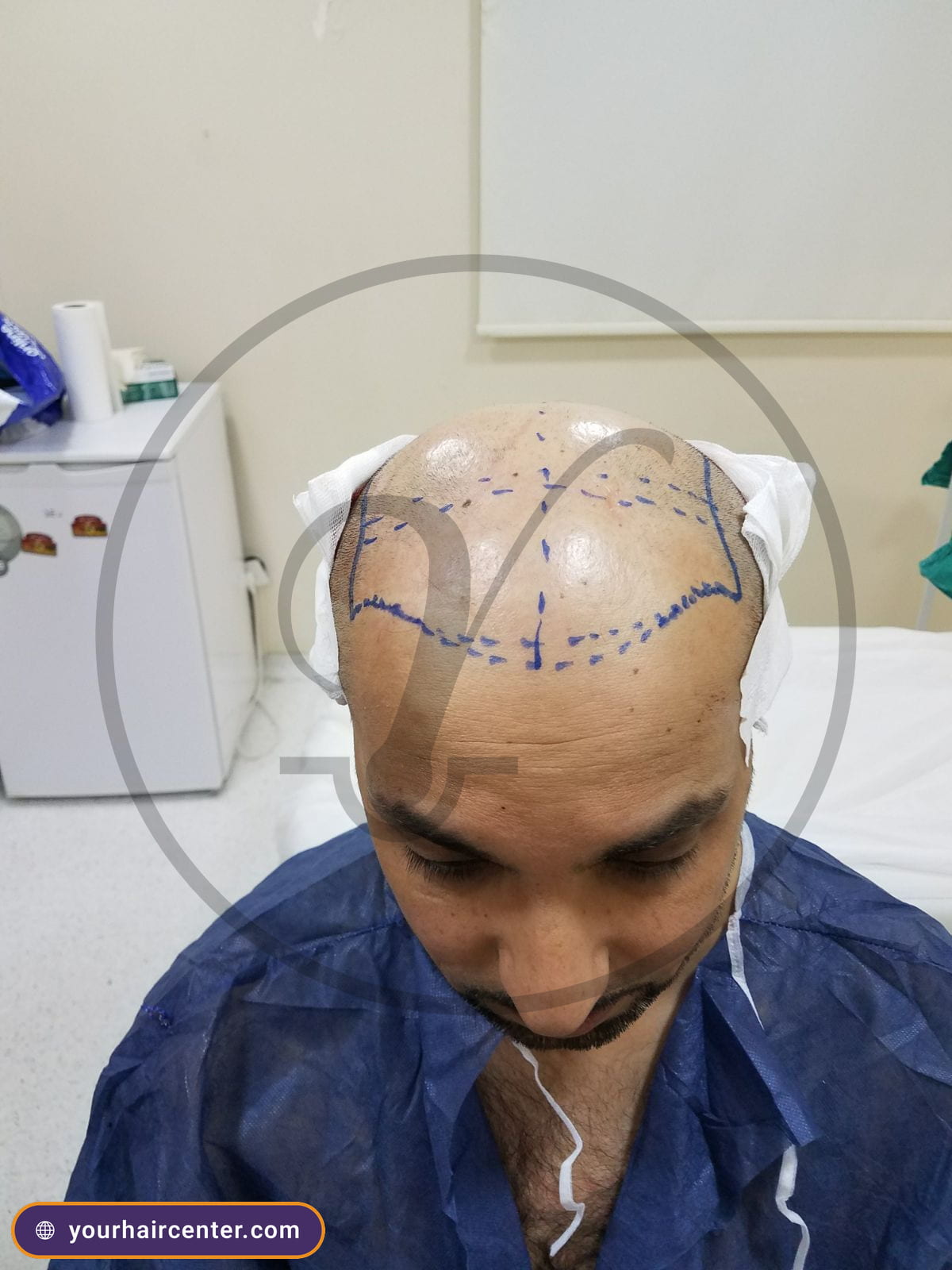
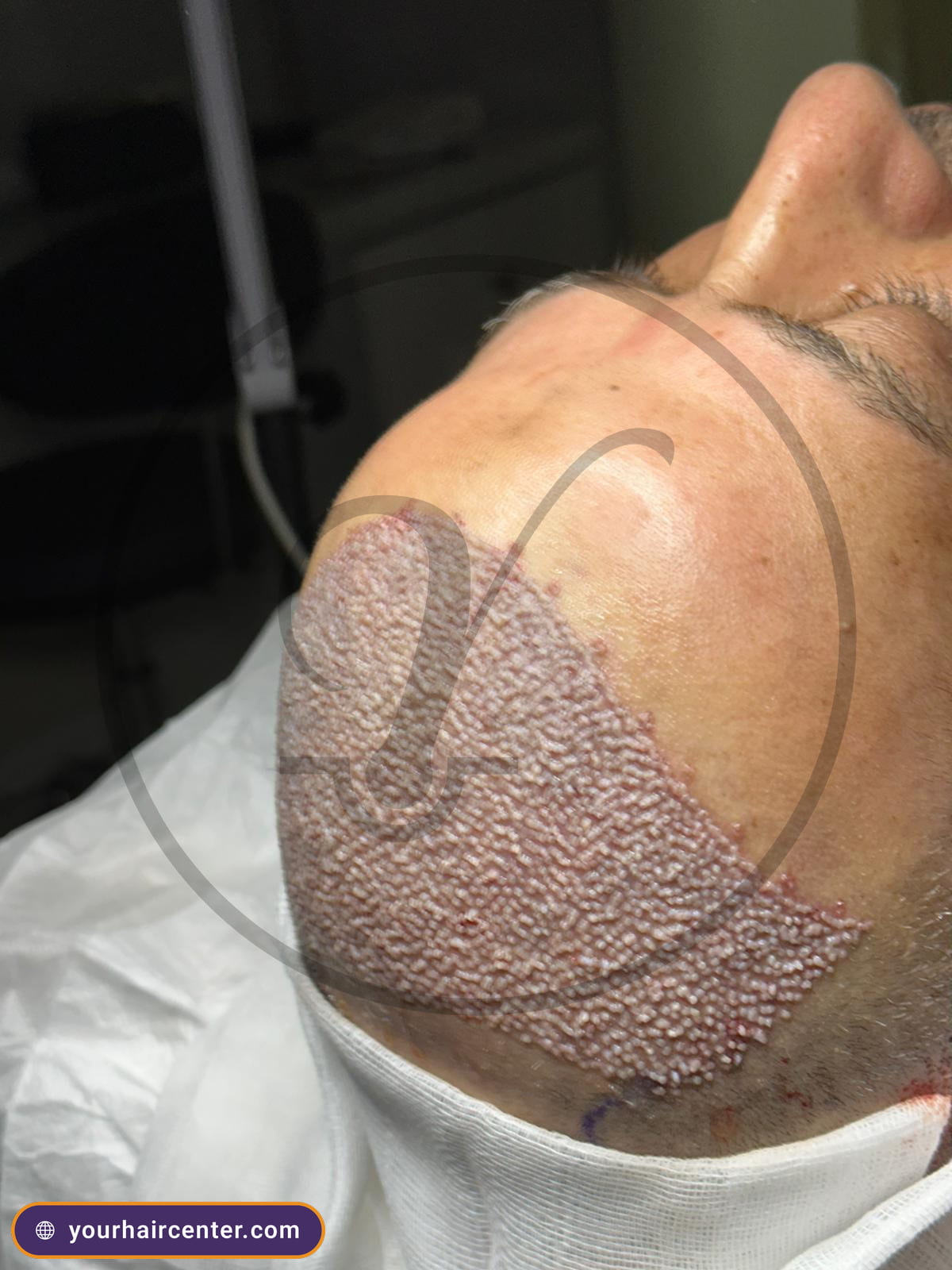
Day 2, surgery. Blood work, then you design the new hairline with your surgeon, then 6 to 8 hours under local anaesthesia or sedation, which the doctor decides for your case. This is the only day with a procedure on it. Immediately afterward there are tiny puncture sites across the recipient zone and short trimmed strips under the donor crown. With no-shave FUE those strips stay hidden under your existing hair length, so there is no buzzed crown to explain on Monday.
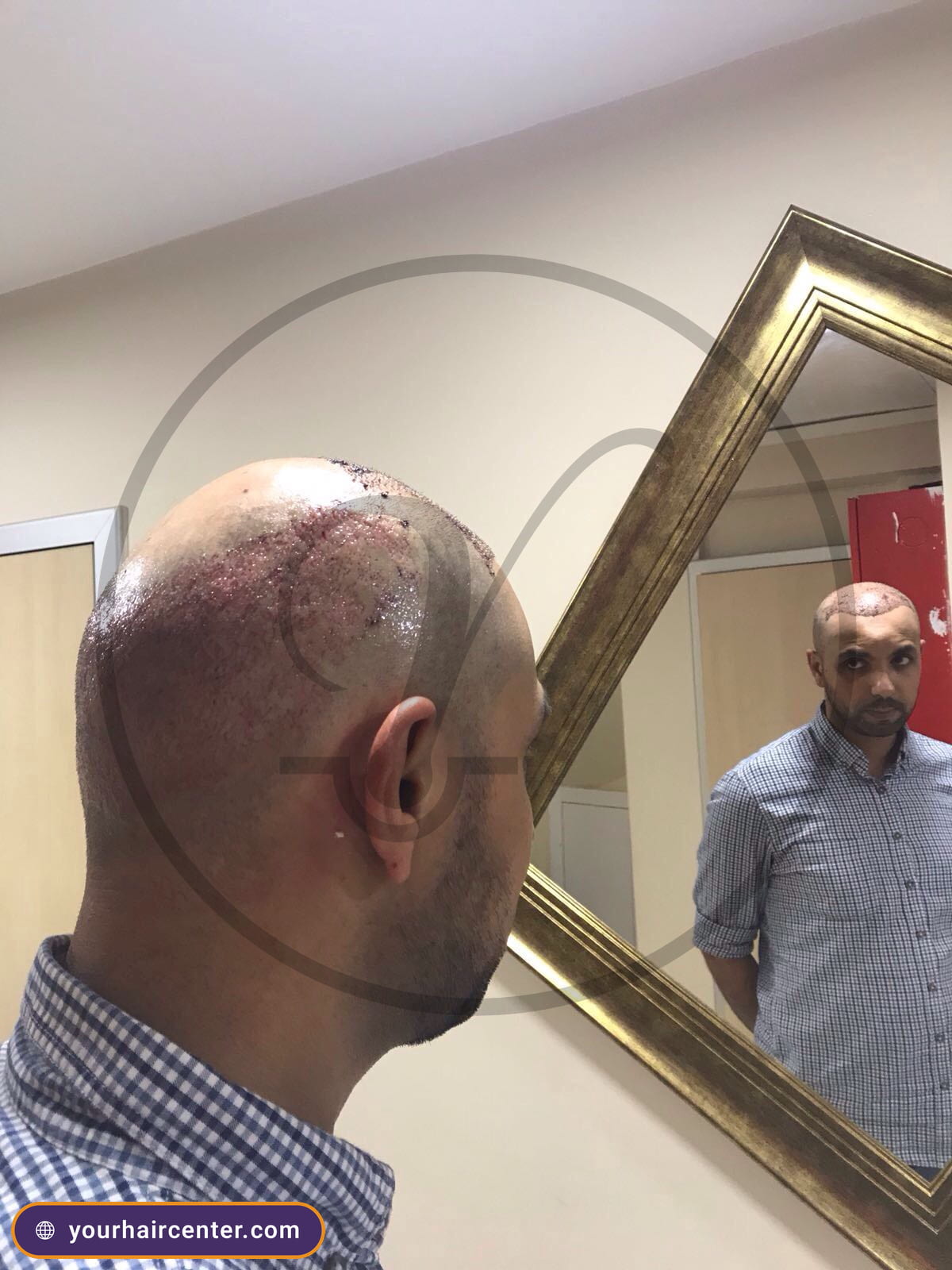
Day 3, first wash. Your first professional wash at the partner clinic, plus the aftercare briefing and your medication pack. The first scab layer forms and light redness settles across the recipient zone. Some patients notice mild frontal swelling around Day 3 to Day 4, and the standard briefing is that it usually settles within a day or two. This is the day the standard no-shave FUE timeline calls "first wash and back to work", and for a local patient it can be exactly that.
The office-visibility readout for Day 3 is honest and specific. With a hat, or on a video call with the camera angled high, you pass cleanly. In person at 3 feet under office lighting, a careful colleague can still see that the recipient zone is red. A traditional shave gives you away at the donor. With no-shave, the redness is the only visible signal, and it is fading by the hour. The decision point on the no-shave FUE timeline for the international patient is Day 4, which the next stretch of the calendar turns into real numbers. The technique itself is covered on the no-shave hair transplant page.
Days 4 to 7, flight home, scabs, and the Tuesday standup moment
This is the office-visibility crux of the no-shave FUE timeline, and it lives or dies on the calendar math. Day 4 is your final clinic check, the VIP transfer to the airport, and your flight home, with the recipient redness already fading and the scabs setting.
Now run the math for a working week. Surgery on a Tuesday in Istanbul means you land back home on a Thursday or Friday. That hands you the weekend as a healing buffer, and your first office day lands on the following Monday or Tuesday, which is Day 7 to Day 8 on your local calendar. The single best scheduling move is to book the surgery early in the week, so the flight home and the messiest scab days fall on Saturday and Sunday rather than on a workday. Days 5 to 6 local are that weekend, scabs continuing to exfoliate with the prescribed wash routine, doing the quiet work of the no shave fue timeline while no one is watching.
Day 7 is the Tuesday standup moment. By now the scabs are mostly cleared. Crusts after this kind of procedure are typically loosened and removed around 5 to 7 days post-surgery with the prescribed gentle wash routine,[1] which lines up with the standard recovery timeline marking the end of the first week as the point where scabs clear and light redness fades. The office-visibility readout flips to passable. In person at 3 feet under standard office lighting, the recipient zone reads as "his hair looks slightly fuller today", not "he had surgery". That is the milestone the whole no shave fue timeline is built around for a working professional.
Be honest about the exception. Top-down inspection, a colleague standing over your seated desk, and very harsh overhead lighting can still surface the recent procedure to a careful observer at Day 7. The passing grade is for normal conversational distance, not for someone hunting for it.
So the practical no-shave FUE timeline for a working professional, in plain numbers, is this. Four calendar days for the Istanbul trip, plus two weekend days as a buffer, plus zero to two work-from-home days if you want extra margin, equals roughly 6 to 8 calendar days total before you walk back in. The office-visibility timeline above is what sets that number, not the clinical one. If you want it confirmed for your specific case, you can ask exactly how many days off work you need on WhatsApp. For why the no-shave route in particular delivers this Day 7 profile, the unshaven FUE technique breakdown maps the options, and patients keeping full length should read the long-hair preservation guide, whose visibility profile is even tighter.
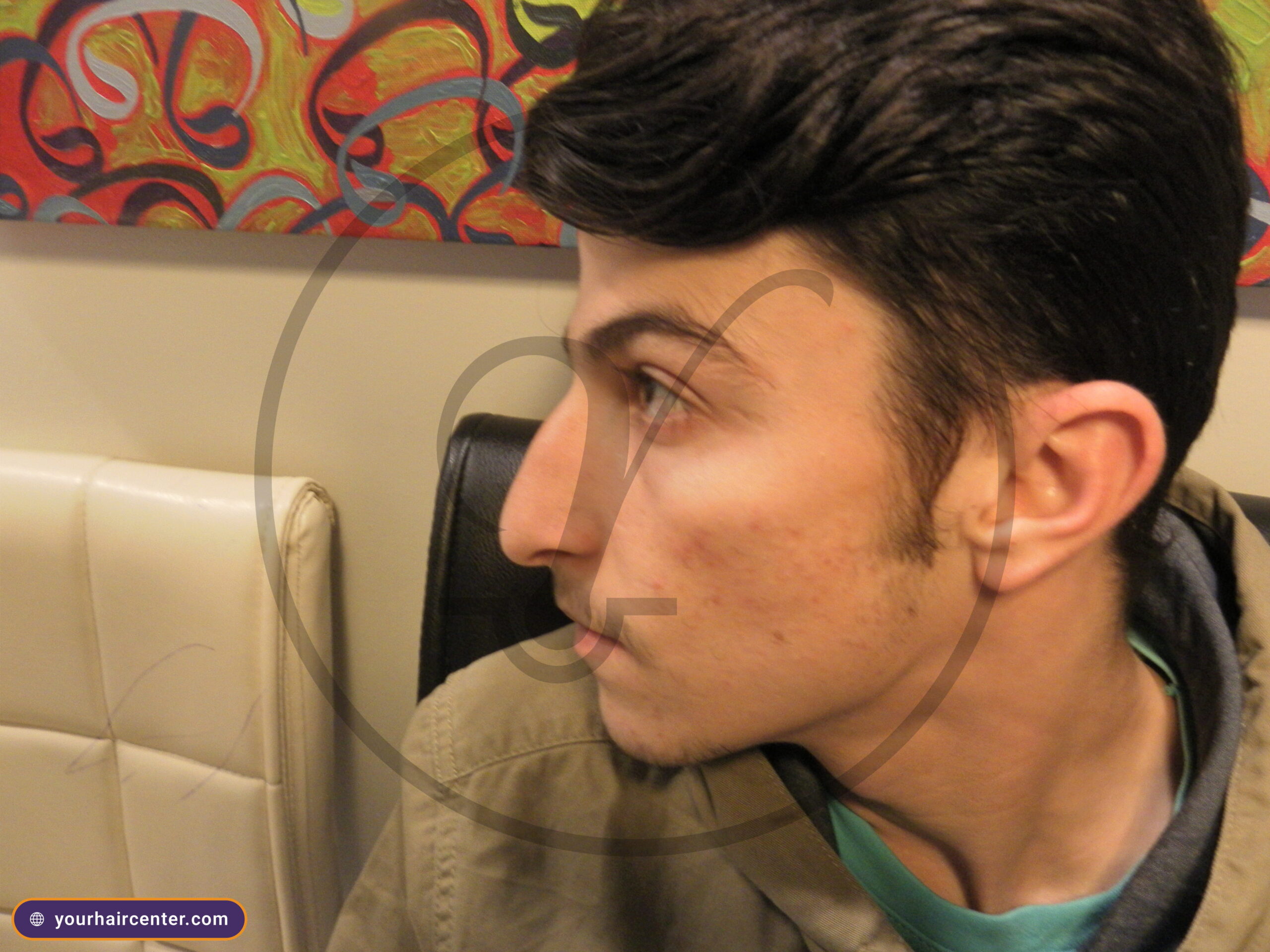
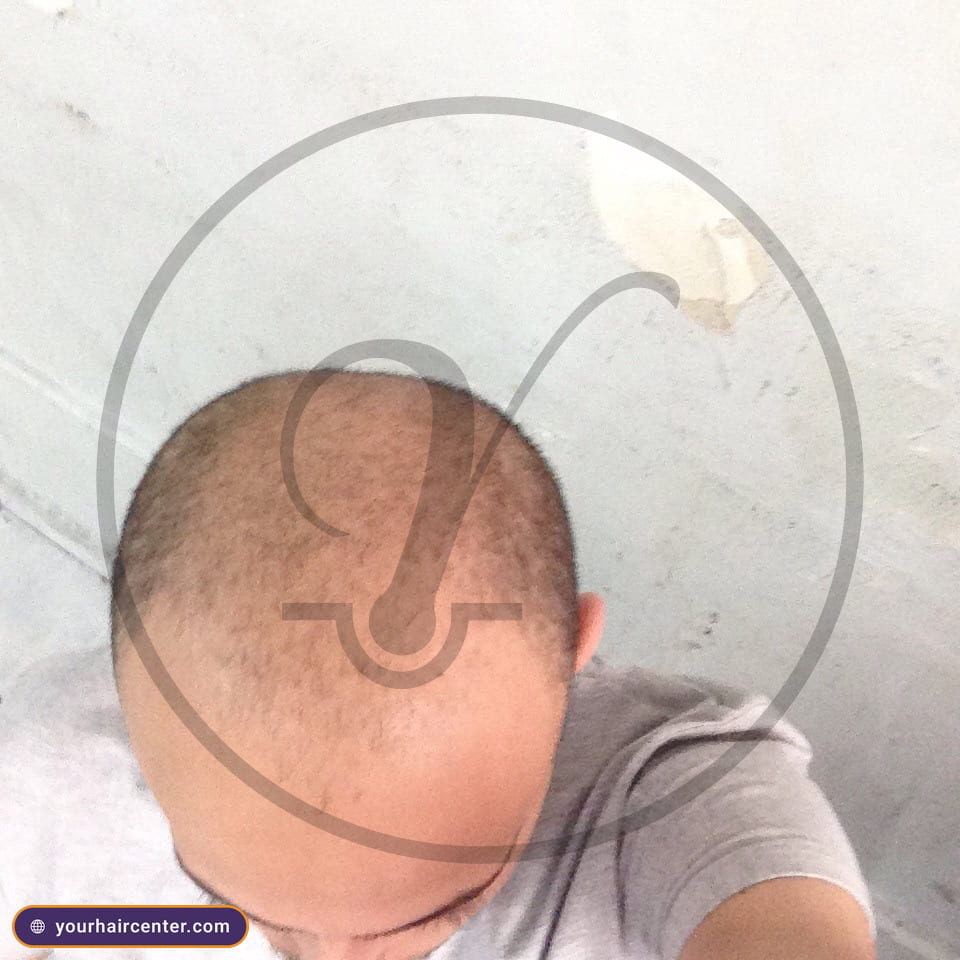
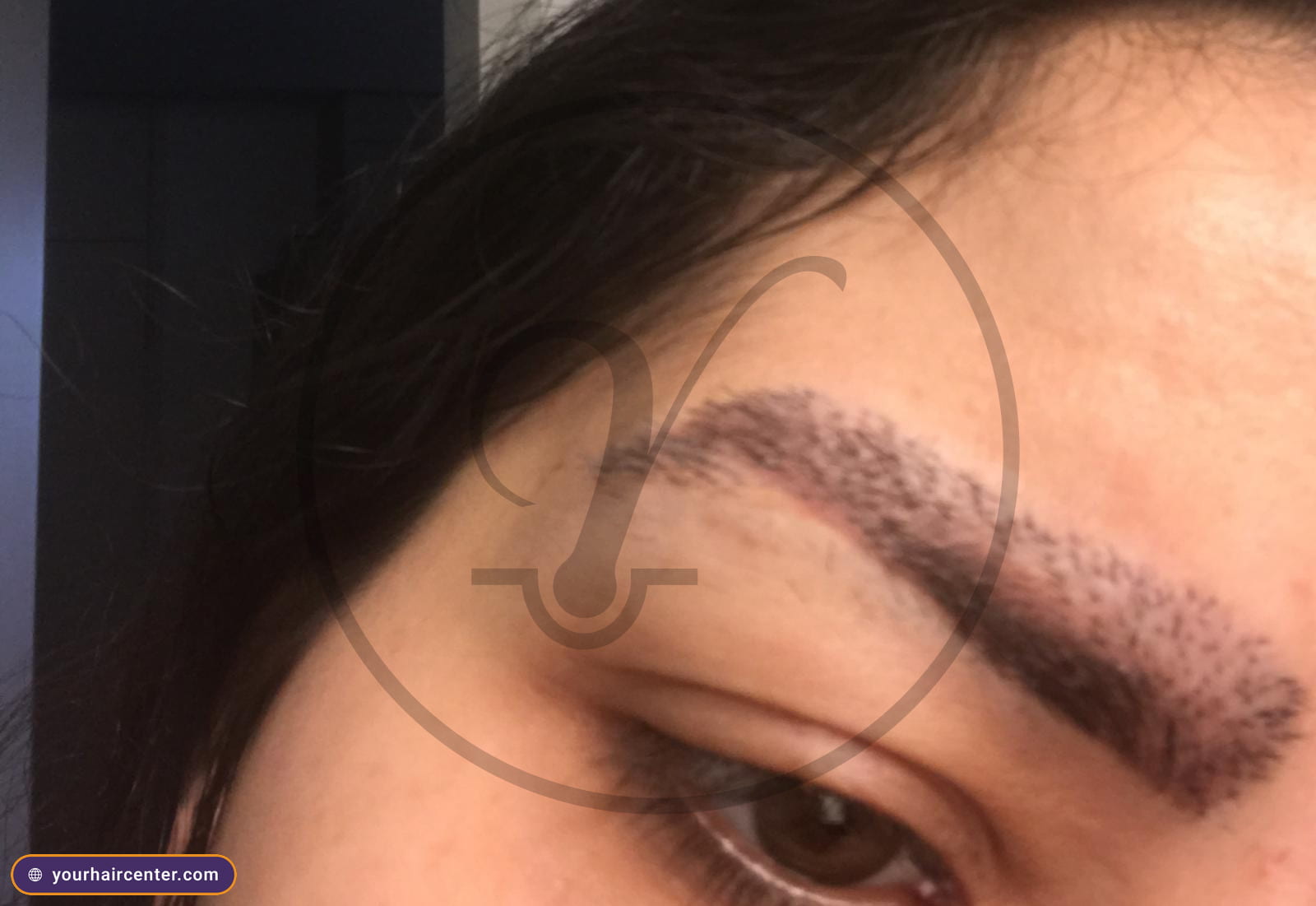
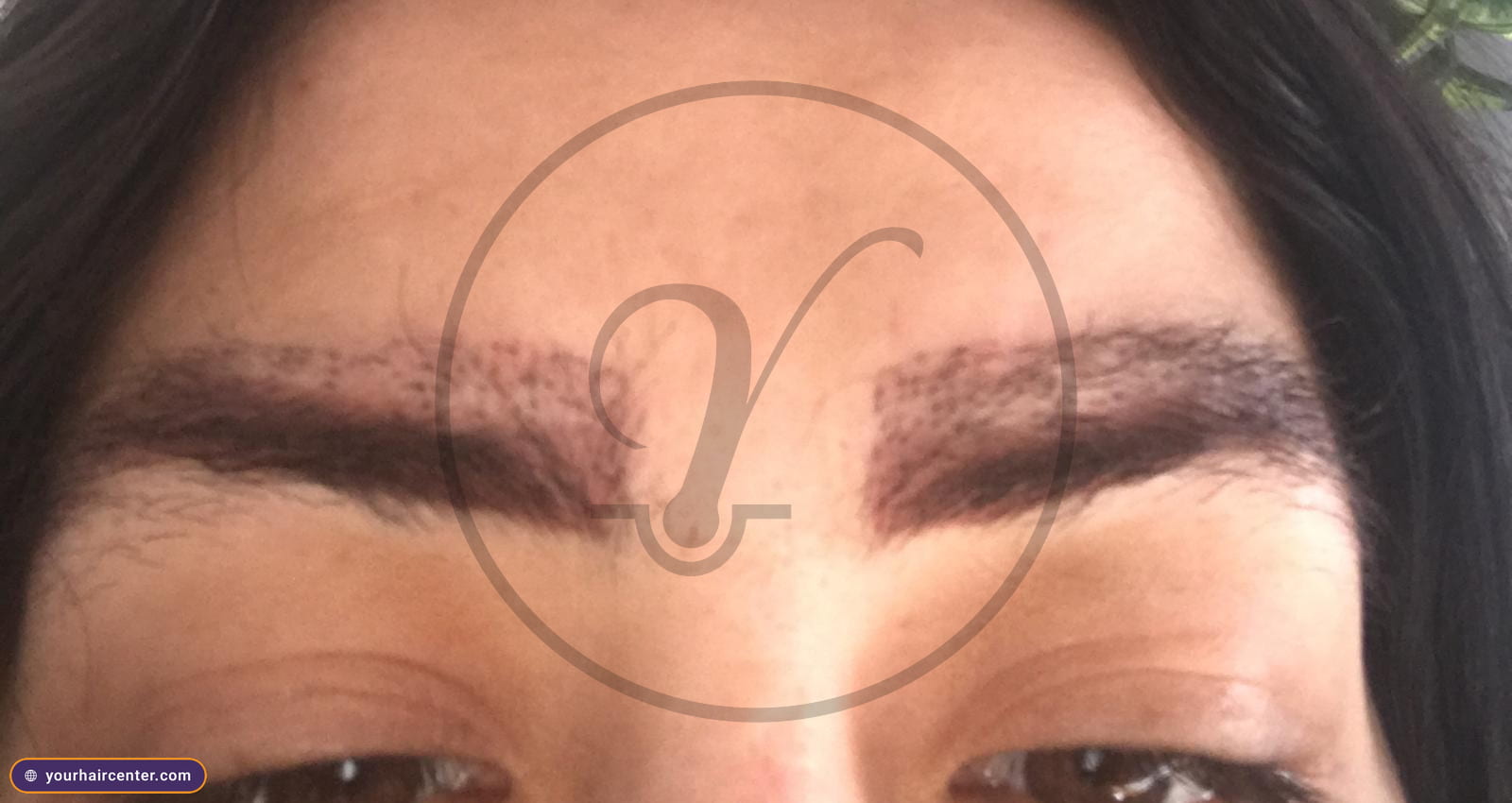
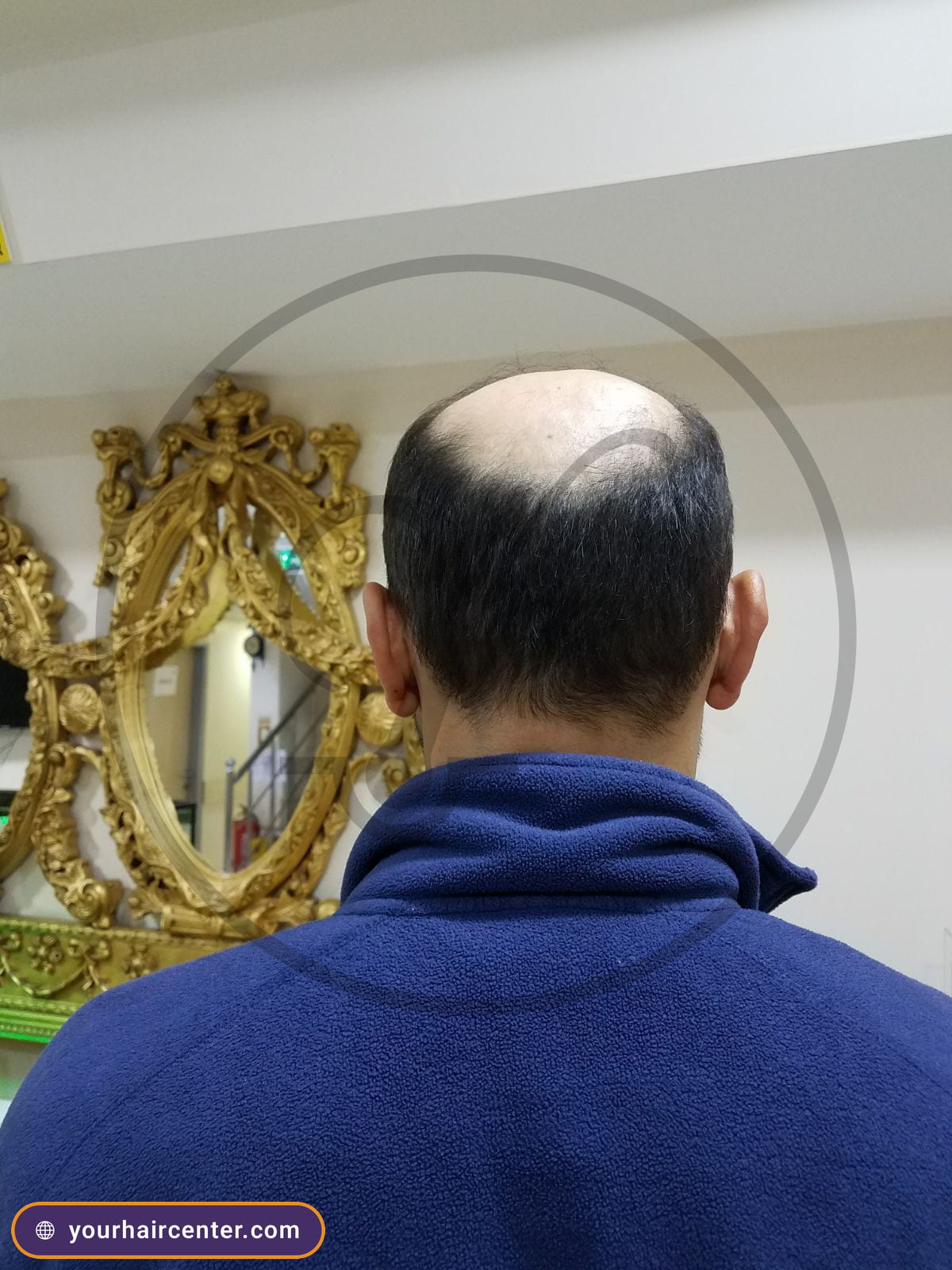
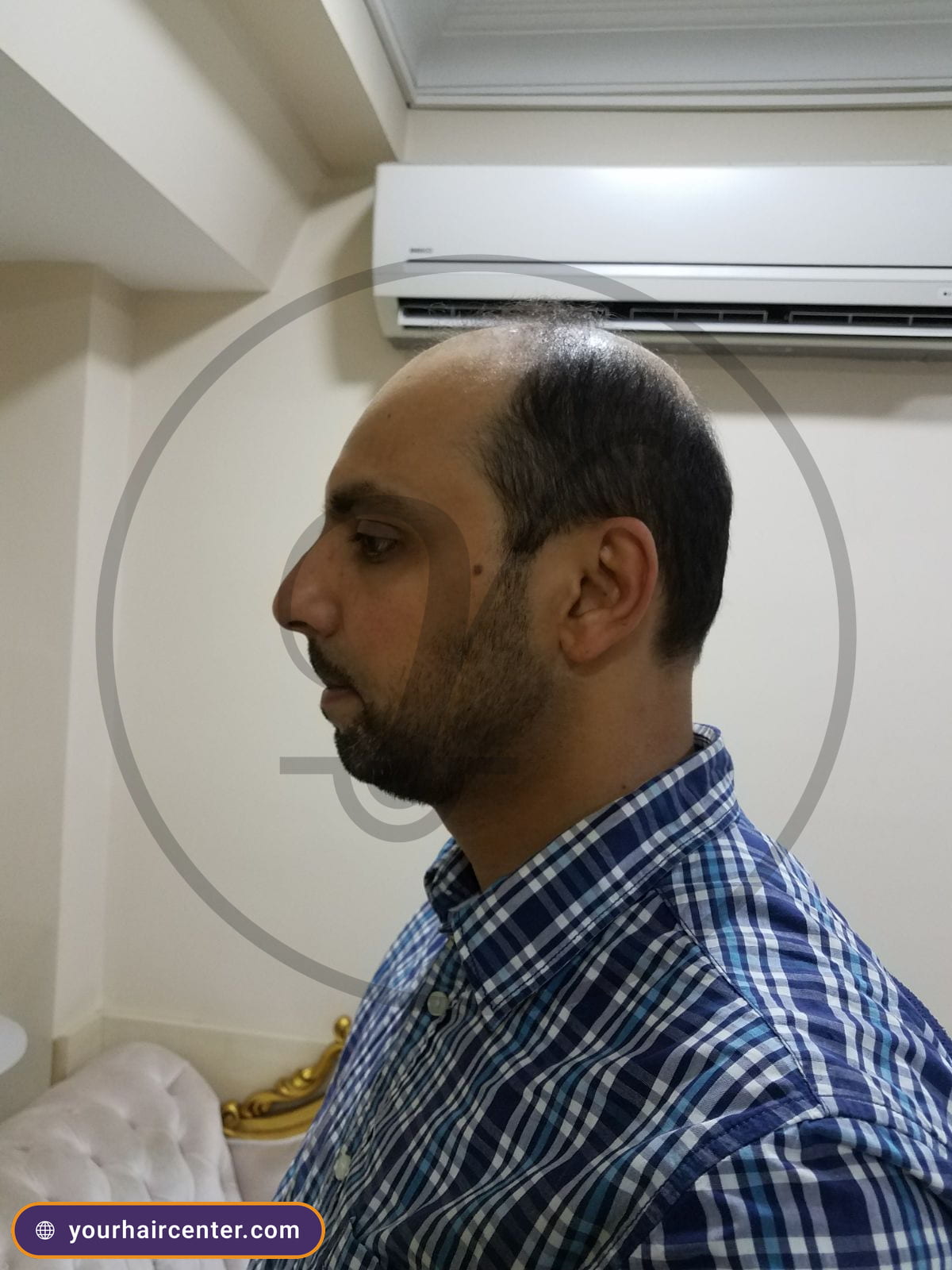
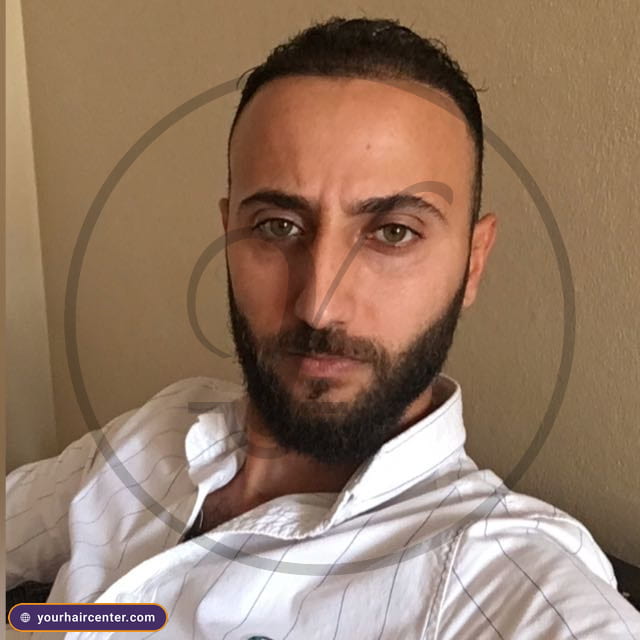
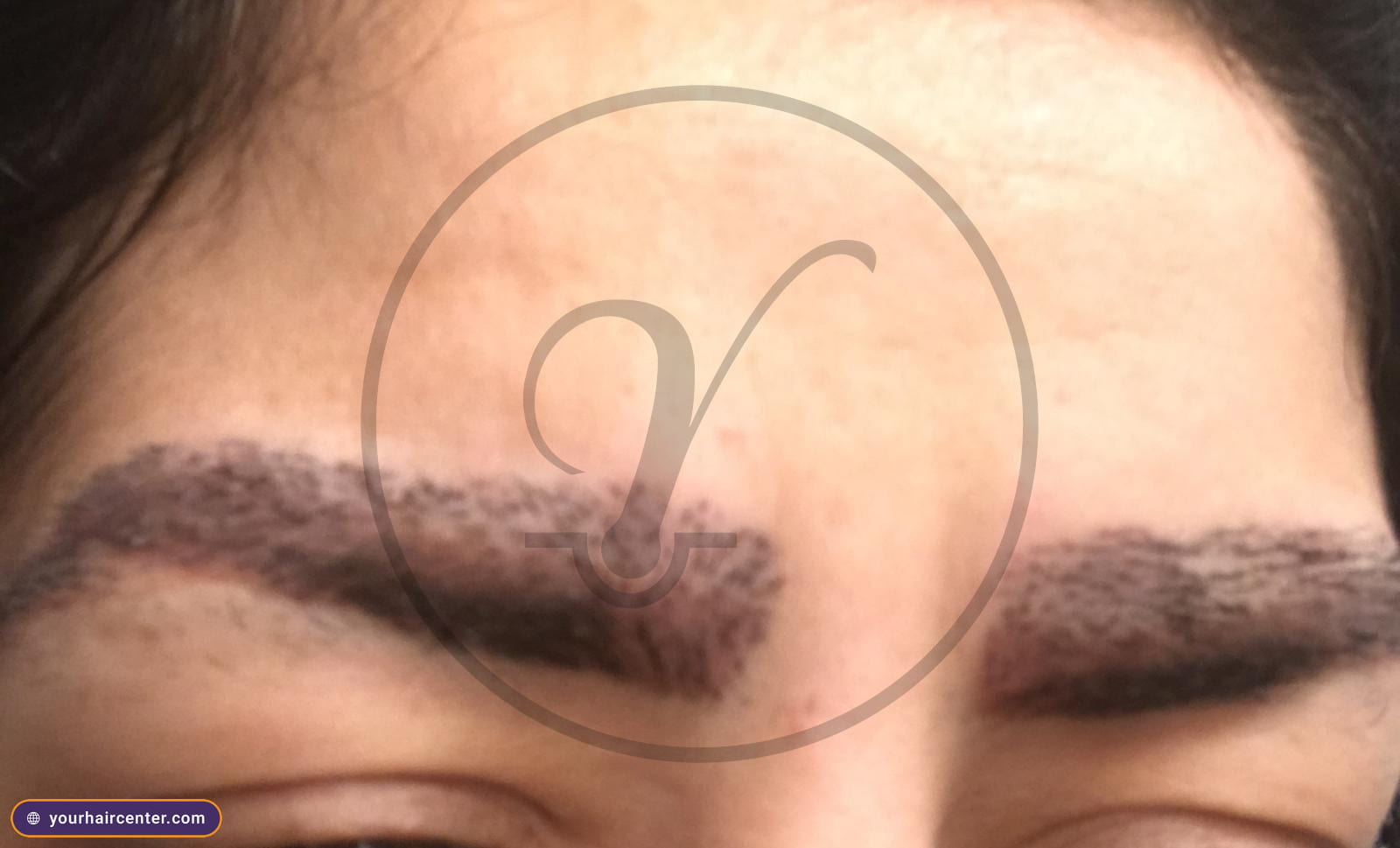
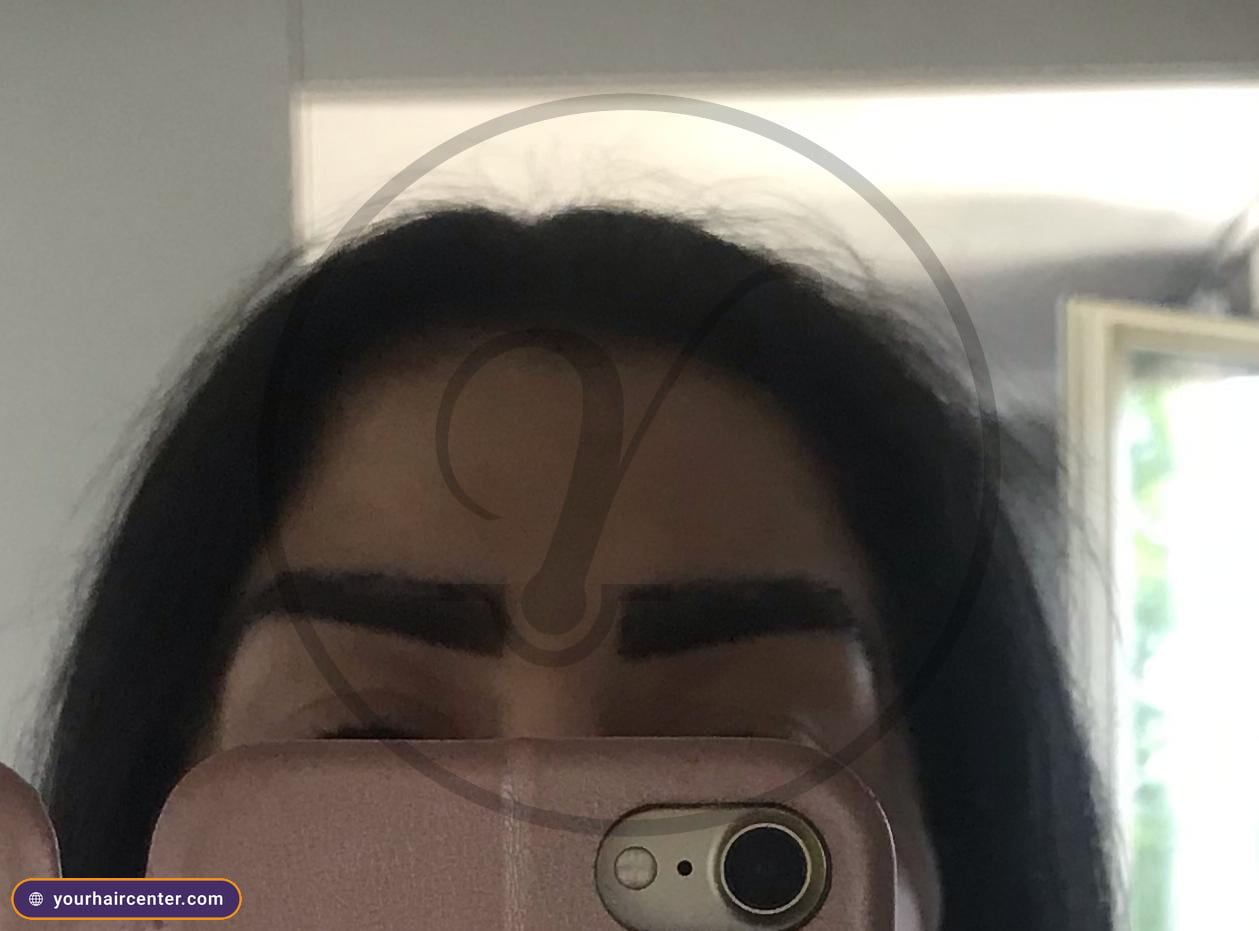
Real results from our patients’ archive. Photos exactly as captured at our accredited partner clinics, with no filters and no retouching. Browse more cases in our photo gallery.

What happens in weeks 2 to 4?
This window is often summed up in one line, "scabs clear". The dual-track no shave fue timeline splits it into two finish lines that arrive at different times.
Week 2, clinical track. Scabs are fully cleared, the recipient zone returns to baseline scalp tone, and the trimmed donor strips have blended into the surrounding length. This is the clinical finish line of the no shave fue timeline, the end of the wound-healing phase.
Week 2, office-visibility track. Indistinguishable from pre-op at standard conversational distance, even under harsh overhead lighting. The exception that still applied at Day 7 has now closed.
Week 3. The scalp enters its dormant stretch. Transplanted shafts are still in place but have not yet shed. A colleague seeing you for the first time since the trip reads your normal head of hair with no signal that anything happened.
Week 4. Shock loss begins for most patients around the end of the first month, the transplanted shafts shedding while the follicle stays anchored under the scalp. This post-transplant shedding is a recognized, temporary effluvium, the surgical-stress equivalent of the stress-triggered shedding that dermatology calls telogen effluvium, which is itself self-resolving over a span of months.[2] The shed shafts were never grown out long enough to read as missing hair, so the scalp continues to look the same at 3 feet even as the shedding starts.
This is also where the social finish line of the no-shave FUE timeline lands. By the end of Week 4, every regular colleague has seen you at least once since the trip, the recalibration to your new baseline is complete, and the "did you change something" comments have stopped. What is not happening yet is new growth, that phase starts later in the recovery. Throughout this window your progress is reviewed remotely through the medical follow-up program, so this stretch of the no-shave FUE timeline is supervised rather than guessed.
Is shock loss at month 1 visible to others?
Month 1 is the most-feared milestone in the entire no shave fue timeline, and it splits into three different realities depending on who is looking.
The clinical reality. Shock loss is the transplanted shafts shedding while the follicle stays anchored beneath the scalp surface. The follicle is not lost, it resets its growth cycle, and new hairs from those follicles typically appear after 3 to 6 months.[1:1] The standard recovery map flags this stage plainly, the transplanted hairs shed and the follicles are simply resetting, which is exactly why it is labelled normal rather than a complication.
The mirror reality. You see hairs falling out, and the recipient zone can read sparser than it did pre-op, because those transplanted shafts were giving the area temporary cosmetic coverage before they shed. From the bathroom mirror, this feels like the transplant failed.
The office reality. Your colleagues see nothing different, because the shed shafts were never long enough to register as a change at 3 feet. This asymmetry is exactly what a no-shave FUE is designed to deliver, the social signal stays flat while the clinical work happens underneath.
Hold onto the gap between those three. Shock loss is the panic point of the no-shave FUE timeline, ugly in the mirror and invisible to the office. Shedding can also extend a little past the first month for some patients, still a normal part of the reset rather than a sign of failure. This stretch is the busiest one for reassurance calls, and the answer is consistent, the follicles are intact and the next visible-density change arrives a couple of months out. To support density through this window, PRP is the adjunct most patients ask about, and your shedding is tracked at each step through the medical follow-up program.
When does new growth show in months 3 to 6?
Now the no-shave FUE timeline turns the corner from shedding to growth, and the two tracks split again, this time in your favor.
Month 3, clinical. New shafts begin to emerge, with new hairs typically appearing in the 3-to-6-month window after the procedure.[1:2] If you are looking closely in a mirror, the recipient zone reads slightly thicker than it did at Month 1. This is the first-emergence checkpoint of the no shave fue timeline, the moment you can finally see something happening.
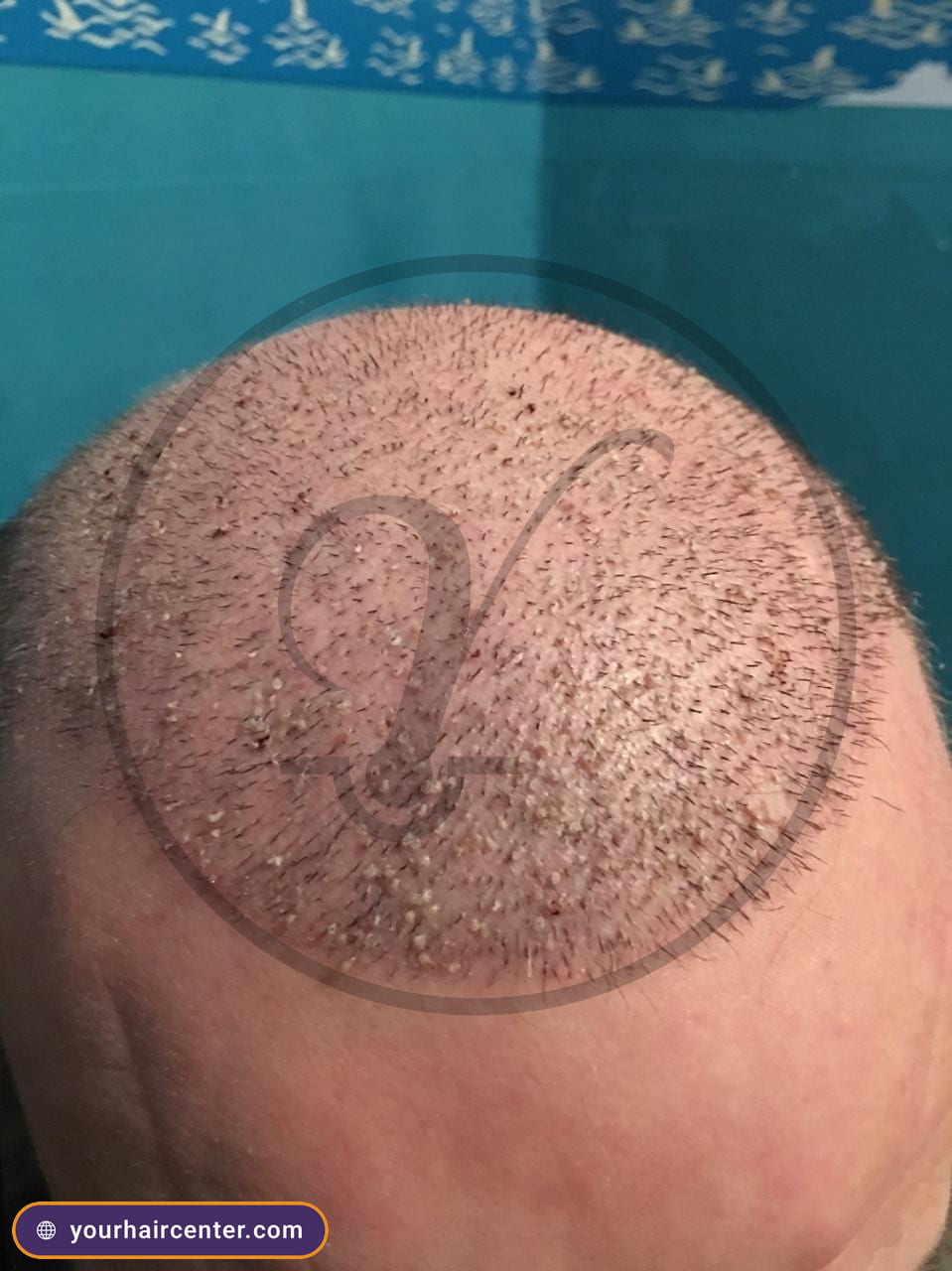
Month 3, office-visibility. No external signal yet. The new shafts are too short and too sparse to register at 3 feet, which is why the Month 3 archive case below reads at pre-op baseline to a colleague while reading as recovery to the patient.
Month 4 to Month 5. Density climbs as the new shafts lengthen, reaching roughly a third of the way to the final result. This is where the "did you change your shampoo" comments start, from colleagues who see you regularly and read the change without being able to name it.
Month 6, clinical. New shafts have reached full growth-phase length, and density is at roughly 60 percent of the final result, the benchmark the standard recovery timeline marks at this stage. Month 6, office-visibility, is the first true social milestone of the no-shave FUE timeline. A colleague who has not seen you in months notices your hair "looks fuller", and a new acquaintance simply reads your hair as your baseline, because they have no pre-op reference.
The stranger test answers itself here. By Month 6 a stranger meeting you for the first time reads your hair as normal hair. By Month 12 the result is indistinguishable from native hair even on close inspection. This window, Months 3 to 6, is the back half of the no shave fue timeline that most "3 months after" searches are really asking about. The full technique sits on the no-shave hair transplant page, and density support through this window is again where PRP comes up.
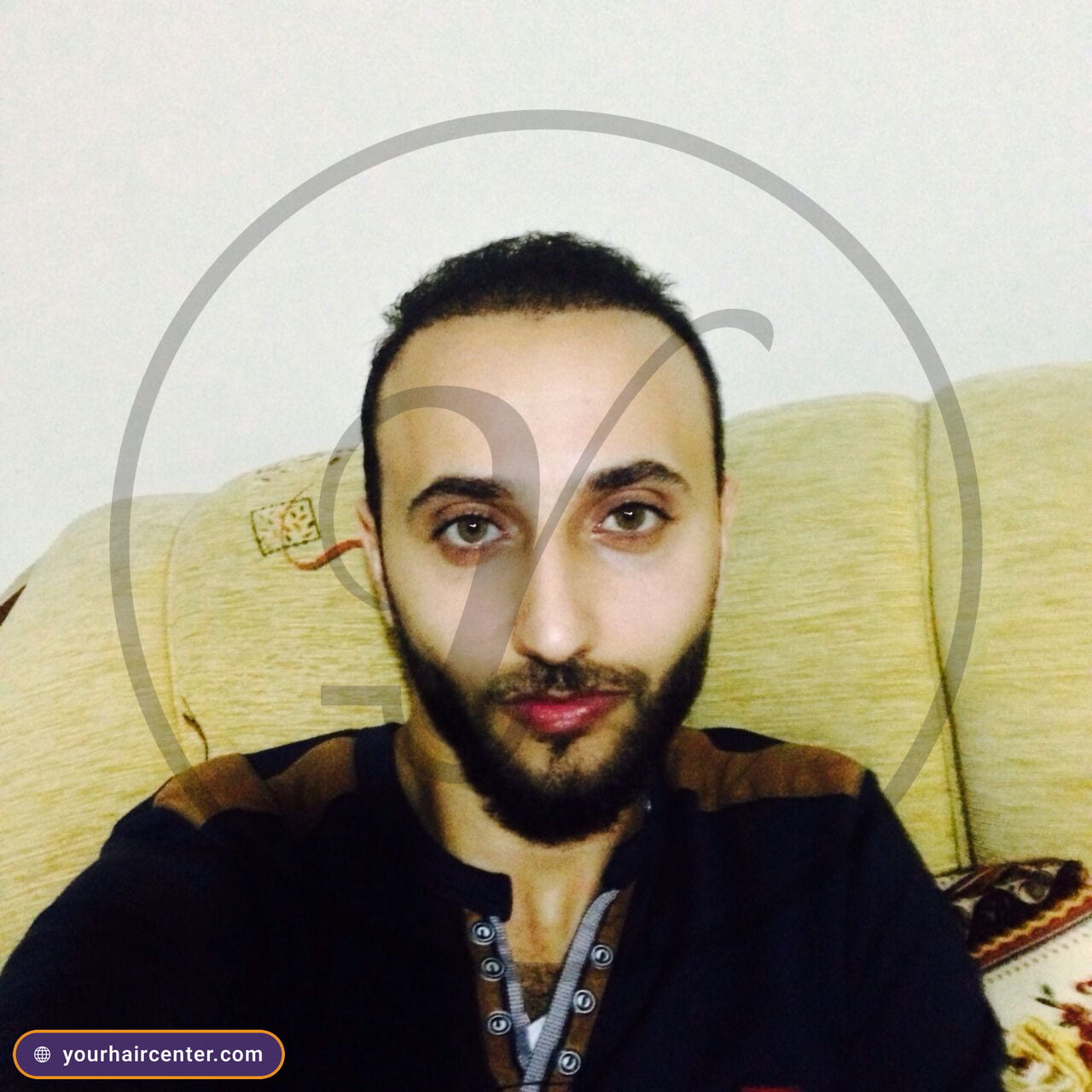
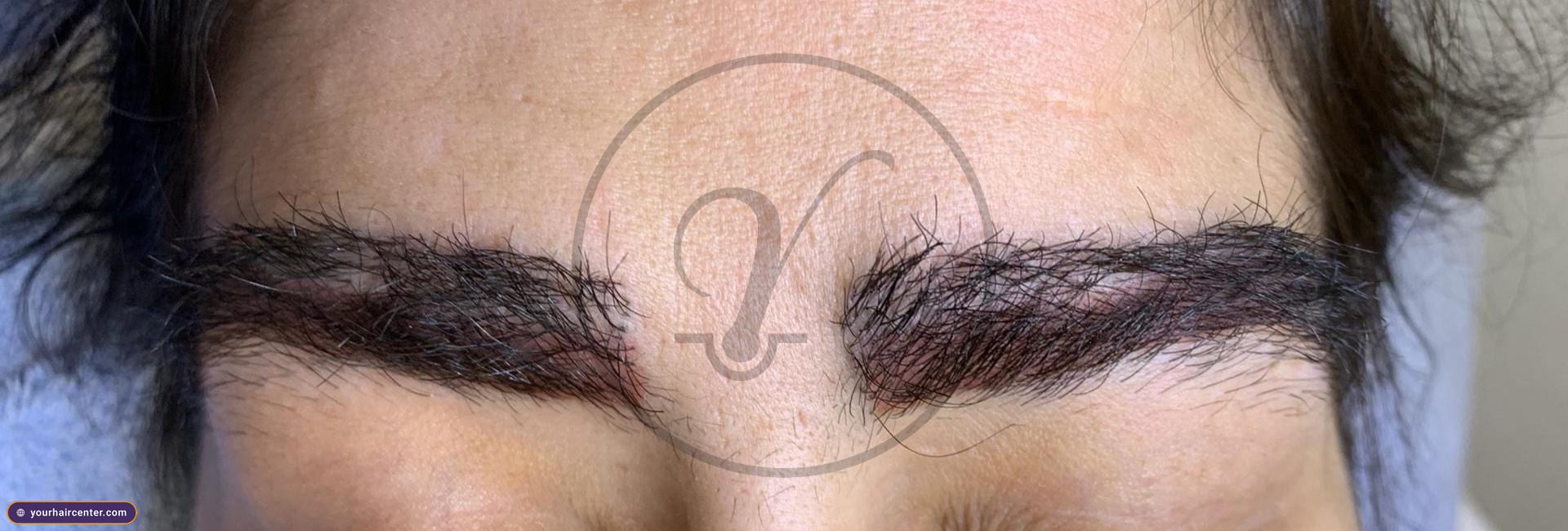
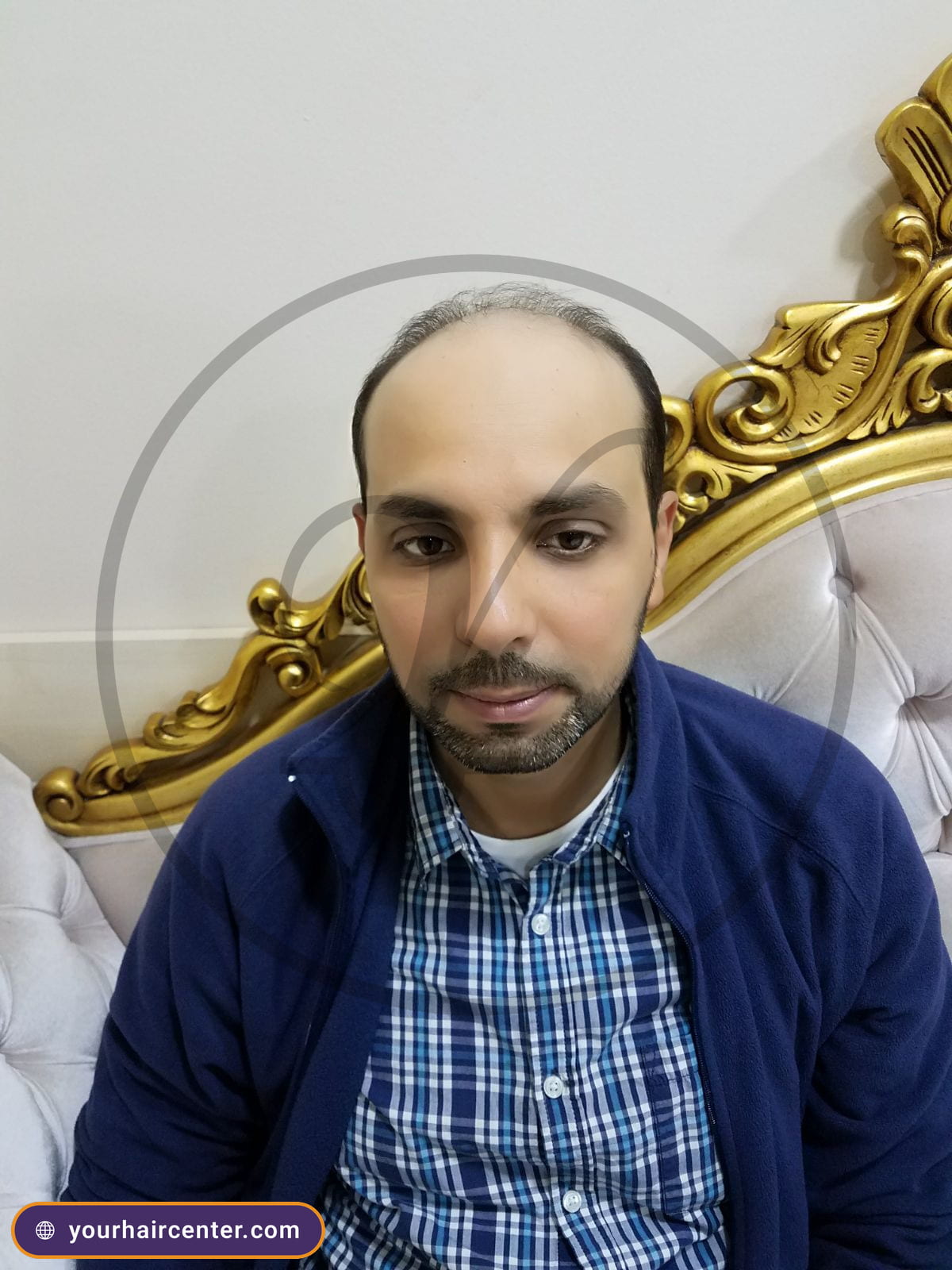
Real results from our patients’ archive. Photos exactly as captured at our accredited partner clinics, with no filters and no retouching. Browse more cases in our photo gallery.

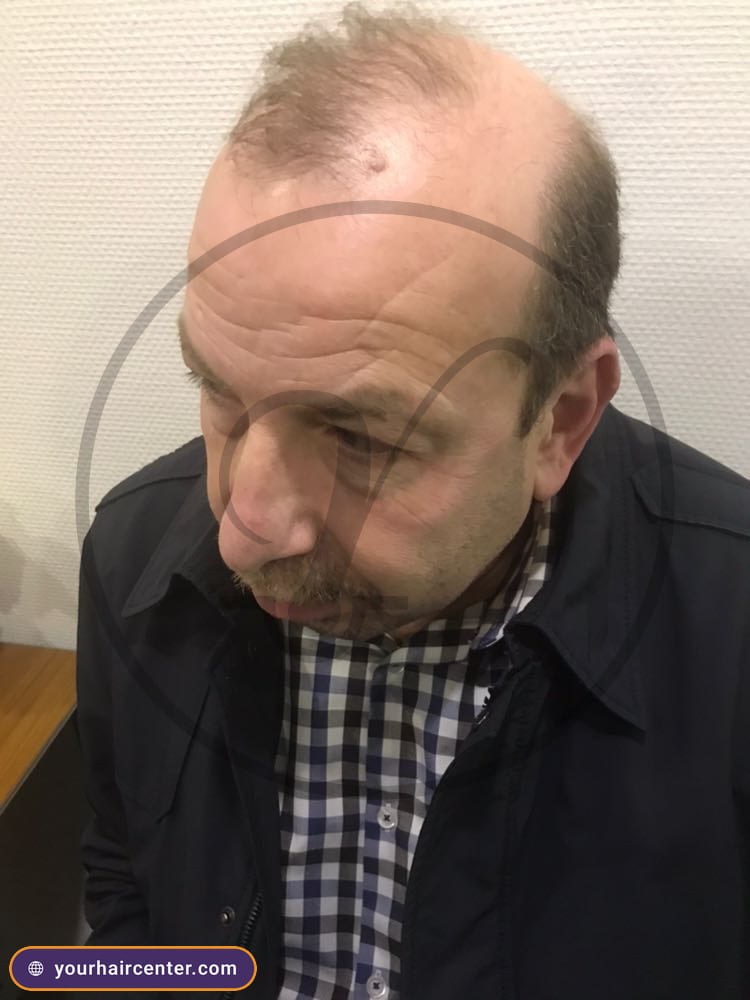


Months 6 to 12, final density, the result
The last stretch of the no shave fue timeline is the one patients book the trip for, and it closes the gap between the two tracks completely.
Month 6 is your baseline for this phase of the no-shave FUE timeline, roughly 60 percent of final density visible, new shafts at full growth-phase length. Months 7 to 8 are quieter on the surface but busy underneath, density climbing as individual shafts thicken and mature.
Month 9, clinical. Density is well along, and the hairline now reads as a stable line rather than an emerging one. Clinicians generally document the maturing result across the 6-to-12-month window before calling it final.[1:3] Month 9, office-visibility, is the point where the result reads as your hair to everyone you meet, including the colleagues who knew you before the trip and have now quietly recalibrated their baseline.
Month 12, clinical, is the finish line of the no-shave FUE timeline. Full density, final shape, and transplanted hair that is indistinguishable from the native zone on close inspection. You can cut, dye, and style it exactly like the rest of your hair, and the written guarantee in the contract covers at least 90 percent of grafts, assessed at this 12-month mark. Month 12, office-visibility, is simple, the result is now your hair, full stop, and this is the canonical "after" photograph.
One last thing makes the whole no shave fue timeline a supervised exercise rather than a self-monitoring one. The medical follow-up program tracks your progress at each milestone over a full year on WhatsApp, starting the moment you land back home, so every checkpoint above is reviewed by the team that did the work rather than guessed at in your bathroom mirror. The technique that produces this 12-month arc is detailed on the no-shave hair transplant page.
Two archive cases, Day 7 and Month 3, what the office-visibility timeline actually looks like
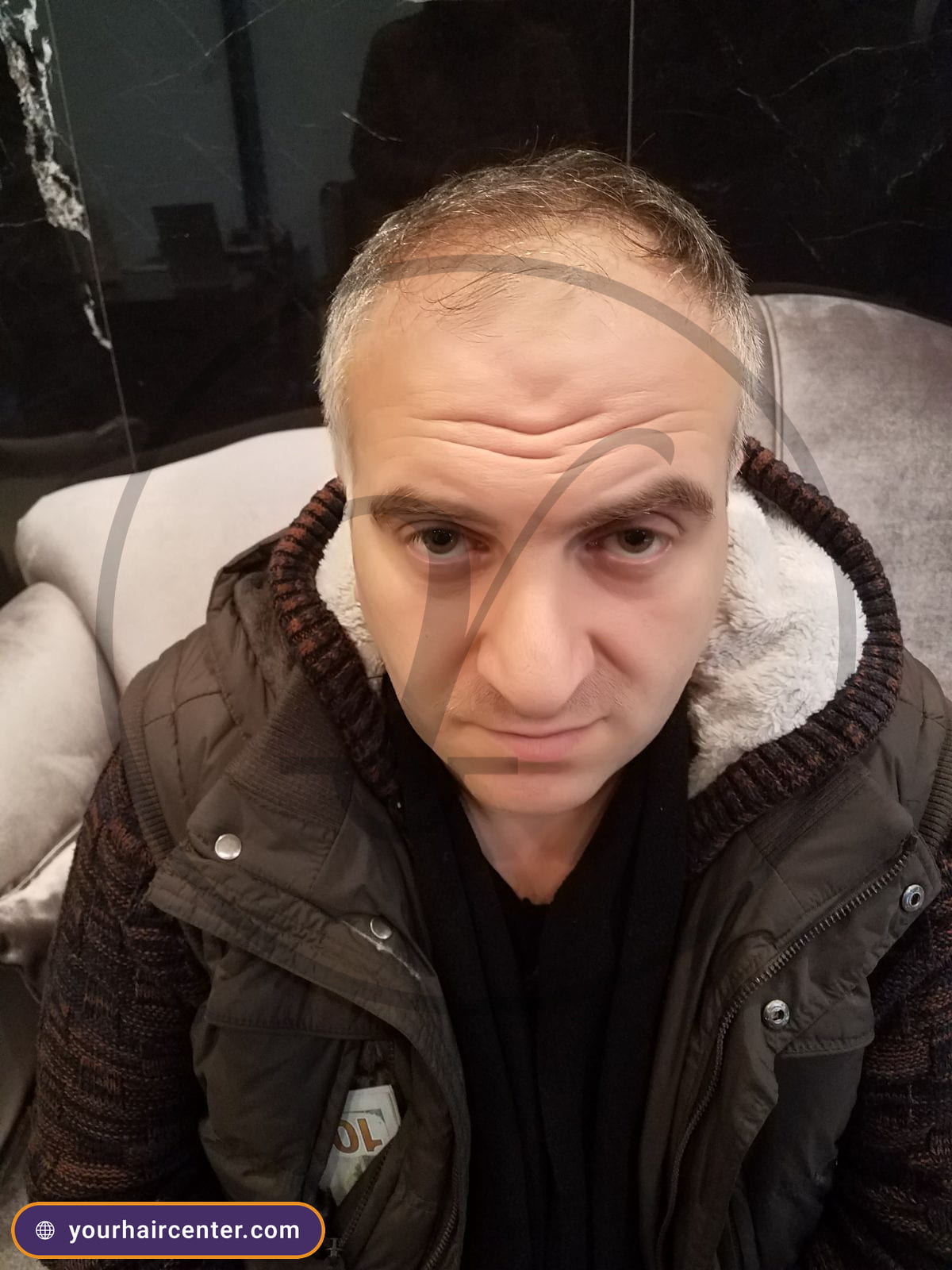
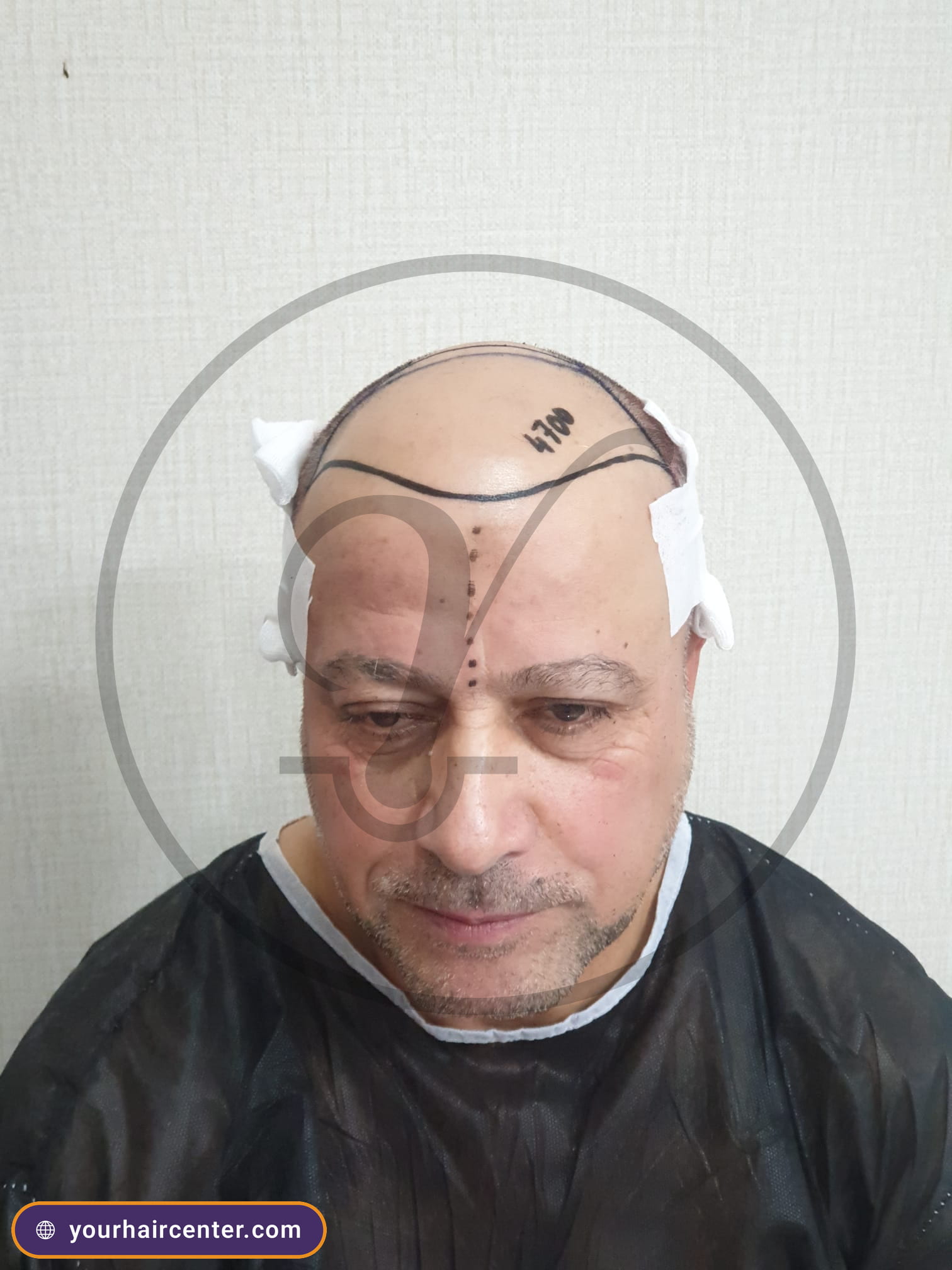
If you read photos before you read prose, this section is for you. Both cases below are composites of typical patients, and the actual photographs come from the in-house Your Hair Center gallery archive and are never synthetic.
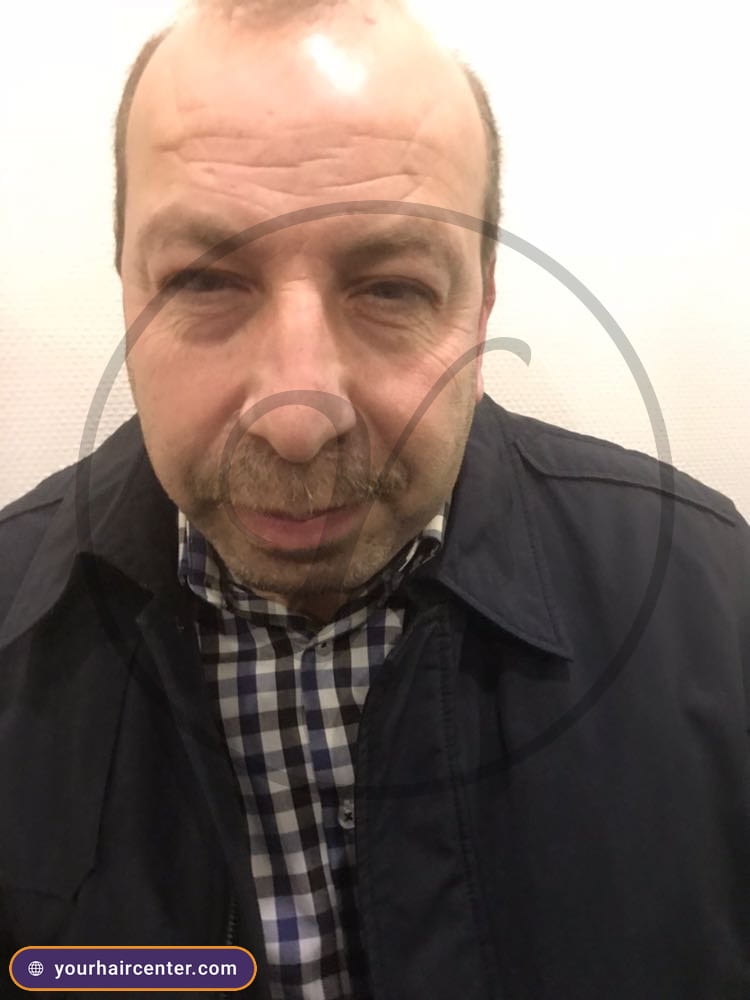
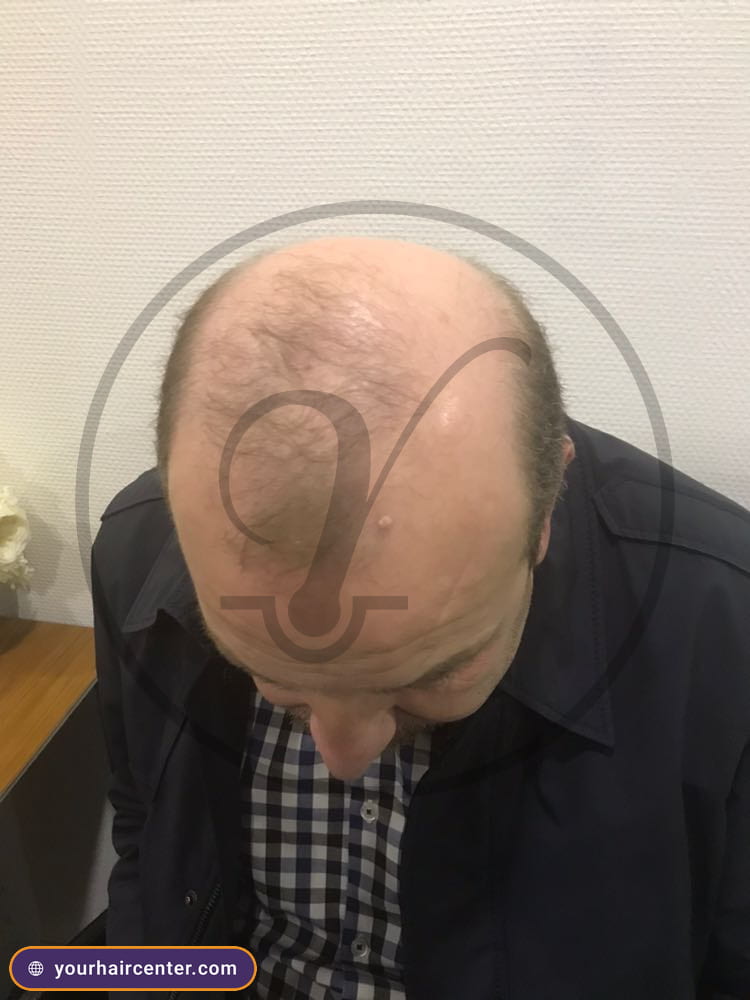
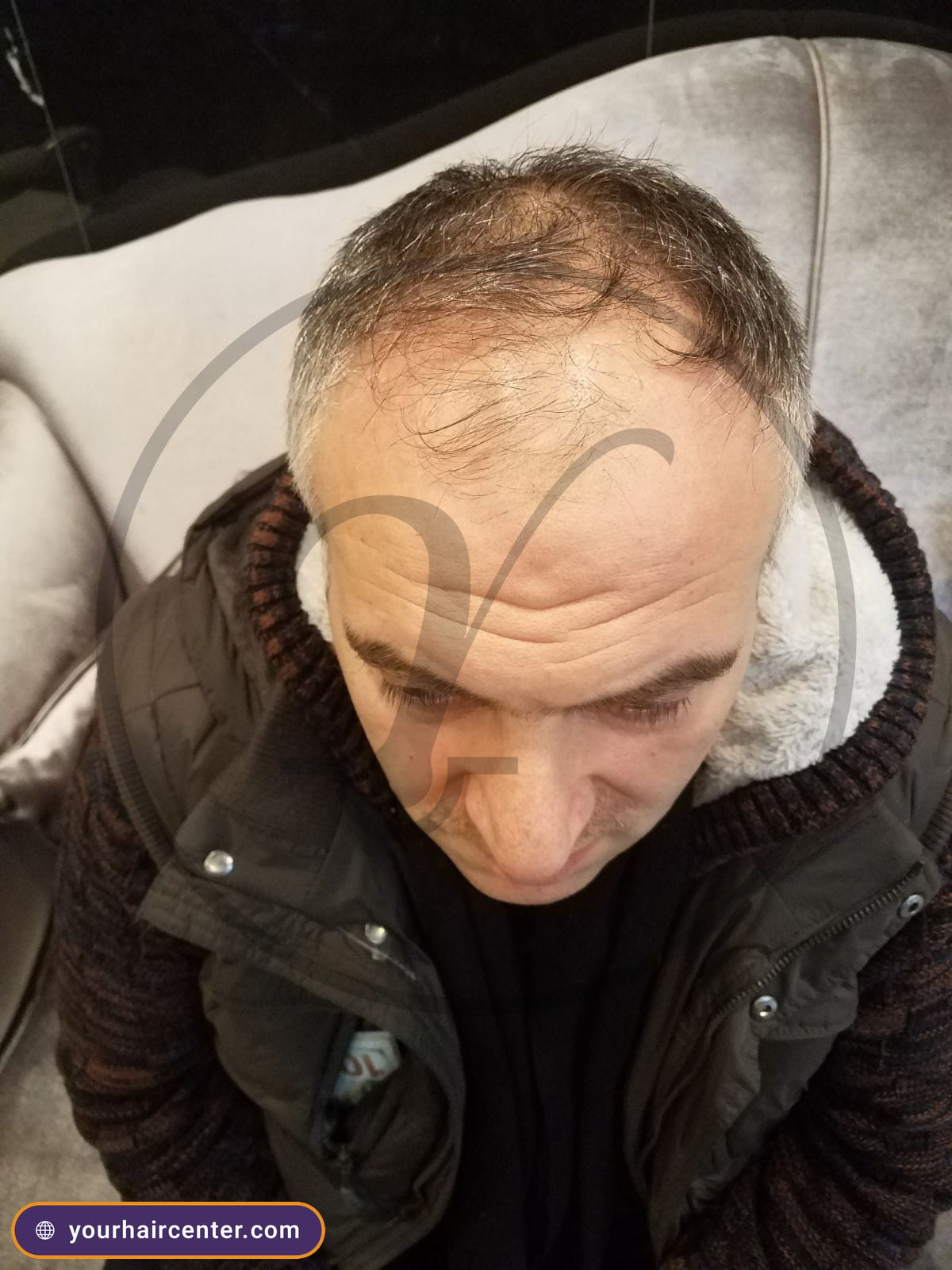
Case 1, Day 7. A representative no shave fue timeline case, around 2,800 grafts placed at the frontal hairline via no-shave FUE, photographed frontally under standard office lighting. It is the visual proof behind the Day 7 milestone from the Days 4 to 7 section above, scabs mostly cleared and the recipient zone reading as nothing happened at 3 feet.
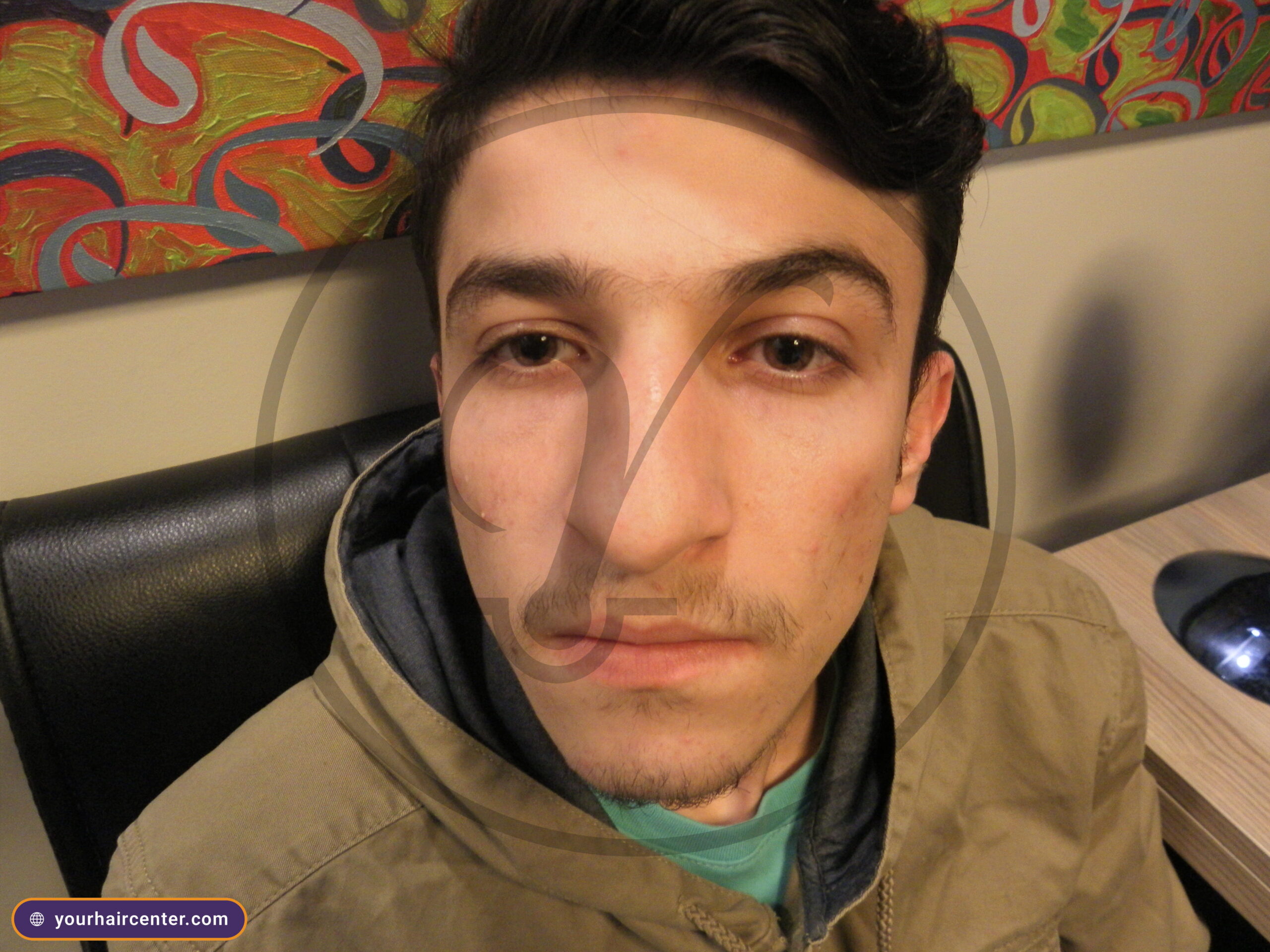
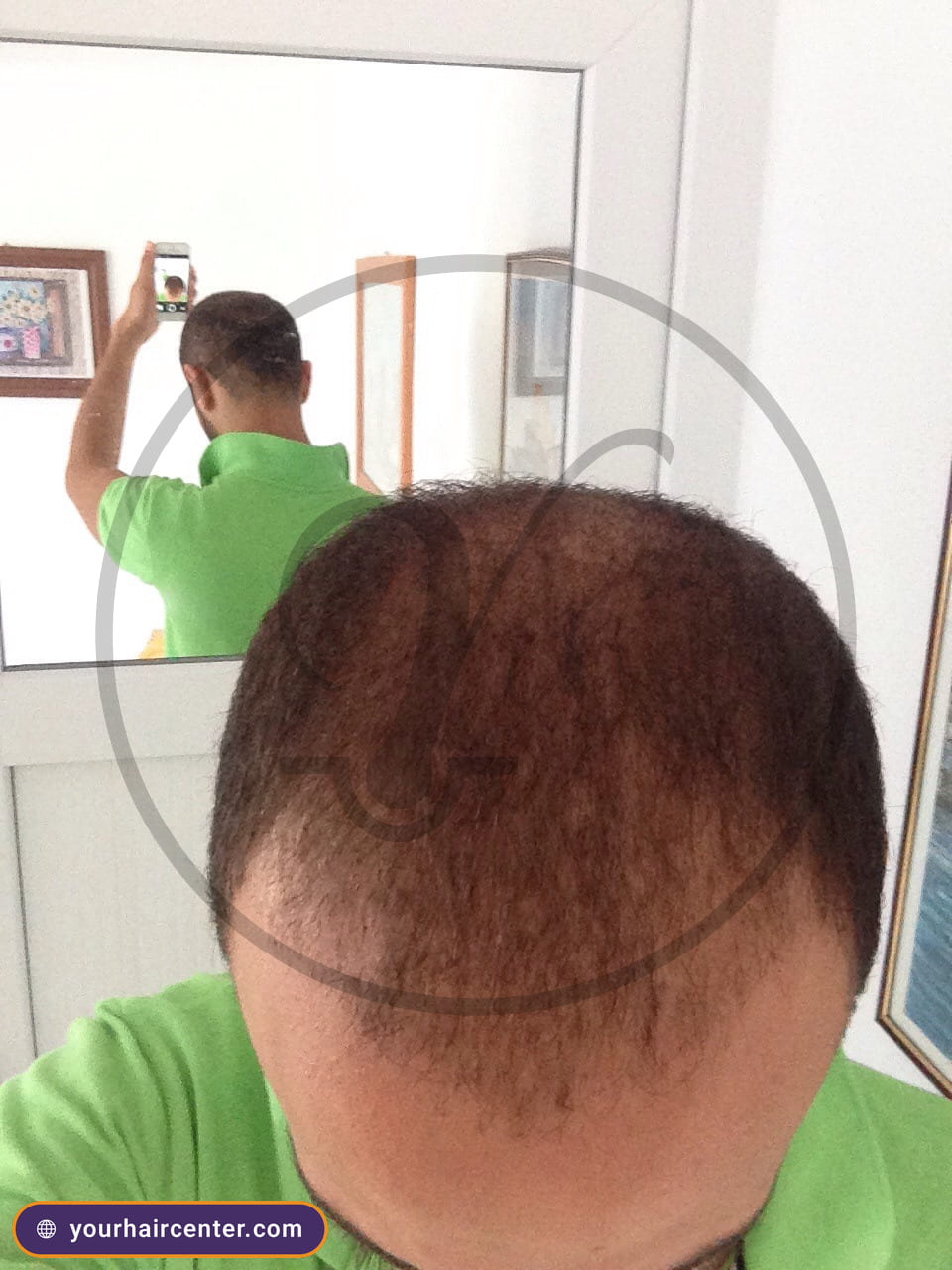
Case 2, Month 3. A representative no-shave FUE timeline case, around 2,600 grafts placed across the frontal third via no-shave FUE, photographed at the dormant-phase checkpoint. It is the visual proof behind the Month 1 and Months 3 to 6 sections above, the shock-loss asymmetry where the mirror reads panic and the office reads nothing.
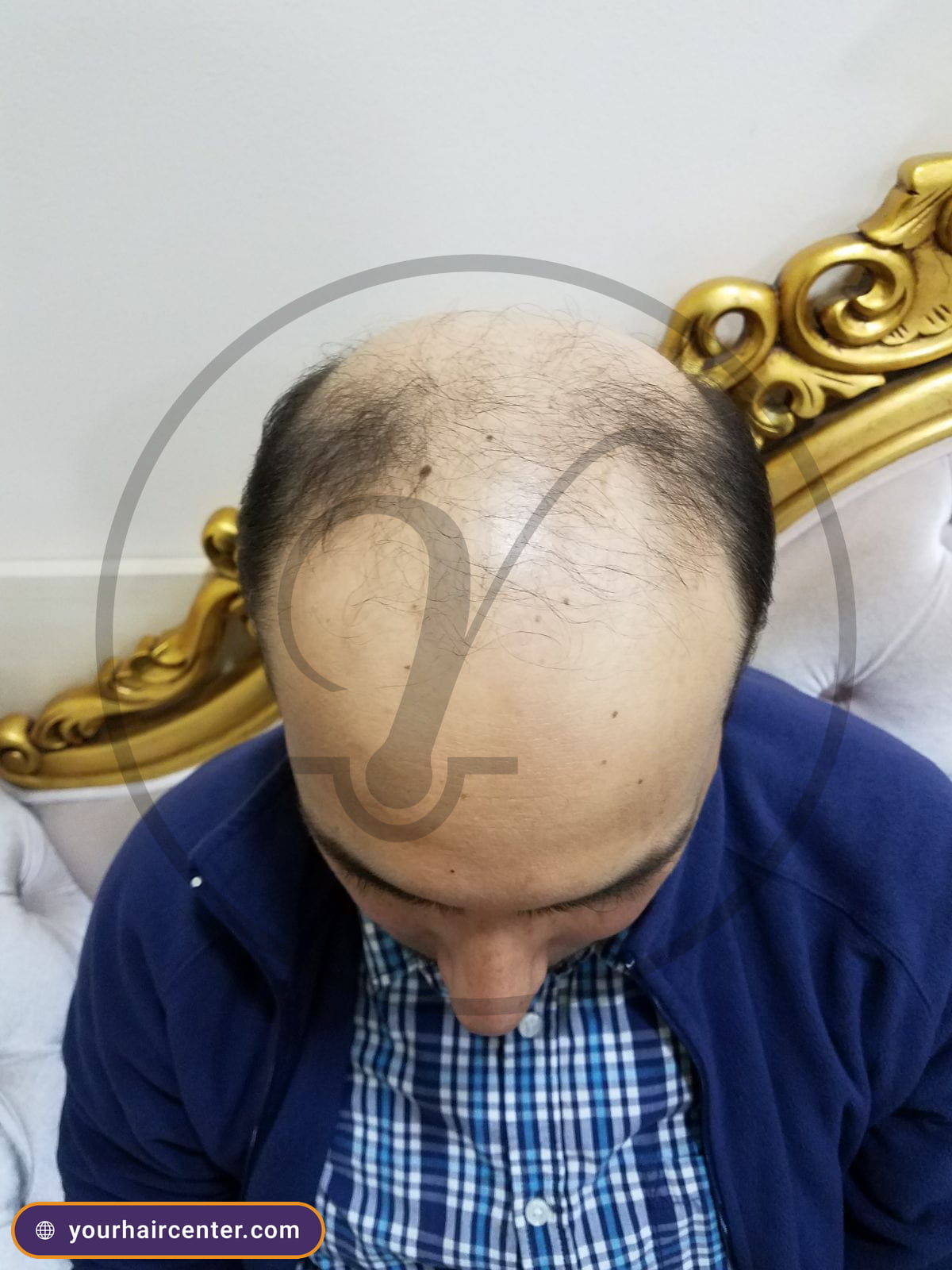
Real results from our patients’ archive. Photos exactly as captured at our accredited partner clinics, with no filters and no retouching. Browse more cases in our photo gallery.



Frequently asked questions
Does no shave FUE work?
Yes. On the no shave fue timeline the technique works the same way a traditional transplant does, with the same permanent result. Follicles are extracted from the donor area without a full shave, placed into the recipient zone, and over 12 months they grow into the native pattern. The only difference is discretion, your donor length hides the trimmed strips, so the procedure stays off everyone’s radar.
Would I look normal 10 days after FUE?
At 10 days you are past the Day 7 passing grade on the no shave fue timeline, so to a colleague at 3 feet under normal office lighting you read as normal. The standard recovery timeline marks the end of the first week as the point where scabs clear and light redness fades, so by Day 10 most of the visible signal is gone. The exception is harsh overhead light or someone inspecting from directly above your seat.
How long after FUE can I shave my head?
Wait until the recipient and donor areas are fully healed and your surgeon clears you, which on the no-shave FUE timeline is well after the crusts come off around 5 to 7 days post-surgery.[1:4] The transplanted no-shave FUE grafts need to be secure first, so a close shave of the recipient zone is not a same-month decision. Your follow-up team confirms the safe point for your specific case before you take a razor to it.
How many days off work do I need for a no-shave FUE?
Plan for roughly 6 to 8 calendar days total. That is four days for the Istanbul trip, two weekend days as a healing buffer, and zero to two optional work-from-home days for extra margin. The office-visibility passing grade on the no shave fue timeline arrives at Day 7, so most patients walk back into the office one short week after the procedure with nobody the wiser.
When can I exercise after a no-shave FUE?
Keep it light in the first week of the no-shave FUE timeline to protect the grafts, gentle walking rather than anything that raises sweat or blood pressure. Strenuous training, heavy lifting, and contact sport wait until your surgeon clears you. Because the office-visibility timeline and the physical-activity timeline are not the same clock, ask your follow-up team for the green light tied to your own healing.
Are there no shave FUE timeline pictures month by month?
Yes, the Your Hair Center gallery holds real archive cases at Day 7, Month 3, Month 6, and Month 12, so you can watch the no-shave FUE timeline play out rather than just read it. The photos route through the in-house archive, never synthetic imagery, and the before-and-after gallery walks a single journey checkpoint by checkpoint.
Planning your no-shave FUE timeline around work
Two timelines, one calendar. The version you actually need runs the clinical track and the office-visibility track side by side, and it is the second track that decides when you go back. Clinical wound healing finishes around Weeks 2 to 4. The office-visibility passing grade arrives at Day 7. The full result arrives at Month 12. Between those markers of the no-shave FUE timeline, your scalp does the work and your colleagues see nothing. The Istanbul trip is four calendar days, and the buffer before you walk back in is two to four more, depending on how you use the weekend. The final result is a year away, but the discreet return to your normal life is one short week away. Ready to plan it around your own calendar? Send your photos for a free evaluation, or ask exactly how many days off work you need.
References
-
Zito PM, Raggio BS. Hair Transplantation. StatPearls, National Center for Biotechnology Information (NCBI) Bookshelf. https://www.ncbi.nlm.nih.gov/books/NBK547740/ (opens in new tab) (crusts removed around 5 to 7 days after surgery; new hairs typically appear after 3 to 6 months; grafts monitored to maturity over the 6 to 12 month window). Retrieved 2026-05-31. ︎ ︎ ︎ ︎ ︎
-
Telogen Effluvium. Cleveland Clinic. https://my.clevelandclinic.org/health/diseases/24486-telogen-effluvium (opens in new tab) (a temporary, stress-triggered shed that usually lasts three to six months, with regrowth following the shedding period). Retrieved 2026-05-31. ︎