4500
grafts
DHI
A hair transplant 6 months vs 1 year guide that plots grafts per square centimeter at every checkpoint and shows what your scalp actually looks like at 3, 6, and 12 months. It explains why the dormant early window is normal, why the final density is set by the plan for each zone and stays the same whether a blade or the fine percutaneous needle opens the recipient sites, and gives you a practical protocol for reading your own progress photos honestly instead of comparing yourself to strangers online.

You are standing in your bathroom on month 4, or month 8, or month 11, phone in one hand, angling your scalp toward the light and trying to answer a single question. Am I where I am supposed to be? A hair transplant 6 months vs 1 year comparison is usually answered with words alone, month 6 is "emergence" and month 12 is "maturation," and you are left to guess whether the face in the mirror is on schedule. This guide answers it with numbers. It plots density as grafts per square centimeter at every milestone, and it pairs each density figure with a plain description of what that scalp actually looks like in real light. There is one more thing to know. The density your curve finally lands on depends on the plan for each zone, not on the tool, and the safe ceiling is the same whether a blade or the fine needle of the percutaneous method opens the recipient sites. The table below is your reference point. It lays out a hair transplant 6 months vs 1 year side by side, with the months in between, so you can find your milestone and read the section that matches it.
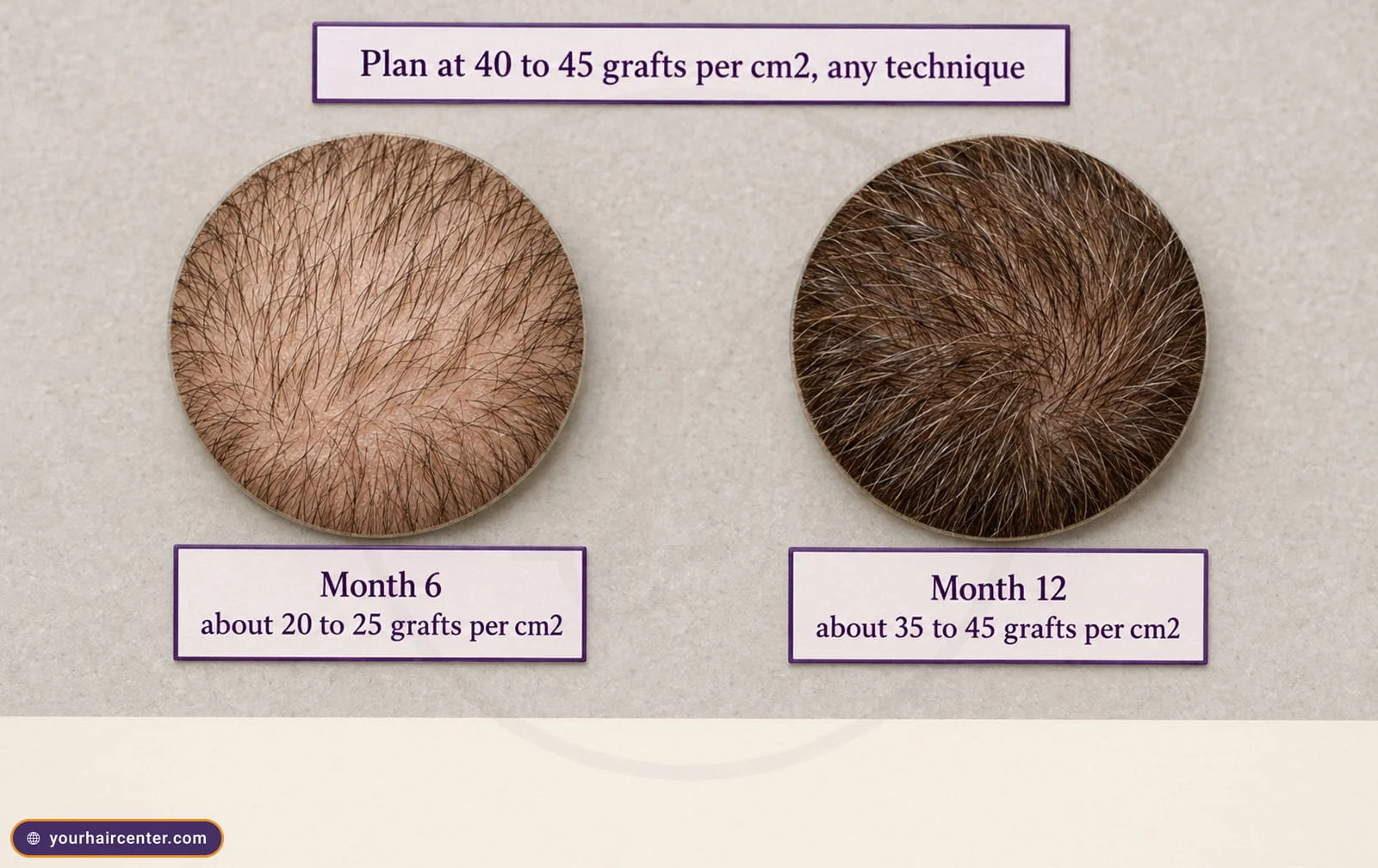
A hair transplant follows a predictable curve. It dips to near-baseline in the first three months, climbs through visible emergence between months 4 and 6, and matures toward its final density between months 7 and 12, with the crown often finishing last. The clearest way to see a hair transplant 6 months vs 1 year is to put the two checkpoints on the same density scale. Here is the whole arc on one screen.
| Milestone | Typical density (grafts/cm2), plan at 40-45 | What you see in the mirror |
|---|---|---|
| Months 1-3 | ~0 (shock loss and scab fall-off) | A near-baseline scalp; some patients look briefly worse than before surgery |
| Months 4-6 | ~20-25 | First visible emergence; thin but real coverage starting to form |
| Months 7-12 | ~35-45 | Mature density; the result you booked for |
| Months 12-18 | ~40-45 | Final thickening and crown completion |
Read these hair transplant 6 months vs 1 year numbers as typical, approximate projections rather than guaranteed measurements. They are anchored to two facts Your Hair Center gives for every hair transplant, whatever the technique. Initial results begin to appear after about 3 months, and final results are complete after about 12 months. The endpoint is the density the plan sets, about 40 to 45 grafts per square centimeter in the dense central zone, the safe limit for percutaneous, sapphire and Classic FUE alike. Everything in between is the curve filling in, which is exactly why a hair transplant 6 months vs 1 year reads as two different scalps rather than two stages of one. If you want to compare your own scalp against documented cases, the percutaneous before-and-after gallery holds timeline images at each milestone. Find the row that matches your month, then read its section below.
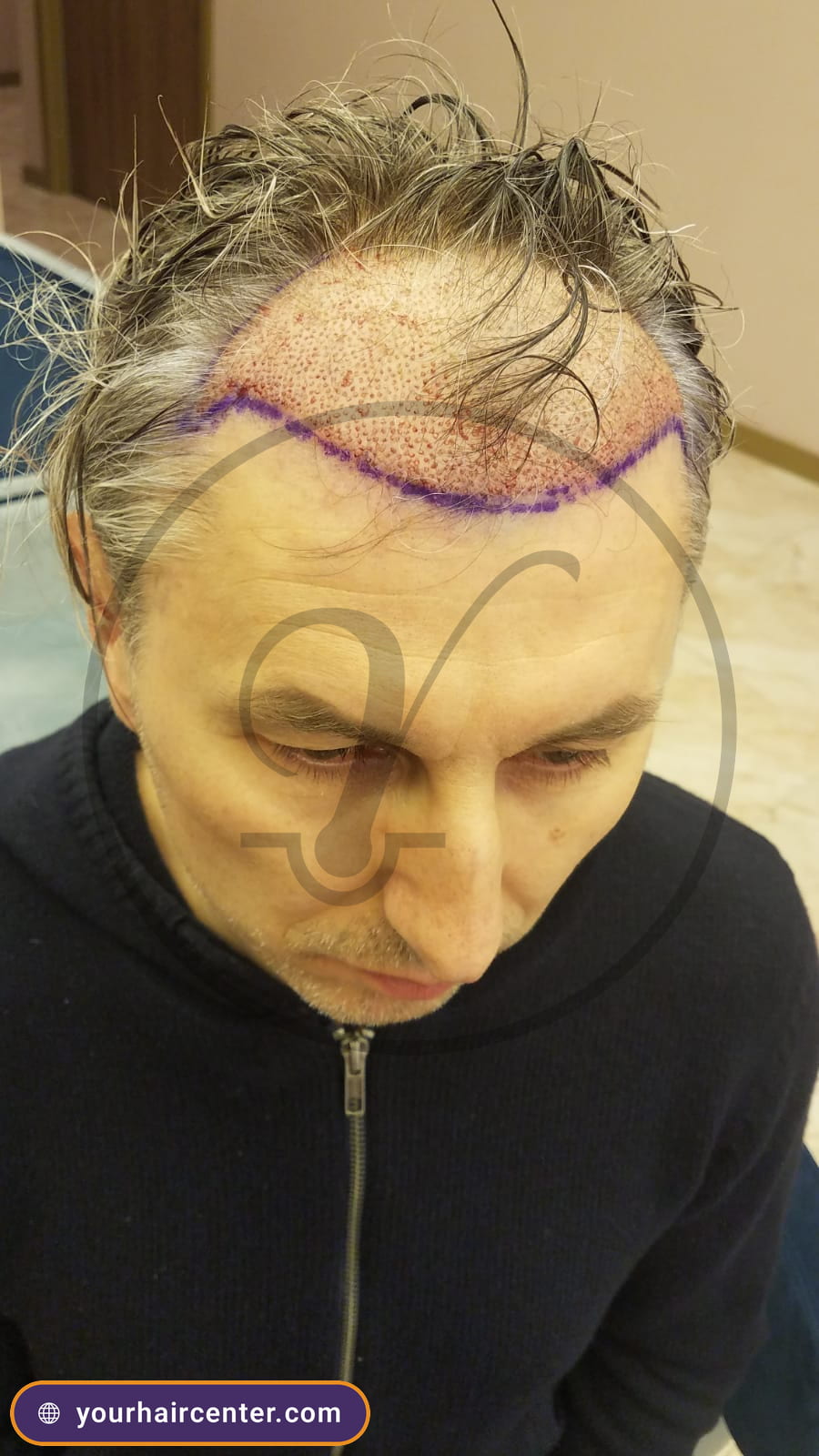
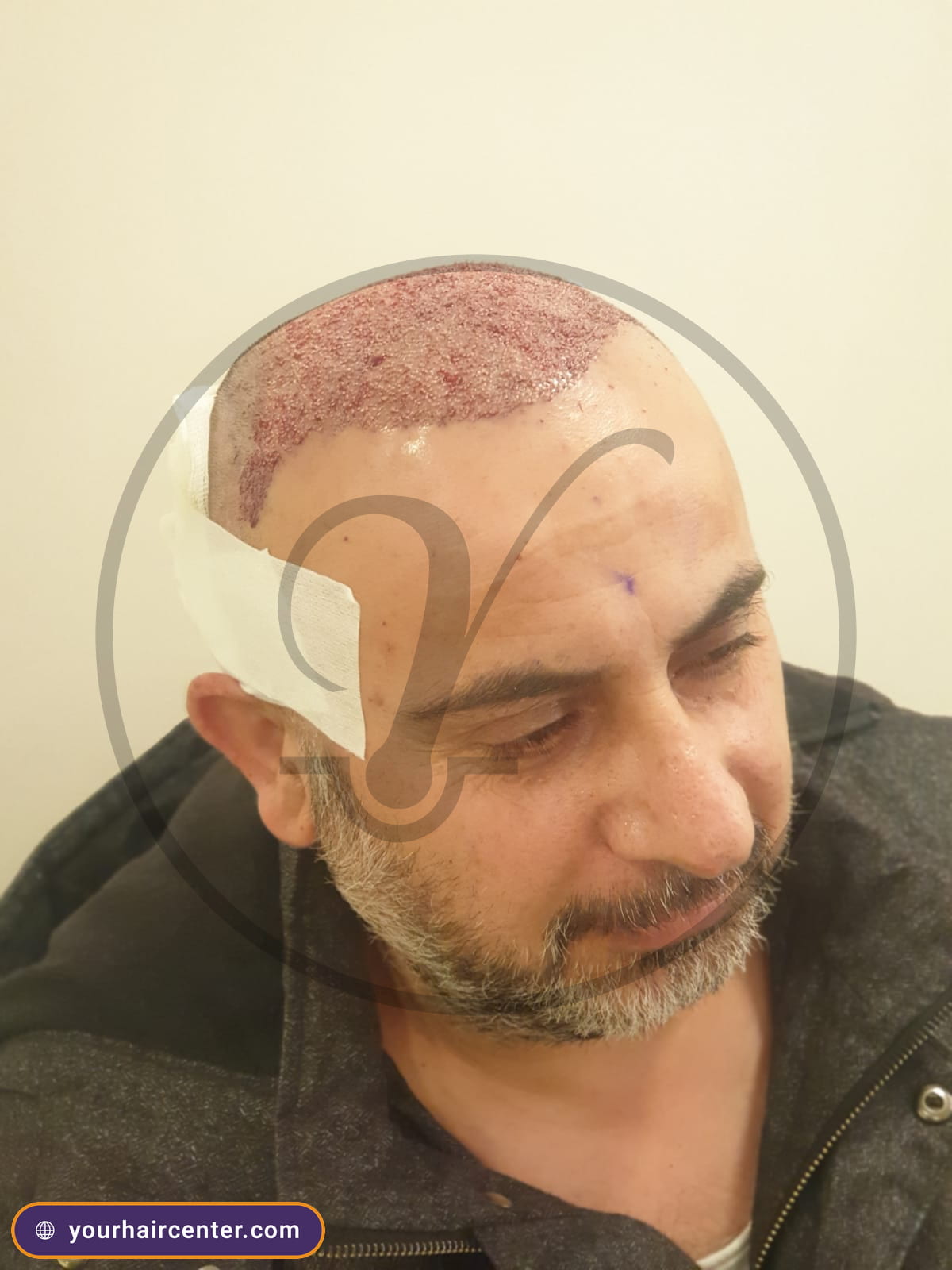
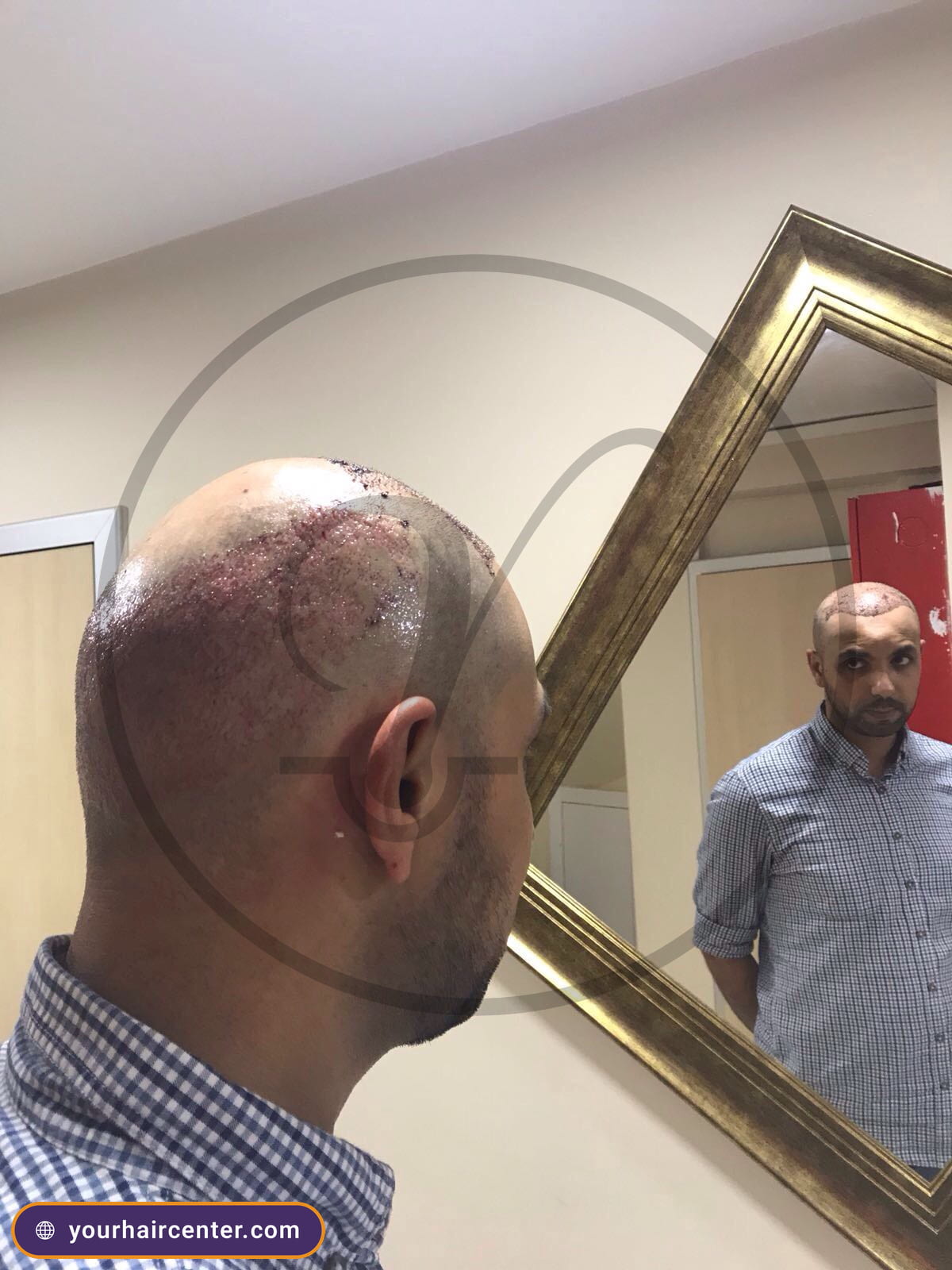
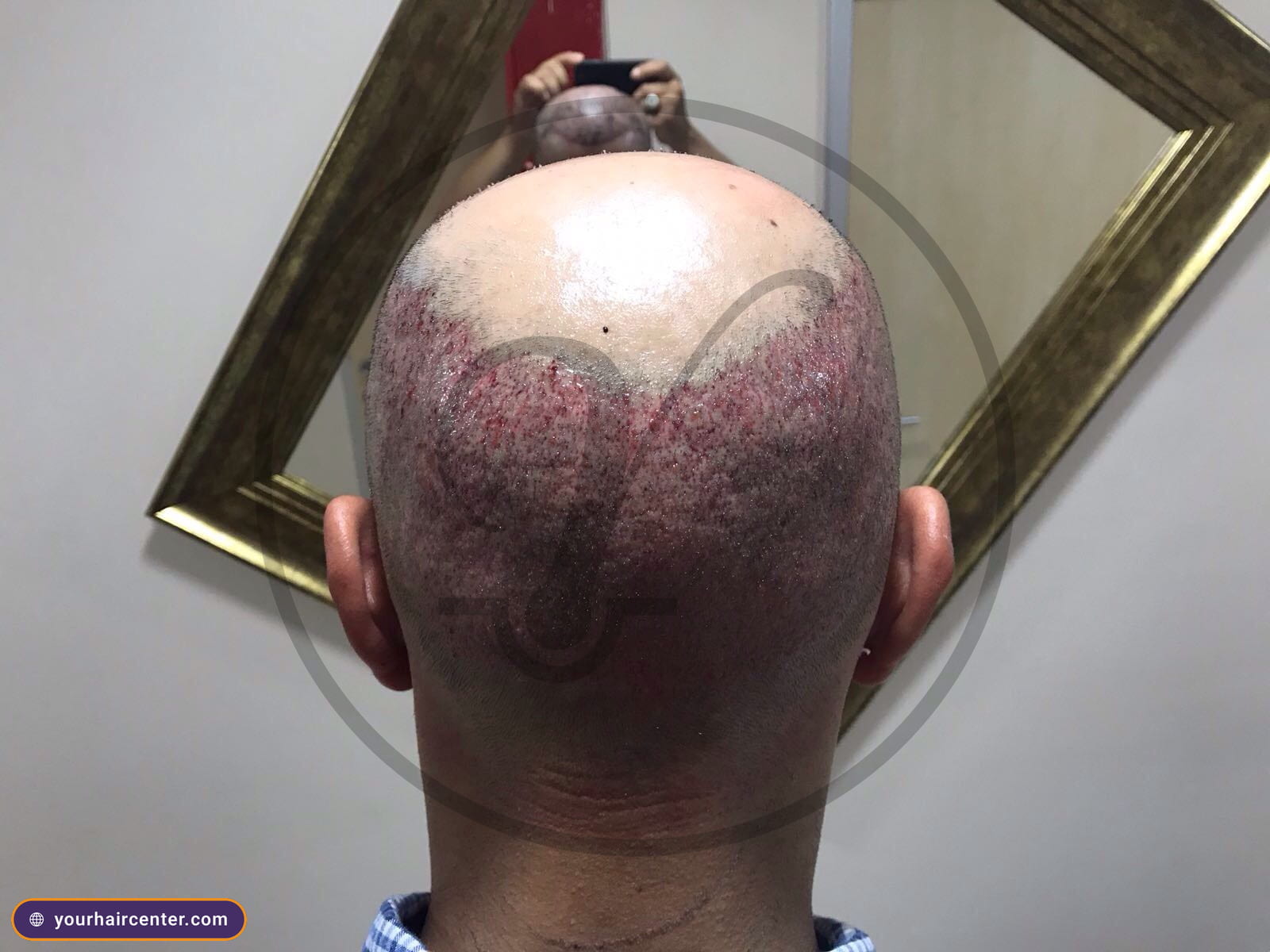
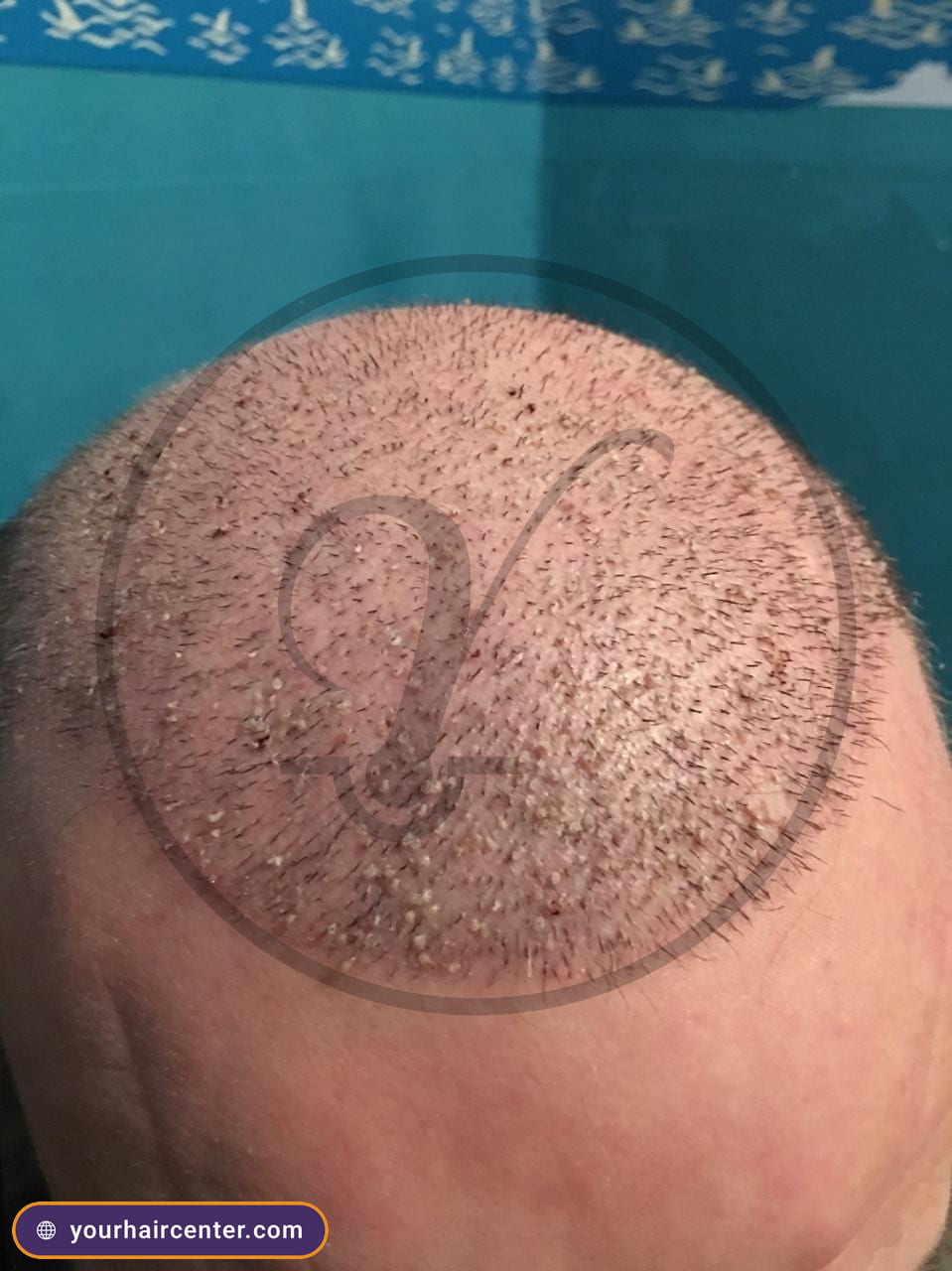
The first stretch is the one that breaks people’s nerve, and it helps to know exactly why before it happens to you. It is also the stretch nobody photographs, so it helps to see where it sits in a hair transplant 6 months vs 1 year timeline. In week 1, your scalp carries small scabs and crusts over the implanted area. There is no growth yet, only the freshly placed grafts settling in. Between weeks 2 and 3 those scabs lift away during your washes, and here is the part that surprises patients. The implanted shafts often fall out along with the scabs. Between two and eight weeks after surgery, the transplanted hair sheds, which is a normal and expected step rather than a sign of failure.[1] The follicle stays alive and anchored under the skin. Only the visible hair shaft is shed while the follicle resets.
This shedding has a biological reason. Transplanted grafts shift from their active growing phase into a resting phase because they are moved and spend time outside the body, then they re-enter growth after a lag of roughly three months.[2] The resting phase of a follicle naturally lasts about two to four months before a new shaft pushes through.[3] So months 1 through 3 are a dormant window. The follicles are alive and quietly preparing, but the mirror looks its worst here. By the third month the area can look thinner than it did before surgery.[1:1] This is the bottom of the curve, not the end of it. None of the distance in a hair transplant 6 months vs 1 year comparison has opened up yet, because the climb has not started.
If you had your procedure in Istanbul, the Day 3 first wash at the partner clinic was the moment the medical team handed this phase over to you, well before any hair transplant 6 months vs 1 year comparison is even possible. They washed the scalp under supervision, reviewed the implanted follicles, and sent you home with the care kit and the schedule. Follow-up then continues by WhatsApp through the first week, the first month, and the third month, so you are not navigating the dormant window alone. For a deeper look at why shafts shed and which side effects depend on the technique, see our guide on hair transplant side effects.
Knowing what is normal protects you from panic. Mild itching, a pink scalp, scabbing in the first two weeks, and a sparse appearance through month 3 are all expected. What is not expected, and what warrants a message to the medical follow-up team with photos, is a fever, spreading redness that grows day over day, pus or discharge, or sharp localized pain. Those are the red flags worth flagging early. Everything else in this window is the curve doing exactly what it should. The dramatic part of a hair transplant 6 months vs 1 year comparison is still ahead of you.
Month 4 is when the mirror starts giving something back, and it marks the start of the hair transplant 6 months vs 1 year climb that most patients actually photograph. Fine, lighter-pigmented hairs begin pushing through the recipient area as the follicles re-enter their growth phase. These first hairs look wispy and pale, lighter than your natural color, because young shafts have not yet built full pigment or caliber. That is normal. They thicken and darken over the months that follow.
By month 5 the hairline starts forming a visible line rather than scattered dots, and the mid-scalp begins filling in unevenly. That unevenness is expected. Follicles wake on slightly different schedules, so one patch leads while a neighboring patch lags by weeks. By month 6 you are sitting at roughly 50 to 60 percent of your final density. For a plan at 40 to 45 grafts per square centimeter that means a typical visible density around 20 to 25, whichever tool opened the recipient sites. These are approximate projections from the planned endpoint, not exact measurements, but they describe the shape of what month 6 delivers. Set against the year mark, this is where the hair transplant 6 months vs 1 year gap is widest, because the density still has roughly half its climb left.
Here is the mirror test at this milestone, the early half of any hair transplant 6 months vs 1 year comparison. Under direct overhead light the scalp still reads slightly see-through, because the shafts are present but not yet at full caliber. Under normal indoor lighting the same scalp looks opaque and covered. Run a hand through the hair and you feel real follicle resistance for the first time since surgery. The hairline reads as a line. The mid-scalp reads as coverage that is thin but unmistakably real. This is the milestone most people mean when they search a hair transplant 6 months vs 1 year, and the honest answer is that 6 months is a strong preview of the result, not the finished result.
A common worry at this point is patchiness, and yes, mild patchiness at month 6 is normal. The lagging follicles have simply not caught up yet. That unevenness typically resolves between months 7 and 9 as the slower patches fill in, which is most of what separates a hair transplant 6 months vs 1 year.
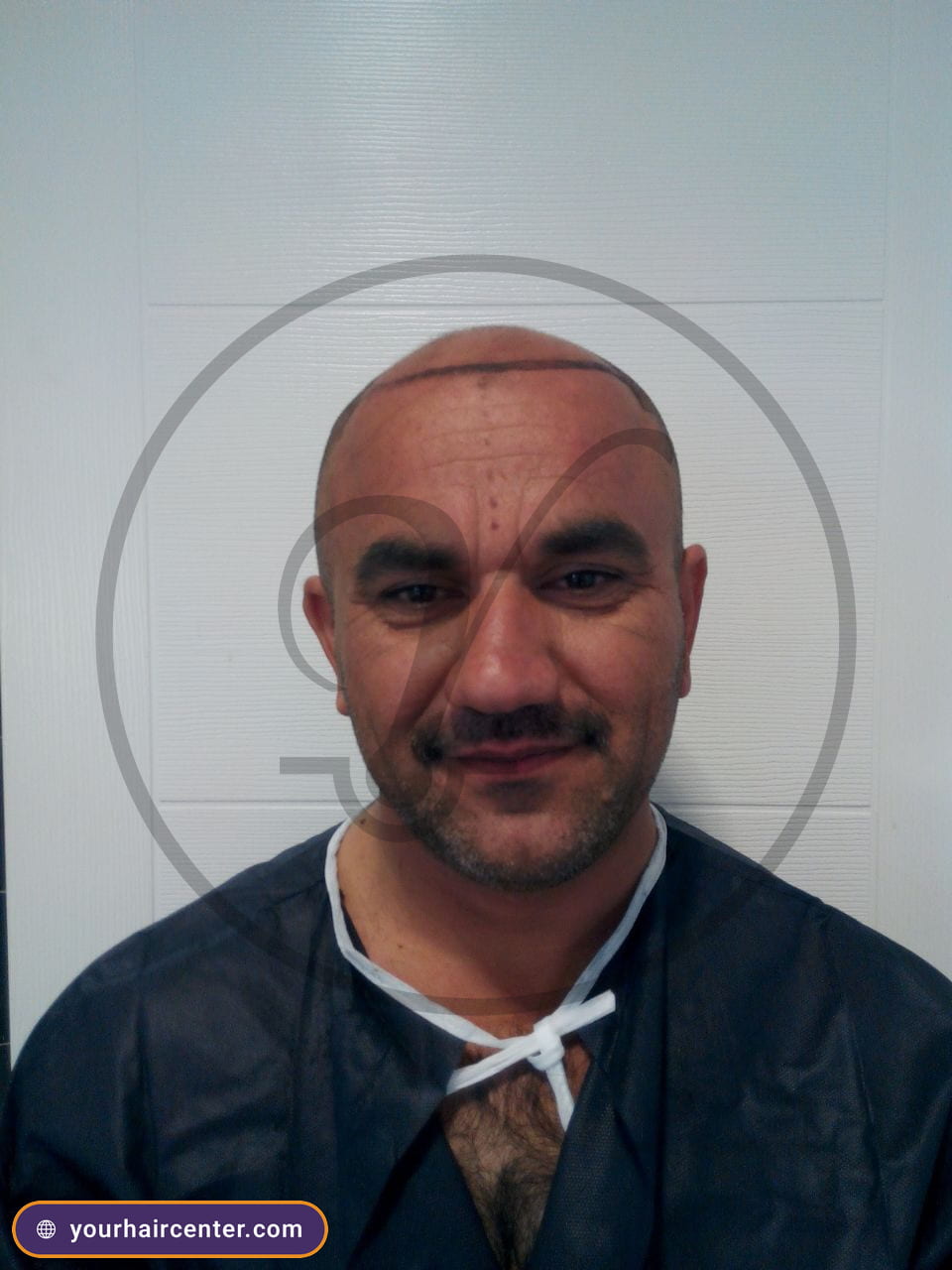
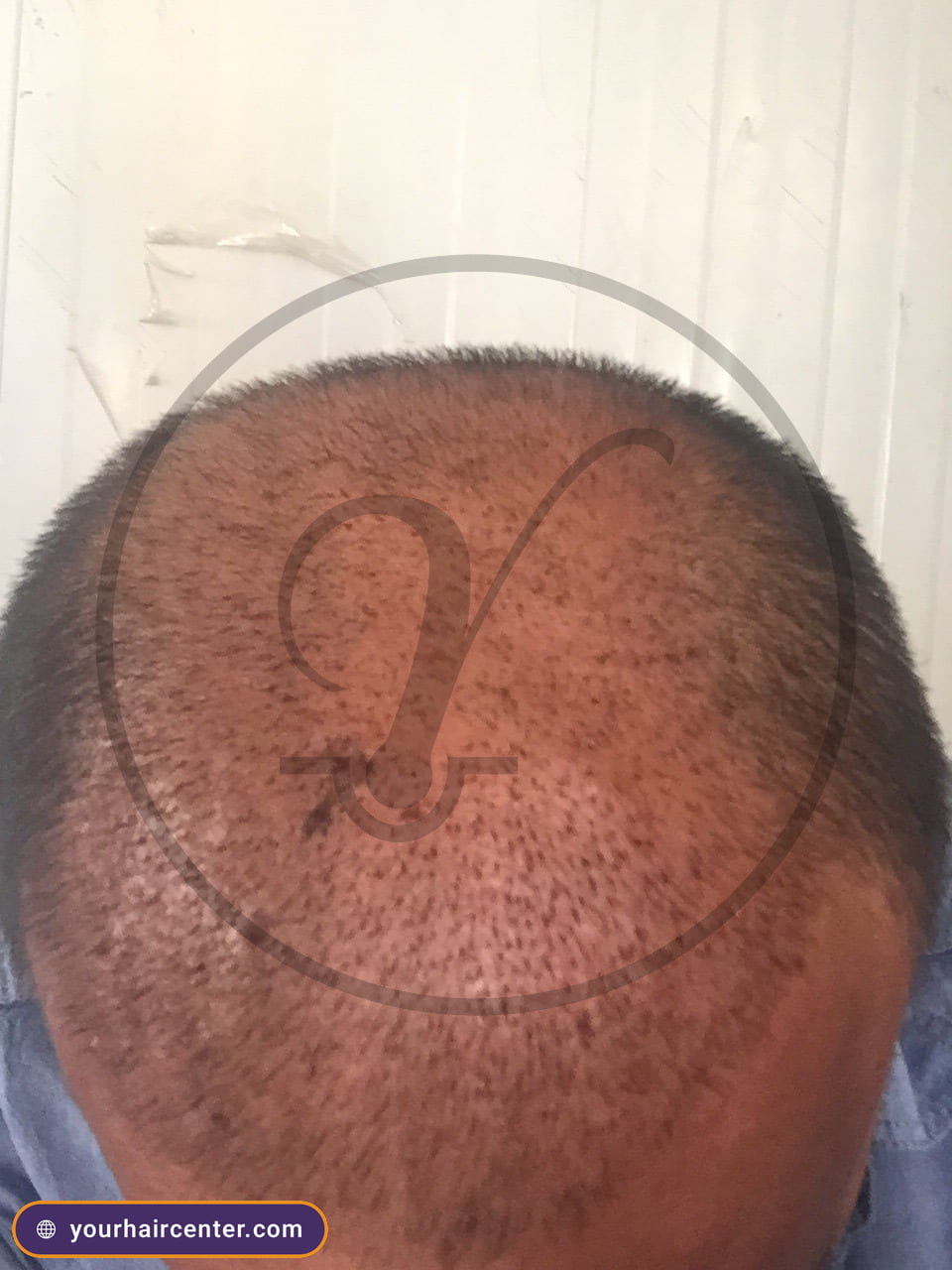
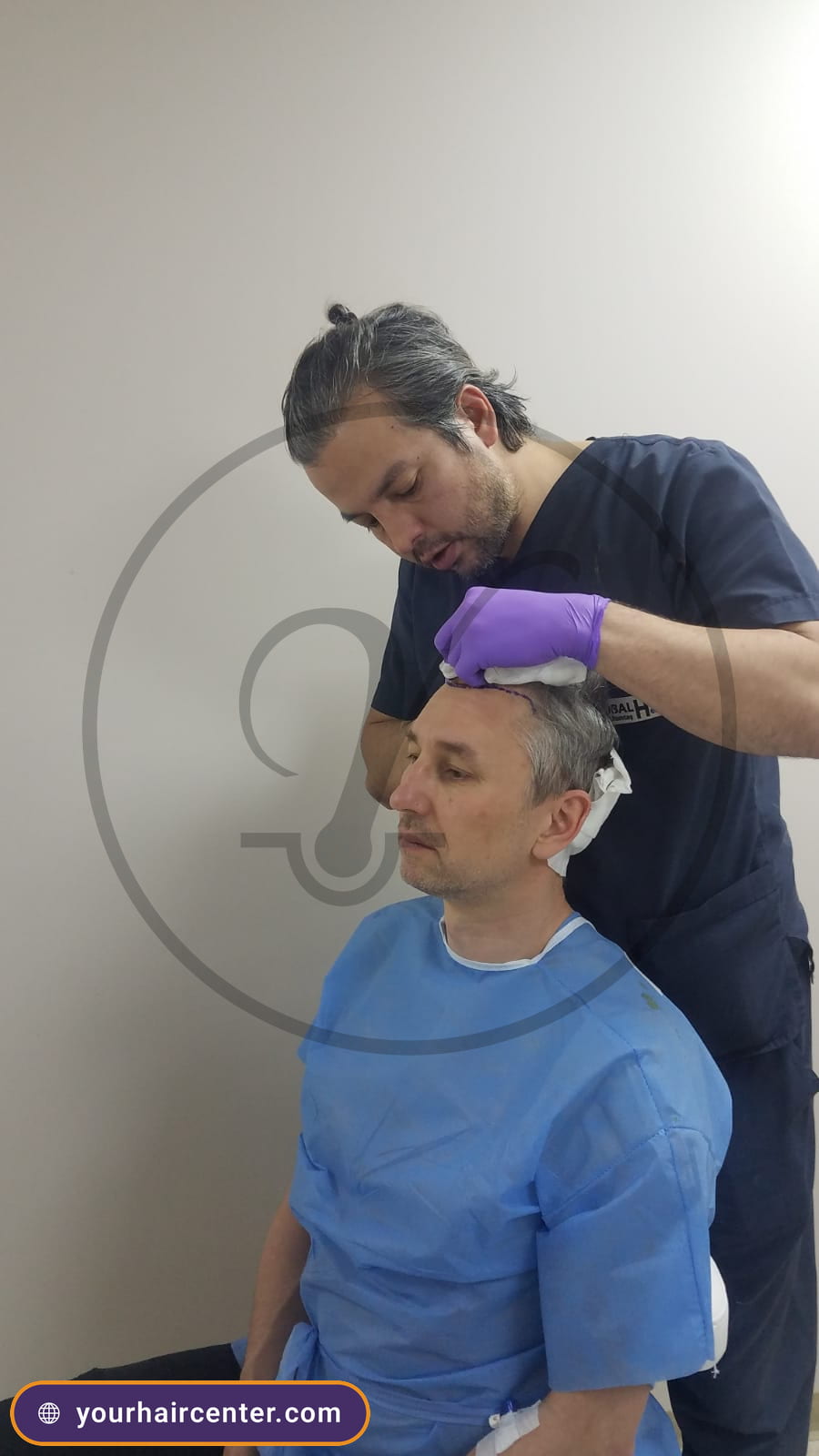
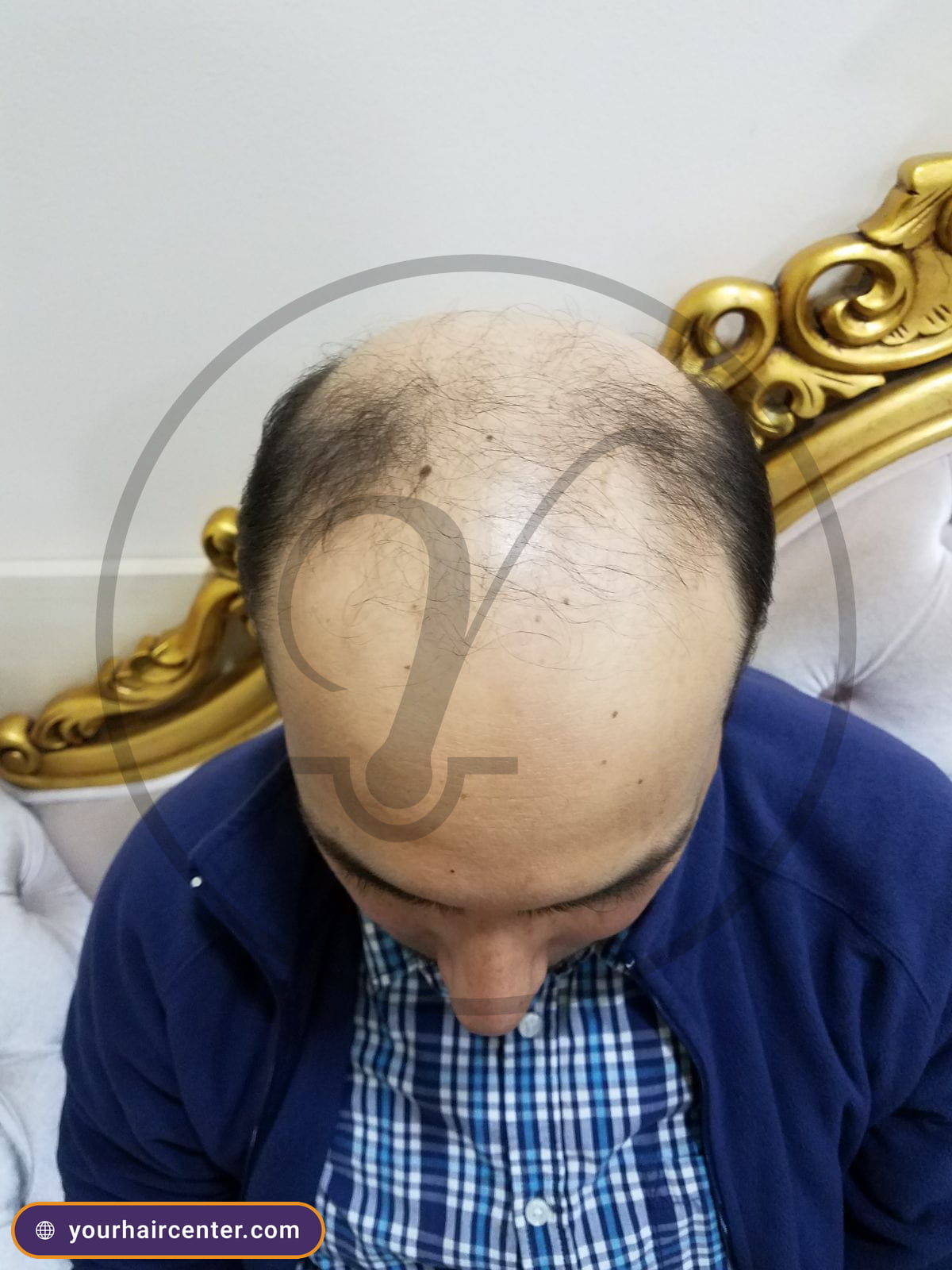
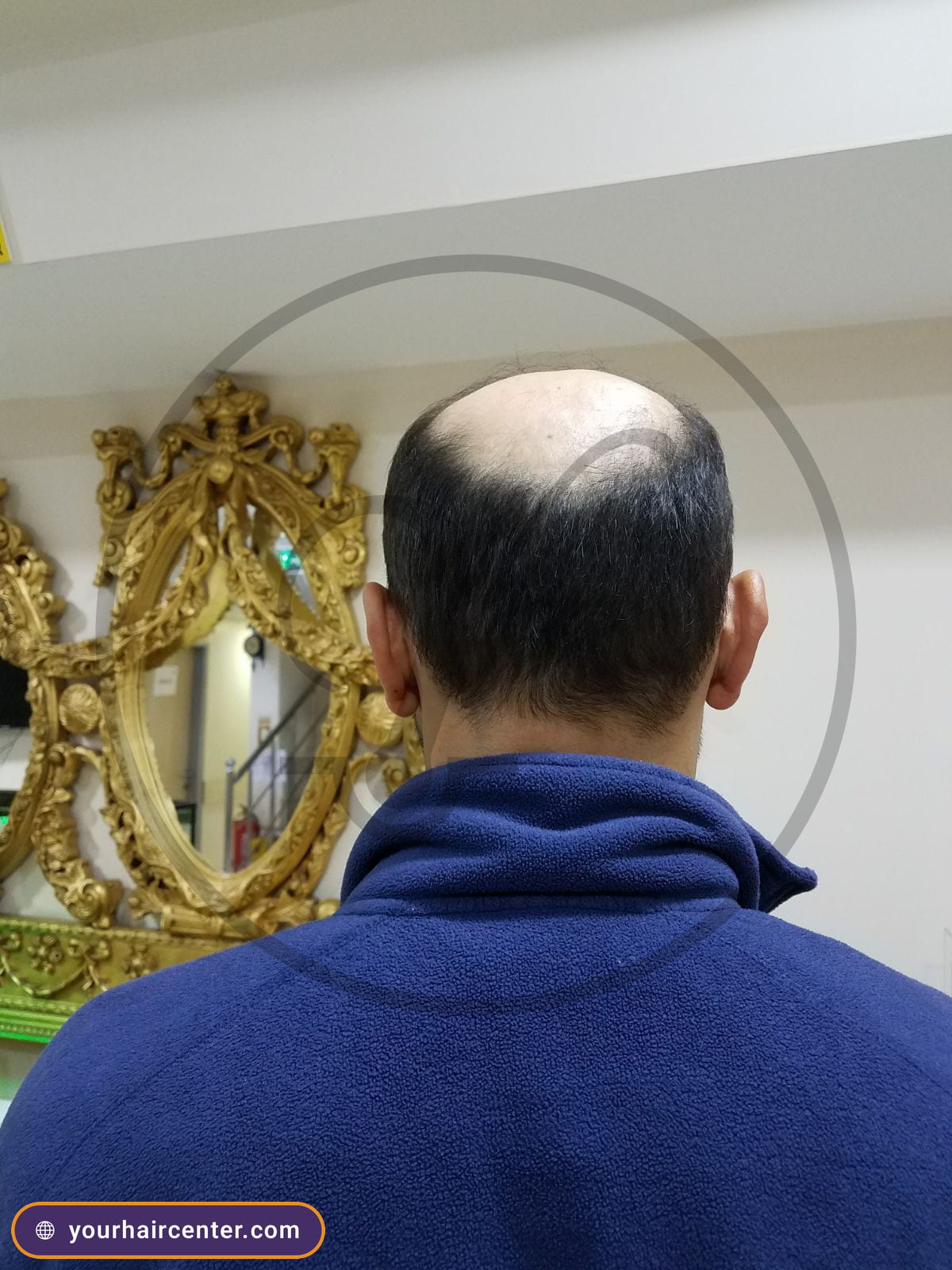
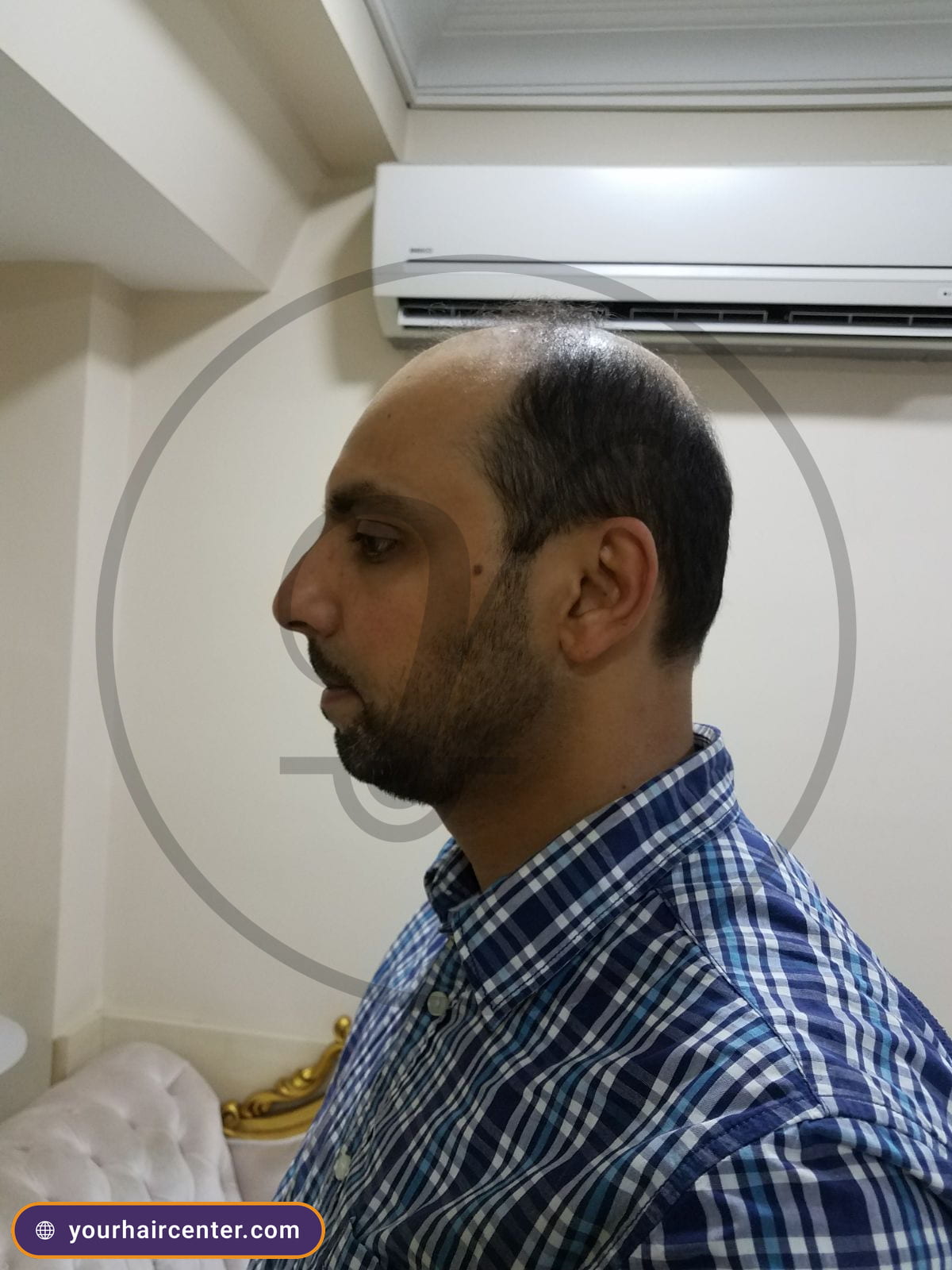
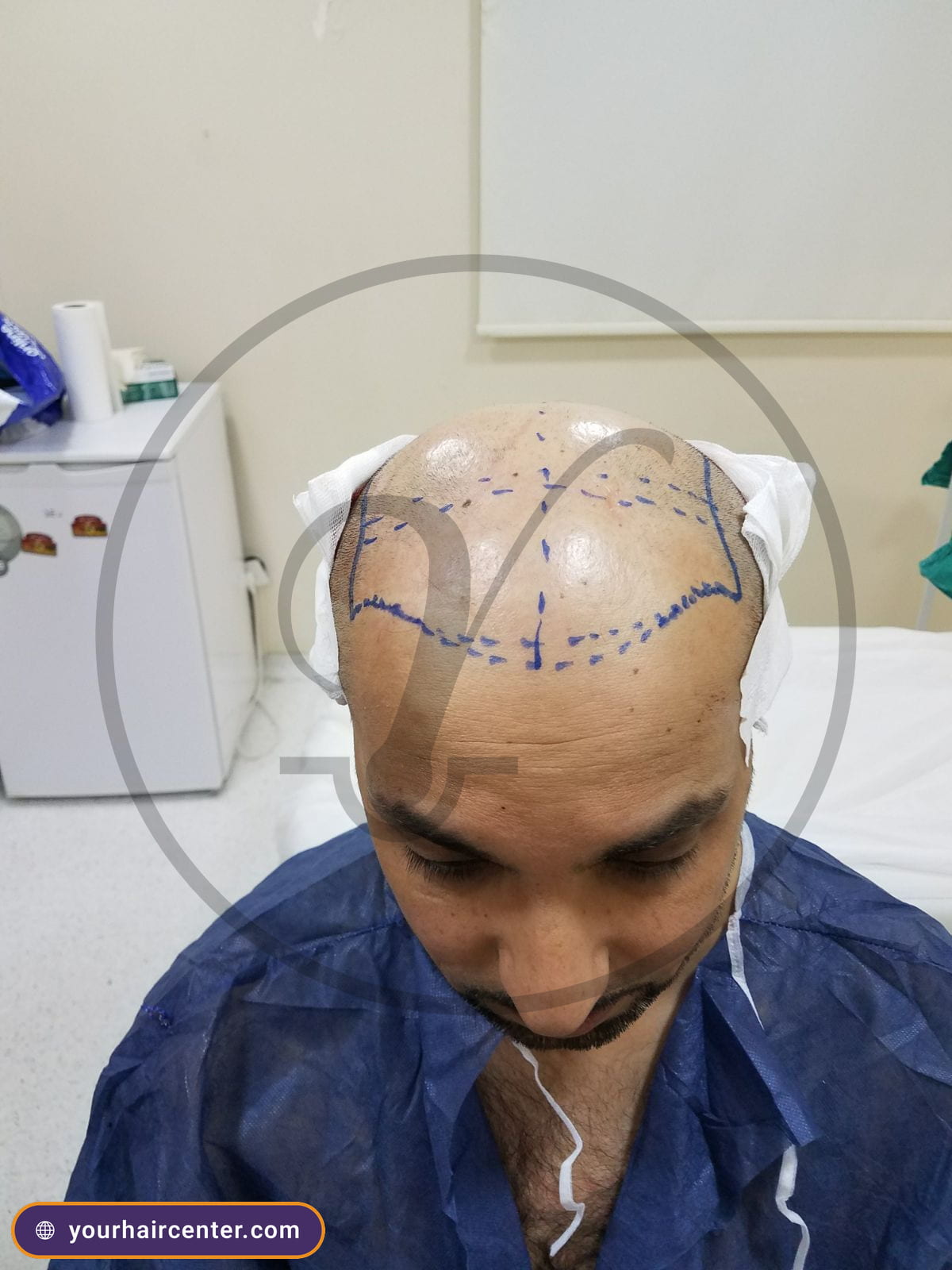
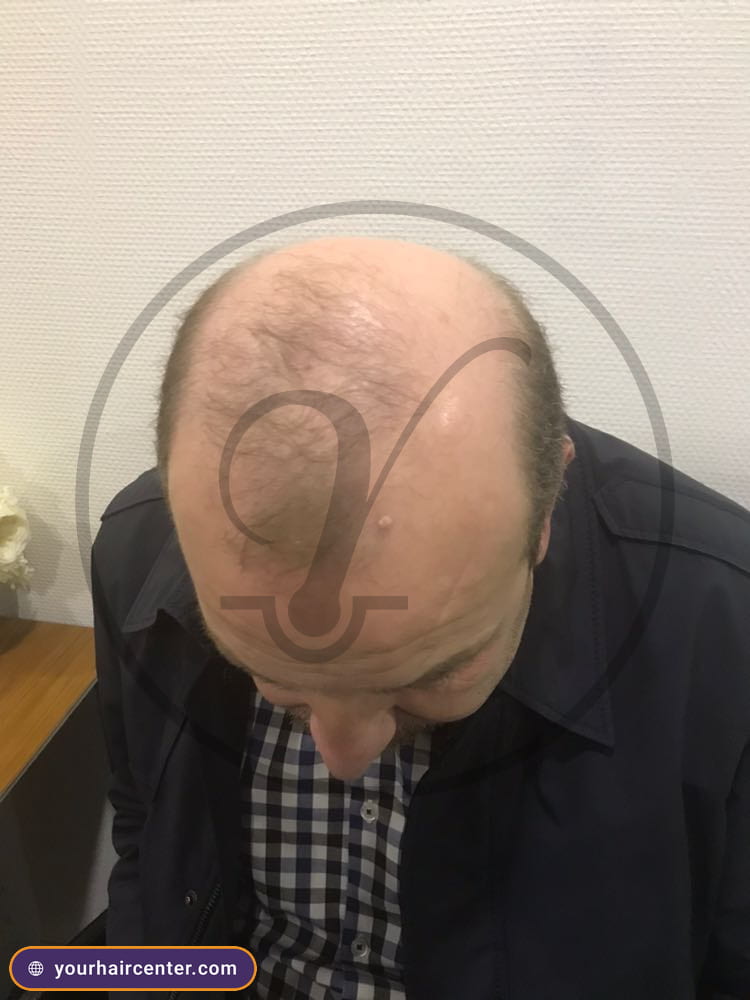
Real results from our patients’ archive. Photos exactly as captured at our accredited partner clinics, no filters, no retouching. Browse more cases in our photo gallery.
Months 7 through 9 are where the picture resolves, and where most of the visible distance in a hair transplant 6 months vs 1 year comparison gets covered. The lagging follicles catch up, the unevenness from month 6 evens out, and the pigment deepens from the wispy lighter shade into your natural color. The change is gradual enough that you may not notice it week to week, but a side-by-side of your month-6 and month-9 photos usually shows it clearly.
Between months 10 and 12 the density approaches its near-final number. For a plan at 40 to 45 that is a typical range around 35 to 45 grafts per square centimeter, with any tool. Put that next to the emergence figures and the hair transplant 6 months vs 1 year difference becomes concrete, a jump from roughly 20 to 25 grafts up to 35 to 45. Just as important, the existing hairs thicken in caliber rather than only growing in count. That caliber change is what produces the fullness you compare against your pre-op photo. A scalp can hold the same number of follicles and still look dramatically fuller once each shaft reaches mature thickness. Most patients see their results between six and nine months after surgery, and for some it takes the full twelve months to arrive.[1:2] The grafts are generally considered fully matured by around the twelve-month mark.[2:1]
This is the milestone the marketing world calls the final result, and for the front hairline and the mid-scalp that label is mostly accurate. What 40 to 45 grafts per square centimeter looks like in real light is straightforward. With mature caliber the scalp reads opaque under normal lighting and largely covered under direct overhead light. The hand-through-hair test now feels full. You reach for styling product only to shape the hair, not to hide scalp. This is the side of the hair transplant 6 months vs 1 year comparison people picture when they imagine the result, the finished version rather than the preview. The one zone where "final at 12 months" is not quite true is the crown, which keeps thickening past the one-year mark. That is the next section.
Real results from our patients’ archive. Photos exactly as captured at our accredited partner clinics, no filters, no retouching. Browse more cases in our photo gallery.
Most timeline guides stop at month 12, which is why a hair transplant 6 months vs 1 year framing feels complete to most readers. The curve does not stop there. There is a final stretch between months 12 and 18 that matters most for anyone whose crown was a significant part of the treatment.
The crown lags for a structural reason, and it is the one place where a hair transplant 6 months vs 1 year readout can mislead you. Its vascular bed remodels more slowly than the frontal scalp, so even when your hairline reaches its planned density by month 12, the crown may still be climbing through months 15 to 18. What changes in this window is less about new growth and more about caliber. The follicles that are already there produce thicker shafts, so the crown reads as fuller without necessarily gaining count. The result is more coverage from the same follicles.
This is why a candid 12-month photo can underrepresent a crown-heavy result. You are taking the picture at the milestone the internet told you was final, but your crown’s curve is still rising. So while a hair transplant 6 months vs 1 year comparison settles the front hairline cleanly, a crown-heavy case really needs an eighteen-month frame to tell the whole story. The practical implication is simple. If the crown was a major treatment zone, hold your final judgment until month 18. For the front hairline you can judge the result confidently at month 12. Patience here is not wishful thinking, it is reading the curve correctly for the zone that finishes last.
Here is the part nearly every other timeline guide muddles. The same growth curve runs at the same milestones regardless of technique, and it lands at the same planned density too. Two patients can post an identical-looking hair transplant 6 months vs 1 year progression and finish at different densities, but the difference comes from the plan for each zone, the donor supply and the caliber of the hair, not from the tool.
Some clinic content presents the 40-to-50 ceiling as a blade-channel limit that a needle can break, which is why some hair transplant 6 months vs 1 year galleries promise more. That is not what the literature says. Marwah and Mysore put the dense central zone at about 40 to 45 grafts per square centimeter and warn that more than about 60 can hamper the scalp’s blood supply and lower graft survival, a limit set by the scalp’s circulation whichever tool opens the sites.[4]
Percutaneous (Turkish perkütan, from "percutaneous", through the skin) is the name Turkish hair transplant centers use for opening the recipient sites with a fine needle instead of a blade. The needle makes a tiny hole or a narrow slit, and the graft is then placed in it with forceps, either after all the sites are made or one site at a time.[4:1] The timeline does not run faster or slower for percutaneous, and it does not run to a denser endpoint. What the needle offers is fine work at the front, where single-hair grafts go into small slits made with a 19-gauge needle or a blade under 0.9 millimeters.[4:2] This is the part of a hair transplant 6 months vs 1 year story that marketing numbers blur, because the schedule and the endpoint are shared, and the craft shows in how natural the hairline looks at month 12.
For researchers comparing four or five clinics, this reframes the question worth asking. The useful question is not "how long until I see results," because the timeline is roughly the same everywhere, and every clinic’s hair transplant 6 months vs 1 year progression looks broadly alike on the way up. The useful question is "what density will you plan for each zone, and how much donor supply does that use." For the full breakdown of what each density tier means and how the numbers are derived, see our hair transplant density guide, and to discuss the technique directly, read the percutaneous hair transplant technique page.
The growth curve is only useful if you can measure yourself against it honestly, and most people sabotage that with inconsistent photos. A fair hair transplant 6 months vs 1 year comparison only works when both photos are shot the same way. Here is a protocol you can apply tonight.
Start with lighting. Use the same overhead light source every single time. Window light at the same time of day works well. Never compare bathroom-mirror selfies shot under mixed lighting, because the inconsistency makes month-to-month comparison meaningless. A scalp that looks thin in cool light and full in warm light has not changed, only the bulbs did. Lighting alone can fake an entire hair transplant 6 months vs 1 year improvement that is not really there.
Next, fix your angles. Shoot three every time. Top-down for the crown, front-facing for the hairline, and three-quarter for the mid-scalp transition zone. Use the same three angles each month. A phone propped on a shelf at a fixed height gives you repeatable framing. Handheld does not, because the angle drifts and you end up comparing different views. A trustworthy hair transplant 6 months vs 1 year pair is two photos taken from the exact same angle, nothing less.
Then account for scalp condition. Wet-scalp photos exaggerate density, because wet shafts darken and clump together to look denser than they are. Dry-scalp photos show your real density. Take both, but trust the dry-scalp photo when you judge your hair transplant 6 months vs 1 year progress, and save the flattering wet-scalp shot for sharing with friends. Compare dry to dry, so that what you measure month over month is hair, not water.
Now run the on-track checklist, which turns a vague hair transplant 6 months vs 1 year worry into a month-by-month yes or no. At month 3, scabs gone, scalp pink to normal, sparse appearance acceptable. At month 6, visible emergence at the hairline, mild patchiness acceptable, mid-scalp beginning to fill. At month 9, unevenness resolved, pigment darkening. At month 12, frontal hairline at near-final density, crown possibly still lagging. At month 18, final crown judgment. The red flags worth a closer look are specific. Month 6 with zero visible emergence anywhere, month 9 with patchiness that is worsening rather than improving, or month 12 with a sparse hairline under strong overhead light. If any of those describe you, send dated photos to the medical follow-up team for an experienced read, or message us directly to share your month-N photo for a progress assessment. A trained eye on your actual hair transplant 6 months vs 1 year photos beats an anxious hour comparing yourself to strangers online.
Yes, and that is normal. At month 6 you are at roughly 50 to 60 percent of your final density, which works out to a typical visible density around 20 to 25 grafts per square centimeter for a plan at 40 to 45, against the 35 to 45 you can expect by month 12. That hair transplant 6 months vs 1 year gap is exactly why a 6-month scalp still reads patchy while a 12-month scalp does not. The patchiness comes from follicles waking on different schedules, so some patches lead while others lag. The lagging patches usually catch up between months 7 and 9, and the unevenness resolves on its own. Mild patchiness at month 6 is a stage in the curve, not a failure of it.
At 6 months you should see the first real emergence. The hairline forms a visible line rather than scattered dots, the mid-scalp fills in unevenly, and the new hairs look fine and lighter than your natural color because they have not built full caliber or pigment yet. Density sits at about 50 to 60 percent of the final result. Under indoor lighting the scalp reads as covered. Under direct overhead light it still reads slightly see-through. Running a hand through the hair, you feel real follicle resistance for the first time since surgery. Put simply, in a hair transplant 6 months vs 1 year comparison, month 6 is a strong preview and month 12 the finished result.
For many candidates, yes. Planned at 40 to 45 grafts per square centimeter, the dense end of the safe range with any tool, 4000 grafts covers roughly 89 to 100 square centimeters, which is enough to rebuild the hairline, mid-scalp, and partial crown for a Norwood 4 to 6 candidate, and planned lighter at the hairline’s edge the same grafts stretch further. That density plan is also what decides how dense your eventual hair transplant 6 months vs 1 year photos look, not just how much area is covered. Whether 4000 is right for you depends on your donor supply and the zones you want covered. We work through the full coverage math in our 4000-graft coverage guide.
A hair transplant 6 months vs 1 year comparison comes down to emergence versus maturation. At 6 months you are in emergence, sitting at roughly 50 to 60 percent of your final density, with a forming hairline and uneven but real coverage. At 1 year you are in maturation, reaching about 90 to 100 percent of final density at the front hairline, with deeper pigment and thicker shafts driving the fullness. The hair transplant 6 months vs 1 year gap is mostly caliber and the catch-up of lagging follicles. Framed as numbers, density climbs from roughly 20 to 25 grafts per square centimeter at the half-year mark up to 35 to 45 by the twelve-month mark, for a plan at 40 to 45 with any tool. One caveat applies, the crown can keep thickening past 12 months and into month 18.
In six checkpoints. Month 1, scabs fall off and the implanted shafts shed while the follicles rest. Month 3, the dormant low point where the scalp can look thinner than before surgery. Month 6, first visible emergence at about 50 to 60 percent of final density. Month 9, the month-6 unevenness resolves and pigment darkens. Month 12, mature density at the front hairline, the result most people booked for. Month 18, the crown completes its thickening for crown-heavy cases. The curve climbs steadily across these points rather than jumping all at once, and the two checkpoints of a hair transplant 6 months vs 1 year comparison sit on opposite sides of the steepest part of that climb.
Across the first year your hair transplant moves through a clear arc, and a hair transplant 6 months vs 1 year comparison captures the two checkpoints at the ends of its steepest stretch. Months 1 to 3 are dormant, months 4 to 6 bring emergence at roughly 50 to 60 percent of final density, months 7 to 12 mature toward 90 to 100 percent at the front hairline, and months 12 to 18 finish the crown and thicken caliber. The thing most timeline guides miss is the endpoint. Technique does not change how long the curve takes or where it lands, about 40 to 45 grafts per square centimeter in the dense zone with any tool, while the plan, the donor supply and the hair’s caliber do. That is the real story behind a hair transplant 6 months vs 1 year. Book a percutaneous hair transplant consultation, or share your month-N photo for a progress assessment.
American Academy of Dermatology. Hair transplant, what to expect. https://www.aad.org/public/diseases/hair-loss/treatment/transplant (opens in new tab) ︎ ︎ ︎
Zito PM, Raggio BS. Hair Transplantation. StatPearls, National Library of Medicine. https://www.ncbi.nlm.nih.gov/books/NBK547740/ (opens in new tab) ︎ ︎
International Society of Hair Restoration Surgery. Hair loss and the hair growth cycle. https://ishrs.org/hair-loss-and-the-hair-growth-cycle/ (opens in new tab) ︎
Marwah MK, Mysore V. Recipient Area. Journal of Cutaneous and Aesthetic Surgery 2018;11(4):202-210. PMC6371721. https://pmc.ncbi.nlm.nih.gov/articles/PMC6371721/ (opens in new tab) ︎ ︎ ︎