Beard transplant recovery time runs on two clocks. The skin heals first, the crusts and redness clear in 7 to 14 days and most people are back at a desk after 3 to 7 days. The beard takes longer, the transplanted hairs shed from about week 2, new growth starts around month 3 and the final result settles at about month 12. This guide maps every checkpoint onto a working week, when you can wash, trim, shave, sleep on your side, train, swim, fly home and sit in the sun without putting the grafts at risk.
You booked a three to five day trip to Istanbul, you blocked off the calendar at work, and now you need a real answer to the harder question. What does your beard transplant recovery time actually look like once you stand up from the chair. When can you sleep on your side again, take a Zoom call without anyone reading your skin, fly home, sit in direct sun, or step into a chlorinated pool. The clinical timeline is online in a dozen places. The operational lifestyle grid that maps a beard transplant recovery time onto a working professional’s actual week is not. That is the gap this guide closes. Skim the Hour-0-to-Month-12 grid for a screenshot you can keep on your phone, or read the deep sections to plan the trip and the months that follow.
How long does beard transplant recovery time actually take, two clocks and four phases
Beard transplant recovery time runs on two clocks. The skin heals first, the crusts and redness clear in 7 to 14 days, and most people are back at a desk after 3 to 7 days. The beard takes longer, the transplanted hairs shed between weeks 2 and 8, fine new growth starts around month 3, roughly 60 to 70 percent of the result shows at month 6, and the final result settles at about month 12, a little later for some. The day-by-day grid below covers what changes when, and what you can or cannot do at each stage.
The two-clock framing is the single most useful idea to hold onto. The first clock, surface healing, governs what your face looks like in the mirror and the physical things you can do. By Day 9, the grafts no longer dislodge under pull testing in the foundational peer-reviewed work on graft anchoring biology[1], the scabs are gone or naturally shedding, and the recipient zone moves from red to pink to skin tone. The second clock, visible regrowth, runs on the natural anagen-to-telogen-to-anagen reset of the transplanted follicles, which is why your new beard disappears in weeks 3 and 4 before it grows.
Within those two clocks, beard transplant recovery time breaks into four phases. The acute phase runs Hours 0 through 14 days and covers the post-op day, the first wash, the scab window, and graft anchoring. The shedding phase runs weeks 2 through 8, when the transplanted shafts release as a natural shock-loss response[2]. The latency phase runs months 2 through 3, when the follicles rest under smooth skin and you see nothing. The regrowth phase runs months 3 through 12, when the fine new hairs emerge, thicken, take on color, and finally match the texture and angle of your native facial hair.
Use the day-by-day grid in the next section to plan your week, and the deep sections to plan your year. The technique-specific timings follow the calibrated angles of the Choi pen and OSL implantation method that YHC uses for facial-hair work, paired with the beard transplant procedure itself.
The day-by-day recovery grid, Hour 0 to Month 12 at a glance
Bookmark this grid. It is the backbone of the beard transplant recovery time arc, and every deep section expands one or more of its rows. The first three columns are the priority information; the last two are the guardrails. Where a column says "call the team," that means message the follow-up team in your aftercare package right away, do not wait for the next scheduled check-in.
| Date range | What is happening biologically | Visible appearance | What you can do | What you cannot do (call the team if) |
|---|---|---|---|---|
| Hour 0-24 | Grafts sit loosely in their channels at the calibrated OSL angles and come out if pulled or rubbed[1:1], mild redness and slight swelling normal | Dotted stippling on recipient zone, donor area covered, possible light headband | Sit, walk, drink water, eat soft foods, sleep on back at 30-45 degree elevation | Touch the recipient zone, lie face-down, drink alcohol; bleeding that does not stop with light pressure after day 1 → call |
| Day 1-3 | Initial graft adherence forming, swelling peaks around day 2-3, donor area scabbing | Recipient zone darker stippled scabs forming, mild swelling possible on cheeks | First wash by the medical team the day after the procedure, gentle face washing from day 2, light walking, sunglasses, hydration, prescribed medications | Sweat heavily, bend forward, rub or touch the grafts; a temperature of 38 degrees Celsius or more → call |
| Day 4-7 | Scabs softening, graft anchoring strengthening, donor area healing fast | Recipient zone pink-red with softening scabs, donor area pinpoint scabs only | Gentle home wash routine, saline mist, desk work from day 3 to 7 | Pick or rub scabs, shave recipient zone, swim, lift more than light grocery loads |
| Day 8-14 | Grafts no longer at risk of dislodging from day 9[1:2], crusts and redness clear between day 7 and 14 | Most scabs gone, recipient skin pink-to-light-red, donor area near-normal | Normal face washing from day 7 to 10, walking, physical work from day 10 to 14 | Touch or rub the grafts, sleep on your side, razor-shave recipient zone, contact sports, saunas, swimming pools |
| Day 15-30 | Shock loss under way, transplanted hairs release while follicles remain alive[2:1] | Recipient zone may look thinner than Day 14, skin smooth and clear of scab | Scissors on the beard from week 2, a trimmer at weeks 3 to 4, side sleeping on a soft pillow from week 3, light cardio from week 3, heavy exercise after 3 to 4 weeks | Razor-shave recipient zone before about a month, saunas, swimming, dye facial hair |
| Month 2 | Shock loss completing, follicles dormant in the latency phase | Recipient zone smooth, dormant, possibly the thinnest visual point of the recovery | Razor shaving once your doctor confirms (from about a month), full gym routine, swimming in the sea | Contact sports and chlorinated pools (wait until month 3), beard dye (ask the team, usually month 6) |
| Month 3 | First new growth emerges from rested follicles[3] | Fine, sometimes darker-than-final hairs appear in patches | Normal life, normal exercise, normal travel | Judge the final result yet (the 3-month beard rule, explained below) |
| Month 4-5 | Hairs lengthening, density rising, color and texture maturing | Recipient zone visibly filling, still a fraction of final density | Trim as you like, dye no earlier than month 6 | Compare with month 12 outcomes yet |
| Month 6 | 60 to 70 percent of the final result visible, growth angles settling | An honest beard, recognizable as the result | Photograph results, post-op review, normal grooming routine | Conclude the result is final (more density still to come) |
| Month 9 | Approaching final density, texture matching native facial hair | Most of the final beard, growth angles fully calibrated | Razor with and against the grain as your barber recommends | Worry about late-arriving hairs that have not yet emerged |
| Month 12 | Growth largely complete, final density for most, some beards keep filling in to month 14[4] | The result you came in for | Treat the new beard as your own hair (because it is) | Nothing, beard transplant recovery time is done |
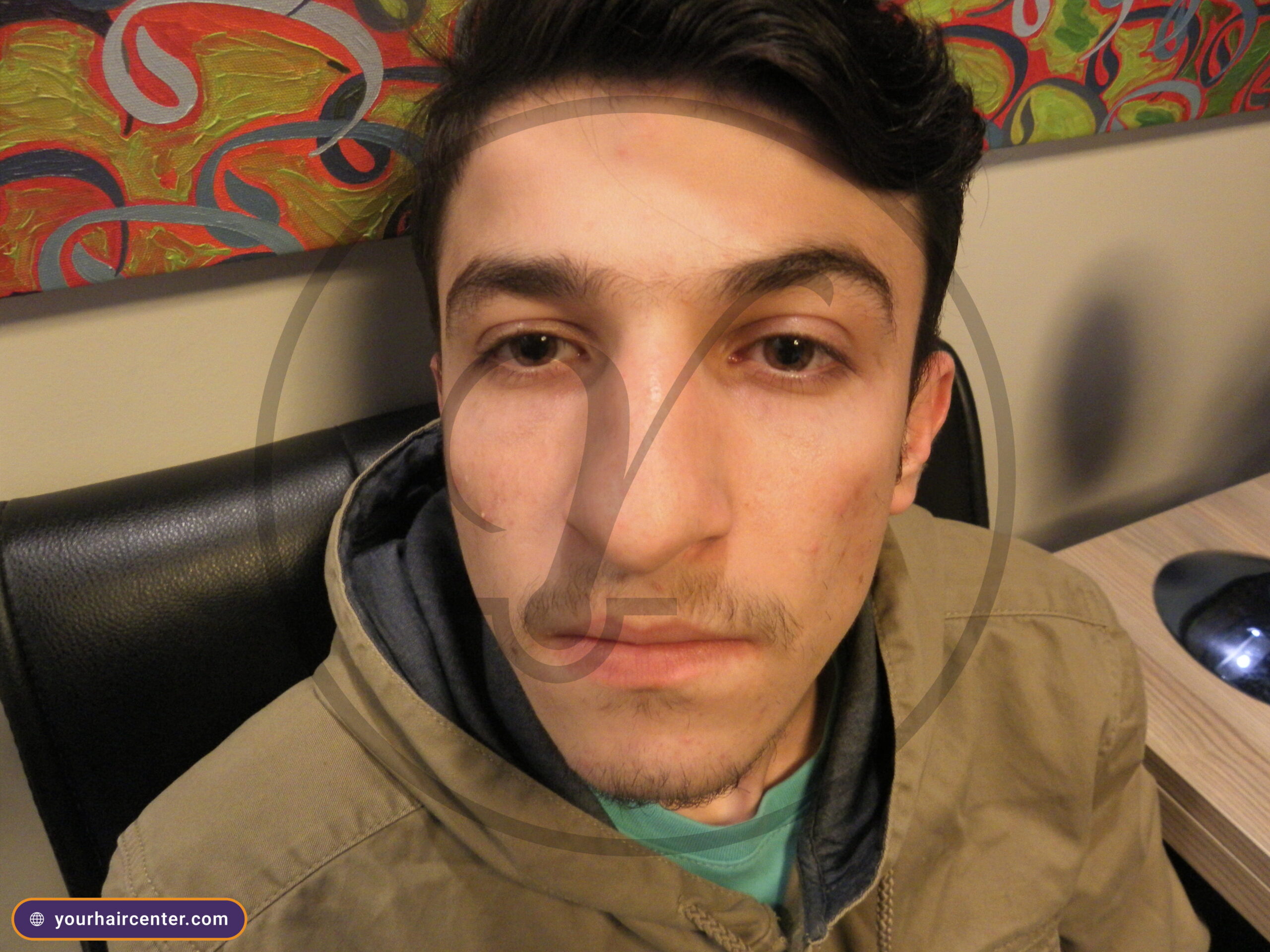
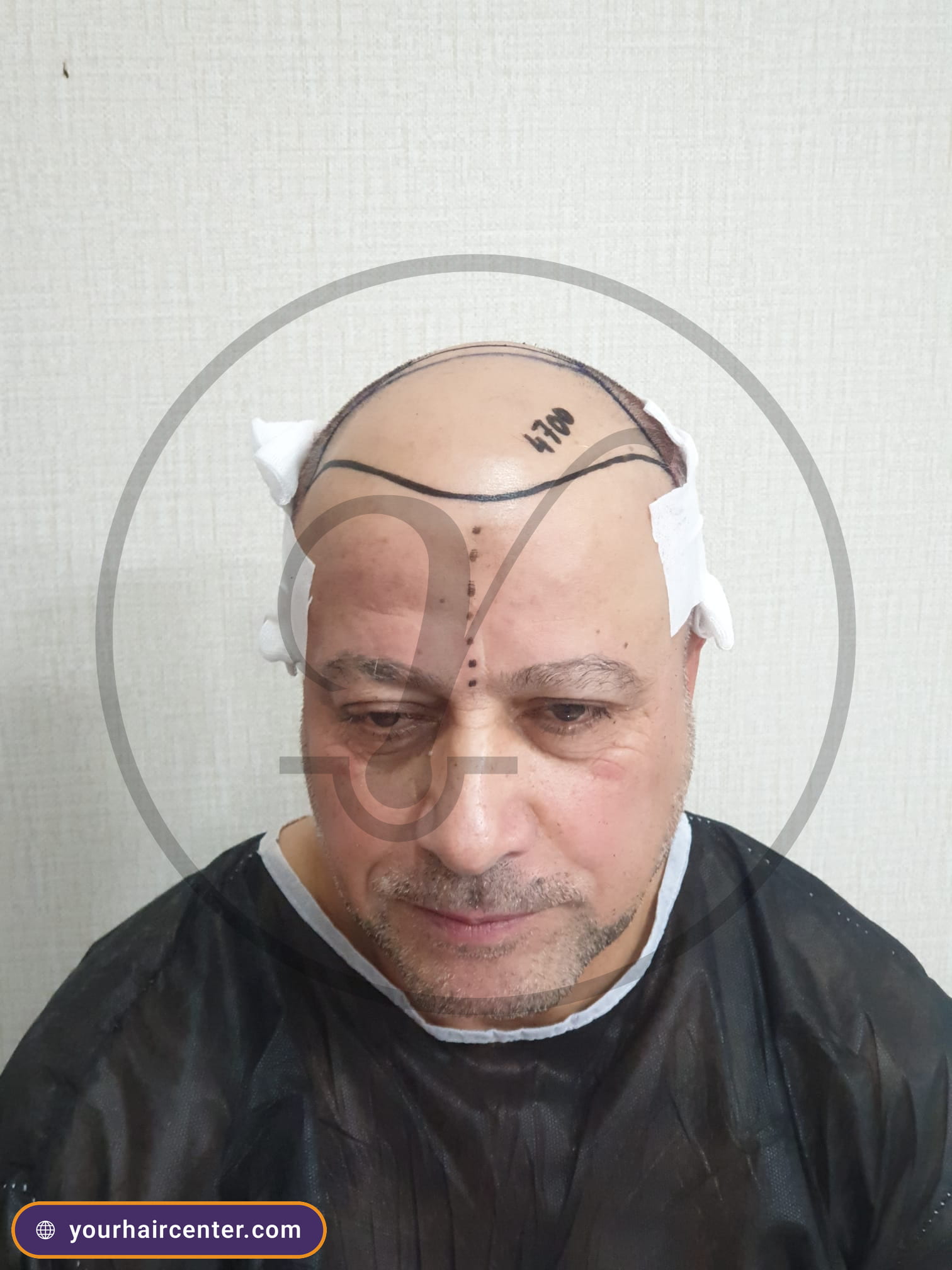
Real results from our patients’ archive. Photos exactly as captured at our accredited partner clinics, with no filters and no retouching. Browse more cases in our photo gallery.



The grid is a planning artifact, not a contract with biology. Some patients shed earlier or later, scab faster, or hit the month-6 milestone at month 5 or 7. The lifestyle guardrails are the part to keep tight; the biological-column dates are typical ranges. Plan your beard transplant recovery time around the lifestyle column. Beard transplant timeline questions about specific dates come back to the same answer, give the follicles their natural cycle and stay out of the way.
Hours 0 to 72, post-op day at the clinic, the flight home question, and the first wash
The first 72 hours of beard transplant recovery time are the most graft-vulnerable window of the entire arc. The grafts are seated in the OSL channels but not yet anchored. Everything you do either protects follicle survival or risks dislodging grafts. The rules are short and the work is mostly passive.
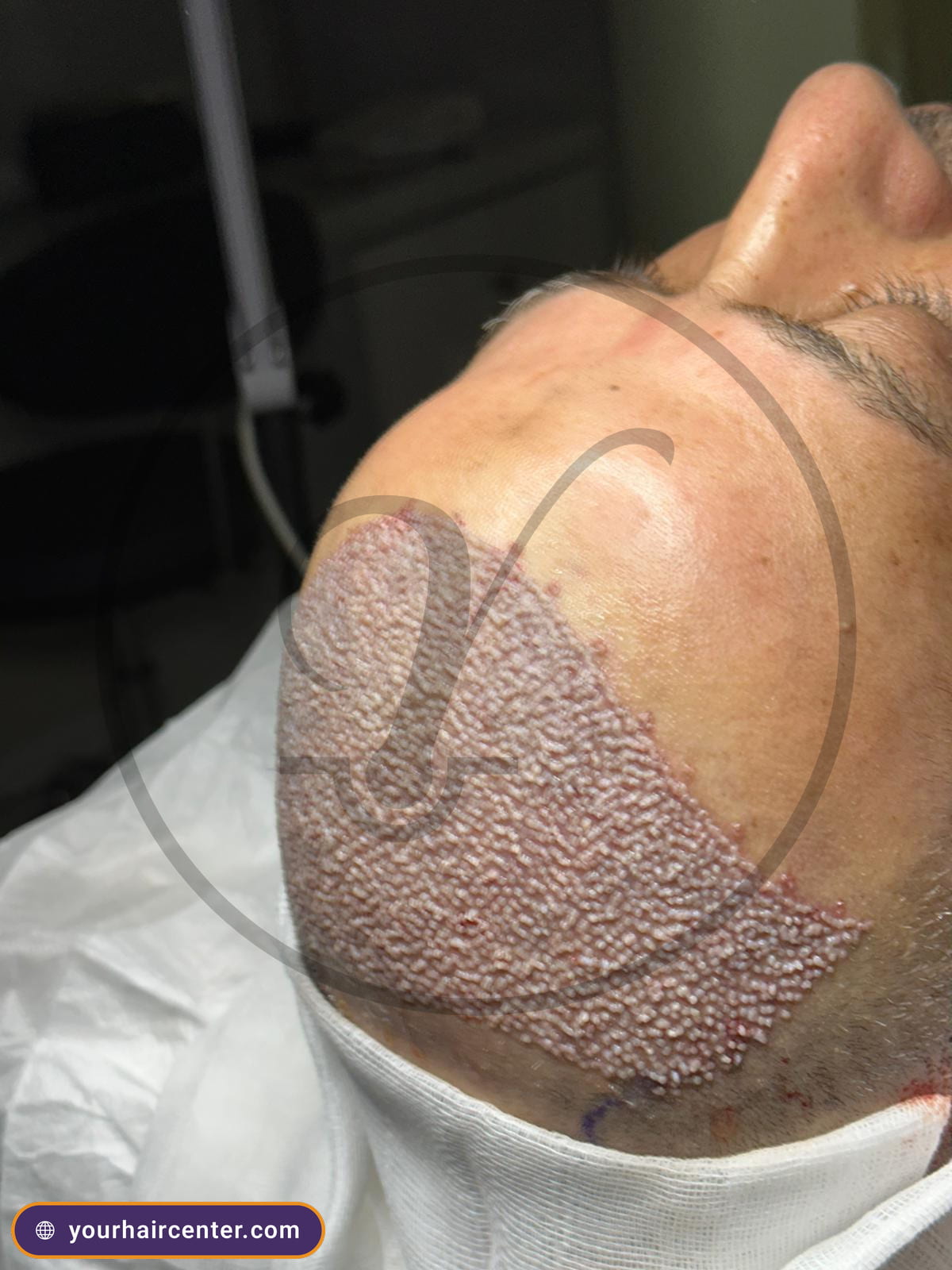
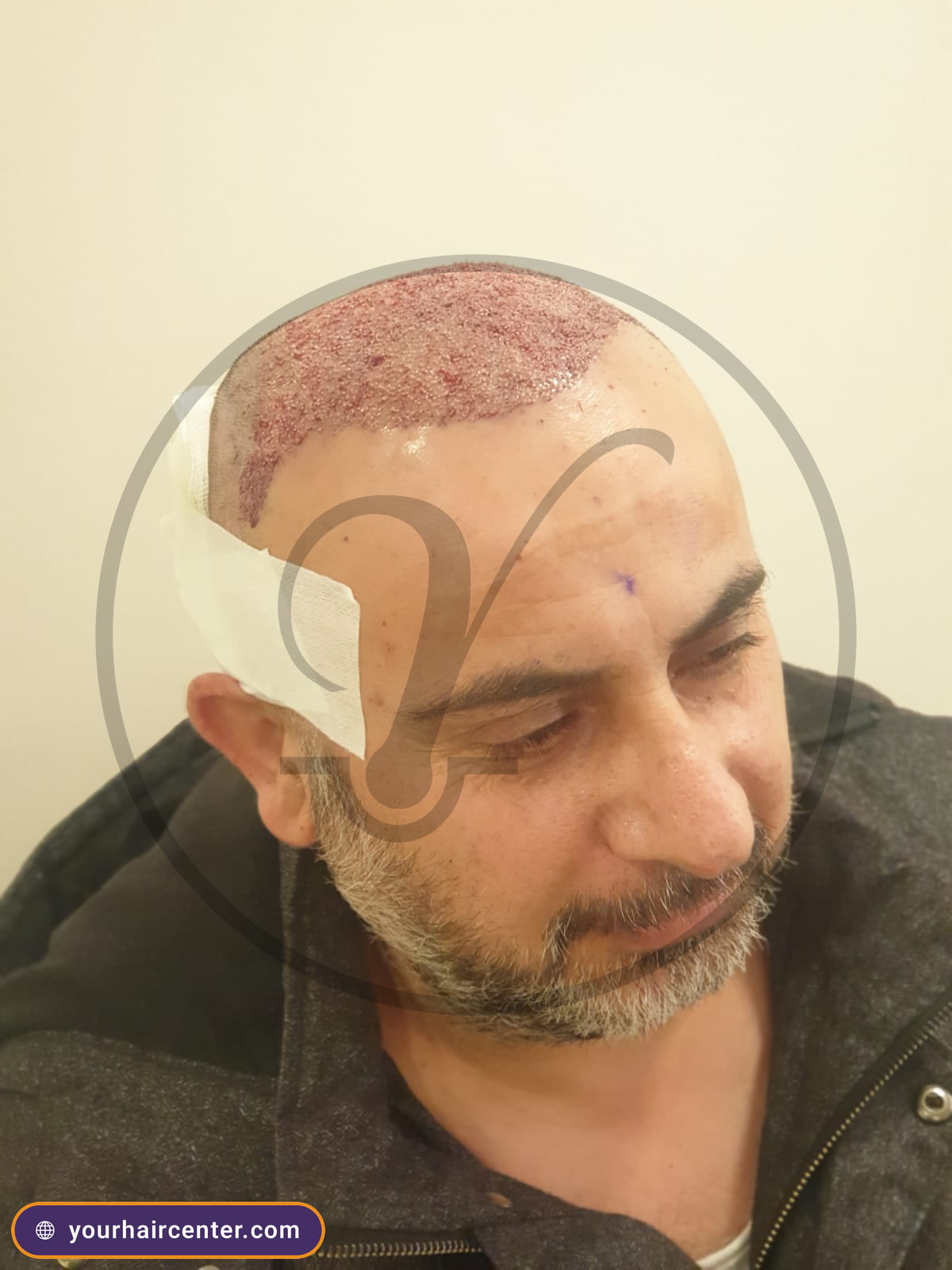
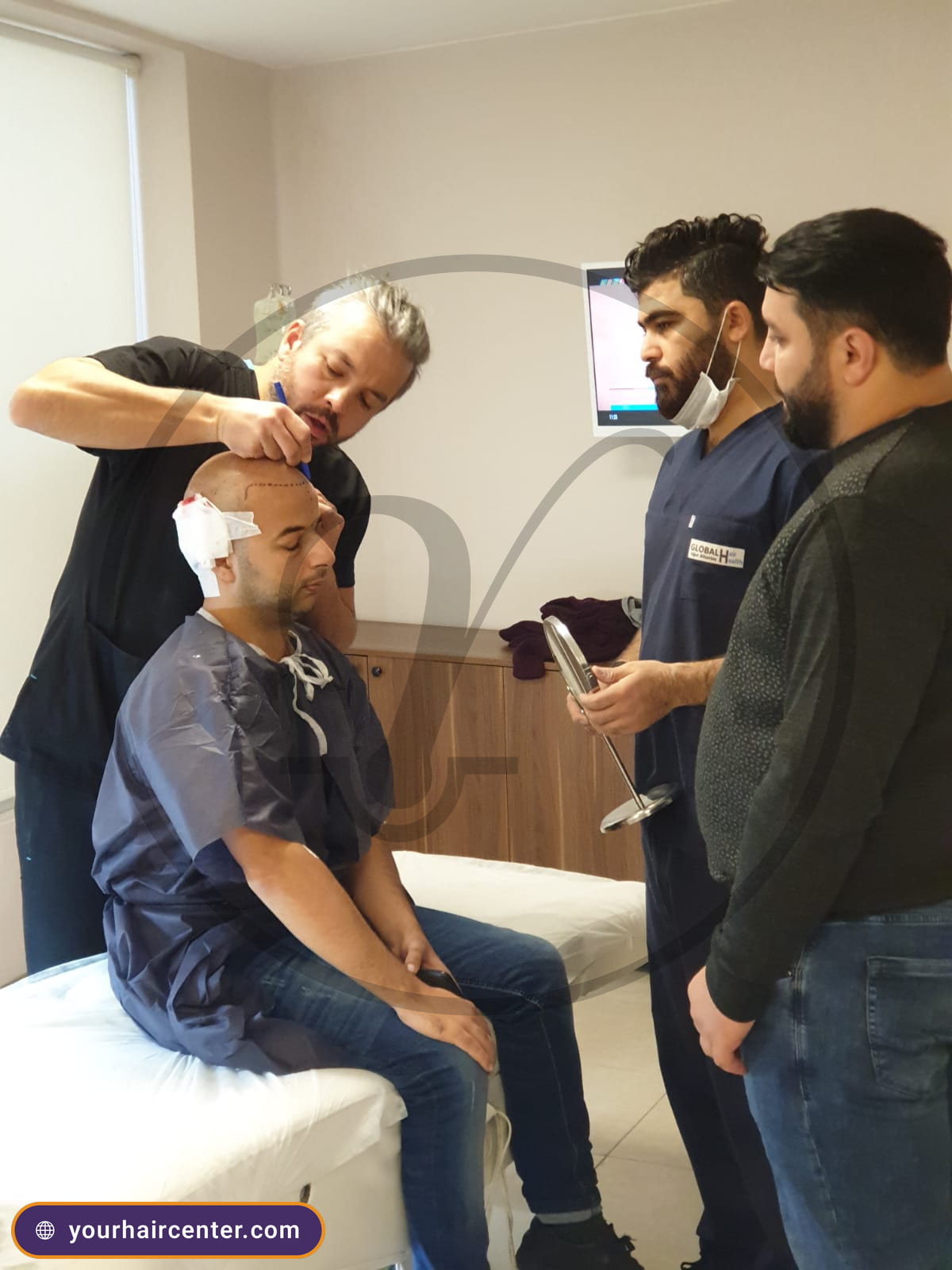
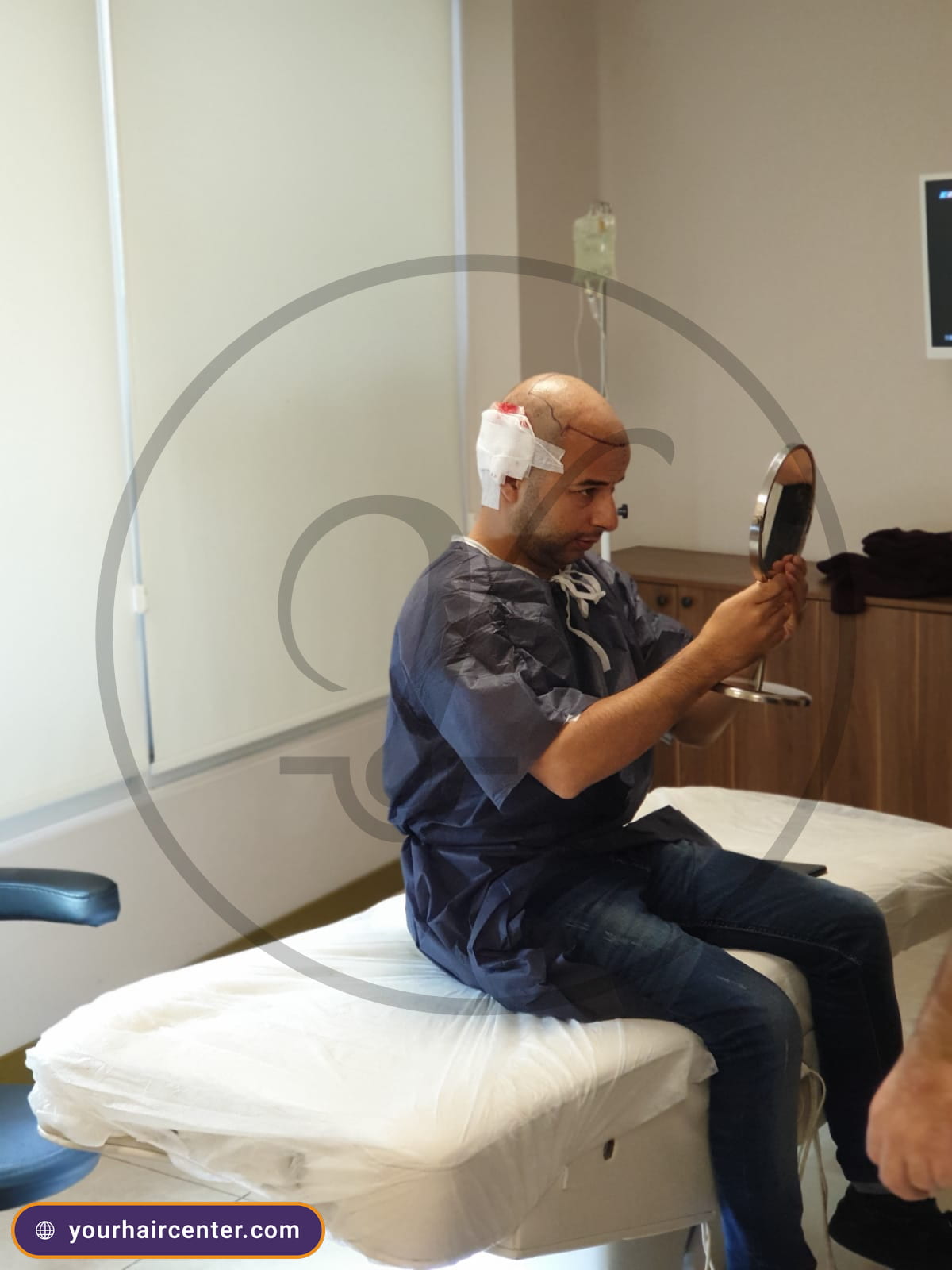
You go back to your hotel the same day, with a light protective head covering and instructions for the night. The mirror at hour 8 shows a dotted pattern on the recipient zone where each graft was placed, a faint pink-red tone around them, and the donor area protected and quiet. Mild swelling and mild redness early in beard transplant recovery time are normal and resolve within a few days. Most people feel no more than mild discomfort, which usually lasts a day or two and is followed by 7 to 10 days of tenderness to the touch[5]; the doctor prescribes light pain relief that covers it.
Sleep on your back the first night, head elevated 30 to 45 degrees on two or three firm pillows or a wedge. Side-sleeping risks pillow contact against the freshly seated grafts. Habitual side-sleepers should plan for this in advance, because it is the single most-disrupted habit of the early beard transplant recovery time window. The elevation also helps post-op swelling drain forward rather than pool in the cheeks.
Day 1 in Istanbul, if you are not flying out immediately, is a slow walking day. Sunglasses are fine; keep your face out of strong sun[4:1]. Stay out of crowded places, do not bend forward to tie shoes, and do not lift heavy bags. Luggage handling early in beard transplant recovery time is what the airport-and-hotel transfer arrangement covers in the all-inclusive package.
The first wash is done by the medical team the day after the procedure. They soften any forming crusts, rinse with low-pressure lukewarm water, and pat the recipient zone dry with a light dabbing motion. You leave with aftercare instructions, prescribed medications, and a gentle face-washing routine you start at home from day 2 and keep up through week one, without rubbing the grafts. Normal face washing returns from day 7 to 10.
The fly-home decision is straightforward for most patients. On the beard itinerary you fly home after the first wash and check-up, the day after the procedure, and cabin pressure is not the concern. The friction risk on the plane is the seat-back headrest catching the donor area, which is solved with an inflatable neck pillow that holds your head off the seat. Long-haul window-seat sun is the second risk; close the window shade for the recipient zone half of the flight.
Message the YHC medical team in the first 72 hours of beard transplant recovery time if any of the following occurs. Bleeding from the recipient zone that does not stop with light pressure after day 1. A temperature of 38 degrees Celsius (100.4 Fahrenheit) or more. Pus, foul odor, or yellow discharge at any graft site. Swelling that keeps growing after day 3 or lasts longer than 7 days, since normal swelling peaks around day 2 or 3 and settles within about a week[6]. The team follows you daily through the first week, and YHC’s medical follow-up team is reachable on WhatsApp around the clock. For the full warning-sign profile, the companion guide on warning signs of a transplant going wrong walks through what each looks like.
Days 4 to 14, the scab window, when scabs fall, and why you cannot pick them
The scab window is the highest-anxiety phase of beard transplant recovery time. You see obvious crusting, feel mild itching, and are tempted to pick. Do not pick. Pulling off a scab that is still stuck takes the graft with it; in the graft-anchoring study this happened every time through day 5[1:3]. That makes picking the most avoidable way to lose grafts in any beard transplant recovery time arc.
The biology is short. In the foundational study on graft anchoring, pulling on a hair always cost the graft for the first 2 days, by day 6 it no longer did, and from day 9 the grafts were no longer at risk of dislodging at all[1:4]. Day 7 to Day 14 is the natural-shed window for the scabs; with gentle washing they release on their own. Rubbing them away, never picking, waits until the team says so, after the first 2 weeks[7].
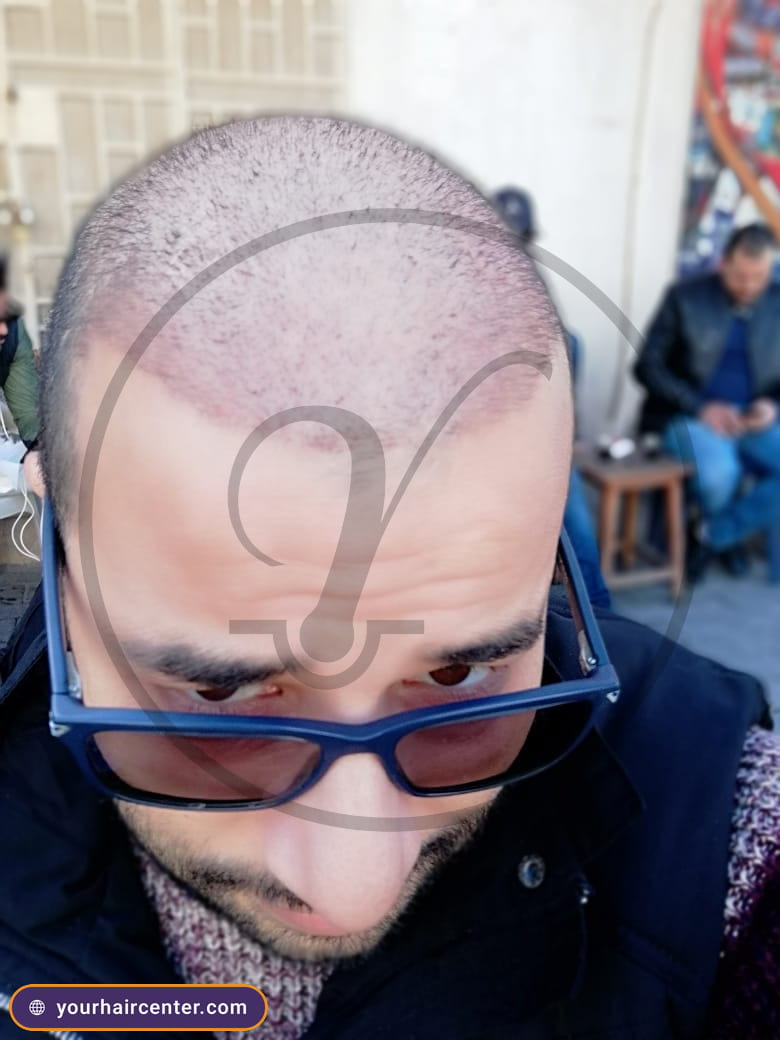
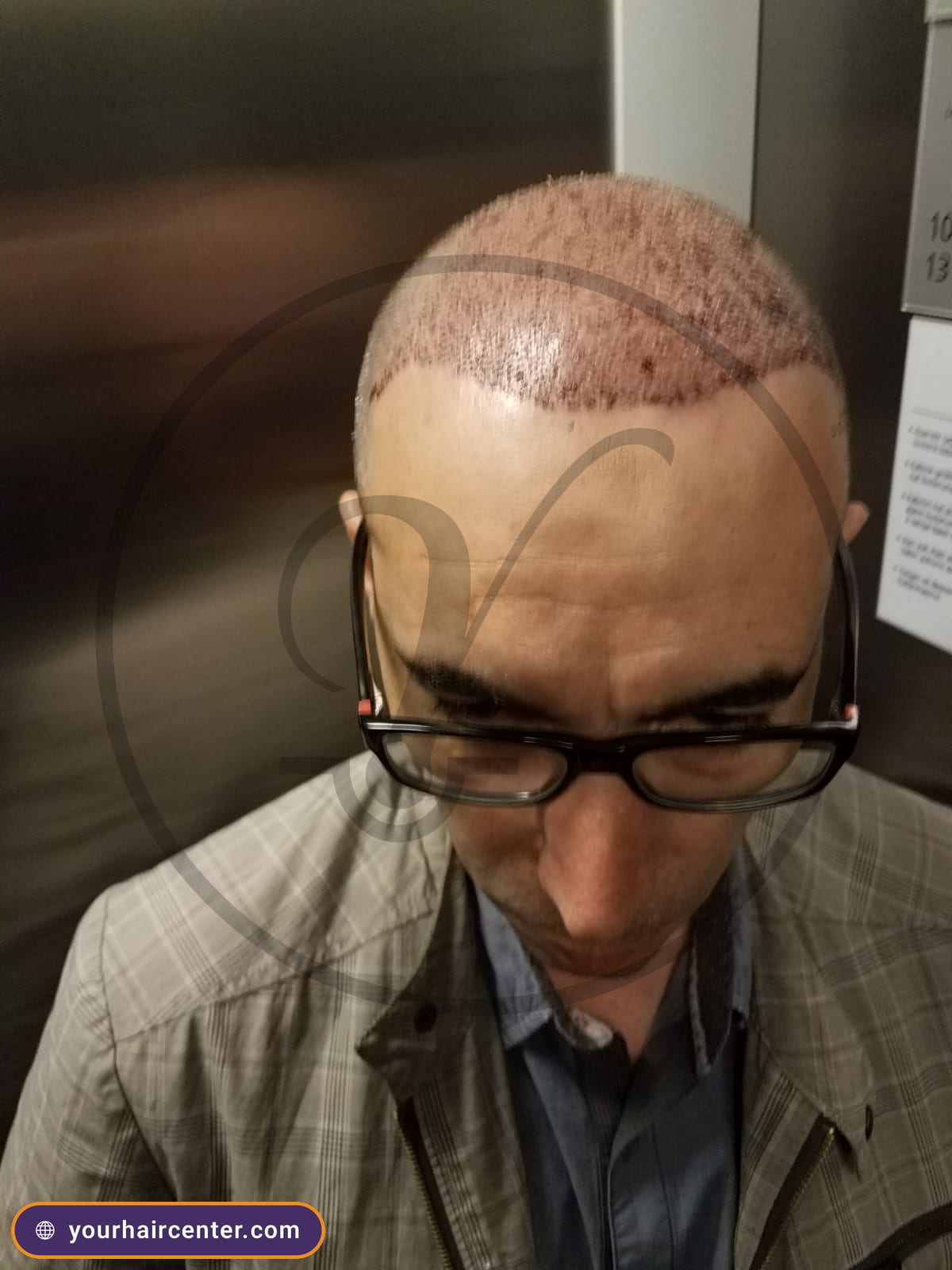
What you see on the face changes meaningfully across this window of beard transplant recovery time. Day 4 to Day 7, gentle home washing has started, the scabs are softening, redness peaks during the first week, and the cheek swelling is fully resolved. Day 8 to Day 10, scabs begin shedding naturally; some will fall in the shower without you noticing. Day 10 to Day 14, most scabs are gone, the recipient skin is pink to light red, and the dotted pattern is barely visible from across a room. The donor area at the back of your scalp is essentially healed by Day 10 to 12; you can touch it but not razor-shave it yet.
The Zoom-call honest answer for this window is the one nobody else gives directly. Once the crusts have fallen, usually between day 7 and 14 of beard transplant recovery time, with low-overhead lighting and a tinted moisturizer if comfortable, most counterparties on a Zoom call will not notice anything unusual. You will notice, and you will be self-conscious for the first few calls. Some pink can linger into week 3 or 4, which colleagues may notice up close. In-person and high-definition broadcast are a different threshold; that is week 4 to 6, covered in the work-and-travel section below.
No shaving on the recipient zone in this window of beard transplant recovery time. The grafts are secure from about day 9, but the skin is still healing and a razor drags across the last crusts and the freshly placed hairs, so the beard stays untouched for 2 weeks, scissors come next, and a razor waits about a month. The donor area at the back of the head follows the scalp rule, scissors or clippers with a guard that keeps the blade off the skin from about one month, once its crusts have fallen. For the broader failure picture, the companion guide on what infection actually looks like covers the early-warning signs. The channels were opened at hour 0 with the Choi pen and OSL implantation method, and gentle washing keeps them clean while the crusts form and fall.
Real results from our patients’ archive. Photos exactly as captured at our accredited partner clinics, with no filters and no retouching. Browse more cases in our photo gallery.





When can you shave, trim, and touch the face, the shaving, sleeping, and sun decision tree
This section aggregates the highest-search-volume practical questions about beard transplant recovery time. The structure is one decision sub-block per question with the first safe date and the rationale. Treat these as default rules; the YHC team confirms or adjusts during follow-up.
First scissor trim and first trimmer, recipient zone. Scissors from week 2, once the crusts have fallen, and an electric trimmer at weeks 3 to 4 of beard transplant recovery time, on the longest guard with the blade kept off the skin. The goal is to even out emerging fine hairs and tidy edges, not to clear the area. Do not trim against the grain; the OSL-calibrated growth angles need to settle.
First razor shave, recipient zone. After about a month, once the skin has settled and your doctor confirms. For a transplant where the growth angles were calibrated by the precise growth angles calibrated by the OSL approach, the first razor pass should be confirmed by the team rather than chosen by the barber.
First cut, donor area scalp. Scissors, and clippers with a guard that keeps the blade off the skin, from about one month once the crusts have fallen. Ask the team before a razor or a zero-guard fade; surgeons set these dates differently, and yours sets them for your case[7:1].
Sleep position. On your back with the head raised for the first 2 weeks of beard transplant recovery time, because a pillow presses on the cheek grafts and the beard stays untouched for 2 weeks. Side sleeping on a soft pillow from week 3, face-down after a month. Habitual side sleepers should plan for this before the trip.
Sun exposure, recipient zone. Keep strong sun off the recipient zone[4:2], with shade until the crusts have fallen and sunscreen outdoors after that, through the end of month 3 of beard transplant recovery time. Freshly healed skin can darken after the inflammation settles, mainly in darker skin[4:3].
Sunglasses. Fine from day 1, since the frame rests on the nose and not on the mustache; keep the arms off any grafted sideburns.
Steam, sauna, hot showers above body temperature. Avoid for the first month. Vasodilation plus sweat can soften and dislodge scabs still in the shed window, and moist heat increases the risk of follicle inflammation.
Hair dye or beard dye on the recipient zone. Ask the team first. The usual advice is to wait until the new hairs have grown in, around month 6 of beard transplant recovery time, with a skin test 48 hours before.
Touching the face, gentle massage. Allowed from Day 14, circular fingertip rub only, no scrubbing or exfoliation until month 2. Day 14 is when the surface is closed and the follicle anchored; the no-scrubbing rule applies until the follicles are firmly settled.
If your doctor gives you a different date for any of these, follow the doctor; the dates above are the defaults for most cases.
When can you exercise, lift, swim, and fly, work and travel resumption
This is the section for planning work and training, because beard transplant recovery time is what determines how many days you lose and how aggressively you can resume the gym, the office, the road, and the calendar. Each activity has a first safe date and a rationale; treat them as conservative defaults the YHC team can tune to your specific case.
Desk work and work-from-home. Day 1 if needed; sitting at a screen does not affect grafts. Most patients prefer to wait until Day 3 or Day 4 for comfort. By Day 5 to Day 7, the productivity hit of the early beard transplant recovery time arc is gone and the recovery is just a visual one.
In-person office, client-facing. Office work is fine after 3 to 7 days. If you would rather nobody asks, wait until the crusts and redness clear between day 7 and 14; some pink can linger into week 3 or 4, and by week 4 to 6 any stippling reads as ordinary skin texture.
Zoom-only meetings. Once the crusts have fallen, usually between day 7 and 14, with low-overhead lighting. Position the camera at face height rather than below, and most counterparties register nothing unusual.
Light cardio. Walking from day 2; brisk walking, slow elliptical and stationary cycling from week 3. No sweat pooling on the face, because sweat slows the scab-shed phase of beard transplant recovery time and irritates new skin.
Moderate cardio. After 3 to 4 weeks. Jogging, cycling, structured intervals at moderate intensity. A soft headband worn high on the forehead catches sweat before it runs down the face. Do not wipe the recipient zone with the headband.
Heavy lifting and strength training. After 3 to 4 weeks of beard transplant recovery time. Raised blood pressure and heavy sweating can unsettle the grafts in the first weeks, so resume at lighter loads first, then build the weight back over the following weeks.
Combat sports and contact sports. Month 3 minimum, ideally month 6 for full-contact disciplines. Direct face contact in the first 12 weeks of beard transplant recovery time is the highest mechanical-displacement risk of any post-recovery activity.
Swimming. Sea and open water from month 2, chlorinated pools from month 3, since chlorine irritates healing skin. Outdoors the sun is the bigger risk, so shade the recipient zone.
Flying home post-op. The day after the procedure, after the first wash and check-up. Cabin pressure is not the concern; the friction risk is the headrest, solved by a neck pillow.
Flying for work in the first 12 weeks. Any time after Day 7 of beard transplant recovery time. No restriction other than the long-haul UV note above and a reminder to skip the in-flight bar service in the first week.
Travel-with-camera-on. Once the crusts have fallen for Zoom; week 4 to 6 for photo shoots and broadcast.
How many work days should I budget? For a short Istanbul trip in the all-inclusive package covering your hotel and aftercare during the Istanbul stay and the Istanbul reception team handling your local logistics, the typical pattern across most beard transplant recovery time arcs is three days for the trip itself (Day 1 arrival and assessment, Day 2 procedure, Day 3 first wash and the flight home), then a few days of rest or work from home, with office work possible after 3 to 7 days and physical work after 10 to 14 days. If your job is client-facing and you would rather nobody asks, add a buffer until the crusts and redness clear between day 7 and 14. The companion guide on what day 14 looks like after a transplant shows the end of that window.
Weeks 2 to 8, shock-loss shedding, why your new beard disappears before it grows
The shedding phase is the most psychologically difficult part of beard transplant recovery time. Weeks 2 to 4, the transplanted hair shafts start releasing from the follicles. Weeks 4 to 5, most of the shafts are gone. Weeks 5 to 6, the recipient zone visually thins to its lowest point, often thinner than the day you arrived in Istanbul. Weeks 7 to 8, the skin smooths over, the follicles rest, and you see nothing. This looks worse before it looks better, and it is normal. The American Academy of Dermatology summarizes this for hair transplantation broadly, between two and eight weeks after surgery, the transplanted hair will fall out[2:2]. The same pattern applies to beard transplant recovery time on the same week ranges.
The biology of this phase is reassuring once you understand it. Surgical trauma to the implanted follicle, combined with the brief ischemia of being transferred from donor to recipient site, triggers an anagen-shaft reset. The shaft you can see falls out; the follicle under the skin stays alive, settles into the new vascular environment, and re-enters anagen on the natural cycle. In a series of beard reconstructions, the transplanted hairs started to fall after 1 to 2 weeks and new growth began in the third to fourth month[3:1]. Native beard hairs around the grafts can shed for a while too, from 2 to 8 weeks, and usually start regrowing around month 3[6:1]. Most transplanted grafts take and grow when the aftercare is followed, though no surgeon can promise that every graft grows[7:2].
The donor area at the back of your scalp can shed too, though less often than the recipient zone. When it does, it usually starts 2 to 4 weeks after the procedure and clears on its own within 3 to 6 months[6:2]. A thin patch that keeps spreading, or one that has not started to regrow by month 6, is a reason to send photos to the team. By week 8 the recipient surface should be smooth skin, not pinpoint pitted scarring. The photo gallery of patient timelines shows what a normal week-6 to week-8 appearance looks like.
The honest reassurance, said directly. This visual trough is the expected course of beard transplant recovery time, not a sign that the grafts failed[2:3]. The follicle is alive, anchored and resting. Nothing you do at home speeds up the latency phase, the cycle runs on biology, not on effort. Patience here is the single highest-leverage behavior. If you are tempted to try anything to "wake up" the follicles in weeks 5 to 8, do nothing instead. For the warning signs that separate normal shedding from real problems, the companion guide on the five ways a beard transplant goes wrong covers what to watch for.
Months 3 to 12, regrowth, the 6-month milestone, the 12-month final result
The regrowth phase is where the result emerges and matures. Each milestone of beard transplant recovery time has a typical visual signature and a typical question patients ask at the next follow-up call.
Month 3. First new growth emerges from the rested follicles as fine, often-darker-than-final hairs. The recipient zone is no longer pink and the dotted post-op pattern is invisible. Density at this point is still only a small fraction of the final result. This is the start of the regrowth phase, not the result, see the 3-month beard rule in the FAQ below. The AAD frames this phase clearly, by the third month, the hair may look thinner than before the transplant, and that is normal[2:4].
Month 4 to 5. Density still rising steadily but well short of the final result. Hair thickness still maturing. The growth angle is starting to settle into the surgically-calibrated direction at the recipient surface. You can trim emerging hairs at this stage of beard transplant recovery time; do not yet razor against the grain on the recipient zone.
Month 6. Sixty to seventy percent of the final result is visible. This is the "I look like I have a real beard" milestone of beard transplant recovery time. Growth angles are settling, color is settling, texture is approaching native. Most patients schedule their first before-and-after photo session at this milestone; the patient timeline gallery shows typical month-6 appearance.
Month 9. Approaching final density in beard transplant recovery time. Hair texture matches surrounding native facial hair, growth angles are fully settled, and regular shaving and trimming follow a normal schedule. The new beard now grooms the same way as the rest of your facial hair.
Month 12. The final result for most people, with the density your case allows and a natural look; some beards keep filling in until month 14[4:4]. The transplanted hairs are permanent and the recovery is done. How closely they match your own beard depends on how well your scalp donor hair matches it, which the doctor checks before planning[7:3]. The AAD notes that most patients see results between six and nine months after surgery, with some patients taking up to 12 months for the full result to emerge[2:5]. Your case may settle on either end of that beard transplant timeline window.
The honest expectation, said directly. Month 3 is not "the beard," month 6 is "an honest beard," and month 12 is "the final beard." Texture, coarseness, and growth rate continue to mature through month 12. Do not judge the final result before then. From the 12-month point forward, the transplanted hair grows on the same anagen cycle as the donor zone, which often means a slightly longer growth phase than your native facial hair, and most patients adjust their grooming schedule accordingly. The result you see in the mirror at month 12 is the beard transplant procedure that produces these results, in its final state.
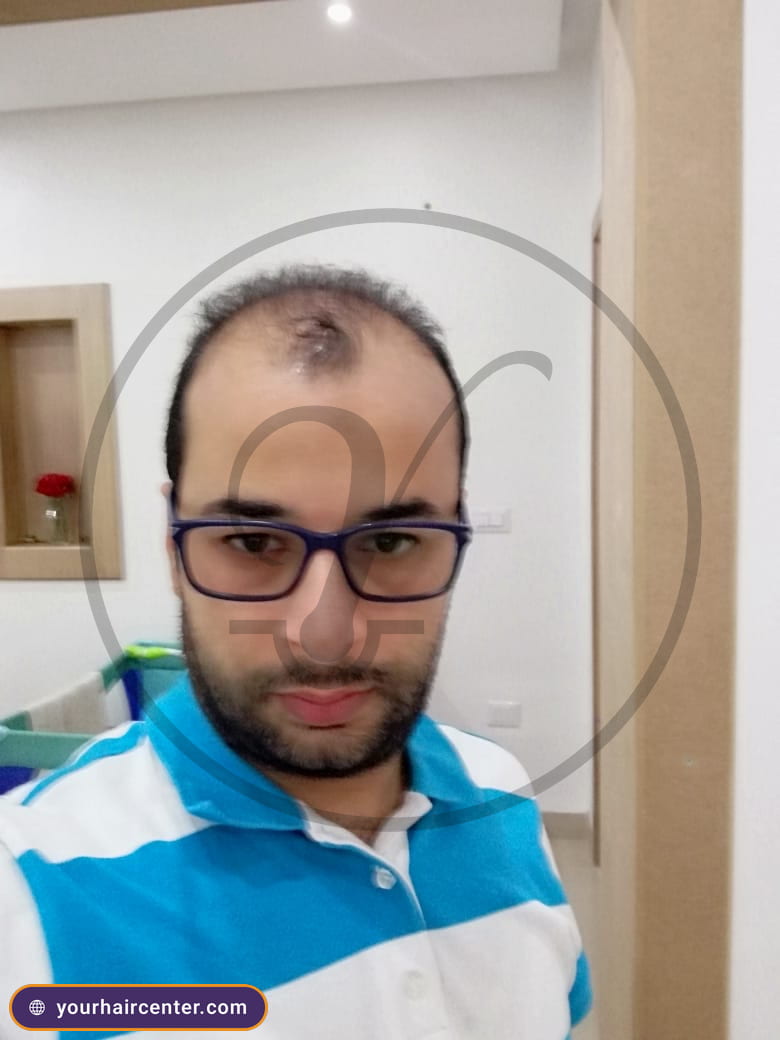
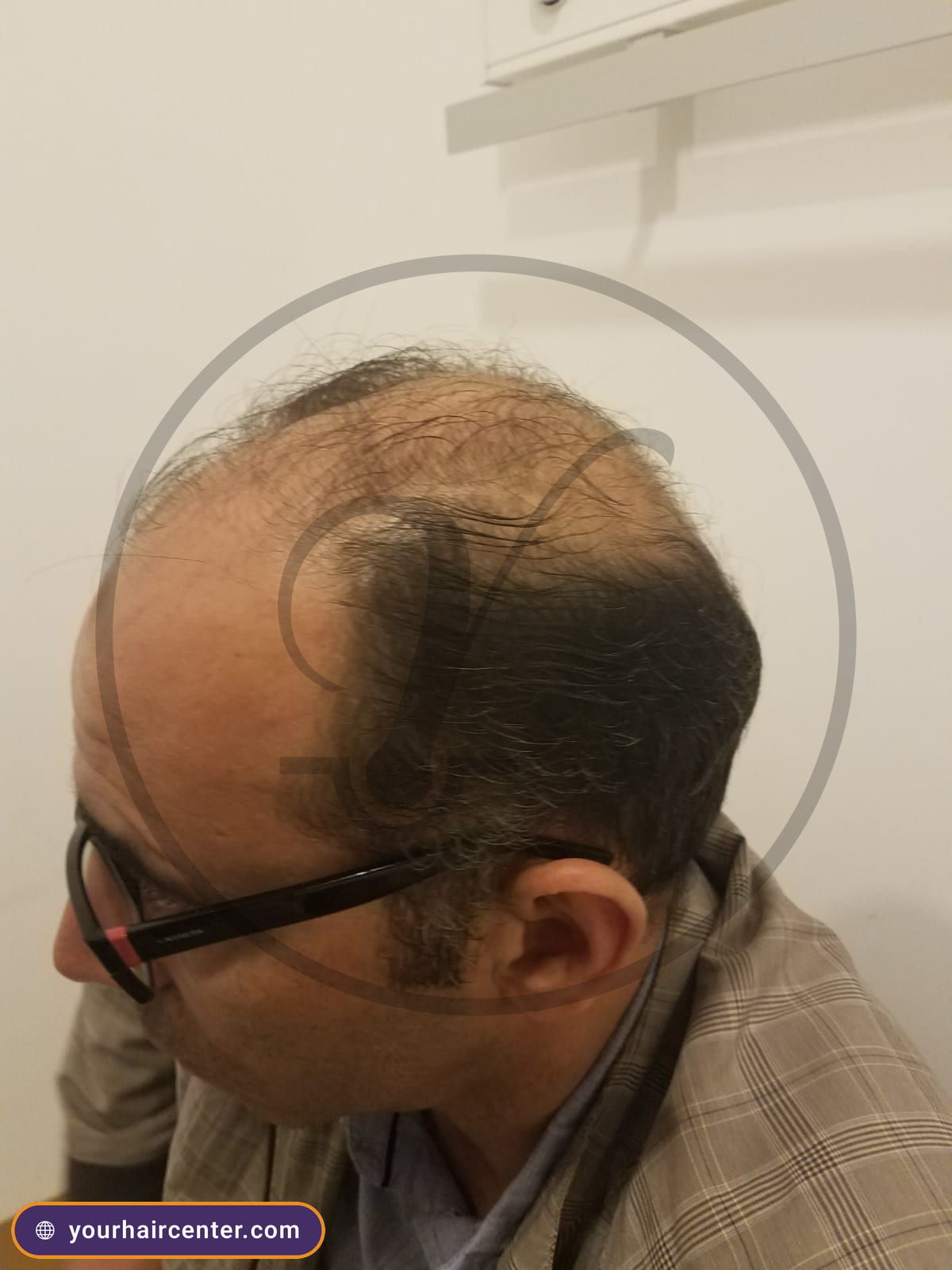
Real results from our patients’ archive. Photos exactly as captured at our accredited partner clinics, with no filters and no retouching. Browse more cases in our photo gallery.



Frequently asked questions
What is the 3-month beard rule?
The 3-month beard rule means not judging your new beard for the first three months of beard transplant recovery time. The transplanted hairs shed in the first weeks and new growth only starts around month 3[3:2], so the visible density is misleadingly low until then. Trimming is a separate question, scissors are fine from week 2 and a trimmer from weeks 3 to 4. The answer to "is it working" is not visible before month 3, and the final verdict comes at about month 12.
Is a beard transplant risky during recovery?
Serious complications during recovery are rare when the procedure is performed by experienced surgeons in a licensed medical facility, as the parent service page documents. The survival-risk profile of any beard transplant recovery time is dominated by behavioral mistakes such as premature shaving of the recipient zone, picking scabs before Day 10 to 14, or heavy lifting in weeks 2 to 3. Following the day-by-day grid above protects the result more than any other single action.
Can I shave 10 days after a beard transplant?
No. At day 10 the grafts are secure, but the beard stays untouched until day 14. Scissors come first, from week 2, then a trimmer at weeks 3 to 4, and a razor after about a month of beard transplant recovery time, once your doctor confirms. The donor area on the scalp waits about a month for scissors or clippers with a guard. See the shaving decision tree in the section on touching the face above.
When can I sleep on my side after a beard transplant?
From week 3, on a soft pillow. The first 2 weeks of beard transplant recovery time are back-only with the head raised 30 to 45 degrees, because a pillow presses on the cheek grafts, and face-down sleeping waits a month. See the post-op and the shaving-sleeping-sun sections above for the rationale.
How long until my beard transplant looks normal in public?
The visual milestones of beard transplant recovery time line up as follows. The crusts and redness clear between day 7 and 14, and office work is fine after 3 to 7 days. Some pink can linger into week 3 or 4. The no-one-notices threshold for in-person and high-definition broadcast is week 4 to 6, and full result maturity is at about month 12. For Zoom-only with normal lighting, the practical threshold is the day the crusts have fallen. The work-and-travel section above breaks this down by setting.
When do final beard transplant results show?
New hair starts growing around month 3. By month 6, roughly 60 to 70 percent of the result is visible. The full final result is in place at about 12 months, a little later for some[4:5], and the transplanted hairs are permanent. This matches the parent service month-by-month timeline and the AAD guidance that most patients see results between six and nine months after surgery, with full maturation for some patients out to 12 months[2:6].
Closing
Beard transplant recovery time has two clocks and four phases. The skim-grid is your daily reference, the deep sections are the trip-planning toolkit. Most patients spend three days on the Istanbul trip itself, rest or work from home for a few days, and are back at the office after 3 to 7 days. The full final result arrives at about month 12. The single highest-leverage behavior is patience, do not pick, do not razor-shave the recipient zone before about a month, keep strong sun off it for the first 3 months, and do not judge the result before month 12. When you are ready to start, send your photos for a free evaluation on the beard transplant page where you can send photos for a free evaluation. For specific beard transplant recovery time questions before booking, WhatsApp the YHC team about your recovery questions.
The content and sources of this guide were reviewed on 14 October 2026.
References
-
Bernstein RM, Rassman WR. Graft anchoring in hair transplantation. Dermatol Surg. 2006;32(2):198-204. PMID 16442039. https://pubmed.ncbi.nlm.nih.gov/16442039/ (opens in new tab) ︎ ︎ ︎ ︎ ︎
-
American Academy of Dermatology Association. A hair transplant can give you permanent, natural-looking results. AAD Public Resources, accessed October 2026. https://www.aad.org/public/diseases/hair-loss/treatment/transplant (opens in new tab) ︎ ︎ ︎ ︎ ︎ ︎ ︎
-
Yaseen U, Ahmed S, Ahmed M. Beard Reconstruction. Int J Trichology. 2021;13(6):4-8. PMID 34934294. PMC8647705. https://pmc.ncbi.nlm.nih.gov/articles/PMC8647705/ (opens in new tab) ︎ ︎ ︎
-
García M, Garces M. Beard and Mustache Transplant. International Society of Hair Restoration Surgery, updated August 2024, accessed October 2026. https://ishrs.org/beard-mustache-transplant/ (opens in new tab) ︎ ︎ ︎ ︎ ︎ ︎
-
International Society of Hair Restoration Surgery. After Hair Restoration Surgery. Accessed October 2026. https://ishrs.org/after-hair-restoration-surgery/ (opens in new tab) ︎
-
Romera de Blas C, Vega Díez D, Ricart Vayá JM, Gómez Zubiaur A. Complications in follicular unit excision hair transplantation, current evidence and practical approaches. Front Med (Lausanne). 2026;13:1750989. PMID 41709896. PMC12909172. https://pmc.ncbi.nlm.nih.gov/articles/PMC12909172/ (opens in new tab) ︎ ︎ ︎
-
Lam SM. Everything You Need to Know About a Beard Transplant. International Society of Hair Restoration Surgery, updated September 2025, accessed October 2026. https://ishrs.org/beard-transplant/ (opens in new tab) ︎ ︎ ︎ ︎