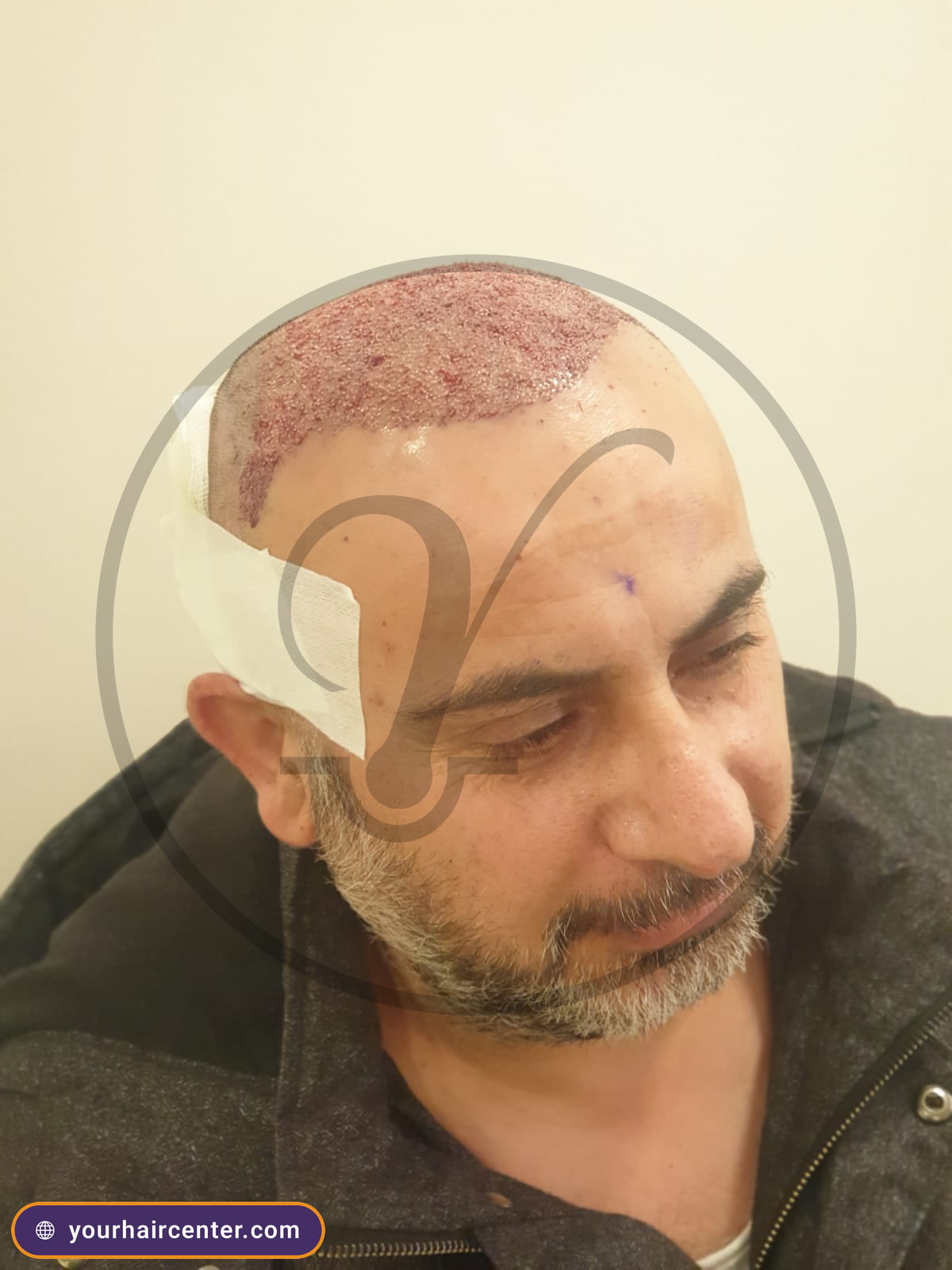
Worried that your result is heading the wrong way, or vetting clinics before booking? A beard transplant gone wrong is one of five identifiable failure modes, each with a documented cause, a visible warning sign on a measurable day-range, and a remediation path. This guide builds the clinical taxonomy from peer-reviewed dermatologic surgery sources, distinguishes normal week-2 shock loss from true failure, and closes with a six-item pre-booking prevention checklist that prevents most of these complications before any scalpel touches skin.

Search "beard transplant gone wrong" and the image results read like a worst-case file. Doll-hair angles, raised papules across the chin, a moth-eaten donor area at the back of the head, a Reddit thread documenting a failed beard transplant in India, news reports of deaths following procedures by unlicensed Istanbul operators. The fear that lands a reader on this article is real. A beard transplant gone wrong is not a single disaster, though. It is one of five identifiable failure modes, each with a documented cause, a visible warning sign on a measurable day-range, and a remediation path. This article builds the clinical taxonomy of what actually goes wrong, then closes with a six-item pre-booking checklist that prevents most beard transplant complications before any scalpel touches skin. If you want to understand what a beard transplant actually involves first, the parent service page covers the standard procedure.
What Does a Failed Beard Transplant Actually Look Like?
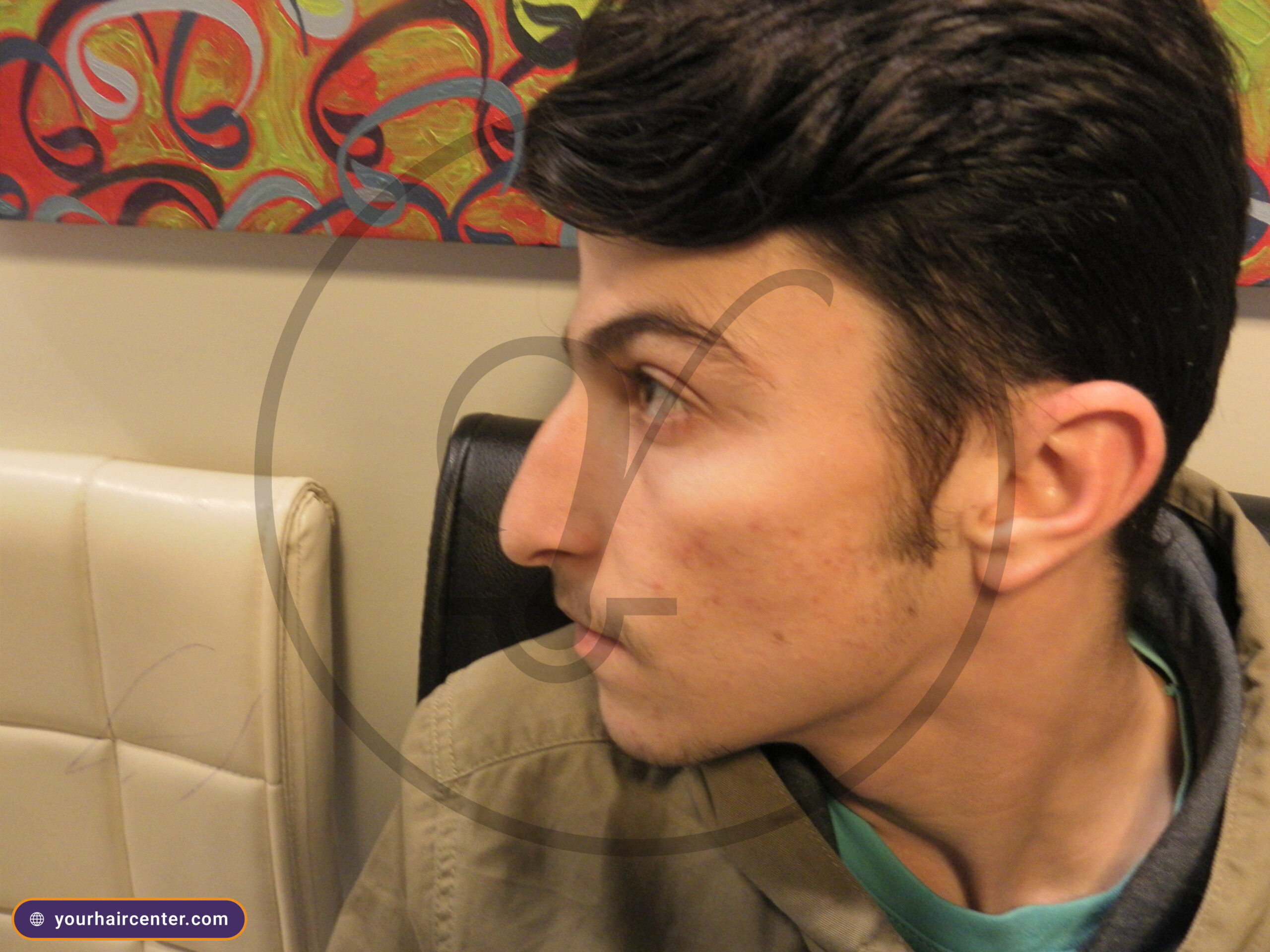
A beard transplant gone wrong typically presents as one or more of the following, unnatural growth angles or a pluggy "doll-hair" appearance, raised papules called cobblestoning across the recipient zone, patchy density past month 12, persistent redness or yellow discharge after day 14, or a moth-eaten donor area at the back of the scalp. These signals trace to five underlying causes, examined in detail below.
Beard restoration is no longer a fringe procedure. Industry tracking shows facial implants rose from roughly 4,700 worldwide in 2012 to roughly 31,000 in 2019 [1]. With volume comes volume-related failures. The most-cited postoperative complication across multicenter studies is folliculitis, with a 1,317-patient cohort reporting a 12.11% incidence at nine-month follow-up [2]. That sets the floor for what beard transplant side effects actually mean in measurable terms.
Before reading further, separate failure from normal recovery. "A natural shock loss occurs during weeks 2-4. The transplanted hairs shed, but the grafts remain alive under the skin. New permanent growth begins around month 3." Most panic posts at week 3 are misread shock loss. If you are inside that window, read the day-by-day recovery timeline before assuming the worst. The five failure modes are unnatural angulation and cobblestoning, donor overharvesting, infection and folliculitis, ineligibility-driven shock loss that does not reverse, and mismatched hair-shaft characteristics.
Failure Mode 1, Unnatural Angulation and Cobblestoning
Beard hair on the cheek and jawline grows at an acute downward-and-forward angle. Mustache hair grows steeper, with the shaft leaving the lip almost flat. The reconstructive-surgery literature describes mustache angulation as the recipient blade entering "in a caudal to cephalic direction and as flat as possible to the lip surface to promote a downward growth" [3]. When the surgeon opens recipient channels at the wrong angle, regrown hair points outward or up. The result reads as "doll hair," and once shed hairs regrow in months 2-4, the angle problem is visible from across a room. This is the most common visible sign of a failed beard transplant.
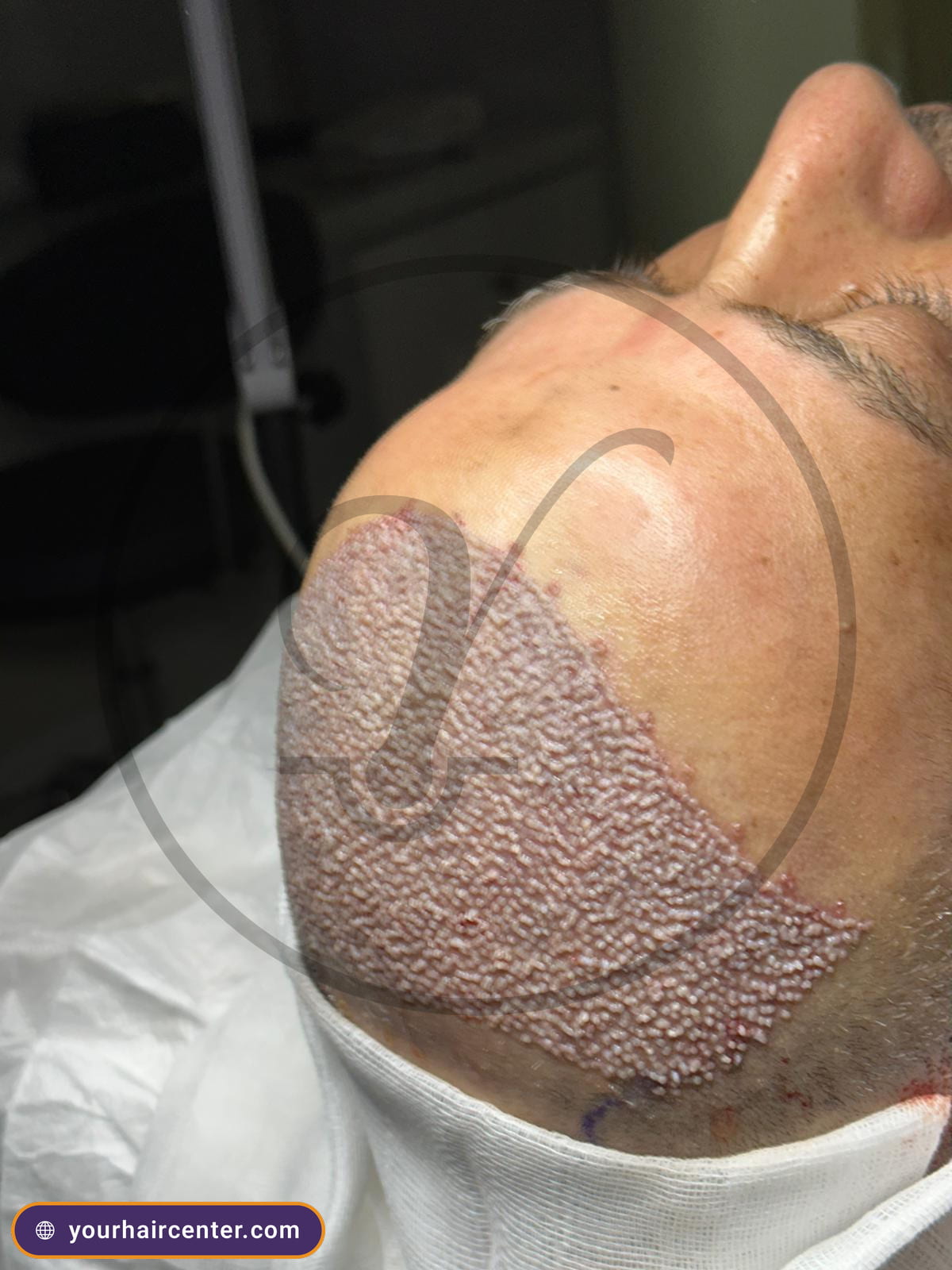
Cobblestoning is the second half of this failure mode, a field of raised papules where grafts were seated too superficially. The dermal contour reads bumpy under directional light. It is associated with rushed implantation outside the depth tolerance of Choi pen technology, and it does not self-resolve.
The visual warning window is days 30 to 60. As shed hairs regrow, the angle problem appears before the density problem.
Remediation is partial extraction of mis-angled grafts at month 9 to 12, dermabrasion or photodynamic therapy for residual cobblestoning, then replacement grafts at corrected angles in a single revision session. Full visual recovery is realistic.
Prevention sits at the channel-opening step. The parent service describes the OSL surgical approach, "Recipient channels are opened at calibrated angles and depths that match the natural growth directions of beard and mustache hair." Channel-first, not implant-first, is the structural defense.
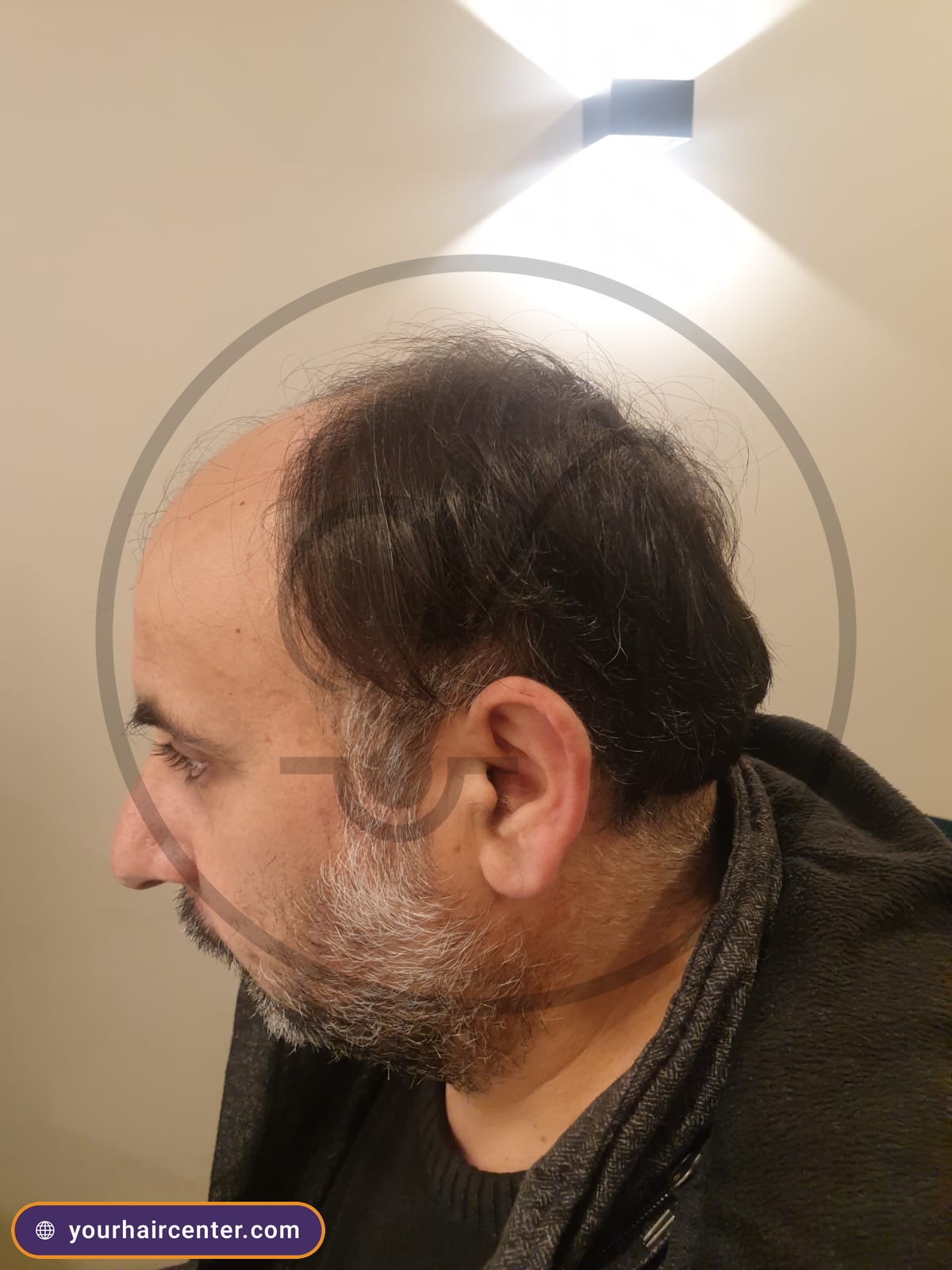
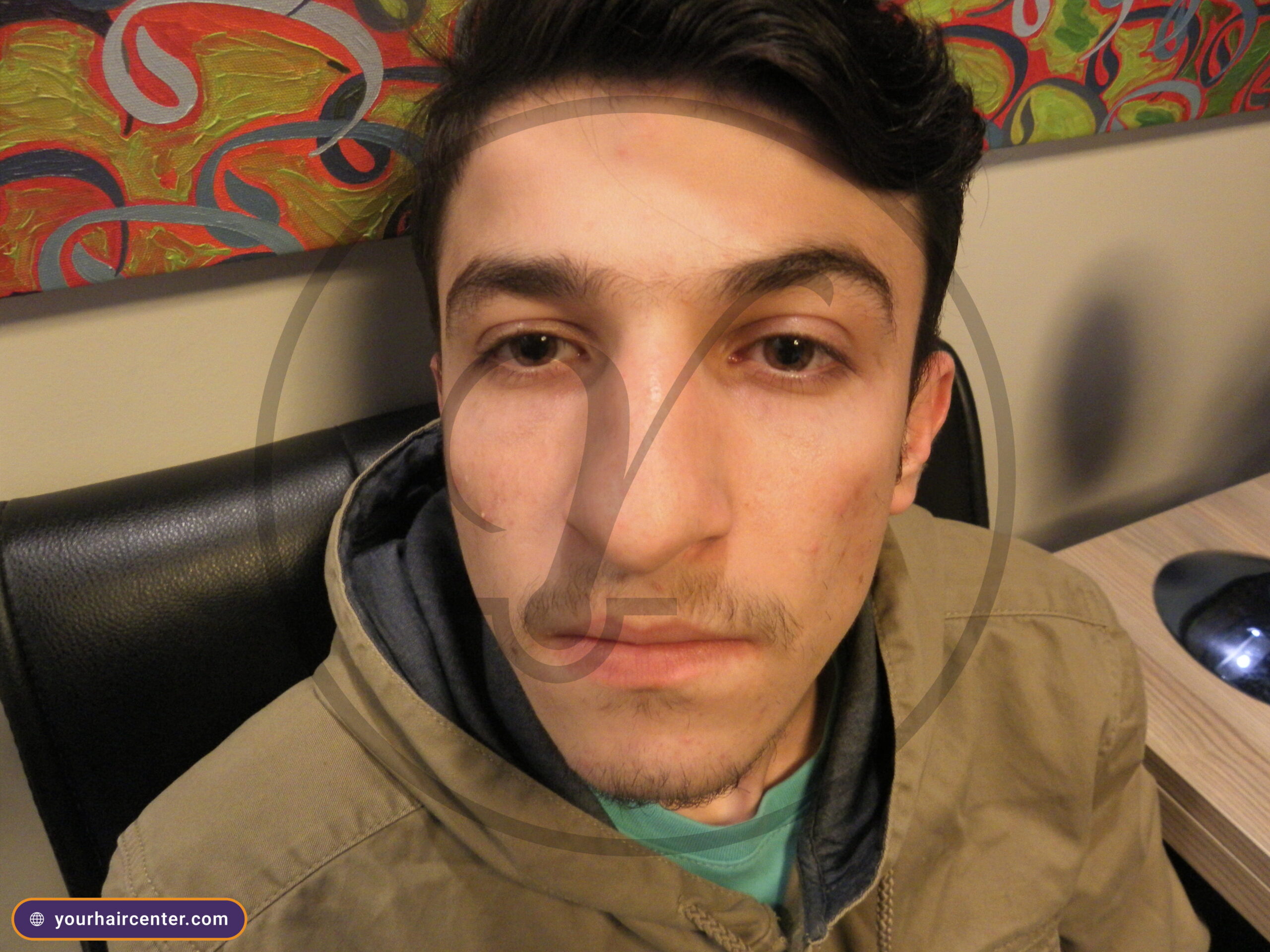
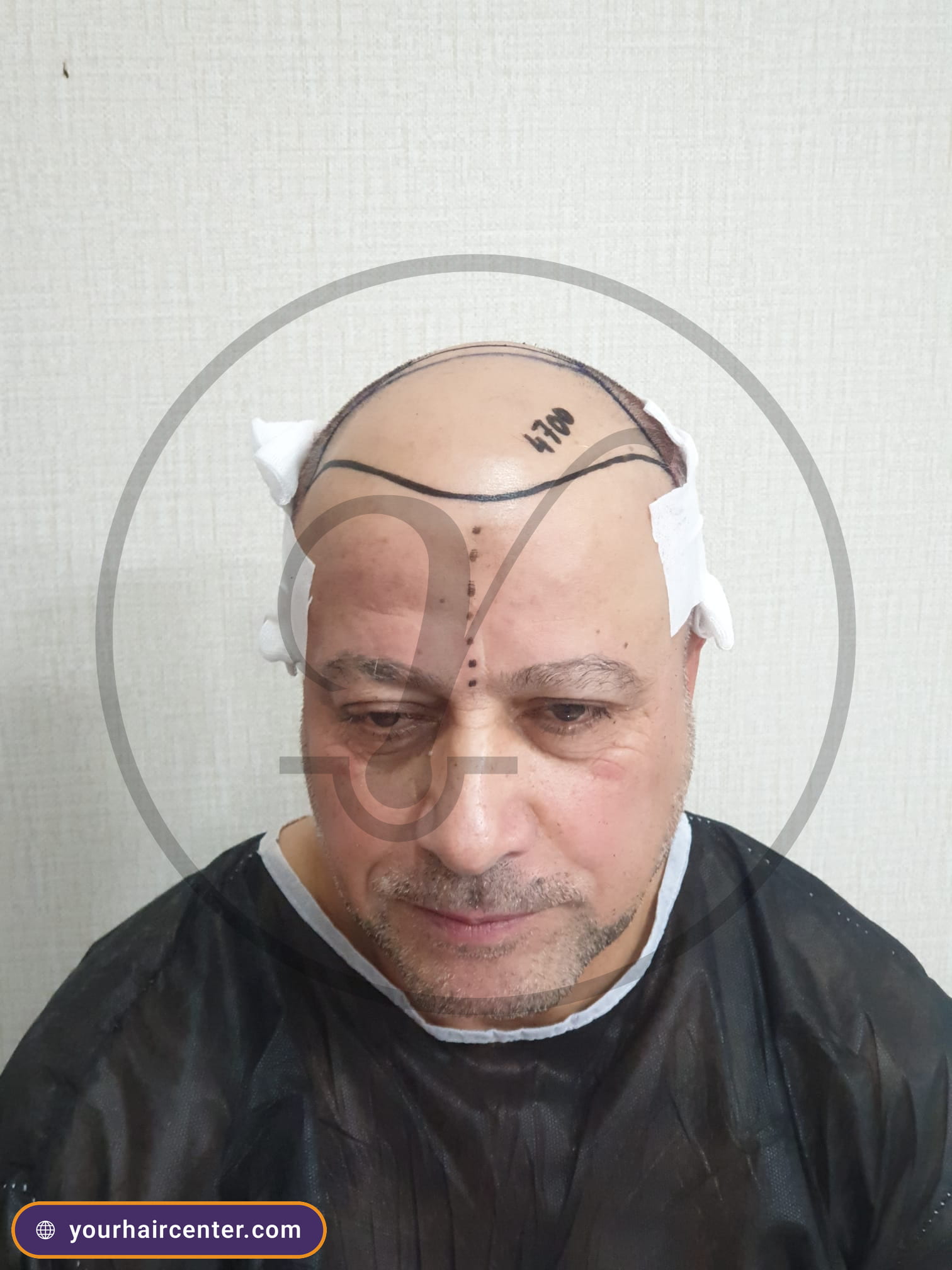
Real results from our patients’ archive. Photos exactly as captured at our accredited partner clinics — no filters, no retouching. Browse more cases in our photo gallery.



Failure Mode 2, Donor Overharvesting and Permanent Donor Depletion
The donor area at the back of the scalp holds a finite reserve of follicles. Peer-reviewed measurements place the safe donor zone in the mid-occipital region between the upper and lower occipital protuberances, with a baseline density of 65 to 85 follicular units per square centimeter [4]. Once extraction passes the safe floor, the donor area thins visibly and follicles do not regenerate. This is the most catastrophic version of a beard transplant gone wrong.
Overharvesting is "one of the most characteristic donor site complications in FUE procedures," resulting in "visible thinning, a moth-eaten appearance, window effect, or permanent donor depletion," with risk rising sharply in "high-volume sessions exceeding 3,000-4,000 grafts" [5].
It happens for three reasons. A clinic incentivized to extract higher graft counts to justify a flat quoted price. A clinic without a graft-count cap tied to a measured donor-density assessment. An under-trained technician punching outside the demarcated safe zone.
The warning sign appears by week 6 in patients who wear short hair. The moth-eaten or striped donor area becomes visible at grade 2 or shorter. The patient who shaved pre-procedure sees this failed beard transplant pattern first.
Donor regrowth after overharvest is partial at best. Camouflage options include scalp micropigmentation, beard-to-scalp reverse transplant where eligible (a separate procedure from the extraction technique families used for facial hair), and low-level laser therapy. None reconstitute the original reserve. The surgeon’s graft-count cap must be tied to measured donor density, not a flat package number.
Failure Mode 3, Infection, Folliculitis, and Cyst Formation
The recipient site of a beard transplant is a fresh wound bed in a high-bacterial-load area. The face carries denser sebum and skin flora than the scalp, and the procedure creates dozens to hundreds of micro-punctures. If aseptic protocol or aftercare hygiene fails, folliculitis develops between days 5 and 14. The 1,317-patient cohort reported a 12.11% folliculitis incidence [2:1], the baseline for this category of beard transplant complications.
Distinguishing normal redness from infection is straightforward. Normal post-op redness fades by day 10. Persistent or expanding redness past day 14, with tenderness, yellow discharge, or warmth, is folliculitis. Hard nodules at week 4 to 8 are likely epidermoid cysts, a recognized complication treated by "conservative excision … drainage for secondary infection" [6].
Confirmed folliculitis responds to oral antibiotics, prescribed by the operating clinic after photo review. Affected grafts often survive if treatment starts within 14 days. Cysts can be drained at month 2 to 3. If you are seeing any of these signs now, send photos for a same-day medical review.
Prevention is structural. A surgical center licensed by the Turkish Ministry of Health, "a medical center licensed by the Turkish Ministry of Health in Istanbul, equipped with the latest technology and certified medical equipment," runs hospital-grade aseptic protocol. A storefront clinic registration does not. The credential is verifiable at saglik.gov.tr. Aftercare matters too, which is why post-procedure medical follow-up is part of the package.
Failure Mode 4, Shock Loss That Does Not Reverse, Underlying Ineligibility
Shock loss in weeks 2 to 4 is normal. The parent service is explicit, "a natural shock loss occurs during weeks 2-4. The transplanted hairs shed, but the grafts remain alive under the skin. New permanent growth begins around month 3." Permanent shock loss past month 6, with no sprout, indicates a different problem. The underlying condition that caused the patchiness was not stabilized before surgery.
The most common ineligibility-driven beard transplant gone wrong scenario is alopecia areata barbae, a T-cell mediated autoimmune disorder that attacks the hair follicle, presenting most often in middle-aged males with focal round patches along the jawline, with vellus white hairs and exclamation-mark hairs on dermoscopy [7]. Operating during an active flare is the single largest preventable failure in this cluster. Other scenarios include hormone-driven facial-hair loss treated as cosmetic patchiness, and severe seborrheic dermatitis an under-trained candidacy screen misses.
The warning sign is no Month 3 sprout. The donor area healed normally, the recipient zone rejected the grafts at the same rate the original facial hair was failing.
Remediation is a dermatology workup, a 12-month stabilization period on appropriate medical therapy, then candidacy re-evaluation. The literature describes JAK inhibitors achieving substantial beard regrowth in many alopecia areata barbae cases over a roughly 12-month course [7:1].
This is what the parent service’s candidacy criteria protect against. "Active conditions causing hair loss, must be treated first" is the ineligibility rule written as defense against this failure mode.
Failure Mode 5, Mismatched Hair-Shaft Characteristics
This is the subtlest version of a beard transplant gone wrong. The procedure looked successful, grafts survived, density met the quote, and the patient is still unhappy. The reason is biological. Donor scalp hair has different shaft characteristics than native facial hair. "Beard hairs are typically much thicker than scalp hair and have twice as many cuticle layers," and "body and beard donor hair are not going to change their characteristic curl, color, and caliber after transplant" [8]. The follicle keeps its origin.
Most patients notice this at months 6 to 12 as new growth matures and texture mismatch becomes visible under directional lighting. A finer, kinkier, or differently-pigmented patch grows in next to native facial hair, and the result looks medically successful but cosmetically wrong. This is the largest source of beard transplant regret in the long tail, even when no surgical error occurred.
It happens when donor selection skips a hair-shaft assessment, or when the patient has visibly differentiated scalp and beard hair (common in patients in their 40s and 50s where greying patterns diverge).
Remediation is beard styling and trimming to conceal shaft differences, and in severe cases revision with finer-caliber follicles from the temple donor zone instead of the occiput. Prevention is the cleaner answer. Donor selection should match the recipient site. You can browse archival before/after results at the YHC gallery for what matched-characteristic outcomes look like at month 12.
How to Fix a Beard Transplant Gone Wrong, The Remediation Matrix
If you are past surgery and reading to figure out what to do, start with one universal rule. Do not book any revision before month 12. The growth timeline confirms that "by month 6, roughly 60-70% of the final result is visible" and "the full final result is in place at 12 months." A failed beard transplant at month 6 is often a normal 60-70% density with more growth ahead. Revising too early can disrupt grafts on track to settle.
The matrix below summarizes the per-mode paths for a botched beard transplant.
| Failure mode | Revision window | Remediation steps |
|---|---|---|
| Angulation and cobblestoning | Month 9-12 | Partial extraction of mis-angled grafts, dermabrasion or photodynamic therapy, replacement at corrected angles |
| Donor overharvesting | Month 12+ | Scalp micropigmentation, beard-to-scalp reverse where eligible, LLLT (recovery is partial) |
| Folliculitis and cysts | Days 5-14 urgent, M2-3 for cysts | Oral antibiotics within 14 days, cyst drainage or excision at month 2-3 |
| Ineligibility shock loss | After 12-month workup | Dermatology workup, treat underlying condition, re-evaluate candidacy |
| Shaft mismatch | Month 12+ | Styling and trimming first, revision with finer temple-donor follicles for severe cases |
For active beard transplant complications such as infection or cyst formation, timing is reversed. Contact the original clinic within 14 days, not at month 12. Most clinics have a duty-of-care window and will provide Medical Follow-Up service by photo review. The Choi pen revision precision protocol allows the surgeon to seat replacement grafts at calibrated depth without disrupting adjacent survivors. When booking a revision consult, bring chronological photos covering days 1 to 365, the original graft-count number, and the operating surgeon’s name, not the clinic’s.
The Pre-Booking Prevention Checklist
The five failure modes are not random misfortunes. Four of the five (everything except shaft mismatch) trace to a buyer-side diligence gap the checklist closes. If a clinic cannot answer all six in writing, you have your answer.
- ISHRS membership tier of the operating surgeon, not the clinic. Verify the surgeon directly at
ishrs.org. Tier signals training depth. - Turkish Health Ministry license number for the operating facility. Hospital license is different from clinic registration. The number is verifiable at
saglik.gov.tr. - Graft-count cap tied to a measured donor-density assessment. A flat-fee number that ignores your specific occipital reserve is the upstream cause of overharvesting.
- Candidacy interview ruling out the parent service’s ineligibility list. Active facial infection, donor depletion, alopecia areata barbae in an active flare, uncontrolled diabetes or clotting disorders. A medical screen, not a sales call.
- Same-surgeon before-and-afters at month 12, not clinic-aggregate galleries. A surgeon’s gallery is what your operating surgeon has produced.
- Explicit aseptic protocol disclosure. Single-use instruments, hospital-grade air filtration, staff PPE, and the licensed facility credential.
This is the diligence for any medical-tourism procedure regardless of destination, procedure-agnostic and clinic-agnostic. For the deeper version with the full credentialing chain and red-flag price brackets, see the full clinic-vetting framework.

Frequently Asked Questions
Do beard transplants look fake?
A beard transplant looks fake when the surgeon opens recipient channels at the wrong angle. Native beard hair grows downward-and-forward at an acute angle, with the mustache shaft leaving the lip almost flat. When channel angulation matches that geometry, the result is indistinguishable. When it does not, regrown hair points outward, the doll-hair look from Failure Mode 1.
How common is a failed beard transplant?
Failure covers five modes, so a single number is misleading. The most-cited complication is folliculitis, reported at 12.11% in a 1,317-patient cohort [2:2]. Catastrophic outcomes such as donor depletion are rarer but cluster in sessions exceeding 3,000 to 4,000 grafts [5:1]. The aggregate beard transplant complications rate also depends on whether texture mismatch counts as failure.
What does a beard transplant gone wrong look like in pictures?
Skip the image search and read the taxonomy. The five patterns are pluggy doll-hair angulation, cobblestoned papules, a moth-eaten donor area in short hair, persistent redness with discharge after day 14, and texture mismatch at month 12. Each maps to one of the failure modes above.
Is beard transplant regret common after the first 6 months?
Regret at month 6 is usually misread density. The growth timeline shows "60-70% of the final result is visible" at month 6, which means 30-40% of density is still to come. Beard transplant regret that survives month 12 is more often texture mismatch than surgical failure.
Can a botched beard transplant be fully fixed?
Most modes have a partial-to-full remediation path. Angulation, cobblestoning, infection, ineligibility shock loss, and shaft mismatch all have documented revision protocols. The exception is donor overharvesting. Once extraction passes the safe floor of 65-85 FU/cm² in the mid-occipital zone [4:1], follicles do not regenerate, and recovery is camouflage rather than reconstruction.
Most of what goes wrong is preventable at the interview
A beard transplant gone wrong is identifiable, often remediable, and overwhelmingly preventable when a buyer applies the six checklist items before signing. The article’s job was to replace anxiety with structured questions you can take into any clinic interview, in Istanbul or anywhere else. YHC welcomes those questions and answers them in writing on WhatsApp before any booking commitment. Send your case photos for a free written evaluation that includes a graft-count cap tied to your measured donor density, or Chat with the medical team on WhatsApp. For the deeper credentialing version, Read the full clinic-vetting framework.
References
-
International Society of Hair Restoration Surgery. "ISHRS Practice Census (facial-implant procedure volumes, 2012 and 2019 data points)." ISHRS, 2020. https://ishrs.org/ (opens in new tab) ︎
-
Wang J, et al. "Characterization and Risk Factors of Folliculitis after Hair Transplantation, A Multicenter Retrospective Study." PubMed, 2023. https://pubmed.ncbi.nlm.nih.gov/37904273/ (opens in new tab) ︎ ︎ ︎
-
Epstein JS. "Reconstructive Hair Transplantation of the Face and Scalp." Seminars in Plastic Surgery via PMC, 2007. https://pmc.ncbi.nlm.nih.gov/articles/PMC2884705/ (opens in new tab) ︎
-
Kim B, et al. "Patient-Based Ratio Method for Permanent Zone Donor Area Calculation in Hair Transplant." PMC, 2024. https://pmc.ncbi.nlm.nih.gov/articles/PMC11679175/ (opens in new tab) ︎ ︎
-
Toscani M, et al. "Complications in follicular unit excision hair transplantation, current evidence and practical approaches." PMC, 2024. https://pmc.ncbi.nlm.nih.gov/articles/PMC12909172/ (opens in new tab) ︎ ︎
-
Lee SH, et al. "Posttransplant epidermoid cysts secondary to small graft hair transplantation." PubMed, 1995. https://pubmed.ncbi.nlm.nih.gov/7551742/ (opens in new tab) ︎
-
Sharma A, et al. "Beard Alopecia, An Updated and Comprehensive Review of Etiologies, Presentation and Treatment." PMC, 2023. https://pmc.ncbi.nlm.nih.gov/articles/PMC10381635/ (opens in new tab) ︎ ︎
-
Umar S. "Using Nonscalp Hair in Scalp Hair Restoration, Theory and Execution." Hair Transplant Forum International via PMC, 2022. https://pmc.ncbi.nlm.nih.gov/articles/PMC8719961/ (opens in new tab) ︎