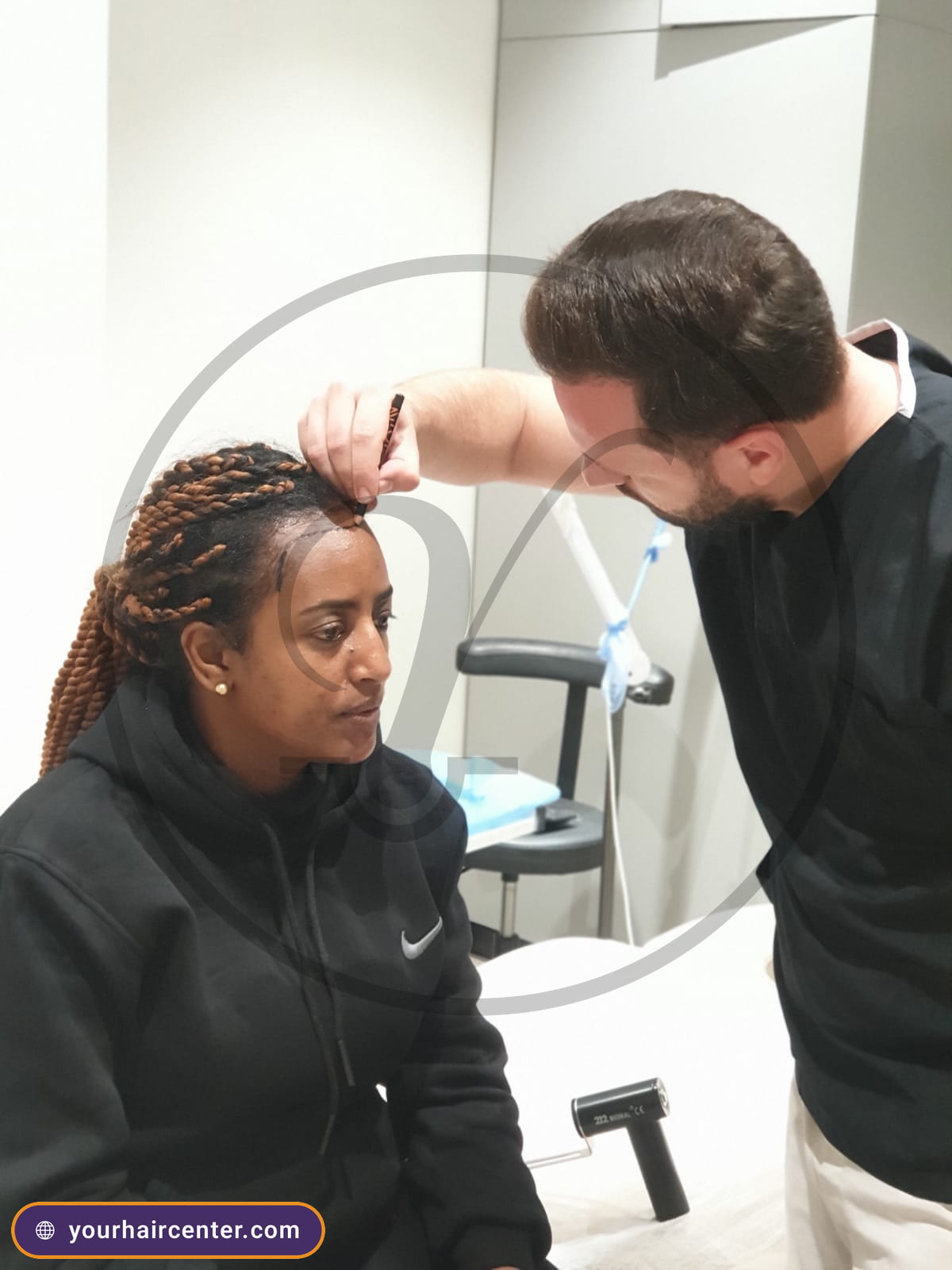
At the two-week mark, five recovery processes resolve on the same day. The grafts are secure, the scabs have finished shedding, the swelling has resolved, the redness has faded, and the ugly duckling shedding phase begins. This guide walks through what 2 weeks after hair transplant truly looks like, maps the day 8 to day 14 sub-timeline, and explains why day 14 is your first scheduled video check-in with the Your Hair Center medical team. Send your day 14 photographs over WhatsApp to book the call.

You are 14 days out from your hair transplant, standing in front of a hotel bathroom mirror at 6 a.m., trying to decide whether what you see is on track or off-script. The scabs are mostly gone. The redness has faded to a quiet pink. A few transplanted hairs are starting to shed onto your pillow, which the forums told you would happen but did not prepare you for emotionally. Your boss wants you back at the desk on Monday. The truth is that 2 weeks after hair transplant surgery is the most under-explained milestone in the entire recovery arc, and almost every clinic blog that covers it treats day 14 as a photo-comparison checkpoint rather than what it actually is. Day 14 is the pivot point where five separate recovery processes resolve on the same date. This guide walks through what your scalp truly looks like at the two-week mark, what changes inside the skin between day 8 and day 14, why this exact date is when Your Hair Center schedules your first video check-in with the doctor, and what realistic return-to-work and grooming decisions you can make from here.
What 2 weeks after hair transplant looks like, the day 14 scalp
At the two-week mark your scalp sits in a specific state. The grafts are secure, the scabs have finished shedding from most of the recipient zone, the swelling has resolved, the redness has faded to a quiet pink, and the early shedding of transplanted hair has begun. These five processes resolve together, which makes day 14 the pivot point.
No other date in the recovery arc aligns all five. At day 7 the scabs are still in place and the swelling may only just be settling. At day 21 the shedding has already accelerated. Day 14 is the single moment where graft security, scab completion, swelling resolution, redness fade, and shedding onset overlap, and understanding each one is how you read your own scalp instead of comparing it to a stranger’s photo.
Graft security is the load-bearing fact here. In the foundational study on graft anchoring, transplanted follicles were no longer dislodged by gentle pulling after the sixth day, and were no longer at risk of being dislodged by the ninth day.[1] By day 14 you are well past that threshold, which is why 2 weeks after hair transplant is when your care plan shifts from “fragile post-op” to “long-haul growth-watching.”
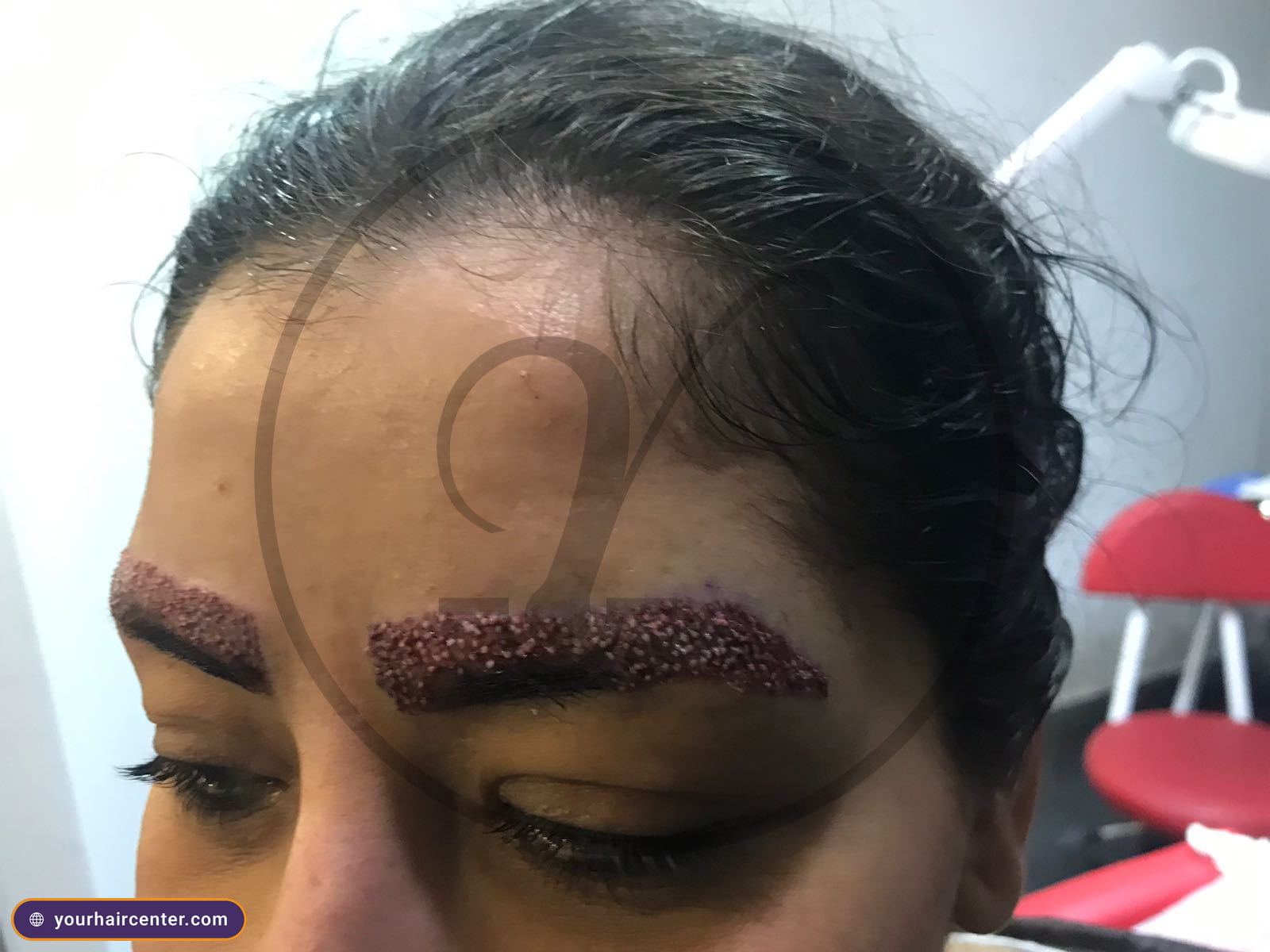
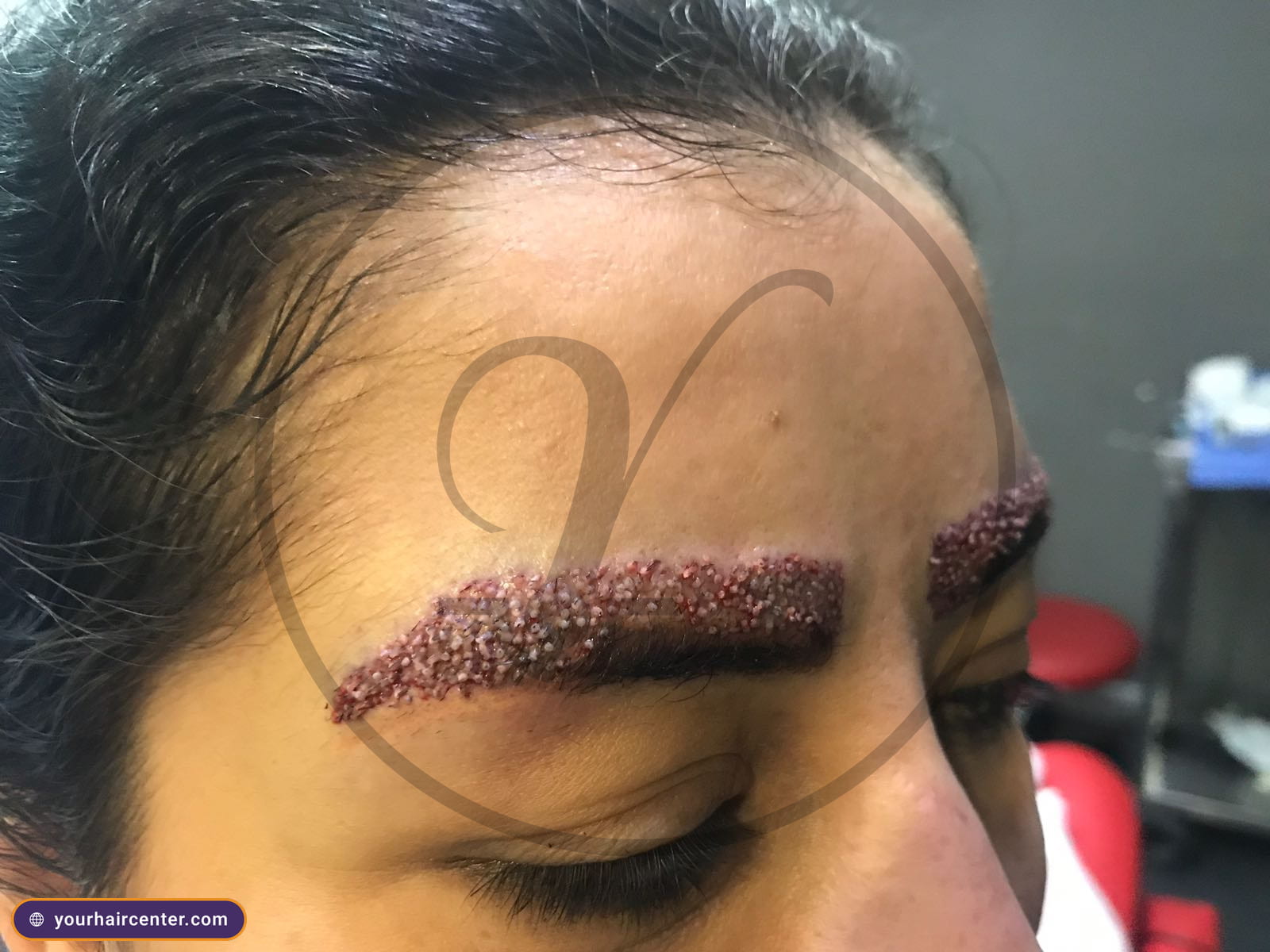
In the mirror, the recipient area reads as pink-toned skin where the channels were placed, with the transplanted shafts still present but loosening. The donor zone shows fading pinkness, with the micro-extraction points in a follicular unit extraction case mostly closed and sensation returning in patches where numbness had lingered through the first week. The honest version is this. By day 14 you will look meaningfully worse than you did on day 1 and meaningfully better than you did at day 7. This is the lowest visible-density preview moment, the calm before shedding accelerates, and it is completely normal. To see how this stage fits the full arc, your 12-month medical follow-up program maps every milestone, and you can study real patient progressions in the photo gallery rather than anonymous forum images.
The within-week-2 sub-timeline, day 8 through day 14
Most guides jump from “7 days after hair transplant” straight to the two-week photo. The days in between are where the real change happens, and they are the calendar most patients try to reverse-engineer from scattered threads. Here is what each day looks like inside the second week.
Day 8. The recipient skin is closing its last open micro-wounds, and the scabs are at their thickest right before they begin to lift. You are still in the lotion-soak phase of washing, softening the crusts gently and rinsing at low pressure. No medical shampoo yet, no rubbing.
Day 9. Scab lift begins in patches at the front hairline, the area that scabbed first. The donor-zone tightness eases, and you can start to lower the pillow height while keeping the on-your-back sleeping position. This is also the day the graft-anchoring research marks as the point where follicles are no longer at risk of being dislodged, so the constant fear of brushing against something eases here too.[1:1]
Day 10. Roughly half of the recipient-zone scabs have lifted off cleanly with the gentle soak-and-rinse routine. You are now in the “can I just remove the rest” decision window, and the clinically correct answer is to keep soaking and let them release on their own. The donor area can be gently handled to lift remaining crusts at this stage.[2] Never pick.
Day 11. The medical-shampoo phase begins. Following the Your Hair Center protocol, you start using the prescribed medical shampoo with gentle tapping motions and no rubbing. For the first time you can feel the underlying pink skin of the recipient zone, and this is where some patients panic about how sparse it looks. What you are seeing is the pre-shedding baseline, not your final result.
Day 12. Residual scabs concentrate at the densest implantation points and at the crown if the crown was transplanted. The loose-hat threshold has now been crossed, so a very loose cap that does not touch the grafts is acceptable for short outings.
Day 13. The last scabs are lifting, and the transplanted shafts are beginning to slide out of the follicles in small numbers. This is the leading edge of the shedding curve, and it is expected. The redness is on its final descent.
Day 14. The pivot day. All five concurrent processes have resolved, your scheduled video call with the doctor takes place, and you are cleared to return to a desk job. Exercise, swimming, and direct sun exposure remain off-limits. The two-week point also lines up with the standard ten-to-fourteen-day post-operative threshold that national health guidance describes for hair transplant aftercare.[3] This is the structure of hair transplant recovery week by week distilled to its single most important date. For the deeper mechanics of crust release, see the day-by-day scab removal protocol, and for the in-Istanbul portion of these days, see your in-Istanbul recovery stay.
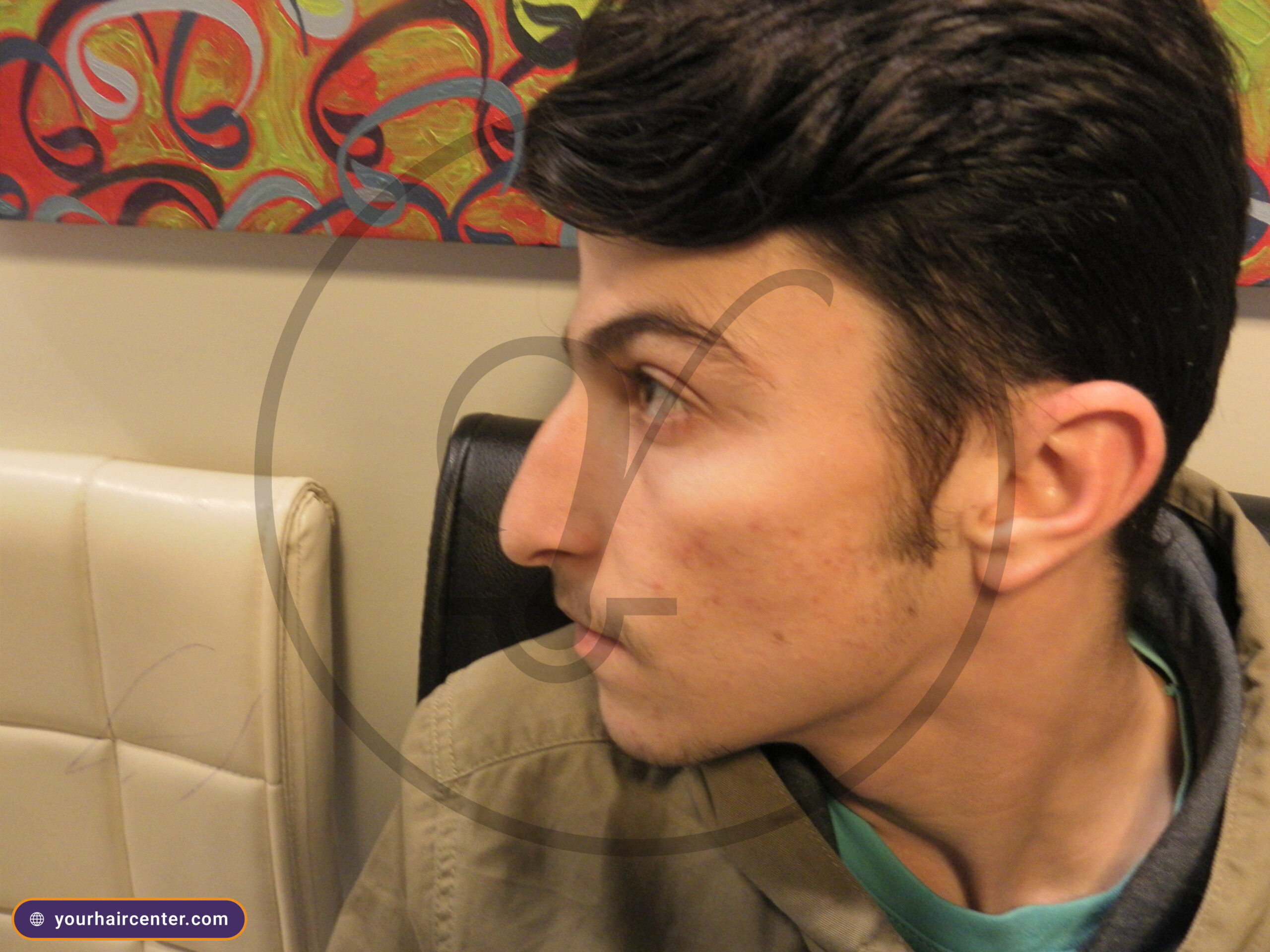
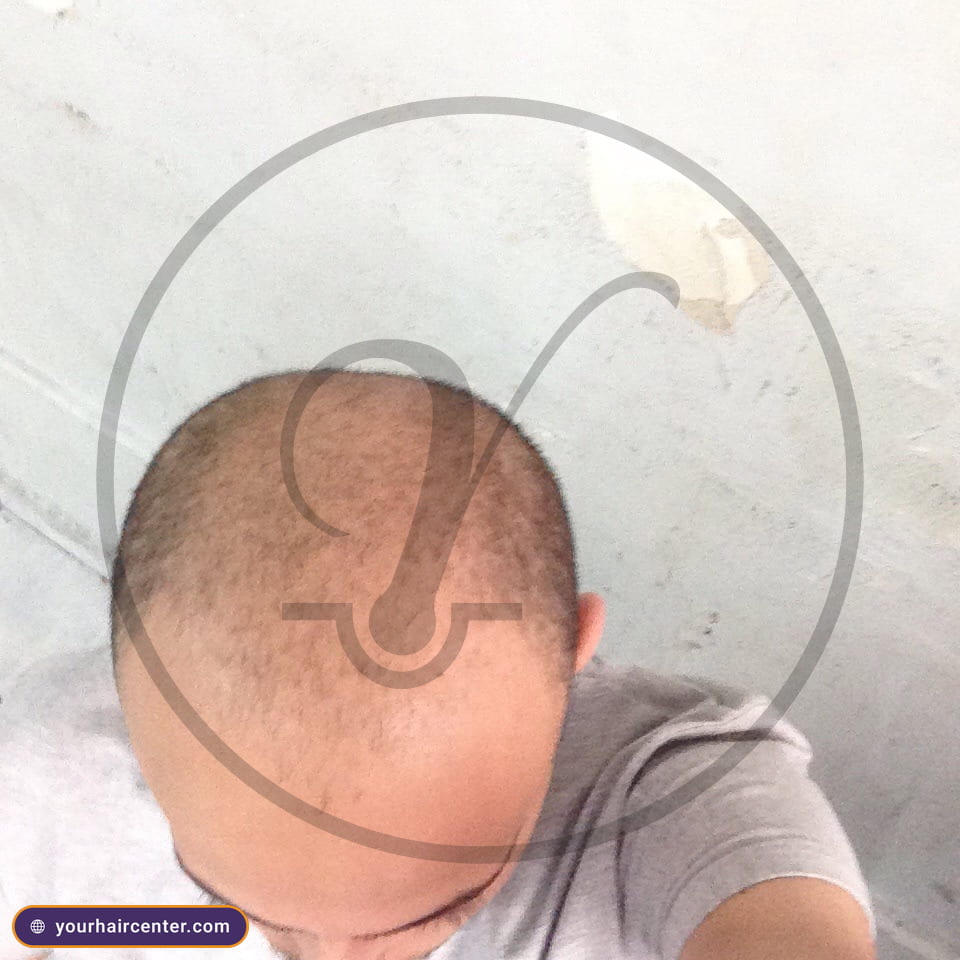
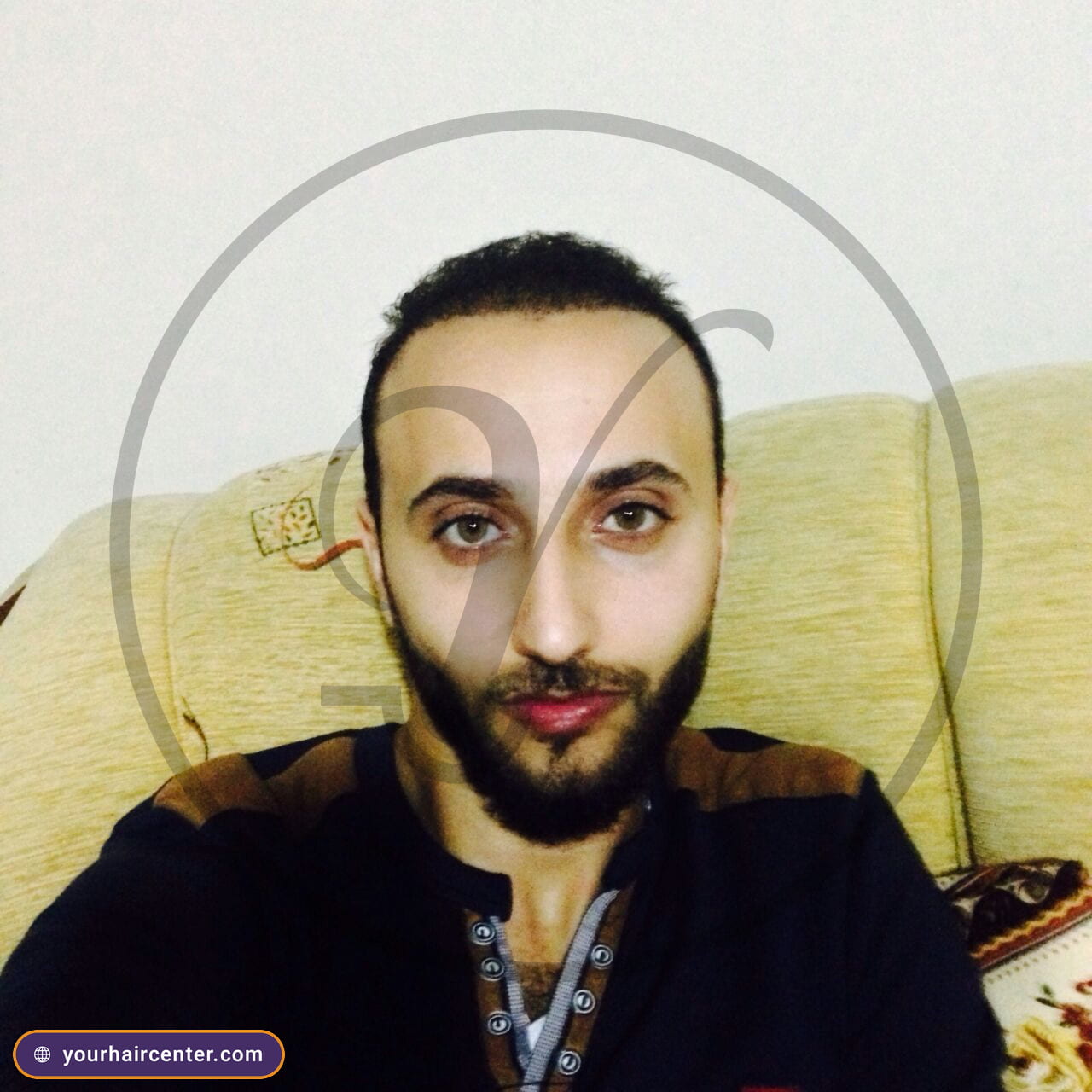
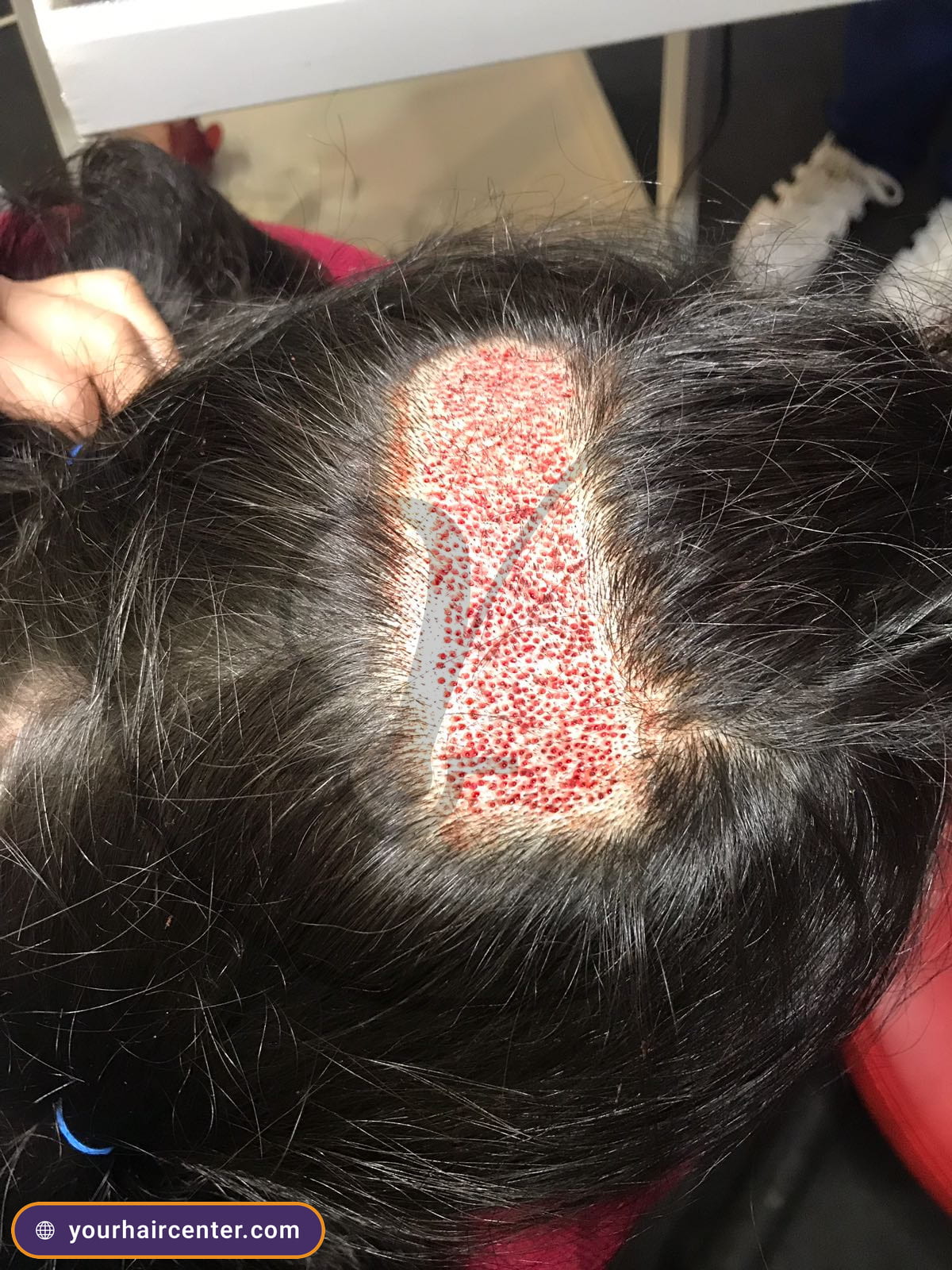
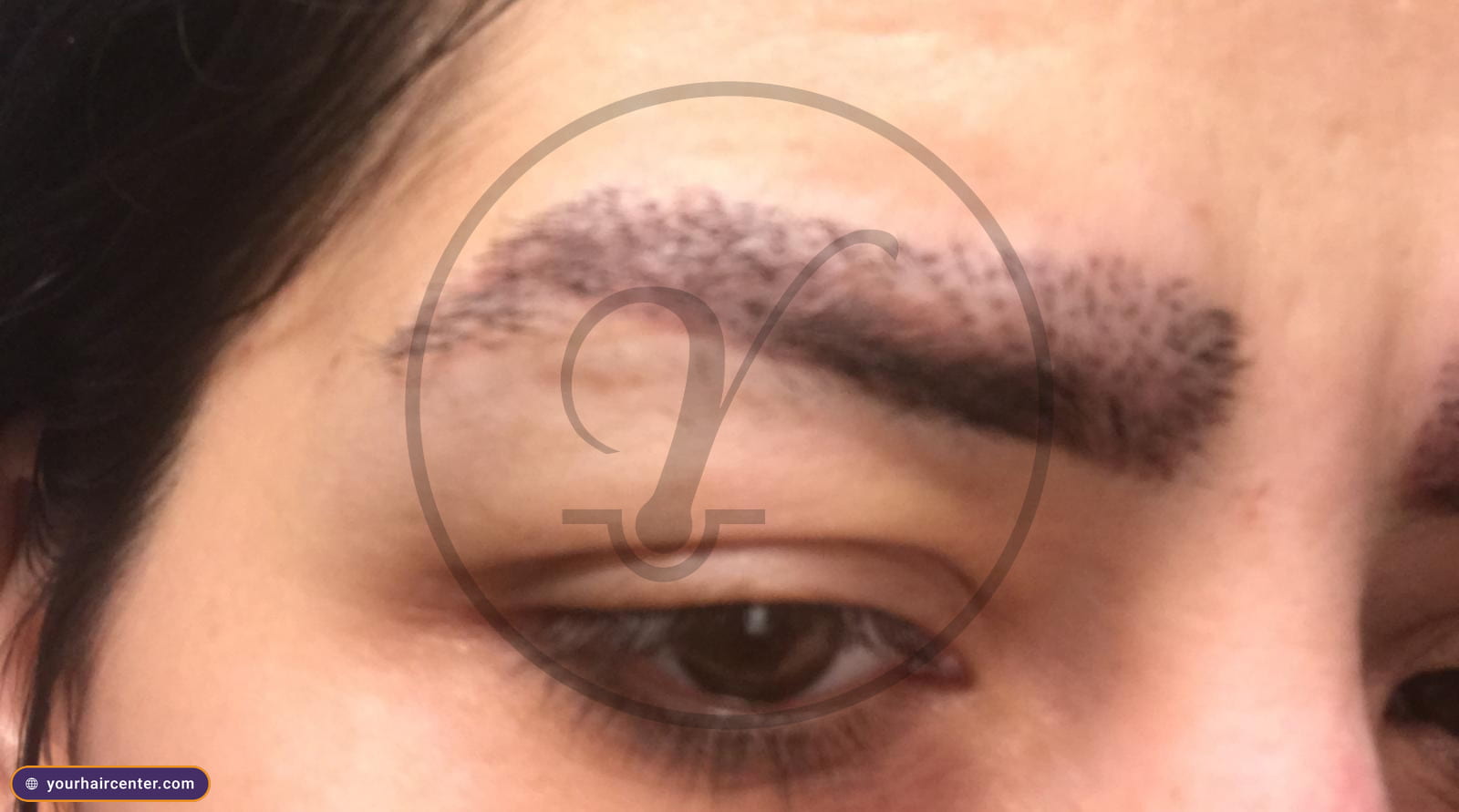
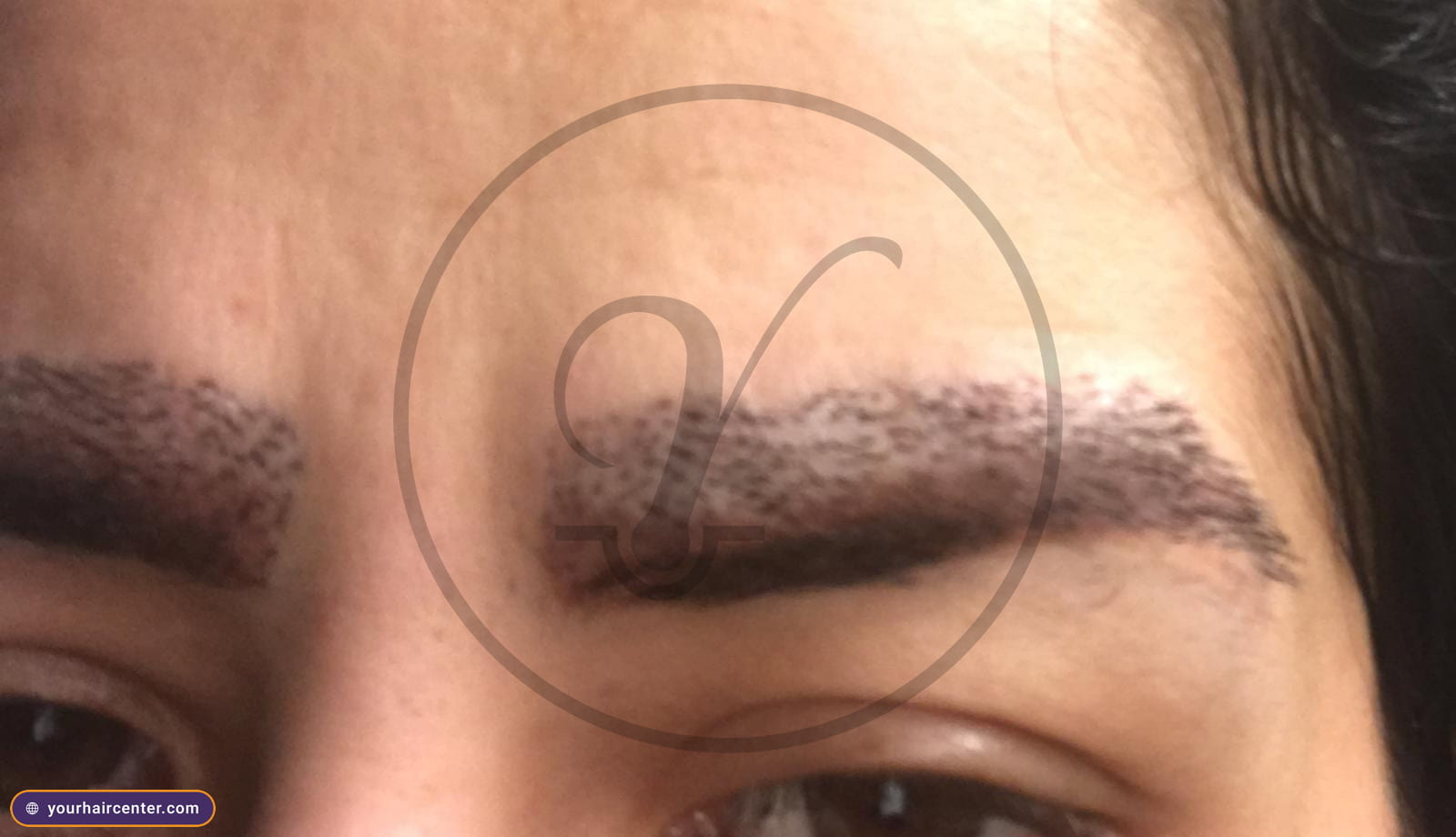
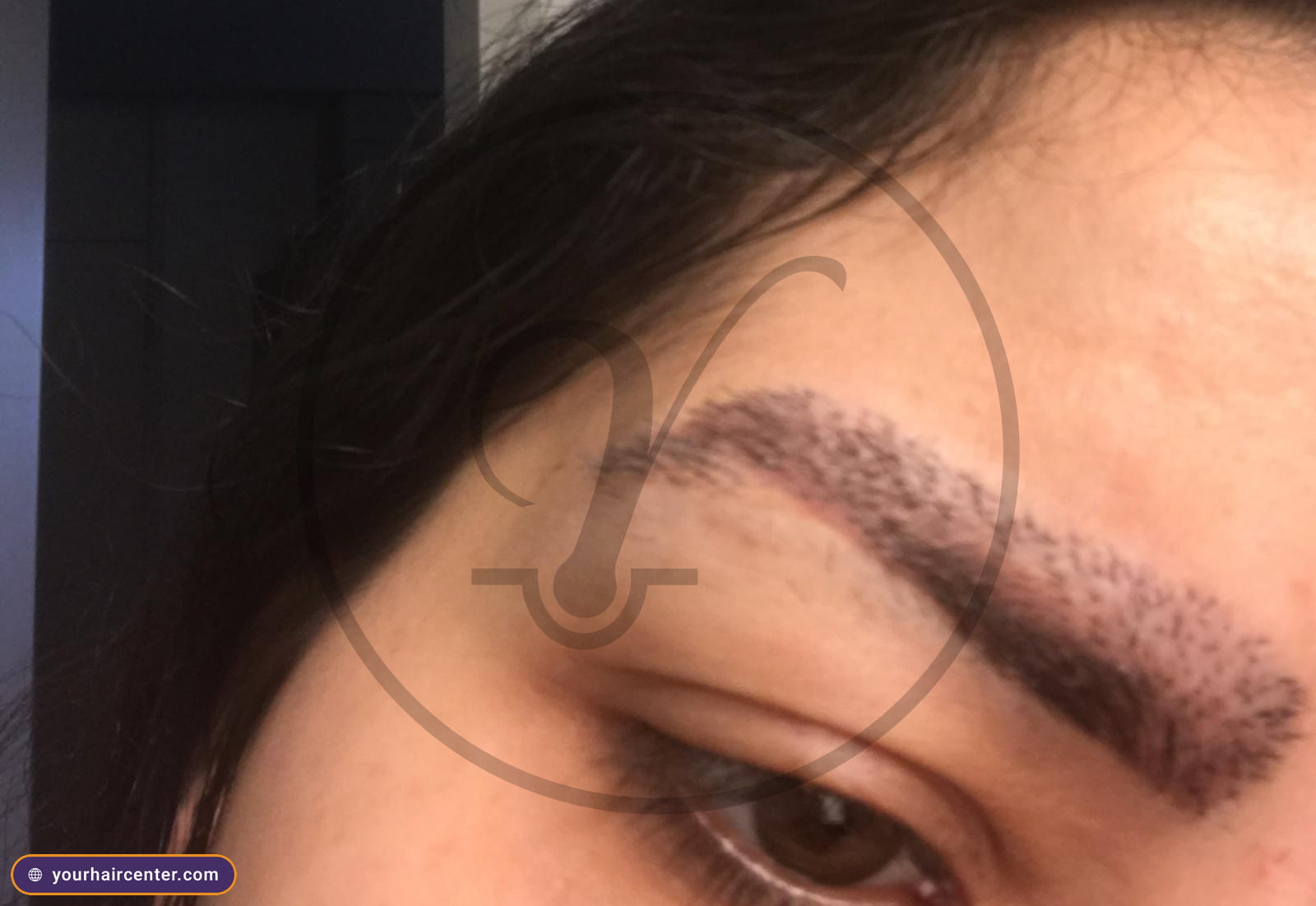
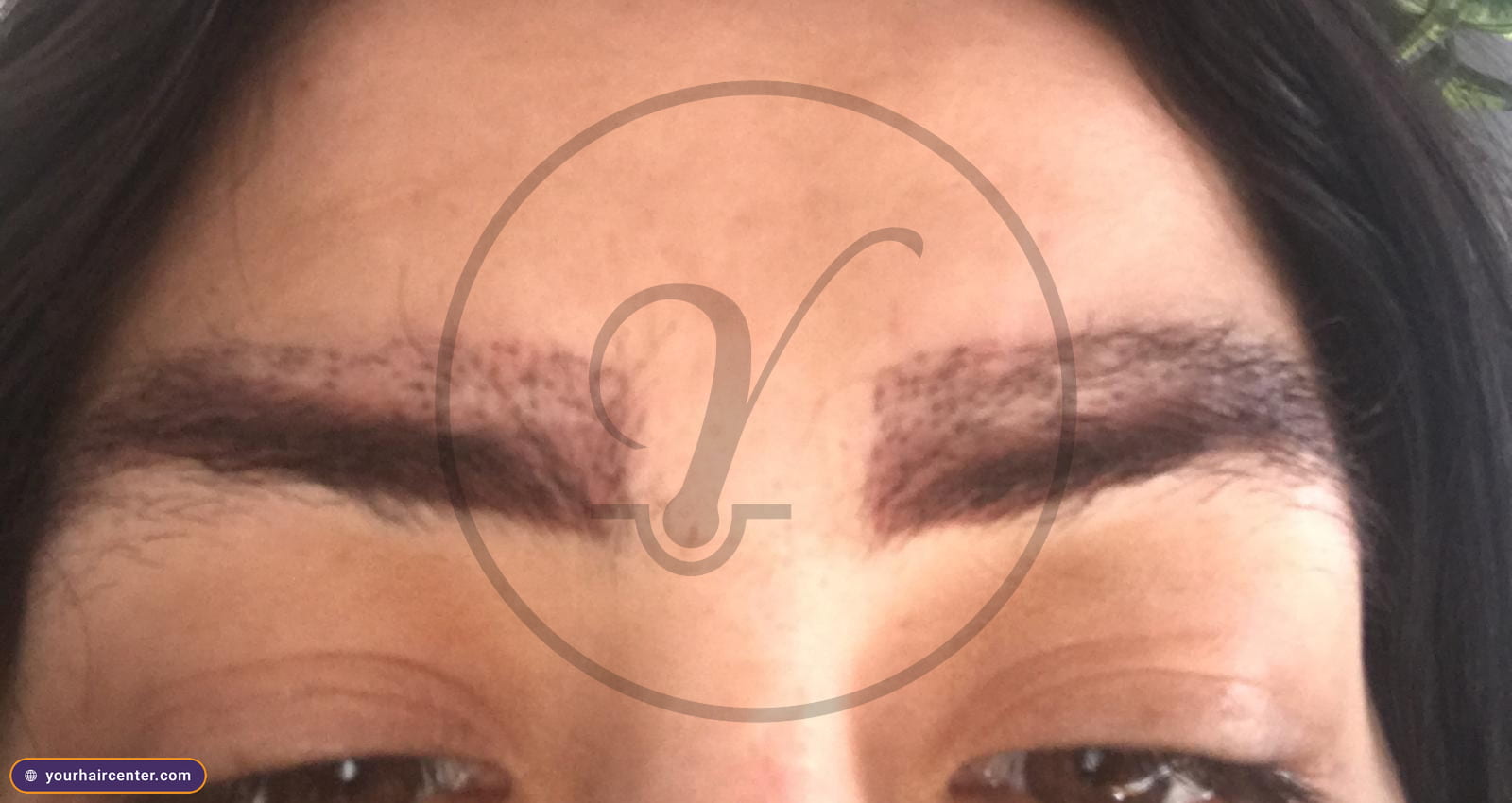
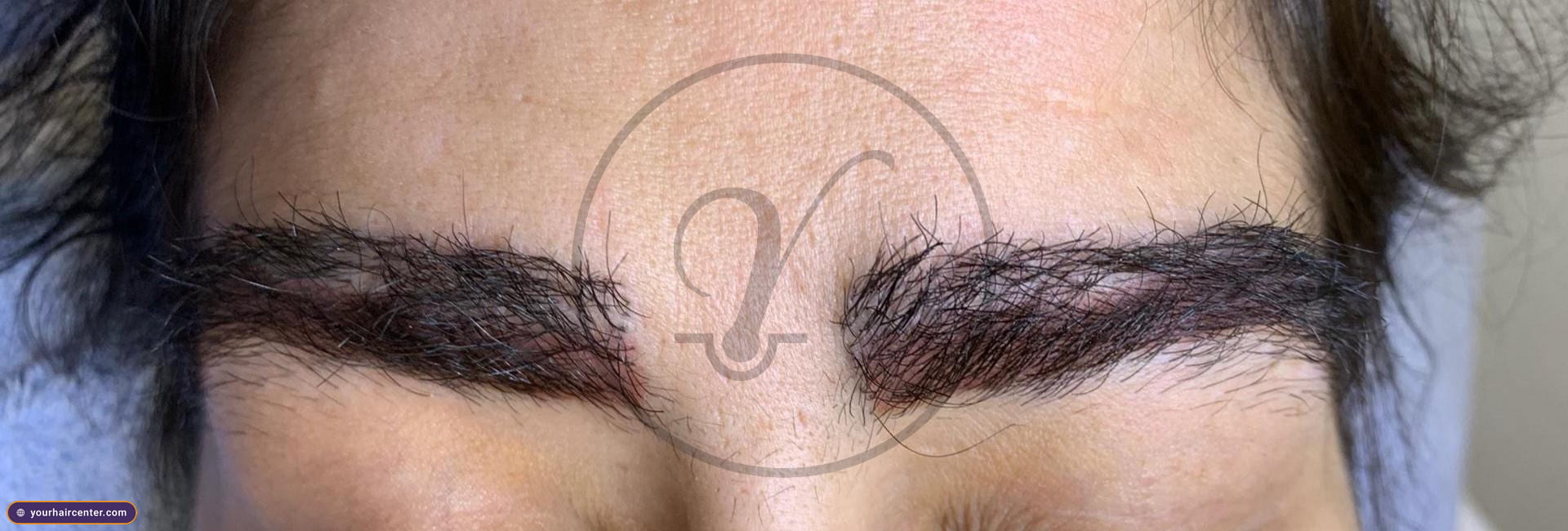
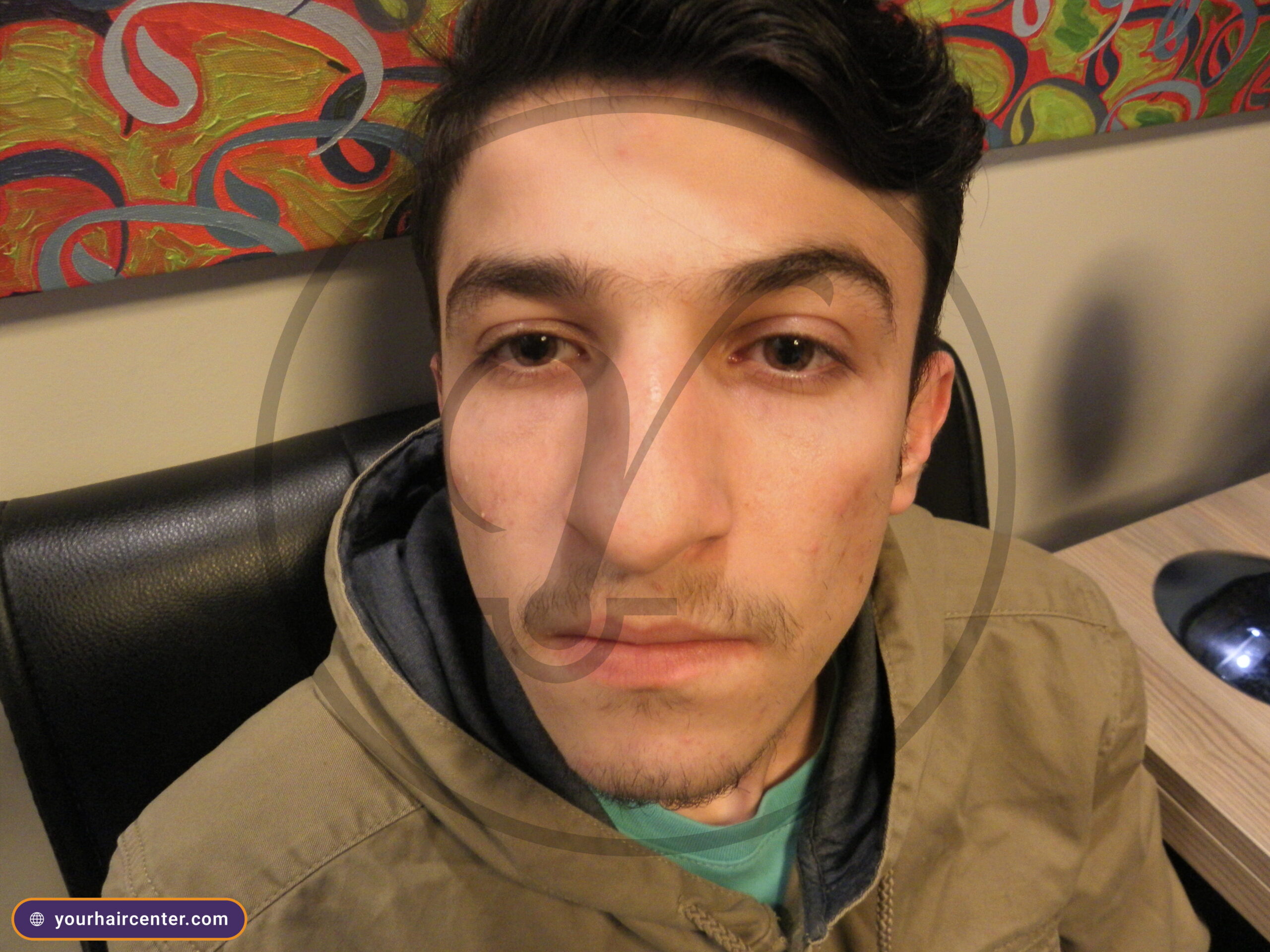
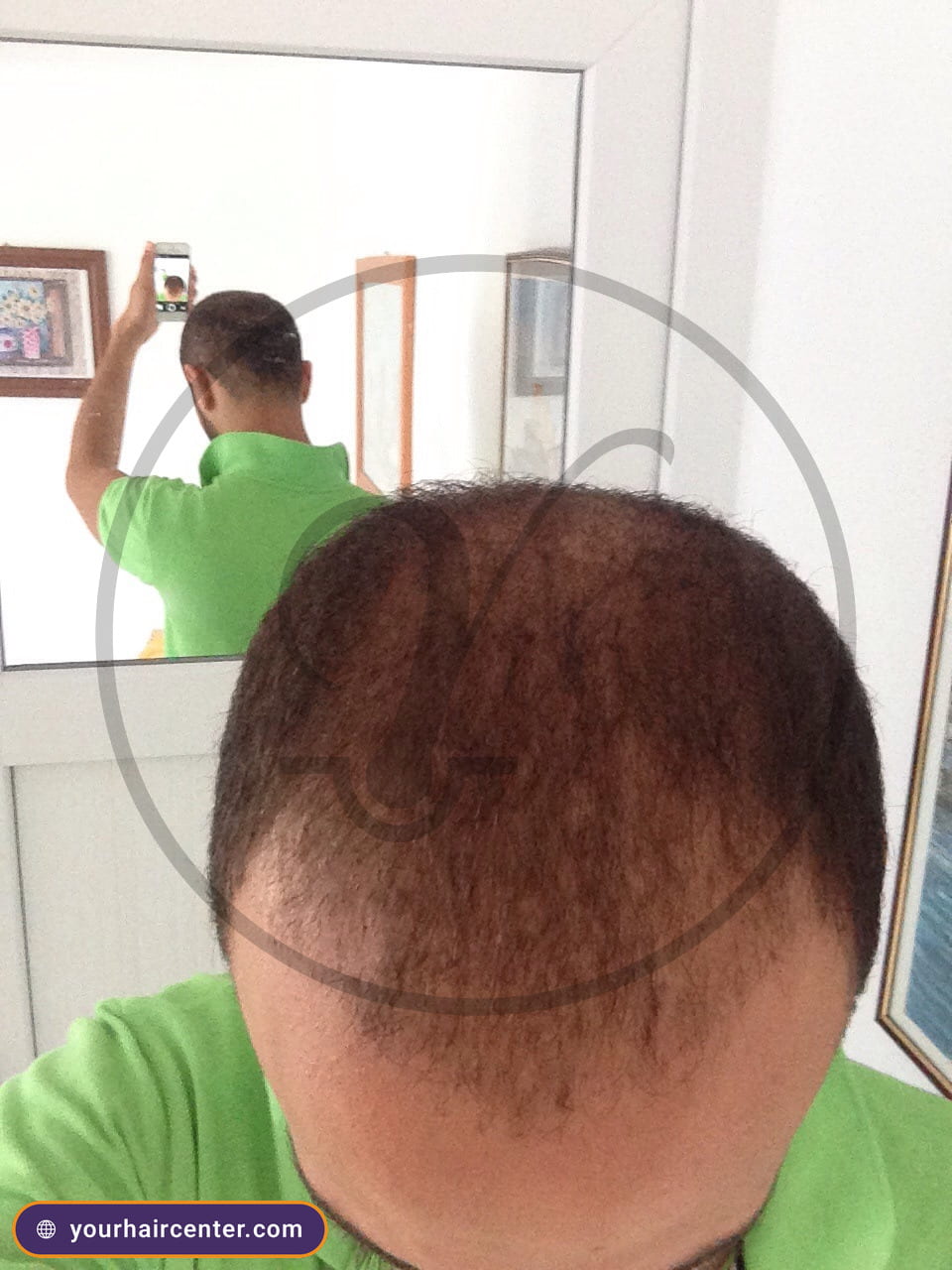
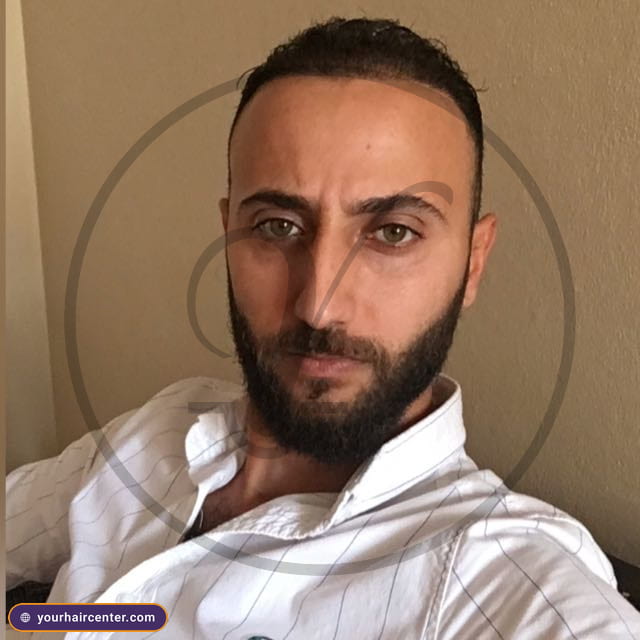
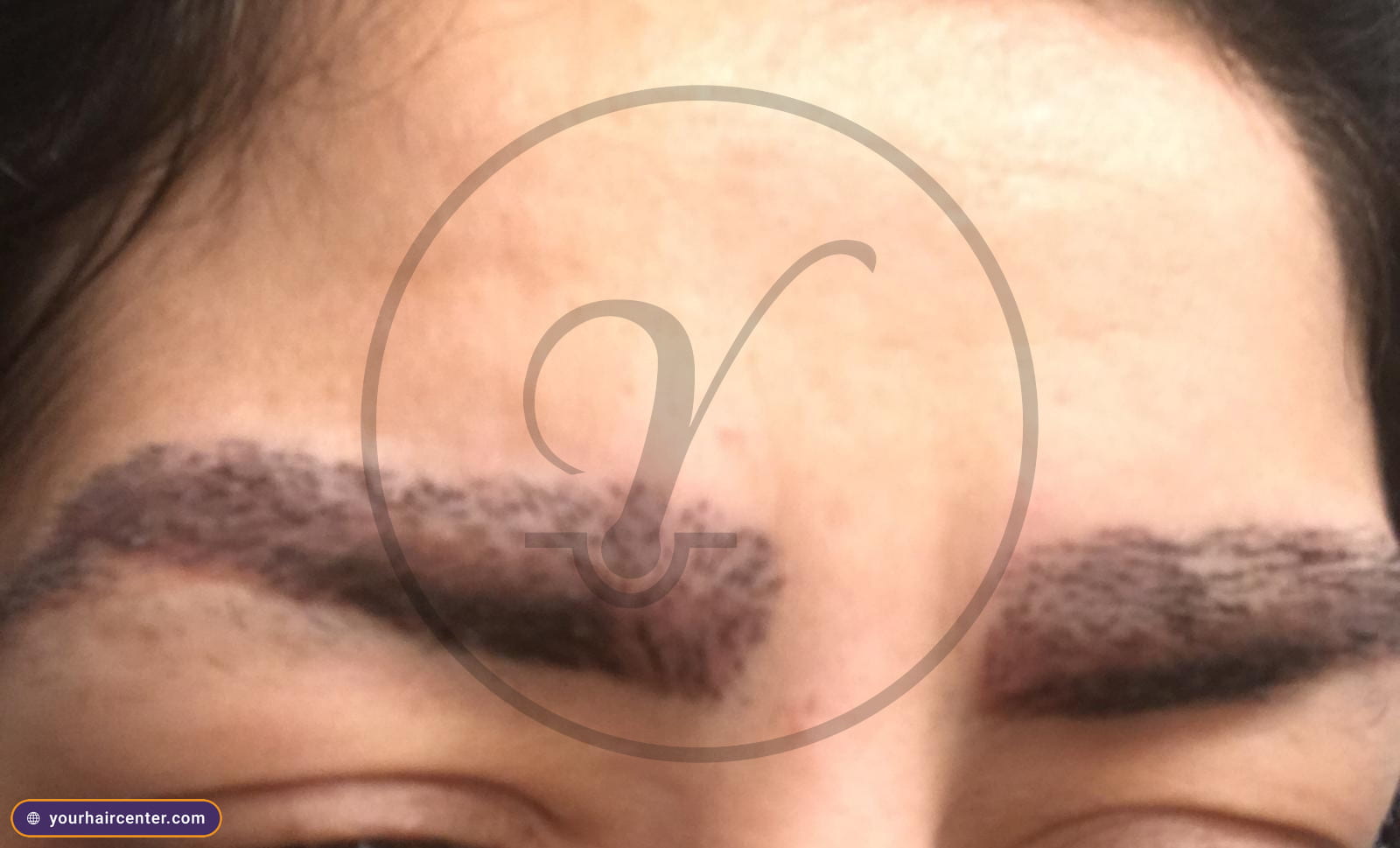
Real results from our patients’ archive. Photos exactly as captured at our accredited partner clinics — no filters, no retouching. Browse more cases in our photo gallery.

Your 2-week WhatsApp video check-in
Here is what no other guide tells you. At Your Hair Center the two-week mark is not a passive photo-comparison milestone. It is a scheduled clinical event with a defined agenda, a structured photograph protocol, and a decision tree the doctor walks through with you live. This is the first of the video consultations in your follow-up program, and it is the call where the doctor confirms that your post-operative phase closed cleanly.
Twenty-four hours before the call, the doctor wants four photographs. A frontal hairline shot taken straight-on under natural light. A top-down view of the crown. A close-up of the donor zone. And a profile view at a 45-degree angle. These four frames let the doctor read the recipient density, the scab status, the redness fade, and the donor healing in a single sitting.
The agenda of the 2 weeks after hair transplant call itself is specific. The doctor confirms graft security with a visual inspection, confirms that scabbing has completed, confirms that swelling and redness have resolved, sets your expectations for the shedding phase that is just beginning, and clears you for a desk-job return while adjusting your lifestyle calendar to your individual case. Every later call serves a different purpose. The month 1, month 3, month 6, and month 12 video consultations are about growth progression. This first call is the only one focused on verifying that the healing phase ended correctly.
Between scheduled calls, the monitoring continues. You send photos over WhatsApp on the cadence your doctor sets, weekly through the first month and then every two weeks through month 3, and the doctor reviews each set and replies with detailed guidance within 24 hours. A 24/7 emergency line covers anything that cannot wait for a scheduled touchpoint.
Why does a patient who flew home from Istanbul value this differently than someone who drove home from a local clinic? Distance. When the clinic is across town, a quick in-person visit is easy, so few packages build a structured two-week video call into the default plan. When you are thousands of miles away, that scheduled video call is the equivalent of walking back through the clinic door. It is part of your 12-month medical follow-up program and what is included in your all-inclusive package. You can send your day 14 photographs over WhatsApp to book it.
Scabs at 2 weeks, what should be gone and what is still hanging on
By the time you reach 2 weeks after hair transplant surgery, the majority of scabs in the recipient zone should have lifted. A “completed” recipient zone reads as pink skin with the transplanted shafts visible, no crusty texture, and no yellow or amber discharge. If that is roughly what you see, you are on track.
Residual scabs at day 14 are not a problem on their own. They tend to concentrate at the densest implantation points and at the crown, and they are simply slower to release in those areas. Your Hair Center guidance treats lingering scabs as normal up to around day 20, with full shedding and fading redness expected by that point. The routine for these final days stays the same. Continue the soften-then-rinse approach, never pick, and send a photograph to the doctor if any single scab persists past day 20.
Donor-zone scabs follow their own clock. In follicular unit extraction cases the donor area has usually closed within the first week to ten days, and the crust-removal window for that area sits around five to seven days after surgery.[2:1] Residual donor-zone scabbing still present at day 14 is worth a quick photograph to the medical team so the doctor can confirm the healing is on schedule.
Scab status is the single most visible difference in 2 weeks after hair transplant pictures, which is why so many patients fixate on it, but a residual scab pattern only becomes a warning sign when other symptoms join it. Persistent yellow or amber discharge, a localized patch of warmth, an enlarging red ring around a single area, or a high fever each flip the situation from routine to escalation. Any of those signs means you send a photo and contact the medical team without waiting. The full day-by-day removal technique lives in the full day-by-day scab removal protocol, and every scab question routes through your 12-month medical follow-up program.
Swelling at 2 weeks, why it has resolved by day 14
For almost every patient, the post-operative swelling cycle has fully resolved by the two-week mark. The forehead and around-the-eye puffiness that can appear in the first days is driven by fluid and gravity, which is why clinics have you sleep with your head elevated during the first week to keep it to a minimum.[2:2] By day 14 that fluid has long since redistributed, the redness is fading, and you are cleared for light daily activity.
What is still normal at this stage is faint. A small share of patients carry a trace of pink discoloration at the forehead or around the eyes into the second week, and it continues to fade over the following days. That is residual coloring, not active swelling.
What is not normal at day 14 is fresh swelling. New puffiness that appears after a previously resolved cycle, asymmetric eye swelling that develops after day 10, or any swelling paired with fever, throbbing pain, or a localized warm zone all warrant immediate contact with the medical team. If something looks off, the doctor needs a straight-on forehead shot in flat indoor light, a profile shot at a 45-degree angle to capture the area around the eyes, and a donor-zone close-up if any swelling has tracked behind the ears.
This is exactly why the two-week call includes a swelling check by design. The doctor wants visual confirmation that the cycle closed cleanly before clearing you for the desk-job return. The full staging framework and the day-by-day swelling arc, including the early-week peak, are covered in hair transplant swelling, the day-by-day timeline and staging guide. For ongoing monitoring, your 12-month medical follow-up program handles every swelling photo you send.
Shock loss starts at 2 weeks, the ugly duckling phase and the office
Shock loss is the temporary shedding of the transplanted shafts as the follicles enter a resting phase. The shaft falls out, but the follicle itself stays anchored under the scalp, and it will produce new hair starting around month 3 to 4. This shedding is a normal, expected part of the cycle, not a sign that the transplant failed. Cleveland Clinic notes plainly that transplanted hair may fall out as the graft heals and that this is normal.[4] The shedding is transient, and new hairs typically appear within three to six months.[2:3]
This is why the shedding that worries patients most at 2 weeks after hair transplant is actually the timeline behaving correctly. It opens the ugly duckling phase, which runs from roughly week 2 to month 3. During this window the recipient zone reads sparser than at any other point in the entire timeline, including before surgery. It is the universal panic-call window, and the most important guidance is the simplest. Do not compare your results to other people’s photos at this early stage.
Why does it start right around day 14? The transplanted follicle effectively entered its resting phase at the moment it was extracted, and the two-week mark lines up with the natural resting-to-shed cycle. So the shedding you notice at day 14 is the timeline working exactly as designed.
For a younger patient returning to a coworker-visible office, there is one reality check that matters most. The visible density at the office will be lower at week 4 than it is at week 2, not higher. The shedding accelerates before regrowth begins, so the loose-cap option becomes more useful in weeks 3 and 4 than at the two-week return date itself. A very loose cap is permitted from week 2 onward, and strategic styling of the surrounding native hair helps bridge the thinnest weeks.
Shock loss reads as a clinical concern, rather than a normal phase, in a few specific patterns. Sharply asymmetric shedding, shedding in the donor zone, or shedding that extends past month 3 to 4 with no regrowth signal each warrant a photo to the doctor. The donor-area version of shock loss and the full prevention approach are covered in shock loss after hair transplant, what is normal and when your doctor steps in. Some patients also coordinate supportive PRP for the shock-loss window as part of their plan.
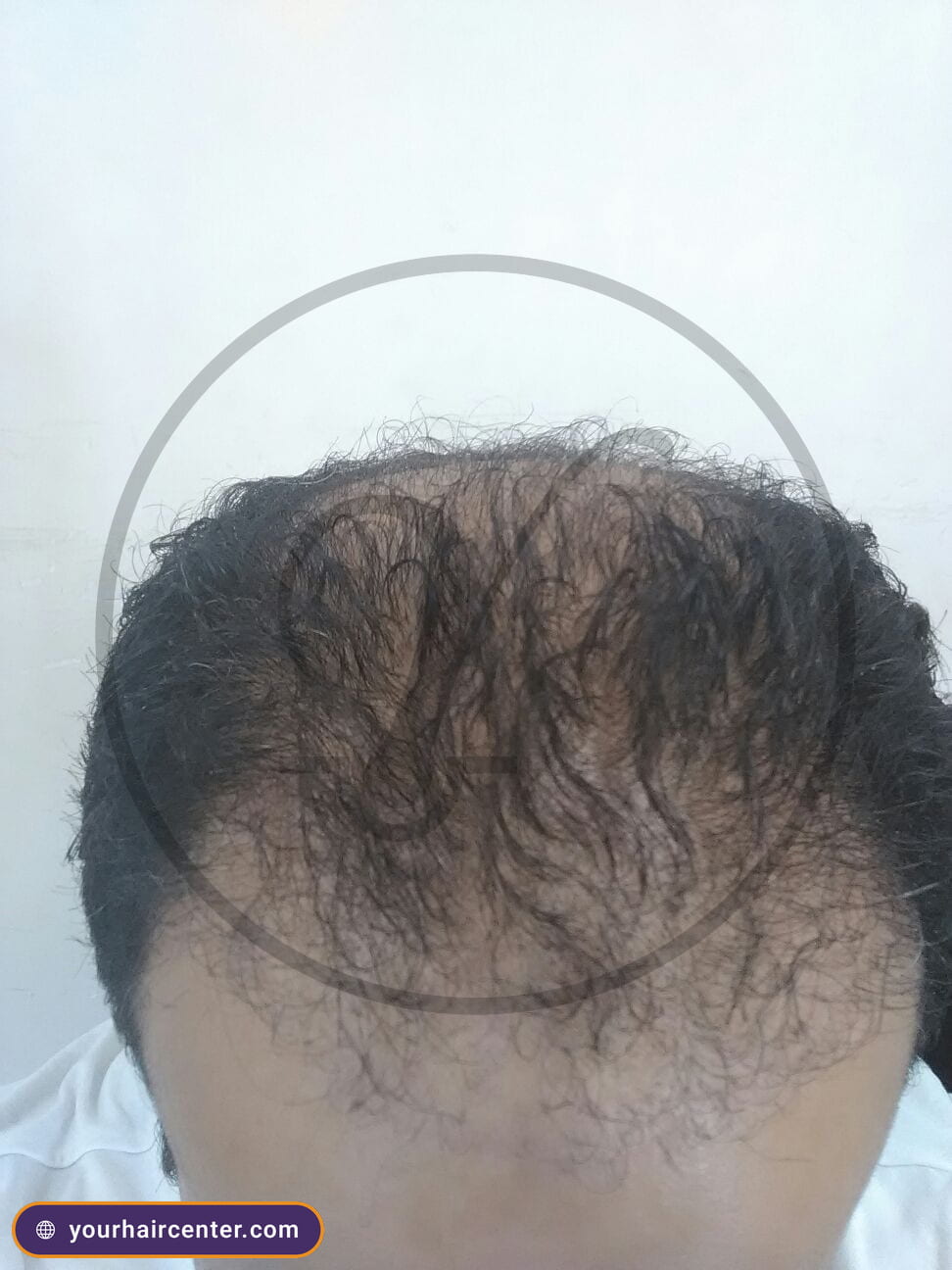
Real results from our patients’ archive. Photos exactly as captured at our accredited partner clinics — no filters, no retouching. Browse more cases in our photo gallery.





The return-to-work decision at 2 weeks
The day-14 clearance to return to work applies cleanly to desk jobs, and only desk jobs. The Your Hair Center lifestyle timeline places “return to a desk job” squarely at week 2, and returning to work and light activity is among the earliest-cleared steps in standard recovery guidance, sitting in the first few days for ordinary office tasks.[4:1] What gates a more active role is not the calendar alone but the scalp.
The load-bearing factors are sweat, direct pressure on the scalp, sun exposure during a commute, and the social variable of returning to a public-facing environment where you would rather not wear a tight cap. A desk is the threshold because it minimizes all four. From day 14 to day 21, a light walking commute or driving is fine, public transport is acceptable as long as you avoid head-bumping situations on a crowded train, and video calls are easier than in-person meetings because the camera keeps a comfortable distance.
Several categories stay off-limits at the two-week mark. Exercise waits until week 3 to 4 for light cardio such as brisk walking and stationary cycling, and full workouts return later still. Swimming waits until month 2. Saunas and steam rooms wait until week 4. Heavy lifting waits until week 3 to 4. Standard recovery guidance similarly places a return to exercise and sport at around three weeks.[4:2]
If you stayed in Istanbul for the full two weeks after hair transplant surgery, the trip home lands right on this pivot. Use a neck pillow on the return flight to avoid unintentional pressure on the transplanted area, and keep a very loose cap on hand for the airport. Cabin pressure is a non-issue for healed grafts. One thing not to plan around your own assumptions is medication. Whether and when finasteride or minoxidil fit your case is patient-specific and is discussed at the two-week video call. Your doctor sets the right plan for your case, so never start or adjust a dosage on your own. The travel and stay details sit inside what is included in your all-inclusive package, and the timing of every activity clearance is reviewed in your 12-month medical follow-up program.
Frequently asked questions about the 2-week mark after a hair transplant
What to expect 2 weeks after a hair transplant?
Two weeks after a hair transplant, expect a scalp in transition. The grafts are secure, most scabs in the recipient zone have shed, the swelling has resolved, and the redness has faded to a quiet pink. At the same time, the transplanted shafts are starting to shed as the follicles enter their resting phase, so the area looks sparser than it did at first. All of this is normal, and it is why day 14 is treated as a clinical milestone rather than a finished result.
Are grafts fully secure after 14 days?
Yes. Research on graft anchoring found that transplanted follicles were no longer dislodged by gentle pulling after the sixth day and were no longer at risk of being dislodged by the ninth day.[1:2] By 14 days you are comfortably past that window, which is why 2 weeks after hair transplant is when your care shifts from protecting fragile grafts to monitoring long-term growth. You still avoid deliberate friction and scratching, but the grafts themselves are anchored.
Can I touch my transplanted hair after 2 weeks?
Gentle contact is generally safe by the two-week mark, because the grafts are anchored by this point.[1:3] That said, the cleanest answer comes from your own scalp. At Your Hair Center the two-week video call exists partly so the doctor can confirm, from your photographs and the live view, that you can resume normal grooming. Until that confirmation, keep handling soft, follow the tapping-not-rubbing wash routine, and never scratch or pick at a residual scab.
What happens after 14 days of hair transplant?
At 2 weeks after hair transplant you move from the healing phase into the growth-watching phase. The shedding that began at the two-week mark continues and peaks over the following weeks, the recipient zone thins out before it fills back in, and the follicles rest beneath the scalp. New hair typically begins to appear within three to six months.[2:4] This is also when your follow-up shifts to regular photo reviews and the next scheduled video call at month 1.
What does 21 days after a hair transplant look like?
By 21 days after a hair transplant, the scabs have shed completely and the redness is fading further. People searching for what 21 days after hair transplant should look like are usually one week past the day 14 pivot, and at this point the shock-loss shedding that started around the two-week mark is well underway, so the area can look thinner than you expect. That is a normal part of the cycle as the follicles rest before producing new hair in month 3 to 4. The single best discipline at this stage is to avoid comparing your scalp to other people’s photos. The deeper shedding timeline is covered in shock loss after hair transplant, what is normal and when your doctor steps in.
The 2-week mark is a milestone, not a photograph
The two-week mark is the only date in the recovery arc where graft security, scab completion, swelling resolution, redness fade, and shock-loss onset all resolve at once. That makes 2 weeks after hair transplant surgery a clinical milestone, not a photograph milestone. The next step is your scheduled video check-in with the Your Hair Center medical team. The doctor reviews your day 14 photographs, confirms each of the five resolutions, sets your shedding expectation calendar, and clears your desk-job return with case-specific guidance. From there the follow-up continues over WhatsApp every week through month 1, every two weeks through month 3, and at the four scheduled video milestones at month 1, 3, 6, and 12 for the full year. The two-week call is included in your all-inclusive package.
Send your day 14 photographs and schedule your 2-week video check-in
See the 12-month medical follow-up program
References
- Bernstein RM, Rassman WR. “Graft anchoring in hair transplantation.” Dermatologic Surgery, 2006. PubMed PMID 16442039. https://pubmed.ncbi.nlm.nih.gov/16442039/ (opens in new tab) ︎ ︎ ︎ ︎
- StatPearls, “Hair Transplantation.” NCBI Bookshelf NBK547740 (National Institutes of Health). https://www.ncbi.nlm.nih.gov/books/NBK547740/ (opens in new tab) ︎ ︎ ︎ ︎ ︎
- NHS. “Cosmetic procedures, Hair transplant.” https://www.nhs.uk/conditions/cosmetic-procedures/hair-transplant/ (opens in new tab) ︎
- Cleveland Clinic. “Hair Transplant: How Does It Work, Success Rates.” https://my.clevelandclinic.org/health/treatments/21519-hair-transplant (opens in new tab) ︎ ︎ ︎