4500
grafts
DHI
Most clinics promise a quick recovery but never put it on a calendar. This guide maps the sapphire FUE recovery time day by day, from the swelling that peaks within three days and the crusts that shed by two weeks, to shock loss at week 2 to 6 and the final result near month 12. It includes a return-to-activity calendar with concrete days for work, gym, swimming, and sun, all grounded in published wound-healing evidence rather than marketing copy.
Every clinic page promises that a sapphire blade heals faster, and almost none of them tell you what that means on a calendar. If you are planning paid time off, a gym break, or a beach holiday around your procedure, "a few weeks" is not a plan. This guide turns the sapphire FUE recovery time into a day-by-day clock you can actually schedule against, from the swelling that peaks within the first three days to the final result at roughly twelve months. Sapphire changes the geometry, not the calendar. A sapphire FUE hair transplant opens recipient channels of only 1.0 to 1.3 mm, against 1.5 to 2.0 mm for the steel blade used in the classic FUE technique, so there is less tissue trauma and the crusts are smaller, though in sapphire FUE recovery they still shed within the same window as any FUE. What follows is the quantified timeline, grounded in the published wound-healing literature rather than marketing copy.
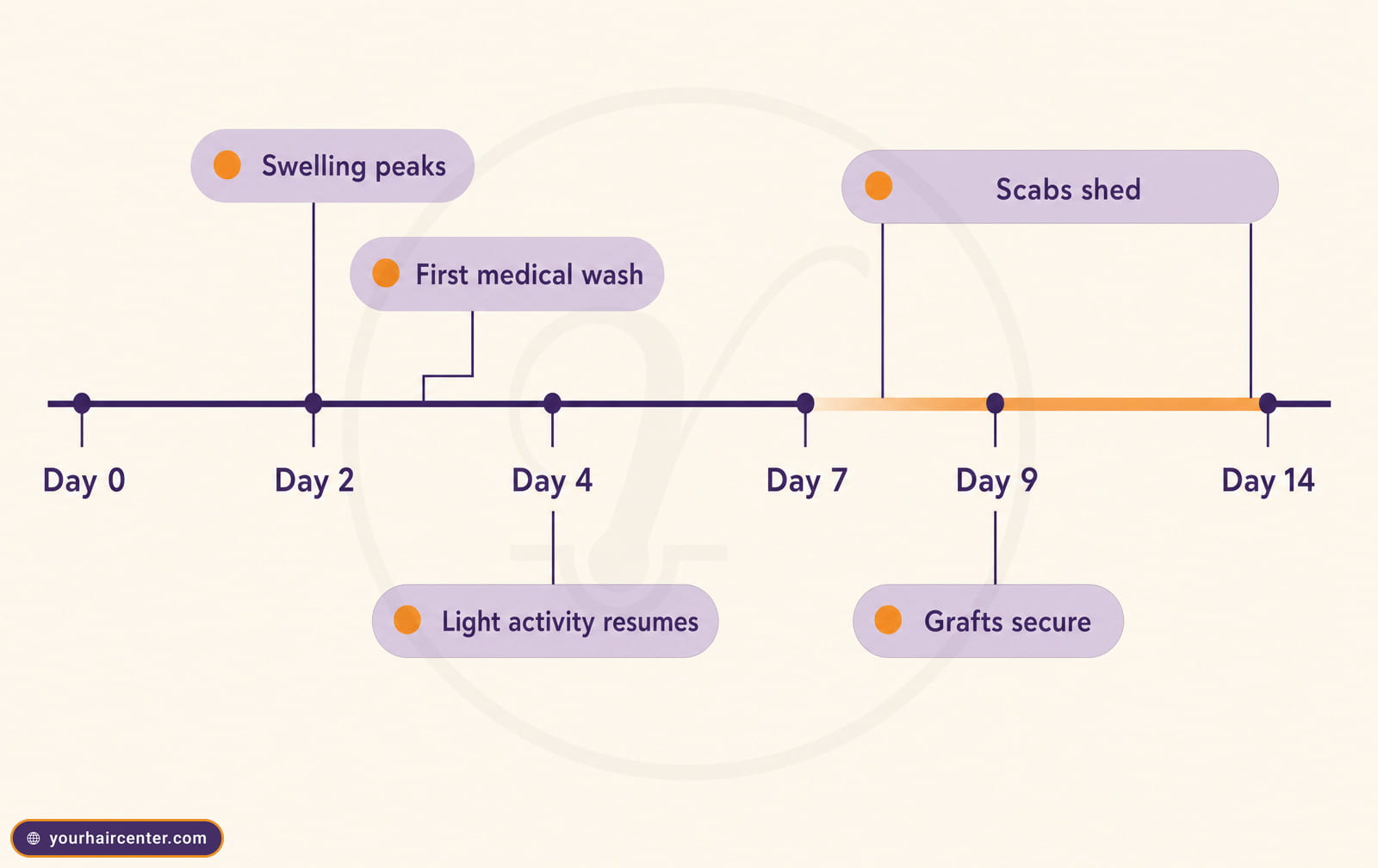
Healing after sapphire FUE runs on a predictable clock. Swelling peaks around day 2 to day 3 and settles within 5 to 7 days,[1] the first medical wash happens at the partner clinic on day 2 or 3, and the small crusts shed between day 5 and day 14, with the tiniest ones falling at day 4 to 6.[2][3] Grafts are firmly anchored by day 9,[4] light activity resumes at day 3 to 5,[5] strenuous exercise waits about three weeks,[5:1] shock loss arrives at week 3 to 4,[6] new growth appears at month 3 to 6,[7] and the full result lands near month 12.[8]
That is the whole sapphire FUE recovery time arc in one paragraph. The table below is the same timeline expanded so you can read it in twenty seconds, then drop the relevant rows into your calendar. Every later section in this guide unpacks one band of this sapphire FUE recovery table in detail, and the sapphire FUE hair transplant page covers the technique itself if you want the procedure-side context first.
| Time point | What is normal | What you will see | What to flag |
|---|---|---|---|
| Day 0 | Anesthesia wears off, mild tightness | Tiny pinpoint sites, faint redness | Severe pain not easing |
| Day 1 | Swelling begins | Forehead puffiness starting | One-sided or rapid swelling |
| Days 2 to 3 | First medical wash, swelling peak[1:1] | Forehead and around-eye fullness | Fever, spreading redness |
| Days 4 to 7 | Crusts fully formed | Dark crusts around each graft | Pus, returning fever |
| Days 8 to 10 | Crusts begin to shed[2:1] | Crusts thinning and dropping | A scab pulled off early |
| Days 10 to 14 | Most crusts gone, grafts secure[4:1] | Healing-pink recipient skin | Persistent open redness |
| Week 3 | Routine restored | Skin tone evening out | Unusual pain or oozing |
| Month 1 | Shock loss phase[6:1] | Transplanted hairs shedding | Total bareness with no fine hair |
| Month 3 | First regrowth[7:1] | Fine, soft new hairs | No fine hair at all |
| Month 6 | Density climbing | Noticeable thickening | Patchy zones not filling |
| Month 12 | Final result[8:1] | Natural, permanent density | Clearly thin areas |
Does sapphire shorten this range? Not measurably. Smaller 1.0 to 1.3 mm channels mean minimal scarring and less tissue trauma than the wider steel incision, and they produce smaller crusts, but those crusts still shed within the documented 5 to 14 day window that applies to any FUE.[2:2] If anything in the "What to flag" column appears during your sapphire FUE recovery, the medical follow-up team is the right first contact, day or night.
The sapphire FUE recovery time begins the moment you leave the chair. The procedure itself takes 6 to 8 hours under local anesthesia or sedation, which the doctor decides for your case, and you stay at the partner clinic for a few hours of observation before heading to your hotel the same day. As the anesthesia fades that evening, expect mild tightness and a tingling sensation across both the recipient area and the donor zone at the back and sides. Most patients describe nothing worse than mild discomfort that eases within a day or two.
How you sleep matters more on these first nights than almost anything else, and it shapes the early sapphire FUE recovery time more than most patients expect. Keep your head elevated, with the head of the bed raised roughly 15 to 30 degrees, through the first week.[9] Gravity is working against you here. Fluid used during the procedure migrates downward overnight, which is why the swelling that starts on day 1 settles into the forehead and around the eyes rather than the scalp itself.
Your medications will typically include a short antibiotic course and an anti-inflammatory to keep swelling down. Take them exactly as the team writes them into your aftercare kit, and reach for the prescribed pain relief rather than guessing. What is normal at this point in the sapphire FUE recovery time is reassuringly boring: tiny pinpoint scabs starting to form at each graft site, mild redness across the recipient area, and a tight feeling in the donor zone.
Contact the team immediately if you notice redness spreading well beyond the transplanted zone, a fever, swelling that is clearly one-sided, or severe pain that does not respond to the medication you were given. These are not part of normal sapphire FUE recovery and warrant a direct message to the medical follow-up team.
The finer channels of a sapphire FUE hair transplant do not change this first day of sapphire FUE recovery, or the days that follow it, which is what the rest of this timeline shows.
This is the band where your sapphire FUE recovery moves from supervised to self-managed. The aftercare rule is firm: do not wash your hair until two days after the transplant, and then only gently, using the medical shampoo the doctor specifies. That first wash is done for you at the partner clinic on day 2 or day 3 so the technique is demonstrated before you are on your own, exactly as the sapphire FUE hair transplant Istanbul itinerary lays out.
The point of washing in early sapphire FUE recovery is not cosmetic. Published surgical guidance has patients washing the scalp without rubbing from about 24 hours after the procedure and gently easing crusts away from the donor area at 5 to 7 days, because softened crusts come off cleanly while picked ones can take a graft with them.[3:1] Pour water by hand or from a soft cup rather than aiming a shower head at the recipient area, and pat, never rub.
Day 3 is departure day. You leave with your post-op medications, written aftercare instructions, documentation photos, and the rest of your kit. For the flight, a loose cap is fine but a tight beanie is not, because compression on grafts that are not yet anchored is the exact pressure you are trying to avoid this early in the sapphire FUE recovery. Through days 3 to 7 the at-home routine is the same gentle, pat-only wash with the prescribed shampoo. The reception and accommodation team handles checkout and the airport transfer so the only thing on your plate is following the wash protocol.
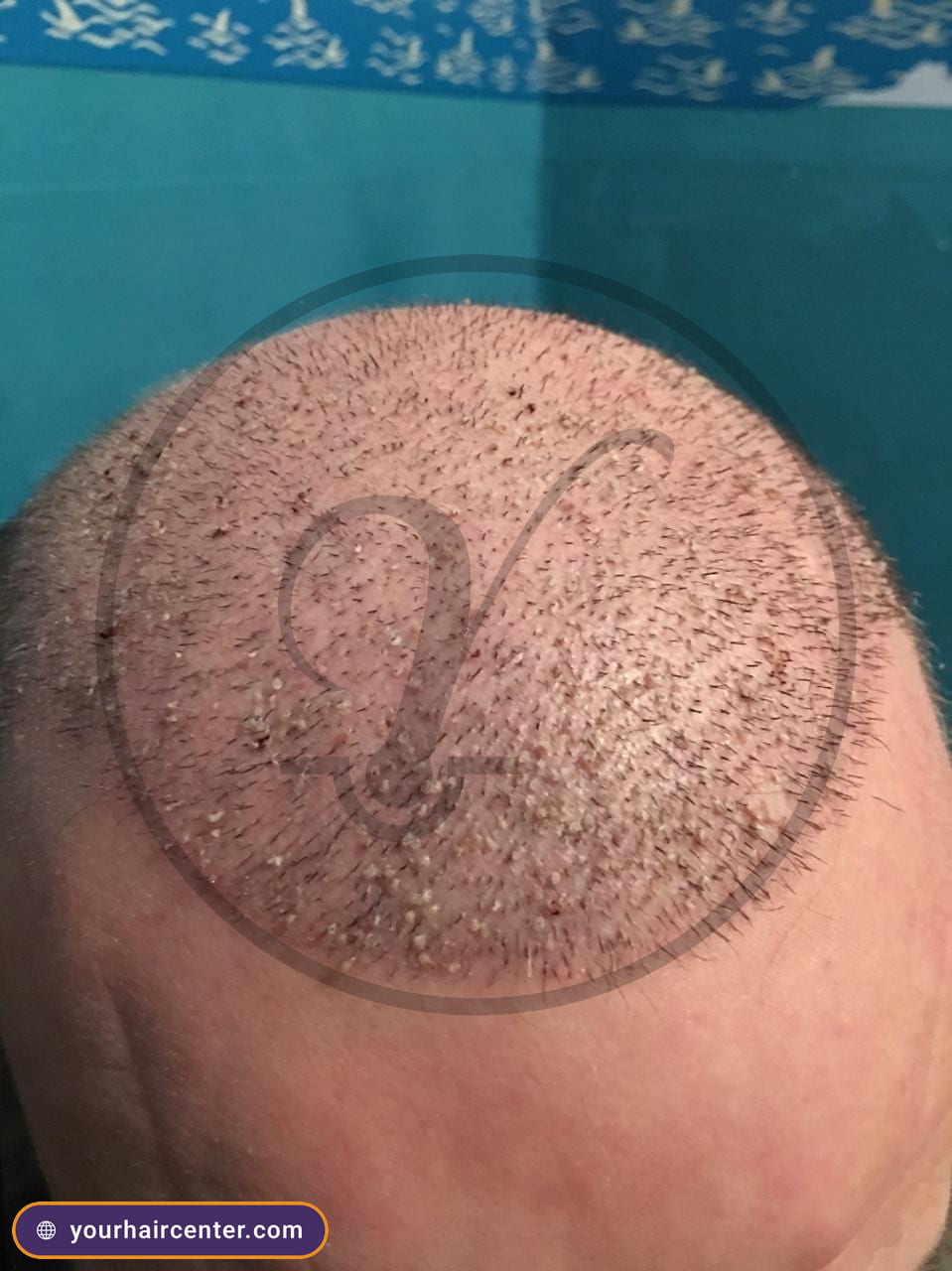
Days 4 to 7 are the visually rough part of the sapphire FUE recovery, and honesty helps more than reassurance here. By day 4 to 5 the crusts are fully formed at every recipient site, showing up as dark or rust-colored points around each graft. They are smaller in diameter than the crusts a steel blade leaves, because the sapphire recipient channel was 1.0 to 1.3 mm rather than 1.5 to 2.0 mm, but the area still scabs. Smaller incisions do not mean no incisions.
The single most important rule of this entire phase of sapphire FUE recovery is not to help the crusts along. The wound-healing data is blunt about why: pulling on an adherent scab dislodged a graft through day 5 of recovery, and crusting actually extends the window during which grafts can be knocked loose.[4:2] Your ongoing gentle washes are softening those crusts in preparation for the natural fall window that opens around day 8, and that is the only assistance they should get.
Do not pick, scratch, or peel a scab off early, however tempting it gets. A crust that comes away on its own after day 8 leaves the graft behind. A crust you pull at on day 5 can take the graft with it.
Keep sleeping with your head elevated, and keep headwear loose. What is worth a message to the team is a crust that disappears days before the expected window, any pus or yellow discharge, or a fever that returns after it had settled. If you want the cross-technique deep dive on managing crusts specifically, the dedicated hair transplant scabs guide covers scab care across all FUE methods, while this article stays on the sapphire FUE recovery clock.
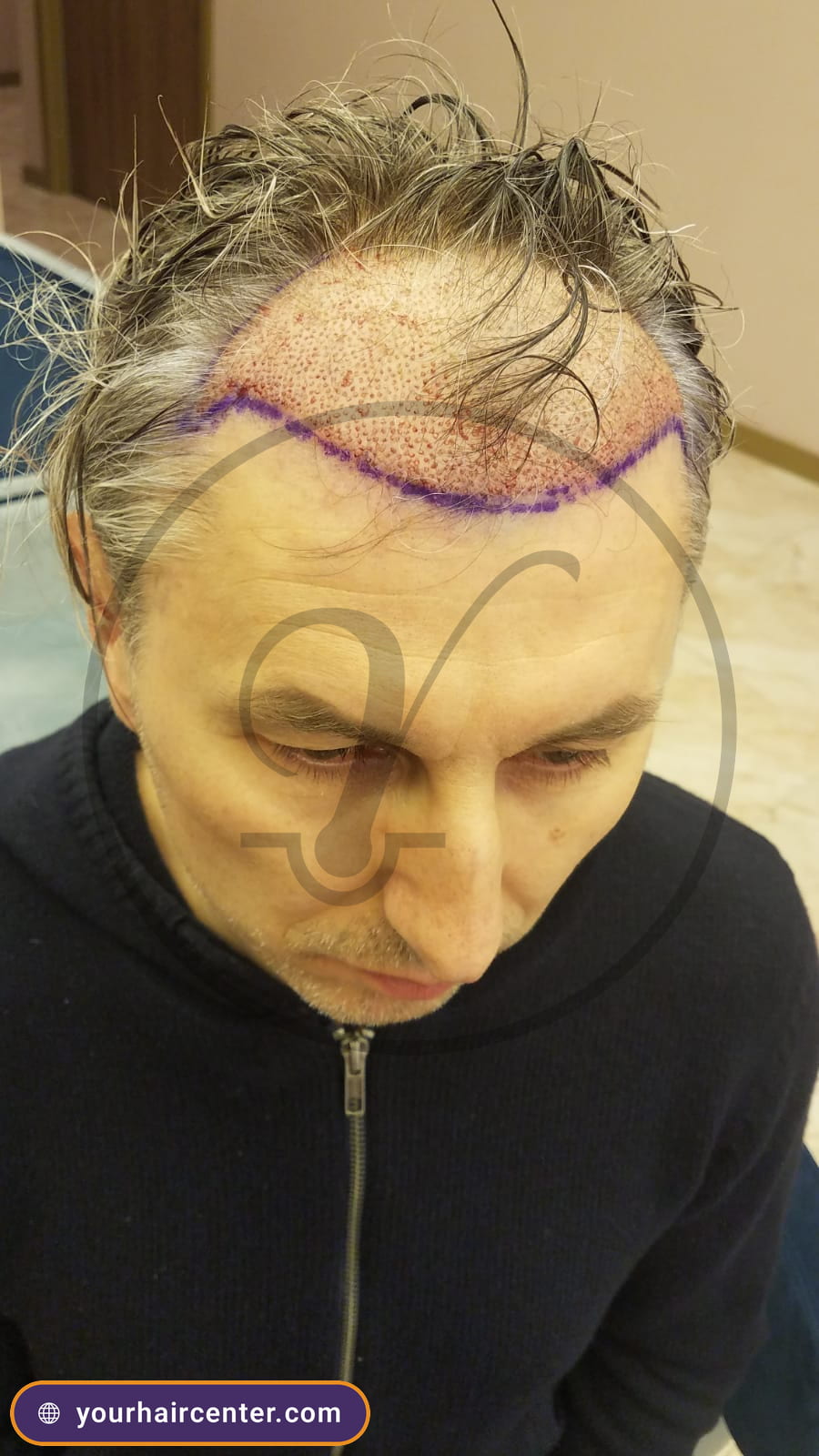
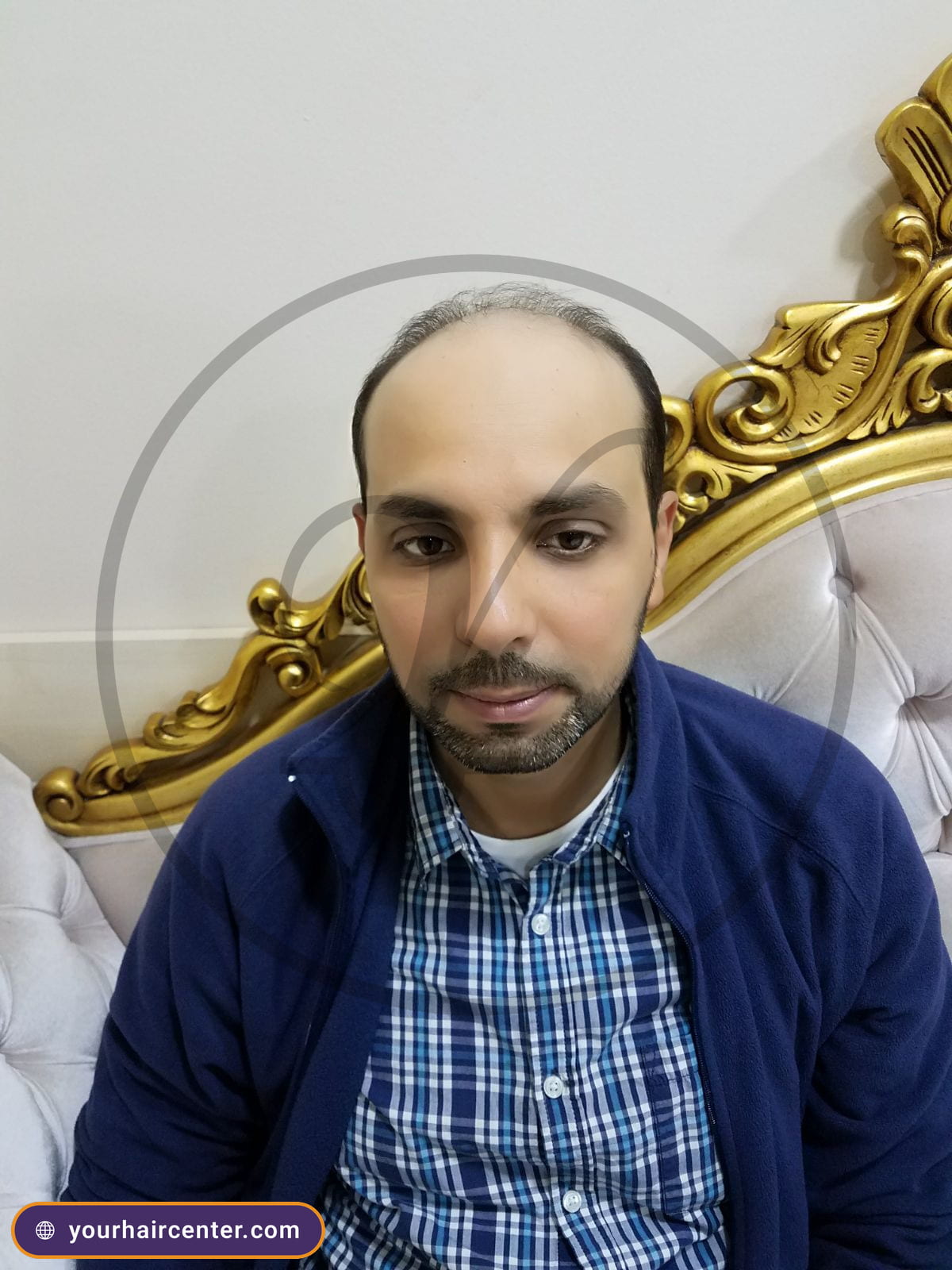
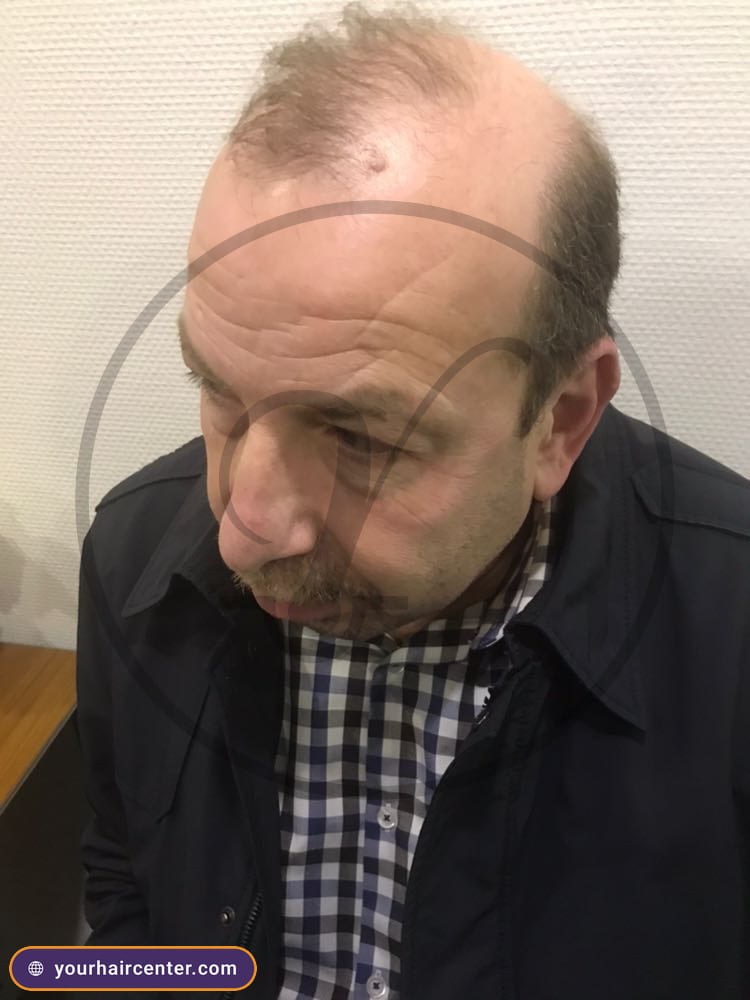
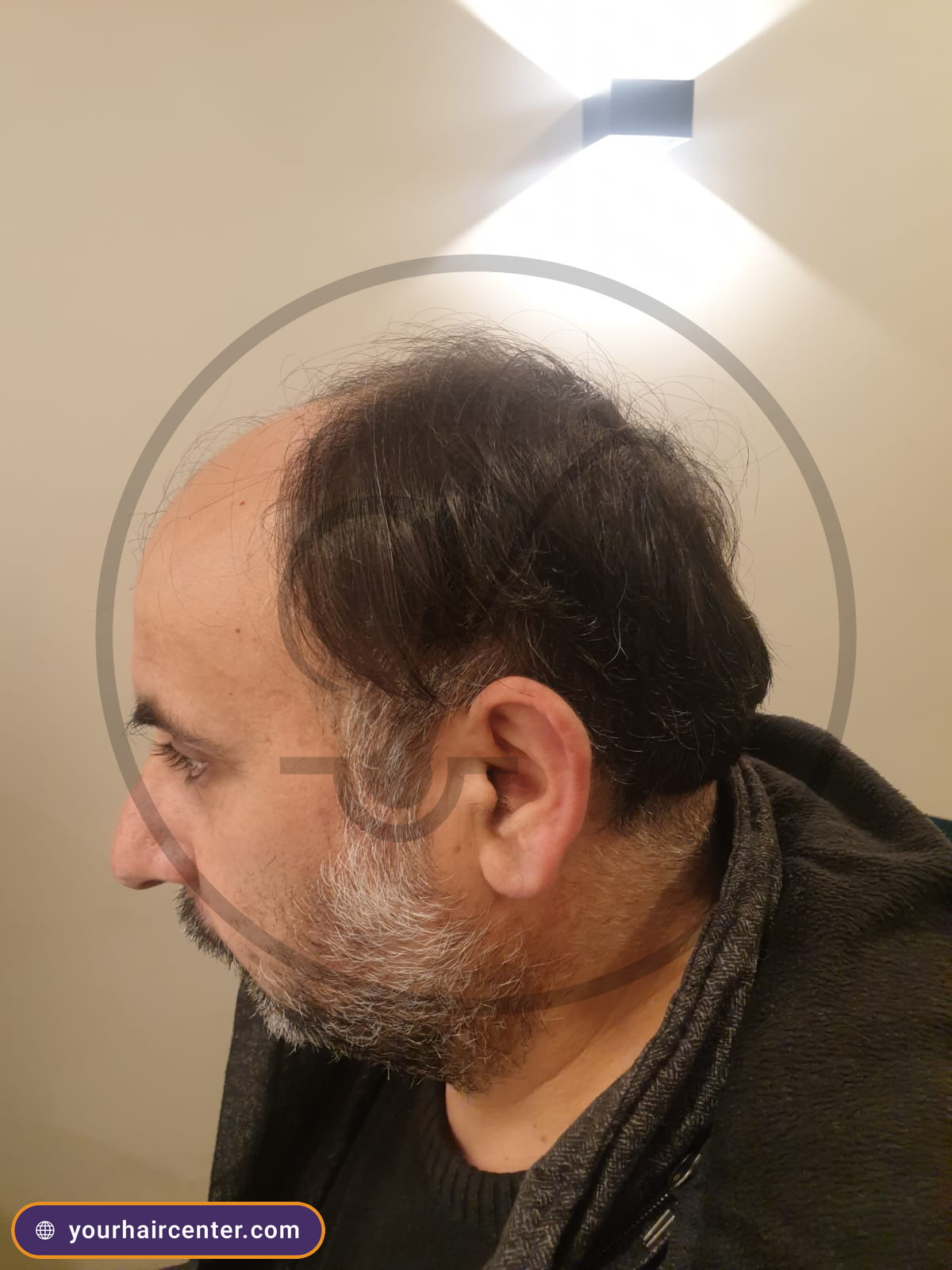
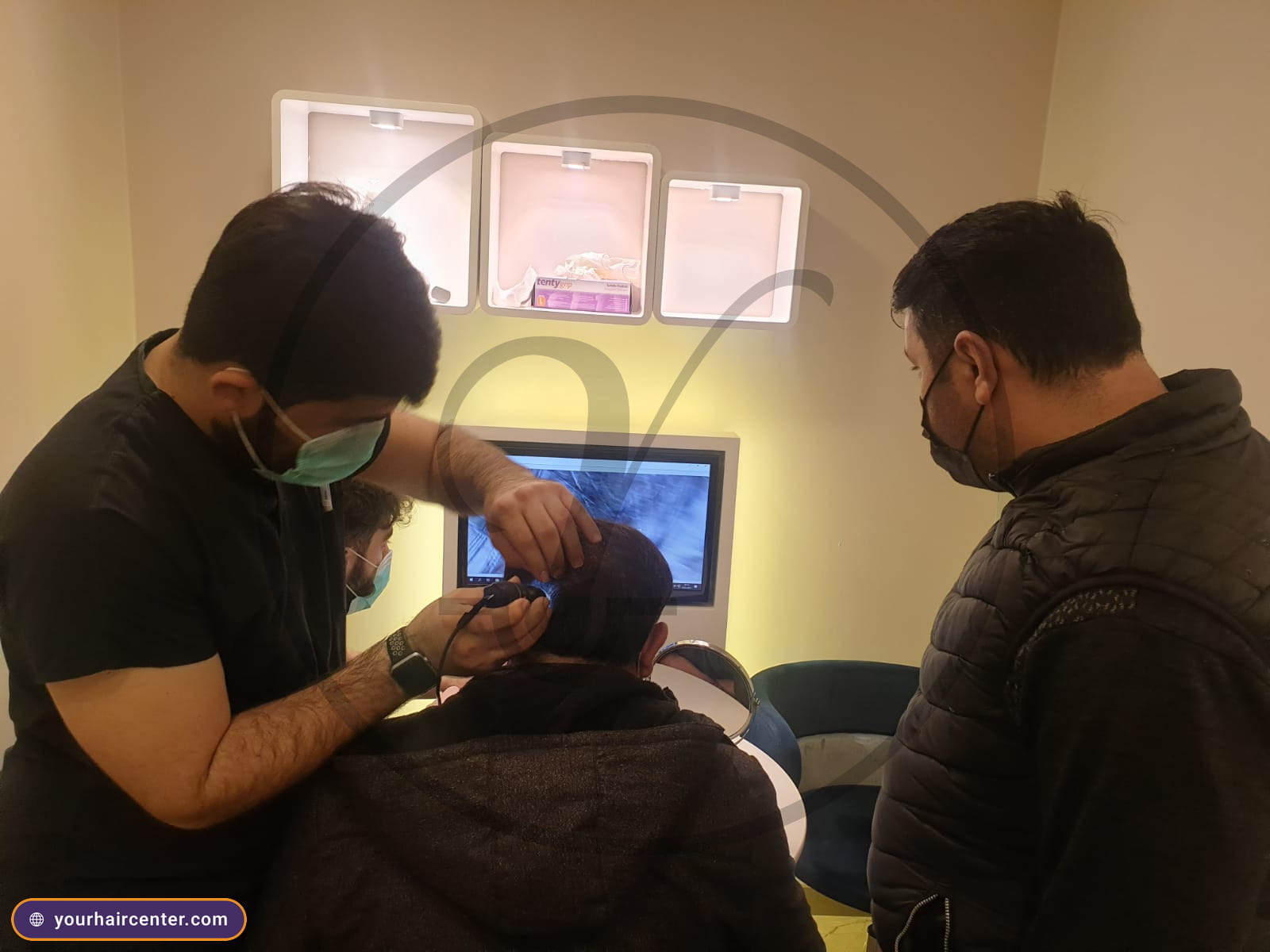
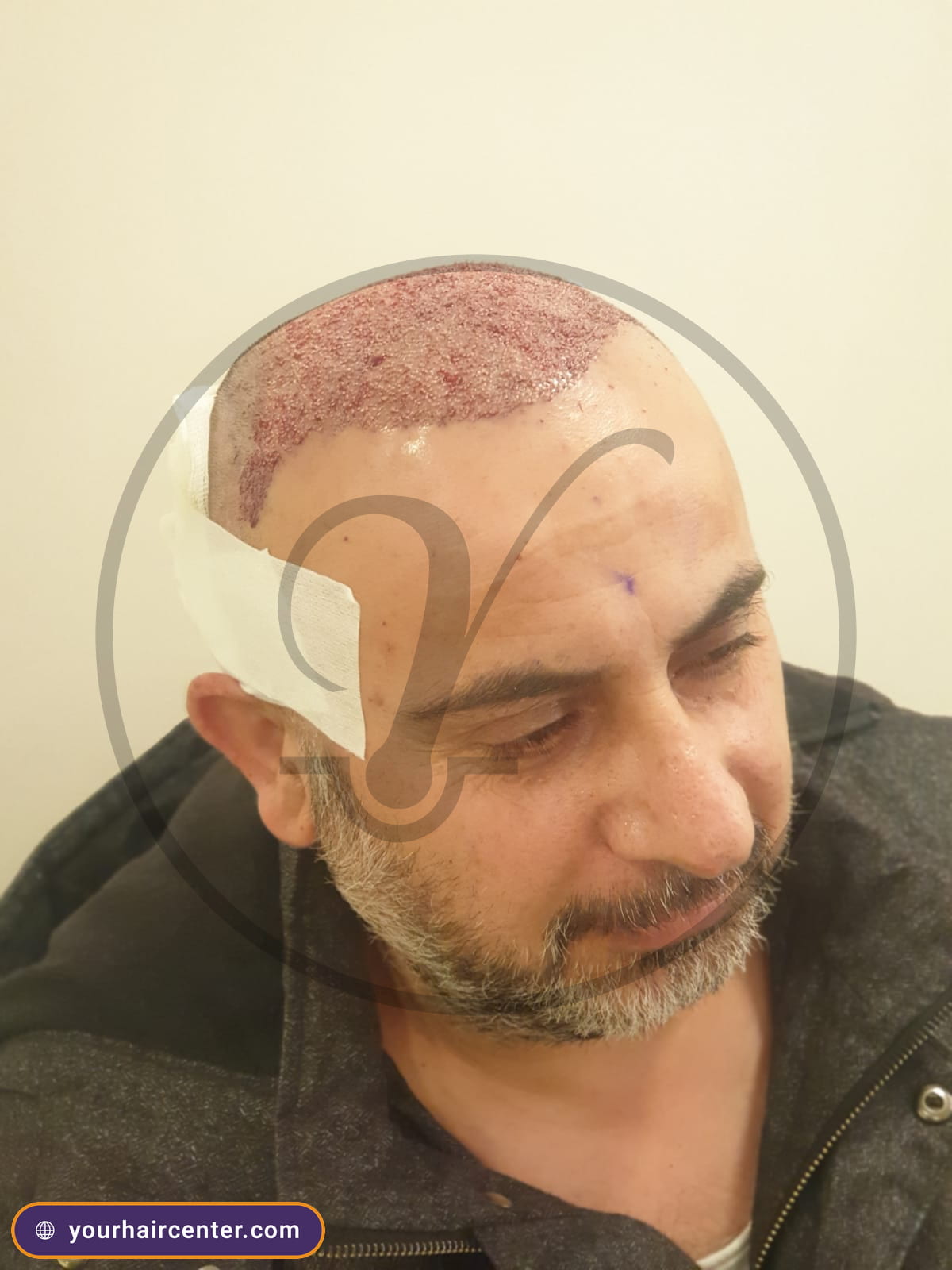
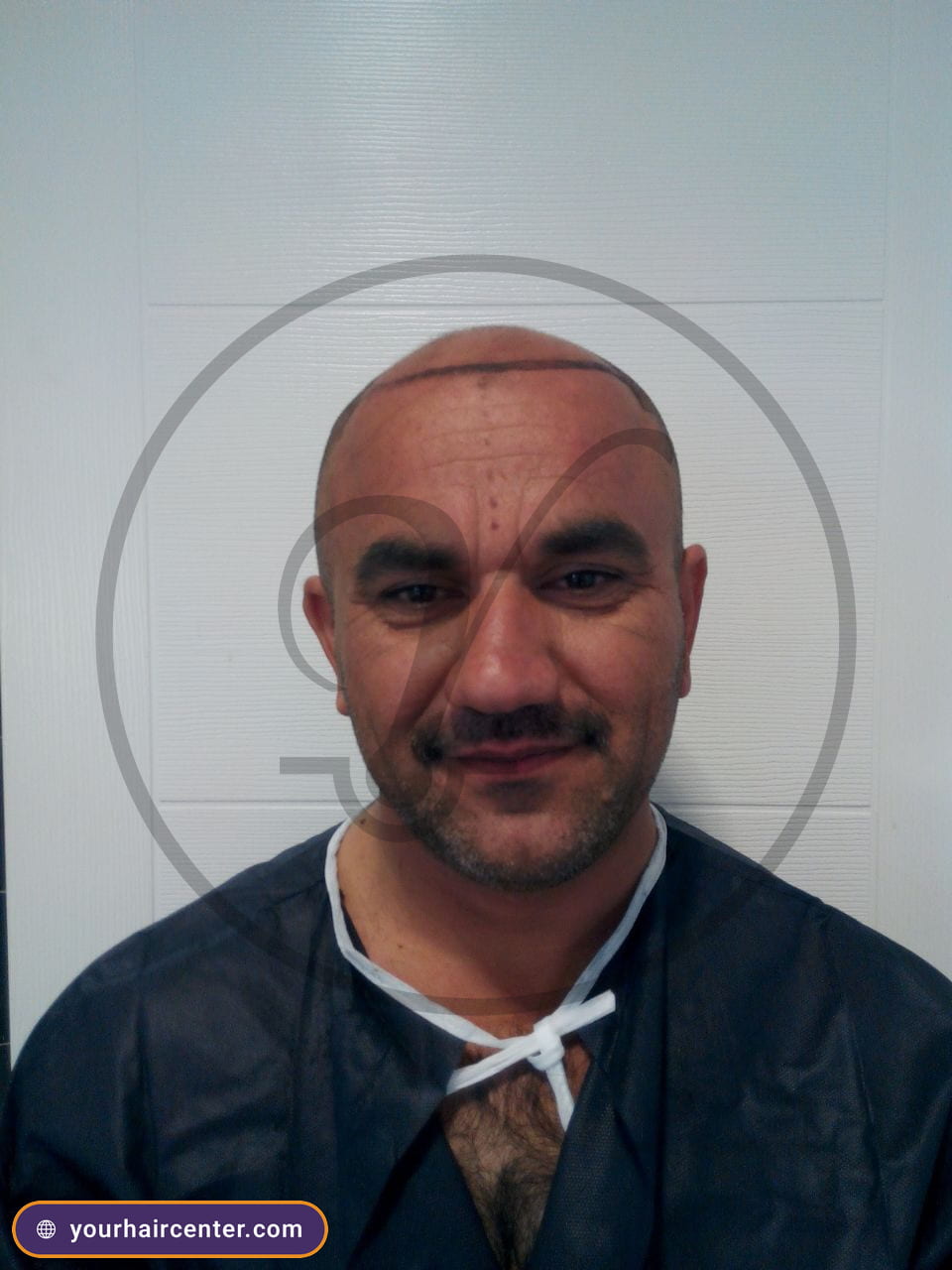
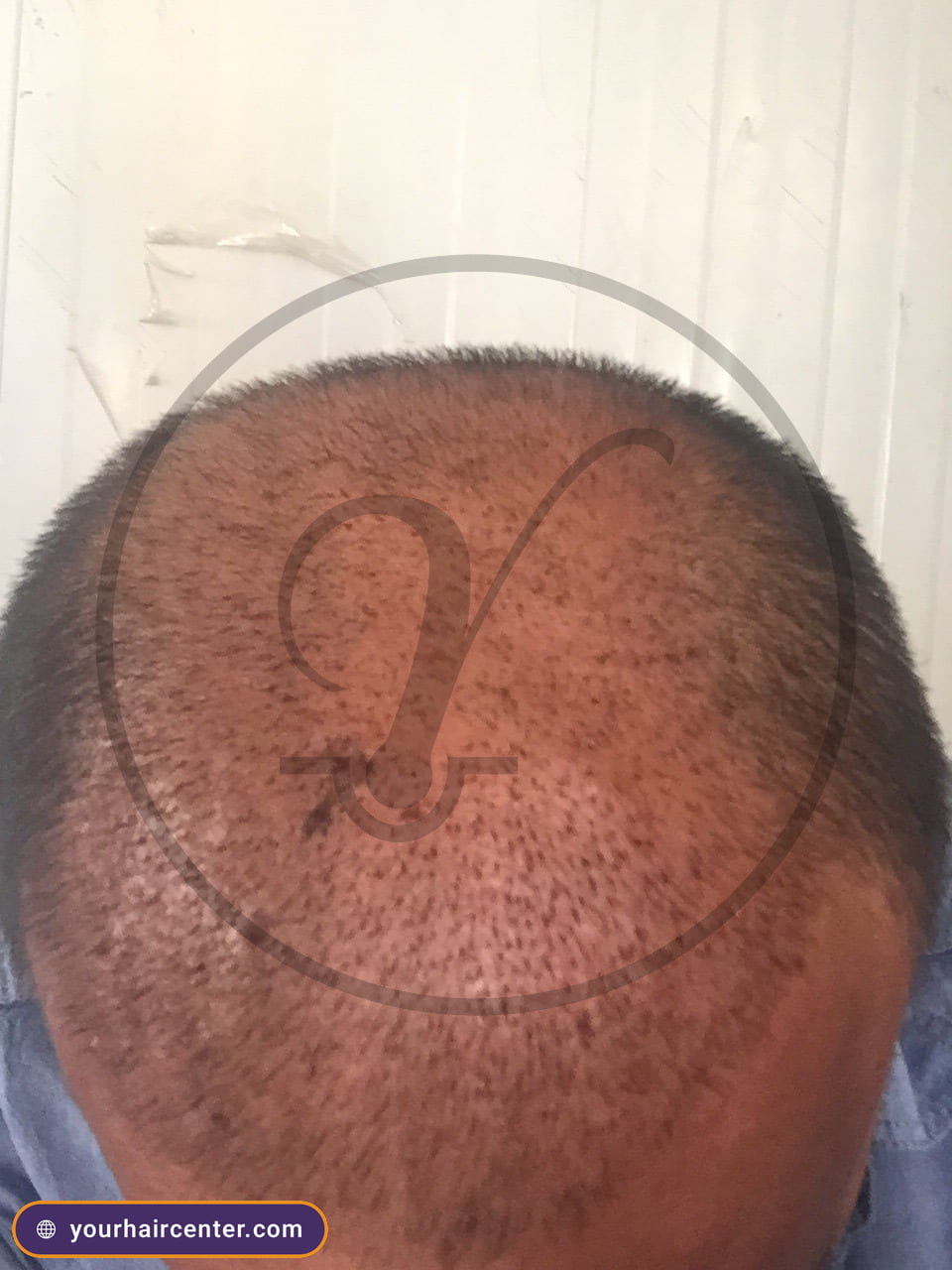
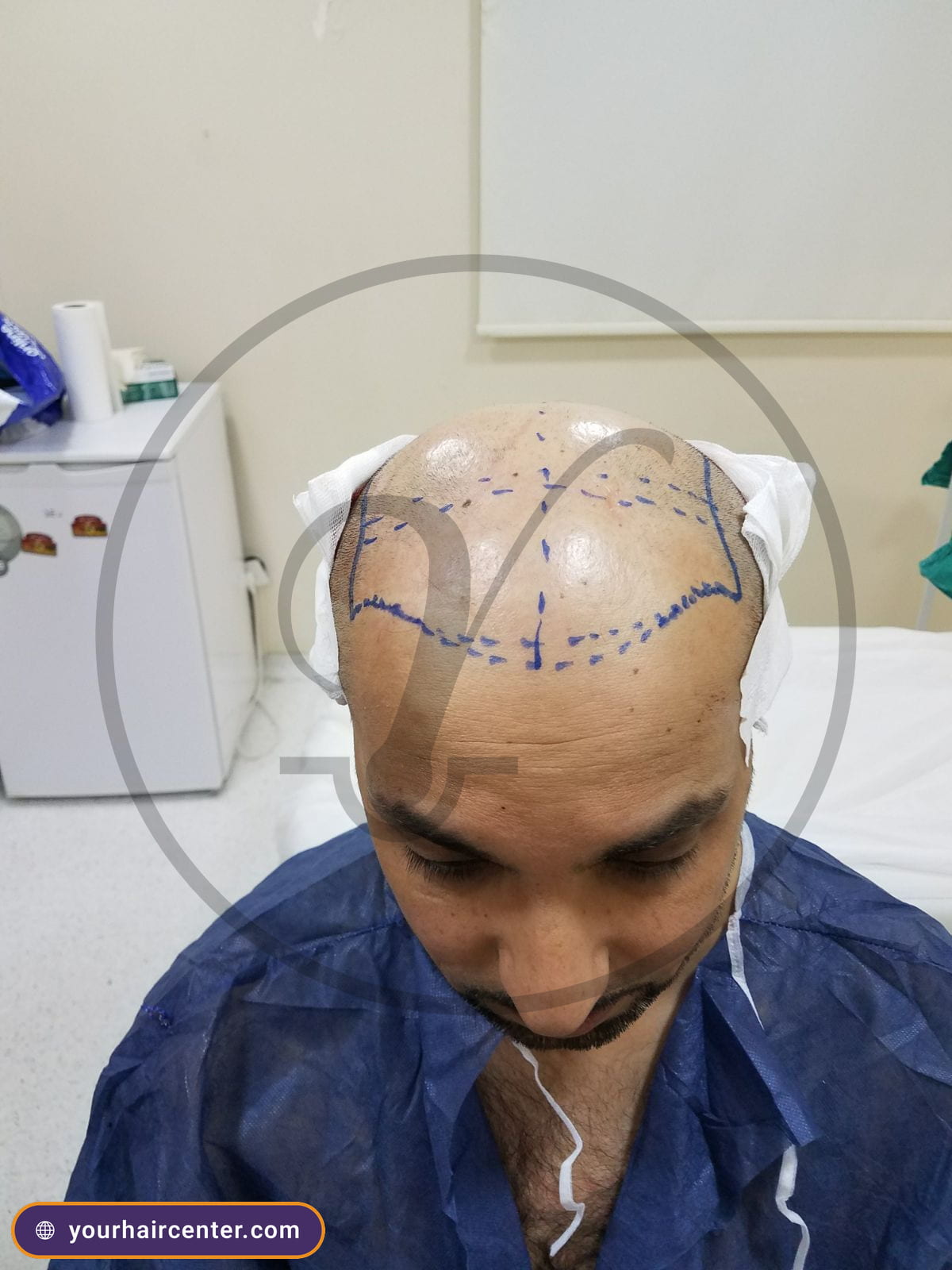
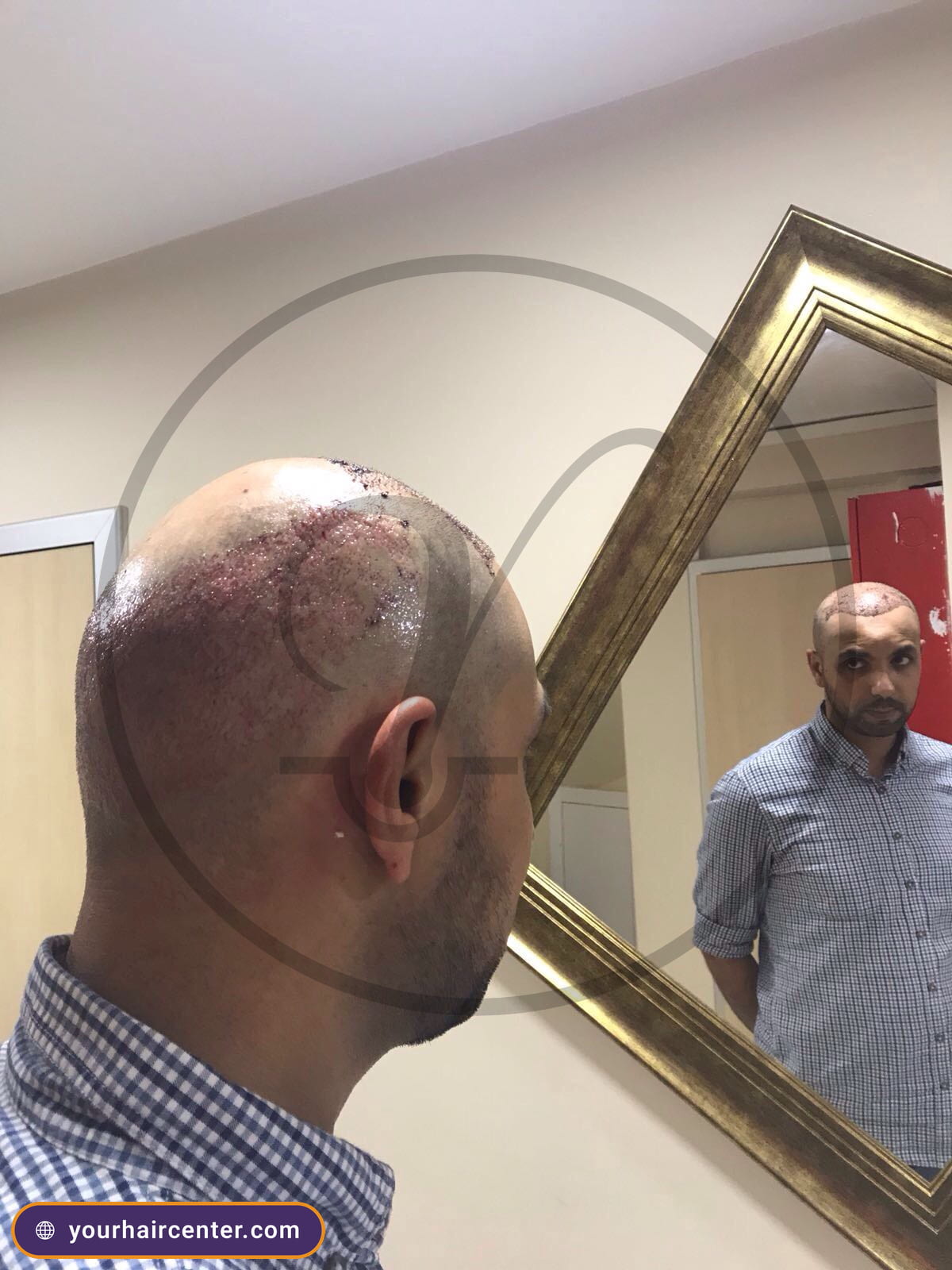
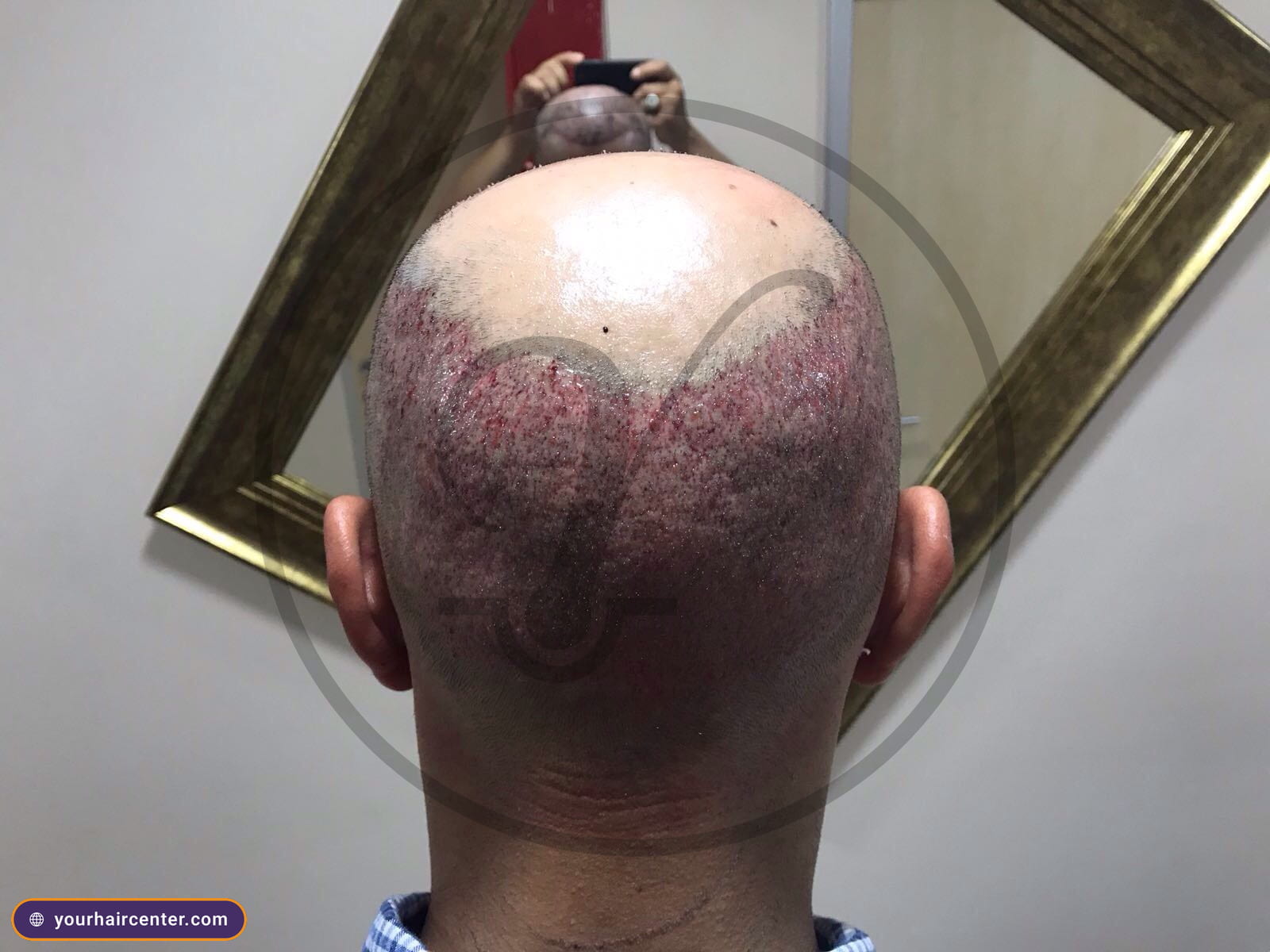
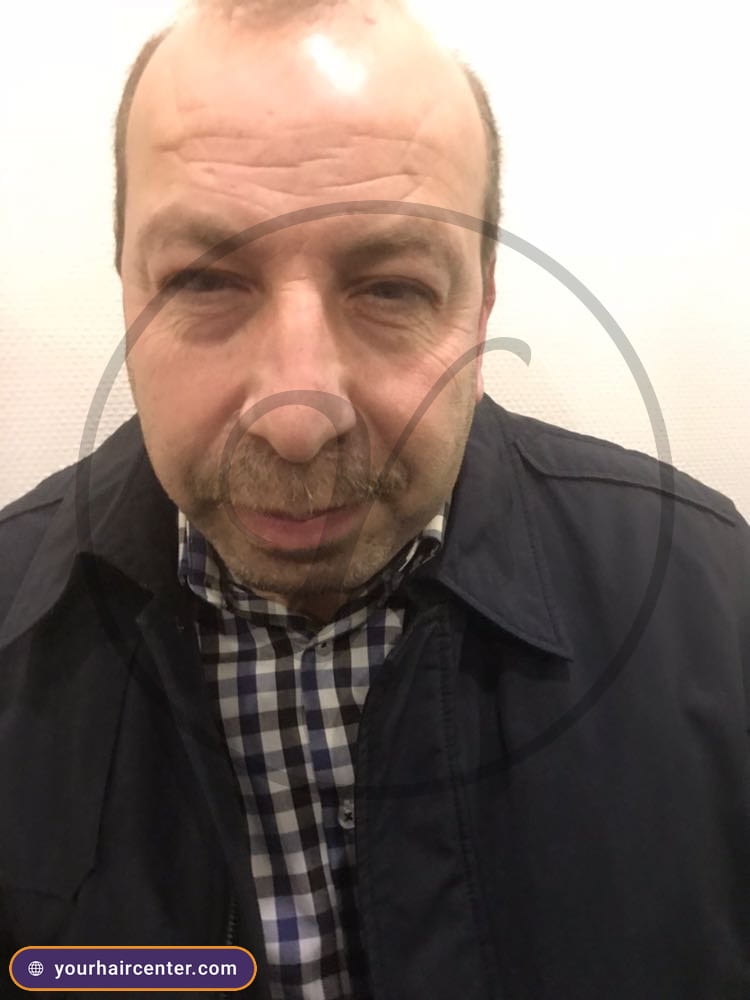
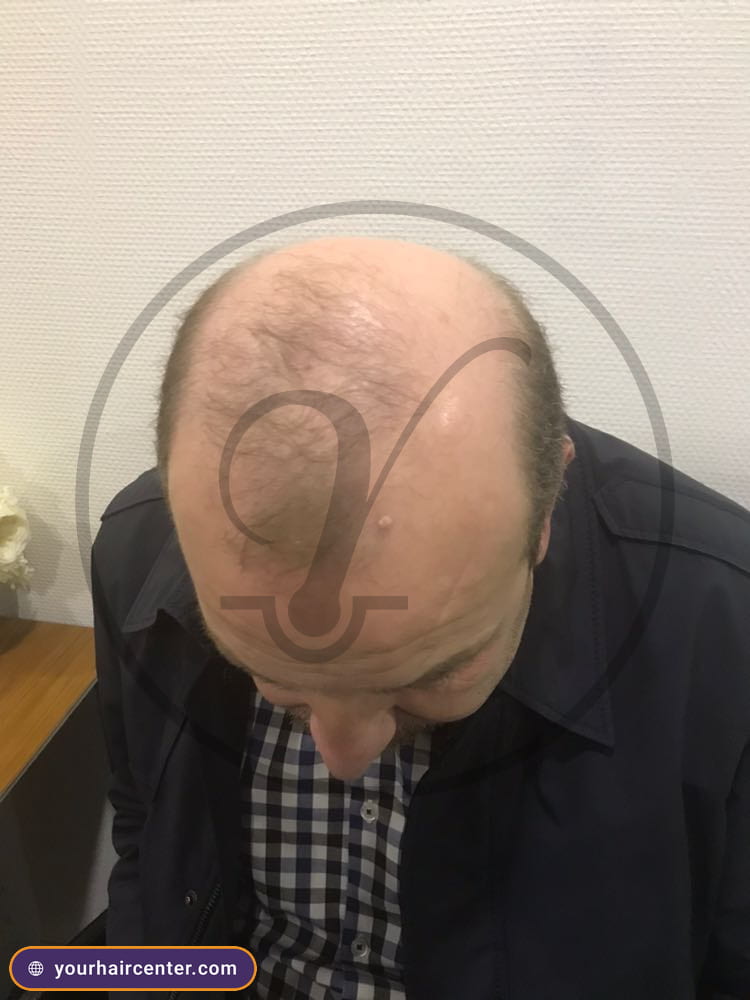
Real results from our patients’ archive. Photos exactly as captured at our accredited partner clinics, with no filters and no retouching. Browse more cases in our photo gallery.
This is the band of the sapphire FUE recovery time that patients wait for. Across days 8 to 14 the crusts enter their natural fall window and are typically gone by around two weeks, which lines up with the documented 5 to 14 day crust-shedding range.[2:3] Just as importantly, the grafts themselves are now secure. By day 9 they are no longer at risk of being dislodged,[4:3] so the constant low-grade anxiety of the first week of sapphire FUE recovery eases considerably.
As the crusts clear, the recipient area shows as healing-pink skin rather than scabbed-over patches. The donor area at the back and sides tends to settle faster than the recipient zone, since donor crusts are usually rubbed away cleanly by day 5 to 7.[3:2] Around day 14 your clinician will typically clear you to transition off the medical shampoo, and normal sleeping positions are fine again.
Activity is the other half of this window in the sapphire FUE recovery time. Light activity and desk work are appropriate from as early as day 3 to 5,[5:2] so by days 10 to 14 most ordinary daily life is back to normal. The hard limit that remains is intensity: genuinely strenuous exercise and heavy lifting should wait until about three weeks, when sweat and exertion no longer threaten the healing field.[5:3] Keep direct sun off the scalp for the first month and wear a brimmed hat outdoors, because healing-pink skin is still photosensitive.[10]
A common question deserves a direct answer. Will you look normal at day 10? For most people the fair reply is "close." The crusts are shedding or gone, but a residual pink tone can linger past day 10 in some patients, and at a short haircut length that pink is the main tell.[2:4] At conversational distance, with hair grown to its usual length, day 10 to 14 is when patients stop feeling like they are visibly in recovery. A day-14 photo update through the medical follow-up channel is a good checkpoint to confirm your sapphire FUE recovery is on track.
Real results from our patients’ archive. Photos exactly as captured at our accredited partner clinics, with no filters and no retouching. Browse more cases in our photo gallery.
If the first two weeks of sapphire FUE recovery are about crusts, the next phase is about a psychological gut-punch that catches most patients off guard. Within roughly the first month, the transplanted hairs shed. The service page describes this stage plainly: "Shock loss of the transplanted hair, a completely normal phase. The follicles settle under the skin and begin their new growth cycle." This is the moment many patients feel they look worse than before surgery, and understanding it in advance defuses most of the worry.
Here is what is actually happening. The implanted hairs shed within the first weeks because the visible shaft detaches, but the follicle root stays anchored and dormant, then re-enters its growth cycle. Shedding of the implanted hairs is expected and the hairs take several months to regrow.[7:2] A milder shedding of the surrounding native hairs near the recipient area can also occur, typically beginning at week 3 to 4, and it is transient.[6:2]
What is not normal, and what is worth raising with the team, is a completely bare recipient area past month 2 with no fine hair appearing at all, or scalp redness that persists well past week 6. Month 1 is the hardest stretch of sapphire FUE recovery emotionally, and it is precisely why the structured medical follow-up cadence exists. By the time fine regrowth starts, most patients have stopped thinking about the surgery at all. The sapphire FUE hair transplant recovery stages list this phase as expected, not as a setback.
From here the sapphire FUE recovery time stops being a daily concern and becomes a patient waiting game with clear checkpoints. The follicles that shed during shock loss begin pushing out new hairs, which grow at roughly one centimeter per month, so the full result genuinely takes a year or more to appear.[8:2]
By month 3, the service page notes that "New hair begins to grow. Fine, soft hairs start appearing in the transplanted areas." This matches the published expectation that new hairs typically appear at 3 to 6 months after the shock-loss shed.[7:3] These first hairs are fine and soft, and their texture and density both mature over the following months, so judging the result at this stage is premature.
By month 6, the picture is described as "Noticeable growth and a clear transformation. Hair continues to gain density and thickness." The bulk of the visible change happens across months 6 to 9, with finer hairs continuing to thicken afterward. Clinicians typically monitor and photograph results across the 6 to 12 month window of sapphire FUE recovery for exactly this reason.[7:4]
By month 12 you reach what the service page calls the "Full final result. Natural density and a permanent look that is indistinguishable from your own hair." This is the closing checkpoint of the sapphire FUE recovery time, and most patients hit it near the one-year mark. If month 6 arrives with very little regrowth, or month 12 still shows clearly patchy density, that is the point to open a review conversation rather than to keep waiting. To see what these checkpoints actually look like across real cases, the sapphire FUE before and after timeline is the visual companion to this prose-based clock.
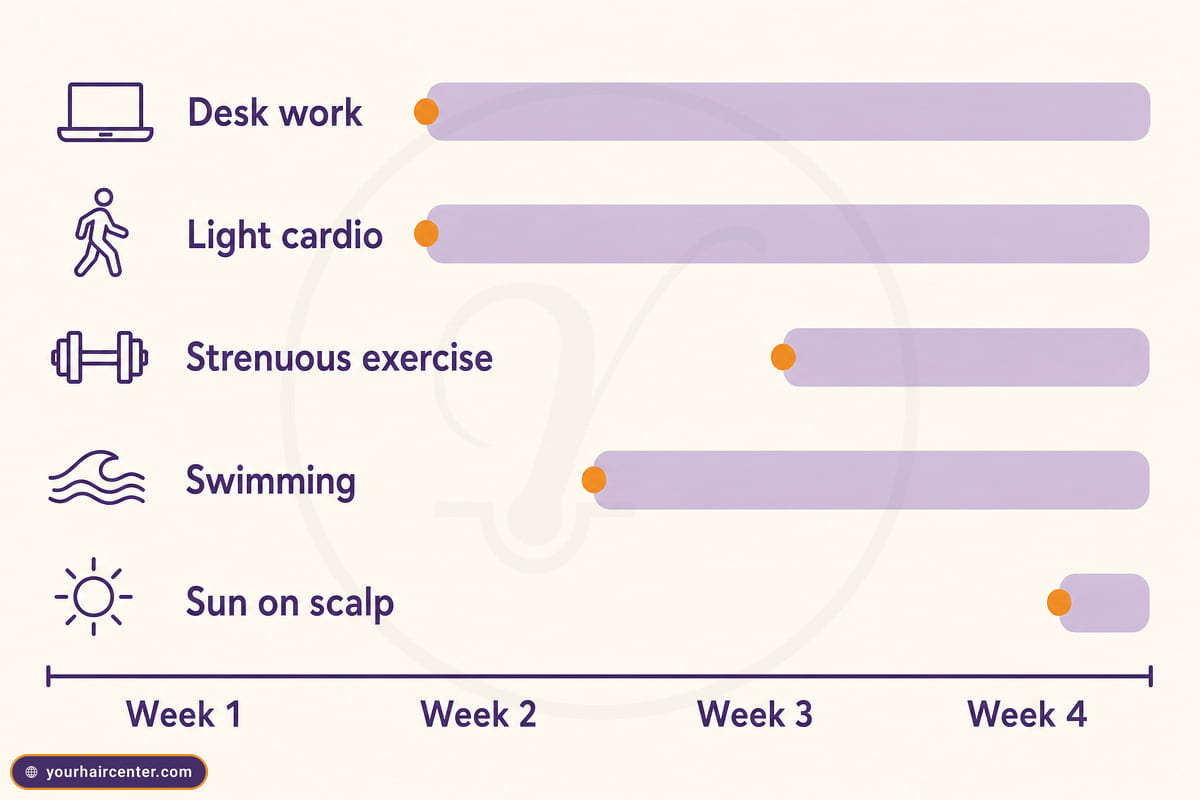
This is the section for planning time off, and it is where the sapphire FUE recovery time turns into an actual schedule. Below is the calendar you can plan against, with concrete days where the evidence supports a concrete day and an honest "confirm with the team" where it does not. Anchoring your gym schedule and PTO to real numbers is the whole point of mapping the sapphire FUE recovery time in the first place.
| Activity | Earliest resumption | Why |
|---|---|---|
| Desk or remote work | Days 3 to 5[5:4] | Light activity is fine once the first wash is done |
| Office work, in person | Days 3 to 5, hat optional | Same window, scabs may show up close until day 10 |
| Light cardio, walking | Days 3 to 5[5:5] | Light activity band, no sweat-soaking intensity |
| Strenuous exercise, lifting | About 3 weeks[5:6] | Sweat and exertion can stress the healing field |
| Swimming, full immersion | 2 to 4 weeks[11] | Avoid submerging the head while sites heal |
| Direct sun on scalp | After about 1 month[10:1] | Healing skin is photosensitive |
| Hair dye, chemical products | Several weeks, confirm timing | Wait long enough for grafts to fully anchor |
| Alcohol | Confirm timing with the team | It can thin the blood and slow healing |
| Sauna, steam, contact sports | Confirm timing with the team | Heat and impact both carry early-phase risk |
A few of these deserve a note. Light activity and desk work genuinely are appropriate within the first week of sapphire FUE recovery, while the head-water immersion limit of two to four weeks and the strenuous-exercise hold of about three weeks are the ones most worth respecting.[5:7][11:1] Sun exposure is the quiet one people forget: keep the scalp covered or shaded for the first month.[10:2] For hair dye, chemical products, alcohol, sauna, and contact sports, the published evidence does not pin an exact day, so the right move is to confirm the timing for your case rather than trust a number you read online.
For female patients searching the sapphire FUE recovery time as it applies to them, the calendar is identical. The one practical difference is discretion: longer hair covers the recipient area through the day-7 to day-14 visible-crust window far more easily, which many women find makes the return to normal life smoother. For anything case-specific, a quick WhatsApp message to the team about your recovery timing gets you a personalized answer.
Not in a way you can plan around. The sapphire channel is 1.0 to 1.3 mm against 1.5 to 2.0 mm for steel, so there is less tissue trauma and the crusts are smaller, but they shed within the same documented 5 to 14 day window as classic FUE.[2:5] Plan the time off for sapphire FUE recovery on that window whichever blade is used. Both sit within the broader family of hair transplant techniques, and the healing differences between them come down to incision geometry more than anything else.
Most patients look close to normal by day 10 of sapphire FUE recovery, though not always fully. The crusts are usually shedding or gone within the 8 to 14 day window,[2:6] but a residual pink tone in the recipient skin can linger past day 10 in some people. At a normal haircut length and at conversational distance, day 10 to 14 is when patients generally stop feeling visibly in recovery.
Exercise is one of the most-searched questions about sapphire FUE recovery, and the answer splits in two. Light activity, including walking and gentle movement, is appropriate from day 3 to 5.[5:8] Genuinely strenuous exercise and heavy lifting, where sweat and exertion could stress the healing field, should wait until about three weeks after the procedure.[5:9] If your routine sits somewhere in between, confirm the timing with the clinical team.
Scabs are the most visible part of sapphire FUE recovery, and they follow a tight schedule. Crusts form fully by day 4 to 5, then shed naturally between day 5 and day 14, with the smallest follicular-unit crusts often falling at day 4 to 6 and larger ones taking a little longer.[2:7][3:3] The key rule is to let them fall on their own. Pulling a crust before the grafts are anchored can dislodge a graft.[4:4]
Return to work is the part of sapphire FUE recovery most patients budget their time off around. Desk-based and remote work is realistic from day 3 to 5, once the first medical wash is done.[5:10] If your role is in person and customer-facing, you may prefer to wait until the crusts are less visible up close, which is typically around day 10. Physically demanding jobs follow the strenuous-exercise rule and should wait roughly three weeks.[5:11]
Concrete days beat the generic "few weeks" every clinic page repeats. Use the day-by-day sapphire FUE recovery time in this guide to schedule your PTO, gym sessions, swim trips, and any visible-scalp social plans with confidence, and treat the calendar as a map rather than a guarantee. If your own sapphire FUE recovery diverges from the timeline, the clinical team is the right first call. For a case-specific recovery plan built around your schedule, start with a sapphire FUE hair transplant evaluation, or send a quick WhatsApp message about your recovery timing.
Edema peaks around 2 to 3 days after surgery and resolves within 5 to 7 days. "Complications in follicular unit excision hair transplantation: current evidence and practical approaches," PMC. https://pmc.ncbi.nlm.nih.gov/articles/PMC12909172/ (opens in new tab) ︎ ︎
Crusts flake off 5 to 14 days after surgery, with smaller follicular-unit scabs often falling at 4 to 6 days. International Society of Hair Restoration Surgery, "FUE, What Is It." https://ishrs.org/fue-what-is-it/ (opens in new tab) ︎ ︎ ︎ ︎ ︎ ︎ ︎ ︎
Wash the scalp without rubbing from about 24 hours after surgery; gently rub the donor area to remove crusts 5 to 7 days after surgery. "Hair Transplantation," StatPearls, NCBI Bookshelf. https://www.ncbi.nlm.nih.gov/books/NBK547740/ (opens in new tab) ︎ ︎ ︎ ︎
By the sixth day, pulling on a hair no longer dislodged the graft; at 9 days postoperatively grafts were no longer at risk of being dislodged; pulling on an adherent scab dislodged a graft through day 5. "Graft anchoring in hair transplantation," PubMed. https://pubmed.ncbi.nlm.nih.gov/16442039/ (opens in new tab) ︎ ︎ ︎ ︎ ︎
Return to work and light activities at days 3 to 5; return to exercise or sports after 3 weeks. Cleveland Clinic, "Hair Transplant." https://my.clevelandclinic.org/health/treatments/21519-hair-transplant (opens in new tab) ︎ ︎ ︎ ︎ ︎ ︎ ︎ ︎ ︎ ︎ ︎ ︎
Shock loss of nontransplanted existing hair typically begins 3 to 4 weeks following surgery and is transient. "Complications of Hair Transplant Procedures, Causes and Management," PMC. https://pmc.ncbi.nlm.nih.gov/articles/PMC8719980/ (opens in new tab) ︎ ︎ ︎
Shedding of the implanted hairs typically occurs after several days and may take several months to regrow; new hairs typically appear after 3 to 6 months; clinicians monitor over the 6 to 12 month window. "Hair Transplantation," StatPearls, NCBI Bookshelf. https://www.ncbi.nlm.nih.gov/books/NBK547740/ (opens in new tab) ︎ ︎ ︎ ︎ ︎
Hairs grow about 1 cm per month, and oftentimes a year or more for the full result to appear. International Society of Hair Restoration Surgery, "FUE, What Is It." https://ishrs.org/fue-what-is-it/ (opens in new tab) ︎ ︎ ︎
Sleep with the head of the bed elevated 15 to 30 degrees during the first week to minimize swelling. "Hair Transplantation," StatPearls, NCBI Bookshelf. https://www.ncbi.nlm.nih.gov/books/NBK547740/ (opens in new tab) ︎
Avoid exposing the donor and recipient sites to direct sunlight for 1 month. "Hair Transplantation," StatPearls, NCBI Bookshelf. https://www.ncbi.nlm.nih.gov/books/NBK547740/ (opens in new tab) ︎ ︎ ︎
Avoid fully immersing the head in water for 2 to 4 weeks after surgery. "Hair Transplantation," StatPearls, NCBI Bookshelf. https://www.ncbi.nlm.nih.gov/books/NBK547740/ (opens in new tab) ︎ ︎