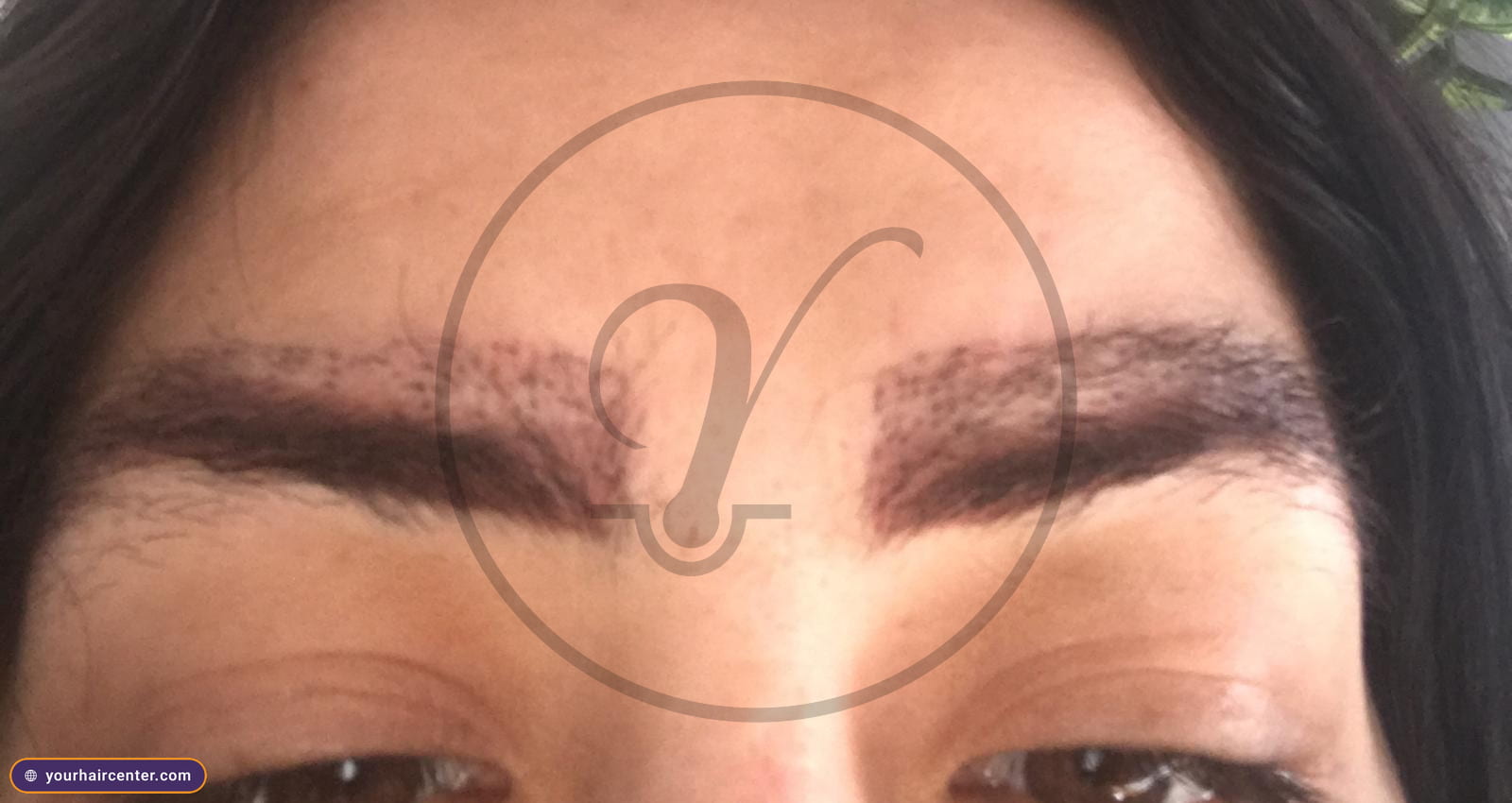
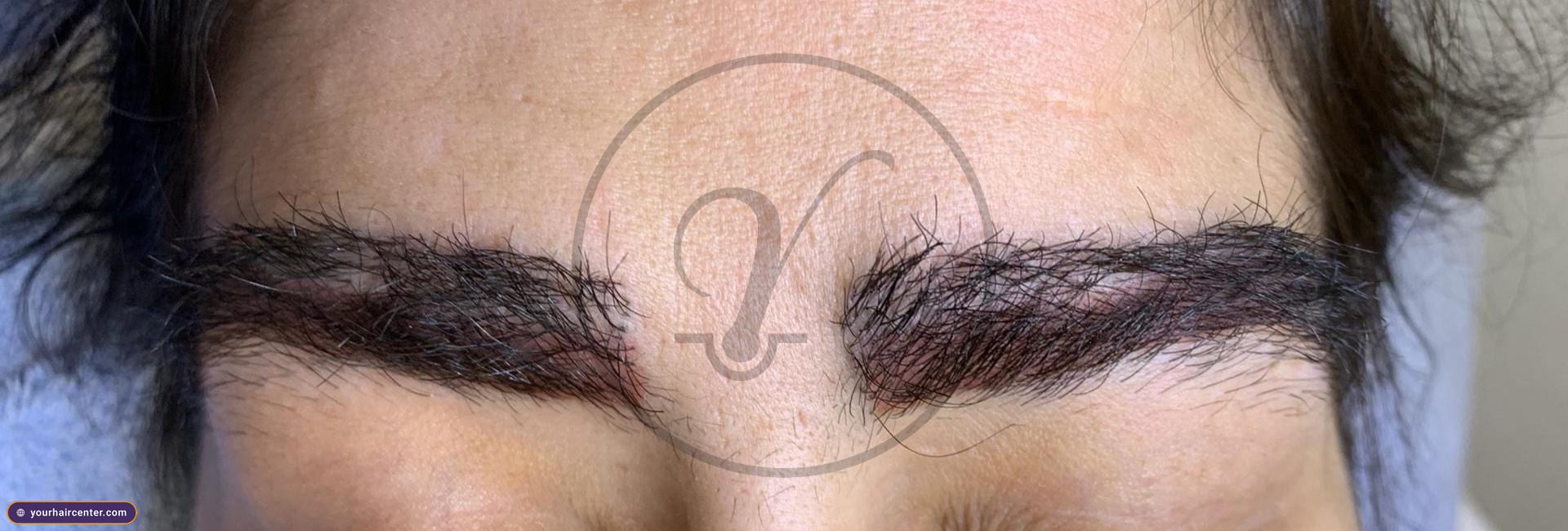
If you have a high or receded forehead and a five-figure surgical quote, you have two real options and most pages only explain one. This guide compares hairline lowering surgery with a no-shave hair transplant for women across candidacy, scalp laxity, recovery, scarring, and cost. You get a clear decision framework, a side-by-side table, and an honest three-option price view including a Turkey all-inclusive package, so you can match the procedure to your scalp rather than to a single clinic.

You have a forehead that has always felt a little too tall, or a frontal hairline that has crept back over the years, and you have just been quoted a five-figure sum for hairline lowering surgery at a plastic-surgery practice. Before you accept that number, it is worth asking a question almost nobody answers cleanly online. Would a hair transplant achieve the same lowered hairline, in the shape you actually want, for a fraction of the price? Hairline lowering surgery and a transplant both move your visible hairline forward, but they do it in completely different ways, suit different candidates, and sit at very different price points. This guide gives you a candidacy framework, a side-by-side comparison, and a three-option cost view, so you can tell which path is genuinely right for your face rather than which one a single clinic happens to sell.
What Is Hairline Lowering Surgery and How Does It Work?
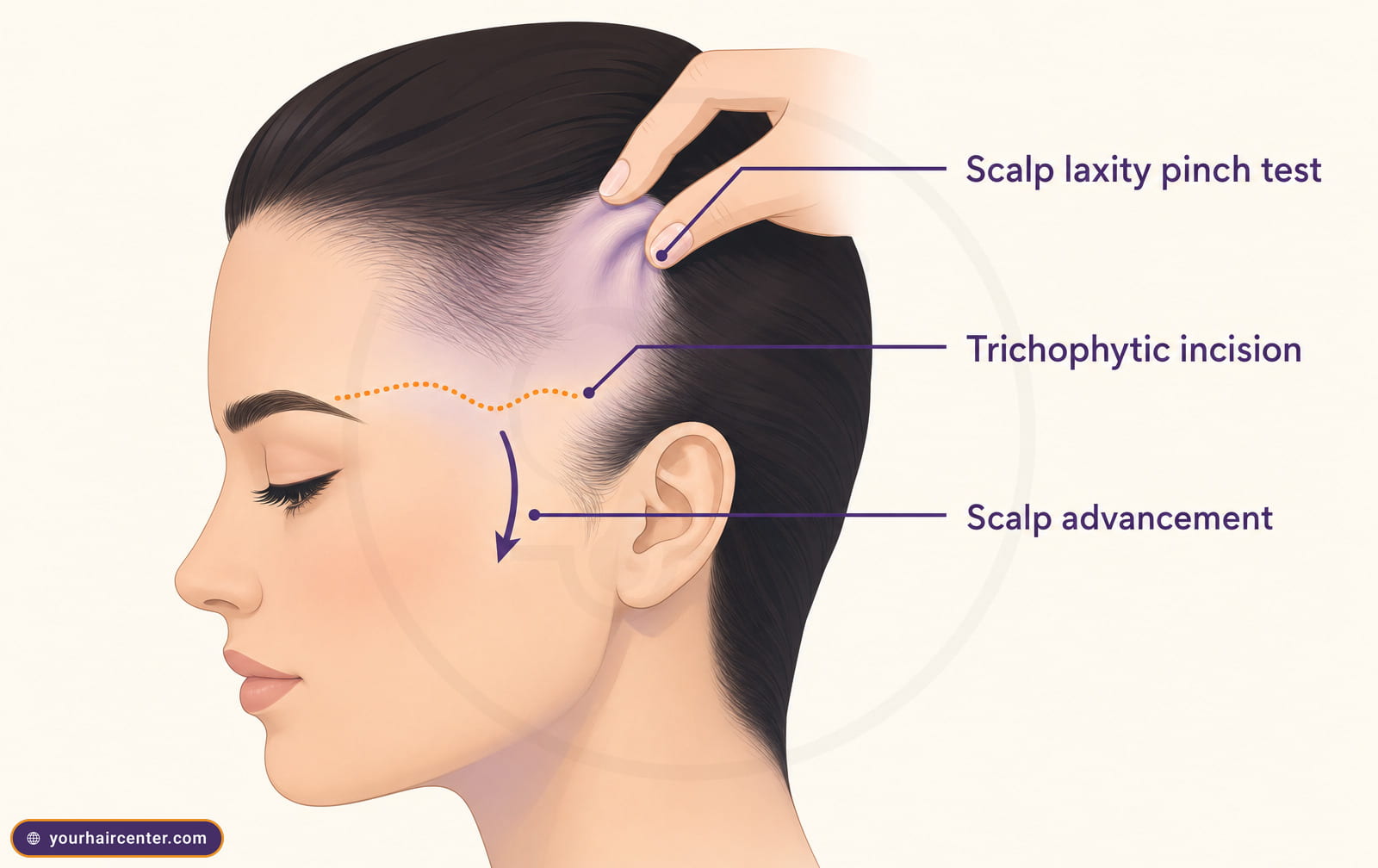
The operation, also called forehead reduction, surgically advances the scalp forward and anchors your existing hairline at a lower position, shortening the forehead. A surgeon makes an incision along the planned new hairline, brings the scalp skin forward, removes a strip of forehead skin, and closes the line so your own hair sits lower than before.[1] The typical reduction is around 2 cm.[2]
The single most important requirement is scalp mobility. Good candidates need a stable frontal hairline and a fairly to very mobile, lax scalp that can stretch forward far enough to make the operation worthwhile, which is why most candidates are women rather than men.[3] Your surgeon checks this with a simple pinch-and-slide test of the scalp at the consultation. A taut, low-mobility scalp limits how far the hairline can be advanced and may take hairline lowering surgery off the table entirely.
The incision itself uses a trichophytic technique, in which the cut is angled so that hair follicles eventually grow up through and across the healed line. Over time this makes a well-performed scar very difficult to spot, and published series describe the resulting scars as good quality in the large majority of cases.[4] The honest caveat is that the line is genuinely visible during early recovery and sits right along your new hairline, which matters a great deal if you cannot step back from work or family life for a couple of weeks.
There are real mechanical limits to what hairline lowering surgery can do. It moves your existing hairline forward in its current shape, so it cannot rebuild a receded or uneven hairline, cannot soften an angular pattern into a rounded feminine one, and cannot add density where follicles have already thinned. It is also generally a one-time operation. Because each advancement relies on scalp laxity that the previous surgery has already used up, repeat lowering is uncommon and adds scar tissue. In other words, the procedure is excellent at shortening a tall but otherwise healthy hairline, and poor at fixing anything that involves shape, recession, or thinning.
That distinction is exactly why a scalp-laxity and hair density assessment comes first. It separates the women who are textbook candidates for hairline lowering surgery from those who would get a better result from a hair transplant for women, where the hairline is rebuilt rather than slid forward.
What Does a Hair Transplant Do Differently for a High Forehead?
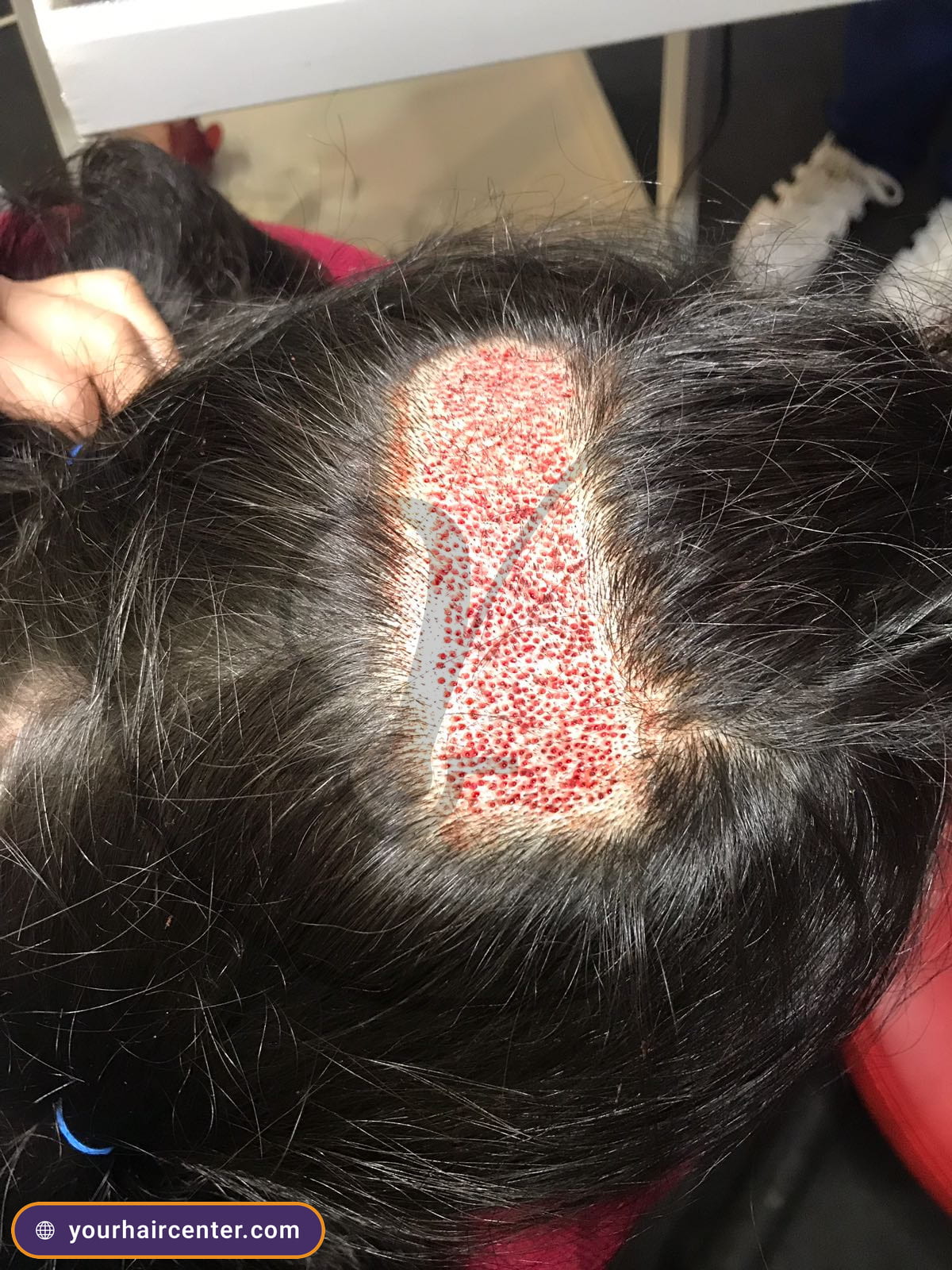
A hair transplant approaches the same high forehead from the opposite direction. Instead of cutting and advancing the scalp, individual follicles are harvested from the donor area at the back of the head and placed one by one along a newly designed hairline. At Your Hair Center a hairline like this is often placed with the DHI no-shave technique using a Choi implanter pen, which places each follicle directly between your existing hairs, so the recipient area stays unshaven. In the donor area selected hairs are trimmed one by one, or a narrow band is shaved and hidden under the hair above it. There is no incision along the new hairline, no strip of skin removed, no stitched line, and no scalp advancement.
The defining advantage is design freedom. Because the surgeon is building the hairline follicle by follicle, it can be drawn in whatever shape suits your face, rounded and softened, gently lowered, or subtly asymmetric to mirror your natural features. Hairline lowering surgery preserves the shape you already have and simply moves it down. A transplant lets you redesign the line from scratch, which is the deciding factor for many women whose concern is not only height but the outline of the hairline itself.
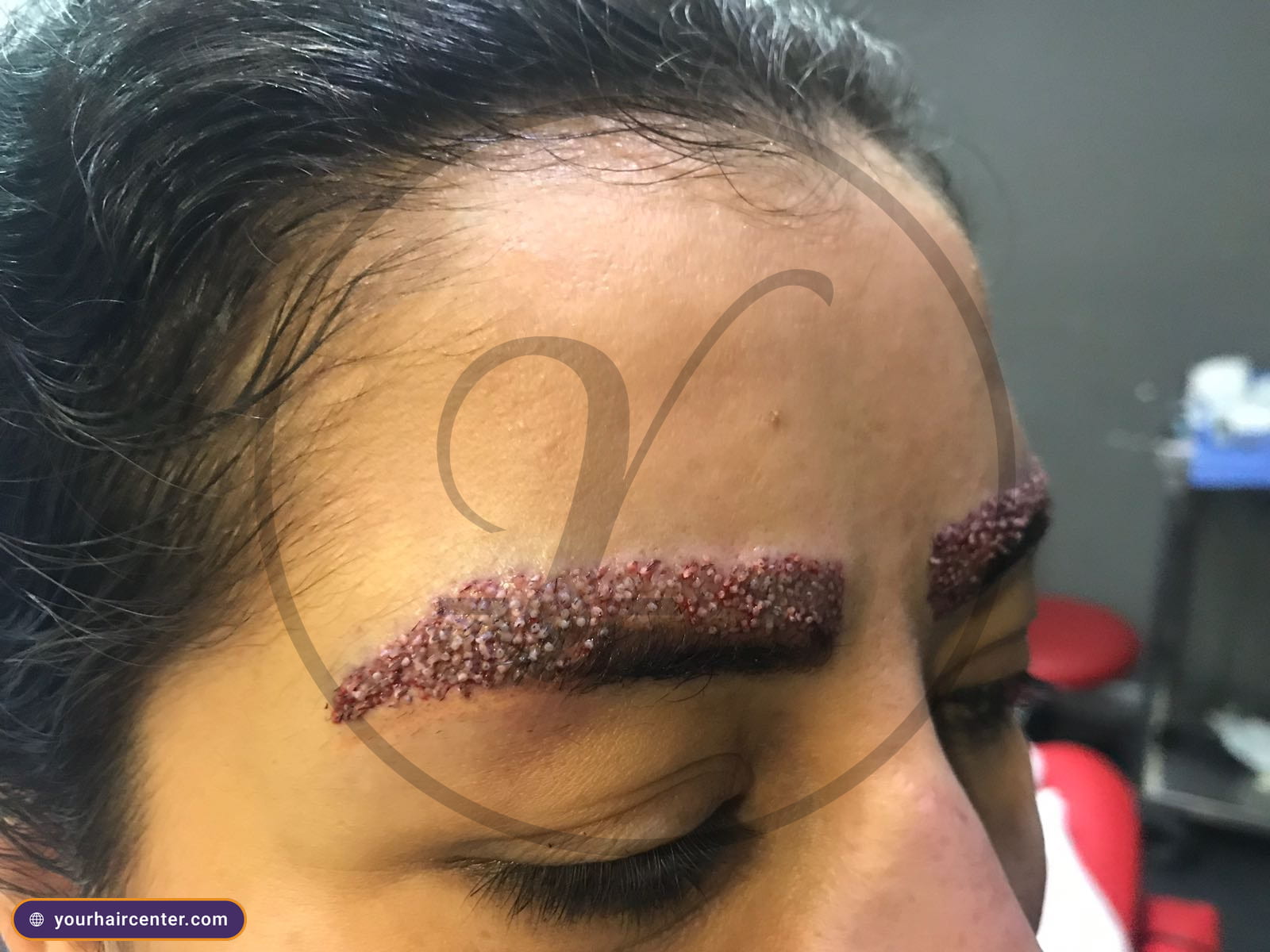
Discretion is the other major difference. With the no-shave DHI approach neither area shows a linear cut, any shaved donor band stays hidden under the hair above it, and the recipient area heals with tiny scabs rather than a linear incision. Those micro-scabs shed naturally by around day 10, and most women are back to ordinary social life within roughly the same window. For anyone who has read about the visible forehead incision that comes with hairline lowering surgery, this is often the point that tips the decision. A Sapphire FUE harvest is the alternative when a donor pattern suits it, and the unshaved technique extends the same keep-it-private logic for women who cannot tolerate any sign of a procedure at all.
For this audience the clinical setting matters as much as the choice between a transplant and hairline lowering surgery. A women’s team stays with you from the consultation through aftercare, in a calm and private environment. Because a hairline is such a personal, visible feature, many women value that continuity.
A transplant is not the right answer for everyone, though, and neither is hairline lowering surgery. It is a poor fit when hair loss is still active and unstable, when the donor area is weak or too sparse to supply enough grafts, during pregnancy or breastfeeding, or for anyone under 20. The transplanted follicles themselves are permanent, because the donor hair at the back of the scalp is genetically resistant to the hormones that drive thinning and keeps that resistance after it is moved, but the underlying pattern still has to be stable before surgery makes sense.
How Hairline Lowering and a Hair Transplant Compare
For a high forehead, the choice between hairline lowering surgery and a transplant comes down to a handful of practical trade-offs. The table below lays them out so you can see, at a glance, where each procedure wins.
| Factor | Hairline lowering surgery | Hair transplant (DHI no-shave) |
|---|---|---|
| Mechanism | Scalp advanced forward, strip of forehead skin removed, incision along the new hairline[1:1] | Follicles harvested from the donor area and placed one by one, no incision along the hairline |
| Session | One short session, typically under local or light general anesthesia | One session of roughly 6 to 7 hours under local anesthesia |
| Scar profile | A line along the new hairline that hair regrows through, described as good quality long-term[4:1] | No linear scar, only tiny micro-scabs in the recipient area |
| How much it lowers | Around 2 cm forward, in your existing hairline shape[2:1] | Adjustable, and the hairline can be fully redesigned, not just moved |
| Shape redesign | Not possible, the existing shape is preserved | Fully possible, rounded, softened, or asymmetric to suit the face |
| Recovery to social life | Stitches out around 1 week, most healing over 2 to 6 weeks[1:2] | Micro-scabs shed by about day 10, back to social life around then |
| Result timing | Immediate on the day of surgery[3:1] | Gradual, new growth from month 3, final density at 12 to 18 months |
| Permanence | Permanent advancement of your existing follicles | Permanent placement of donor follicles resistant to thinning |
| Best fit | A lifelong high but stable hairline with a lax, mobile scalp and no active loss | A high or receded hairline needing reshaping, with a stable donor area |
Neither column is the winner in the abstract. A woman with a tall but healthy hairline and a loose scalp is the textbook case for hairline lowering surgery, while a woman who wants the shape changed, has some recession, or has limited scalp laxity is far better served by a transplant. To weigh the difference against your own scalp rather than a generic chart, a hair and scalp analysis measures laxity and donor density directly, and you can see real before-and-after results for both routes.
Who Is the Right Candidate for Each Procedure?
Most online pages describe each procedure in isolation and leave you to guess which one applies to you. A clearer way to decide is to walk through the same factors a surgeon weighs at the consultation. No single answer settles it, but together these six points reliably point toward one path or the other.
- Scalp laxity. This is the gatekeeper for surgical lowering. A mobile, lax scalp that slides forward easily favors hairline lowering surgery, because the operation depends on stretching the scalp into its new lower position.[3:2] A tight, low-mobility scalp pushes you toward a transplant, which does not rely on stretch at all.
- Lifelong high versus receded. A forehead that has always been tall, with a stable hairline that has not moved, is the classic candidate for hairline lowering surgery, which needs that stability to work.[2:2] A hairline that has receded or changed shape over time is the classic transplant candidate, because the line has to be rebuilt rather than slid forward.
- Hair-loss activity. Any active, unstable thinning, whether from female pattern loss, traction alopecia, or hormonal shedding, rules out hairline lowering surgery on its own. Moving the scalp forward does nothing for a density problem, and lowering a hairline that is still thinning behind it makes little sense. Once the loss has genuinely stabilized, a transplant becomes the option that restores density where it has been lost. If you are early in that process, mapping your stage with the Ludwig scale for female pattern thinning is the right first step.
- Desired advancement distance. Hairline lowering surgery typically brings the hairline forward by around 2 cm.[2:3] If your goal is a modest drop and you simply want the height reduced, that range may be all you need. If you want more change than that, or you want the hairline reshaped as well as lowered, a transplant gives far more flexibility.
- Scar tolerance and concealment. Hairline lowering surgery leaves a visible incision along the new hairline for the first couple of weeks, whereas DHI recovery shows only micro-scabs and no linear cut.[1:3] For women who cannot step out of work or family life during recovery, this difference often decides the matter on its own.
- What happens at the consultation. A hair and scalp analysis appointment performs the laxity test, evaluates donor-area density, maps a hairline to your face shape, and produces a written recommendation between hairline lowering surgery and a transplant. The assessment is carried out by a women’s team, and a careful evaluation will tell you when neither surgery is appropriate yet, for example during active autoimmune disease, pregnancy or breastfeeding, under 20, with a donor area too weak for a transplant, or with a scalp too tight for lowering.
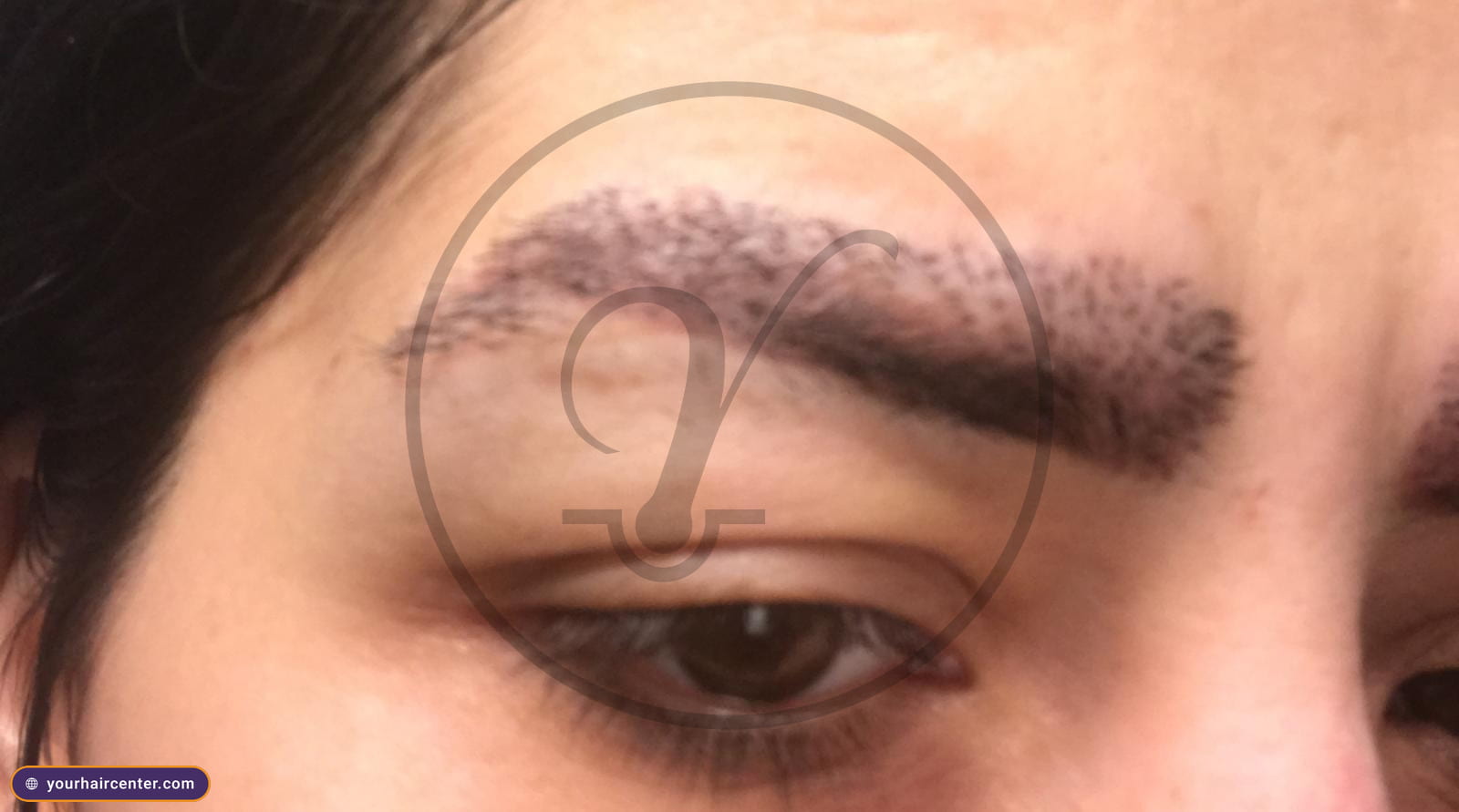
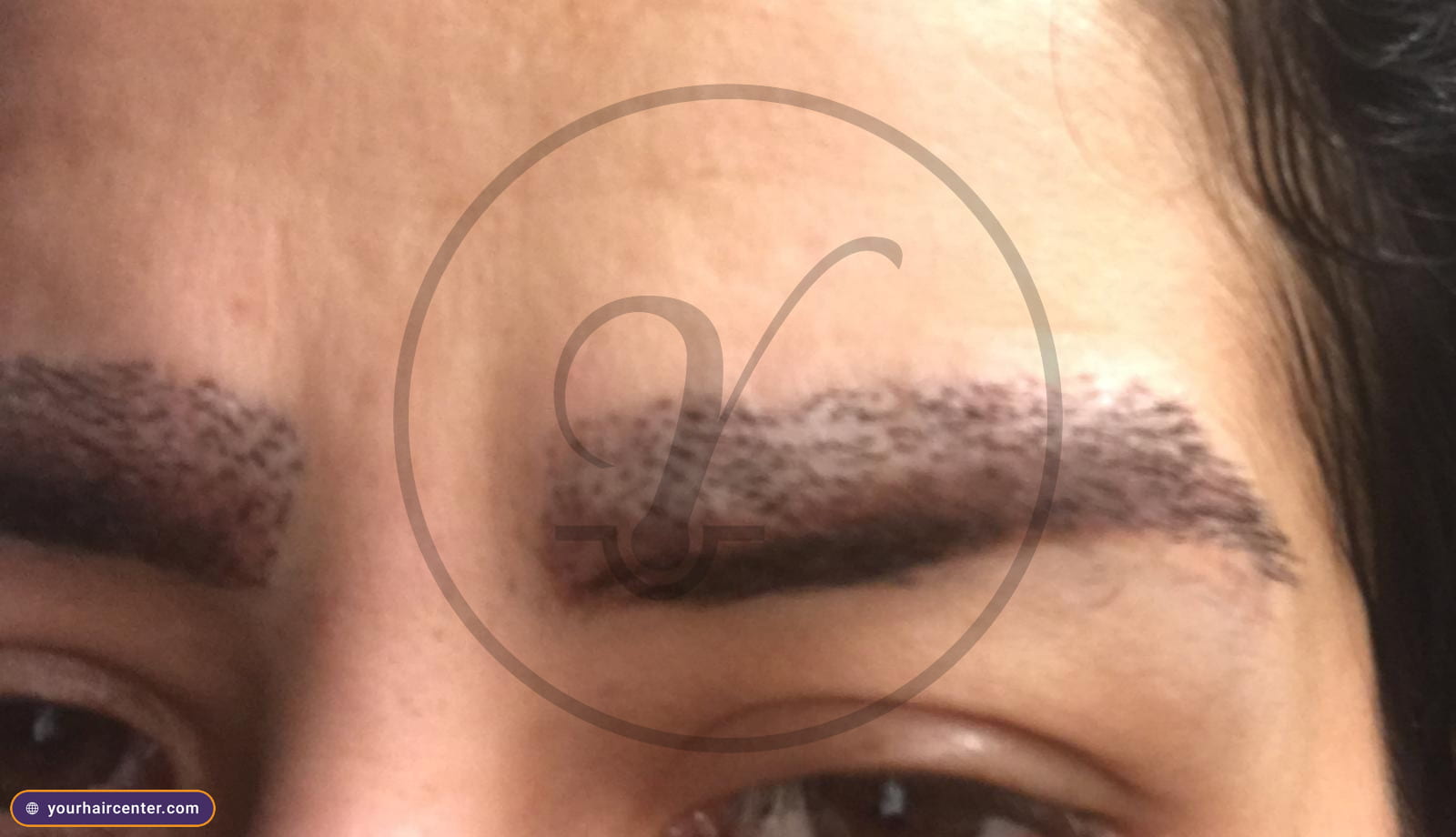
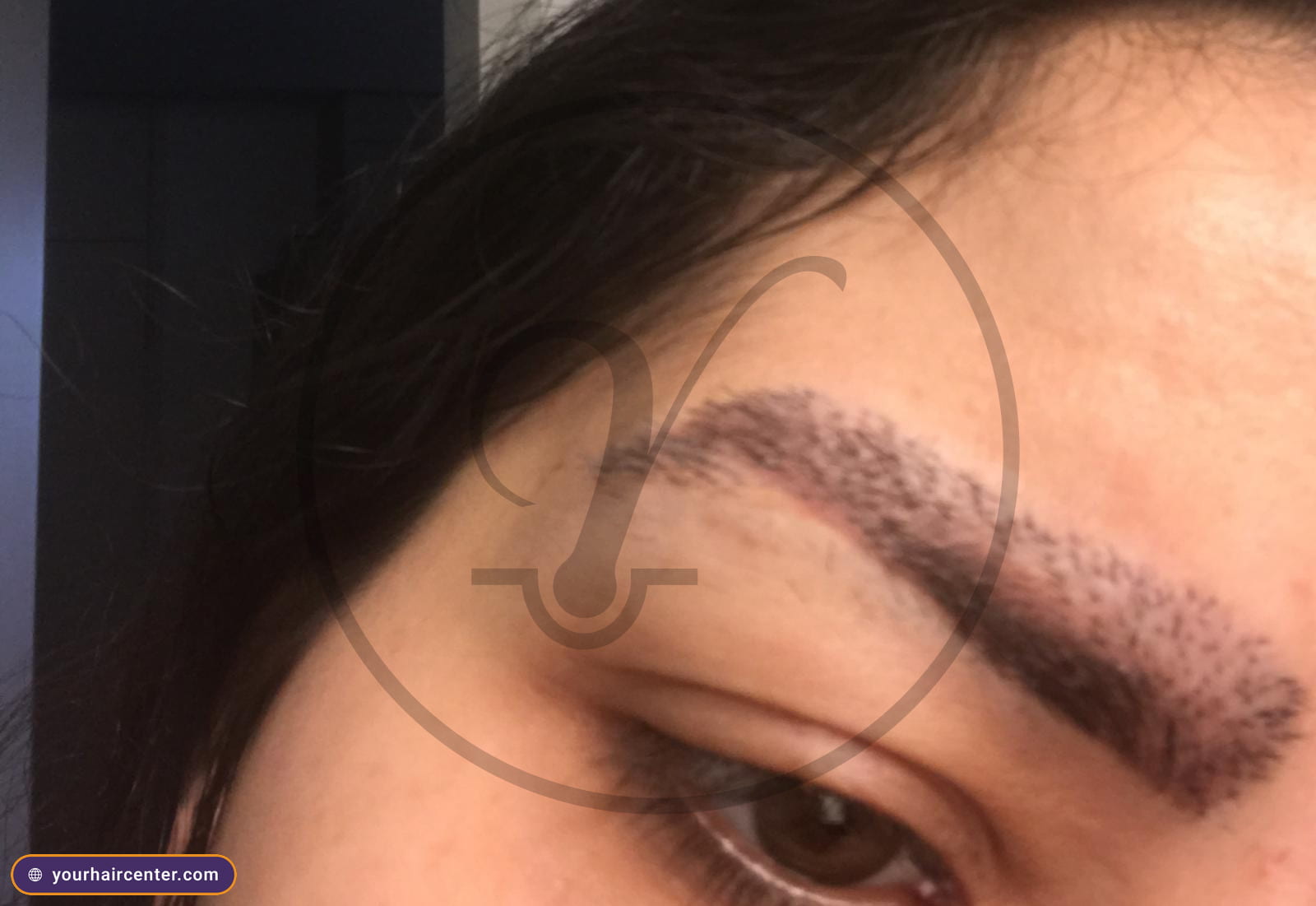
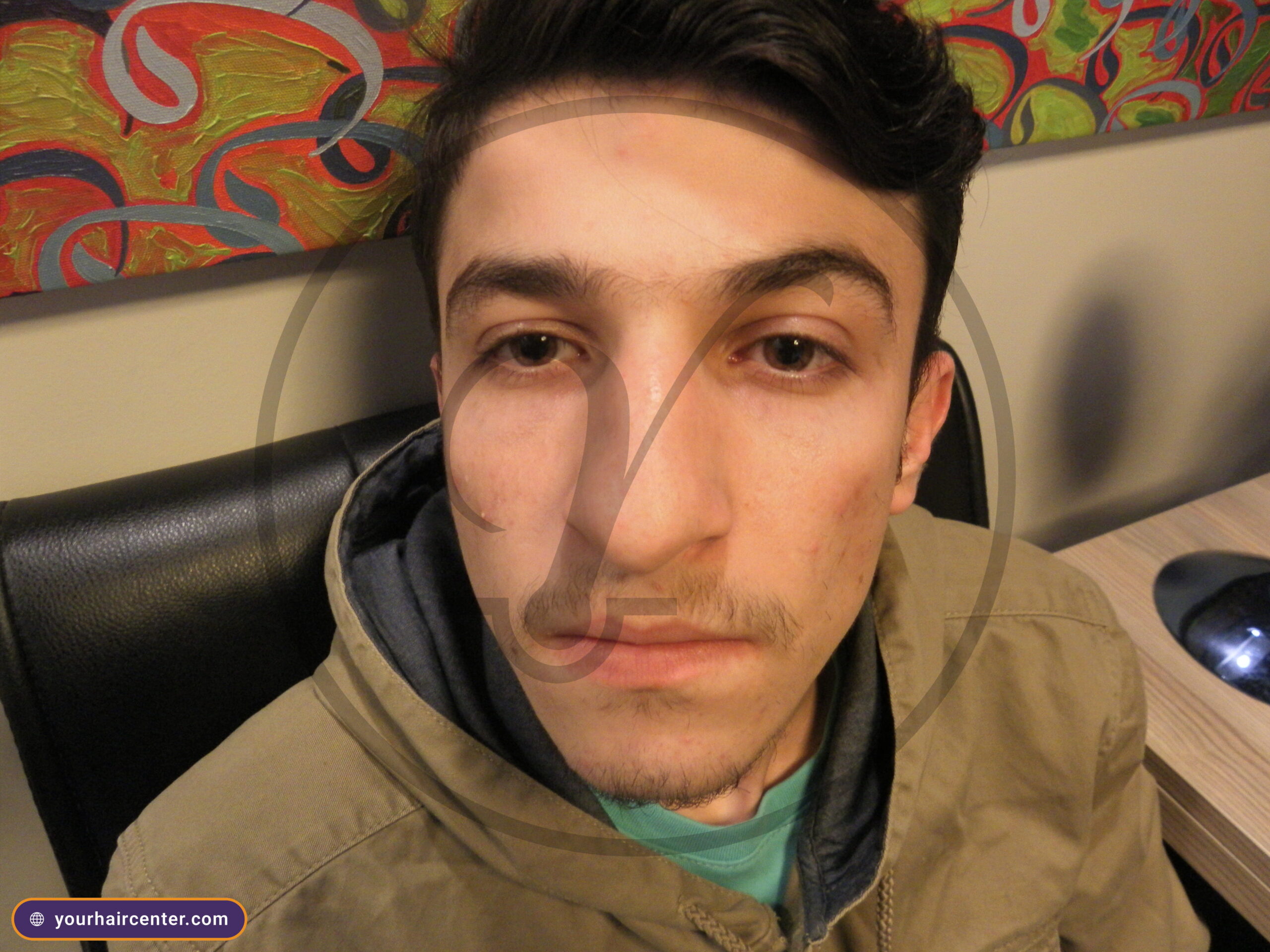
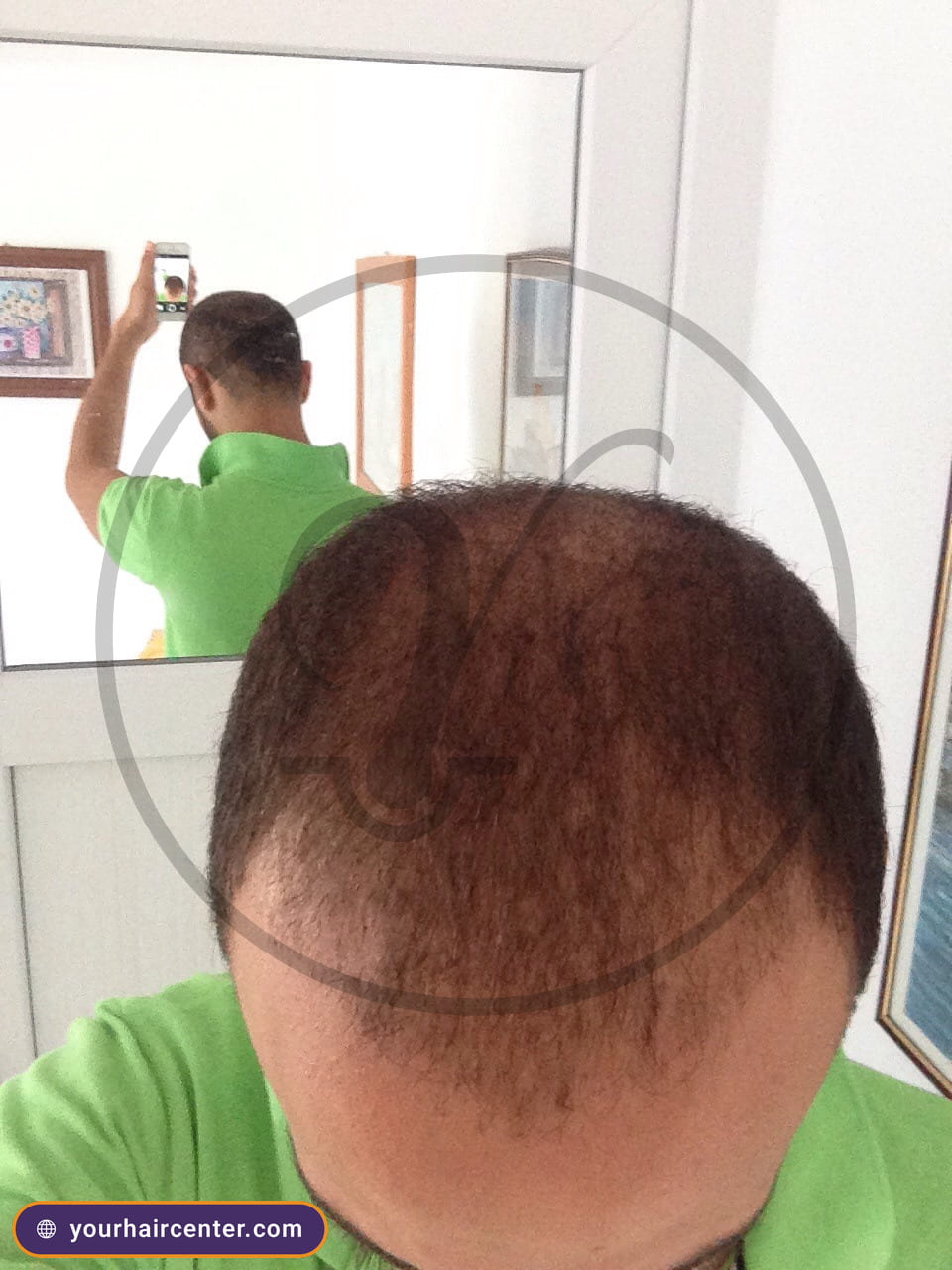
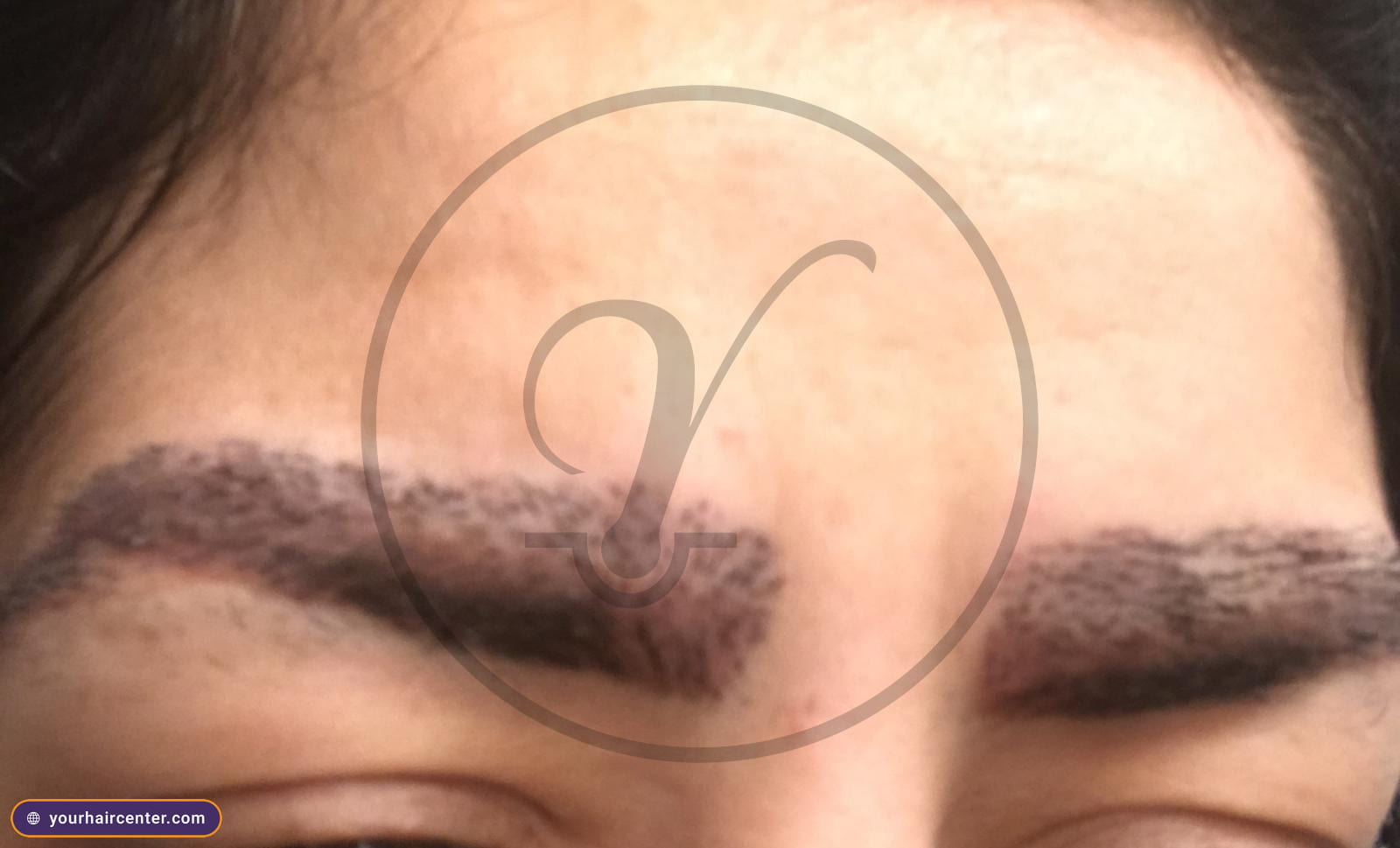
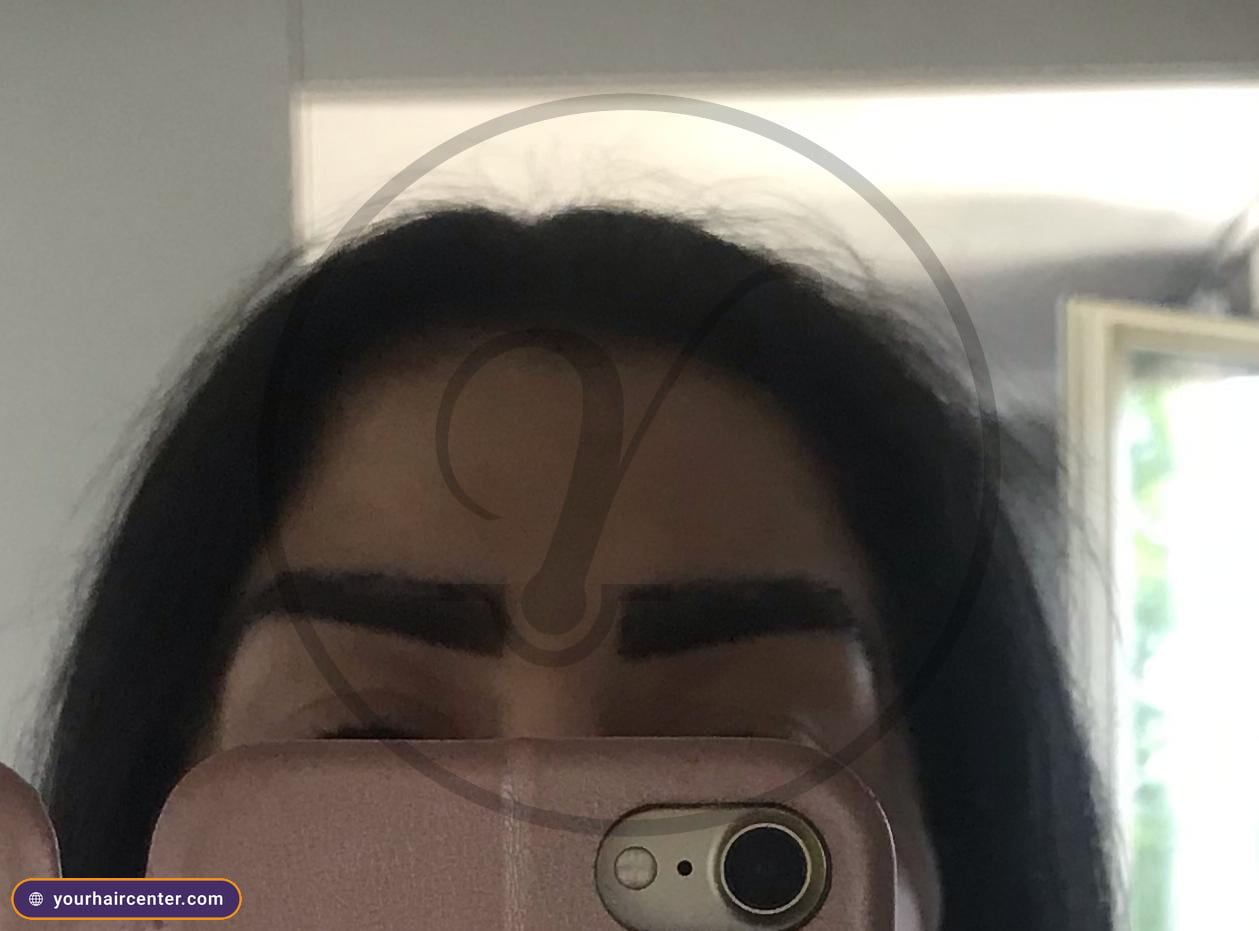
Real results from our patients’ archive. Photos exactly as captured at our accredited partner clinics and hospitals, with no filters and no retouching. Browse more cases in our photo gallery.


How Much Does Each Option Cost?
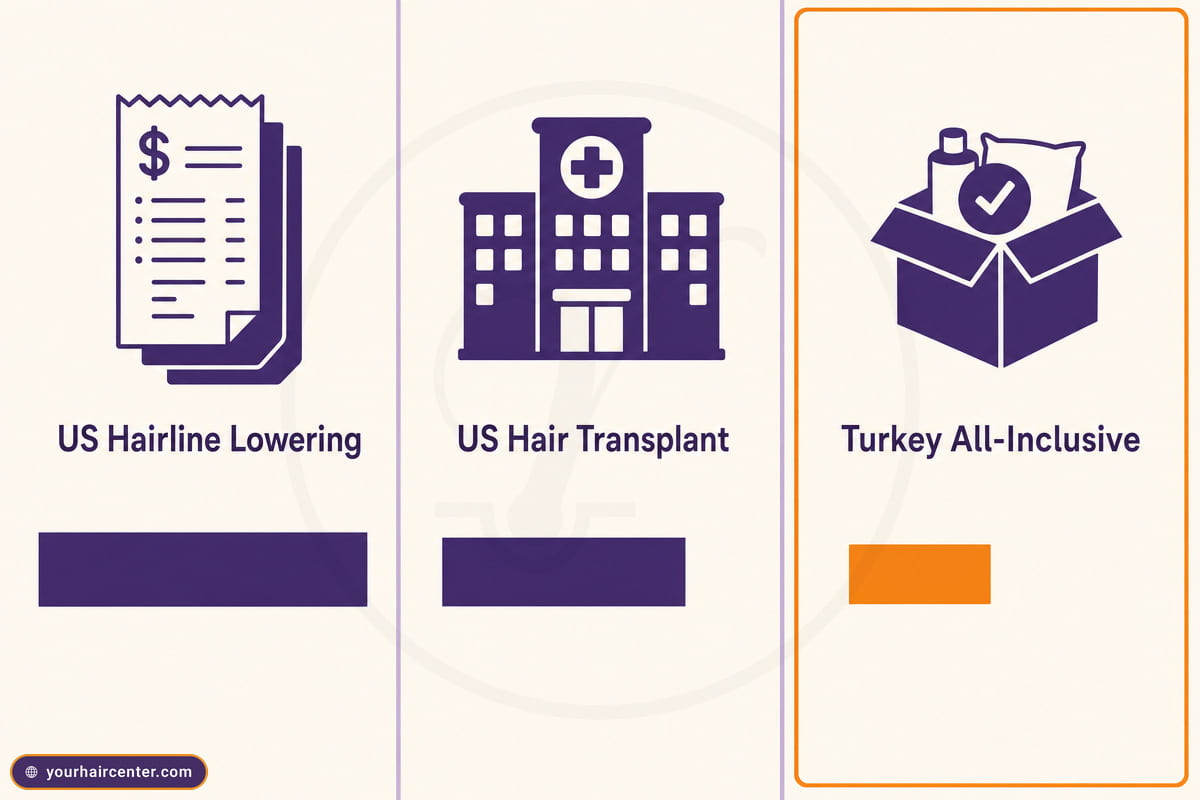
Most comparisons stop at two prices, US hairline lowering surgery versus a US transplant, and miss the option that changes the whole calculation. There are really three financial paths here, and the cheapest is not the one with the lowest sticker shock but the one that does not surprise you later.
A US quote for hairline lowering surgery looks like a single number until you read the fine print. Once the surgeon fee, anesthesia, facility charge, and post-op supplies are itemized, the total can run well above the headline fee, and that is before you add any flights, accommodation, or time off work. The itemized written quote is the only number worth comparing.
A US hair-transplant quote works the same way, and unlike hairline lowering surgery it is rarely a single line. A 2021 study of 90 clinics, cited in a 2023 survey of US patients, put the average total cost of a US hair transplant at about $13,610,[5] and a quote often starts from the surgeon fee, with anesthesia, the facility, medication and follow-up added as separate lines. You only learn the real total once everything is added up.
A Turkey all-inclusive transplant package is structurally different, and that is the point. Where a US quote for hairline lowering surgery hides its extras, one package price covers the procedure, 3 to 5 hotel nights by package, airport and partner-clinic transfers, medication, and a full year of follow-up. Our packages run from $1,650 for classic FUE through $2,650 for sapphire FUE to $4,650 for Royal VIP, the only package with DHI, so the no-shave DHI route described here is quoted at $4,650. There is no itemization left to surprise you, because the itemization is already inside the price. For the full breakdown of a frontal-only case, the frontal female hair transplant cost guide lays out every line rather than repeating it here, and the all-inclusive package page shows exactly what each package contains.
Two notes belong in any cost conversation. First, in the United States and the United Kingdom both procedures are treated as elective cosmetic surgery, so insurance almost never reimburses either one, which makes the out-of-pocket price the real decision driver. Second, cost should be the tie-breaker, not the headline. If your scalp and hairline genuinely suit hairline lowering surgery, that remains the right call regardless of price. Candidacy fit comes first, and the cost question only settles a choice that is otherwise close. If you want a clear figure for your own case, you can ask whether you are a candidate on WhatsApp and receive a free, itemized estimate.
How Recovery and Discretion Compare
How painful a procedure is, and how visible the recovery looks, often matter more in practice than the headline result. Hairline lowering surgery is done under local or light general anesthesia, and for a transplant most patients remain awake under an anesthesia that makes the scalp numb,[6] but what happens afterward differs sharply.
Hairline lowering surgery involves a real incision and stitches. The nonabsorbable sutures typically come out about a week after surgery, you may wear gauze or a light dressing for the first several days, and most of the healing, including bruising and swelling, settles over the first two to six weeks.[1:4] Temporary numbness along the forehead is common while nerves recover, reported in most patients in published series, though it generally resolves over the following months.[2:4] A DHI transplant, by contrast, leaves only micro-scabs that shed by around day 10, and discomfort typically lasts no longer than a day or two, followed by 7 to 10 days of tenderness to the touch.[7]
Visibility during recovery is the difference women tend to feel most. The lowering incision sits in plain view along the new hairline until the stitches are removed and the line settles, while DHI recovery shows no incision at all, only fading scabs. The long-term picture for surgical lowering is reassuring, a well-healed trichophytic line is described as good quality and becomes difficult to spot once hair grows through it, but it is realistic to expect that it is not perfectly invisible at close range with the hair pulled back.[4:2] On timing, hairline lowering surgery gives an immediate result on the day of surgery, while transplant density builds gradually and finalizes at 12 to 18 months.
The other half of the decision is who is caring for you and what happens if something does not go to plan. Our specialists treat patients at accredited partner clinics and hospitals, with a women’s team across consultation and aftercare, an English-speaking medical team, and a full year of follow-up in every package, with remote check-ins at 3, 6, and 12 months. You can also see before-and-after results and read more about the no-shave DHI technique before you commit to either path.
Frequently Asked Questions
How much does a hairline lowering procedure cost?
In the United States the price of hairline lowering surgery is the sum of the surgeon fee, anesthesia, the facility and aftercare, so ask each practice for every line in writing before you compare. A hair transplant for women that achieves a comparable lowered hairline costs $1,650 to $4,650 in our all-inclusive packages, with no-shave DHI at $4,650, and already includes hotel, transfers, medication, and a full year of follow-up, which removes the hidden extras entirely.
Is hairline lowering surgery worth it?
Worth depends on candidacy fit, not price alone. For a lifelong high but stable hairline with a lax, mobile scalp and no active hair loss, hairline lowering surgery is the textbook fit and gives an immediate result.[3:3] For a receded hairline, active thinning, or a wish to redesign the hairline shape rather than simply lower it, a transplant is the better-matched option.
How painful is a forehead reduction surgery?
Hairline lowering surgery is performed under local or light general anesthesia, which numbs the area during the operation. Afterward, discomfort along the incision is managed with prescribed medication, and most healing settles over the first two to six weeks.[1:5] Temporary numbness along the forehead is common as the nerves recover, and it typically fades over the following months.[2:5]
What does a hairline lowering procedure do?
Hairline lowering surgery surgically advances the scalp forward and anchors your existing hairline at a lower position, reducing forehead height by around 2 cm depending on how mobile your scalp is.[2:6] It moves the hairline you already have, so it does not redesign the hairline shape, that requires a transplant, which rebuilds the line follicle by follicle.
How long is hairline lowering surgery recovery?
Stitches usually come out about a week after surgery, the visible incision settles over the next one to two weeks, and most healing, including swelling, resolves across the first two to six weeks.[1:6] DHI transplant recovery is different, the micro-scabs shed by around day 10 with no incision at any stage, which is why the two procedures feel so different during the first fortnight.
What do hairline lowering before-and-after results look like compared with a transplant?
Hairline lowering surgery shows an immediate change on the day of surgery, since the hairline is physically moved. A transplant reveals its result gradually, with new growth from around month 3 and final density at 12 to 18 months. Both are permanent. You can see before-and-after photos or ask about your own candidacy on WhatsApp.
Which Procedure Fits Your Hairline?
The right choice is not universally one procedure over the other, it is whichever one matches your scalp laxity, hair-loss activity, desired advancement distance, and how much recovery you can hide. That is exactly what a structured assessment is for, and it is the reason hairline lowering surgery and a transplant should be weighed together rather than in isolation. Start your free candidacy assessment for a hair transplant for women, and a women’s team will give you a written recommendation between the two paths, or message the team on WhatsApp to talk it through first.
The content and sources of this guide were reviewed on 15 October 2026.
References
-
Cleveland Clinic, "Facial Feminization Surgery (FFS), Procedure & Recovery," my.clevelandclinic.org (opens in new tab), 2023. https://my.clevelandclinic.org/health/treatments/21574-facial-feminization-surgery (opens in new tab) ︎ ︎ ︎ ︎ ︎ ︎ ︎
-
"Aesthetic forehead reduction in female patients, Surgical details and analysis of outcome," Journal of Plastic, Reconstructive & Aesthetic Surgery, 2022;75(1):407-414. https://pubmed.ncbi.nlm.nih.gov/34305024/ (opens in new tab) ︎ ︎ ︎ ︎ ︎ ︎ ︎
-
"Hairline-Lowering Surgery," Facial Plastic Surgery Clinics of North America (PubMed, National Library of Medicine), 2020. https://pubmed.ncbi.nlm.nih.gov/32312507/ (opens in new tab) ︎ ︎ ︎ ︎
-
"Forehead Reduction Surgery, Outcomes and Complications of 650 Cases in a Multiracial Population," Aesthetic Plastic Surgery, 2025. https://pubmed.ncbi.nlm.nih.gov/40240586/ (opens in new tab) ︎ ︎ ︎
-
Knoedler L, Ruppel F, Kauke-Navarro M, et al. Hair Transplantation in the United States, A Population-based Survey of Female and Male Pattern Baldness. Plastic and Reconstructive Surgery Global Open, 2023. PMID 37964923. Accessed October 2026. https://pmc.ncbi.nlm.nih.gov/articles/PMC10642908/ (opens in new tab) ︎
-
American Academy of Dermatology. Hair transplant, A hair transplant can give you permanent, natural-looking results. Accessed October 2026. https://www.aad.org/public/diseases/hair-loss/treatment/transplant (opens in new tab) ︎
-
International Society of Hair Restoration Surgery. After Hair Restoration Surgery. Accessed October 2026. https://ishrs.org/after-hair-restoration-surgery/ (opens in new tab) ︎