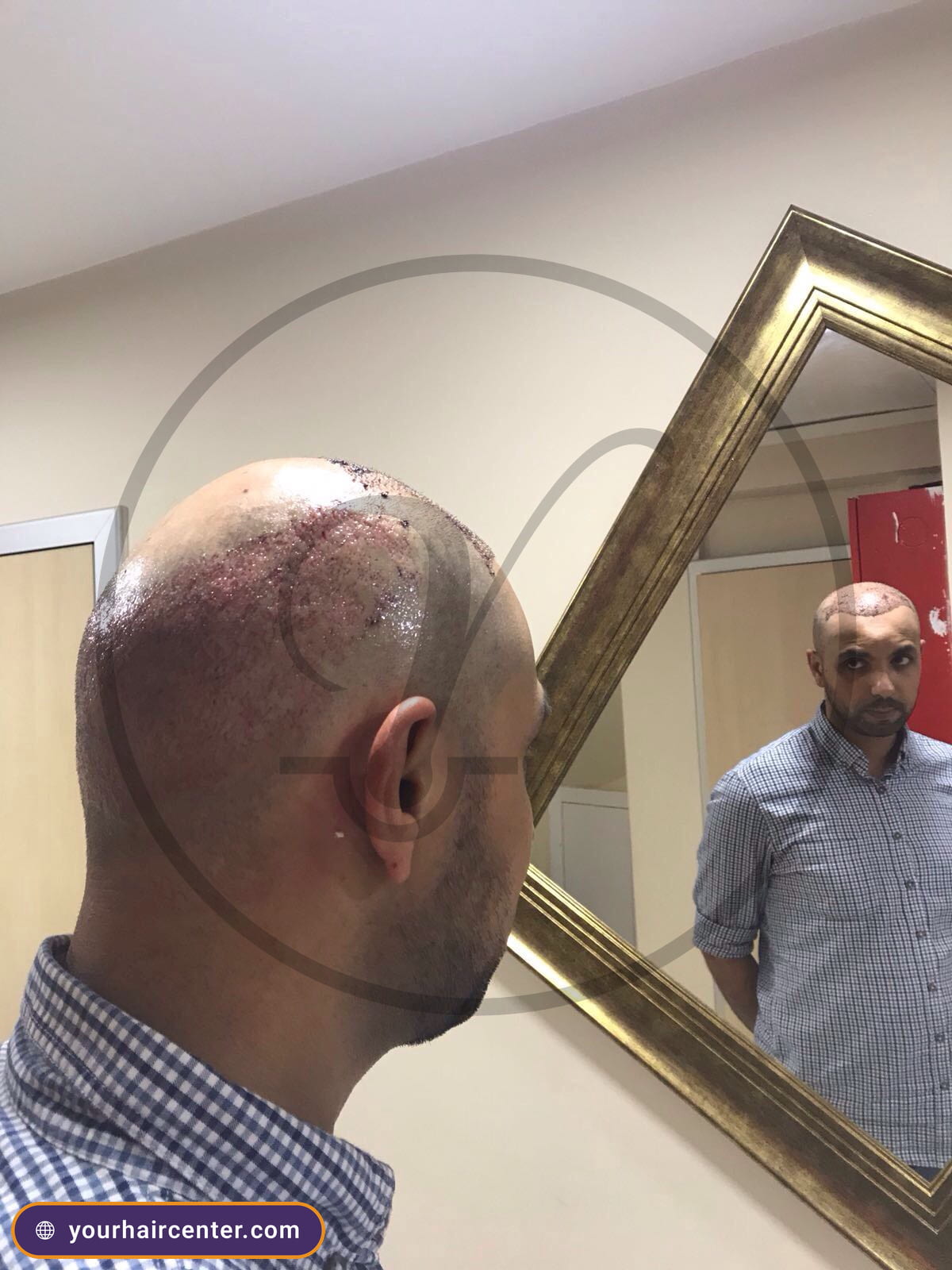
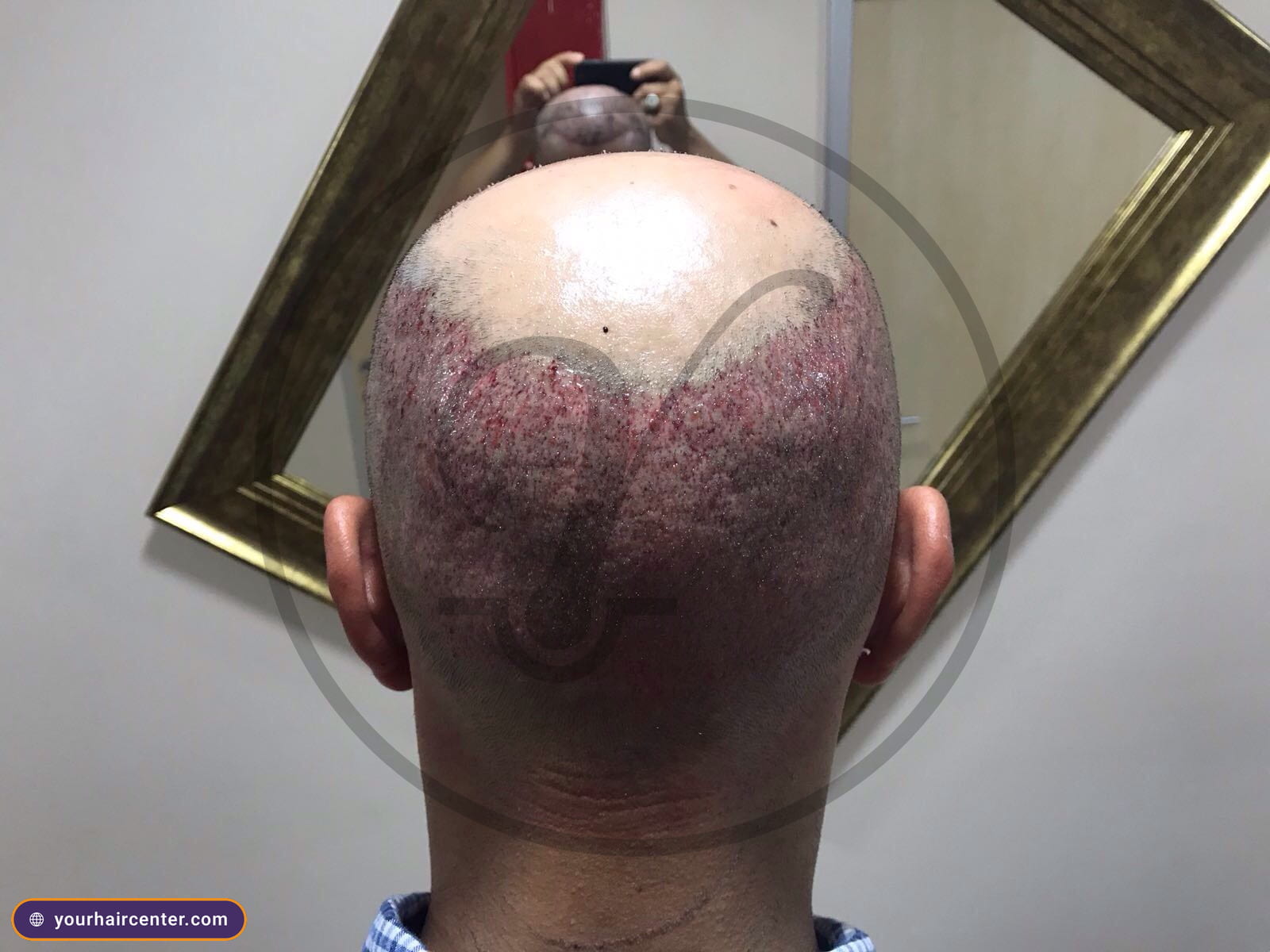
Eyebrow transplant regret is rarely bad luck. It comes from five specific, nameable failures in texture, angle, growth rate, graft type, and density-design, and every one of them can be prevented before surgery. This guide walks through all five causes, the corrective options for each, a 12-point checklist for vetting any clinic the week before you book, the follicle biology that makes those answers meaningful, and the medical situations that should pause the procedure entirely.

If you have spent an evening reading patient forums and review sites, eyebrow transplant regret can look like a roll of the dice, where some people love their new brows and others describe results that never sat right. It is not a roll of the dice. Almost every case of eyebrow transplant regret traces back to one of five specific, nameable causes, and every one of them is preventable by decisions made before the procedure ever begins. This article gives you the diagnostic. You get the five causes, a 12-point checklist for vetting a clinic and surgeon the week before you book, and a short explainer on follicle biology so the answers you get from a clinic actually mean something. When an eyebrow hair transplant is planned carefully and performed by an experienced team, most patients are satisfied with the result and the procedure carries a low complication profile.[1][2] The aim here is to keep your partner in that group.
The five causes of eyebrow transplant regret
- Coarse, wiry texture from scalp donor follicles behaving as scalp hair on the face.
- Wrong follicle angle and direction, producing brows that stand up instead of laying flat.
- Fast growth rate inherited from the scalp donor, requiring frequent trimming for life.
- Pluggy, doll-like appearance from multi-hair grafts placed in the brow line.
- Overly aggressive density-design, with brows drawn too thick, too arched, or too low on the orbital bone for the face.
If you only read one section, read this one. Eyebrow transplant regret almost always comes from the same short list of failures, and each has both a corrective option and, more usefully, a way to avoid it entirely. The first four are widely discussed. The fifth is the one most cause-lists miss, and it is one of the most common drivers of the “looks fake” complaint. Here is each in turn.
Cause 1. Coarse texture and the scalp-to-face donor mismatch
Brow restoration borrows follicles from the back of the scalp, and scalp terminal hair has a thicker shaft than native eyebrow hair.[3] On the face, a too-thick shaft reads as coarse or wiry rather than soft, and that mismatch is one of the most common sources of eyebrow transplant regret. The fix is a grooming protocol, careful donor selection toward the finest available hair, and in some cases laser reduction to thin the shaft, or surgical revision with finer donor. The better answer is choosing finer donor hair and a conservative plan from the start.
Cause 2. Unnatural angle and direction
Eyebrow follicles must be implanted at an extremely flat angle to the skin and made to follow the natural arch, with medial hairs angling up and lateral hairs sweeping down and out. Inexperienced practitioners default to the much steeper angles used for scalp work, and the brows then stand straight up instead of laying flat, a highly visible trigger for eyebrow transplant regret.[2:1] Correction means angle revision, which is partial extraction and re-implantation at the correct orientation. Prevention is surgeon experience with facial work specifically.
Cause 3. Fast growth rate and the trimming commitment
Scalp hair follows a long growth cycle measured in years, while native brow hair has a much shorter cycle.[3:1] Transplanted scalp follicles keep their original cycle on the face, so the new brows grow faster than natural ones and need regular trimming. This is not a complication; it is expected biology that every reputable surgeon explains before surgery. Some patients pursue partial laser reduction; most simply trim. Eyebrow transplant regret here is a consent failure, not a surgical one.
Cause 4. Pluggy multi-hair grafts and the doll-eye look
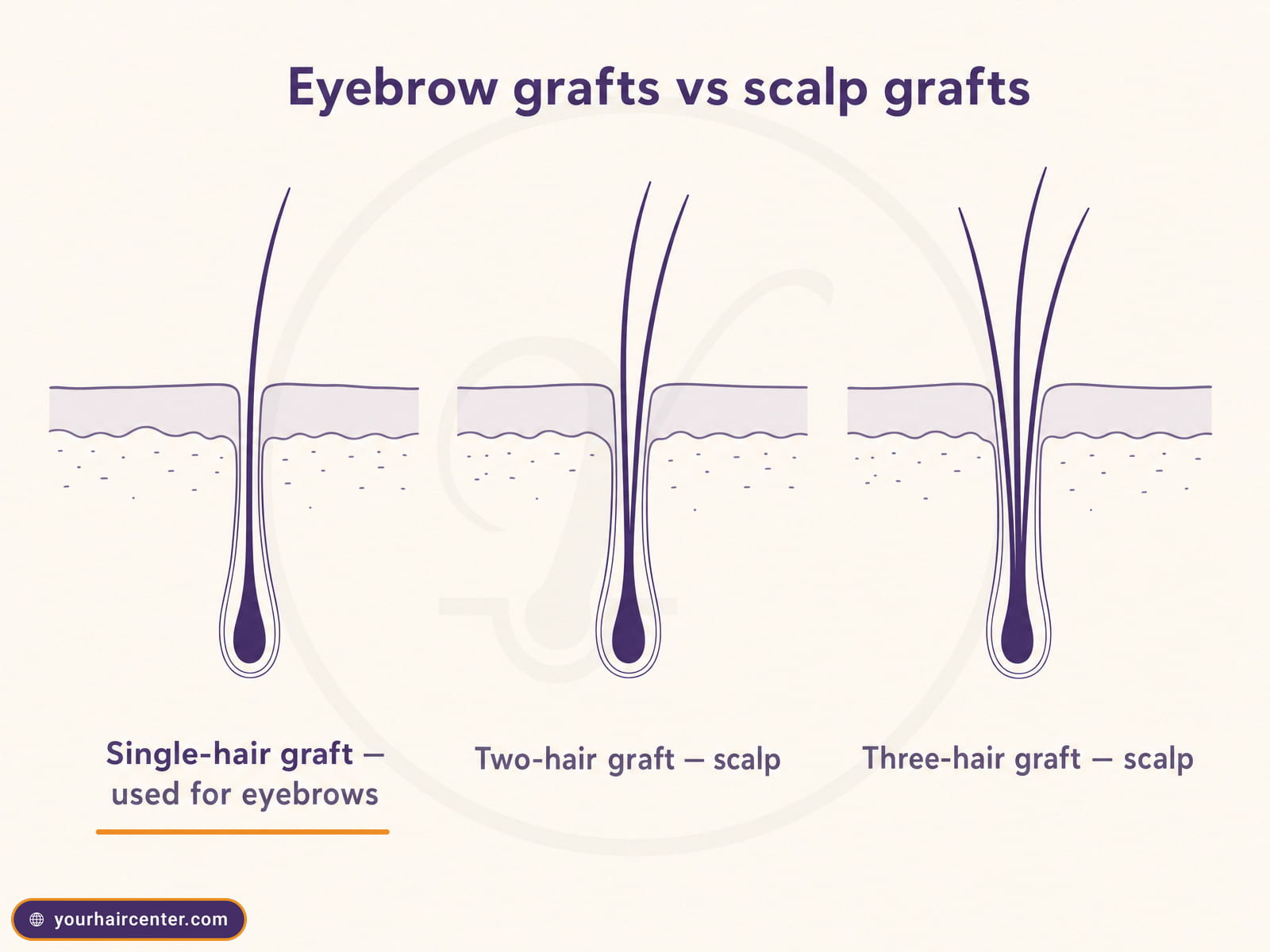
Scalp follicular units naturally contain one to four hairs, but eyebrow restoration calls for single-hair grafts only. Multi-hair grafts placed in the brow line produce a tufted, pluggy, doll-like appearance that cannot be hidden, and few outcomes drive eyebrow transplant regret faster.[2:2] Correction is partial graft removal and redistribution, or full revision in severe cases. This is a planning and extraction failure rather than an implantation-skill failure, and the regret it causes is entirely avoidable with the right protocol.
Cause 5. Overly aggressive density-design, the hidden source of eyebrow transplant regret
This is the cause most lists miss, and it is where the problem often hides even when everything else is done right. Surgeon and patient sometimes co-design brows that are too thick, too arched, or set too low on the orbital bone, usually chasing a reference photo or a filter look. The texture, angle, growth rate, and graft type can all be correct and the brows still read as drawn-on, leaving real eyebrow transplant regret behind a technically clean procedure. Laser reduction can thin density and partial extraction helps in rare cases, but prevention is the only real fix, and it begins in the design consultation, where both patient and surgeon share responsibility for a realistic plan.
The biology of single-hair grafts and why eyebrow restoration is not just a small hair transplant
To judge the answers a clinic gives you, and to understand why so much eyebrow transplant regret is really a single-hair-graft problem, it helps to know why single-hair grafts matter so much for the brow. An eyebrow hair transplant is not simply a scalp procedure scaled down. It is a different problem in follicle selection and angle control, and our eyebrow restoration service explains the full procedure if you want the broader picture.
Start with how scalp hair grows. Follicles on the donor area come in natural bundles called follicular units, each holding one, two, three, or rarely four hairs that share a single graft.[2:3] The eyebrow, by contrast, is built from single hairs laid down at low density across the orbital ridge, each pointing in a precise direction that shifts as you move from the inner brow to the tail. Recreating that pattern means the surgeon must use one-hair grafts and place each at an exact angle.
This is where technique matters. The FUE extraction method lets the surgeon harvest and select individual one-hair units rather than larger bundles, which is exactly what brow work needs.[2:4] DHI implantation with a Choi pen gives the finest possible control over the angle and depth of each placement, which is why it is favored for delicate facial work.
The payoff is graft survival. In experienced hands, a high proportion of transplanted follicles take root and grow.[2:5] That is the thing worth asking about, not a marketing satisfaction figure, but how many grafts actually survive, which is the foundation of every good eyebrow restoration in the broader field of hair transplant surgery.
This is also why “do you use single-hair grafts” is the single most useful question a patient can ask. It is not a technicality. It is the difference between a brow built from individual, correctly oriented hairs and one built from bundles that betray themselves as transplants the moment the hair grows in, which is the most common path to eyebrow transplant regret. When you understand the biology, the checklist questions in the next section stop being a script you recite and become things you can actually evaluate.
The 12-point clinic and surgeon vetting checklist (use this before you book)
Every guide tells you to “find an experienced surgeon.” None tells you what to ask. These are the 12 questions that separate the clinics that prevent eyebrow transplant regret from the ones that cause it, each with the answer that should reassure you and the answer that should send you elsewhere. Screenshot this and bring it to every consultation.
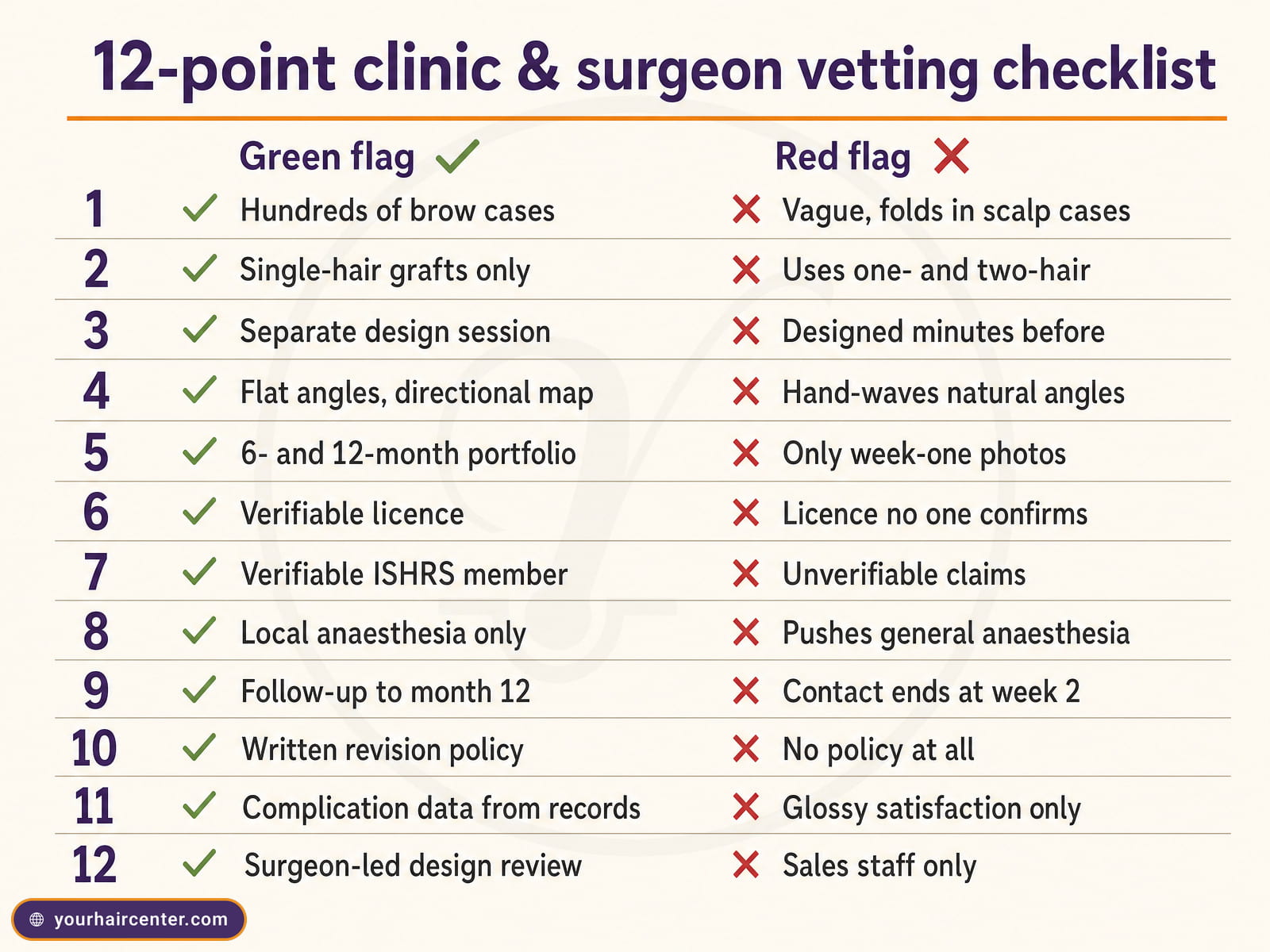
- Eyebrow-specific case volume. Ask how many eyebrow transplants the clinic performs each year and how many the assigned surgeon has personally done. The green flag is hundreds of eyebrow-specific cases. The red flag is vague answers, or numbers that quietly fold in scalp cases.
- Single-hair graft confirmation. Ask whether the clinic uses single-hair grafts exclusively for brows. The green flag is yes, with a reason. The red flag is “we use one- and two-hair grafts,” which is the pluggy-result risk in writing.
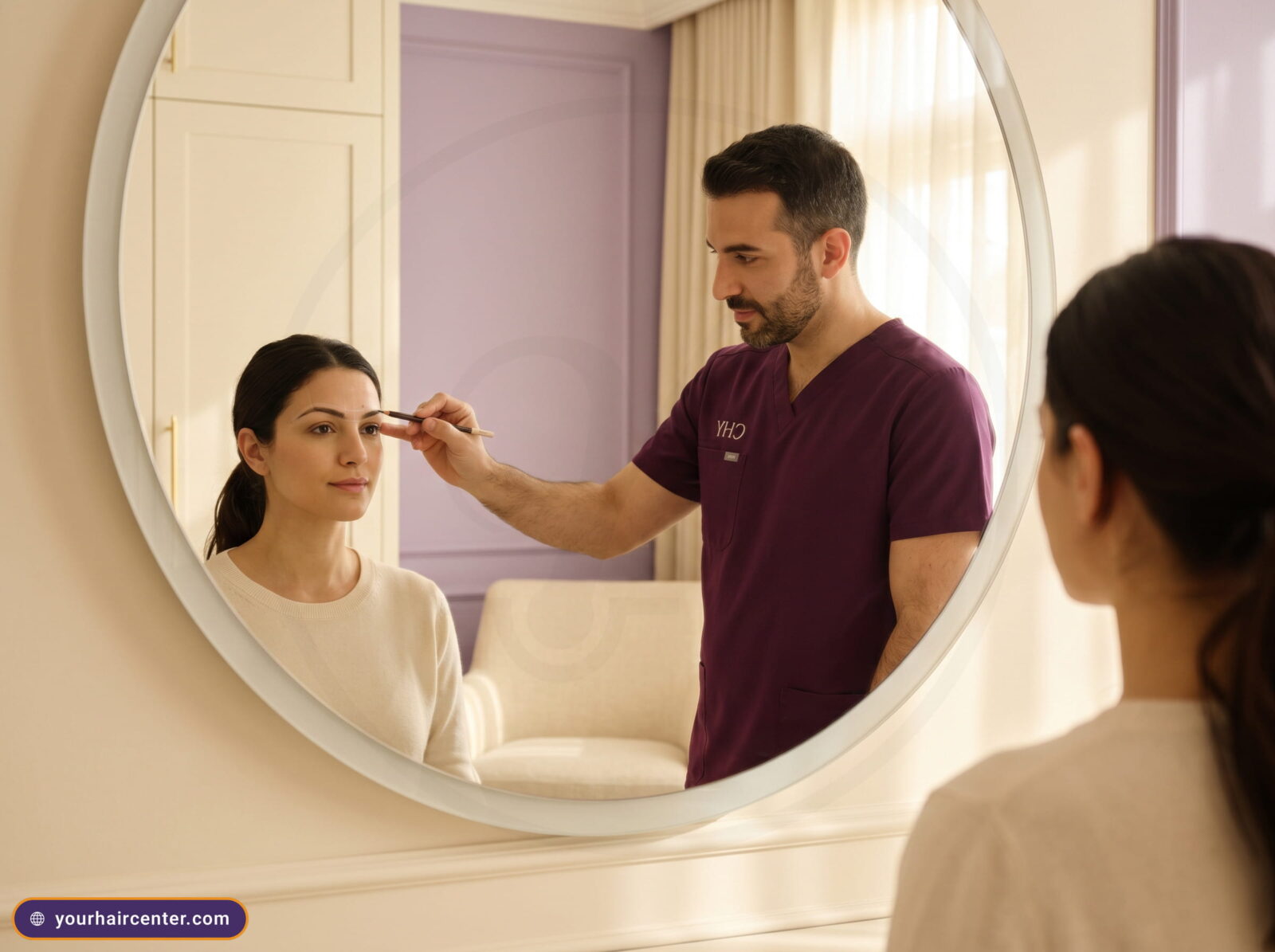
- Pre-operative design consultation. Ask whether the arch is designed in a dedicated consultation before surgery day, with you awake and giving input. The green flag is a separate design session with photos and a mirror. The red flag is a design that happens minutes before the procedure.
- Angle and direction protocol. Ask how the surgeon controls follicle angle during implantation. The green flag is a specific reference to very flat angles and a medial-to-lateral directional map. The red flag is a hand-wave toward “natural angles” with no detail.
- Six-month and twelve-month portfolio. Ask to see at least ten cases at both the six-month and twelve-month mark, not just immediate post-op. The green flag is a portfolio shown on request. The red flag is that only week-one photos exist.
- Clinic accreditation. Ask whether the facility is licensed by the national health authority, which in Turkey is the Turkish Ministry of Health, and whether it holds Joint Commission International accreditation. The green flag is a verifiable licence, with JCI a bonus. The red flag is a licence no one can confirm.
- Surgeon credentials and society membership. Ask whether the operating surgeon belongs to a recognized hair-restoration society such as the ISHRS. The green flag is membership you can verify.[2:6] The red flag is vague or unverifiable claims.
- Anesthesia protocol. Ask whether the procedure is done under local anesthesia only. The green flag is yes, since local-only is the standard for a one-to-two-hour brow procedure. The red flag is anyone pushing general anesthesia for this.
- Follow-up schedule through month twelve. Ask for the explicit follow-up schedule and whether it is included in the price. The green flag is scheduled checkpoints through month twelve as part of a structured medical follow-up program. The red flag is contact that ends at week two.
- Revision policy. Ask what happens if you have regret about the result at twelve months, and what a revision costs. The green flag is a clear written policy. The red flag is no policy at all.
- Complication-rate disclosure. Ask what the clinic’s documented complication experience is and where it comes from. The green flag is figures traceable to clinic records. The red flag is only glossy satisfaction claims and no complication data.
- Surgeon-led design review. Ask whether the surgeon, not just a coordinator, reviews your reference photos and explains why a given arch is or is not realistic for the face. The green flag is required surgeon involvement. The red flag is a design conversation that happens only with sales staff.
If a clinic answers these openly and specifically, you have done most of the work of preventing eyebrow transplant regret before a single follicle is moved. When you are ready, the team behind our eyebrow hair transplant service will walk through every one of these points with you.
Real complication rates and what published clinical data actually shows
Much of the fear that fuels eyebrow transplant regret comes from not knowing what is normal and what is not. Eyebrow restoration is among the lower-complication procedures in this field, and most events that do occur are minor and self-limiting.[1:1] It helps to know the categories so you can ask about them by name rather than fearing the unknown.
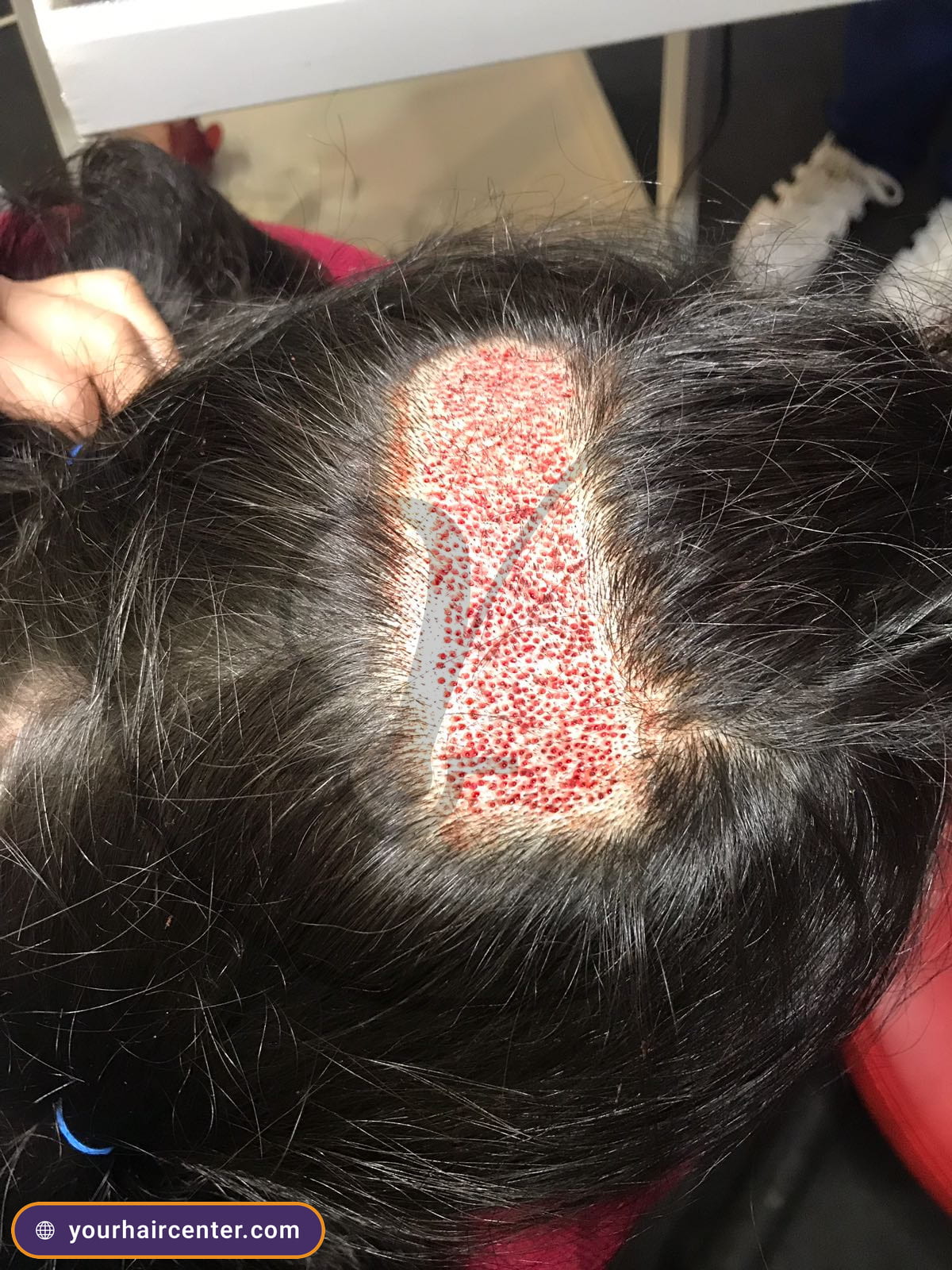
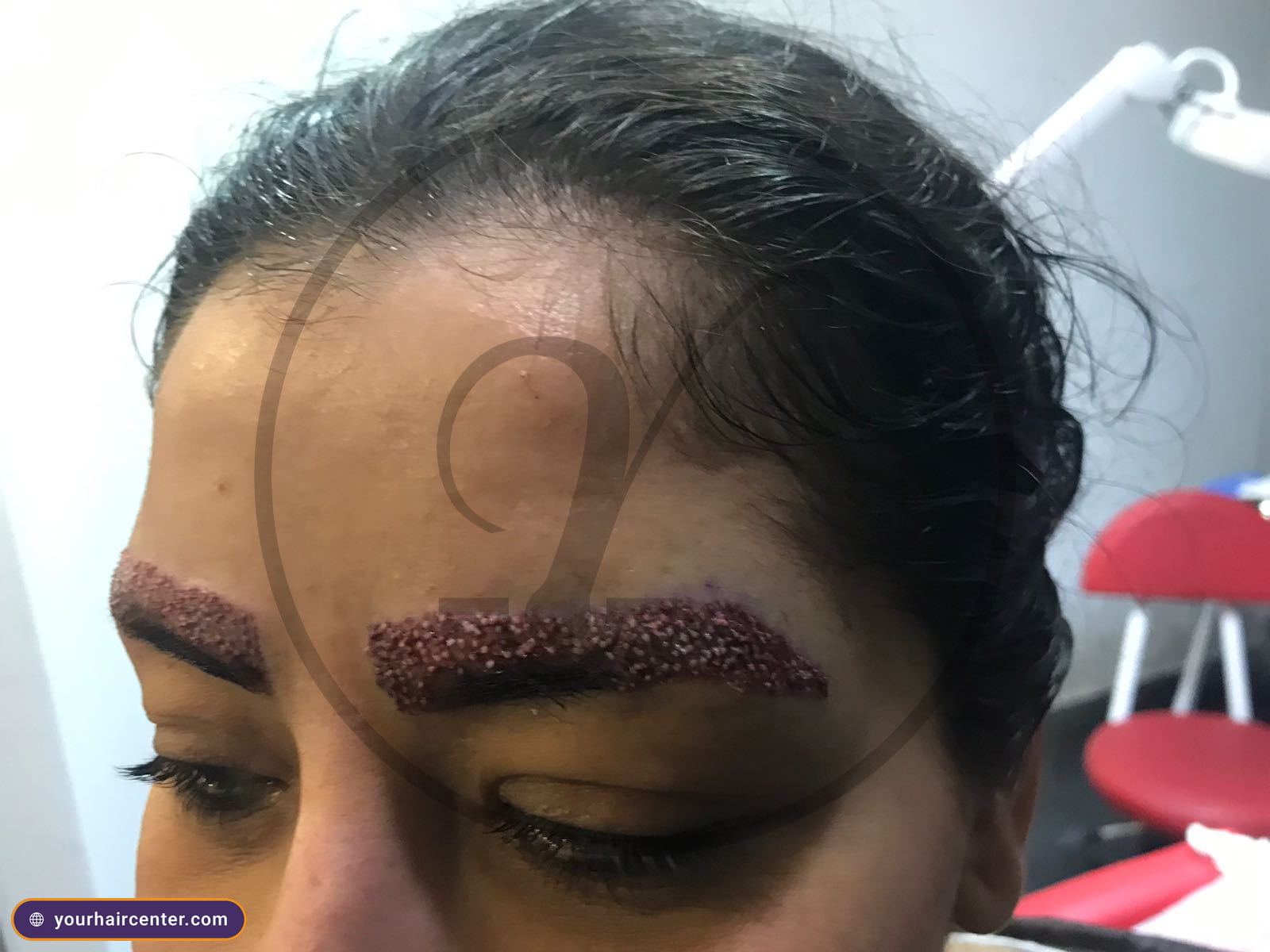
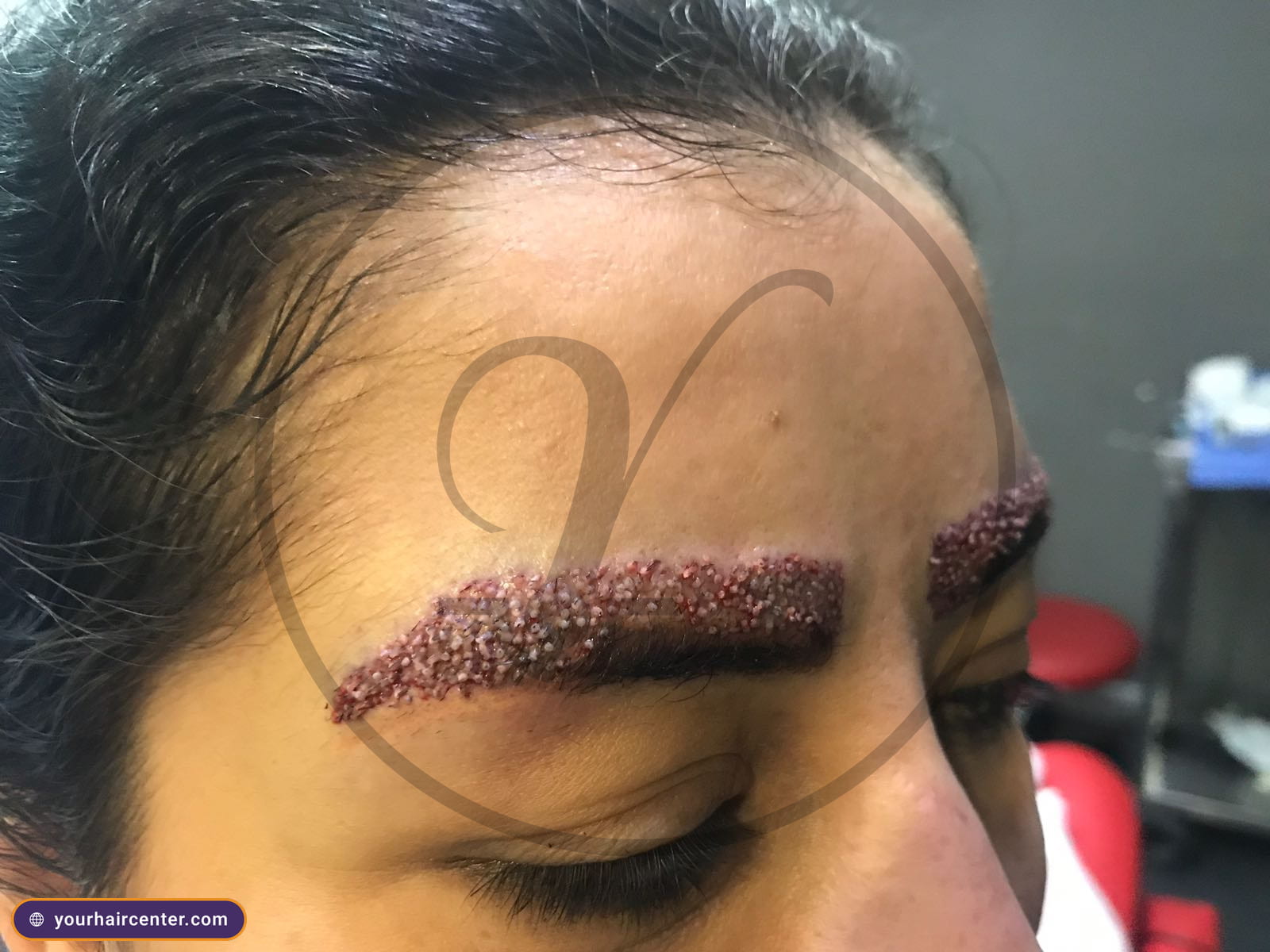
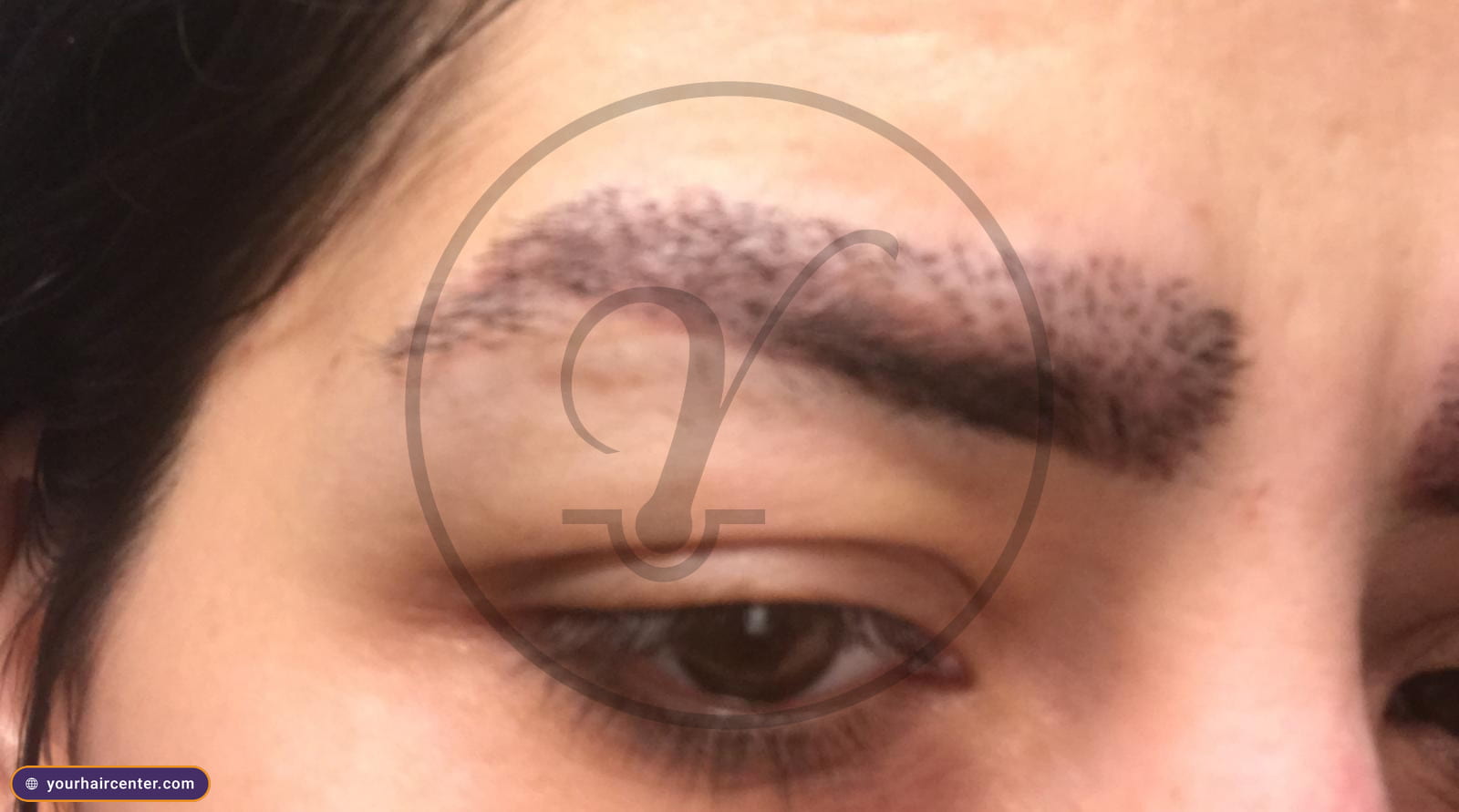
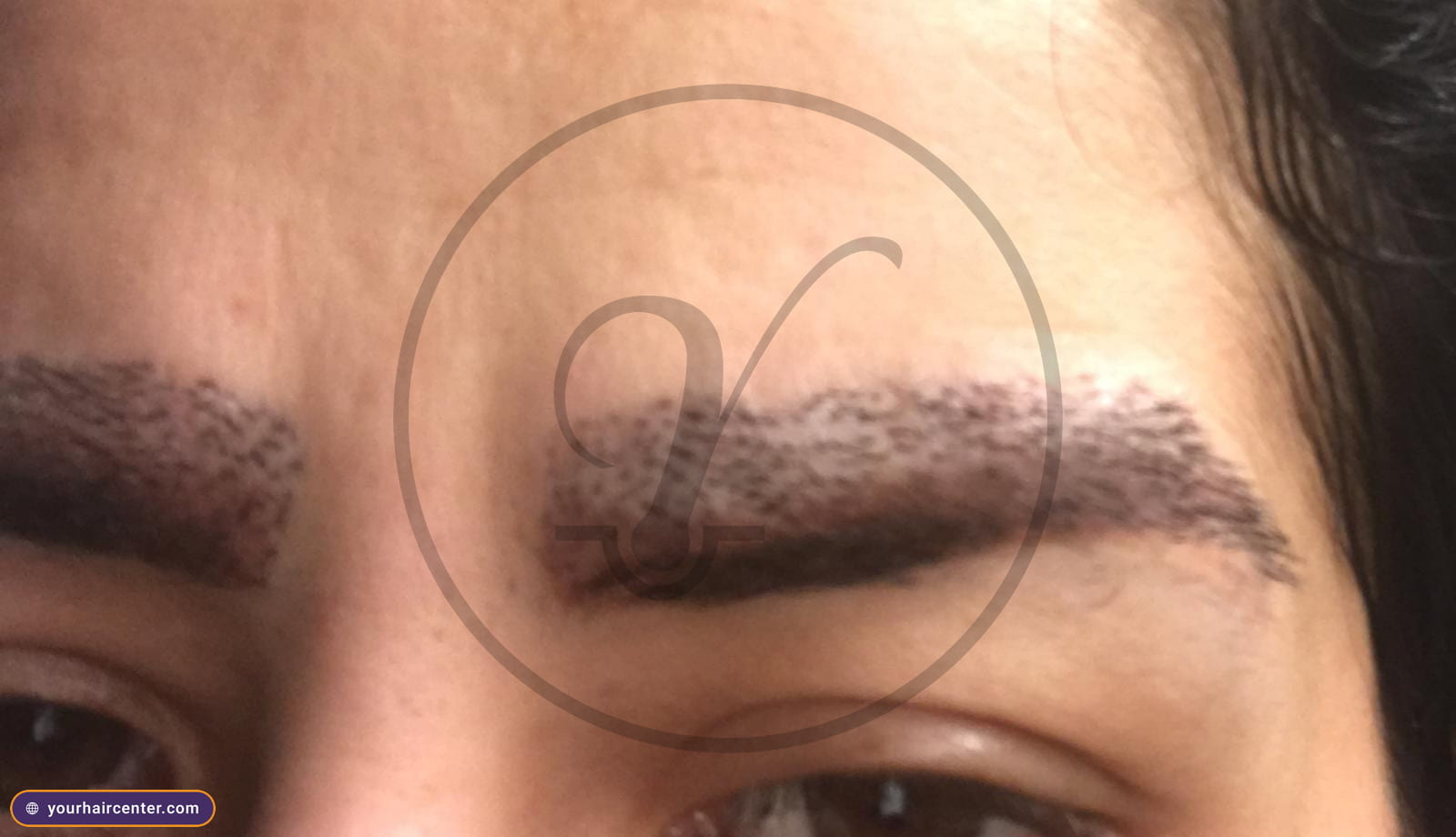
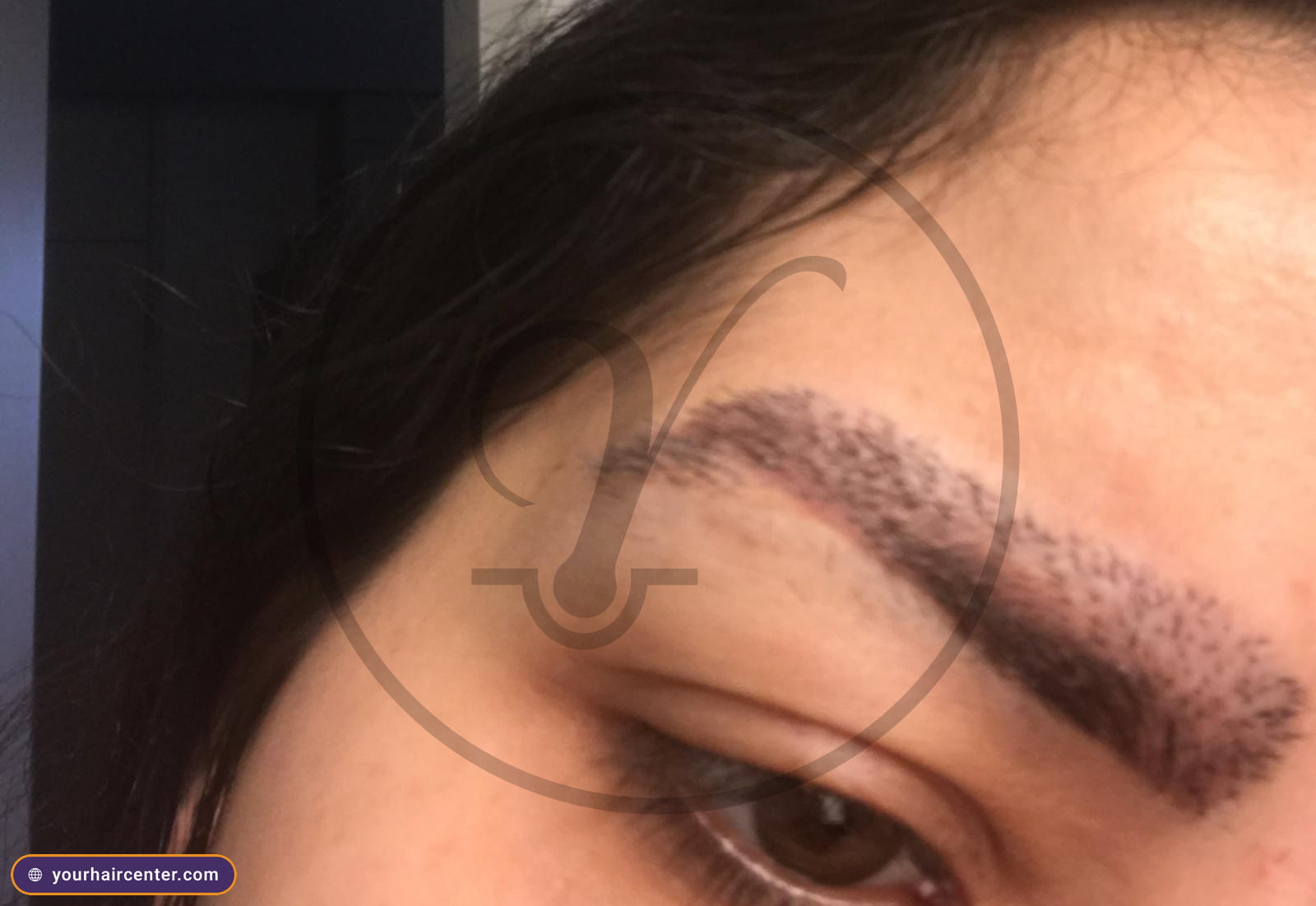
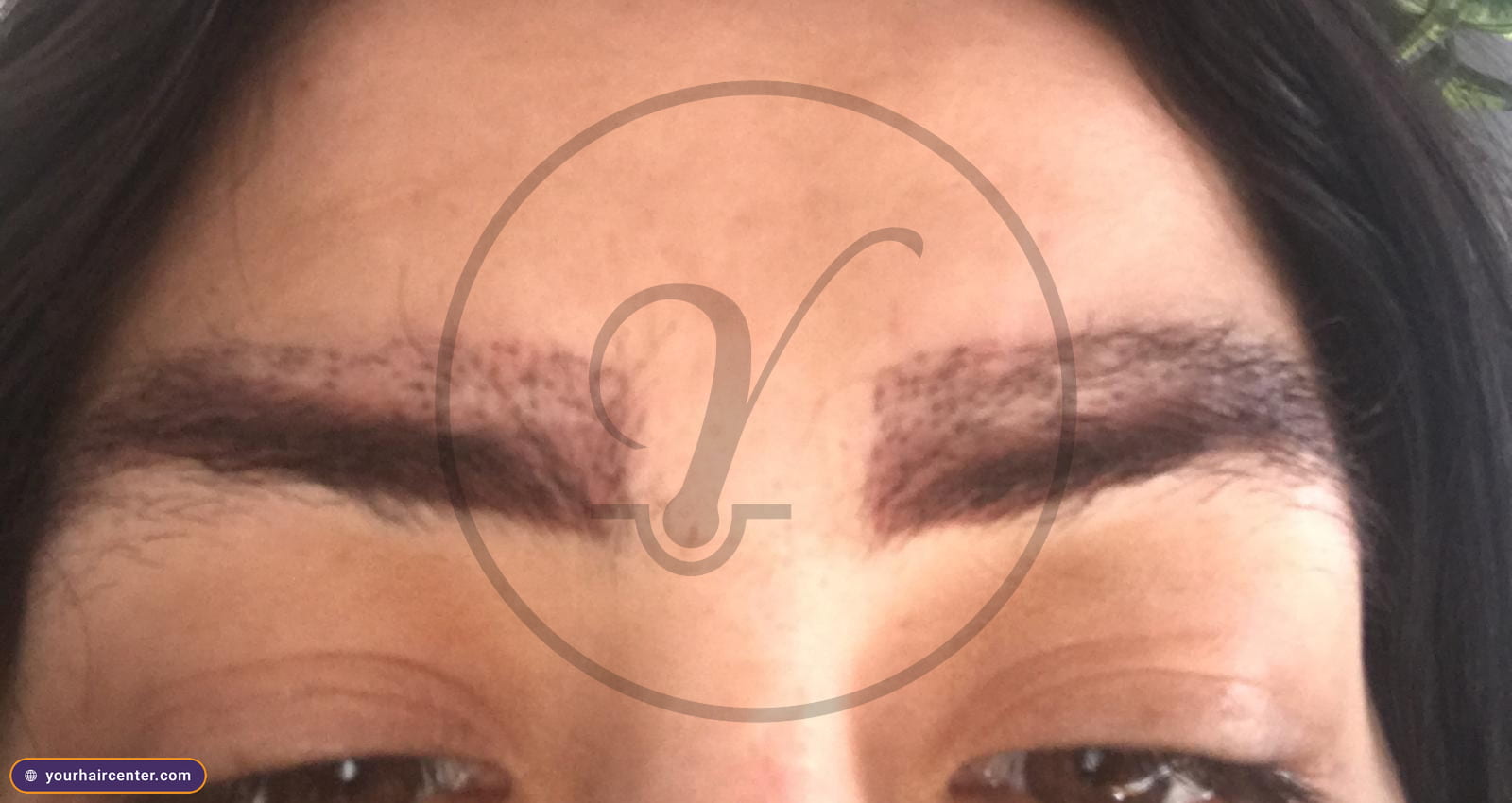
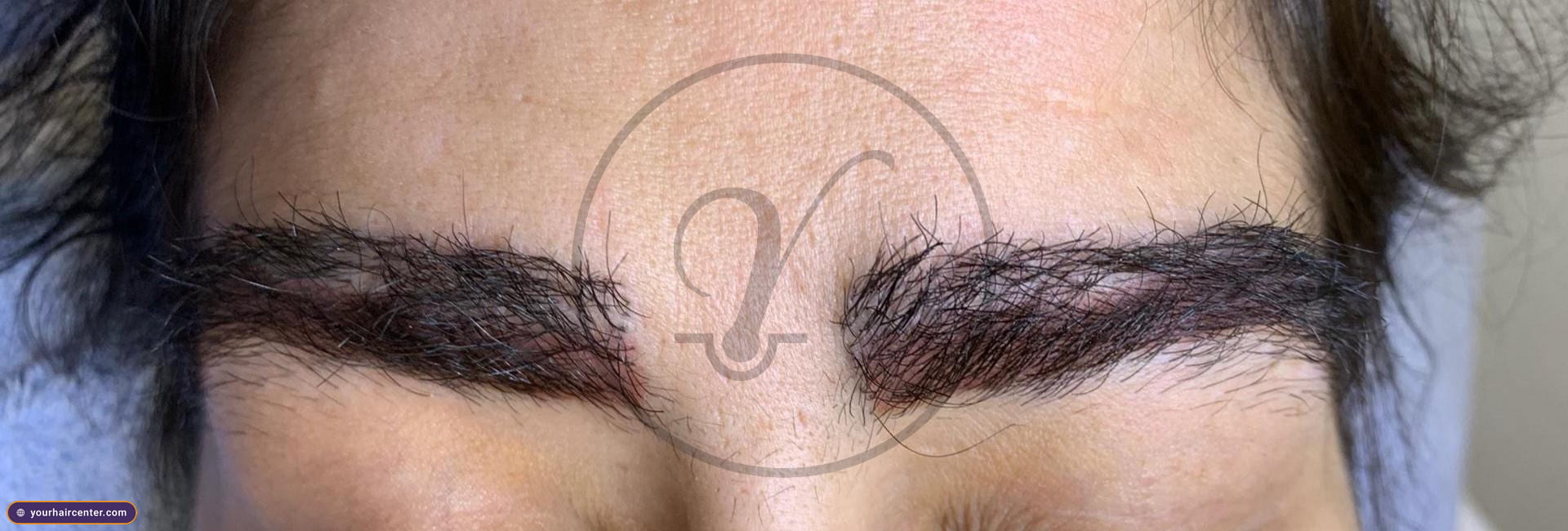
Real results from our patients’ archive. Photos exactly as captured at our accredited partner clinics — no filters, no retouching. Browse more cases in our photo gallery.
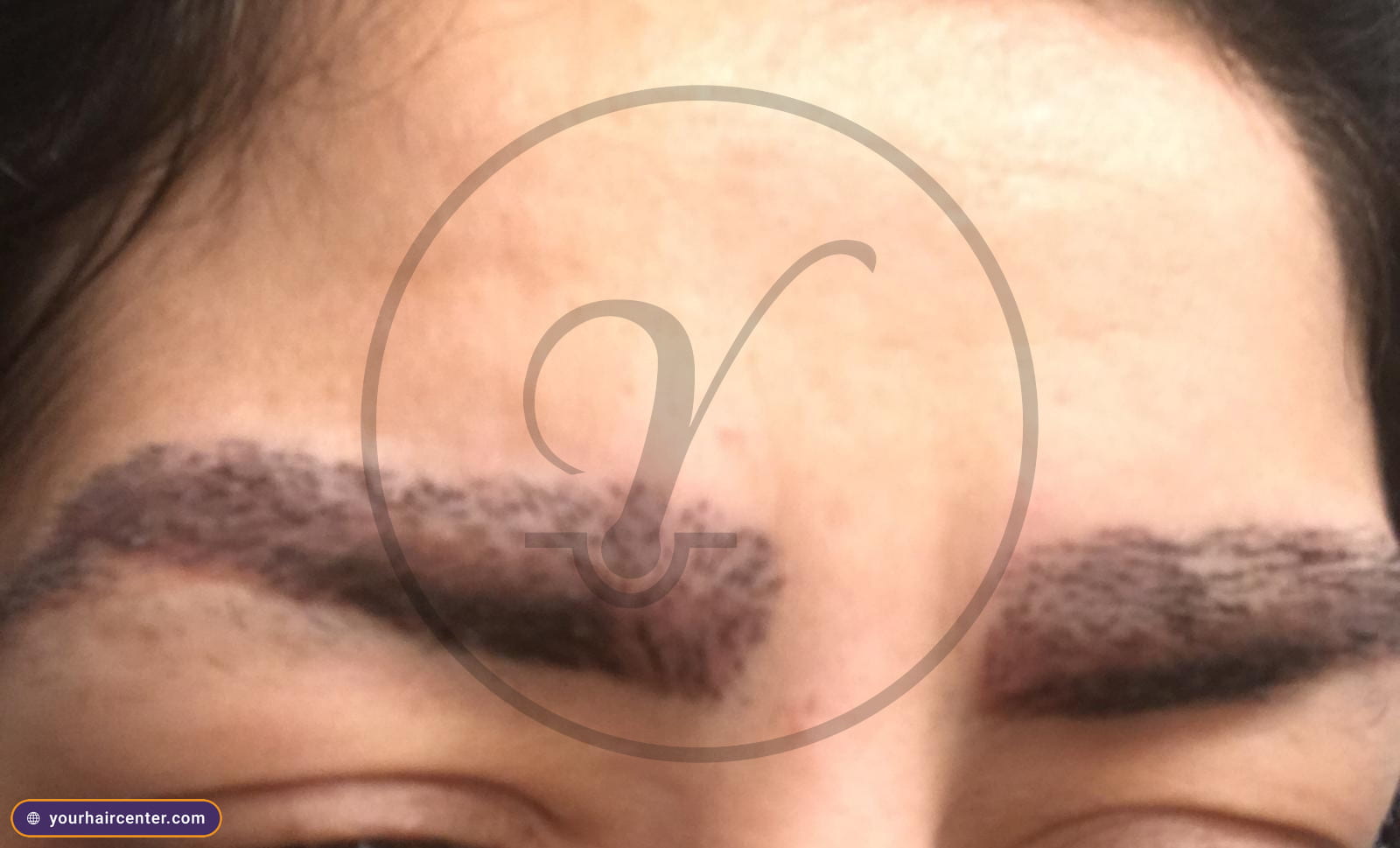
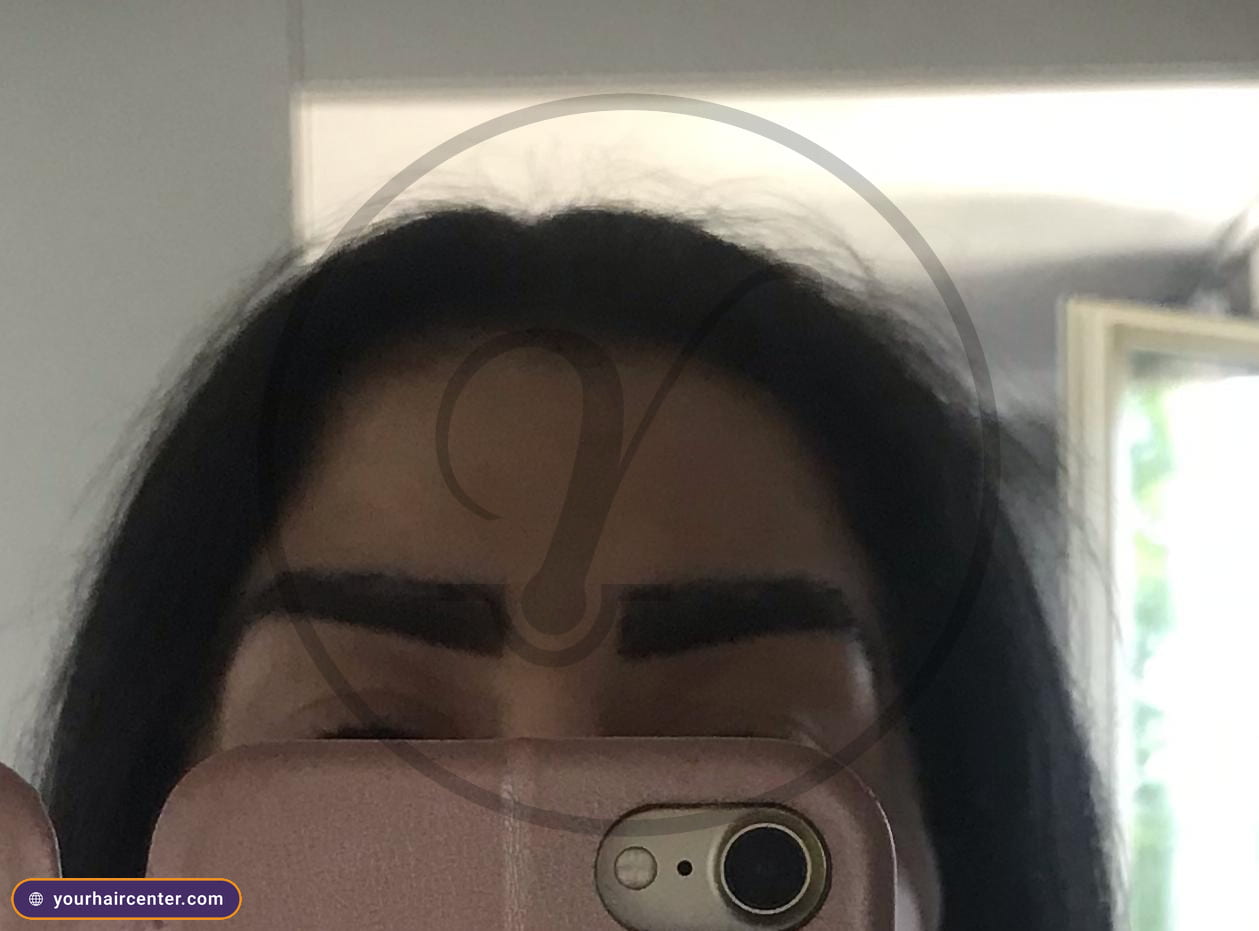
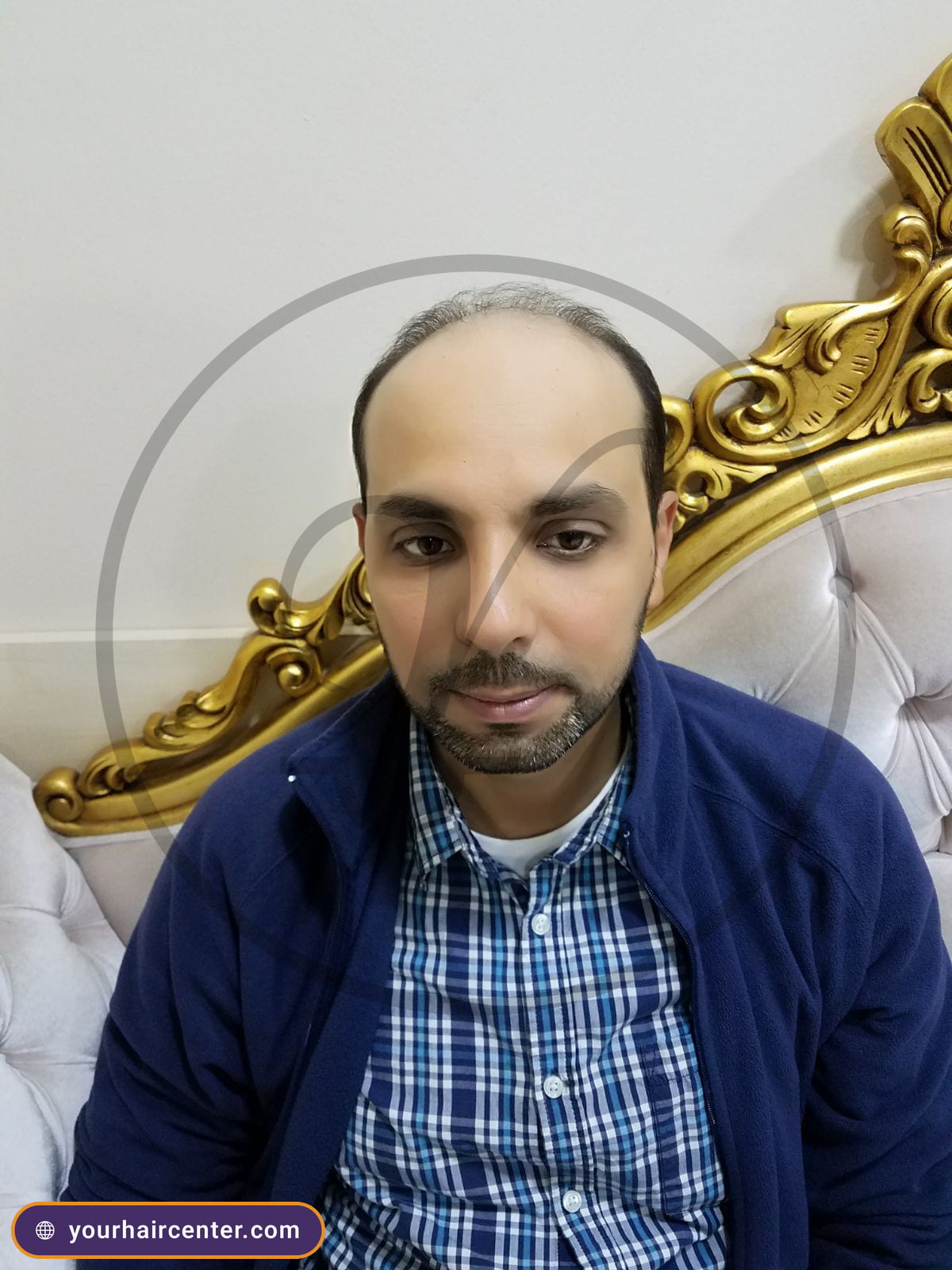

Folliculitis, which shows as small inflamed bumps around the new follicles, is the most common minor issue, and it is usually mild and resolves with simple care.[4] Ingrown hairs at the recipient site can occur as the new hairs emerge and are likewise manageable.[1:2] What looks alarming to patients is shock loss, when the transplanted hairs shed in the first month. This is expected, not a complication, because the follicle stays in place and regrows.[1:3] Pigment changes in the donor area are a recognized possibility and worth asking about. Cyst formation around buried follicles is rare and, when it appears, is typically minor and treatable; reputable surgeons monitor for it during follow-up rather than leaving it to chance.
Do not judge the result during the first month. The shedding you see is shock loss, and acting on it, whether by demanding a revision or, worse, attempting any at-home correction, is how a normal recovery turns into genuine regret.
Notice what these categories have in common. Every one of them is either expected and temporary, or made far less likely by the vetting you do up front. The complications that drive genuine eyebrow transplant regret are overwhelmingly the design and technique failures from the first section of this article, and those are exactly what the 12-point checklist is built to prevent.
Who should not get an eyebrow transplant, the medical contraindications to know before booking
Before any conversation about cost or scheduling, there is a more important question. Is the patient medically suitable at all? Operating on the wrong candidate is its own route to eyebrow transplant regret, and six situations should pause or rule out the procedure.
- Active alopecia areata in the brow region. This is an autoimmune condition that attacks hair follicles, and transplanted follicles can fall victim to the same process.[5] The disease should be stable before any transplant is considered.
- Active, untreated trichotillomania. Compulsive hair-pulling will not spare new follicles, so the underlying disorder must be addressed first.[6]
- Active eczema, psoriasis, or skin inflammation in the brow area. Inflamed skin compromises healing at the recipient site.
- Uncontrolled bleeding or clotting disorders. As with any minor surgery, these need to be managed before proceeding.[6:1]
- Currently undergoing chemotherapy. It is generally best to wait until treatment finishes and hair growth re-establishes, often six to twelve months afterward.[1:4]
- Unrealistic expectations. Not a medical contraindication in the strict sense, but a documented predictor of regret, which is why a careful surgeon screens for it during the design consultation.
A proper consultation includes a candidacy review that flags any of these before a plan is made. If you want that review for your partner, you can schedule a consultation or read more about Your Hair Center and our credentials first.
Three myths about eyebrow transplant regret that the internet gets wrong
Patient forums repeat a handful of misconceptions that cause unnecessary panic. Here is each, with what is actually true.
Myth 1. “Eyebrow transplants always fall out”
The shedding seen at month one is shock loss, not permanent loss. The follicle remains anchored, regrows from the same root, and produces lasting hair over the following months.[1:5] Mistaking expected shedding for failure, and feeling premature eyebrow transplant regret because of it, is one of the most common forum errors.
Myth 2. “Once it goes wrong, there is nothing you can do”
Every one of the five causes has a documented corrective pathway, whether laser reduction, partial revision, full revision, or a grooming protocol, and the window for correction stays open for years in most cases.[2:7] Eyebrow transplant regret is rarely the end of the road.
Myth 3. “Cheaper procedures inevitably go wrong”
Price is not what predicts eyebrow transplant regret. Surgeon experience, a strict single-hair graft protocol, a real design consultation, and structured follow-up are the variables that decide whether you avoid regret.[2:8] A carefully vetted lower-cost clinic can outperform an under-vetted premium one on every measure that counts.
Frequently asked questions about eyebrow transplant regret
What are the cons of eyebrow transplant?
The downsides cluster into the five categories that drive eyebrow transplant regret, namely coarse texture, wrong angle, fast growth, pluggy multi-hair grafts, and overly aggressive density-design, plus a candidacy filter for who should not have the procedure at all. Each is covered in detail above, and each has both a corrective option and a prevention step you control before booking.
Can an eyebrow transplant go wrong?
Yes, in roughly five named ways, namely texture, angle, growth rate, pluggy grafts, and over-aggressive design. The reassuring part is that all five are preventable with the vetting protocol in this article, and all are documented as correctable with the right secondary intervention when they do occur.[1:6] Poor outcomes are almost always traceable to planning, not luck.
What are the side effects of an eyebrow transplant?
Side effects are mild and expected. They include light swelling and redness for three to five days, small scabs that shed during the first week, and shock loss of the transplanted hairs in the first month before regrowth begins.[1:7] These differ from true complications such as folliculitis, ingrown hairs, and infection, which are rare and treatable.[4:1]
Can a bad eyebrow transplant be reversed or corrected?
In most cases, yes, and that is the most reassuring fact about eyebrow transplant regret. Coarse texture or excess density can be thinned with laser reduction; pluggy results corrected by partial graft extraction; angle errors fixed with revision; and severe cases addressed with full revision.[2:9] Surgeons typically wait around twelve months after the original procedure so full growth can be assessed before any correction.
How long after an eyebrow transplant do you know if it went wrong?
Most regret triggers become visible by month six, once the fine early regrowth has been replaced by mature terminal hairs. The final result is judged at twelve months.[1:8] Panicking during the month-one shedding phase is premature, because that shedding is expected, and the true picture only emerges later.
What you now know
You came in asking what causes eyebrow transplant regret and how to keep it from happening. You now have the full diagnostic. It is five named causes, each with a correction and a prevention; a 12-point checklist to vet any clinic the week before booking; the follicle biology that makes the answers meaningful; and a candidacy filter to check medical suitability first. Regret is not bad luck. It is the absence of these checks. If you want a careful starting point, send us your concerns and the questions from the checklist, and a doctor will review the case before any procedure conversation begins through our eyebrow hair transplant service. You can also talk to a doctor about safety directly.
References
- Cleveland Clinic, Eyebrow Transplant, What It Is, Surgery, Recovery and Results. https://my.clevelandclinic.org/health/treatments/24236-eyebrow-transplant (opens in new tab) ︎ ︎ ︎ ︎ ︎ ︎ ︎ ︎ ︎
- International Society of Hair Restoration Surgery (ISHRS), “Hair Transplant Surgery” (follicular-unit grafting and surgeon-led restoration). https://ishrs.org/patients/treatments-for-hair-loss/hair-transplant-surgery/ (opens in new tab) ︎ ︎ ︎ ︎ ︎ ︎ ︎ ︎ ︎ ︎
- “Physiology, Hair,” StatPearls [Internet], NCBI Bookshelf, National Institutes of Health (hair structure, the growth cycle, terminal-versus-vellus hair, and how growth-cycle length differs by body region). https://www.ncbi.nlm.nih.gov/books/NBK499948/ (opens in new tab) ︎ ︎
- Cleveland Clinic, folliculitis, causes, symptoms, and treatment. https://my.clevelandclinic.org/health/diseases/17692-folliculitis (opens in new tab) ︎ ︎
- National Institute of Arthritis and Musculoskeletal and Skin Diseases (NIAMS), “Alopecia Areata” (autoimmune hair loss in which the immune system attacks hair follicles). https://www.niams.nih.gov/health-topics/alopecia-areata (opens in new tab) ︎
- MedlinePlus, trichotillomania (hair-pulling disorder). https://medlineplus.gov/ency/article/001517.htm (opens in new tab) ︎ ︎