Planning your eyebrow transplant day by day is the surest way to avoid surprises during recovery. This guide walks the first 14 days one day at a time, then the Week 3-4 shedding, then the month-by-month regrowth curve that reaches its maximum density between Months 8 and 14. Each stage carries a clear do and do-not, plus the return-to-work, exercise, makeup, sleep, pool, and travel dates you can plug straight into your calendar, with sources you can verify for every clinical milestone.

Eyebrow transplant recovery, day by day, follows a clear order. Swelling and bruising come in the first days,[1] the tiny crusts over the grafts come away in the second week,[2] and a pink tone lasts about two weeks. The transplanted hairs shed after about two weeks, new hairs start at 3 to 4 months, and density peaks between Months 8 and 14.[1:1][2:1]
If you have already booked your procedure, the question you are really asking is which Monday you can sit in a meeting room without your brows looking like you lost a fight. This is the eyebrow transplant day by day guide the search results never quite give you, a calendar you can actually plug dates into. We map the first 14 days one day at a time, then the Week 3-4 shedding that almost every patient goes through, then the month-by-month regrowth curve that reaches its maximum density between Months 8 and 14. Every entry is tagged with an explicit do and do-not, so you know when it is safe to return to your desk, the gym, makeup, a flight, and the pool. Underneath the dates we explain the biology, the shedding, the resting follicles and the slow thickening of the new hairs that make the day-by-day recovery behave the way it does, with sources you can verify. Save this page, plug the dates into your calendar, then book the procedure to checkpoint Day 0.
How Long Does Eyebrow Transplant Recovery Take? The Day-1-to-Month-12 Quick Answer
Eyebrow transplant recovery follows seven plain checkpoints, summarized here and detailed below.
- Days 1-3 swelling and bruising around the brows and eyes peak then settle.[1:2]
- Days 4-7 small scabs sit over each graft site and stay visible up close.[2:2]
- Days 8-14 the scabs come away and the pink tone fades, while the brows look fuller than before.[2:3][1:3]
- Weeks 3-4 the transplanted hairs shed, which is expected.[1:4]
- Months 2-3 the follicles rest, then the first fine regrowth appears.[3]
- Months 4-6 the new hairs thicken and darken, and most grafts are growing by Month 6.[2:4]
- Months 8-14 the brow reaches its maximum density.[1:5]
Our team plans the return to desk work for Day 7 and to client-facing work for Day 14, although many people feel well enough for desk work after a couple of days.[3:1] The seven checkpoints above are the spine of this guide, and the eyebrow transplant day by day breakdown below turns each of them into a dated, actionable step. The scab window, the shedding and the regrowth onset come from published eyebrow series we cite as we go, while the dates for work, exercise and makeup are our team’s planning dates. Return-to-life dates, aftercare rules, and red-flag symptoms each get their own section so you never confuse normal healing with a problem. The transplanted follicles keep growing for life, and because they come from the scalp they grow faster than native brow hair and usually need regular trimming.[1:6] A second session for extra density is common and waits at least eight months after the first.[1:7] If you want the procedure itself explained first, start with the eyebrow hair transplant overview.
Eyebrow Transplant Day by Day, the Daily Recovery Timeline for Days 1-14
This is the heart of the day-by-day recovery timeline, the part of eyebrow transplant recovery you actually have to plan your work and travel around. Each day below gives you what your brows look like, what they feel like, and a clear do and do-not list. Print this eyebrow transplant healing schedule, or set a daily reminder.
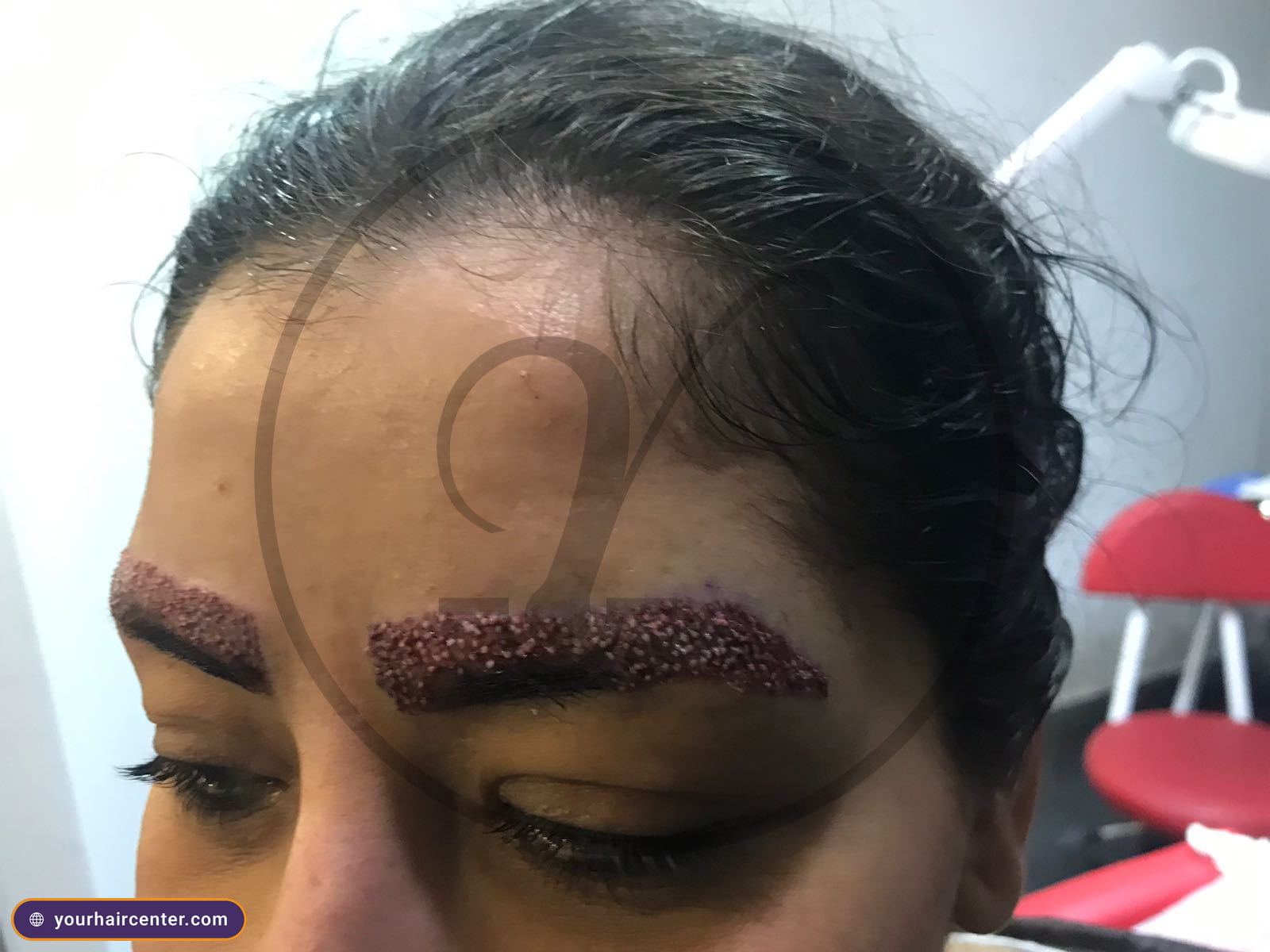
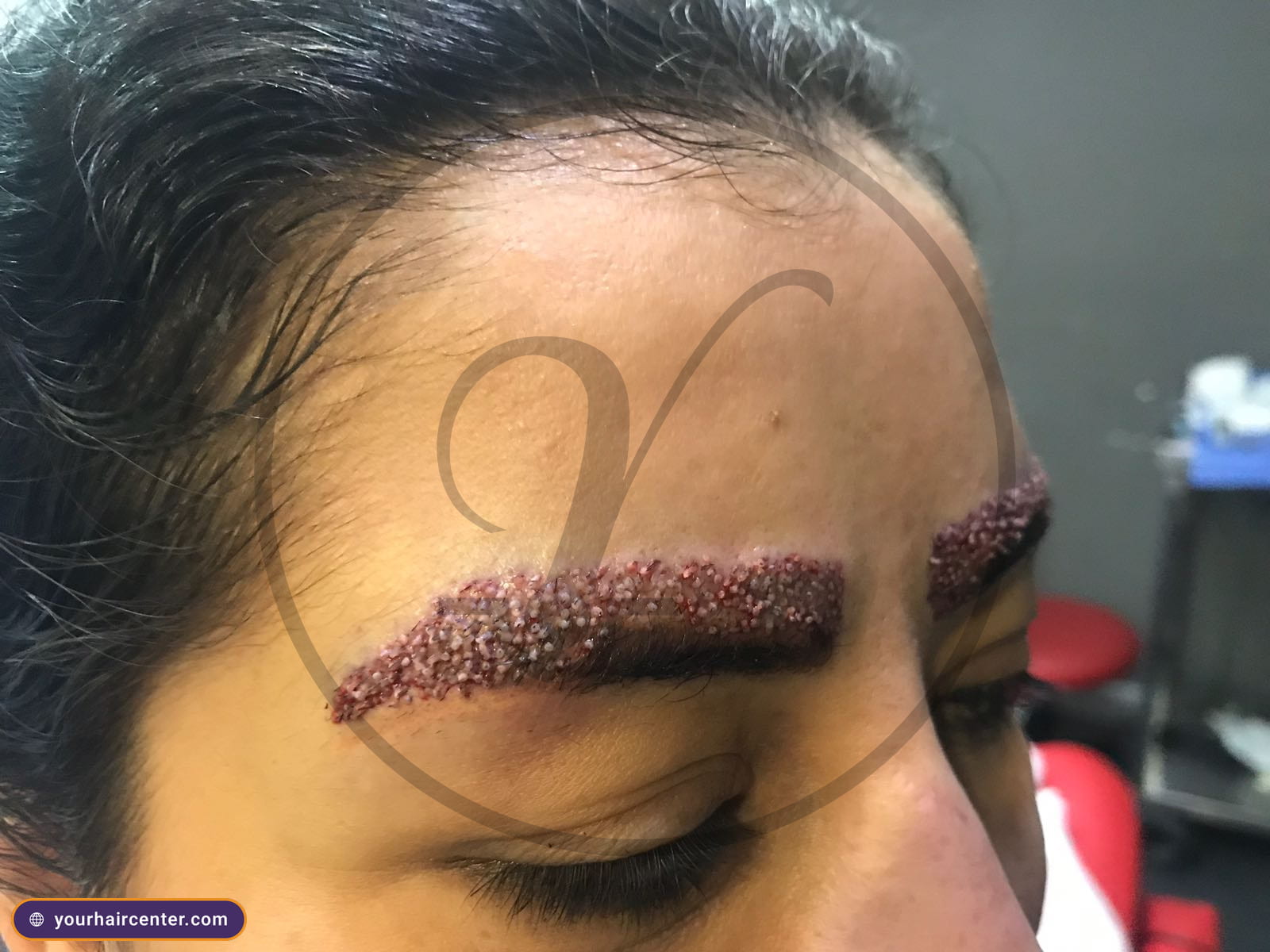
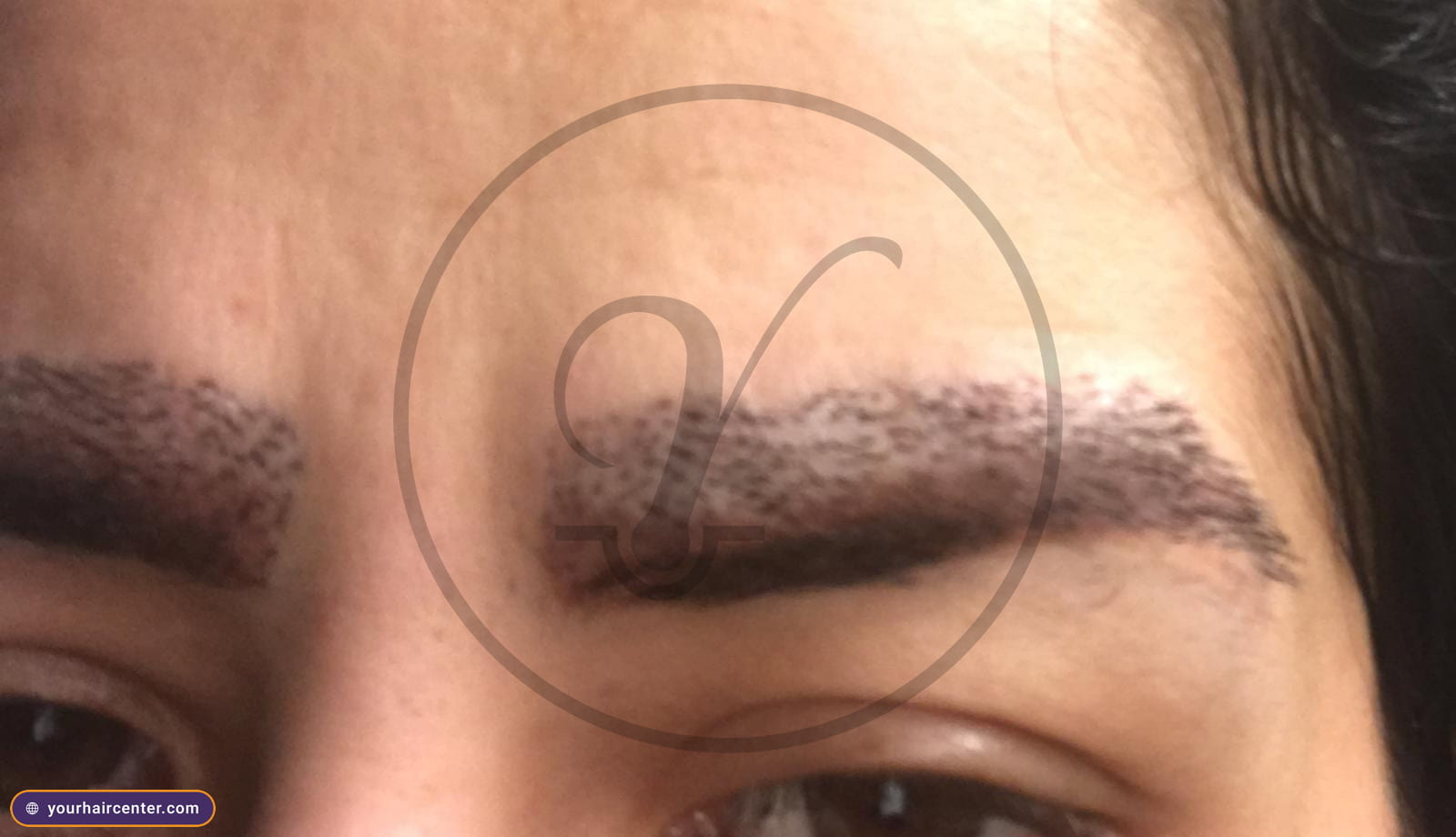
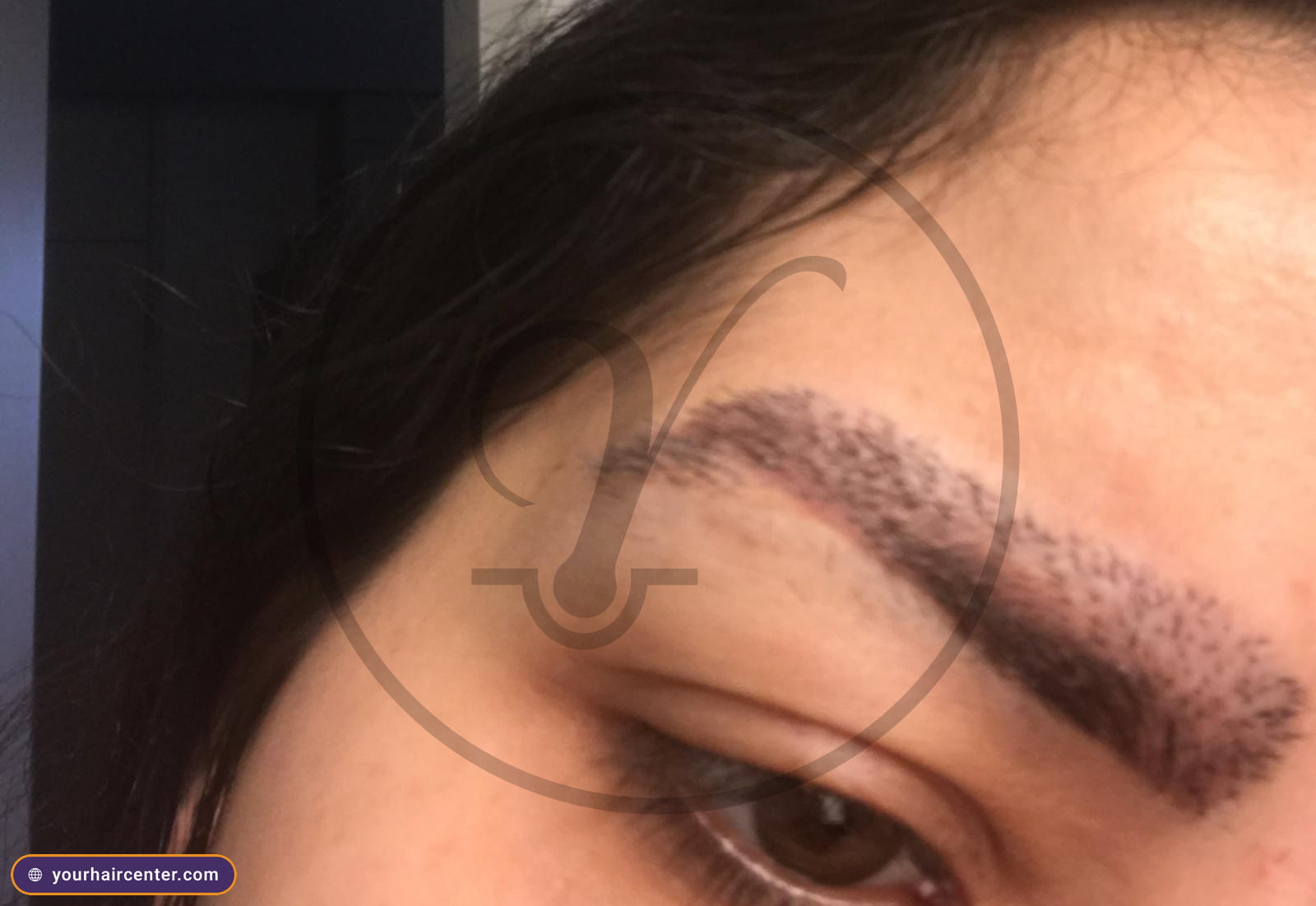
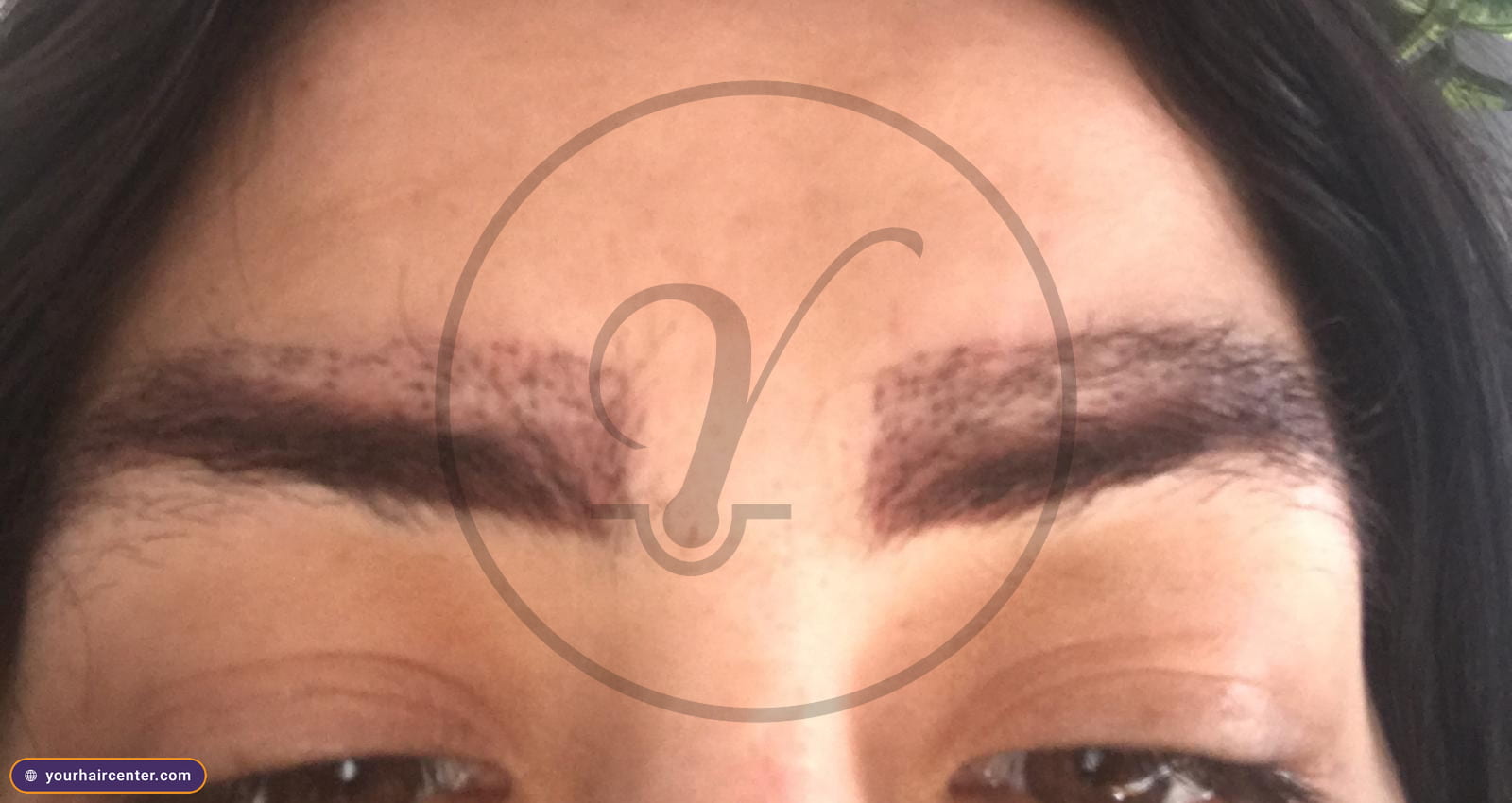
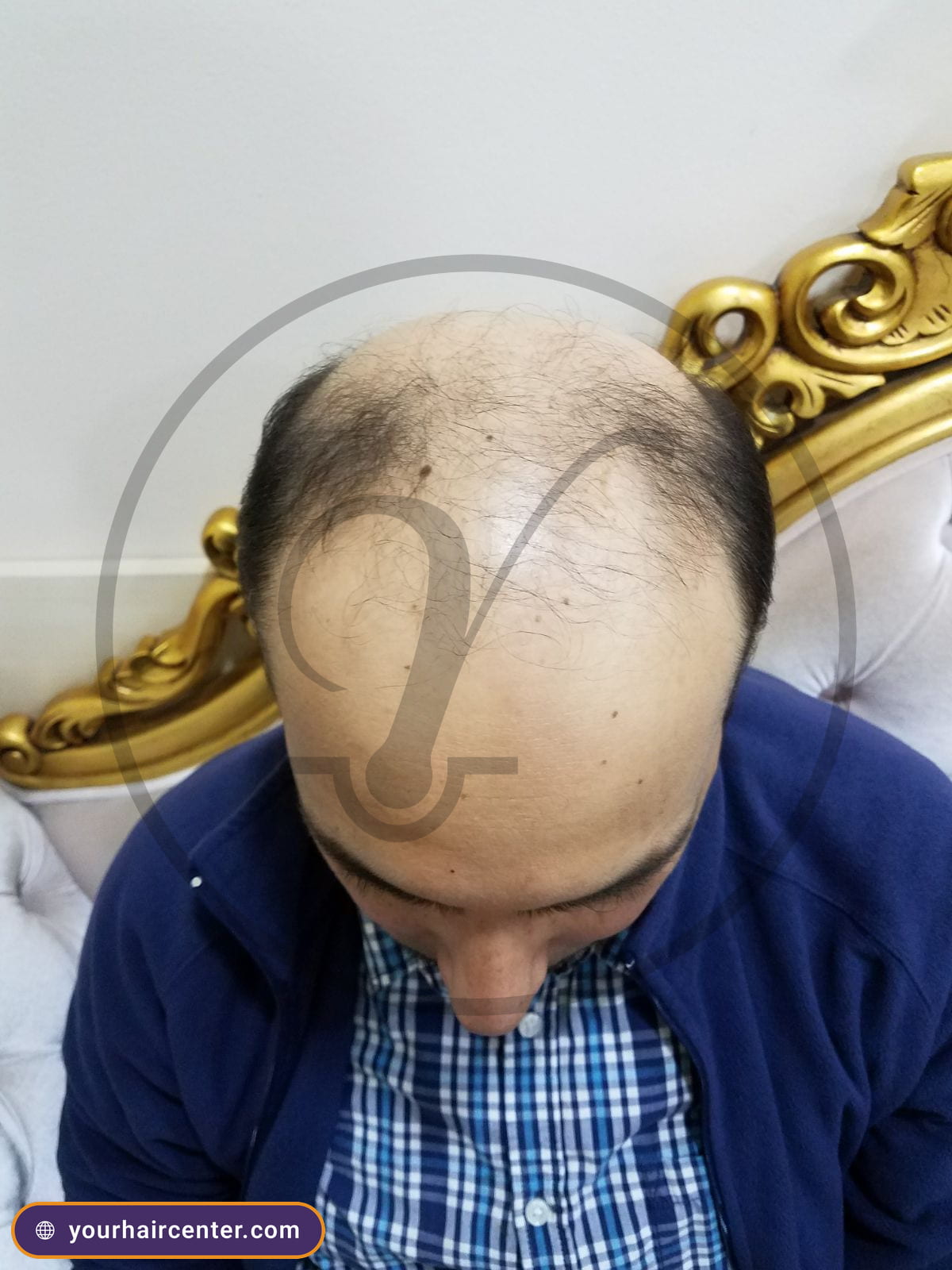
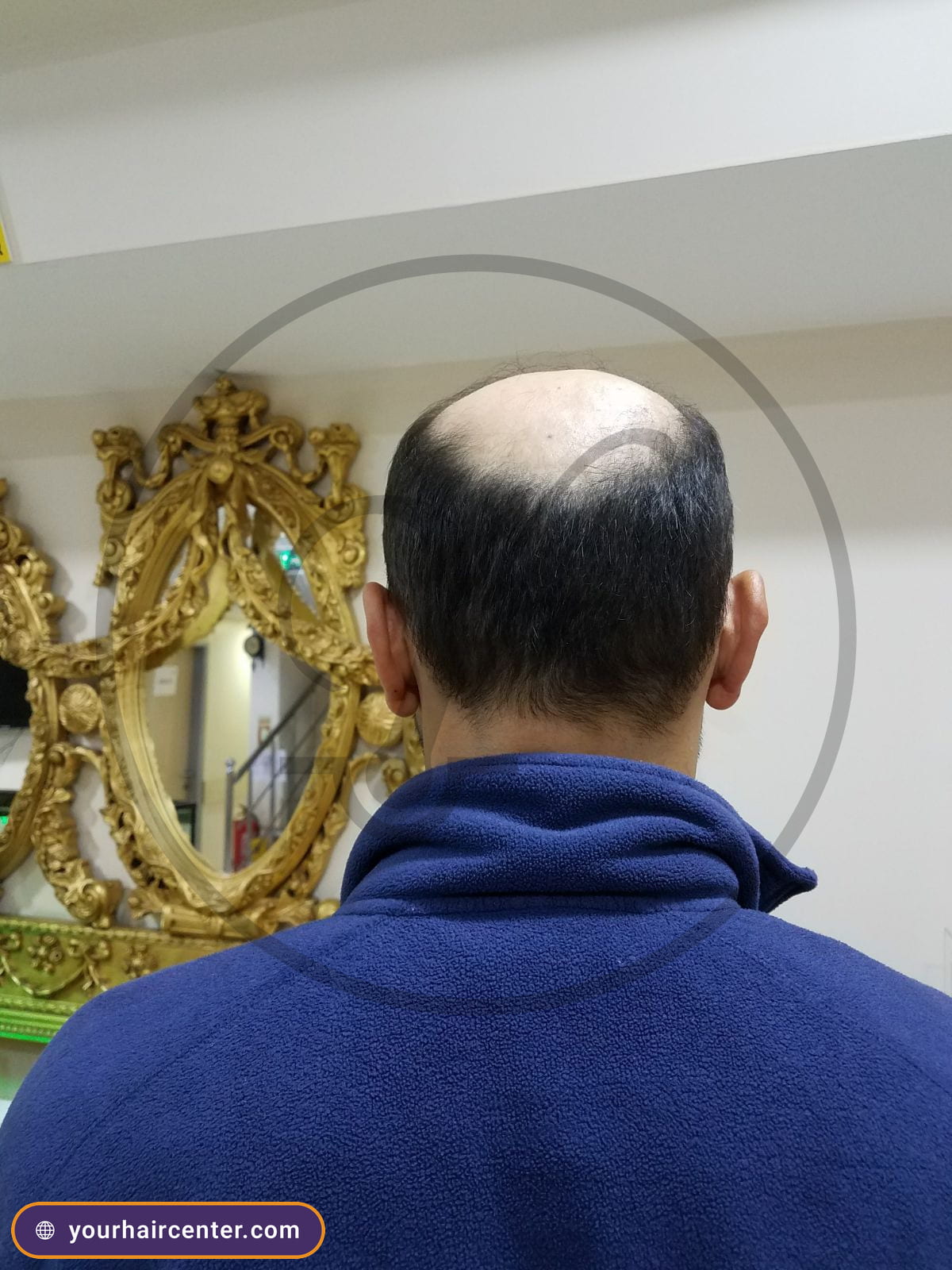
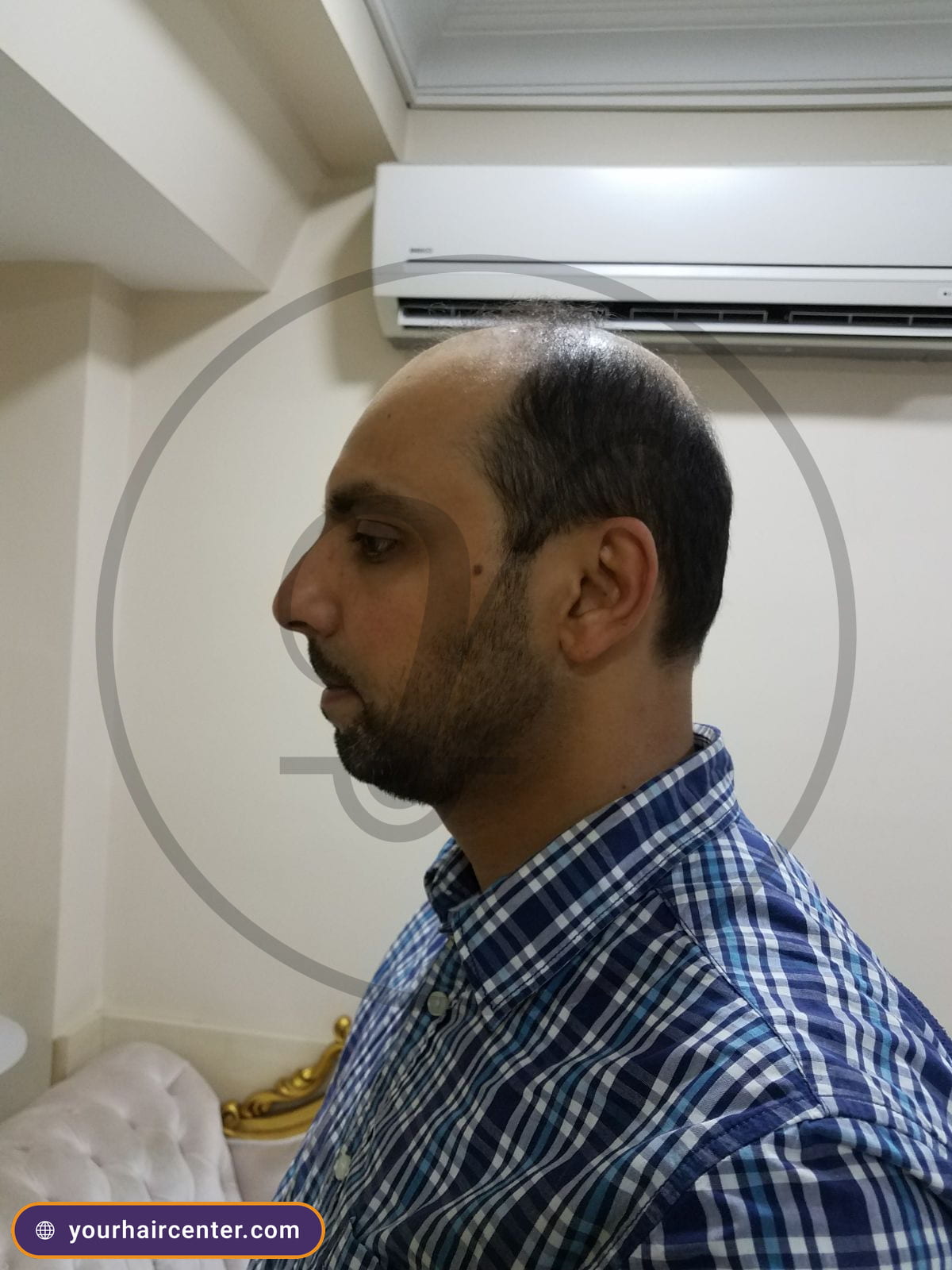
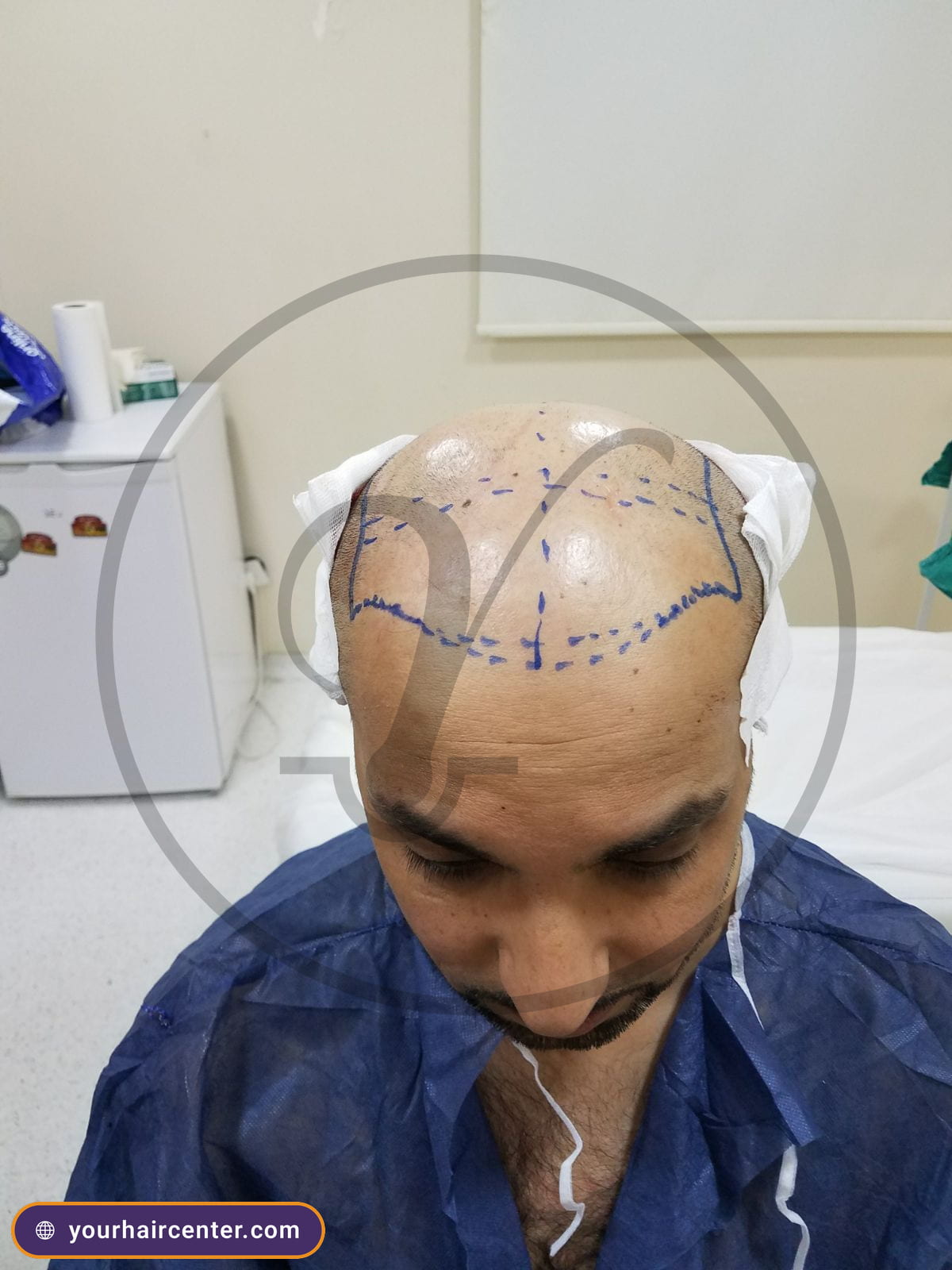
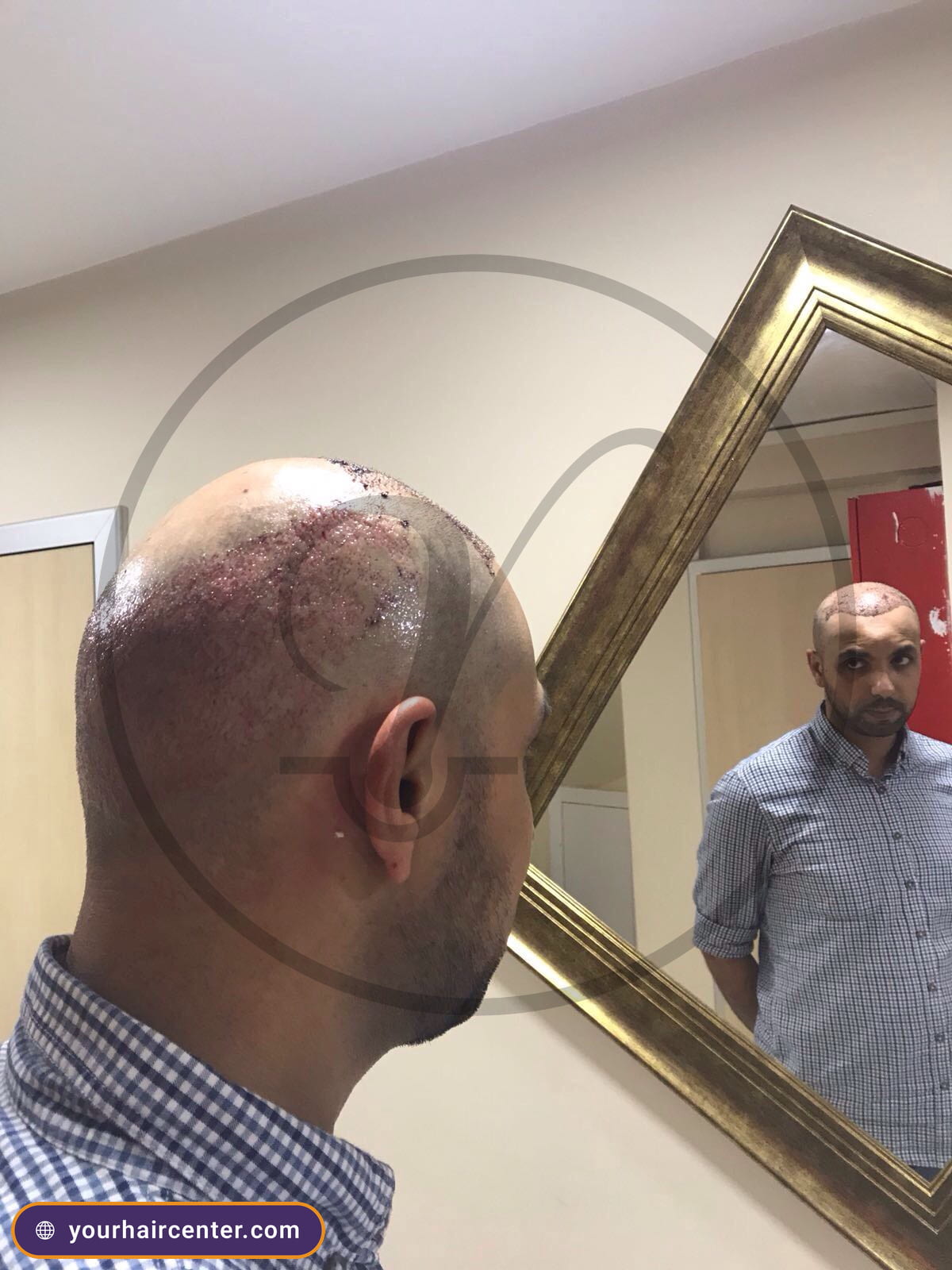
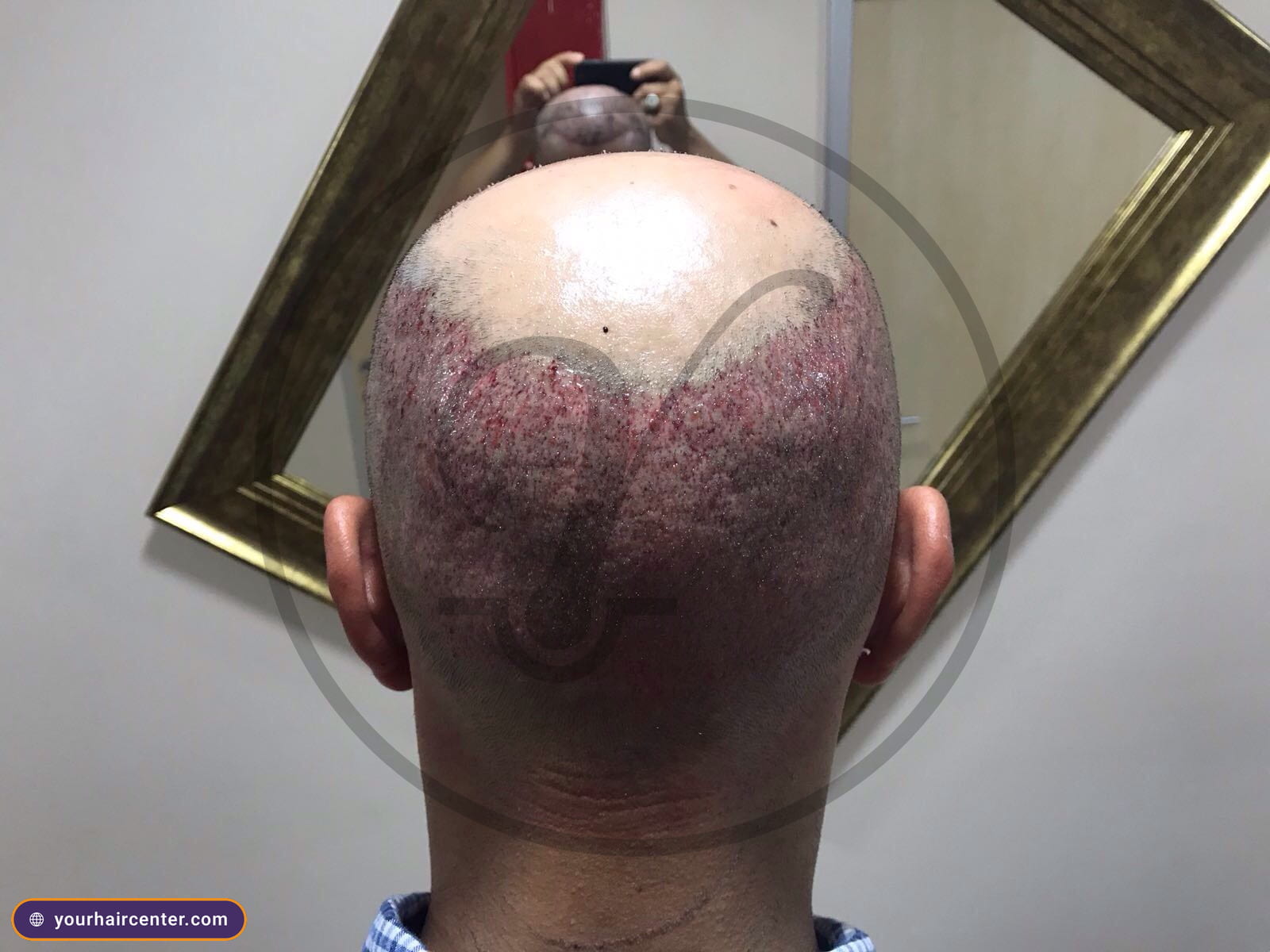
Real results from our patients’ archive. Photos exactly as captured at our accredited partner clinics and hospitals, with no filters and no retouching. Browse more cases in our photo gallery.
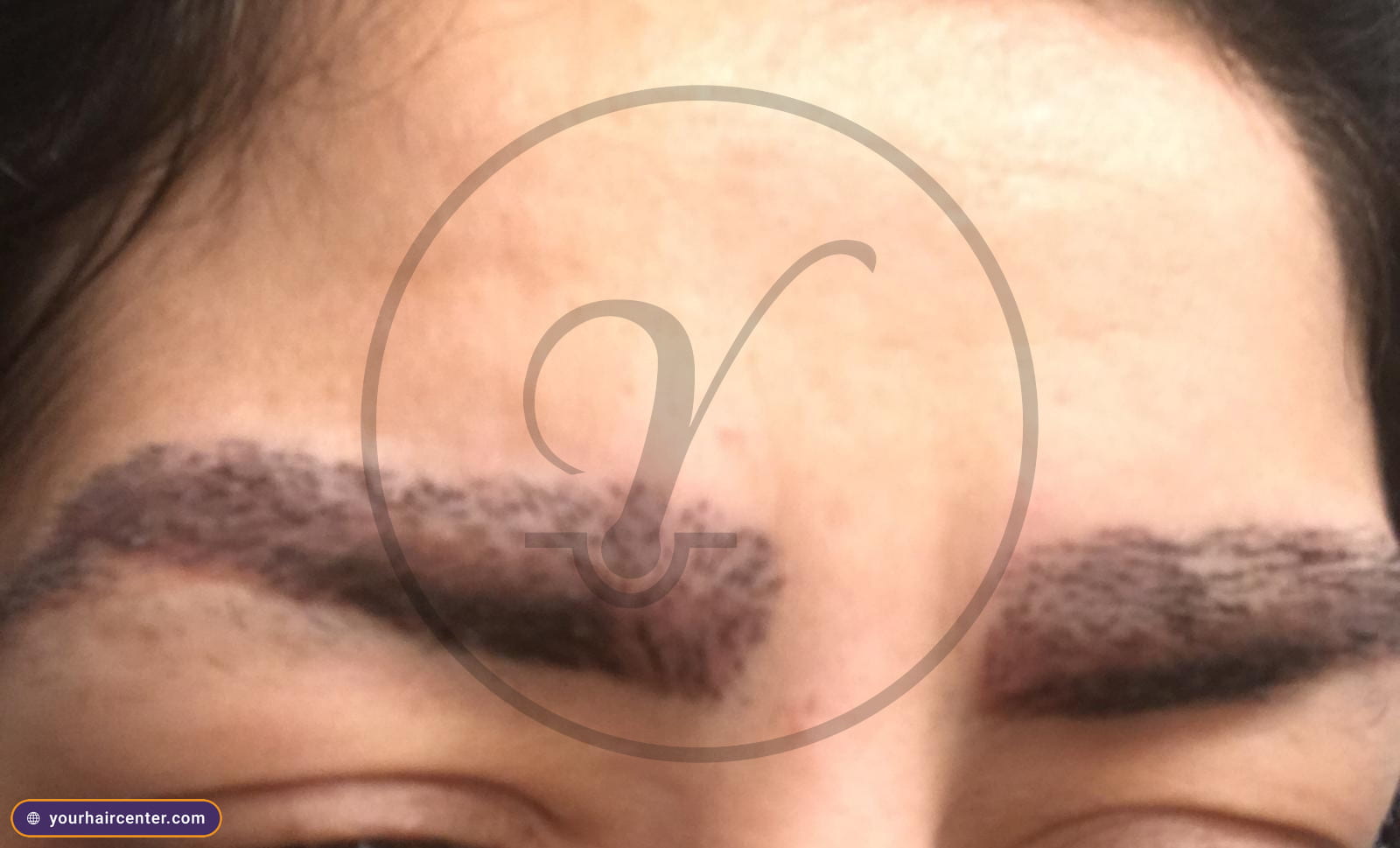
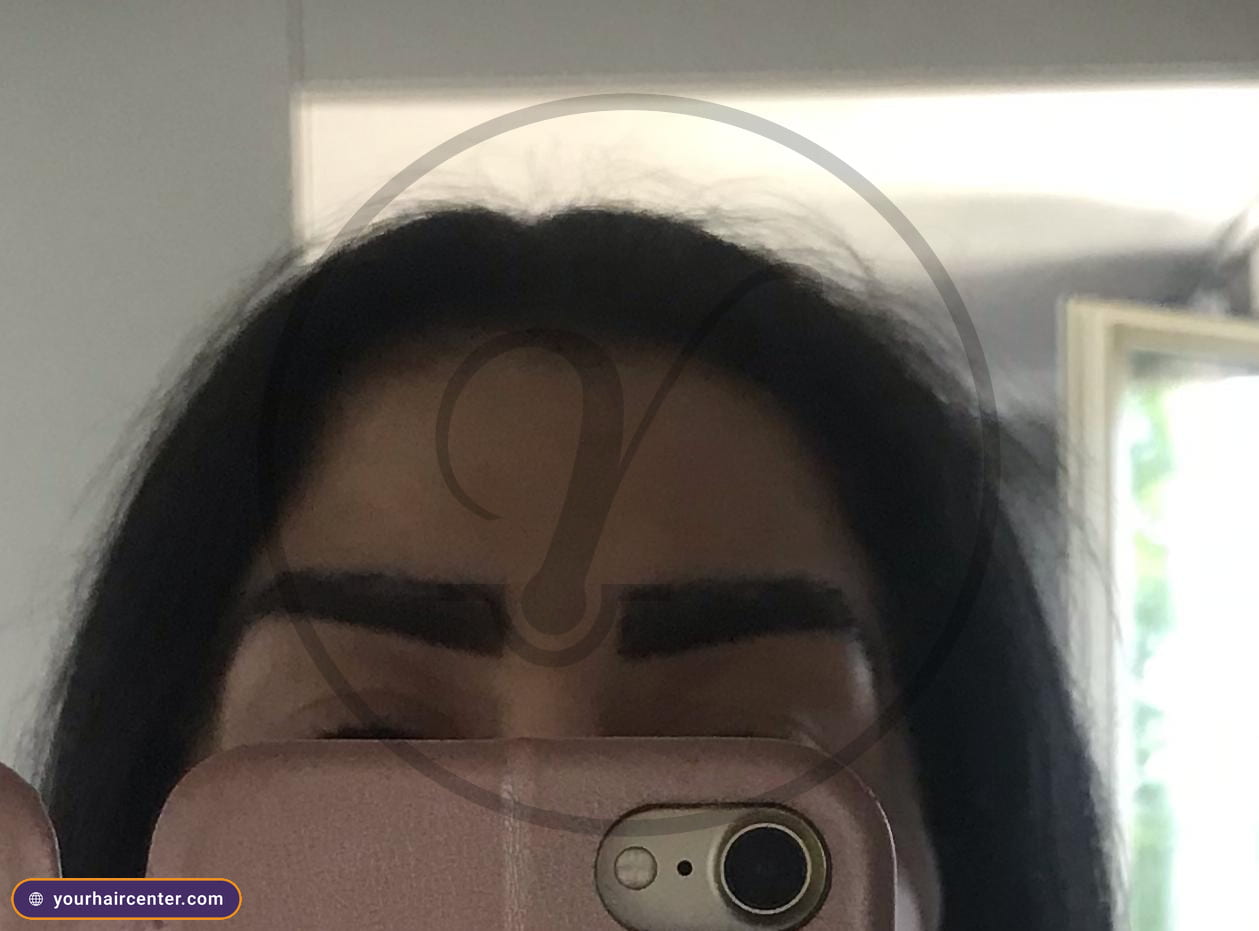
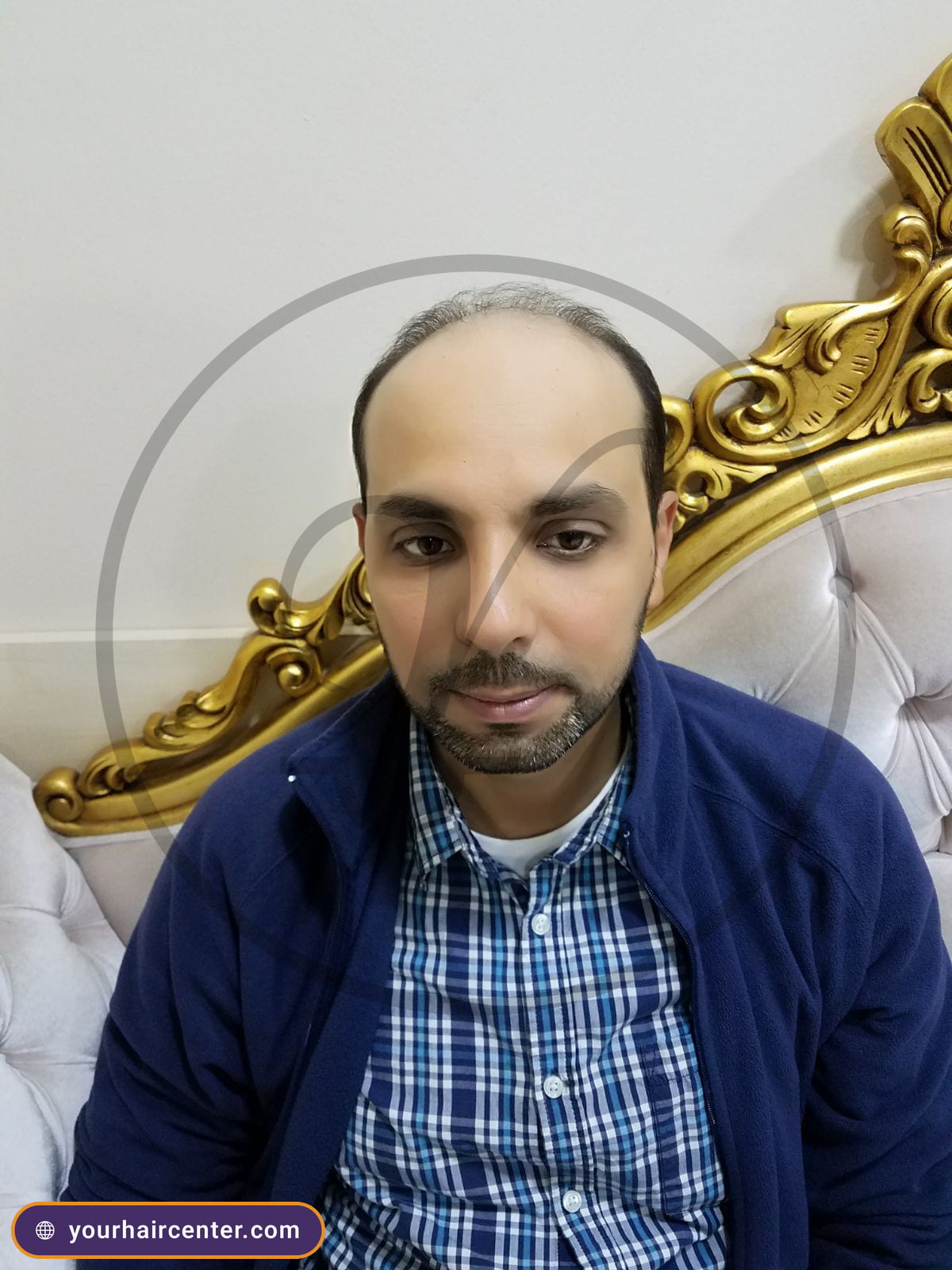

Day 1, the procedure day
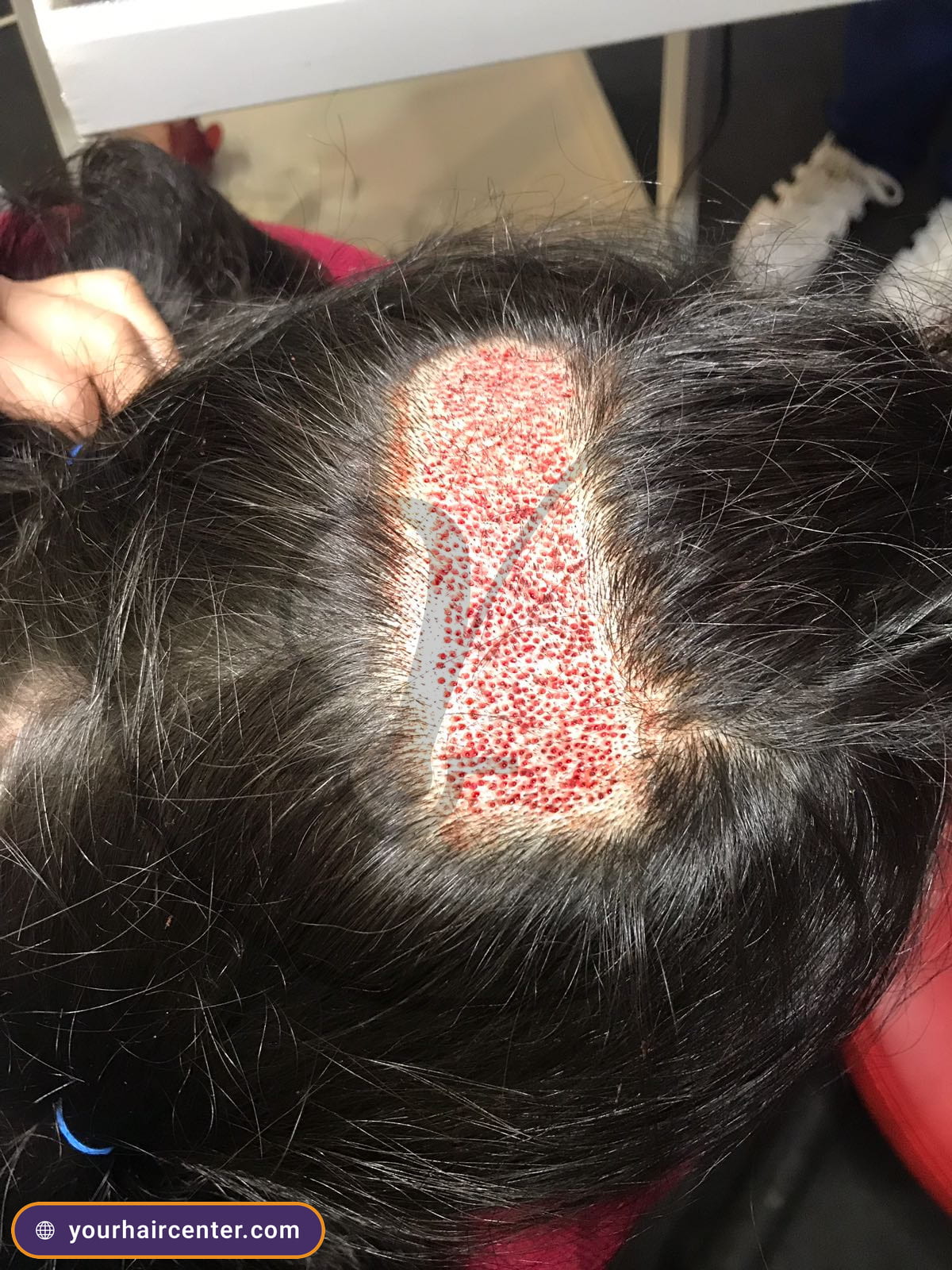
Day 1 starts the eyebrow transplant recovery clock. Tiny red dots sit at each recipient site, with mild puffiness around the brows and a small dressing over the scalp donor area. As the local anesthesia wears off you feel numbness fading and a mild tightness, but no real pain at rest.
- Do sleep semi-upright at a 45-degree angle on two pillows, keep your head still on the transfer or flight back, and take the anti-inflammatory at the dose your doctor set.
- Do not touch, rub, or wet the brows, lean forward, drink alcohol, or take aspirin or any blood-thinning over-the-counter medicine.
Day 2, peak swelling
Swelling around the brows and forehead is at its peak, and a little bruising may appear around the eyes overnight as gravity pulls the swelling downward.[4] You feel a dull pressure across the forehead rather than sharp pain.
- Do keep sleeping semi-upright and apply a cold compress to the forehead only, never directly on the brow grafts, in ten-minute intervals.[5]
- Do not put ice or a compress on the brow area itself, bend over, or lift anything heavier than a laptop bag.
Day 3, swelling resolves and the first clinic check
Swelling is worst in the morning and begins to ease by evening, while redness at the recipient sites is still clearly visible. Itching may start as healing accelerates, and the tightness eases off.
- Do attend your in-clinic post-op check before discharge, where the clinical team performs the first medical wash for you.
- Do not scratch, try to wash the brow area yourself before that medical wash, or smoke, since nicotine constricts the small blood vessels that feed the new grafts.
Day 4, first scabs appear
The scab phase of eyebrow transplant healing begins now. Tiny scabs, each smaller than a sesame seed, form over the graft sites. They are visible up close but not obvious from arm’s length. Itching continues and the donor area on the scalp may feel dry.
- Do begin the gentle twice-daily saline wash at home exactly as your doctor prescribed, and pat dry with a clean cotton pad.
- Do not pick, scratch, or peel the scabs, or apply any cream that did not come in your aftercare kit.
Day 5, scabs darken
The scabs darken to a reddish-brown and the outline of your new brow shape is clearly visible. Itching can intensify, which simply signals active healing.
- Do continue the saline wash, go back to sleeping flat from tonight, and wear sunglasses outdoors.
- Do not expose the brow area to direct sun without sunglasses or a hat, or remove any scabs.
Day 6, swelling fully resolved
Most facial swelling has now resolved, the scabs are still in place, and any bruising is fading.[4:1] Discomfort is minimal.
- Do take gentle walks outdoors and ease back into non-strenuous desk work from home if you want to.
- Do not hit the gym, jog, swim, use a sauna, or have sex yet, since strenuous activity can make the graft sites bleed or swell.[3:2]
Day 7, return to a desk job
This is the one-week mark of eyebrow transplant recovery, the checkpoint most people search for. The scabs are still there but less prominent, and from across a meeting room your brows just read as slightly darker than usual. You are comfortable for a full day of activity. This is also the most-Googled point in the day by day timeline, so here is the honest answer on graft security.
In a study that tested scalp grafts by pulling on them, pulling an attached scab could still remove a graft through Day 5, and from Day 9 the grafts were no longer at risk of being dislodged.[6] The NHS still asks patients to treat transplanted hair very carefully for the first two weeks, so careful handling still matters.[7]
- Do return to a non-client-facing desk job (this is our team’s return-to-desk date), and resume your normal sleeping position.
- Do not take on client-facing or on-camera work yet (wait until Day 14), play any contact sport, or yank shirts over your head carelessly.
Day 8, scabs start to fall
The scabs begin loosening and some fall off on their own during the saline wash. Itching is reducing.
- Do continue the saline wash, let the scabs fall by themselves, and take light walks outdoors with sunscreen on the forehead, not yet on the brows.
- Do not apply any makeup to the brow area, or pull off loose scabs even if they seem to dangle.
Day 9, the brows look sparse
This is the point in eyebrow transplant healing where the brows can look their thinnest so far. As the scabs shed, some transplanted hairs come away with them,[2:5] so the recipient zone can temporarily look sparser than it did before surgery. This is normal and expected, the day-by-day low point that sets up the shedding biology covered in the months section below. Sensation is nearly back to normal.
- Do trust the timeline rather than panicking, and take photos for your follow-up.
- Do not judge your final result by how the brows look on Day 9.
Day 10, makeup around the brow
Most scabs have shed, the recipient sites look pink, and a little redness lingers. Sensation is normal.
- Do resume makeup on the rest of your face, foundation, eye shadow, and mascara, but keep it off the brow area itself.
- Do not use brow pencils, brow gel, brow tint, or any product on the brow zone, because friction can dislodge the newly transplanted follicles and cause shedding.
Day 11, color settles
Redness is fading and the transplanted hairs are visible as tiny short shafts. Sensation is normal.
- Do switch to a light moisturizer on the surrounding face, working around the brow.
- Do not exfoliate, or apply retinoids or acids anywhere near the brow border.
Day 12, almost client-ready
Your brows look slightly fuller than before surgery, with the transplanted hairs still in place and minimal redness. Sensation is normal.
- Do take light walks, resume yoga without inversions, and plan your client-facing return for Day 14.
- Do not do head-down poses, jog in a way that bounces the head, or use saunas or pools.
Day 13, the last residual scabs
A handful of stubborn scabs may still cling to the densest implantation zone. Sensation is normal.
- Do keep up the saline wash to coax the last scabs to release.
- Do not pick at those last scabs.
Day 14, the scab phase ends
Day 14 closes the day-by-day phase of eyebrow transplant recovery. Your brows look fuller than before surgery, all scabs have shed, and the transplanted hairs are still in place, though they are due to shed after about two weeks.[1:8] This is the calm before the Week 3-4 shedding, and a good photo checkpoint. Sensation is fully normal.
- Do return to client-facing work, video calls, and in-person meetings, and resume light to moderate gym sessions.
- Do not start contact sports, swimming pools, saunas, dye, or microblading touch-ups yet, or do heavy weight training that strains the forehead.
For context, the technique you chose, the FUE hair transplant route or the DHI hair transplant with the Choi pen, does not change this day-by-day window, since scabs and redness clear on the same timeline whatever the technique. If you are still in Istanbul during these first days, the reception and accommodation team coordinates your stay and clinic transfers around this schedule.
Weeks 3-4, Shock Loss Begins (Don’t Panic, This Is the Procedure Working)
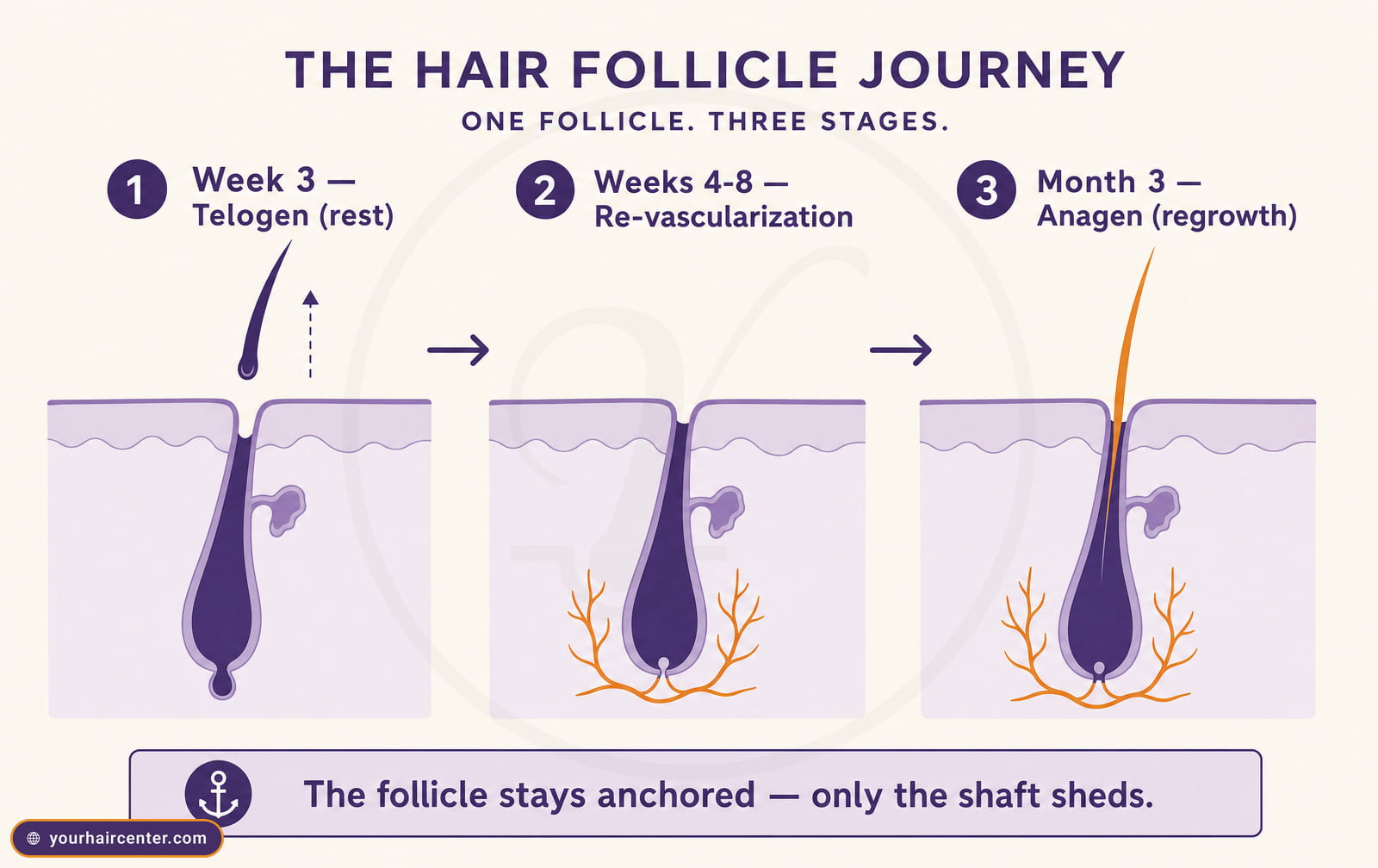
This is the stage of eyebrow transplant recovery that worries patients most, even though it is completely normal. Around Week 3 the transplanted hair shafts begin to shed, and your brows look thinner than they did on Day 14, often thinner than before surgery. This is shock loss, and it is expected, since almost all of the transplanted brow hairs fall out at this stage.[1:9][8] By Week 4 the shedding approaches its peak and the recipient zone can read as bald in spots. The follicles themselves stay anchored under the skin; only the visible shafts fall.
Here is the biology in plain terms. The follicles were lifted from the donor area and resettled into new recipient sites, and for the first days they live on oxygen from the surrounding tissue until their blood supply is restored, by the end of the first week.[8:1] That move makes the growing hair shafts fall out, which surgeons call anagen effluvium, while the living follicle stays in place under the skin and starts a new hair over the following months.[8:2][2:6] Nothing is lost. This is the eyebrow transplant healing process doing exactly what it should, and it is the single most misunderstood point on the day-by-day recovery timeline.
Shock loss is the single most misread moment in eyebrow transplant recovery. The brows looking sparse at Week 4 is not a failed transplant, it is the procedure working.
- Do stay the course, take post-op photos every two weeks, attend your medical follow-up check, and resume your full exercise routine while keeping contact off the face.
- Do not ask any surgeon for a revision during shock loss, and do not apply any growth serum without your doctor’s approval.
If you want to see how this phase sits within the wider hair-restoration picture, the hair transplant category hub gathers the related guides.
Months 2-12, the Monthly Eyebrow Regrowth Milestones
After the daily and weekly detail, the eyebrow transplant day by day timeline opens out into months. The day-by-day resolution of the first two weeks gives way to a monthly cadence here, but it is the same eyebrow transplant recovery arc, where the brow you booked the procedure for actually grows in. Each milestone below carries a biology marker and an appearance note so you can plot the regrowth curve with confidence.
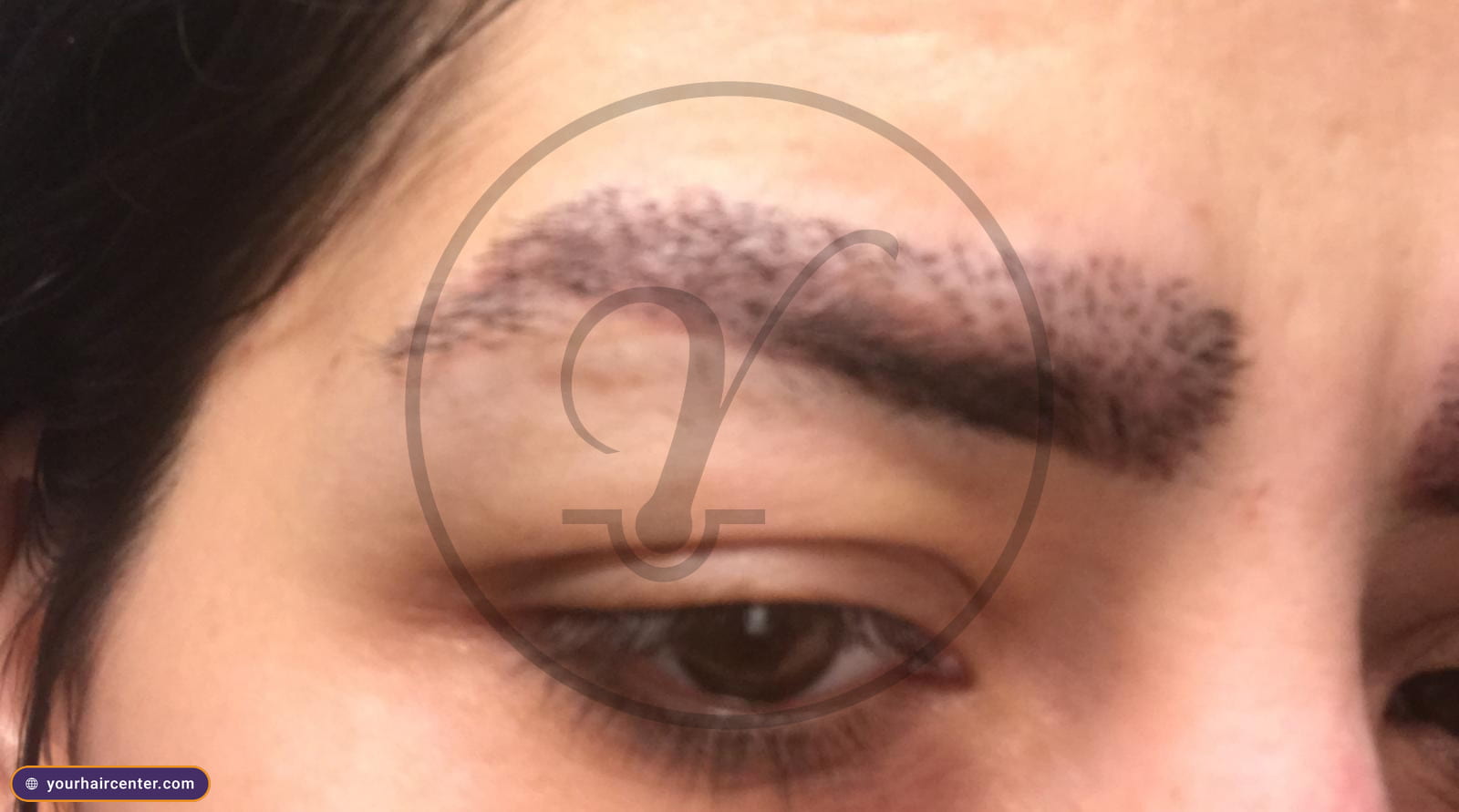
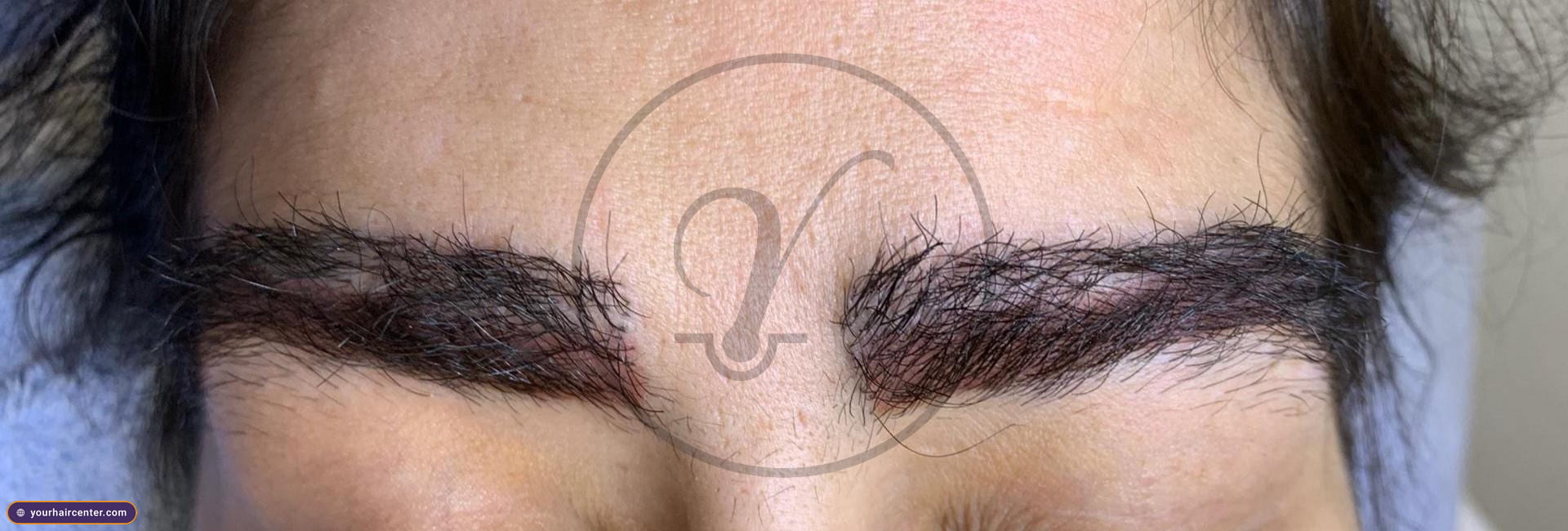
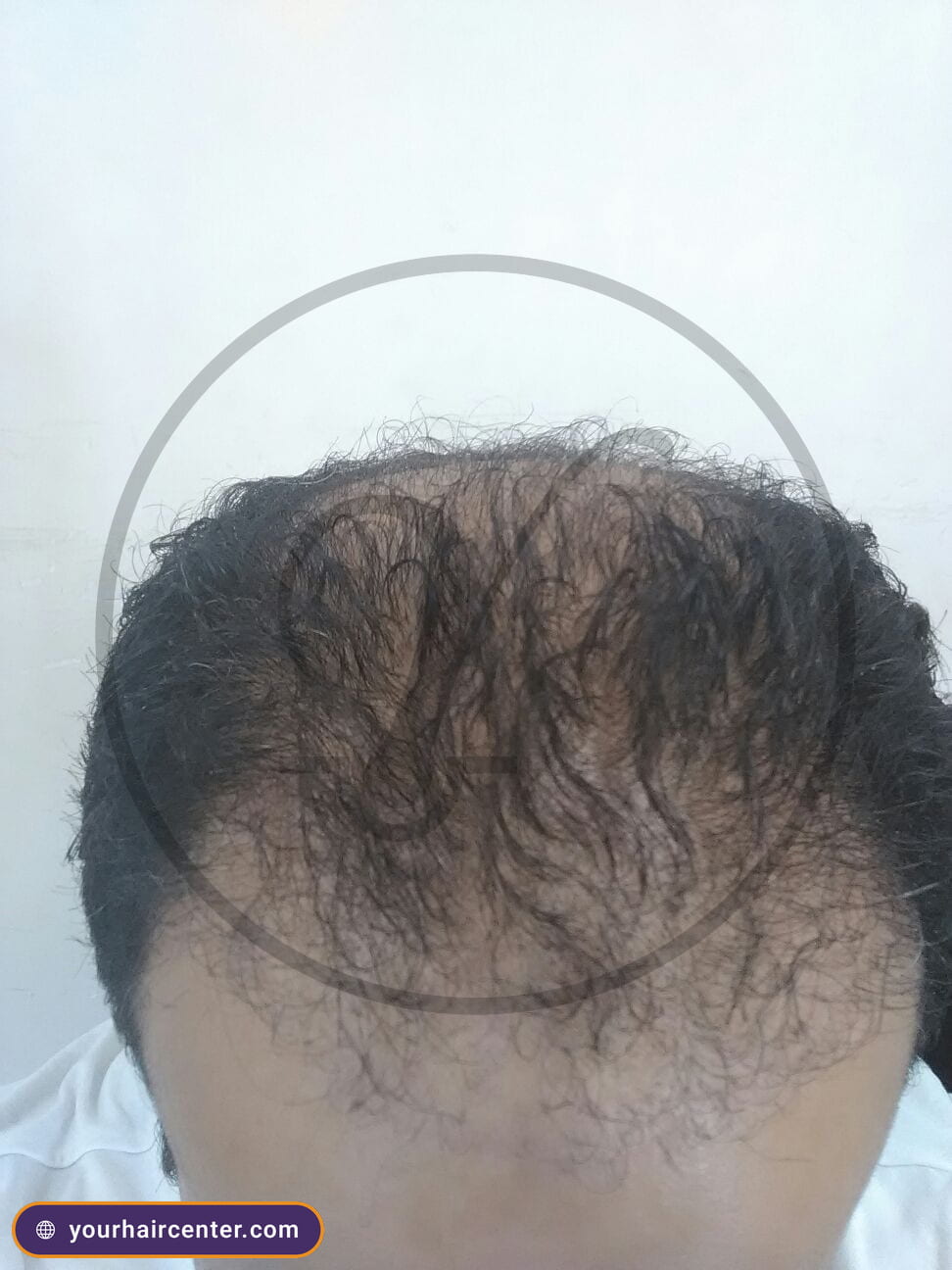
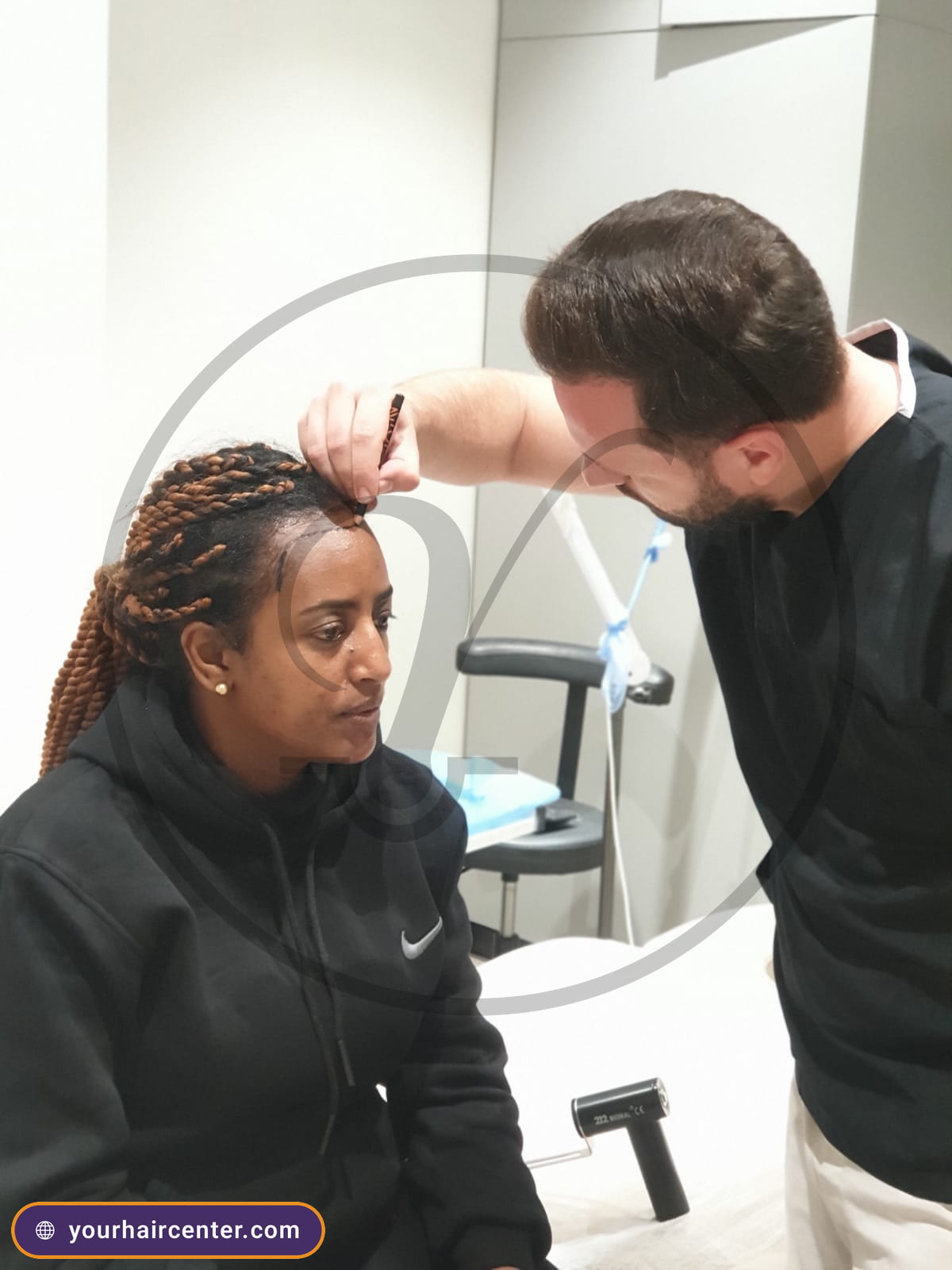
Real results from our patients’ archive. Photos exactly as captured at our accredited partner clinics and hospitals, with no filters and no retouching. Browse more cases in our photo gallery.





Month 1, shock-loss peak
The recipient zone reads as bald or near-bald in spots, the lowest visible-density moment of the whole eyebrow transplant recovery. Most of the transplanted shafts have shed, while the follicles stay in place under the skin.[8:3] This is the universal is-it-working panic point, and the answer is yes.
Month 2, follicle dormancy
There is usually no visible change from Month 1, and the zone still reads sparse. New hair can take 6 to 12 weeks or longer to show,[3:3] so this dormancy window is a normal, expected part of the cycle. It is the longest patience checkpoint, and not a moment to request any intervention.
Month 3, first regrowth
Tiny, fine, often colorless hairs begin to emerge from the recipient sites, visible only on close inspection or in raking light. A published review of eyebrow restoration puts the start of growth for about half of the grafts at 3 to 4 months, with the rest following over the next few months.[2:7] This is the recovery timeline’s confirmation moment, the payoff the day-by-day waiting has been building toward.
Month 4, the new hairs thicken
The hairs lengthen and begin to pick up pigment, and the brow shape starts to fill in, though density is still modest and the brow is only partly filled. The first fine hairs grow longer, darker and thicker, and more grafts start growing through Months 5 and 6.[2:8] The result starts to read as a brow rather than a transplant zone.
Month 6, visible density
The brow now reads as a clear, visibly filled shape with more density still to come, the hairs lengthen to brow-hair scale, and the angle is clearly defined. By now most grafts are growing.[2:9] Hair taken from the scalp keeps growing faster than native brow hair, so our team usually suggests the first trim between Months 4 and 6, once the new hairs pass your natural brow length, and many people then trim every 2 to 3 weeks.[2:10][8:4]
Month 9, near-complete
Density keeps climbing, the arch reads natural, and the brow integrates with the surrounding face. The last 10 to 15 percent of the grafts start growing at 7 to 8 months.[2:11] To a casual observer the result already looks finished, and regular trimming keeps the shape.
Month 12, the final review
The brow shows its full density, with curl and angle integrated, close to a native brow at conversation distance. Density reaches its maximum between Months 8 and 14,[1:10] so the 12-month follow-up call is where our team reviews the result, and a brow that is still filling in gets its final check by Month 14. Any second session for extra density waits at least eight months after the first.[1:11] This is the before-and-after most patients book the procedure for.
The technique used at surgery shapes how these months feel day to day, whether your case ran on FUE or the DHI Choi pen method, and your medical follow-up schedule tracks each of these checkpoints. For the procedure itself, see the eyebrow hair transplant page.
Return-to-Life Dates, Work, Exercise, Makeup, Sleep, Pool, and Flight
This is the eyebrow transplant aftercare section to paste straight into your calendar. The dates below pull the day-by-day recovery rules into a single grid and follow our team’s eyebrow transplant recovery plan. They are planning dates rather than figures from a study, and your doctor confirms each one at follow-up. Published guidance is broader, telling patients to treat new grafts very carefully for two weeks and noting that they may be told to cut down on exercise in the first month.[7:1]
| Activity | When it is safe |
|---|---|
| Flight home (commercial cabin) | Day 1 |
| Sleeping flat (semi-upright Days 1-4) | Day 5 |
| Desk job, non-client-facing | Day 7 |
| Light exercise (walking, yoga without inversions) | Day 7 |
| Alcohol | Day 7 |
| Makeup around the brow (foundation, eye shadow, mascara) | Day 10 |
| Client-facing work, video calls, meetings | Day 14 |
| Moderate exercise (jogging, cycling, light weights) | Day 14 |
| Heavy weight training and intense cardio | Day 21 |
| Swimming pool | Day 21 |
| Ocean swimming | Day 21 |
| Contact sport (boxing, rugby, soccer headers) | Day 30 |
| Makeup on the brow (pencil, gel, powder, tint) | Day 30 |
| Sauna, steam room, hot yoga | Day 30 |
| Brow tinting, lamination, threading | Month 3 |
| Smoking / nicotine | Defer as long as possible |
A few notes on the rows that matter most, read against your day-by-day recovery dates. The pressurized cabin is structurally fine from Day 1, since most patients fly home the day after surgery, so hydrate well, wear sunglasses, and avoid resting your brow against the headrest. Sleep semi-upright on your back on two pillows through Day 4 to keep swelling down, then flat from Day 5.[9] Hold heavy training to Day 21 and keep direct impact off the brow line until Day 30. Heat-and-sweat settings like saunas and hot yoga wait until Day 30 too in our team’s plan. If a wedding or a board photo falls in Weeks 3-4, plan around the shock-loss appearance rather than scheduling it then.
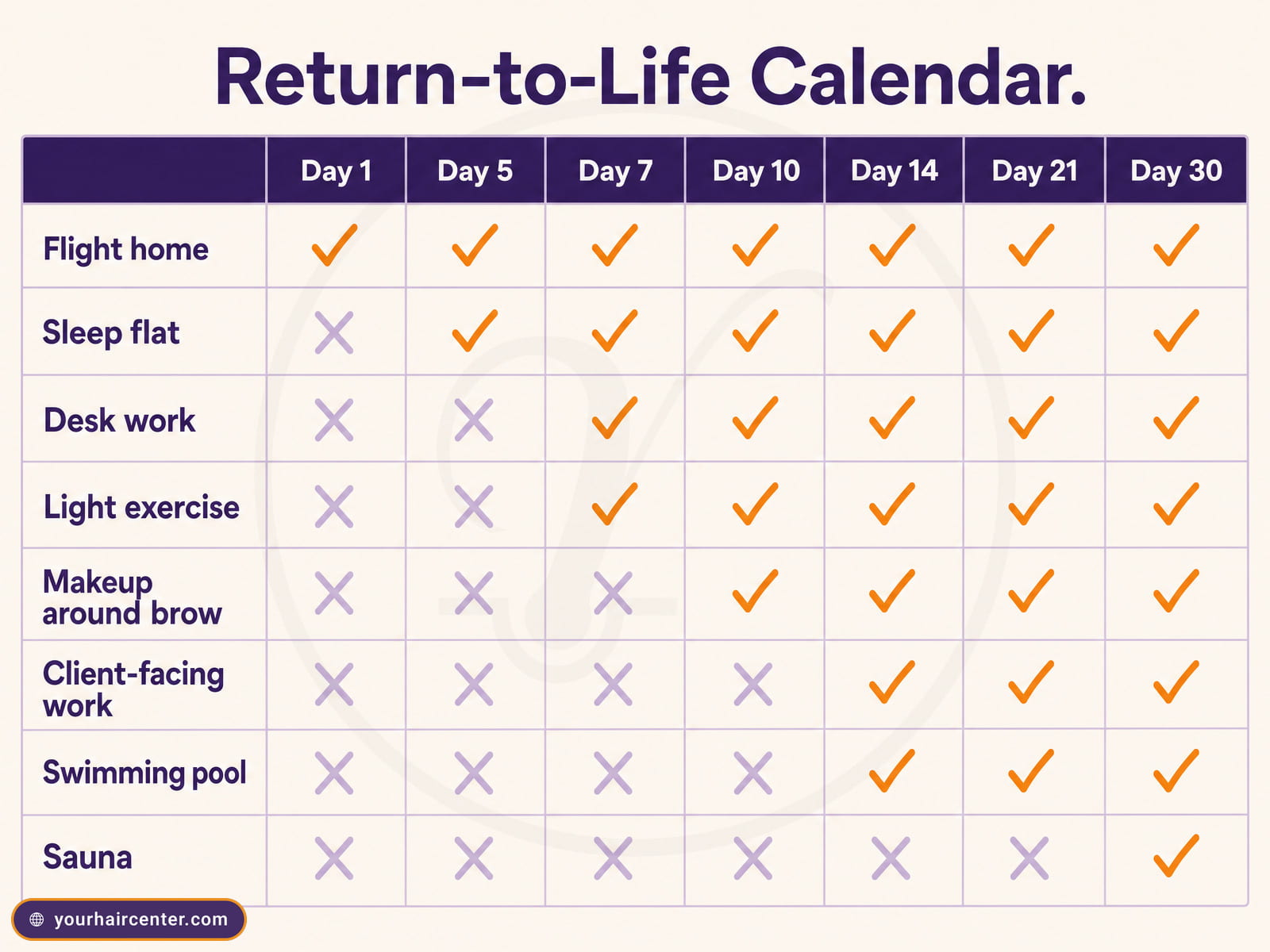
If you want help mapping these dates against your travel, the reception and accommodation team plans your stay around them, your medical follow-up confirms each milestone, and you can message us on WhatsApp to talk through your recovery dates before you travel.
Aftercare Essentials, the Cross-Day Rules You Repeat Every Single Day
These are the eyebrow transplant aftercare rules the day-by-day recovery timeline points back to, gathered in one place so you are not hunting for them fourteen times.
- Sleep position. Stay semi-upright at 45 degrees on two pillows or a wedge from Day 1 through Day 4, then lie flat from Day 5 onward. The usual advice is to sleep on your back, flat or slightly propped up, not on your side or face, since position plays a part in post-surgical swelling.[9:1]
- Washing. Your first wash is done by the clinical team at the Day 3 in-clinic check. From Day 4 through Day 14 you do a gentle saline self-wash twice daily, patting dry rather than rubbing, and from Day 8 you can use a gentle baby shampoo on the surrounding scalp. A published eyebrow protocol likewise keeps the grafts moist with saline and allows the first head wash on the third day, with no rubbing over the grafts.[2:12]
- Sun protection. Sun damage can weaken the growth of transplanted hair,[4:2] and published aftercare keeps the grafted area out of direct sunlight for the first month,[5:1] so keep the brow zone out of direct sun from Day 1 through Day 30 with a broad-brim hat and sunglasses, and use SPF 30 or higher on the surrounding face from Day 11, working around the brow border, until about Month 3.
- What not to apply on the brows for the first two weeks. No brow pencil, gel, powder, or tint, no mascara crossing onto the brow, no hairspray, retinoids, acids, exfoliants, scrubs, or unprescribed growth serums. Friction can dislodge the newly transplanted follicles and cause shedding.
- Hydration and nutrition. Drink at least two liters of water a day through the first two weeks, and eat a protein-, iron-, and vitamin-rich diet to support follicle re-vascularization.
- Common-sense reminders. Defer nicotine as long as you can, since it constricts the vessels feeding the grafts, hold off alcohol through Day 7, and avoid aspirin or blood thinners through Day 7 unless they are prescribed.
Sticking to this aftercare routine is most of what makes the difference between a smooth eyebrow transplant recovery and an avoidable setback. Your medical follow-up team checks your technique at each call, and the eyebrow hair transplant page covers the procedure these rules protect.
When to Call the Clinic, Red-Flag Symptoms vs Normal Expected Appearance
Most of what you will see in the first weeks is normal eyebrow transplant healing. This section separates the expected from the genuine red flags, so you neither panic over normal changes nor ignore a real problem during eyebrow transplant recovery.
Normal, do not panic.
- Swelling from Day 1 through Day 5
- Bruising around the eyes from Day 2 through Day 7
- Itching from Day 3 through Day 10
- Scabs from Day 4 through Day 14
- Shock-loss shedding from Week 3 through Week 6
- The recipient zone reading thinner than before surgery from Week 4 through Month 2
- Mild asymmetry between the brows in the first three months, as one side may track ahead of the other
- Tingling at the scalp donor area through Month 1
Call the clinic today.
- A fever above 38.4°C or 101°F on any day after the procedure, which can signal infection[10]
- Pus or yellow discharge at any recipient or donor site[10:1]
- Redness spreading well beyond the brow border after Day 5[10:2]
- Severe pain that the prescribed anti-inflammatory does not control
- Bleeding at a recipient site that does not stop within five minutes of gentle pressure
- Significant one-sided swelling that persists past Day 7
- A transplanted hair that falls out with a visible dark bulb at its base in the first five days
- Numbness at the donor area that persists past Month 3
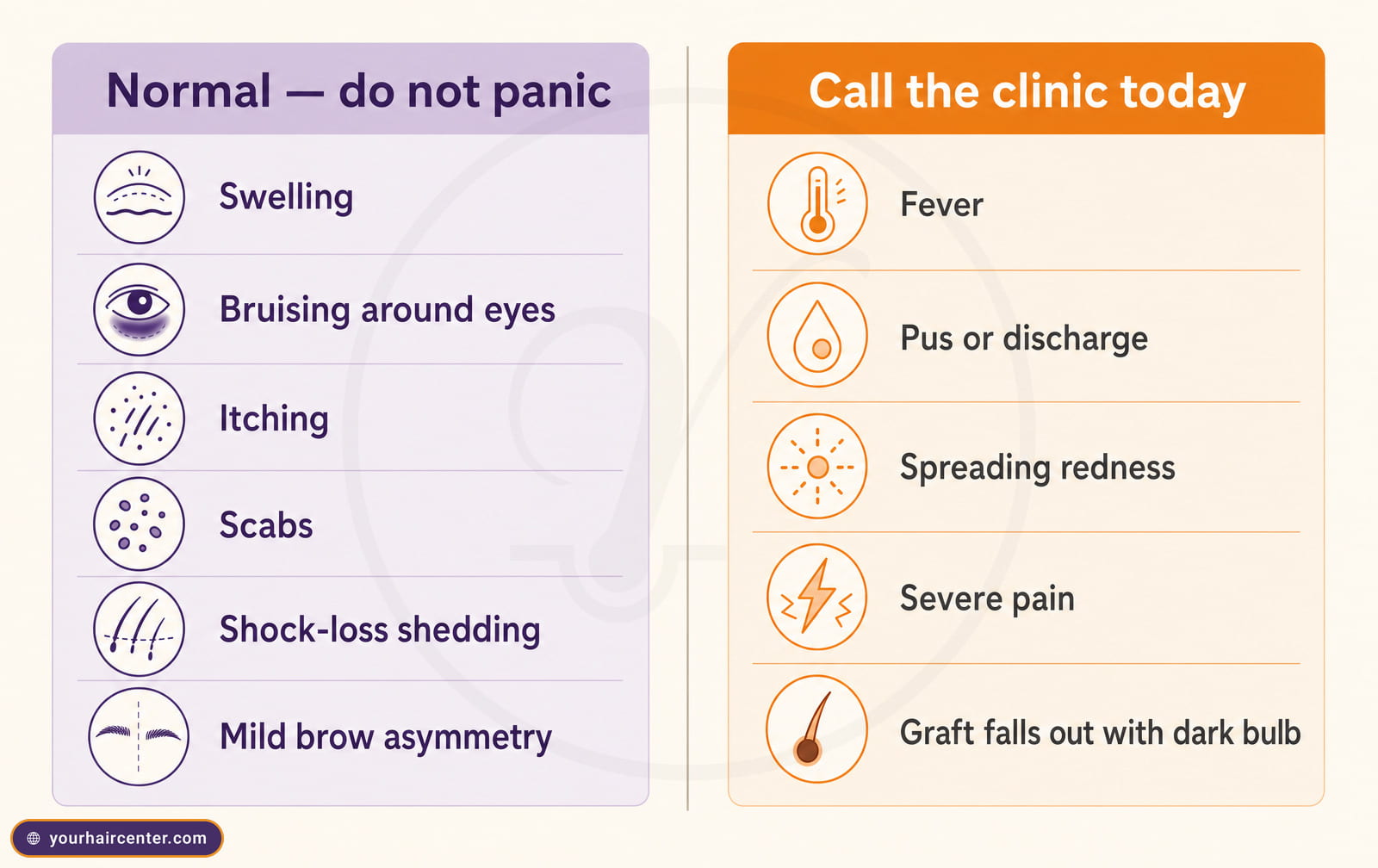
If something feels wrong, your medical follow-up line is the fastest route to an answer, the eyebrow hair transplant team knows your case, and you can message us on WhatsApp to talk through your recovery before you travel if you are still planning.
Frequently Asked Questions
How long does it take to recover from an eyebrow transplant?
Eyebrow transplant recovery runs in stages. The visible scab phase clears within about two weeks,[2:13] the transplanted hairs shed in Weeks 3-4,[1:12] the first regrowth appears from around Month 3,[2:14] and density peaks between Months 8 and 14.[1:13] Our team plans the return to desk work for Day 7, although many people feel ready after a couple of days,[3:4] which is why this day by day timeline is worth reading before you book.
Can grafts be dislodged after 7 days?
By Day 7 of eyebrow transplant recovery the risk of dislodging a graft is much lower than in the first days. In a study that pulled on scalp grafts, pulling the hair no longer dislodged a graft from Day 6, pulling an attached scab could still remove one through Day 5, and from Day 9 the grafts were no longer at risk.[6:1] The NHS still asks patients to treat transplanted hair very carefully for the first two weeks,[7:2] so careful eyebrow transplant aftercare, gentle washing and no rubbing, still matters until then.
When can I wash my eyebrows after an eyebrow transplant?
Your first wash is performed by the clinical team at the Day 3 in-clinic check, not by you at home. From Day 4 your eyebrow transplant aftercare includes a gentle twice-daily saline wash exactly as prescribed, patting dry rather than rubbing, which keeps the grafts secure while scabs shed.[2:15]
What does my eyebrow transplant look like after 1 week?
After 1 week of eyebrow transplant recovery the scabs are still present but less prominent, and from arm’s length your brows simply look a little darker than usual. Swelling has settled and the brow shape is clearly defined.[4:3] This is why Day 7 is our team’s return-to-desk point on the day by day timeline for non-client-facing work, while the scabs come away in the second week.[2:16]
What is the full eyebrow transplant timeline from day 1 to month 12?
The full eyebrow transplant timeline runs day by day for the first two weeks (swelling, scabs, shedding scabs), then Weeks 3-4 shock loss, then monthly milestones, follicle dormancy at Month 2, first regrowth from Month 3, most grafts growing by Month 6,[2:17] and maximum density between Months 8 and 14.[1:14] That whole eyebrow transplant recovery arc is mapped, milestone by milestone, in this guide.
When do I see the final result of my eyebrow transplant?
The final result of an eyebrow transplant shows when density reaches its maximum, between Months 8 and 14,[1:15] which is why our team reviews it at the 12-month follow-up. Meaningful density returns by Month 6, but the last grafts only start growing at 7 to 8 months,[2:18] which is why the eyebrow transplant recovery arc is measured in months rather than weeks once the day-by-day phase ends. Any second session for extra density waits at least eight months after the first.[1:16]
Your Recovery, On a Calendar
Eyebrow transplant recovery is not a single two-weeks-off line. It is a sequence of explicit dates you can plot against your real calendar, and reading the eyebrow transplant day by day timeline ahead of time is the surest way to avoid the panic moments. The first 14 days are the daily-resolution window, Weeks 3-4 are the shedding dip almost every patient goes through, and the months that follow are the regrowth curve that reaches its maximum density between Months 8 and 14. The YHC pathway wraps a Day 3 in-clinic check, a saline-wash protocol, and a 12-month follow-up around that timeline, so it is a protocol the clinical team supports rather than advice in isolation. Send your photos for a free recovery-and-timeline review, or message us on WhatsApp to talk through your travel and recovery dates before you book.
The content and sources of this guide were reviewed on 8 October 2026.
References
-
Klingbeil KD, Fertig R. Eyebrow and Eyelash Hair Transplantation, A Systematic Review. The Journal of Clinical and Aesthetic Dermatology, 2018;11(6):21-30. PMC6011870. https://pmc.ncbi.nlm.nih.gov/articles/PMC6011870/ (opens in new tab) (accessed 2026-10-08). ︎ ︎ ︎ ︎ ︎ ︎ ︎ ︎ ︎ ︎ ︎ ︎ ︎ ︎ ︎ ︎ ︎
-
Rajput RJ. Hair Transplant for Eyebrow Restoration. Indian Journal of Plastic Surgery, 2021;54(4):489-494. PMC8719974. https://pmc.ncbi.nlm.nih.gov/articles/PMC8719974/ (opens in new tab) (accessed 2026-10-08). ︎ ︎ ︎ ︎ ︎ ︎ ︎ ︎ ︎ ︎ ︎ ︎ ︎ ︎ ︎ ︎ ︎ ︎ ︎
-
Cleveland Clinic. Eyebrow Transplant. Last updated 1 October 2022. https://my.clevelandclinic.org/health/treatments/24236-eyebrow-transplant (opens in new tab) (accessed 2026-10-08). ︎ ︎ ︎ ︎ ︎
-
Kerure AS, Patwardhan N. Complications in Hair Transplantation. Journal of Cutaneous and Aesthetic Surgery, 2018;11(4):182-189. PMC6371733. https://pmc.ncbi.nlm.nih.gov/articles/PMC6371733/ (opens in new tab) (accessed 2026-10-08). ︎ ︎ ︎ ︎
-
Goldin J, Zito PM, Raggio BS. Hair Transplantation. StatPearls, StatPearls Publishing, updated 2 August 2025. https://www.ncbi.nlm.nih.gov/books/NBK547740/ (opens in new tab) (accessed 2026-10-08). ︎ ︎
-
Bernstein RM, Rassman WR. Graft Anchoring in Hair Transplantation. Dermatologic Surgery, 2006;32(2):198-204. PMID 16442039. https://pubmed.ncbi.nlm.nih.gov/16442039/ (opens in new tab) (accessed 2026-10-08). ︎ ︎
-
NHS. Hair transplant. Page last reviewed 29 September 2023. https://www.nhs.uk/tests-and-treatments/cosmetic-procedures/cosmetic-surgery/hair-transplant/ (opens in new tab) (accessed 2026-10-08). ︎ ︎ ︎
-
Gupta J, Kumar A, Chouhan K, Ariganesh C, Nandal V. The Science and Art of Eyebrow Transplantation by Follicular Unit Extraction. Journal of Cutaneous and Aesthetic Surgery, 2017;10(2):66-71. PMC5561712. https://pmc.ncbi.nlm.nih.gov/articles/PMC5561712/ (opens in new tab) (accessed 2026-10-08). ︎ ︎ ︎ ︎ ︎
-
Garg AK, Garg S. Complications of Hair Transplant Procedures, Causes and Management. Indian Journal of Plastic Surgery, 2021;54(4):477-482. PMC8719980. https://pmc.ncbi.nlm.nih.gov/articles/PMC8719980/ (opens in new tab) (accessed 2026-10-08). ︎ ︎
-
Cleveland Clinic. Surgical Wound Infection. Last updated 17 June 2025. https://my.clevelandclinic.org/health/diseases/surgical-wound-infection (opens in new tab) (accessed 2026-10-08). ︎ ︎ ︎