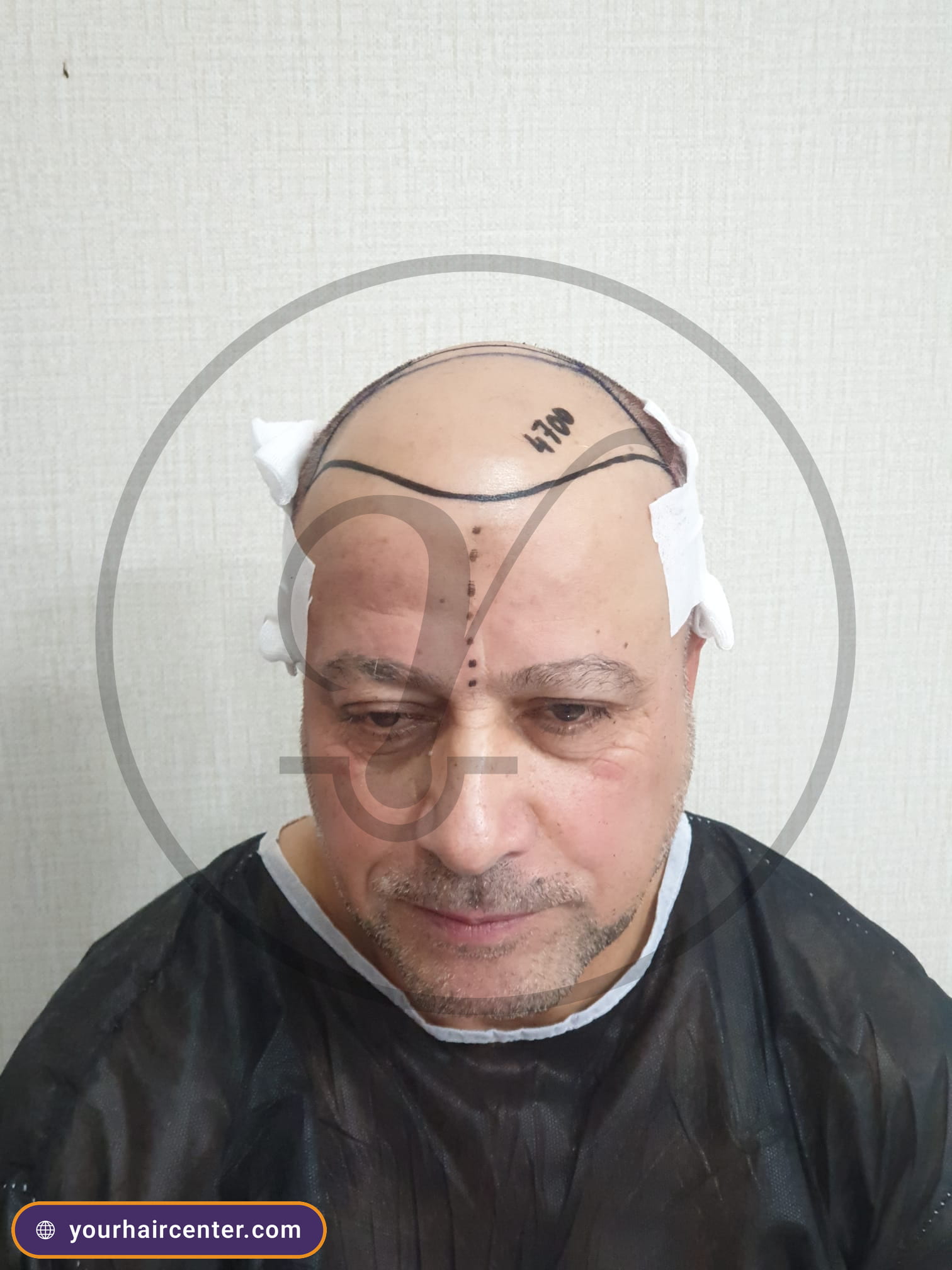
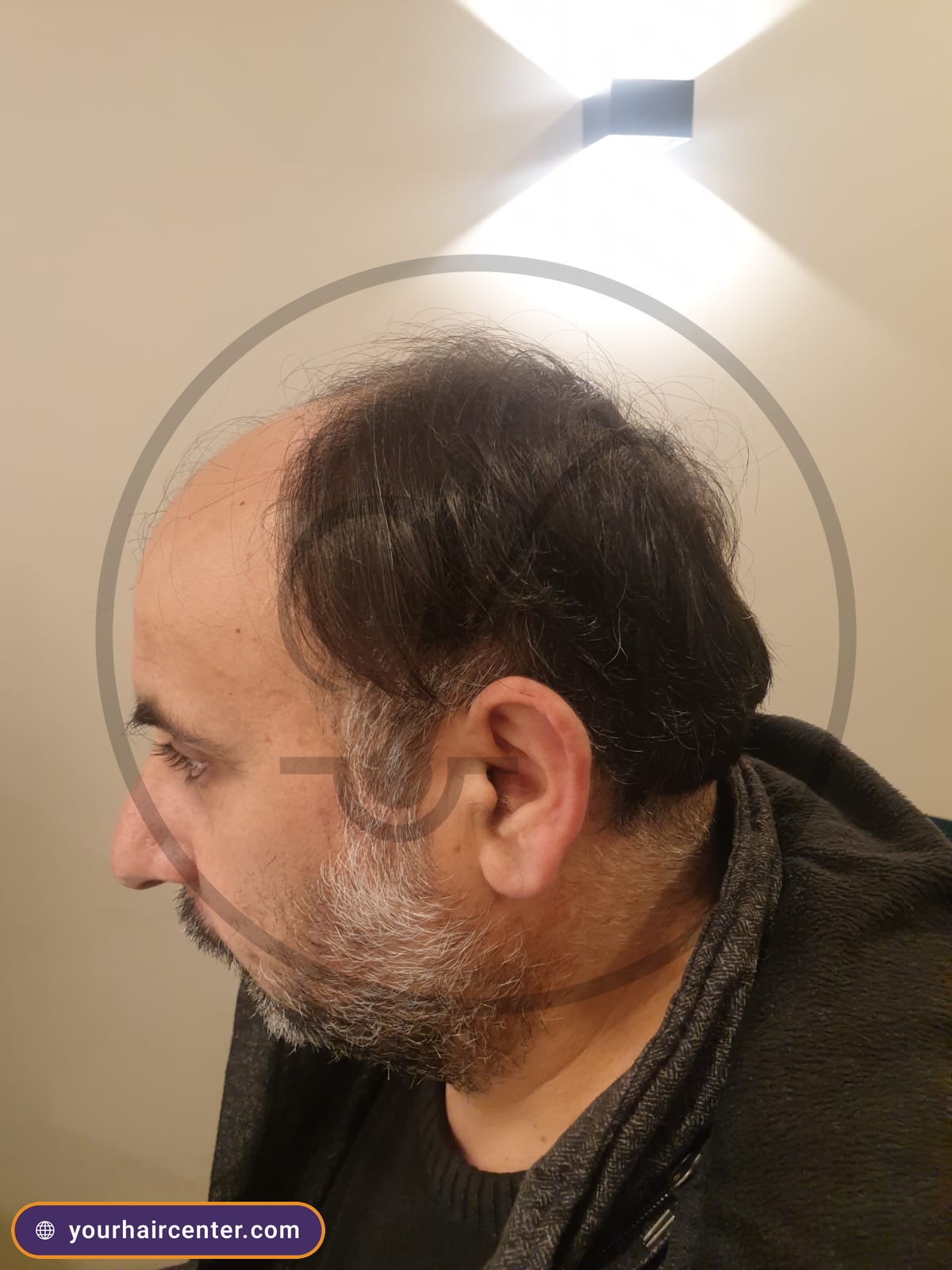
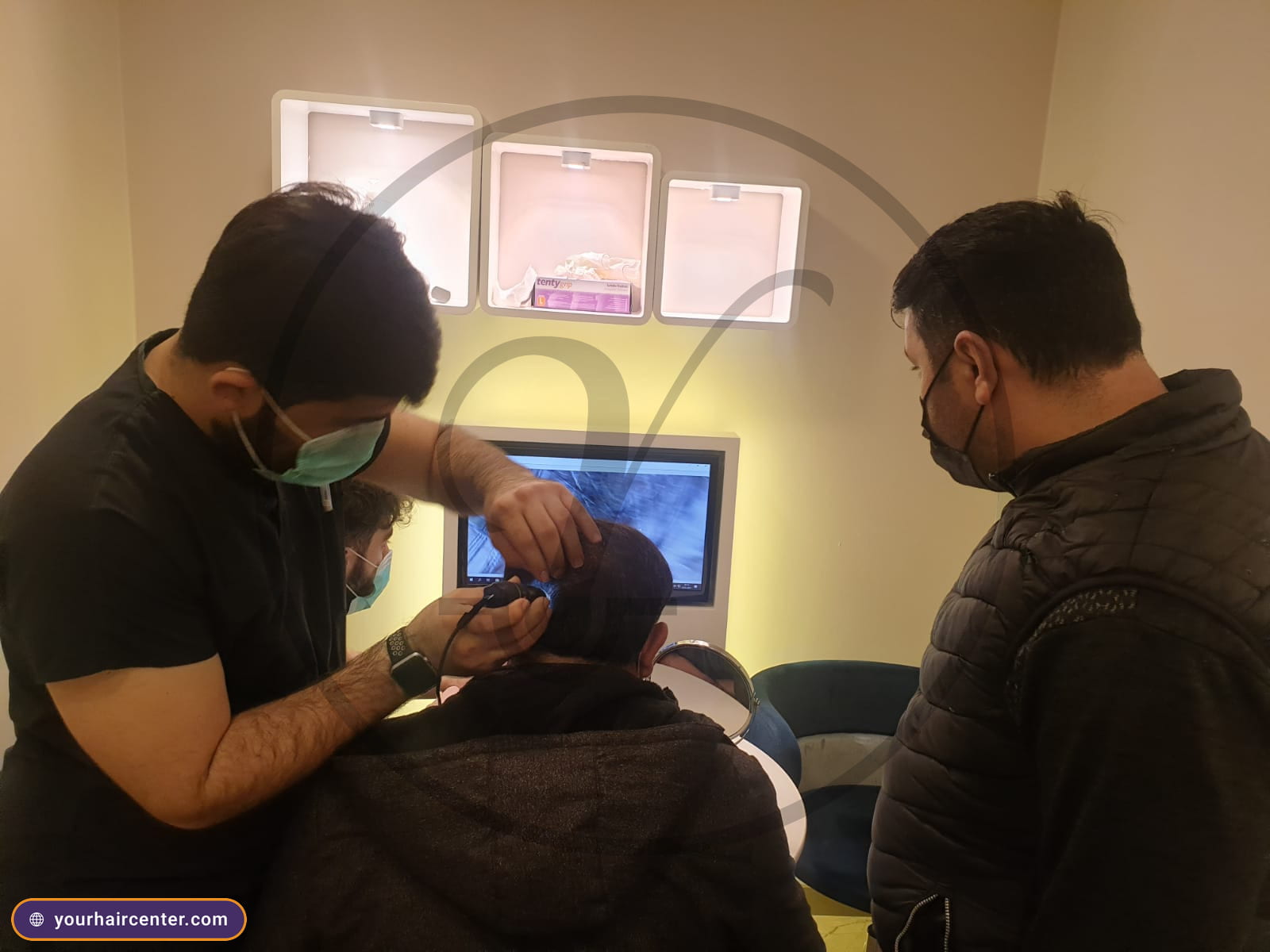
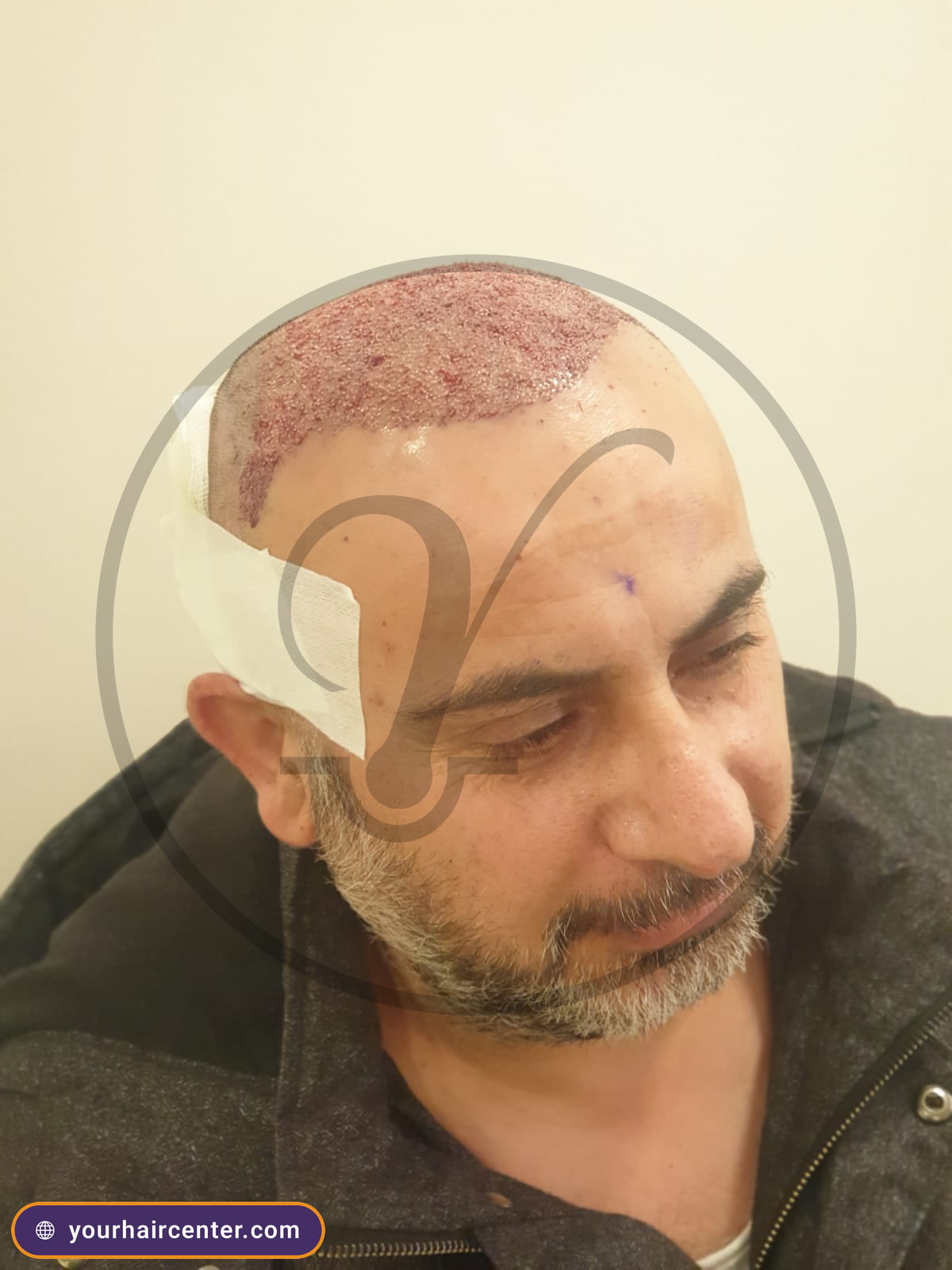
4500
grafts
DHI
Know exactly what to expect from DHI recovery after a Choi Pen hair transplant, hour by hour at the start and month by month as your hair grows back. We walk the full recovery from the Day 4 swelling and the Week 2 to Week 4 shock loss through first regrowth at Month 3 and the final result at Month 12, with the awkward stages named plainly and clear answers on when you can fly, work, and train again.

You have paid the deposit, booked the flight, and now you want to know exactly what your head will look and feel like for the next 365 days. This guide to DHI recovery day by day gives you that preview, hour by hour at the start and month by month as the result builds. Most people who search whether a DHI hair transplant is painful are reassured quickly, because the procedure runs under local anesthesia and the soreness afterward is usually mild. What they really want is a clear DHI recovery timeline, one that names the awkward stretches instead of glossing over them.
That is what you get here. A complete Day 0 to Month 12 walkthrough anchored to real Choi Pen DHI patients from the Your Hair Center archive, with the milestones that catch unprepared patients off guard flagged plainly, the Day 4 swelling, the Week 2 to Week 4 shock loss, and the quiet Month 2 dormancy before regrowth. We also answer the questions about DHI recovery that patients search twice and partners read over their shoulder, when you can fly home, when you can return to work, and when you can lift weights again.
This map covers the whole DHI recovery, milestone by milestone, and each stage is broken down in depth in the sections that follow.
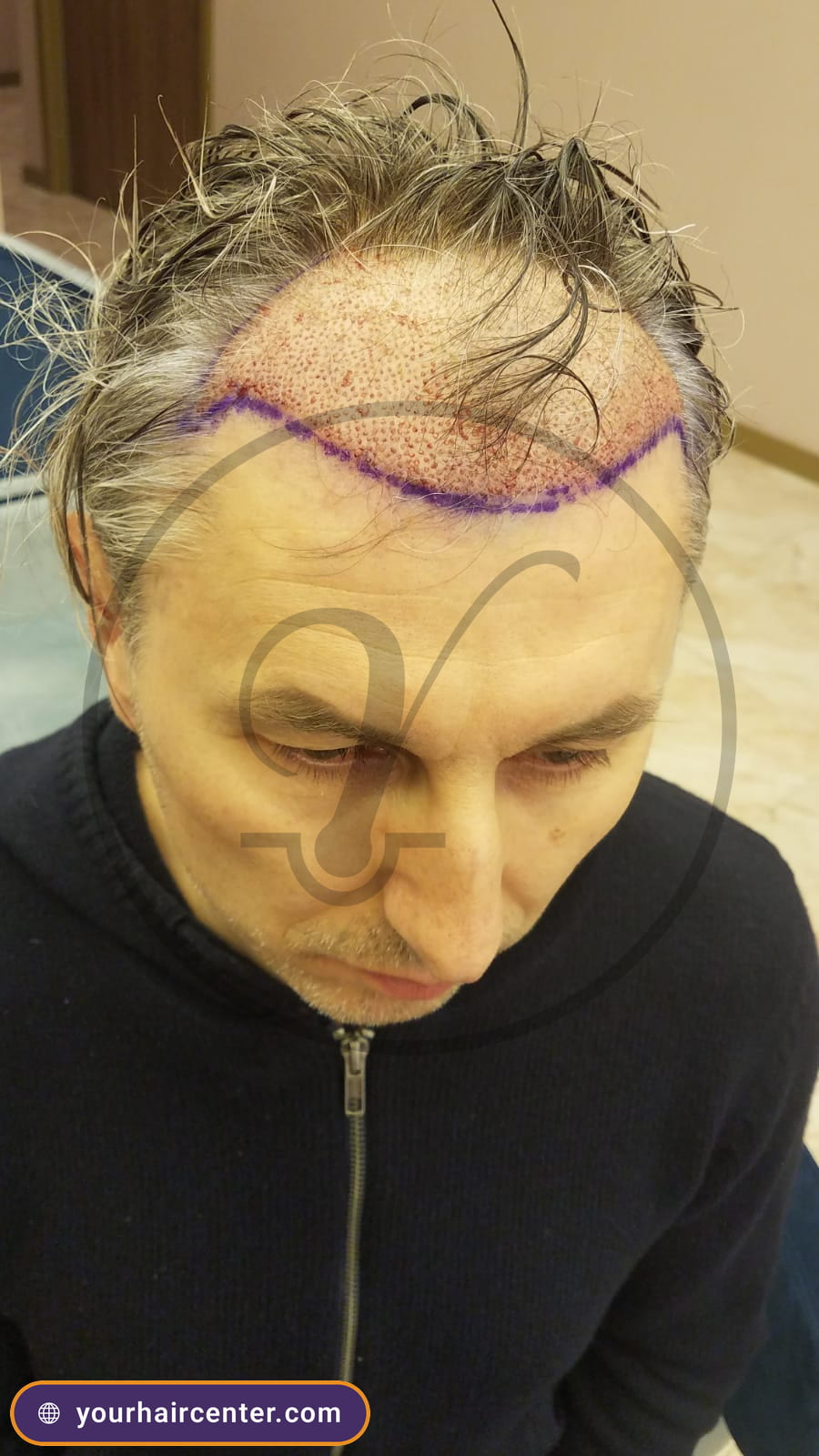
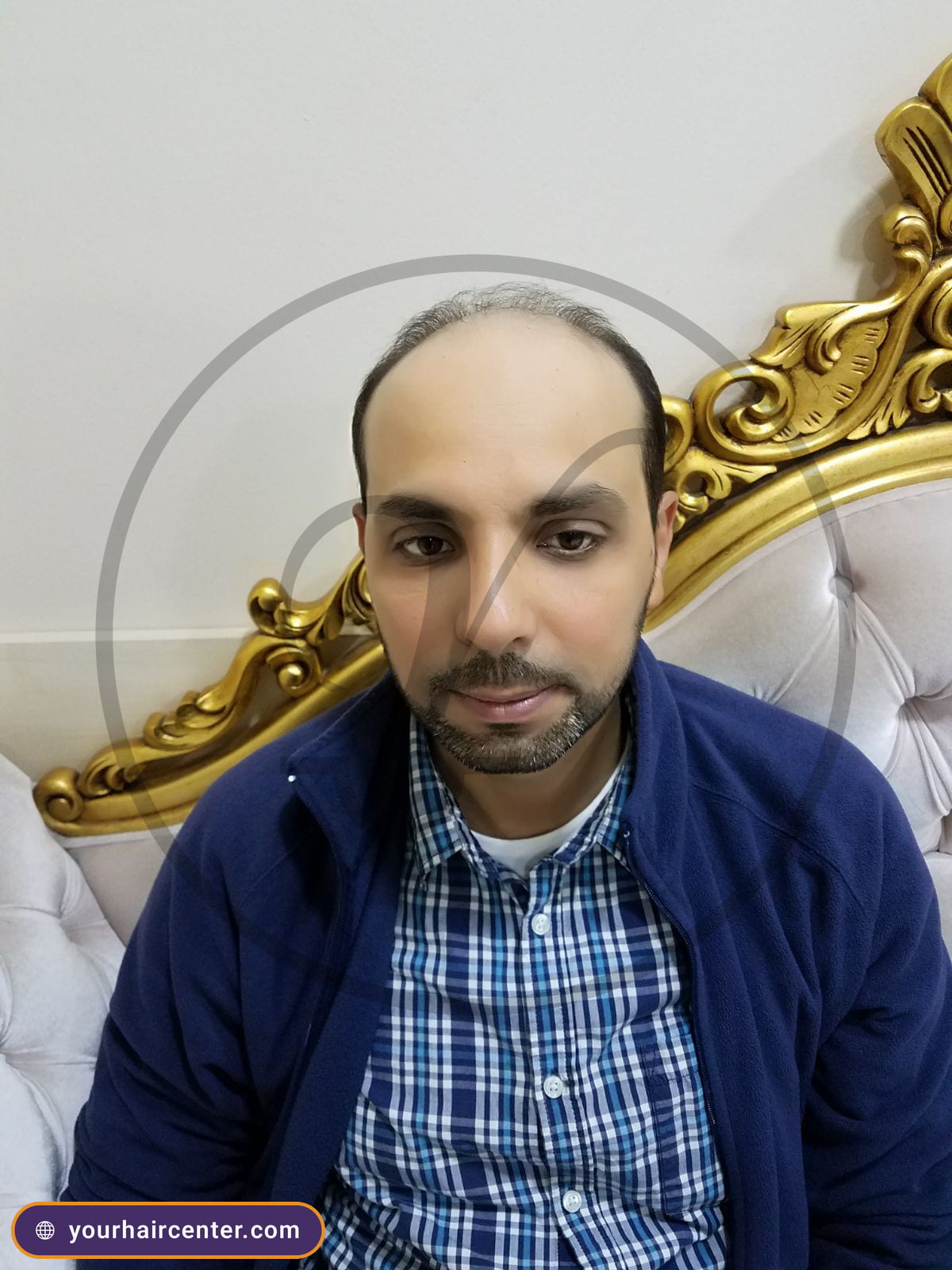
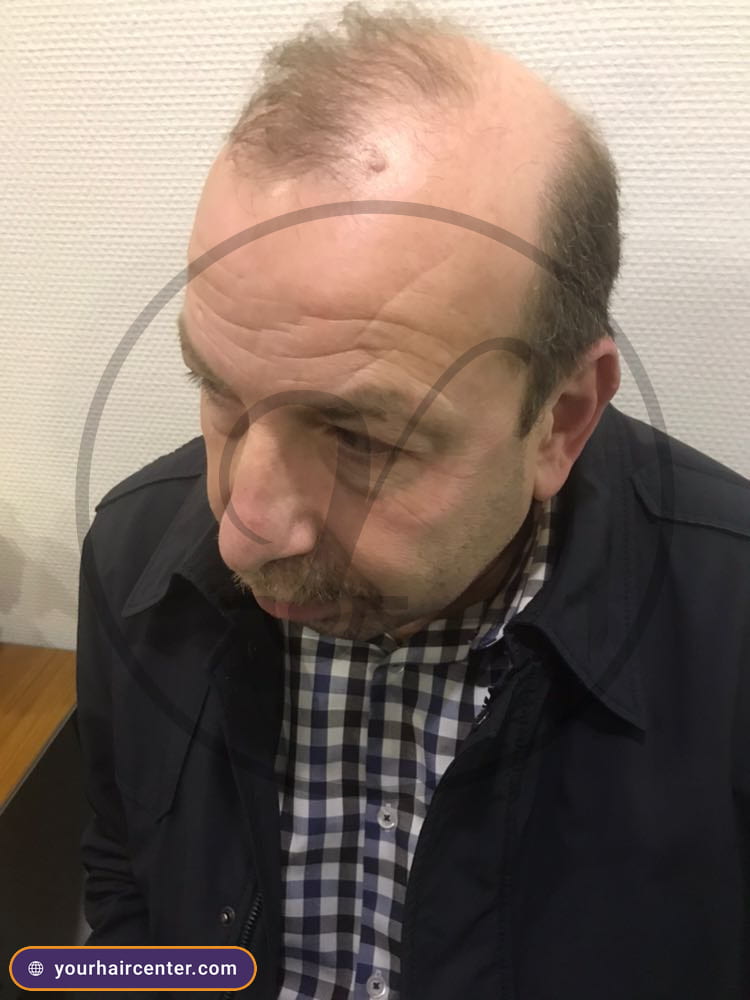
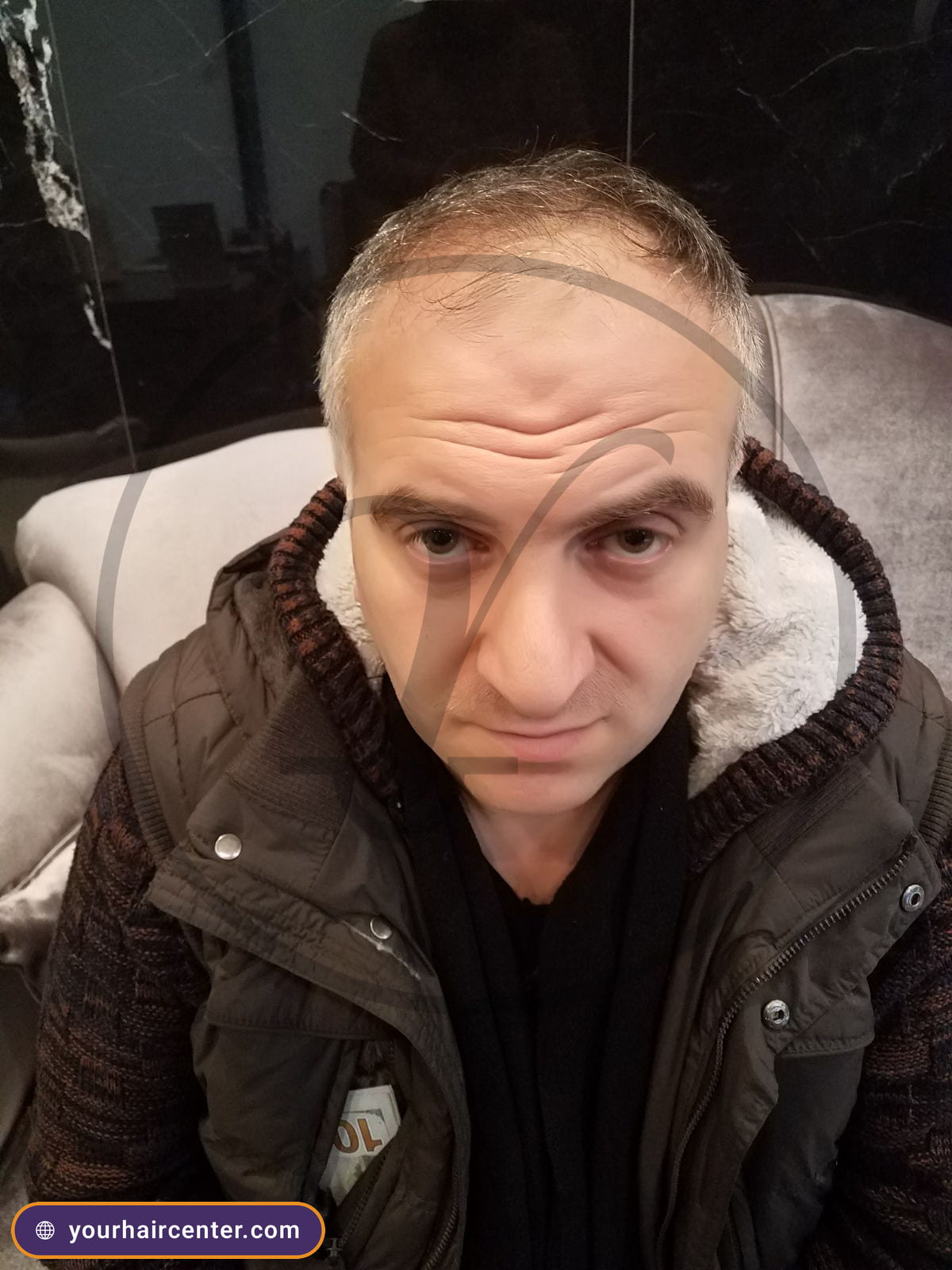
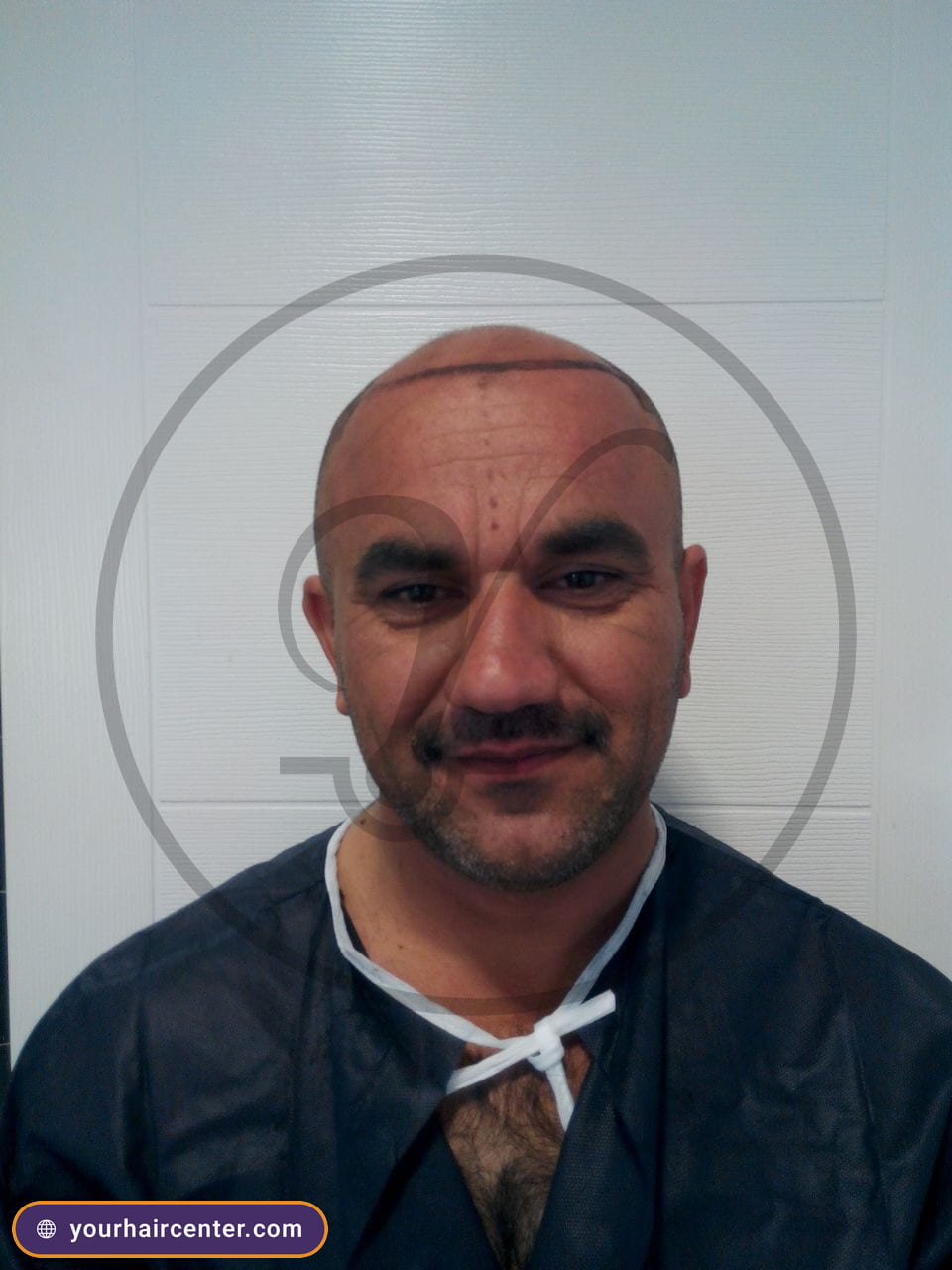
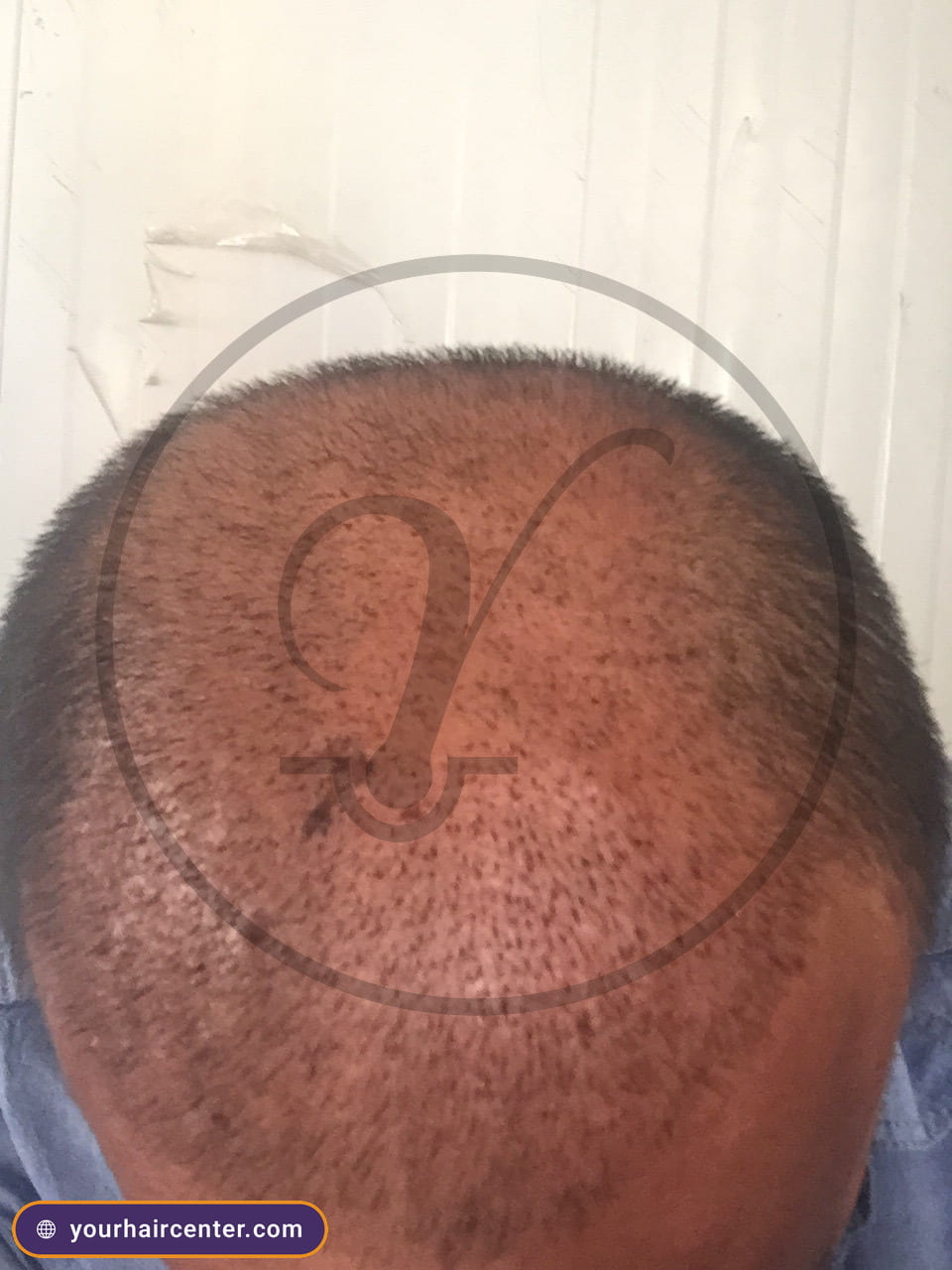
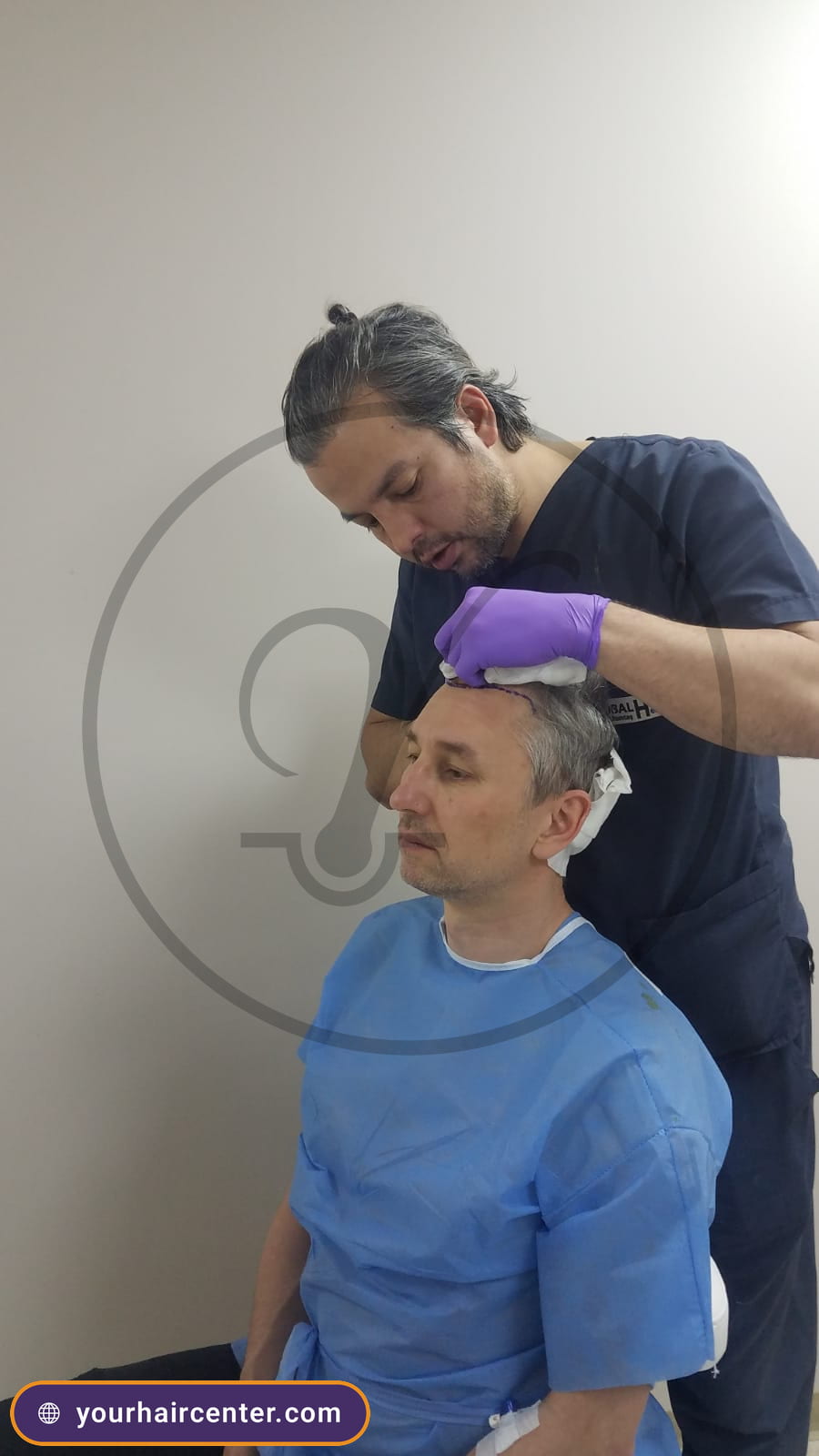
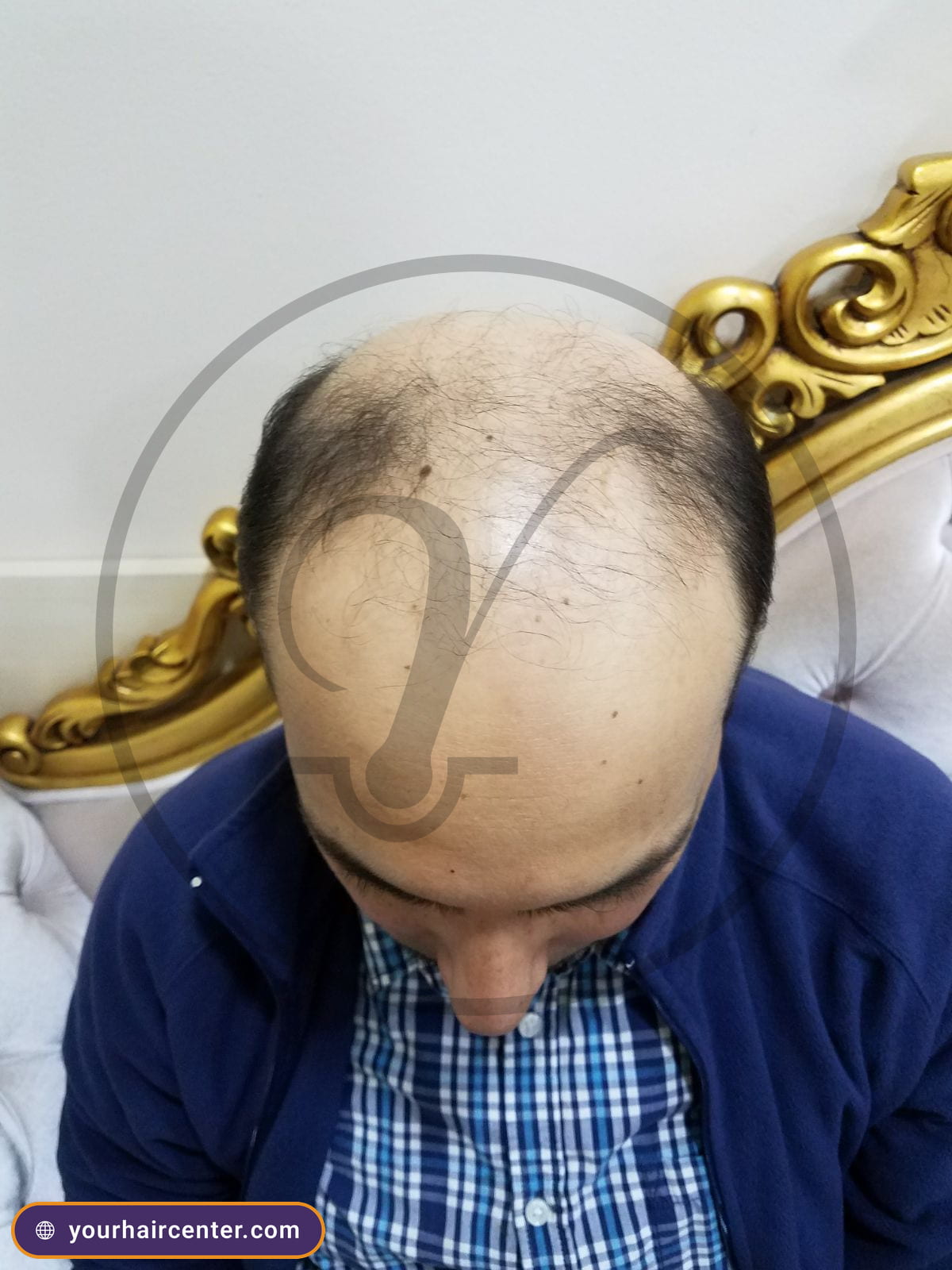
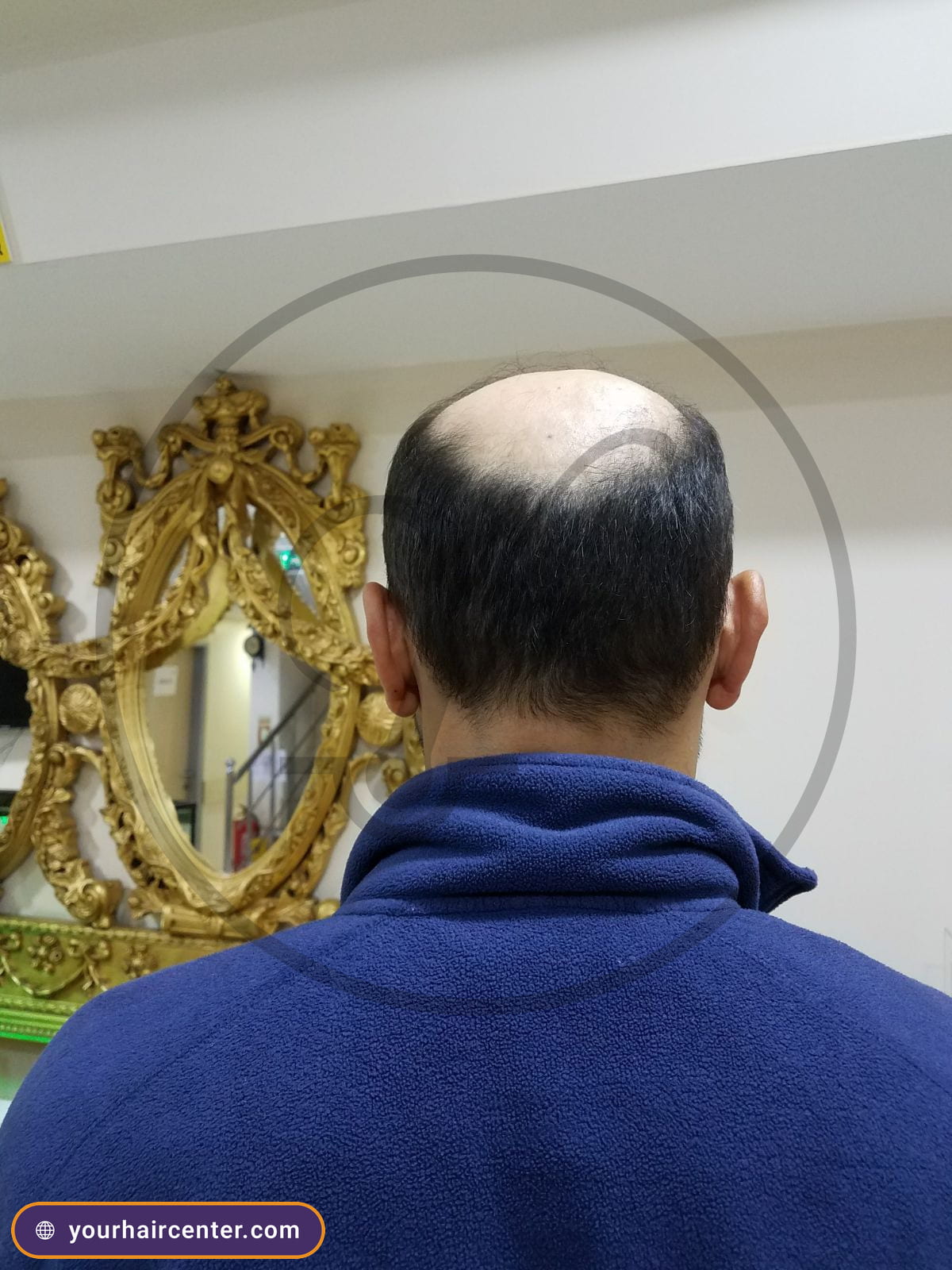
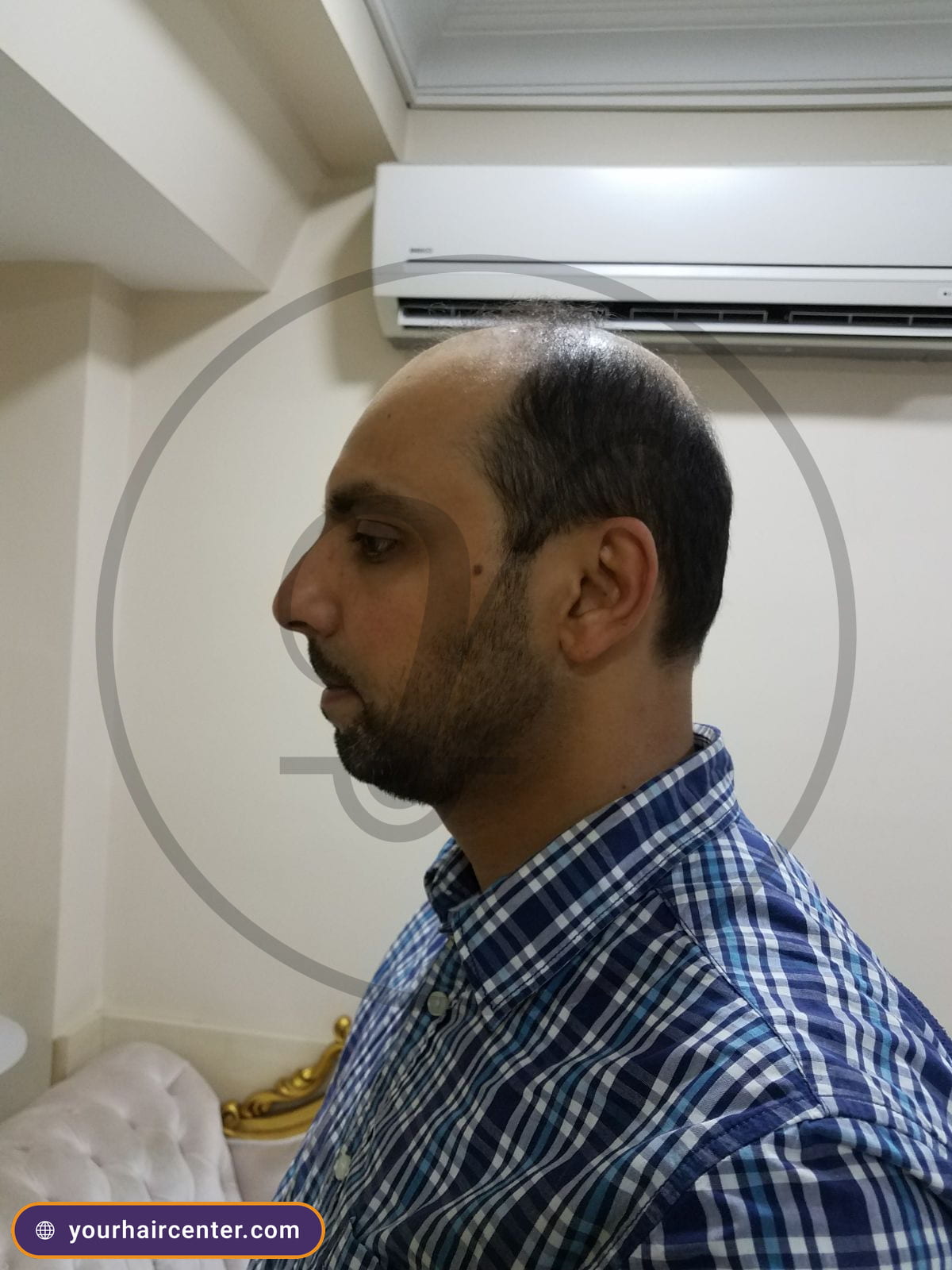
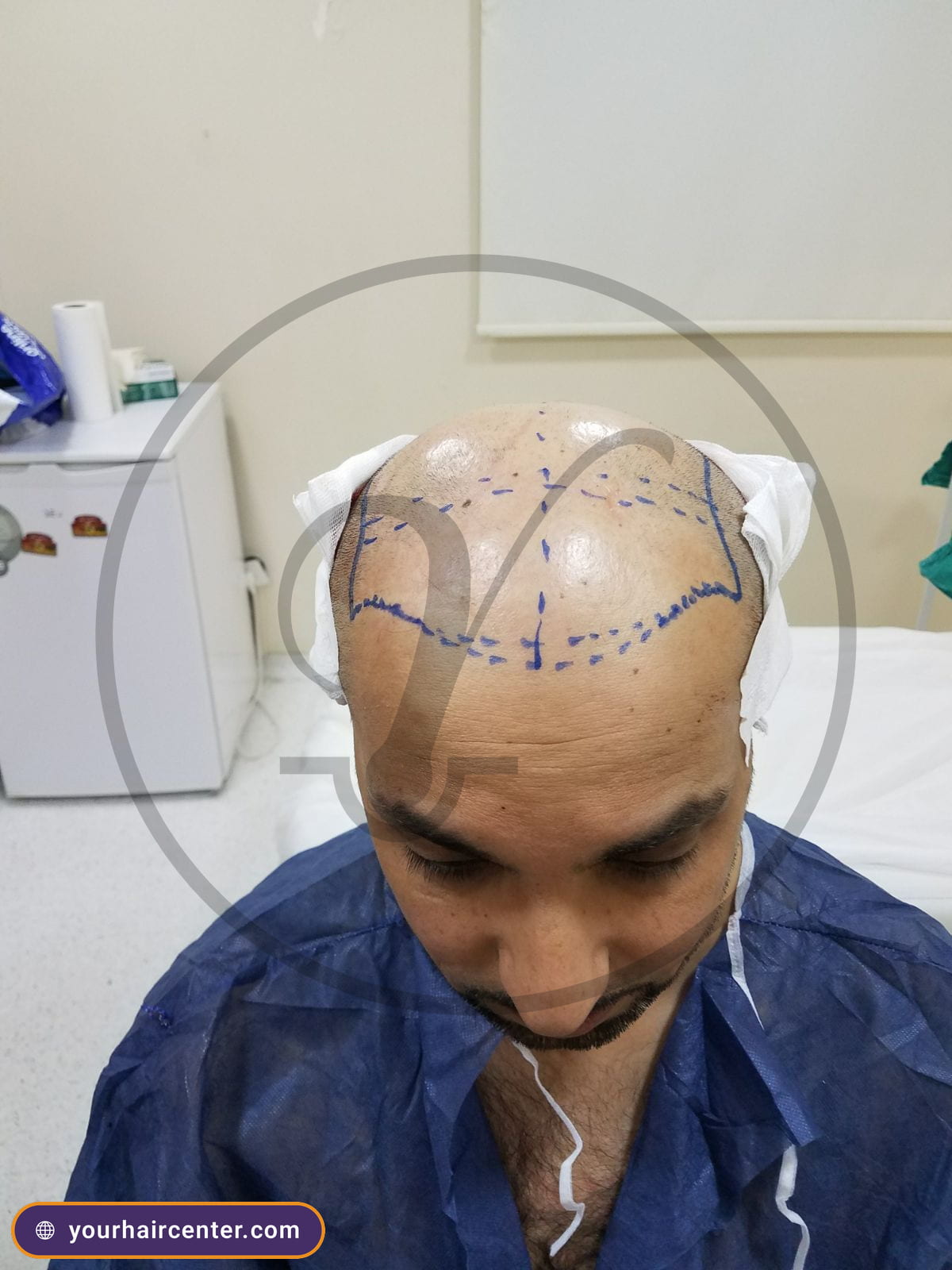
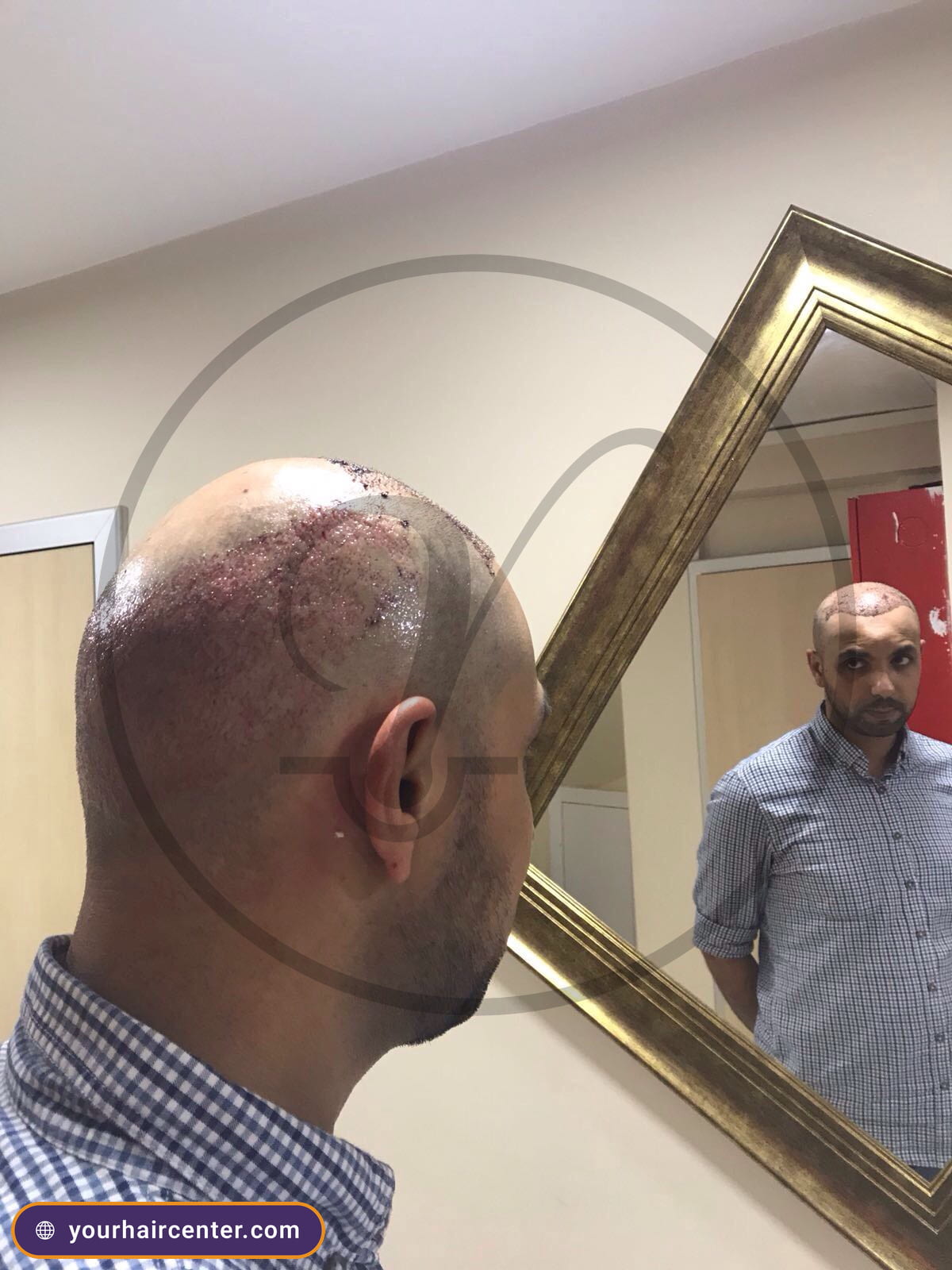
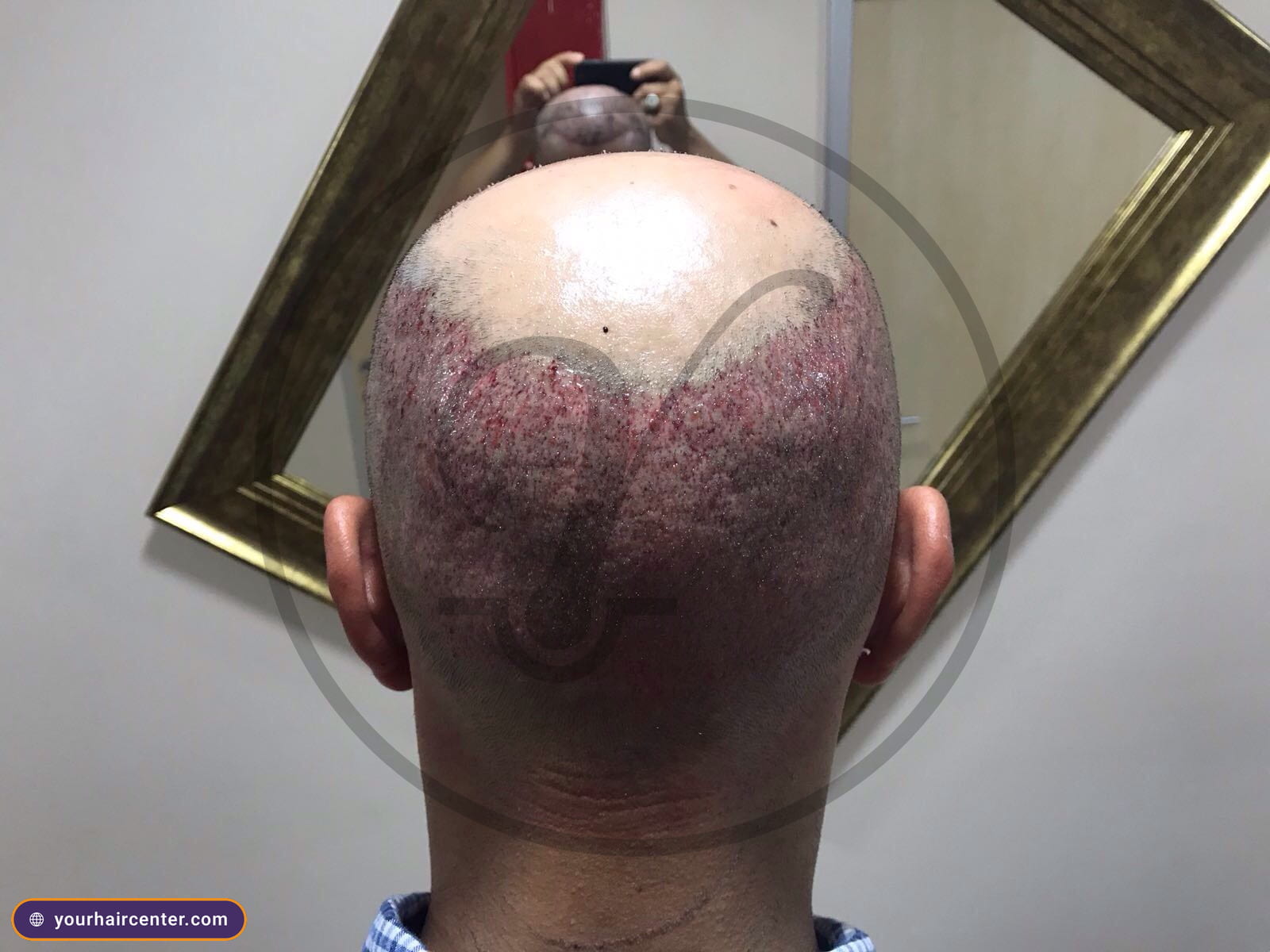
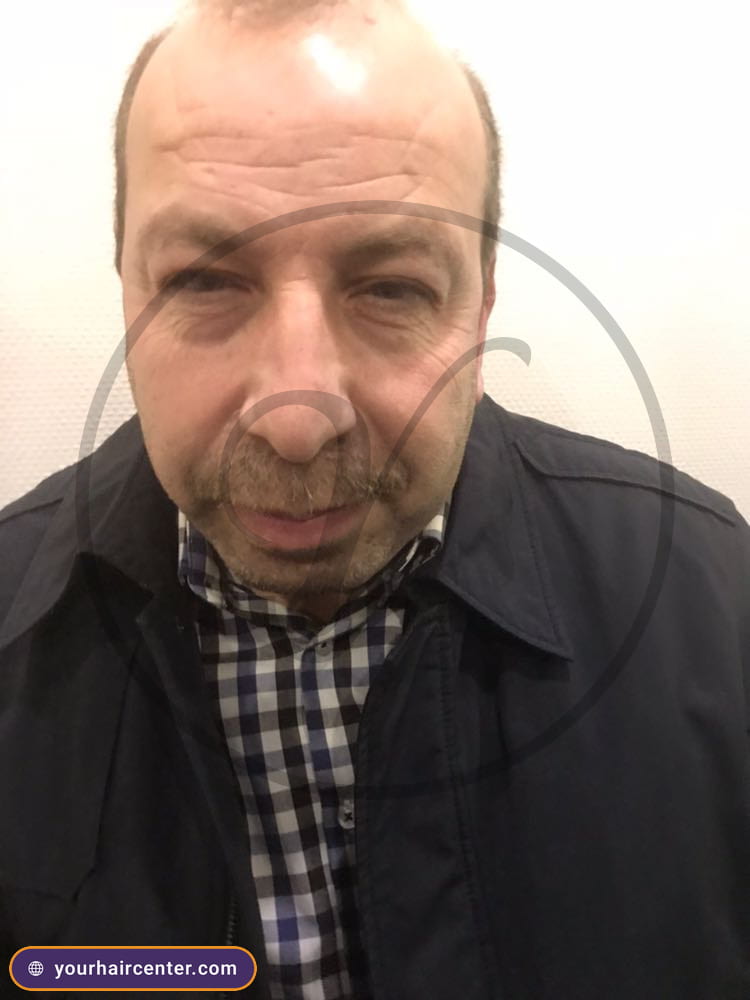
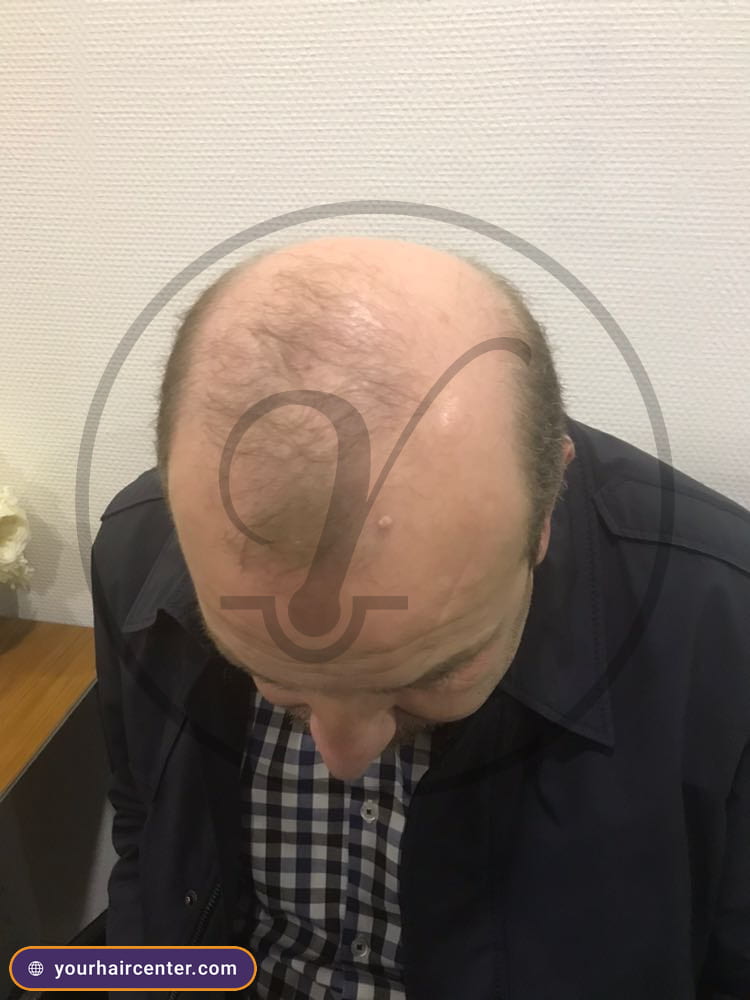
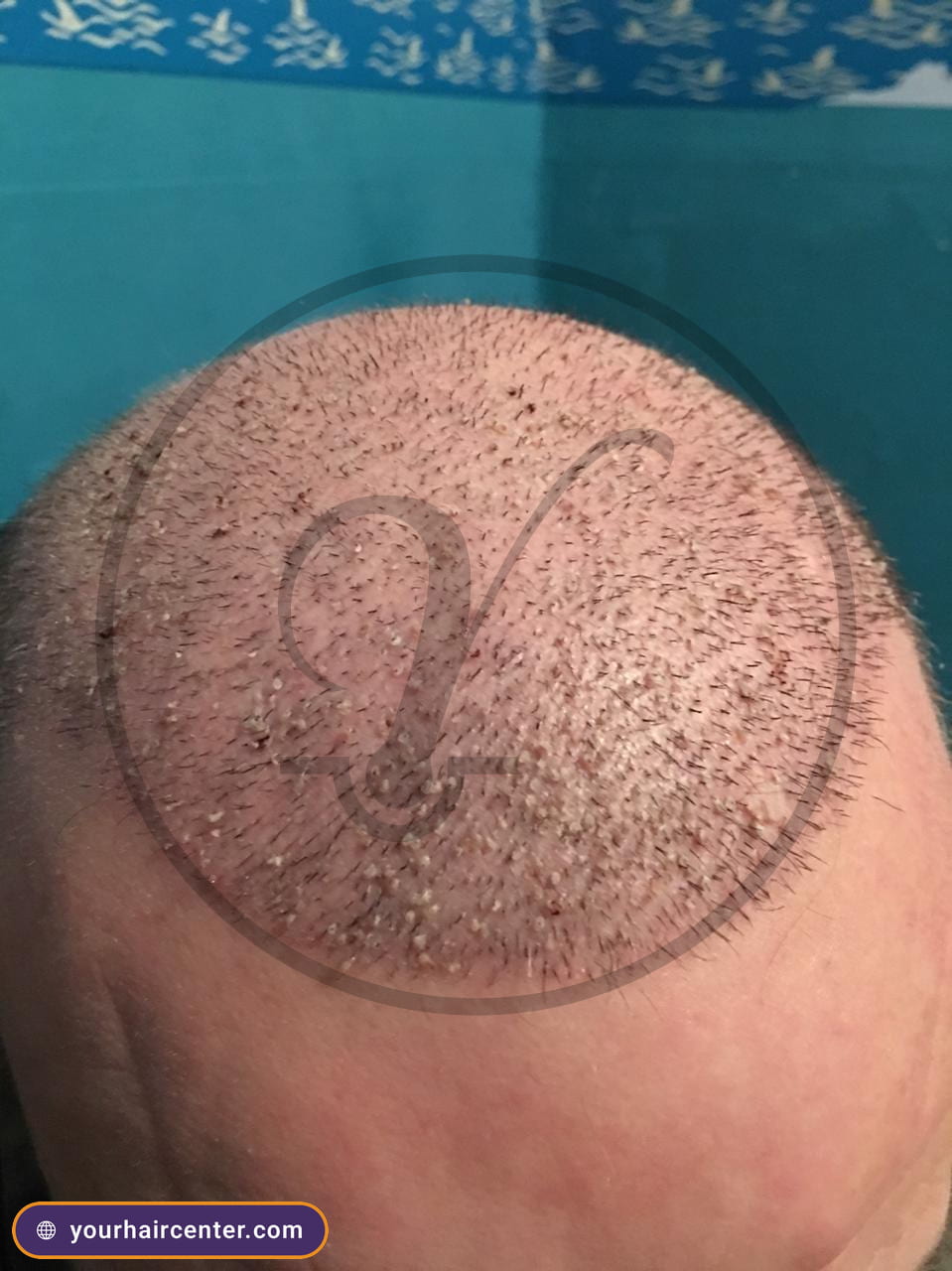
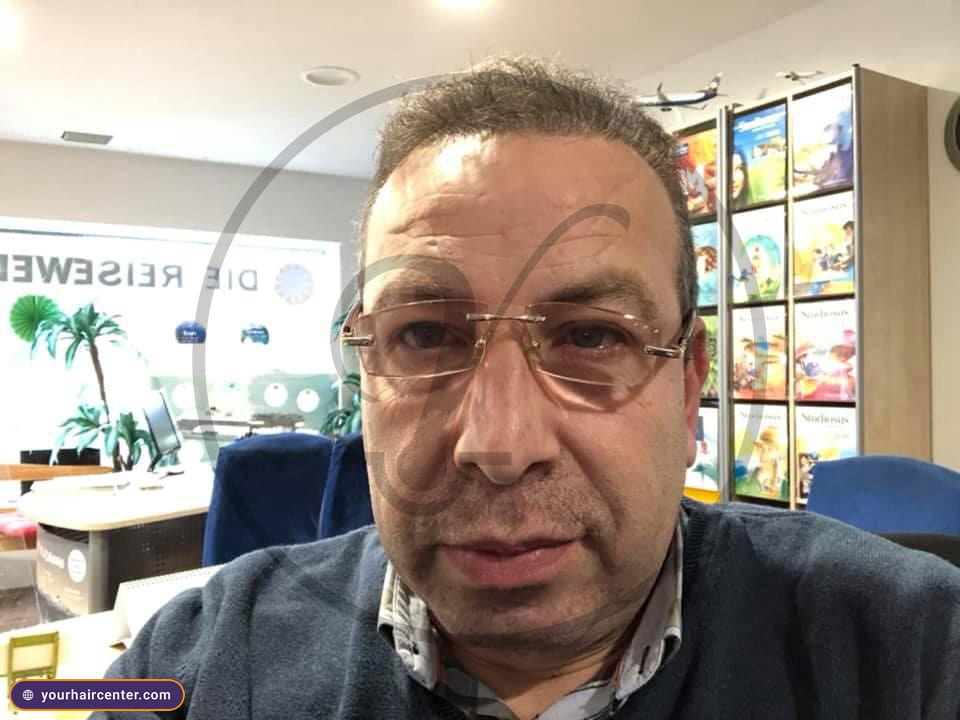
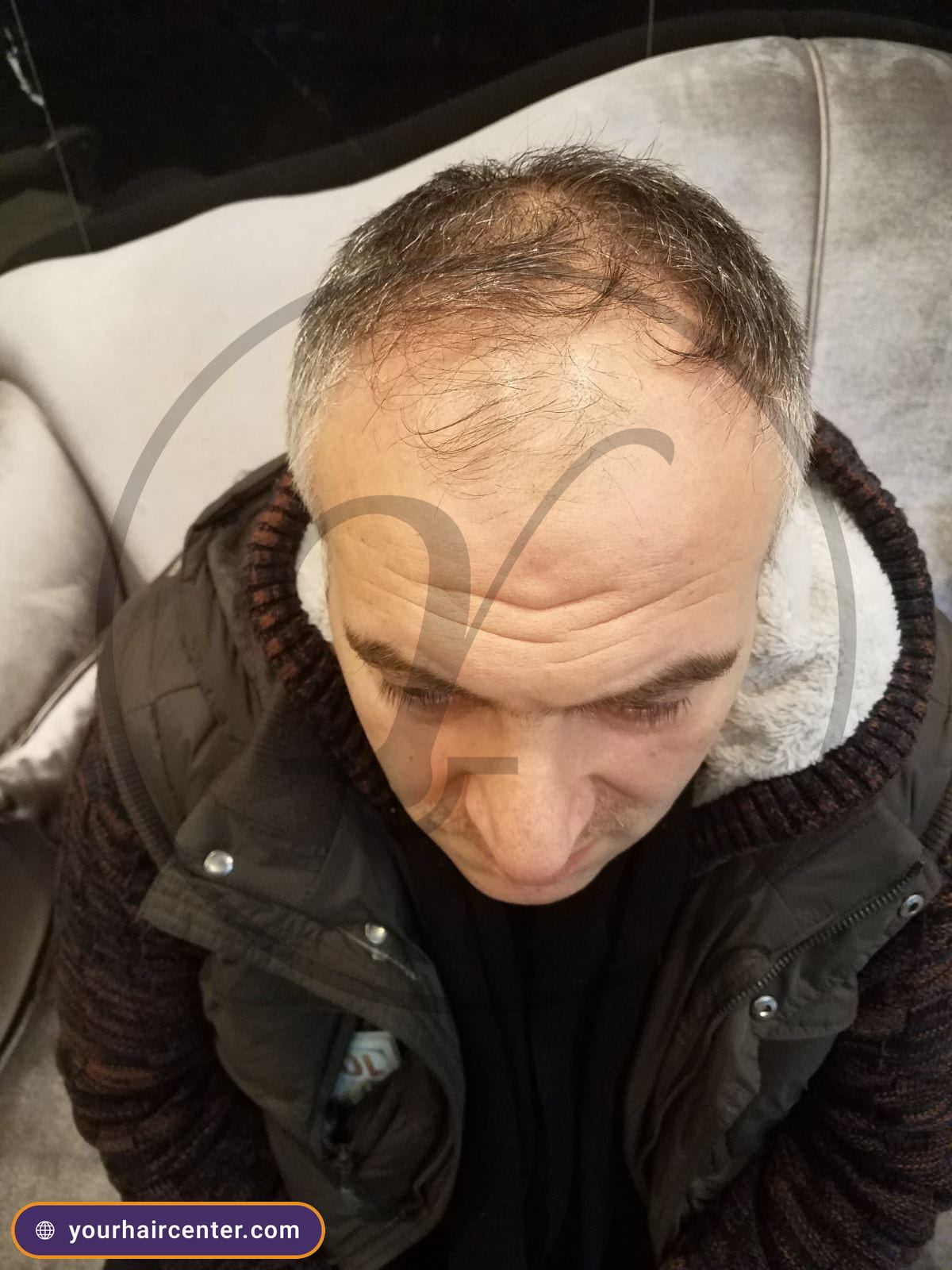
Real results from our patients’ archive. Photos exactly as captured at our accredited partner clinics, with no filters and no retouching. Browse more cases in our photo gallery.
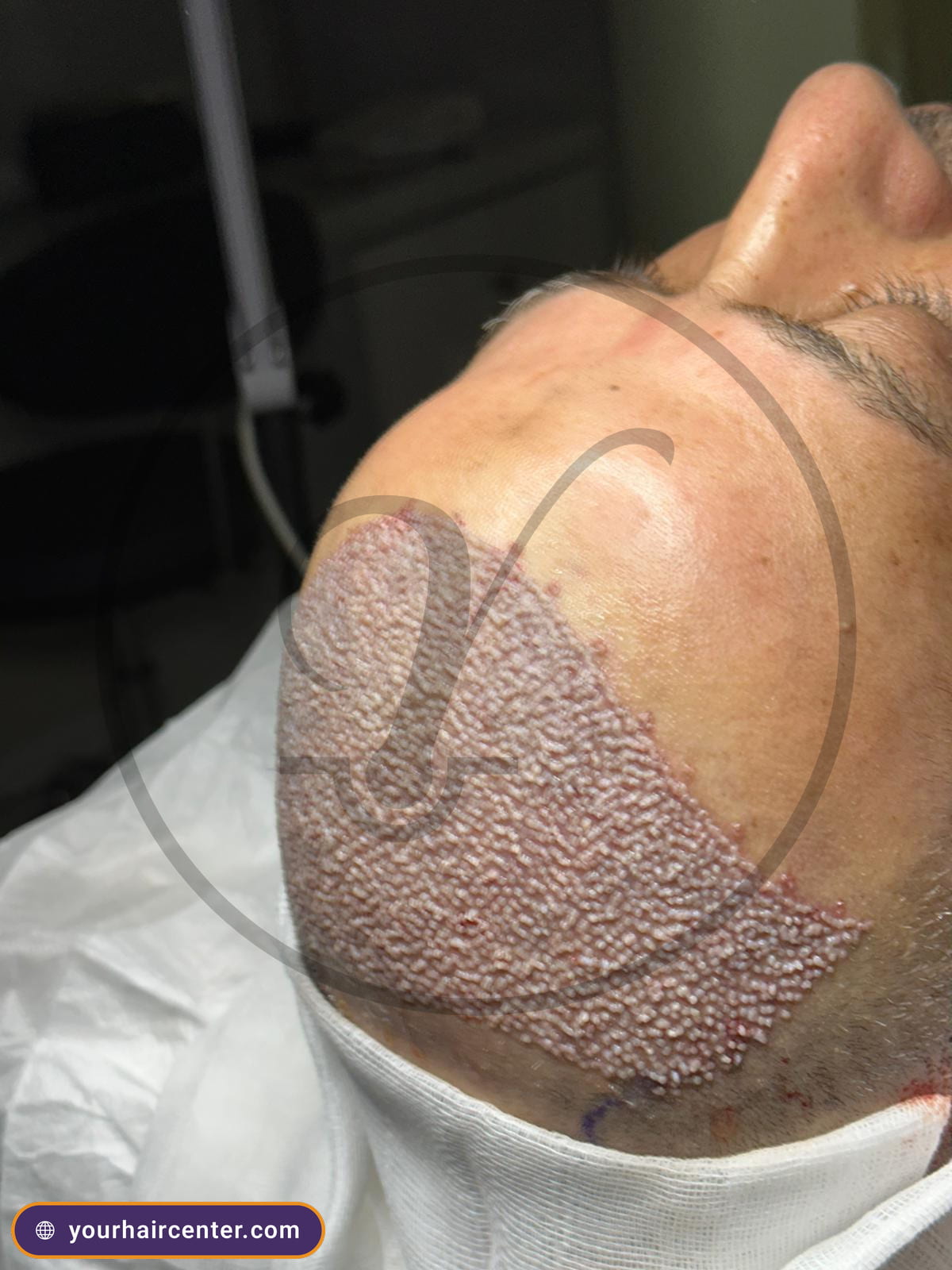
The first ninety-six hours of DHI recovery carry the most anxiety, so it helps to know what each one holds. Day 0 is procedure day. The Choi Pen DHI procedure implants each follicle directly under local anesthesia, with no pre-opened channels, and the session runs roughly six to eight hours depending on graft count. You leave the partner clinic with a light dressing on the donor area and nothing covering the recipient zone.
Day 1 brings the first medical wash, performed at the partner clinic so the team can show you the correct gentle technique. The surgeon prescribes antibiotics and topical aftercare and walks you through the next days of DHI recovery.[1] Most patients feel only mild tightness rather than pain, and about half need no painkillers at all.
Days 2 and 3 of DHI recovery are for rest. The donor area may show pinpoint bleeding spots that stop quickly. To limit swelling, sleep with the head of the bed raised, the published surgical guidance is an elevation of fifteen to thirty degrees through the first week.[2] A cold pack held on the forehead, never on the recipient grafts, for around twenty minutes every two to three hours also helps in this window.[2:1]
Day 4 is the swelling peak. The forehead, brow line, and occasionally the eyelids look puffy. This is post-operative edema, it affects the forehead in roughly a quarter of patients around day three, and it resolves on its own within about five to seven days.[3] The team sees the same pattern, swelling that lasts three to four days and peaks around the fourth. It looks alarming in the mirror but it is the textbook normal course of DHI recovery, not a complication. Anything that points the other way, asymmetric swelling, fever, pus, or ongoing bleeding, belongs in the "when to call a doctor" section below.
This stretch of DHI recovery is where most patients fly home, settle into the daily home wash, and watch the scabs separate. From Day 5 onward you wash daily with the prescribed medical shampoo, working a gentle finger-pad lather with no rubbing and no scrubbing. The tiny scabs that form around each graft stay put until they are gently rubbed away, usually one to two weeks after surgery, and the donor crusts can be eased off from around day five to seven.[2:2][4]
When can you fly home? It is one of the most-asked questions about DHI recovery day by day, and the answer is reassuring. At Your Hair Center the standard schedule has you departing Istanbul on Day 4, after the first wash and aftercare briefing. Cabin pressure does not threaten the grafts. The practical advice is to wear a loose hoodie or a soft button-front shirt that does not pull over the head, and to avoid tight hats, over-ear headphones pressing the recipient zone, and reclining hard into a headrest for the first week and a half.
By Day 8 to Day 10 most scabs have fallen away on their own. This is also when a common fear surfaces, that a fallen scab means a lost graft. The two are different structures. Research on graft fixation found that pulling on an adherent scab could still lift a graft through day five, but by the sixth day pulling on a hair no longer dislodged it, and by day nine the grafts were no longer at risk of being dislodged at all.[5] In other words, the recipient area has stabilized well before the second week of DHI recovery. The recipient sites the Choi Pen makes as each graft goes in heal like those of any other technique, with the crusts and redness clearing in about 7 to 14 days.
From Day 11 to Day 14 the pink settles toward your normal skin tone and the donor area is fully closed. With the no-shave Choi Pen approach, where only the donor zone is trimmed, most patients look unremarkable to a casual observer by this point. This is also the window for the first remote check-in under Your Hair Center’s 1-year follow-up program, which keeps the medical team looped in on your DHI recovery without another flight.
This is the hardest section to read and the most important to read honestly. Of every stage in DHI recovery, shock loss is the one that catches people off guard. Yes, your hair is going to fall out, and that is exactly what is supposed to happen.
Between roughly two and eight weeks into DHI recovery the transplanted hairs shed.[6] At Your Hair Center the team frames it as the implanted hairs falling out almost completely within two to four weeks, a one hundred percent normal stage rather than a sign of failure. The critical point is structural. The visible hair shaft sheds, but the follicle root stays anchored under the skin, dormant, waiting to grow.[6:1] Shock loss of this kind typically begins two to six weeks after surgery and is transient, with recovery over the following three to four months.[7]
The psychological dip is a real part of DHI recovery and worth naming for both the patient and the partner reading along. By the third month the scalp can actually look thinner than it did before the procedure.[6:2] Patients who were not warned often contact the team in distress at this point; patients who were warned ride it out. There is also native shock loss, where some of the original surrounding hairs shed temporarily from the nearby work, and this too reverses in the large majority of cases.[7:1]
Shedding tapers toward the end of Week 4, and DHI recovery then enters a quiet dormant phase before regrowth begins. This is a scheduled milestone in Your Hair Center’s remote follow-up, a Week 4 check-in to confirm the pattern is on track. For the partner watching a mood drop, the line to hold onto is simple. This is supposed to look worse before it looks better, and Month 3 is the visible turnaround. Checking your scalp one month into DHI recovery and seeing thin coverage is one of the most misread moments of the year. It looks like a problem when it is in fact the timeline working exactly as designed.
By the one-month mark of DHI recovery, the shedding is essentially complete. The scalp may look slightly thinner than your starting point, occasionally a little pink where shedding was heaviest, and the donor area is healed and hard to spot.
Month 2 is the dormant phase, and it tests patience because nothing visible is happening. This is the quietest point of DHI recovery, and the easiest to misread as a stall. Under the skin the follicles are reorganizing; the transplanted roots sit dormant for roughly ten to fourteen weeks before they all begin to grow.[2:3] The absence of visible change here is the textbook normal, not a stall.
Activity opens up gradually in this period of DHI recovery. The team clears light activity from around two weeks, while heavier exertion waits longer, and published guidance is clear that exact return-to-exercise and water-exposure windows vary from surgeon to surgeon.[4:1] Full immersion of the head in water is best avoided for two to four weeks, and direct sun on the scalp for about a month.[2:4] The full DHI recovery activity breakdown is in the table further down.
Month 3 is the turnaround. The first visible regrowth appears as fine new hairs across the recipient zones; new hairs typically emerge somewhere between the third and sixth month.[6:3][2:5] It is not dense yet, the texture can look uneven between zones, but the trajectory is now clearly positive. The new shafts are thinner and shorter than they will become, and any patchiness tends to even out as DHI recovery moves through the following months.
For patients who want to support this phase, the Royal VIP package that DHI is part of already includes three PRP sessions, and an exosome treatment option is available as well. These are optional add-ons to DHI recovery, not requirements for a good result.
Real results from our patients’ archive. Photos exactly as captured at our accredited partner clinics, with no filters and no retouching. Browse more cases in our photo gallery.
This is the stretch friends and family start to notice, and the most rewarding part of DHI recovery. Around the fourth month new hair usually appears in earnest and the shafts begin to thicken and deepen in color.[6:4] Hair grows at roughly one centimeter per month, so length and coverage build steadily from here.[4:2]
By Month 5 both density and length have improved enough that most patients can style the hair without obvious thinning at the hairline, and they start to look like themselves again in photographs. By the six-month mark, roughly half of the eventual fullness has typically returned. It is worth being precise about expectations here, because most patients see meaningful results between six and nine months after surgery, and for some it takes a full twelve months.[6:5] So the six-month milestone of DHI recovery is genuinely encouraging but not the finish line, the caliber and density keep maturing beyond it.
For a closer look at how this stage photographs across multiple patients, see the companion guide on DHI before and after results, which follows complete journeys image by image. The short version for this point in DHI recovery is straightforward. Month 6 is good but not done, and the final maturation runs through the rest of the first year. Tracking your own six-month photographs against your Day 0 baseline is the clearest way to confirm your DHI recovery is on schedule.
The back half of the first year after DHI is about refinement rather than dramatic change. Through Months 7 to 9 the density continues to thicken as the newer shafts catch up in caliber and pigment, and the hairline edge softens into a more natural profile. Most patients are seeing their results clearly settle in this window.[6:6]
From Month 10 to Month 12 the final fullness arrives. Published timelines put the complete result anywhere from a year to a year and a half, with the surgical literature noting that grafts mature over the six to twelve months that follow surgery and that it often takes a year or more for the full result to appear.[2:6][4:3] Crown-zone grafts tend to mature a little more slowly than hairline grafts, so some patients see continued thickening even past the one-year checkpoint of DHI recovery.
Month 12 is also the official close of Your Hair Center’s full-year remote follow-up. At this milestone you submit comparison photos for the case archive with your consent, and the team confirms the result has stabilized through the 1-year follow-up program. Durability is the reassuring footnote to the whole of DHI recovery. The follicles transplanted with DHI are taken from the genetically resistant donor ring at the back and sides of the scalp, so the transplanted hair is built to last. The native hair around it can still thin over the years from its own underlying genetics, which is a separate process and not a transplant failure. There are FDA-approved medications some patients use to slow that native thinning; the specifics belong in a conversation with the medical team rather than a one-size figure here.
Real results from our patients’ archive. Photos exactly as captured at our accredited partner clinics, with no filters and no retouching. Browse more cases in our photo gallery.
These are the questions patients search twice, so here they are consolidated against the DHI recovery timeline. Treat the windows as careful general guidance; published aftercare protocols agree on the principles but the exact day counts vary from one surgeon to the next, so your own specialist’s instructions always come first.[4:4]
| Activity | Earliest safe window | Notes |
|---|---|---|
| Fly home from Istanbul | Day 4 | Cabin pressure does not affect the grafts. Wear a loose button-front top and avoid tight hats. |
| Return to a desk job | Within the first week to ten days | Most office workers resume early; client-facing roles often wait a few extra days for swelling to settle. |
| Return to a physical job | After the early healing window | Construction, healthcare, and kitchen work should wait until heavy exertion and sweating are safe. |
| Light cardio, walking, easy cycling | From around two weeks | Our team clears light activity at this point; pat the scalp dry rather than rubbing. |
| Moderate cardio, running, gym machines | A few weeks later | No tight headbands; wash the scalp after each session with the medical shampoo. |
| Heavy lifting and contact sports | Once the scalp has fully healed | Anything that spikes blood pressure to the scalp waits for the full healing window. |
| Swimming and full water immersion | After two to four weeks | Avoid submerging the head for two to four weeks; chlorine irritates the recipient zone.[2:7] |
| Sauna and steam room | After the early healing window | Heat dilates scalp vessels and can prolong any residual swelling. |
| Direct sun on the scalp | After about one month | Keep the scalp out of direct sun for roughly a month, and wear a loose hat outdoors.[2:8] |
| Hair dye and chemical treatments | Several months out | Early chemical treatment can stress immature follicles; wait until the hair has matured. |
| Drinking alcohol | After the first couple of weeks | Alcohol thins the blood and can prolong swelling; our team advises stopping two weeks before and staying off early in recovery. |
| Smoking | Quit before, ideally stay off | Nicotine restricts scalp microcirculation and slows healing; our team advises stopping at least two weeks before surgery. |
Every row follows the same DHI recovery principle. Protect the grafts and the blood supply that feeds them while they anchor and wake up, then ease back in. Anything that raises blood pressure to the scalp, soaks the recipient area, or rubs against it gets pushed later.
This part of the guide matters most, because it separates the normal patterns from the genuine "contact us now" signals.
The normal, expected side effects of DHI recovery are easy to misread on a day when you check the mirror too often. They include forehead and eye swelling peaking around days three to four,[3:1] pinpoint bleeding from the donor area in the first day or so, mild itching during the scab phase, the temporary shock loss between Week 2 and Week 4, and the quiet Month 2 dormancy. None of these mean anything has gone wrong.
A handful of patterns do warrant an immediate message. Swelling that is asymmetric or worsening after Day 5, persistent or heavy bleeding, a fever (for example above 38.5 degrees Celsius), pus or yellow discharge from the donor or recipient area, severe pain that over-the-counter relief does not touch, or expanding redness spreading around the donor zone. The Your Hair Center medical team is reachable around the clock during DHI recovery, so you can send a follow-up question the moment something looks off rather than guessing.
On pain, a common worry throughout DHI recovery, the procedure itself runs under local anesthesia, so most patients feel the brief sting of the injections and then mild soreness for a few days, managed with the painkillers the doctor prescribes. On scarring, the recipient sites heal like those of any technique, and the donor area heals as fine dot marks that the surrounding hair usually hides once it grows back to its normal length.
In DHI recovery, first visible regrowth usually appears around Month 3, when fine new hairs emerge across the recipient zones. Most patients see clear results between six and nine months, and for some the full result takes twelve months, with crown-zone grafts maturing a little later than hairline grafts.[6:7][2:9]
Beyond the twelve months of DHI recovery, the result is built to be permanent. DHI uses follicles taken from the genetically resistant donor ring at the back and sides of the scalp, and those follicles keep their resistance to thinning after transplantation, so the transplanted hair is permanent. The native hair surrounding the transplant can still thin over time from its own underlying genetics, which is a separate process.
No, you cannot dislodge grafts after 10 days. Research on graft fixation found that by day nine the grafts were no longer at risk of being dislodged, with fixation strengthening sharply from around day six.[5:1] By this point in DHI recovery, routine touching, gentle washing, and a soft pillowcase are all safe.
The disadvantages of DHI are mainly capacity and the training it demands. DHI runs at about three thousand grafts a day, so larger cases run over two days under one plan, while a sapphire FUE session can reach up to about 4,000 grafts. It also needs a team specifically trained on the Choi Pen. Where a large area needs coverage, the specialist may plan the sapphire FUE technique instead of or alongside DHI, as the DHI vs sapphire FUE comparison article explains in detail.
Day 4 is the standard day to fly home in Your Hair Center’s DHI recovery schedule, after the first wash and aftercare briefing. Cabin pressure does not affect the implanted follicles. Wear a loose top, avoid tight hats and hard headrest pressure on the back of the head, and skip over-ear headphones across the recipient zone for the first week and a half.
A DHI hair transplant is performed under local anesthesia, so after the brief sting of the injections most patients feel pressure rather than pain during the session. Afterward the soreness is usually mild for the first few days and is managed with the painkillers the doctor prescribes.
From a single afternoon under local anesthesia to a fully matured result at the one-year mark, DHI recovery runs through awkward stretches, the Day 4 swelling, the Week 2 to Week 4 shock loss and the silent Month 2 dormancy, all part of the plan rather than warning signs. The Your Hair Center support does not end when you leave Istanbul on Day 4; the remote follow-up runs the full first year, because recovery is a year-long partnership, not a four-day transaction. Explore the rest of the hair transplant techniques to see how the Choi Pen fits the wider picture. Book a free Choi Pen DHI evaluation, or send a recovery question on WhatsApp.
National Health Service (NHS), "Hair transplant." https://www.nhs.uk/tests-and-treatments/cosmetic-procedures/cosmetic-surgery/hair-transplant/ (opens in new tab) ︎
Zito PM, Raggio BS. "Hair Transplantation." StatPearls, NCBI Bookshelf (National Library of Medicine). https://www.ncbi.nlm.nih.gov/books/NBK547740/ (opens in new tab) ︎ ︎ ︎ ︎ ︎ ︎ ︎ ︎ ︎ ︎
"Hair Transplantation: Preventing Post-operative Oedema." Journal of Cutaneous and Aesthetic Surgery, PMC (National Library of Medicine). https://pmc.ncbi.nlm.nih.gov/articles/PMC2956963/ (opens in new tab) ︎ ︎
International Society of Hair Restoration Surgery, "FUE Hair Transplant: Benefits, Process & Recovery." https://ishrs.org/fue-what-is-it/ (opens in new tab) ︎ ︎ ︎ ︎ ︎
Beehner ML. "Graft anchoring in hair transplantation." Dermatologic Surgery (PubMed). https://pubmed.ncbi.nlm.nih.gov/16442039/ (opens in new tab) ︎ ︎
American Academy of Dermatology, "Hair transplant: A hair transplant can give you permanent, natural-looking results." https://www.aad.org/public/diseases/hair-loss/treatment/transplant (opens in new tab) ︎ ︎ ︎ ︎ ︎ ︎ ︎ ︎
"Localized Telogen Effluvium Following Hair Transplantation." International Journal of Trichology, PMC (National Library of Medicine). https://pmc.ncbi.nlm.nih.gov/articles/PMC5839894/ (opens in new tab) ︎ ︎